Dattatreya Mantra
दिगंबरा दिगंबरा श्रीपाद वल्लभ दिगंबरा ॥Also known as Digambara Digambara
In Devanagari, Tamil, Telugu, Kannada, Malayalam and English — with the meaning of every word, and the one syllable most people pronounce wrongly.
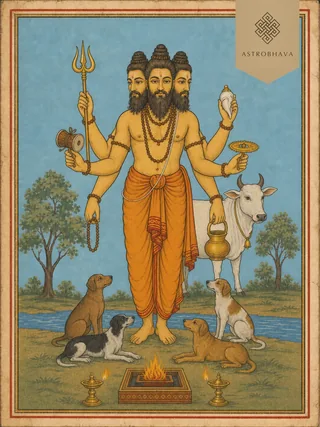 The Dattatreya Homam, performed for youBook →
What the Dattatreya Mantra is
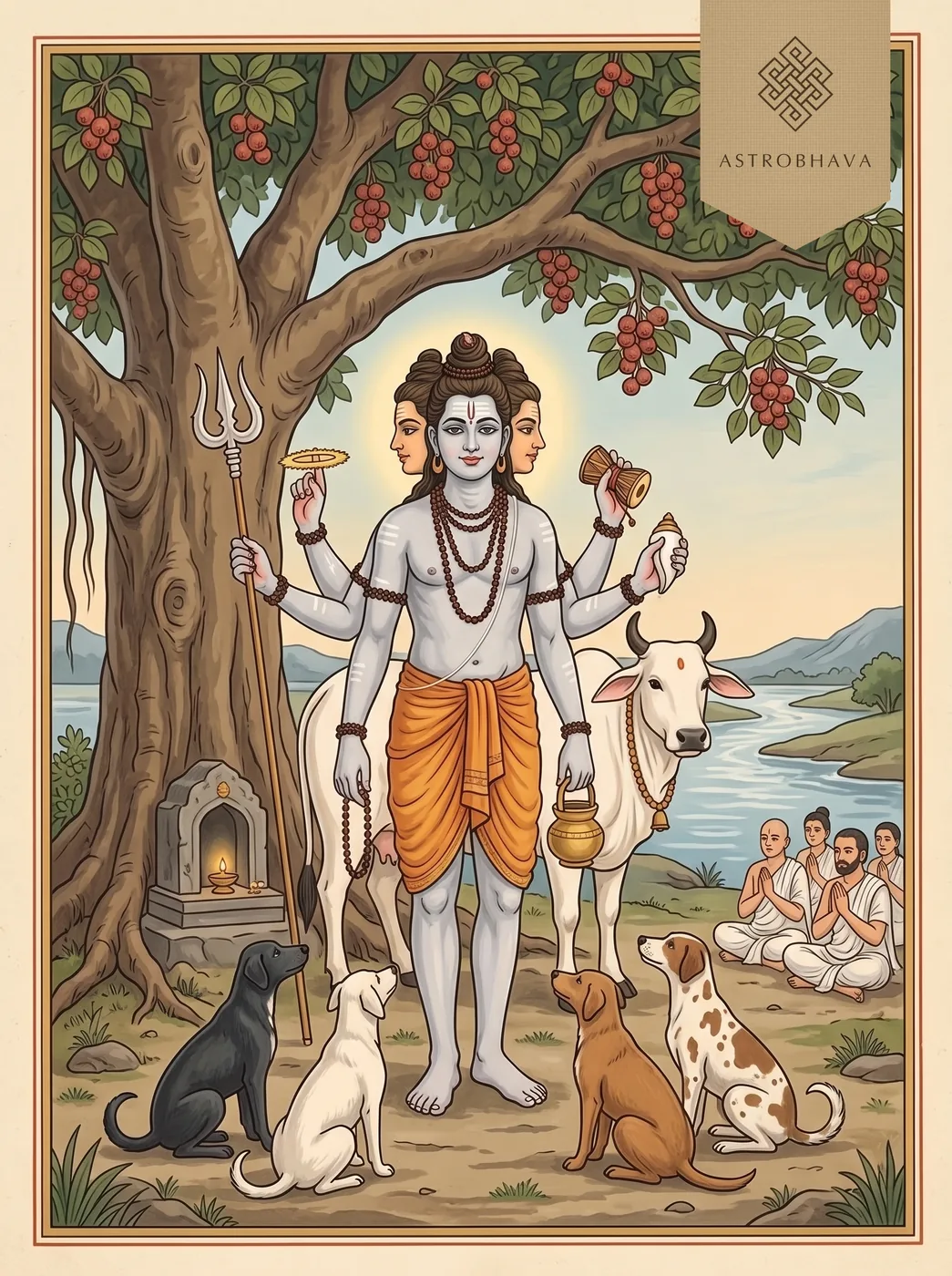
The Dattatreya mantra, as devotees of the Datta tradition use the phrase, is not one line but a small set of three texts addressed to Dattatreya, the ascetic son of the sage Atri who is worshipped in Maharashtra, Karnataka and Andhra as the Trimurti in one person. The first is a Marathi refrain, "Digambara Digambara Shripada Vallabha Digambara", which calls him Digambara, "clothed by the directions", and names Shripada Shrivallabha, honoured in the sampradaya as his first incarnation of the present age. The second is the Datta Gayatri in the three-part Gayatri pattern: it names him as Digambara, then as the Avadhuta, the renunciant who has shaken off every bond, and closes with a prayer that Datta move the mind. The third is a dhyana shloka, the meditation verse set before the Dattatreya Stotram that the Narada Purana ascribes to the sage Narada; it pictures him with matted locks, a pale body and a trident in hand, and calls him a treasury of compassion.
From Pithapuram to a Marathi refrain
The name in the first line points to a saint the Datta tradition holds dear. According to tradition, Shripada Shrivallabha was born in 1320 at Pithapuram, then called Pitikapuram, in present-day Andhra Pradesh. He is said to have taken sannyasa at sixteen and to have lived most of his life at Kuruvapur, an island in the Krishna river near Raichur in Karnataka, where tradition holds that he entered the water in jala-samadhi at thirty. The Shri Guru Charitra, the Marathi scripture of the sampradaya, speaks of Kuruvapur as a holy place, and devotees regard Narasimha Saraswati as the incarnation who followed him. The refrain itself has no written source and is handed down as traditional. Within the sampradaya it is credited to Shripada Shrivallabha, whose name it carries, and some treat it as self-revealed; one Marathi temple account instead links it with the later saint Vasudevananda Saraswati, known as Tembe Swami (1854-1914). It is sung as a bhajan in Datta temples. The Gayatri closes the short Datta Atharvashirsha, a later devotional text that counts Shripada Shrivallabha, Narasimha Saraswati and the Swami of Akkalkot among Datta's forms.
The mantra, in six scripts
- दिगंबरा
- digaṃbarā — O Digambara, clothed by the directions
- दिगंबरा
- digaṃbarā — O Digambara
- श्रीपाद
- śrīpāda — Shripada, of the auspicious feet
- वल्लभ
- vallabha — Vallabha, the beloved
- दिगंबरा
- digaṃbarā — O Digambara
Dattatreya Mantra lyrics in full
Three short texts printed one after another: the Marathi Digambara refrain, the Datta Gayatri, and the dhyana verse of the Narada Purana Dattatreya Stotram.
All 3 verses, in Sanskrit, Tamil, Telugu, Kannada, Malayalam and English, each with its meaning. Choose a script:
Download the Dattatreya Mantra PDFAll 3 verses with their meanings, in Sanskrit. Free to print and keep.
दिगंबरा दिगंबरा श्रीपाद वल्लभ दिगंबरा ॥
திகம்பரா திகம்பரா ஶ்ரீபாத வல்லப திகம்பரா ॥
దిగంబరా దిగంబరా శ్రీపాద వల్లభ దిగంబరా ॥
ದಿಗಂಬರಾ ದಿಗಂಬರಾ ಶ್ರೀಪಾದ ವಲ್ಲಭ ದಿಗಂಬರಾ ॥
ദിഗംബരാ ദിഗംബരാ ശ്രീപാദ വല്ലഭ ദിഗംബരാ ॥
digaṃbarā digaṃbarā śrīpāda vallabha digaṃbarā ||
O Digambara, clothed only in the directions of space; O Digambara; O Shripada Vallabha, Digambara. A call to Dattatreya in his form as Shripada Shrivallabha, repeated as a chant of the name.
ॐ दिगंबराय विद्महे अवधूताय धीमहि ।
तन्नो दत्तः प्रचोदयात् ॥
ௐ திகம்பராய வித்மஹே அவதூதாய தீமஹி ।
தந்நோ தத்தஃ ப்ரசோதயாத் ॥
ఓం దిగంబరాయ విద్మహే అవధూతాయ ధీమహి ।
తన్నో దత్తః ప్రచోదయాత్ ॥
ಓಂ ದಿಗಂಬರಾಯ ವಿದ್ಮಹೇ ಅವಧೂತಾಯ ಧೀಮಹಿ ।
ತನ್ನೋ ದತ್ತಃ ಪ್ರಚೋದಯಾತ್ ॥
ഓം ദിഗംബരായ വിദ്മഹേ അവധൂതായ ധീമഹി ।
തന്നോ ദത്തഃ പ്രചോദയാത് ॥
oṃ digaṃbarāya vidmahe avadhūtāya dhīmahi |
tanno dattaḥ pracodayāt ||
Om. We come to know the one who is clothed by the directions; we meditate on the Avadhuta, free of all bonds. May Datta inspire and guide us.
जटाधरं पाण्डुरङ्गं शूलहस्तं कृपानिधिम् ।
सर्वरोगहरं देवं दत्तात्रेयमहं भजे ॥
ஜடாதரம் பாண்டுரங்கம் ஶூலஹஸ்தம் க்ருபாநிதிம் ।
ஸர்வரோகஹரம் தேவம் தத்தாத்ரேயமஹம் பஜே ॥
జటాధరం పాణ్డురఙ్గం శూలహస్తం కృపానిధిమ్ ।
సర్వరోగహరం దేవం దత్తాత్రేయమహం భజే ॥
ಜಟಾಧರಂ ಪಾಣ್ಡುರಙ್ಗಂ ಶೂಲಹಸ್ತಂ ಕೃಪಾನಿಧಿಮ್ ।
ಸರ್ವರೋಗಹರಂ ದೇವಂ ದತ್ತಾತ್ರೇಯಮಹಂ ಭಜೇ ॥
ജടാധരം പാണ്ഡുരങ്ഗം ശൂലഹസ്തം കൃപാനിധിമ് ।
സര്വരോഗഹരം ദേവം ദത്താത്രേയമഹം ഭജേ ॥
jaṭādharaṃ pāṇḍuraṅgaṃ śūlahastaṃ kṛpānidhim |
sarvarogaharaṃ devaṃ dattātreyamahaṃ bhaje ||
I worship Lord Dattatreya, who wears matted locks, whose body is pale white, who holds a trident and is a treasury of compassion. The verse calls him the god who removes all illness.
The syllable people get wrong
In the Gayatri, avadhūtāya is often said "avadhutaya" with every vowel short; the dh is aspirated and both the ū and the following ā are long, so it runs a-va-DHOO-TAA-ya.
When the Dattatreya Mantra is chanted
Festival. Datta Jayanti, the full moon of Margashirsha
Questions
Have your chart read before you decide
Chanting is yours to do, and free. But which deity your situation calls for — and whether a mantra alone is the right response — depends on your chart. Sometimes it is; sometimes it is not.
- Over 30 years in the Guru–Sishya Parampara, from the age of five
- He reads every chart himself — 60 minutes, one to one, never delegated
- Charts are read only between sunrise and sunset, following tradition
