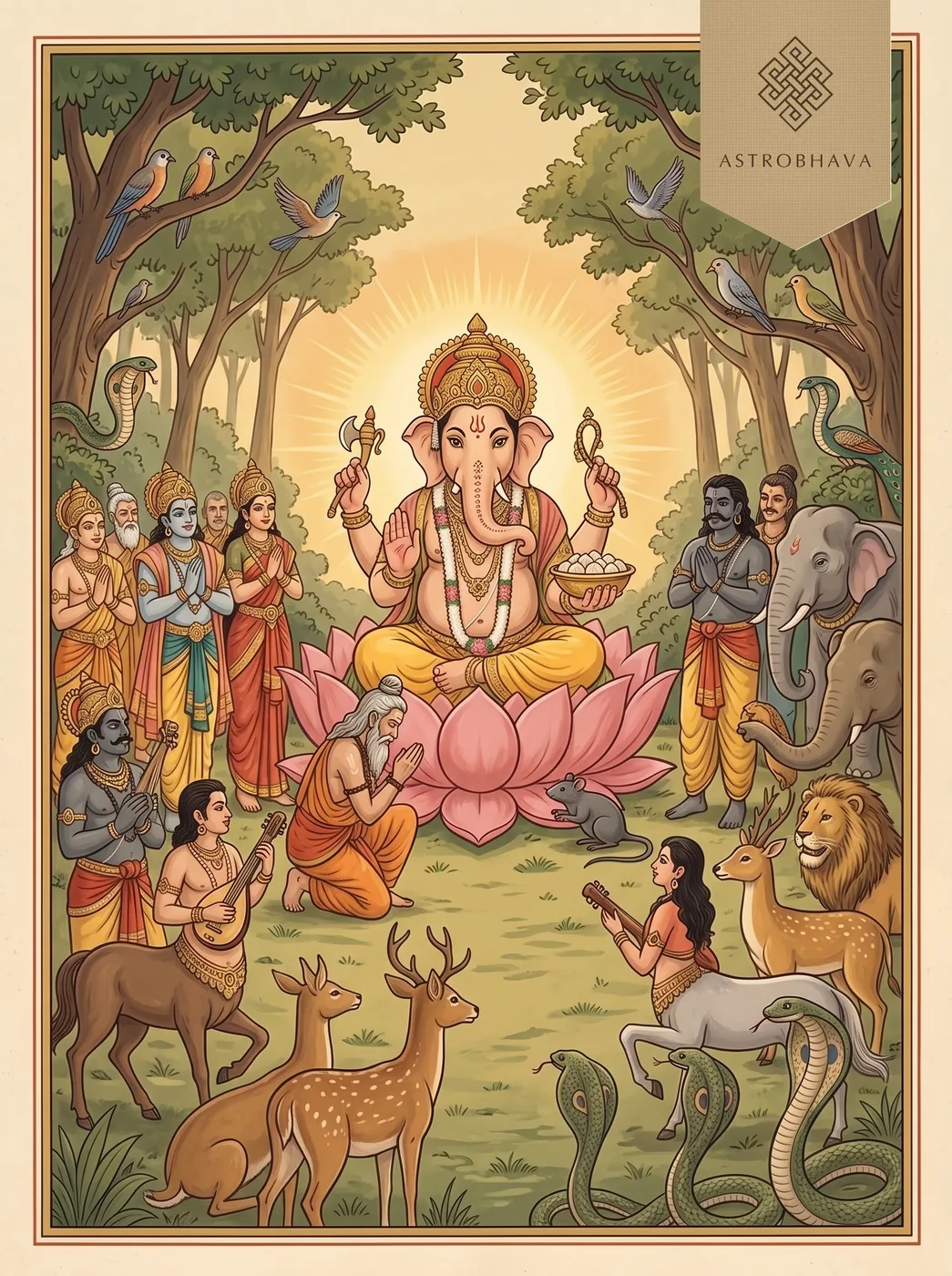
Ganesha Ashtakam
यतोऽनन्तशक्तेरनन्ताश्च जीवा यतो निर्गुणादप्रमेया गुणास्ते । यतो भाति सर्वं त्रिधा भेदभिन्नं सदा तं गणेशं नमामो भजामः ॥Also known as Sarvekrita Ganesha Stuti
In Devanagari, Tamil, Telugu, Kannada, Malayalam and English — with the meaning of every word, and the one syllable most people pronounce wrongly.
 The Ganapathi Homa, performed for youBook →
What the Ganesha Ashtakam is
The Ganesha Ashtakam, also printed as Ganeshashtakam, is a hymn of eight verses from chapter 91 of the Upasana Khanda of the Ganesha Purana, where it is sung not by one poet but by all creatures together. Every verse is built on the word yatah, 'from whom', and closes on the same refrain, sada tam ganesham namamo bhajamah, 'that Ganesha we always salute and worship'. The sequence reads like a roll call of creation: verse 1 names the living beings and the threefold world, verse 2 Brahma, Vishnu, Indra and humankind, verses 3 and 4 the elements, oceans, Danavas, Kinnaras, beasts, birds, insects and creepers. Verses 5 and 6 turn to what a life meets, understanding, children, wishes, and even grief and desire. Verse 7 names Shesha, and verse 8 ends with the Upanishadic 'neti neti', the Veda falling silent before Brahman. Five more verses, spoken by Ganesha in chapter 92, form the phala shruti.
The hymn sung by all of Kashyapa's children
According to the Ganesha Purana, Brahma tells this episode to Vyasa. After a dissolution of the world, Ganesha orders Brahma to create once more. Brahma brings forth seven mind-born sons, Kashyapa, Gautama, Jamadagni, Vasishtha, Bharadwaja, Atri and Vishvamitra, and entrusts the work to Kashyapa as the wisest. Kashyapa repeats the one-syllable mantra of Ganesha in the forest for a thousand divine years, until Ganesha appears, four-armed, holding noose and goad, and grants him the power to create. Kashyapa's wives then bear everything that exists: Diti the Daityas, Aditi the gods and Gandharvas, Danu the Danavas, and in turn Kinnaras, Yakshas, Charanas, beasts, mountains, trees, oceans, grains, insects, serpents and birds. Kashyapa gives each of them a mantra of Ganesha to practise. After another thousand divine years Ganesha appears to all of them at once, but to each in the form they had meditated on: dark as a rain cloud with eight arms, moon-pale with four, red with six, as a child, a youth or an old man, riding a mouse, a lion or a peacock. With joined palms they praise him in one voice, and that song is this Ashtakam, which is why its verses list the very beings singing it. In chapter 92 Ganesha says he has never shown such a form even to Brahma, Vishnu or Shiva, and calls the hymn dear to him.
The mantra, in six scripts
- यतोऽनन्तशक्तेरनन्ताश्च
- yato'nantaśakteranantāśca — from whom, of endless power, the endless (come)
- जीवा
- jīvā — living beings
- यतो
- yato — from whom
- निर्गुणादप्रमेया
- nirguṇādaprameyā — from the one beyond qualities, the immeasurable
- गुणास्ते
- guṇāste — those qualities
- यतो
- yato — from whom
- भाति
- bhāti — shines
- सर्वं
- sarvaṃ — all this
- त्रिधा
- tridhā — in three ways
- भेदभिन्नं
- bhedabhinnaṃ — divided by distinctions
- सदा
- sadā — always
- तं
- taṃ — that
- गणेशं
- gaṇeśaṃ — Ganesha
- नमामो
- namāmo — we salute
- भजामः
- bhajāmaḥ — we worship
Ganesha Ashtakam lyrics in full
Eight verses sung by all beings together, followed by the five verses in which Ganesha names the fruits of the hymn.
All 13 verses, in Sanskrit, Tamil, Telugu, Kannada, Malayalam and English, each with its meaning. Choose a script:
Download the Ganesha Ashtakam PDFAll 13 verses with their meanings, in Sanskrit. Free to print and keep.
यतोऽनन्तशक्तेरनन्ताश्च जीवा यतो निर्गुणादप्रमेया गुणास्ते ।
यतो भाति सर्वं त्रिधा भेदभिन्नं सदा तं गणेशं नमामो भजामः ॥
யதோநந்தஶக்தேரநந்தாஶ்ச ஜீவா யதோ நிர்குணாதப்ரமேயா குணாஸ்தே ।
யதோ பாதி ஸர்வம் த்ரிதா பேதபிந்நம் ஸதா தம் கணேஶம் நமாமோ பஜாமஃ ॥
యతోఽనన్తశక్తేరనన్తాశ్చ జీవా యతో నిర్గుణాదప్రమేయా గుణాస్తే ।
యతో భాతి సర్వం త్రిధా భేదభిన్నం సదా తం గణేశం నమామో భజామః ॥
ಯತೋಽನನ್ತಶಕ್ತೇರನನ್ತಾಶ್ಚ ಜೀವಾ ಯತೋ ನಿರ್ಗುಣಾದಪ್ರಮೇಯಾ ಗುಣಾಸ್ತೇ ।
ಯತೋ ಭಾತಿ ಸರ್ವಂ ತ್ರಿಧಾ ಭೇದಭಿನ್ನಂ ಸದಾ ತಂ ಗಣೇಶಂ ನಮಾಮೋ ಭಜಾಮಃ ॥
യതോഽനന്തശക്തേരനന്താശ്ച ജീവാ യതോ നിര്ഗുണാദപ്രമേയാ ഗുണാസ്തേ ।
യതോ ഭാതി സര്വം ത്രിധാ ഭേദഭിന്നം സദാ തം ഗണേശം നമാമോ ഭജാമഃ ॥
yato'nantaśakteranantāśca jīvā yato nirguṇādaprameyā guṇāste |
yato bhāti sarvaṃ tridhā bhedabhinnaṃ sadā taṃ gaṇeśaṃ namāmo bhajāmaḥ ||
From him of endless power come the endless living beings; from him, who is beyond all qualities, come the immeasurable qualities; from him shines this whole world, divided in three ways. That Ganesha we always salute and worship.
यतश्चाविरासीज्जगत्सर्वमेतत्तथाब्जासनो विश्वगो विश्वगोप्ता ।
तथेन्द्रादयो देवसङ्घा मनुष्याः सदा तं गणेशं नमामो भजामः ॥
யதஶ்சாவிராஸீஜ்ஜகத்ஸர்வமேதத்ததாப்ஜாஸநோ விஶ்வகோ விஶ்வகோப்தா ।
ததேந்த்ராதயோ தேவஸங்கா மநுஷ்யாஃ ஸதா தம் கணேஶம் நமாமோ பஜாமஃ ॥
యతశ్చావిరాసీజ్జగత్సర్వమేతత్తథాబ్జాసనో విశ్వగో విశ్వగోప్తా ।
తథేన్ద్రాదయో దేవసఙ్ఘా మనుష్యాః సదా తం గణేశం నమామో భజామః ॥
ಯತಶ್ಚಾವಿರಾಸೀಜ್ಜಗತ್ಸರ್ವಮೇತತ್ತಥಾಬ್ಜಾಸನೋ ವಿಶ್ವಗೋ ವಿಶ್ವಗೋಪ್ತಾ ।
ತಥೇನ್ದ್ರಾದಯೋ ದೇವಸಙ್ಘಾ ಮನುಷ್ಯಾಃ ಸದಾ ತಂ ಗಣೇಶಂ ನಮಾಮೋ ಭಜಾಮಃ ॥
യതശ്ചാവിരാസീജ്ജഗത്സര്വമേതത്തഥാബ്ജാസനോ വിശ്വഗോ വിശ്വഗോപ്താ ।
തഥേന്ദ്രാദയോ ദേവസങ്ഘാ മനുഷ്യാഃ സദാ തം ഗണേശം നമാമോ ഭജാമഃ ॥
yataścāvirāsījjagatsarvametattathābjāsano viśvago viśvagoptā |
tathendrādayo devasaṅghā manuṣyāḥ sadā taṃ gaṇeśaṃ namāmo bhajāmaḥ ||
From him this whole universe came into being, and so did Brahma seated on the lotus and Vishnu, the all-pervading protector of the world; so too Indra and the hosts of gods, and human beings. That Ganesha we always salute and worship.
यतो वह्निभानू भवो भूर्जलं च यतः सागराश्चन्द्रमा व्योम वायुः ।
यतः स्थावरा जङ्गमा वृक्षसङ्घाः सदा तं गणेशं नमामो भजामः ॥
யதோ வஹ்நிபாநூ பவோ பூர்ஜலம் ச யதஃ ஸாகராஶ்சந்த்ரமா வ்யோம வாயுஃ ।
யதஃ ஸ்தாவரா ஜங்கமா வ்ருக்ஷஸங்காஃ ஸதா தம் கணேஶம் நமாமோ பஜாமஃ ॥
యతో వహ్నిభానూ భవో భూర్జలం చ యతః సాగరాశ్చన్ద్రమా వ్యోమ వాయుః ।
యతః స్థావరా జఙ్గమా వృక్షసఙ్ఘాః సదా తం గణేశం నమామో భజామః ॥
ಯತೋ ವಹ್ನಿಭಾನೂ ಭವೋ ಭೂರ್ಜಲಂ ಚ ಯತಃ ಸಾಗರಾಶ್ಚನ್ದ್ರಮಾ ವ್ಯೋಮ ವಾಯುಃ ।
ಯತಃ ಸ್ಥಾವರಾ ಜಙ್ಗಮಾ ವೃಕ್ಷಸಙ್ಘಾಃ ಸದಾ ತಂ ಗಣೇಶಂ ನಮಾಮೋ ಭಜಾಮಃ ॥
യതോ വഹ്നിഭാനൂ ഭവോ ഭൂര്ജലം ച യതഃ സാഗരാശ്ചന്ദ്രമാ വ്യോമ വായുഃ ।
യതഃ സ്ഥാവരാ ജങ്ഗമാ വൃക്ഷസങ്ഘാഃ സദാ തം ഗണേശം നമാമോ ഭജാമഃ ॥
yato vahnibhānū bhavo bhūrjalaṃ ca yataḥ sāgarāścandramā vyoma vāyuḥ |
yataḥ sthāvarā jaṅgamā vṛkṣasaṅghāḥ sadā taṃ gaṇeśaṃ namāmo bhajāmaḥ ||
From him come fire and the sun, Shiva, the earth and water; from him come the oceans, the moon, the sky and the wind; from him come things unmoving and moving, and the multitudes of trees. That Ganesha we always salute and worship.
यतो दानवाः किन्नरा यक्षसङ्घा यतश्चारणा वारणाः श्वापदाश्च ।
यतः पक्षिकीटा यतो वीरुधश्च सदा तं गणेशं नमामो भजामः ॥
யதோ தாநவாஃ கிந்நரா யக்ஷஸங்கா யதஶ்சாரணா வாரணாஃ ஶ்வாபதாஶ்ச ।
யதஃ பக்ஷிகீடா யதோ வீருதஶ்ச ஸதா தம் கணேஶம் நமாமோ பஜாமஃ ॥
యతో దానవాః కిన్నరా యక్షసఙ్ఘా యతశ్చారణా వారణాః శ్వాపదాశ్చ ।
యతః పక్షికీటా యతో వీరుధశ్చ సదా తం గణేశం నమామో భజామః ॥
ಯತೋ ದಾನವಾಃ ಕಿನ್ನರಾ ಯಕ್ಷಸಙ್ಘಾ ಯತಶ್ಚಾರಣಾ ವಾರಣಾಃ ಶ್ವಾಪದಾಶ್ಚ ।
ಯತಃ ಪಕ್ಷಿಕೀಟಾ ಯತೋ ವೀರುಧಶ್ಚ ಸದಾ ತಂ ಗಣೇಶಂ ನಮಾಮೋ ಭಜಾಮಃ ॥
യതോ ദാനവാഃ കിന്നരാ യക്ഷസങ്ഘാ യതശ്ചാരണാ വാരണാഃ ശ്വാപദാശ്ച ।
യതഃ പക്ഷികീടാ യതോ വീരുധശ്ച സദാ തം ഗണേശം നമാമോ ഭജാമഃ ॥
yato dānavāḥ kinnarā yakṣasaṅghā yataścāraṇā vāraṇāḥ śvāpadāśca |
yataḥ pakṣikīṭā yato vīrudhaśca sadā taṃ gaṇeśaṃ namāmo bhajāmaḥ ||
From him come the Danavas, the Kinnaras and the hosts of Yakshas; from him the Charanas, the elephants and the wild beasts; from him the birds and insects, and from him the creepers and plants. That Ganesha we always salute and worship.
यतो बुद्धिरज्ञाननाशो मुमुक्षोर्यतः सम्पदो भक्तसन्तोषिकाः स्युः ।
यतो विघ्ननाशो यतः कार्यसिद्धिः सदा तं गणेशं नमामो भजामः ॥
யதோ புத்திரஜ்ஞாநநாஶோ முமுக்ஷோர்யதஃ ஸம்பதோ பக்தஸந்தோஷிகாஃ ஸ்யுஃ ।
யதோ விக்நநாஶோ யதஃ கார்யஸித்திஃ ஸதா தம் கணேஶம் நமாமோ பஜாமஃ ॥
యతో బుద్ధిరజ్ఞాననాశో ముముక్షోర్యతః సమ్పదో భక్తసన్తోషికాః స్యుః ।
యతో విఘ్ననాశో యతః కార్యసిద్ధిః సదా తం గణేశం నమామో భజామః ॥
ಯತೋ ಬುದ್ಧಿರಜ್ಞಾನನಾಶೋ ಮುಮುಕ್ಷೋರ್ಯತಃ ಸಮ್ಪದೋ ಭಕ್ತಸನ್ತೋಷಿಕಾಃ ಸ್ಯುಃ ।
ಯತೋ ವಿಘ್ನನಾಶೋ ಯತಃ ಕಾರ್ಯಸಿದ್ಧಿಃ ಸದಾ ತಂ ಗಣೇಶಂ ನಮಾಮೋ ಭಜಾಮಃ ॥
യതോ ബുദ്ധിരജ്ഞാനനാശോ മുമുക്ഷോര്യതഃ സമ്പദോ ഭക്തസന്തോഷികാഃ സ്യുഃ ।
യതോ വിഘ്നനാശോ യതഃ കാര്യസിദ്ധിഃ സദാ തം ഗണേശം നമാമോ ഭജാമഃ ॥
yato buddhirajñānanāśo mumukṣoryataḥ sampado bhaktasantoṣikāḥ syuḥ |
yato vighnanāśo yataḥ kāryasiddhiḥ sadā taṃ gaṇeśaṃ namāmo bhajāmaḥ ||
From him the seeker of liberation gains understanding and the end of ignorance; from him come riches that bring joy to his devotees; from him comes the removal of obstacles and the success of every undertaking. That Ganesha we always salute and worship.
यतः पुत्रसम्पद्यतो वाञ्छितार्थो यतोऽभक्तविघ्नास्तथाऽनेकरूपाः ।
यतः शोकमोहौ यतः काम एव सदा तं गणेशं नमामो भजामः ॥
யதஃ புத்ரஸம்பத்யதோ வாஞ்சிதார்தோ யதோபக்தவிக்நாஸ்ததாநேகரூபாஃ ।
யதஃ ஶோகமோஹௌ யதஃ காம ஏவ ஸதா தம் கணேஶம் நமாமோ பஜாமஃ ॥
యతః పుత్రసమ్పద్యతో వాఞ్ఛితార్థో యతోఽభక్తవిఘ్నాస్తథాఽనేకరూపాః ।
యతః శోకమోహౌ యతః కామ ఏవ సదా తం గణేశం నమామో భజామః ॥
ಯತಃ ಪುತ್ರಸಮ್ಪದ್ಯತೋ ವಾಞ್ಛಿತಾರ್ಥೋ ಯತೋಽಭಕ್ತವಿಘ್ನಾಸ್ತಥಾಽನೇಕರೂಪಾಃ ।
ಯತಃ ಶೋಕಮೋಹೌ ಯತಃ ಕಾಮ ಏವ ಸದಾ ತಂ ಗಣೇಶಂ ನಮಾಮೋ ಭಜಾಮಃ ॥
യതഃ പുത്രസമ്പദ്യതോ വാഞ്ഛിതാര്ഥോ യതോഽഭക്തവിഘ്നാസ്തഥാഽനേകരൂപാഃ ।
യതഃ ശോകമോഹൌ യതഃ കാമ ഏവ സദാ തം ഗണേശം നമാമോ ഭജാമഃ ॥
yataḥ putrasampadyato vāñchitārtho yato'bhaktavighnāstathā'nekarūpāḥ |
yataḥ śokamohau yataḥ kāma eva sadā taṃ gaṇeśaṃ namāmo bhajāmaḥ ||
From him comes the blessing of children, from him the thing one longs for; from him come the many kinds of obstacles that meet those without devotion; from him come grief and delusion, and desire itself. That Ganesha we always salute and worship.
यतोऽनन्तशक्तिः स शेषो बभूव धराधारणेऽनेकरूपे च शक्तः ।
यतोऽनेकधा स्वर्गलोका हि नाना सदा तं गणेशं नमामो भजामः ॥
யதோநந்தஶக்திஃ ஸ ஶேஷோ பபூவ தராதாரணேநேகரூபே ச ஶக்தஃ ।
யதோநேகதா ஸ்வர்கலோகா ஹி நாநா ஸதா தம் கணேஶம் நமாமோ பஜாமஃ ॥
యతోఽనన్తశక్తిః స శేషో బభూవ ధరాధారణేఽనేకరూపే చ శక్తః ।
యతోఽనేకధా స్వర్గలోకా హి నానా సదా తం గణేశం నమామో భజామః ॥
ಯತೋಽನನ್ತಶಕ್ತಿಃ ಸ ಶೇಷೋ ಬಭೂವ ಧರಾಧಾರಣೇಽನೇಕರೂಪೇ ಚ ಶಕ್ತಃ ।
ಯತೋಽನೇಕಧಾ ಸ್ವರ್ಗಲೋಕಾ ಹಿ ನಾನಾ ಸದಾ ತಂ ಗಣೇಶಂ ನಮಾಮೋ ಭಜಾಮಃ ॥
യതോഽനന്തശക്തിഃ സ ശേഷോ ബഭൂവ ധരാധാരണേഽനേകരൂപേ ച ശക്തഃ ।
യതോഽനേകധാ സ്വര്ഗലോകാ ഹി നാനാ സദാ തം ഗണേശം നമാമോ ഭജാമഃ ॥
yato'nantaśaktiḥ sa śeṣo babhūva dharādhāraṇe'nekarūpe ca śaktaḥ |
yato'nekadhā svargalokā hi nānā sadā taṃ gaṇeśaṃ namāmo bhajāmaḥ ||
From him Shesha, the serpent of endless strength, came to be, able to bear the earth in its many forms; from him come the many heavenly worlds in their varied kinds. That Ganesha we always salute and worship.
यतो वेदवाचो विकुण्ठा मनोभिः सदा नेति नेतीति यत्ता गृणन्ति ।
परब्रह्मरूपं चिदानन्दभूतं सदा तं गणेशं नमामो भजामः ॥
யதோ வேதவாசோ விகுண்டா மநோபிஃ ஸதா நேதி நேதீதி யத்தா க்ருணந்தி ।
பரப்ரஹ்மரூபம் சிதாநந்தபூதம் ஸதா தம் கணேஶம் நமாமோ பஜாமஃ ॥
యతో వేదవాచో వికుణ్ఠా మనోభిః సదా నేతి నేతీతి యత్తా గృణన్తి ।
పరబ్రహ్మరూపం చిదానన్దభూతం సదా తం గణేశం నమామో భజామః ॥
ಯತೋ ವೇದವಾಚೋ ವಿಕುಣ್ಠಾ ಮನೋಭಿಃ ಸದಾ ನೇತಿ ನೇತೀತಿ ಯತ್ತಾ ಗೃಣನ್ತಿ ।
ಪರಬ್ರಹ್ಮರೂಪಂ ಚಿದಾನನ್ದಭೂತಂ ಸದಾ ತಂ ಗಣೇಶಂ ನಮಾಮೋ ಭಜಾಮಃ ॥
യതോ വേദവാചോ വികുണ്ഠാ മനോഭിഃ സദാ നേതി നേതീതി യത്താ ഗൃണന്തി ।
പരബ്രഹ്മരൂപം ചിദാനന്ദഭൂതം സദാ തം ഗണേശം നമാമോ ഭജാമഃ ॥
yato vedavāco vikuṇṭhā manobhiḥ sadā neti netīti yattā gṛṇanti |
parabrahmarūpaṃ cidānandabhūtaṃ sadā taṃ gaṇeśaṃ namāmo bhajāmaḥ ||
Before him the words of the Vedas fall back, together with the mind, and can only declare, again and again, 'not this, not this'. He is the form of the supreme Brahman, made of consciousness and bliss. That Ganesha we always salute and worship.
पुनरूचे गणाधीशः स्तोत्रमेतत्पठेन्नरः ।
त्रिसन्ध्यं त्रिदिनं तस्य सर्वकार्यं भविष्यति ॥
புநரூசே கணாதீஶஃ ஸ்தோத்ரமேதத்படேந்நரஃ ।
த்ரிஸந்த்யம் த்ரிதிநம் தஸ்ய ஸர்வகார்யம் பவிஷ்யதி ॥
పునరూచే గణాధీశః స్తోత్రమేతత్పఠేన్నరః ।
త్రిసన్ధ్యం త్రిదినం తస్య సర్వకార్యం భవిష్యతి ॥
ಪುನರೂಚೇ ಗಣಾಧೀಶಃ ಸ್ತೋತ್ರಮೇತತ್ಪಠೇನ್ನರಃ ।
ತ್ರಿಸನ್ಧ್ಯಂ ತ್ರಿದಿನಂ ತಸ್ಯ ಸರ್ವಕಾರ್ಯಂ ಭವಿಷ್ಯತಿ ॥
പുനരൂചേ ഗണാധീശഃ സ്തോത്രമേതത്പഠേന്നരഃ ।
ത്രിസന്ധ്യം ത്രിദിനം തസ്യ സര്വകാര്യം ഭവിഷ്യതി ॥
punarūce gaṇādhīśaḥ stotrametatpaṭhennaraḥ |
trisandhyaṃ tridinaṃ tasya sarvakāryaṃ bhaviṣyati ||
Then Ganesha, lord of the ganas, spoke again: the verse says that whoever recites this hymn at the three junctions of the day for three days will see all his tasks fulfilled.
यो जपेदष्टदिवसं श्लोकाष्टकमिदं शुभम् ।
अष्टवारं चतुर्थ्यां तु सोऽष्टसिद्धीरवाप्नुयात् ॥
யோ ஜபேதஷ்டதிவஸம் ஶ்லோகாஷ்டகமிதம் ஶுபம் ।
அஷ்டவாரம் சதுர்த்யாம் து ஸோஷ்டஸித்தீரவாப்நுயாத் ॥
యో జపేదష్టదివసం శ్లోకాష్టకమిదం శుభమ్ ।
అష్టవారం చతుర్థ్యాం తు సోఽష్టసిద్ధీరవాప్నుయాత్ ॥
ಯೋ ಜಪೇದಷ್ಟದಿವಸಂ ಶ್ಲೋಕಾಷ್ಟಕಮಿದಂ ಶುಭಮ್ ।
ಅಷ್ಟವಾರಂ ಚತುರ್ಥ್ಯಾಂ ತು ಸೋಽಷ್ಟಸಿದ್ಧೀರವಾಪ್ನುಯಾತ್ ॥
യോ ജപേദഷ്ടദിവസം ശ്ലോകാഷ്ടകമിദം ശുഭമ് ।
അഷ്ടവാരം ചതുര്ഥ്യാം തു സോഽഷ്ടസിദ്ധീരവാപ്നുയാത് ॥
yo japedaṣṭadivasaṃ ślokāṣṭakamidaṃ śubham |
aṣṭavāraṃ caturthyāṃ tu so'ṣṭasiddhīravāpnuyāt ||
The verse says that one who repeats these eight auspicious verses for eight days, and eight times on Chaturthi, gains the eight siddhis.
यः पठेन्मासमात्रं तु दशवारं दिने दिने ।
स मोचयेद्बन्धगतं राजवध्यं न संशयः ॥
யஃ படேந்மாஸமாத்ரம் து தஶவாரம் திநே திநே ।
ஸ மோசயேத்பந்தகதம் ராஜவத்யம் ந ஸம்ஶயஃ ॥
యః పఠేన్మాసమాత్రం తు దశవారం దినే దినే ।
స మోచయేద్బన్ధగతం రాజవధ్యం న సంశయః ॥
ಯಃ ಪಠೇನ್ಮಾಸಮಾತ್ರಂ ತು ದಶವಾರಂ ದಿನೇ ದಿನೇ ।
ಸ ಮೋಚಯೇದ್ಬನ್ಧಗತಂ ರಾಜವಧ್ಯಂ ನ ಸಂಶಯಃ ॥
യഃ പഠേന്മാസമാത്രം തു ദശവാരം ദിനേ ദിനേ ।
സ മോചയേദ്ബന്ധഗതം രാജവധ്യം ന സംശയഃ ॥
yaḥ paṭhenmāsamātraṃ tu daśavāraṃ dine dine |
sa mocayedbandhagataṃ rājavadhyaṃ na saṃśayaḥ ||
The verse says that one who recites it ten times a day for a month can free a person held in bonds, even one condemned to death by the king, without doubt.
विद्याकामो लभेद्विद्यां पुत्रार्थी पुत्रमाप्नुयात् ।
वाञ्छिताँल्लभते सर्वानेकविंशतिवारतः ॥
வித்யாகாமோ லபேத்வித்யாம் புத்ரார்தீ புத்ரமாப்நுயாத் ।
வாஞ்சிதாம்ல்லபதே ஸர்வாநேகவிம்ஶதிவாரதஃ ॥
విద్యాకామో లభేద్విద్యాం పుత్రార్థీ పుత్రమాప్నుయాత్ ।
వాఞ్ఛితాఁల్లభతే సర్వానేకవింశతివారతః ॥
ವಿದ್ಯಾಕಾಮೋ ಲಭೇದ್ವಿದ್ಯಾಂ ಪುತ್ರಾರ್ಥೀ ಪುತ್ರಮಾಪ್ನುಯಾತ್ ।
ವಾಞ್ಛಿತಾಁಲ್ಲಭತೇ ಸರ್ವಾನೇಕವಿಂಶತಿವಾರತಃ ॥
വിദ്യാകാമോ ലഭേദ്വിദ്യാം പുത്രാര്ഥീ പുത്രമാപ്നുയാത് ।
വാഞ്ഛിതാഁല്ലഭതേ സര്വാനേകവിംശതിവാരതഃ ॥
vidyākāmo labhedvidyāṃ putrārthī putramāpnuyāt |
vāñchitāṃllabhate sarvānekaviṃśativārataḥ ||
The verse says that one who wants learning gains learning and one who wants a son gains a son; by reciting it twenty-one times one obtains everything one wishes for.
यो जपेत्परया भक्त्या गजाननपरो नरः ।
एवमुक्त्वा ततो देवश्चान्तर्धानं गतः प्रभुः ॥
யோ ஜபேத்பரயா பக்த்யா கஜாநநபரோ நரஃ ।
ஏவமுக்த்வா ததோ தேவஶ்சாந்தர்தாநம் கதஃ ப்ரபுஃ ॥
యో జపేత్పరయా భక్త్యా గజాననపరో నరః ।
ఏవముక్త్వా తతో దేవశ్చాన్తర్ధానం గతః ప్రభుః ॥
ಯೋ ಜಪೇತ್ಪರಯಾ ಭಕ್ತ್ಯಾ ಗಜಾನನಪರೋ ನರಃ ।
ಏವಮುಕ್ತ್ವಾ ತತೋ ದೇವಶ್ಚಾನ್ತರ್ಧಾನಂ ಗತಃ ಪ್ರಭುಃ ॥
യോ ജപേത്പരയാ ഭക്ത്യാ ഗജാനനപരോ നരഃ ।
ഏവമുക്ത്വാ തതോ ദേവശ്ചാന്തര്ധാനം ഗതഃ പ്രഭുഃ ॥
yo japetparayā bhaktyā gajānanaparo naraḥ |
evamuktvā tato devaścāntardhānaṃ gataḥ prabhuḥ ||
So it is for the person devoted to Gajanana who repeats it with the highest devotion. Having said this, the Lord vanished from sight.
The syllable people get wrong
The first word, yato'nantaśakteḥ, carries an avagraha (') marking a dropped a: the a of ananta has merged into yato, so it is said ya-to-nan-ta-shak-teh, never 'yato ananta'. The same elision returns in yato'bhaktavighnāḥ (verse 6) and yato'nekadhā (verse 7).
When the Ganesha Ashtakam is chanted
Weekday. Tuesday
Festival. Ganesh Chaturthi
Questions
Have your chart read before you decide
Chanting is yours to do, and free. But which deity your situation calls for — and whether a mantra alone is the right response — depends on your chart. Sometimes it is; sometimes it is not.
- Over 30 years in the Guru–Sishya Parampara, from the age of five
- He reads every chart himself — 60 minutes, one to one, never delegated
- Charts are read only between sunrise and sunset, following tradition
