Ganesha Mangalashtakam
गजाननाय गाङ्गेयसहजाय सदात्मने । गौरीप्रियतनूजाय गणेशायास्तु मङ्गलम् ॥Also known as Ganapati Mangalashtakam
In Devanagari, Tamil, Telugu, Kannada, Malayalam and English — with the meaning of every word, and the one syllable most people pronounce wrongly.
 The Ganapathi Homam, performed for youBook →
What the Ganesha Mangalashtakam is
The Ganesha Mangalashtakam, also printed as the Ganapati Mangalashtakam, is a set of eight Sanskrit couplets that each close by wishing mangalam, auspiciousness, to Ganesha. No printed edition names a poet or a Purana for it, and it is carried as a traditional anonymous hymn. Each verse strings together titles in the dative, 'to the elephant-faced one', 'to the dear son of Gauri', and ends on one name with 'astu mangalam', 'let there be auspiciousness'. The verses are built on sound: verse 1 runs on g (gajanana, gangeya, gauri, ganesha), verse 2 on n, verse 4 on s, verse 6 on v and verse 7 on p. The content moves from family to ornaments to deeds, and verse 8 drops the pattern to repeat 'mangalam' four times. A ninth verse, the phala shruti, says the eight are holy and are to be read with care for the removal of all obstacles.
A Kailasa household in eight blessings
No legend of composition is attached to the Ganesha Mangalashtakam; its setting is the custom it serves. Mangala verses are traditionally recited at the end of a run of stotras or songs, or as an auspicious function closes, and they turn the usual prayer around: instead of asking for a blessing, the devotee wishes auspiciousness to the deity. This hymn gives Ganesha that closing salute.
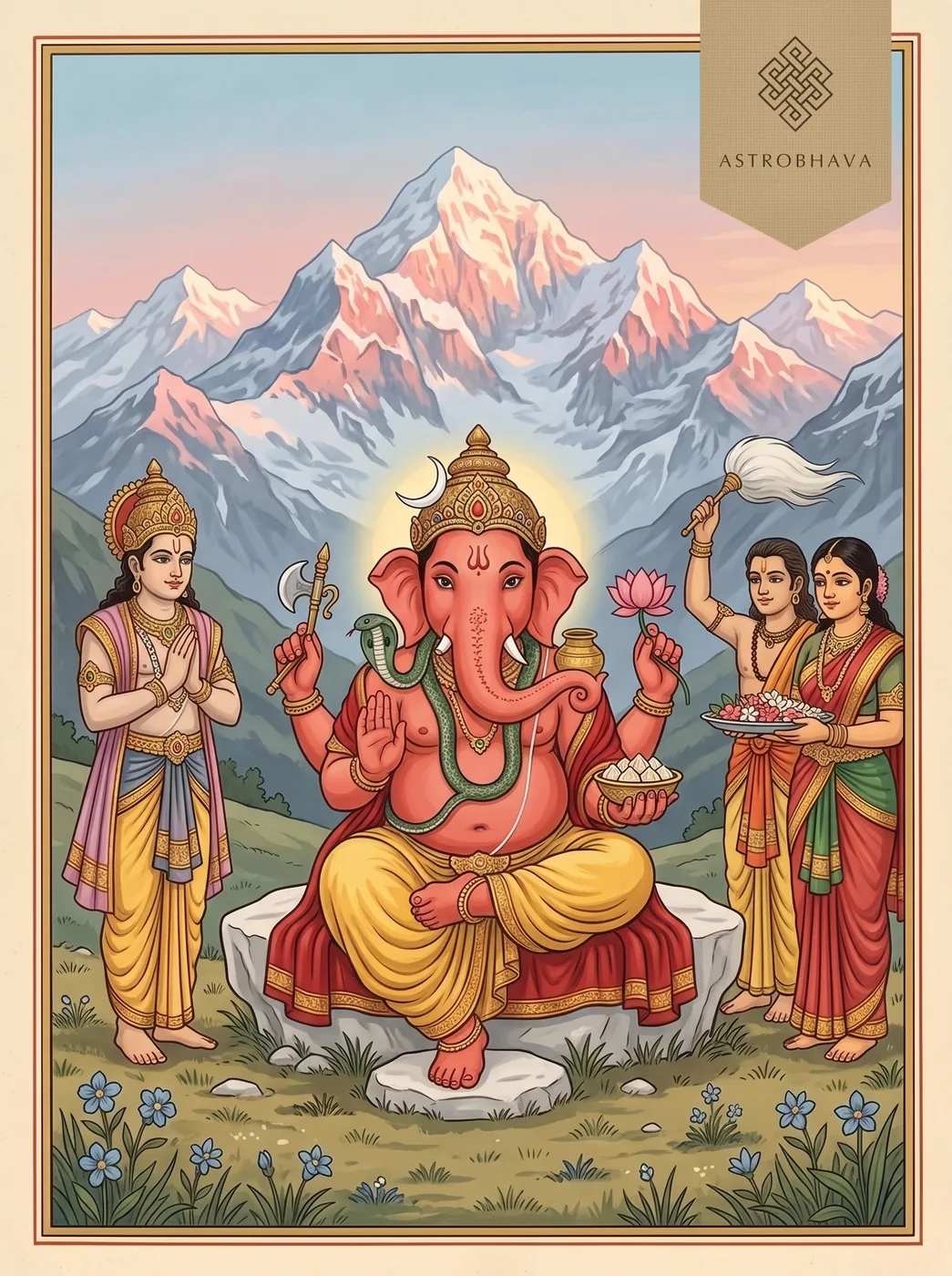
The verses supply a portrait of Shiva's household. Ganesha is Gauri's dear son and the son of Hara, Ishana and Virupaksha, a name of Shiva that the dictionaries explain as 'of unusual eyes', for the third eye on the forehead. He is called the brother of Gangeya. That name points to Skanda, whose birth the Mahabharata and Kalidasa's Kumarasambhava place in the waters of the Ganga, which carried Shiva's seed before the child was born. Verse 2 makes Ganesha the leader of Nandi and the other ganas, Shiva's attendants.
The ornaments match the images worshipped in temples: the serpent worn as a sacred thread, and the half-moon on the head that gives the Bhalachandra form its name. Verse 6 calls him a vatu, a young Vedic student, in line with the tradition, common in the south, that he is unmarried. Verse 4's pot of nectar lifted on the tip of the trunk recalls the jewelled pot that images of Mahaganapati hold in the trunk.
The mantra, in six scripts
- गजाननाय
- gajānanāya — to the elephant-faced one
- गाङ्गेयसहजाय
- gāṅgeyasahajāya — to the brother of Skanda, son of Ganga
- सदात्मने
- sadātmane — whose self is ever true
- गौरीप्रियतनूजाय
- gaurīpriyatanūjāya — to Gauri's dear son
- गणेशायास्तु
- gaṇeśāyāstu — to Ganesha, let there be
- मङ्गलम्
- maṅgalam — auspiciousness
Ganesha Mangalashtakam lyrics in full
Eight verses, each ending in 'astu mangalam', and a ninth verse on reading them. The printed closing line is given at the end.
All 10 verses, in Sanskrit, Tamil, Telugu, Kannada, Malayalam and English, each with its meaning. Choose a script:
Download the Ganesha Mangalashtakam PDFAll 10 verses with their meanings, in Sanskrit. Free to print and keep.
गजाननाय गाङ्गेयसहजाय सदात्मने ।
गौरीप्रियतनूजाय गणेशायास्तु मङ्गलम् ॥
கஜாநநாய காங்கேயஸஹஜாய ஸதாத்மநே ।
கௌரீப்ரியதநூஜாய கணேஶாயாஸ்து மங்கலம் ॥
గజాననాయ గాఙ్గేయసహజాయ సదాత్మనే ।
గౌరీప్రియతనూజాయ గణేశాయాస్తు మఙ్గలమ్ ॥
ಗಜಾನನಾಯ ಗಾಙ್ಗೇಯಸಹಜಾಯ ಸದಾತ್ಮನೇ ।
ಗೌರೀಪ್ರಿಯತನೂಜಾಯ ಗಣೇಶಾಯಾಸ್ತು ಮಙ್ಗಲಮ್ ॥
ഗജാനനായ ഗാങ്ഗേയസഹജായ സദാത്മനേ ।
ഗൌരീപ്രിയതനൂജായ ഗണേശായാസ്തു മങ്ഗലമ് ॥
gajānanāya gāṅgeyasahajāya sadātmane |
gaurīpriyatanūjāya gaṇeśāyāstu maṅgalam ||
May there be auspiciousness for Ganesha, the elephant-faced one, the brother of Skanda the son of Ganga, whose self is ever true, and the dear son of Gauri.
नागयज्ञोपवीताय नतविघ्नविनाशिने ।
नन्द्यादिगणनाथाय नायकायास्तु मङ्गलम् ॥
நாகயஜ்ஞோபவீதாய நதவிக்நவிநாஶிநே ।
நந்த்யாதிகணநாதாய நாயகாயாஸ்து மங்கலம் ॥
నాగయజ్ఞోపవీతాయ నతవిఘ్నవినాశినే ।
నన్ద్యాదిగణనాథాయ నాయకాయాస్తు మఙ్గలమ్ ॥
ನಾಗಯಜ್ಞೋಪವೀತಾಯ ನತವಿಘ್ನವಿನಾಶಿನೇ ।
ನನ್ದ್ಯಾದಿಗಣನಾಥಾಯ ನಾಯಕಾಯಾಸ್ತು ಮಙ್ಗಲಮ್ ॥
നാഗയജ്ഞോപവീതായ നതവിഘ്നവിനാശിനേ ।
നന്ദ്യാദിഗണനാഥായ നായകായാസ്തു മങ്ഗലമ് ॥
nāgayajñopavītāya natavighnavināśine |
nandyādigaṇanāthāya nāyakāyāstu maṅgalam ||
May there be auspiciousness for the Leader who wears a serpent as his sacred thread, who destroys the obstacles of those who bow to him, and who is lord of Nandi and the other attendants of Shiva.
इभवक्त्राय चेन्द्रादिवन्दिताय चिदात्मने ।
ईशानप्रेमपात्राय चेष्टदायास्तु मङ्गलम् ॥
இபவக்த்ராய சேந்த்ராதிவந்திதாய சிதாத்மநே ।
ஈஶாநப்ரேமபாத்ராய சேஷ்டதாயாஸ்து மங்கலம் ॥
ఇభవక్త్రాయ చేన్ద్రాదివన్దితాయ చిదాత్మనే ।
ఈశానప్రేమపాత్రాయ చేష్టదాయాస్తు మఙ్గలమ్ ॥
ಇಭವಕ್ತ್ರಾಯ ಚೇನ್ದ್ರಾದಿವನ್ದಿತಾಯ ಚಿದಾತ್ಮನೇ ।
ಈಶಾನಪ್ರೇಮಪಾತ್ರಾಯ ಚೇಷ್ಟದಾಯಾಸ್ತು ಮಙ್ಗಲಮ್ ॥
ഇഭവക്ത്രായ ചേന്ദ്രാദിവന്ദിതായ ചിദാത്മനേ ।
ഈശാനപ്രേമപാത്രായ ചേഷ്ടദായാസ്തു മങ്ഗലമ് ॥
ibhavaktrāya cendrādivanditāya cidātmane |
īśānapremapātrāya ceṣṭadāyāstu maṅgalam ||
May there be auspiciousness for the elephant-faced one, worshipped by Indra and the other gods, whose self is pure consciousness, the object of Shiva's love, the giver of what is wished for.
सुमुखाय सुशुण्डाग्रोक्षिप्तामृतघटाय च ।
सुरबृन्दनिषेव्याय सुखदायास्तु मङ्गलम् ॥
ஸுமுகாய ஸுஶுண்டாக்ரோக்ஷிப்தாம்ருதகடாய ச ।
ஸுரப்ருந்தநிஷேவ்யாய ஸுகதாயாஸ்து மங்கலம் ॥
సుముఖాయ సుశుణ్డాగ్రోక్షిప్తామృతఘటాయ చ ।
సురబృన్దనిషేవ్యాయ సుఖదాయాస్తు మఙ్గలమ్ ॥
ಸುಮುಖಾಯ ಸುಶುಣ್ಡಾಗ್ರೋಕ್ಷಿಪ್ತಾಮೃತಘಟಾಯ ಚ ।
ಸುರಬೃನ್ದನಿಷೇವ್ಯಾಯ ಸುಖದಾಯಾಸ್ತು ಮಙ್ಗಲಮ್ ॥
സുമുഖായ സുശുണ്ഡാഗ്രോക്ഷിപ്താമൃതഘടായ ച ।
സുരബൃന്ദനിഷേവ്യായ സുഖദായാസ്തു മങ്ഗലമ് ॥
sumukhāya suśuṇḍāgrokṣiptāmṛtaghaṭāya ca |
surabṛndaniṣevyāya sukhadāyāstu maṅgalam ||
May there be auspiciousness for the fair-faced one, who lifts a pot of nectar with the tip of his graceful trunk, who is served by the hosts of the gods, the giver of happiness.
चतुर्भुजाय चन्द्रार्धविलसन्मस्तकाय च ।
चरणावनतानर्थतारणायास्तु मङ्गलम् ॥
சதுர்புஜாய சந்த்ரார்தவிலஸந்மஸ்தகாய ச ।
சரணாவநதாநர்ததாரணாயாஸ்து மங்கலம் ॥
చతుర్భుజాయ చన్ద్రార్ధవిలసన్మస్తకాయ చ ।
చరణావనతానర్థతారణాయాస్తు మఙ్గలమ్ ॥
ಚತುರ್ಭುಜಾಯ ಚನ್ದ್ರಾರ್ಧವಿಲಸನ್ಮಸ್ತಕಾಯ ಚ ।
ಚರಣಾವನತಾನರ್ಥತಾರಣಾಯಾಸ್ತು ಮಙ್ಗಲಮ್ ॥
ചതുര്ഭുജായ ചന്ദ്രാര്ധവിലസന്മസ്തകായ ച ।
ചരണാവനതാനര്ഥതാരണായാസ്തു മങ്ഗലമ് ॥
caturbhujāya candrārdhavilasanmastakāya ca |
caraṇāvanatānarthatāraṇāyāstu maṅgalam ||
May there be auspiciousness for the four-armed one, whose head shines with the half-moon, who carries across from misfortune those who bow at his feet.
वक्रतुण्डाय वटवे वन्द्याय वरदाय च ।
विरूपाक्षसुतायास्तु विघ्ननाशाय मङ्गलम् ॥
வக்ரதுண்டாய வடவே வந்த்யாய வரதாய ச ।
விரூபாக்ஷஸுதாயாஸ்து விக்நநாஶாய மங்கலம் ॥
వక్రతుణ్డాయ వటవే వన్ద్యాయ వరదాయ చ ।
విరూపాక్షసుతాయాస్తు విఘ్ననాశాయ మఙ్గలమ్ ॥
ವಕ್ರತುಣ್ಡಾಯ ವಟವೇ ವನ್ದ್ಯಾಯ ವರದಾಯ ಚ ।
ವಿರೂಪಾಕ್ಷಸುತಾಯಾಸ್ತು ವಿಘ್ನನಾಶಾಯ ಮಙ್ಗಲಮ್ ॥
വക്രതുണ്ഡായ വടവേ വന്ദ്യായ വരദായ ച ।
വിരൂപാക്ഷസുതായാസ്തു വിഘ്നനാശായ മങ്ഗലമ് ॥
vakratuṇḍāya vaṭave vandyāya varadāya ca |
virūpākṣasutāyāstu vighnanāśāya maṅgalam ||
May there be auspiciousness for the one with the curved trunk, the young brahmachari, the one worthy of worship and the giver of boons; may there be auspiciousness for the son of Shiva, the destroyer of obstacles.
प्रमोदामोदरूपाय सिद्धिविज्ञानरूपिणे ।
प्रकृष्टपापनाशाय फलदायास्तु मङ्गलम् ॥
ப்ரமோதாமோதரூபாய ஸித்திவிஜ்ஞாநரூபிணே ।
ப்ரக்ருஷ்டபாபநாஶாய பலதாயாஸ்து மங்கலம் ॥
ప్రమోదామోదరూపాయ సిద్ధివిజ్ఞానరూపిణే ।
ప్రకృష్టపాపనాశాయ ఫలదాయాస్తు మఙ్గలమ్ ॥
ಪ್ರಮೋದಾಮೋದರೂಪಾಯ ಸಿದ್ಧಿವಿಜ್ಞಾನರೂಪಿಣೇ ।
ಪ್ರಕೃಷ್ಟಪಾಪನಾಶಾಯ ಫಲದಾಯಾಸ್ತು ಮಙ್ಗಲಮ್ ॥
പ്രമോദാമോദരൂപായ സിദ്ധിവിജ്ഞാനരൂപിണേ ।
പ്രകൃഷ്ടപാപനാശായ ഫലദായാസ്തു മങ്ഗലമ് ॥
pramodāmodarūpāya siddhivijñānarūpiṇe |
prakṛṣṭapāpanāśāya phaladāyāstu maṅgalam ||
May there be auspiciousness for the one whose form is joy and delight, whose form is accomplishment and wisdom, who destroys even the gravest sins, the giver of results.
मङ्गलं गणनाथाय मङ्गलं हरसूनवे ।
मङ्गलं विघ्नराजाय विघ्नहर्त्रेस्तु मङ्गलम् ॥
மங்கலம் கணநாதாய மங்கலம் ஹரஸூநவே ।
மங்கலம் விக்நராஜாய விக்நஹர்த்ரேஸ்து மங்கலம் ॥
మఙ్గలం గణనాథాయ మఙ్గలం హరసూనవే ।
మఙ్గలం విఘ్నరాజాయ విఘ్నహర్త్రేస్తు మఙ్గలమ్ ॥
ಮಙ್ಗಲಂ ಗಣನಾಥಾಯ ಮಙ್ಗಲಂ ಹರಸೂನವೇ ।
ಮಙ್ಗಲಂ ವಿಘ್ನರಾಜಾಯ ವಿಘ್ನಹರ್ತ್ರೇಸ್ತು ಮಙ್ಗಲಮ್ ॥
മങ്ഗലം ഗണനാഥായ മങ്ഗലം ഹരസൂനവേ ।
മങ്ഗലം വിഘ്നരാജായ വിഘ്നഹര്ത്രേസ്തു മങ്ഗലമ് ॥
maṅgalaṃ gaṇanāthāya maṅgalaṃ harasūnave |
maṅgalaṃ vighnarājāya vighnahartrestu maṅgalam ||
Auspiciousness to the lord of the ganas, auspiciousness to the son of Shiva, auspiciousness to the king over obstacles; may there be auspiciousness for the remover of obstacles.
श्लोकाष्टकमिदं पुण्यं मङ्गलप्रदमादरात् ।
पठितव्यं प्रयत्नेन सर्वविघ्ननिवृत्तये ॥
ஶ்லோகாஷ்டகமிதம் புண்யம் மங்கலப்ரதமாதராத் ।
படிதவ்யம் ப்ரயத்நேந ஸர்வவிக்நநிவ்ருத்தயே ॥
శ్లోకాష్టకమిదం పుణ్యం మఙ్గలప్రదమాదరాత్ ।
పఠితవ్యం ప్రయత్నేన సర్వవిఘ్ననివృత్తయే ॥
ಶ್ಲೋಕಾಷ್ಟಕಮಿದಂ ಪುಣ್ಯಂ ಮಙ್ಗಲಪ್ರದಮಾದರಾತ್ ।
ಪಠಿತವ್ಯಂ ಪ್ರಯತ್ನೇನ ಸರ್ವವಿಘ್ನನಿವೃತ್ತಯೇ ॥
ശ്ലോകാഷ്ടകമിദം പുണ്യം മങ്ഗലപ്രദമാദരാത് ।
പഠിതവ്യം പ്രയത്നേന സര്വവിഘ്നനിവൃത്തയേ ॥
ślokāṣṭakamidaṃ puṇyaṃ maṅgalapradamādarāt |
paṭhitavyaṃ prayatnena sarvavighnanivṛttaye ||
The verse says this holy set of eight verses bestows auspiciousness, and should be recited with reverence and care for the removal of all obstacles.
इति श्री गणपति मङ्गलाष्टकम् ।
இதி ஶ்ரீ கணபதி மங்கலாஷ்டகம் ।
ఇతి శ్రీ గణపతి మఙ్గలాష్టకమ్ ।
ಇತಿ ಶ್ರೀ ಗಣಪತಿ ಮಙ್ಗಲಾಷ್ಟಕಮ್ ।
ഇതി ശ്രീ ഗണപതി മങ്ഗലാഷ്ടകമ് ।
iti śrī gaṇapati maṅgalāṣṭakam |
Thus ends the Shri Ganapati Mangalashtakam.
The syllable people get wrong
In verse 8, vighnahartrestu (vighnahartre 'stu) is vighnahartre, 'to the remover of obstacles', fused with astu, 'let there be'; say vigh-na-har-tres-tu as one word, keeping the r before the t, the breathy gh, and the long e, rather than splitting it into 'vighnaharthre astu'.
When the Ganesha Mangalashtakam is chanted
Weekday. Tuesday
Questions
Have your chart read before you decide
Chanting is yours to do, and free. But which deity your situation calls for — and whether a mantra alone is the right response — depends on your chart. Sometimes it is; sometimes it is not.
- Over 30 years in the Guru–Sishya Parampara, from the age of five
- He reads every chart himself — 60 minutes, one to one, never delegated
- Charts are read only between sunrise and sunset, following tradition
