Ganesha Pancharatnam
मुदाकरात्तमोदकं सदा विमुक्तिसाधकं कलाधरावतंसकं विलासिलोकरक्षकम् । अनायकैकनायकं विनाशितेभदैत्यकं नताशुभाशुनाशकं नमामि तं विनायकम् ॥Also known as Mudakaratta Modakam
In Devanagari, Tamil, Telugu, Kannada, Malayalam and English — with the meaning of every word, and the one syllable most people pronounce wrongly.
What the Ganesha Pancharatnam is
The Ganesha Pancharatnam, the 'five jewels' of Ganesha, is a short Sanskrit hymn whose closing colophon names Adi Shankaracharya as its author. Its five main verses are set in the pancha-chamara metre: four quarters of sixteen syllables each, alternating short and long, which gives the lines their quick, even step and their inner rhymes. Each verse is a string of epithets ending in a verb of devotion, and the verb deepens as the hymn goes on: 'I bow' in verse 1, 'I take refuge' in verse 2, 'I salute' in verse 3, 'I worship' in verse 4 and 'I meditate constantly' in verse 5. The portrait moves the same way, from the outward figure holding a modaka and wearing the crescent moon, to the lord of gods, treasures and ganas, to the one-tusked presence dwelling in the hearts of yogis. A sixth verse, the phala shruti, names the hymn Maha Ganesha Pancharatnam.
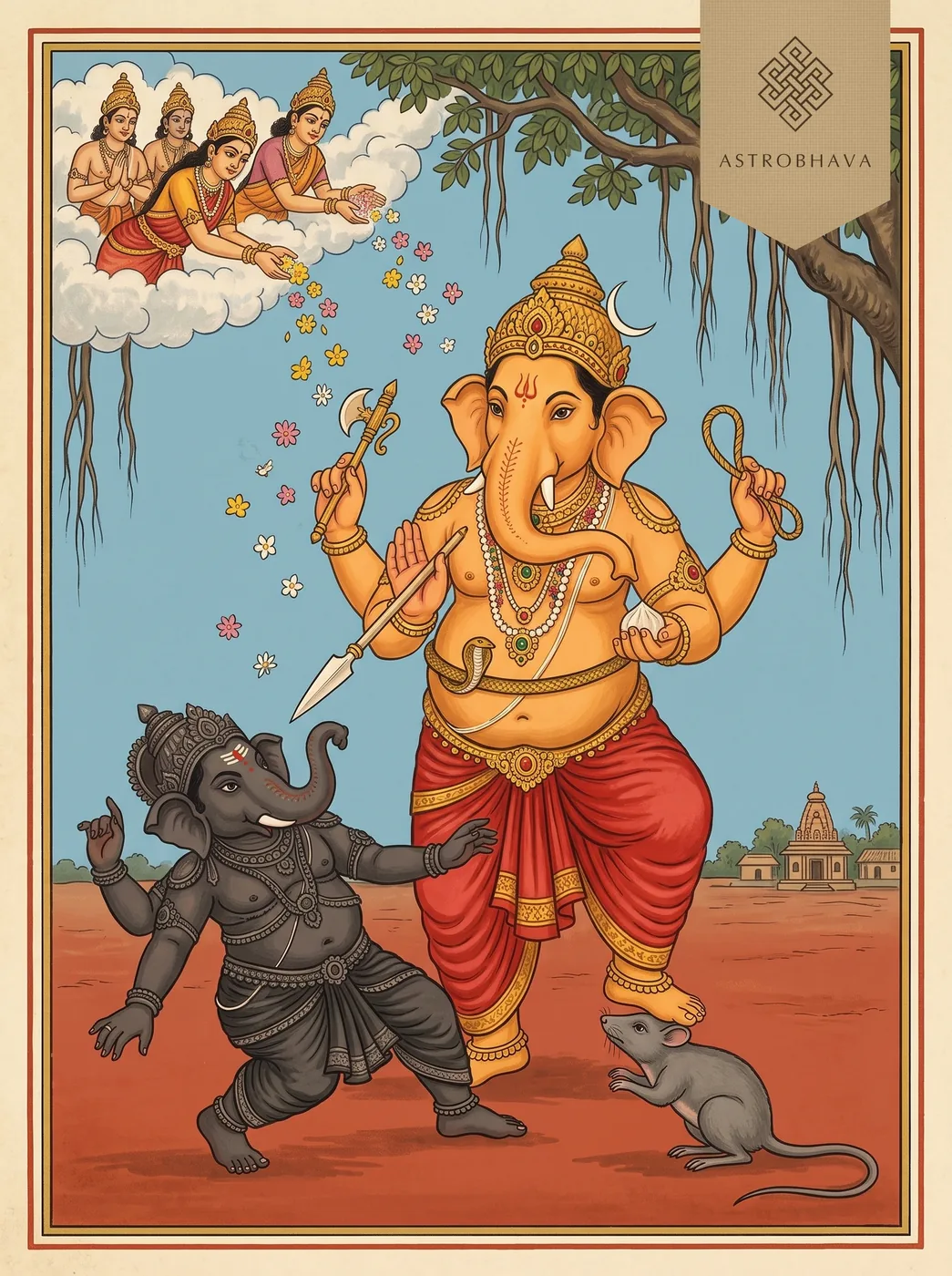
The elephant-faced demon behind verse 1
No account survives of the day Shankara composed these verses; the tradition preserves only his name in the colophon. The hymn does, however, point to a story of its own. Verse 1 calls Ganesha vinashitebhadaityaka, the one who destroyed the elephant-demon, and verse 3 repeats the image as nirastadaityakunjara, the one who threw down the demon-elephant. That demon is Gajamukhasura. According to the account carried in the Mudgala Purana, he won near-invulnerability through austerities offered to Shiva and turned that strength against the three worlds, and Shiva declared that only Ganesha could subdue him. Ganesha snapped off one of his own tusks and drove it at the demon as a lance. Defeated, Gajamukhasura shrank into a mouse to slip away; Ganesha, seeing through the disguise, did not strike again but took the mouse as his mount. Temple tradition in Tamil Nadu sets the battle at Thiruchengattankudi near Thiruvarur, where the demon's blood is said to have reddened the ground, giving the village its name, and where Shiva is worshipped as Ganapatheeswarar, the lord whom Ganesha himself worshipped afterwards. The same temple keeps the image of Vatapi Ganapathi brought from Badami by the Pallava general Paranjothi.
The mantra, in six scripts
- मुदाकरात्तमोदकं
- mudākarāttamodakaṃ — joyfully holding a modaka in hand
- सदा
- sadā — always
- विमुक्तिसाधकं
- vimuktisādhakaṃ — bringing about liberation
- कलाधरावतंसकं
- kalādharāvataṃsakaṃ — crowned with the crescent moon
- विलासिलोकरक्षकम्
- vilāsilokarakṣakam — protector of the world's people
- अनायकैकनायकं
- anāyakaikanāyakaṃ — sole leader of the leaderless
- विनाशितेभदैत्यकं
- vināśitebhadaityakaṃ — slayer of the elephant-demon
- नताशुभाशुनाशकं
- natāśubhāśunāśakaṃ — swiftly ending the ills of those who bow
- नमामि
- namāmi — I bow
- तं
- taṃ — to that
- विनायकम्
- vināyakam — Vinayaka
Ganesha Pancharatnam lyrics in full
Five verses in the pancha-chamara metre, followed by the verse that names the hymn and its fruits.
All 6 verses, in Sanskrit, Tamil, Telugu, Kannada, Malayalam and English, each with its meaning. Choose a script:
Download the Ganesha Pancharatnam PDFAll 6 verses with their meanings, in Sanskrit. Free to print and keep.
मुदाकरात्तमोदकं सदा विमुक्तिसाधकं कलाधरावतंसकं विलासिलोकरक्षकम् ।
अनायकैकनायकं विनाशितेभदैत्यकं नताशुभाशुनाशकं नमामि तं विनायकम् ॥
முதாகராத்தமோதகம் ஸதா விமுக்திஸாதகம் கலாதராவதம்ஸகம் விலாஸிலோகரக்ஷகம் ।
அநாயகைகநாயகம் விநாஶிதேபதைத்யகம் நதாஶுபாஶுநாஶகம் நமாமி தம் விநாயகம் ॥
ముదాకరాత్తమోదకం సదా విముక్తిసాధకం కలాధరావతంసకం విలాసిలోకరక్షకమ్ ।
అనాయకైకనాయకం వినాశితేభదైత్యకం నతాశుభాశునాశకం నమామి తం వినాయకమ్ ॥
ಮುದಾಕರಾತ್ತಮೋದಕಂ ಸದಾ ವಿಮುಕ್ತಿಸಾಧಕಂ ಕಲಾಧರಾವತಂಸಕಂ ವಿಲಾಸಿಲೋಕರಕ್ಷಕಮ್ ।
ಅನಾಯಕೈಕನಾಯಕಂ ವಿನಾಶಿತೇಭದೈತ್ಯಕಂ ನತಾಶುಭಾಶುನಾಶಕಂ ನಮಾಮಿ ತಂ ವಿನಾಯಕಮ್ ॥
മുദാകരാത്തമോദകം സദാ വിമുക്തിസാധകം കലാധരാവതംസകം വിലാസിലോകരക്ഷകമ് ।
അനായകൈകനായകം വിനാശിതേഭദൈത്യകം നതാശുഭാശുനാശകം നമാമി തം വിനായകമ് ॥
mudākarāttamodakaṃ sadā vimuktisādhakaṃ kalādharāvataṃsakaṃ vilāsilokarakṣakam |
anāyakaikanāyakaṃ vināśitebhadaityakaṃ natāśubhāśunāśakaṃ namāmi taṃ vināyakam ||
He joyfully holds sweet modakas in his hand, ever brings about liberation, wears the crescent moon as an ornament and protects the people of the world. He is the one leader of those who have no leader, the slayer of the elephant-demon, and he quickly destroys the misfortunes of those who bow to him; I bow to that Vinayaka.
नतेतरातिभीकरं नवोदितार्कभास्वरं नमत्सुरारिनिर्जरं नताधिकापदुद्धरम् ।
सुरेश्वरं निधीश्वरं गजेश्वरं गणेश्वरं महेश्वरं तमाश्रये परात्परं निरन्तरम् ॥
நதேதராதிபீகரம் நவோதிதார்கபாஸ்வரம் நமத்ஸுராரிநிர்ஜரம் நதாதிகாபதுத்தரம் ।
ஸுரேஶ்வரம் நிதீஶ்வரம் கஜேஶ்வரம் கணேஶ்வரம் மஹேஶ்வரம் தமாஶ்ரயே பராத்பரம் நிரந்தரம் ॥
నతేతరాతిభీకరం నవోదితార్కభాస్వరం నమత్సురారినిర్జరం నతాధికాపదుద్ధరమ్ ।
సురేశ్వరం నిధీశ్వరం గజేశ్వరం గణేశ్వరం మహేశ్వరం తమాశ్రయే పరాత్పరం నిరన్తరమ్ ॥
ನತೇತರಾತಿಭೀಕರಂ ನವೋದಿತಾರ್ಕಭಾಸ್ವರಂ ನಮತ್ಸುರಾರಿನಿರ್ಜರಂ ನತಾಧಿಕಾಪದುದ್ಧರಮ್ ।
ಸುರೇಶ್ವರಂ ನಿಧೀಶ್ವರಂ ಗಜೇಶ್ವರಂ ಗಣೇಶ್ವರಂ ಮಹೇಶ್ವರಂ ತಮಾಶ್ರಯೇ ಪರಾತ್ಪರಂ ನಿರನ್ತರಮ್ ॥
നതേതരാതിഭീകരം നവോദിതാര്കഭാസ്വരം നമത്സുരാരിനിര്ജരം നതാധികാപദുദ്ധരമ് ।
സുരേശ്വരം നിധീശ്വരം ഗജേശ്വരം ഗണേശ്വരം മഹേശ്വരം തമാശ്രയേ പരാത്പരം നിരന്തരമ് ॥
natetarātibhīkaraṃ navoditārkabhāsvaraṃ namatsurārinirjaraṃ natādhikāpaduddharam |
sureśvaraṃ nidhīśvaraṃ gajeśvaraṃ gaṇeśvaraṃ maheśvaraṃ tamāśraye parātparaṃ nirantaram ||
He is fearsome to those who will not bow, bright as the newly risen sun, honoured by gods and demons alike, and he lifts his devotees out of great troubles. He is lord of the gods, lord of treasures, lord of elephants, lord of the ganas and the great lord; I always take refuge in him, higher than the highest.
समस्तलोकशङ्करं निरस्तदैत्यकुञ्जरं दरेतरोदरं वरं वरेभवक्त्रमक्षरम् ।
कृपाकरं क्षमाकरं मुदाकरं यशस्करं मनस्करं नमस्कृतां नमस्करोमि भास्वरम् ॥
ஸமஸ்தலோகஶங்கரம் நிரஸ்ததைத்யகுஞ்ஜரம் தரேதரோதரம் வரம் வரேபவக்த்ரமக்ஷரம் ।
க்ருபாகரம் க்ஷமாகரம் முதாகரம் யஶஸ்கரம் மநஸ்கரம் நமஸ்க்ருதாம் நமஸ்கரோமி பாஸ்வரம் ॥
సమస్తలోకశఙ్కరం నిరస్తదైత్యకుఞ్జరం దరేతరోదరం వరం వరేభవక్త్రమక్షరమ్ ।
కృపాకరం క్షమాకరం ముదాకరం యశస్కరం మనస్కరం నమస్కృతాం నమస్కరోమి భాస్వరమ్ ॥
ಸಮಸ್ತಲೋಕಶಙ್ಕರಂ ನಿರಸ್ತದೈತ್ಯಕುಞ್ಜರಂ ದರೇತರೋದರಂ ವರಂ ವರೇಭವಕ್ತ್ರಮಕ್ಷರಮ್ ।
ಕೃಪಾಕರಂ ಕ್ಷಮಾಕರಂ ಮುದಾಕರಂ ಯಶಸ್ಕರಂ ಮನಸ್ಕರಂ ನಮಸ್ಕೃತಾಂ ನಮಸ್ಕರೋಮಿ ಭಾಸ್ವರಮ್ ॥
സമസ്തലോകശങ്കരം നിരസ്തദൈത്യകുഞ്ജരം ദരേതരോദരം വരം വരേഭവക്ത്രമക്ഷരമ് ।
കൃപാകരം ക്ഷമാകരം മുദാകരം യശസ്കരം മനസ്കരം നമസ്കൃതാം നമസ്കരോമി ഭാസ്വരമ് ॥
samastalokaśaṅkaraṃ nirastadaityakuñjaraṃ daretarodaraṃ varaṃ varebhavaktramakṣaram |
kṛpākaraṃ kṣamākaraṃ mudākaraṃ yaśaskaraṃ manaskaraṃ namaskṛtāṃ namaskaromi bhāsvaram ||
He brings good to all the worlds and drove off the elephant-like demon; he has a large belly, is the best, has the face of a noble elephant and is imperishable. He is a mine of compassion, patience and joy, gives fame, and gives a good mind to those who bow to him; I bow to that shining one.
अकिञ्चनार्तिमार्जनं चिरन्तनोक्तिभाजनं पुरारिपूर्वनन्दनं सुरारिगर्वचर्वणम् ।
प्रपञ्चनाशभीषणं धनञ्जयादिभूषणं कपोलदानवारणं भजे पुराणवारणम् ॥
அகிஞ்சநார்திமார்ஜநம் சிரந்தநோக்திபாஜநம் புராரிபூர்வநந்தநம் ஸுராரிகர்வசர்வணம் ।
ப்ரபஞ்சநாஶபீஷணம் தநஞ்ஜயாதிபூஷணம் கபோலதாநவாரணம் பஜே புராணவாரணம் ॥
అకిఞ్చనార్తిమార్జనం చిరన్తనోక్తిభాజనం పురారిపూర్వనన్దనం సురారిగర్వచర్వణమ్ ।
ప్రపఞ్చనాశభీషణం ధనఞ్జయాదిభూషణం కపోలదానవారణం భజే పురాణవారణమ్ ॥
ಅಕಿಞ್ಚನಾರ್ತಿಮಾರ್ಜನಂ ಚಿರನ್ತನೋಕ್ತಿಭಾಜನಂ ಪುರಾರಿಪೂರ್ವನನ್ದನಂ ಸುರಾರಿಗರ್ವಚರ್ವಣಮ್ ।
ಪ್ರಪಞ್ಚನಾಶಭೀಷಣಂ ಧನಞ್ಜಯಾದಿಭೂಷಣಂ ಕಪೋಲದಾನವಾರಣಂ ಭಜೇ ಪುರಾಣವಾರಣಮ್ ॥
അകിഞ്ചനാര്തിമാര്ജനം ചിരന്തനോക്തിഭാജനം പുരാരിപൂര്വനന്ദനം സുരാരിഗര്വചര്വണമ് ।
പ്രപഞ്ചനാശഭീഷണം ധനഞ്ജയാദിഭൂഷണം കപോലദാനവാരണം ഭജേ പുരാണവാരണമ് ॥
akiñcanārtimārjanaṃ cirantanoktibhājanaṃ purāripūrvanandanaṃ surārigarvacarvaṇam |
prapañcanāśabhīṣaṇaṃ dhanañjayādibhūṣaṇaṃ kapoladānavāraṇaṃ bhaje purāṇavāraṇam ||
He wipes away the pain of the destitute, is the vessel of the ancient sacred words, the elder son of Shiva, the destroyer of the cities, and he crushes the pride of the enemies of the gods. He is terrible at the dissolution of the world, adorned with Dhananjaya and other serpents, an elephant with ichor on his cheeks; I worship that ancient elephant.
नितान्तकान्तदन्तकान्तिमन्तकान्तकात्मजं अचिन्त्यरूपमन्तहीनमन्तरायकृन्तनम् ।
हृदन्तरे निरन्तरं वसन्तमेव योगिनां तमेकदन्तमेव तं विचिन्तयामि सन्ततम् ॥
நிதாந்தகாந்ததந்தகாந்திமந்தகாந்தகாத்மஜம் அசிந்த்யரூபமந்தஹீநமந்தராயக்ருந்தநம் ।
ஹ்ருதந்தரே நிரந்தரம் வஸந்தமேவ யோகிநாம் தமேகதந்தமேவ தம் விசிந்தயாமி ஸந்ததம் ॥
నితాన్తకాన్తదన్తకాన్తిమన్తకాన్తకాత్మజం అచిన్త్యరూపమన్తహీనమన్తరాయకృన్తనమ్ ।
హృదన్తరే నిరన్తరం వసన్తమేవ యోగినాం తమేకదన్తమేవ తం విచిన్తయామి సన్తతమ్ ॥
ನಿತಾನ್ತಕಾನ್ತದನ್ತಕಾನ್ತಿಮನ್ತಕಾನ್ತಕಾತ್ಮಜಂ ಅಚಿನ್ತ್ಯರೂಪಮನ್ತಹೀನಮನ್ತರಾಯಕೃನ್ತನಮ್ ।
ಹೃದನ್ತರೇ ನಿರನ್ತರಂ ವಸನ್ತಮೇವ ಯೋಗಿನಾಂ ತಮೇಕದನ್ತಮೇವ ತಂ ವಿಚಿನ್ತಯಾಮಿ ಸನ್ತತಮ್ ॥
നിതാന്തകാന്തദന്തകാന്തിമന്തകാന്തകാത്മജം അചിന്ത്യരൂപമന്തഹീനമന്തരായകൃന്തനമ് ।
ഹൃദന്തരേ നിരന്തരം വസന്തമേവ യോഗിനാം തമേകദന്തമേവ തം വിചിന്തയാമി സന്തതമ് ॥
nitāntakāntadantakāntimantakāntakātmajaṃ acintyarūpamantahīnamantarāyakṛntanam |
hṛdantare nirantaraṃ vasantameva yogināṃ tamekadantameva taṃ vicintayāmi santatam ||
He has a tusk of surpassing beauty and is the son of Shiva, the ender of Death; his form is beyond thought, he has no end, and he cuts away obstacles. He dwells ever within the hearts of yogis; on him alone, the one-tusked, I meditate constantly.
महागणेशपञ्चरत्नमादरेण योऽन्वहं प्रजल्पति प्रभातके हृदि स्मरन् गणेश्वरम् ।
अरोगतामदोषतां सुसाहितीं सुपुत्रतां समाहितायुरष्टभूतिमभ्युपैति सोऽचिरात् ॥
மஹாகணேஶபஞ்சரத்நமாதரேண யோந்வஹம் ப்ரஜல்பதி ப்ரபாதகே ஹ்ருதி ஸ்மரந் கணேஶ்வரம் ।
அரோகதாமதோஷதாம் ஸுஸாஹிதீம் ஸுபுத்ரதாம் ஸமாஹிதாயுரஷ்டபூதிமப்யுபைதி ஸோசிராத் ॥
మహాగణేశపఞ్చరత్నమాదరేణ యోఽన్వహం ప్రజల్పతి ప్రభాతకే హృది స్మరన్ గణేశ్వరమ్ ।
అరోగతామదోషతాం సుసాహితీం సుపుత్రతాం సమాహితాయురష్టభూతిమభ్యుపైతి సోఽచిరాత్ ॥
ಮಹಾಗಣೇಶಪಞ್ಚರತ್ನಮಾದರೇಣ ಯೋಽನ್ವಹಂ ಪ್ರಜಲ್ಪತಿ ಪ್ರಭಾತಕೇ ಹೃದಿ ಸ್ಮರನ್ ಗಣೇಶ್ವರಮ್ ।
ಅರೋಗತಾಮದೋಷತಾಂ ಸುಸಾಹಿತೀಂ ಸುಪುತ್ರತಾಂ ಸಮಾಹಿತಾಯುರಷ್ಟಭೂತಿಮಭ್ಯುಪೈತಿ ಸೋಽಚಿರಾತ್ ॥
മഹാഗണേശപഞ്ചരത്നമാദരേണ യോഽന്വഹം പ്രജല്പതി പ്രഭാതകേ ഹൃദി സ്മരന് ഗണേശ്വരമ് ।
അരോഗതാമദോഷതാം സുസാഹിതീം സുപുത്രതാം സമാഹിതായുരഷ്ടഭൂതിമഭ്യുപൈതി സോഽചിരാത് ॥
mahāgaṇeśapañcaratnamādareṇa yo'nvahaṃ prajalpati prabhātake hṛdi smaran gaṇeśvaram |
arogatāmadoṣatāṃ susāhitīṃ suputratāṃ samāhitāyuraṣṭabhūtimabhyupaiti so'cirāt ||
The verse says that whoever recites these five jewels of Maha Ganesha with reverence every day at dawn, holding Ganesha in the heart, soon gains health, freedom from faults, skill in learning and speech, good children, a long and settled life and the eight kinds of prosperity.
The syllable people get wrong
The opening word mudākarāttamodakaṃ is often sung as 'muda-karatha modakam', but it is mudā kara-ātta modakaṃ, 'with joy, the modaka taken in the hand'. Say moo-DAA-ka-RAAT-ta, with a doubled, unaspirated tt and no 'th' sound.
When the Ganesha Pancharatnam is chanted
Weekday. Tuesday
Festival. Vinayaka Chaturthi
Questions
Have your chart read before you decide
Chanting is yours to do, and free. But which deity your situation calls for — and whether a mantra alone is the right response — depends on your chart. Sometimes it is; sometimes it is not.
- Over 30 years in the Guru–Sishya Parampara, from the age of five
- He reads every chart himself — 60 minutes, one to one, never delegated
- Charts are read only between sunrise and sunset, following tradition
Related
Ganapathi Mula Mantra
The foundational mantra. Chanted at the start of any undertaking.
Bala Ganapathi Mantra
The child form. For children's wellbeing and early education.
Taruna Ganapathi Mantra
The youthful form. For vigour at the start of a venture.
Ganapathi Homa
The fire ritual, performed for you and telecast live.