Govardhan Aarti
श्री गोवर्धन महाराज, ओ महाराज, तेरे माथे मुकुट विराज रहेओ ॥Also known as Giriraj Maharaj Aarti
In Devanagari, Tamil, Telugu, Kannada, Malayalam and English — with the meaning of every word, and the one syllable most people pronounce wrongly.
 The Rajagopala Homam, performed for youBook →
What the Govardhan Aarti is
The Govardhan Aarti, printed as Shri Govardhan Maharaj Aarti, is the lamp-song of Braj addressed to Govardhan hill itself, hailed as Giriraj, king of mountains, and worshipped as a living form of Krishna. It is an anonymous folk aarti in Braj speech. Its frame is one image held throughout: a crown shining on the hill's brow. The refrain greets the hill twice as Maharaj, each of the five stanzas closes on that same crown line, and singers return to the refrain after every stanza. The stanzas follow a visit to the hill. First come the offerings placed on it, betel leaf, flowers and a poured stream of milk; next, the seven-kos circuit walked around it, with Chakleshwar as the halt; then the dressed hill, with a necklace at the throat, a diamond and ruby at the chin, earrings, and the grand sight of the whole. The last stanza turns to Krishna as the one who held the mountain up and asks him to carry the devotee across.
The first offering made to the hill
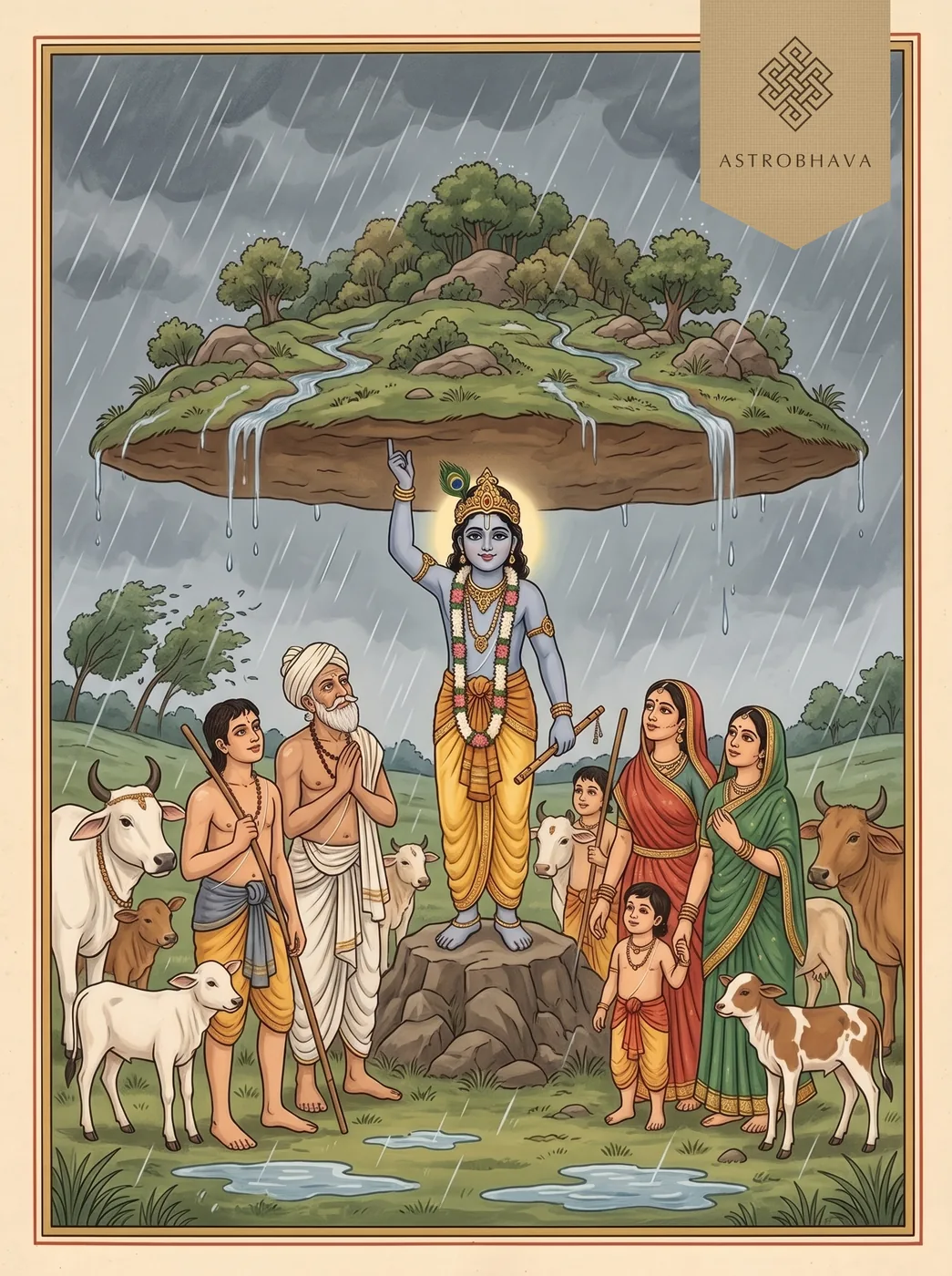
The aarti's offerings echo a scene the Bhagavata Purana sets before the storm. In the twenty-fourth chapter of its tenth book, the young Krishna asks Nanda why the cowherds prepare a yearly sacrifice for Indra, and argues that their living comes from the forest, the cows and the hill where the herds graze. He asks that the grain and dishes gathered for Indra be offered instead to the cows, the brahmanas and Govardhan. The cowherds cook the feast, feed the priests, give grass to the cattle and then walk around the hill with their herds, the women following in ox-carts. Krishna takes on a vast form, declares that he is the mountain, eats what is offered, and bows with everyone to that form. Only in the next chapter does Indra send his rain; Krishna lifts the hill in one hand, as easily, the text says, as a child holds up a mushroom, and shelters Vraja beneath it for seven days. The aarti keeps both halves of the tale: its opening stanzas repeat the offering and the circuit, and its final stanza names the holder of the mountain. In Braj today pilgrims walk the path of about 21 kilometres, some pouring milk from a pierced pot as they go, and at Jatipura a great rock of the hill is bathed in milk and dressed afresh through the day.
The mantra, in six scripts
- श्री
- śrī — revered
- गोवर्धन
- govardhana — Govardhan hill
- महाराज
- mahārāja — great king
- ओ
- o — O
- महाराज
- mahārāja — great king
- तेरे
- tere — your
- माथे
- māthe — on the brow
- मुकुट
- mukuṭa — crown
- विराज
- virāja — shining, enthroned
- रहेओ
- raheo — remains, is
Govardhan Aarti lyrics in full
The refrain and five stanzas, each stanza ending on the line of the shining crown; the refrain is sung again after every stanza.
All 6 verses, in Hindi, Tamil, Telugu, Kannada, Malayalam and English, each with its meaning. Choose a script:
Download the Govardhan Aarti PDFAll 6 verses with their meanings, in Hindi. Free to print and keep.
श्री गोवर्धन महाराज, ओ महाराज,
तेरे माथे मुकुट विराज रहेओ ॥
ஶ்ரீ கோவர்தந மஹாராஜ, ஓ மஹாராஜ,
தேரே மாதே முகுட விராஜ ரஹேஓ ॥
శ్రీ గోవర్ధన మహారాజ, ఓ మహారాజ,
తేరే మాథే ముకుట విరాజ రహేఓ ॥
ಶ್ರೀ ಗೋವರ್ಧನ ಮಹಾರಾಜ, ಓ ಮಹಾರಾಜ,
ತೇರೇ ಮಾಥೇ ಮುಕುಟ ವಿರಾಜ ರಹೇಓ ॥
ശ്രീ ഗോവര്ധന മഹാരാജ, ഓ മഹാരാജ,
തേരേ മാഥേ മുകുട വിരാജ രഹേഓ ॥
śrī govardhana mahārāja, o mahārāja,
tere māthe mukuṭa virāja raheo ||
O revered Govardhan Maharaj, O great king, a crown shines upon your brow.
तोपे पान चढ़े तोपे फूल चढ़े,
तोपे चढ़े दूध की धार ।
तेरे माथे मुकुट विराज रहेओ ॥
தோபே பாந சடே தோபே பூல சடே,
தோபே சடே தூத கீ தார ।
தேரே மாதே முகுட விராஜ ரஹேஓ ॥
తోపే పాన చఢే తోపే ఫూల చఢే,
తోపే చఢే దూధ కీ ధార ।
తేరే మాథే ముకుట విరాజ రహేఓ ॥
ತೋಪೇ ಪಾನ ಚಢೇ ತೋಪೇ ಫೂಲ ಚಢೇ,
ತೋಪೇ ಚಢೇ ದೂಧ ಕೀ ಧಾರ ।
ತೇರೇ ಮಾಥೇ ಮುಕುಟ ವಿರಾಜ ರಹೇಓ ॥
തോപേ പാന ചഢേ തോപേ ഫൂല ചഢേ,
തോപേ ചഢേ ദൂധ കീ ധാര ।
തേരേ മാഥേ മുകുട വിരാജ രഹേഓ ॥
tope pāna caṛhe tope phūla caṛhe,
tope caṛhe dūdha kī dhāra |
tere māthe mukuṭa virāja raheo ||
Betel leaves are offered upon you, flowers are offered upon you, and a stream of milk is poured over you. A crown shines upon your brow.
तेरी सात कोस की परिकम्मा,
और चकलेश्वर विश्राम ।
तेरे माथे मुकुट विराज रहेओ ॥
தேரீ ஸாத கோஸ கீ பரிகம்மா,
ஔர சகலேஶ்வர விஶ்ராம ।
தேரே மாதே முகுட விராஜ ரஹேஓ ॥
తేరీ సాత కోస కీ పరికమ్మా,
ఔర చకలేశ్వర విశ్రామ ।
తేరే మాథే ముకుట విరాజ రహేఓ ॥
ತೇರೀ ಸಾತ ಕೋಸ ಕೀ ಪರಿಕಮ್ಮಾ,
ಔರ ಚಕಲೇಶ್ವರ ವಿಶ್ರಾಮ ।
ತೇರೇ ಮಾಥೇ ಮುಕುಟ ವಿರಾಜ ರಹೇಓ ॥
തേരീ സാത കോസ കീ പരികമ്മാ,
ഔര ചകലേശ്വര വിശ്രാമ ।
തേരേ മാഥേ മുകുട വിരാജ രഹേഓ ॥
terī sāta kosa kī parikammā,
aura cakaleśvara viśrāma |
tere māthe mukuṭa virāja raheo ||
Your circuit of walking worship runs seven kos, and Chakleshwar is the resting place on the way. A crown shines upon your brow.
तेरे गले में कण्ठा साज रहेओ,
ठोड़ी पे हीरा लाल ।
तेरे माथे मुकुट विराज रहेओ ॥
தேரே கலே மேம் கண்டா ஸாஜ ரஹேஓ,
டோடீ பே ஹீரா லால ।
தேரே மாதே முகுட விராஜ ரஹேஓ ॥
తేరే గలే మేం కణ్ఠా సాజ రహేఓ,
ఠోడీ పే హీరా లాల ।
తేరే మాథే ముకుట విరాజ రహేఓ ॥
ತೇರೇ ಗಲೇ ಮೇಂ ಕಣ್ಠಾ ಸಾಜ ರಹೇಓ,
ಠೋಡೀ ಪೇ ಹೀರಾ ಲಾಲ ।
ತೇರೇ ಮಾಥೇ ಮುಕುಟ ವಿರಾಜ ರಹೇಓ ॥
തേരേ ഗലേ മേം കണ്ഠാ സാജ രഹേഓ,
ഠോഡീ പേ ഹീരാ ലാല ।
തേരേ മാഥേ മുകുട വിരാജ രഹേഓ ॥
tere gale meṃ kaṇṭhā sāja raheo,
ṭhoṛī pe hīrā lāla |
tere māthe mukuṭa virāja raheo ||
A necklace adorns your throat, and a diamond and a ruby sit upon your chin. A crown shines upon your brow.
तेरे कानन कुण्डल चमक रहेओ,
तेरी झाँकी बनी विशाल ।
तेरे माथे मुकुट विराज रहेओ ॥
தேரே காநந குண்டல சமக ரஹேஓ,
தேரீ சாம்கீ பநீ விஶால ।
தேரே மாதே முகுட விராஜ ரஹேஓ ॥
తేరే కానన కుణ్డల చమక రహేఓ,
తేరీ ఝాఁకీ బనీ విశాల ।
తేరే మాథే ముకుట విరాజ రహేఓ ॥
ತೇರೇ ಕಾನನ ಕುಣ್ಡಲ ಚಮಕ ರಹೇಓ,
ತೇರೀ ಝಾಁಕೀ ಬನೀ ವಿಶಾಲ ।
ತೇರೇ ಮಾಥೇ ಮುಕುಟ ವಿರಾಜ ರಹೇಓ ॥
തേരേ കാനന കുണ്ഡല ചമക രഹേഓ,
തേരീ ഝാഁകീ ബനീ വിശാല ।
തേരേ മാഥേ മുകുട വിരാജ രഹേഓ ॥
tere kānana kuṇḍala camaka raheo,
terī jhāṃkī banī viśāla |
tere māthe mukuṭa virāja raheo ||
Earrings glitter in your ears, and the sight of your adorned form is vast and grand. A crown shines upon your brow.
गिरिराज धरण प्रभु तेरी शरण,
करो भक्त का बेड़ा पार ।
तेरे माथे मुकुट विराज रहेओ ॥
கிரிராஜ தரண ப்ரபு தேரீ ஶரண,
கரோ பக்த கா பேடா பார ।
தேரே மாதே முகுட விராஜ ரஹேஓ ॥
గిరిరాజ ధరణ ప్రభు తేరీ శరణ,
కరో భక్త కా బేడా పార ।
తేరే మాథే ముకుట విరాజ రహేఓ ॥
ಗಿರಿರಾಜ ಧರಣ ಪ್ರಭು ತೇರೀ ಶರಣ,
ಕರೋ ಭಕ್ತ ಕಾ ಬೇಡಾ ಪಾರ ।
ತೇರೇ ಮಾಥೇ ಮುಕುಟ ವಿರಾಜ ರಹೇಓ ॥
ഗിരിരാജ ധരണ പ്രഭു തേരീ ശരണ,
കരോ ഭക്ത കാ ബേഡാ പാര ।
തേരേ മാഥേ മുകുട വിരാജ രഹേഓ ॥
girirāja dharaṇa prabhu terī śaraṇa,
karo bhakta kā beṛā pāra |
tere māthe mukuṭa virāja raheo ||
O you who held up the king of mountains, I take refuge in you; carry your devotee's boat across to the far shore. A crown shines upon your brow.
The syllable people get wrong
रहेओ (raheo), the word that ends the crown line after every stanza, is three short syllables, ra-he-o, with the e said as in 'they'; it is the Braj form of 'rahyo' and is not sung as 'rahiyo' or 'raho'.
When the Govardhan Aarti is chanted
Weekday. Thursday
Festival. Govardhan Puja (Annakut), the day after Diwali
Questions
Have your chart read before you decide
Chanting is yours to do, and free. But which deity your situation calls for — and whether a mantra alone is the right response — depends on your chart. Sometimes it is; sometimes it is not.
- Over 30 years in the Guru–Sishya Parampara, from the age of five
- He reads every chart himself — 60 minutes, one to one, never delegated
- Charts are read only between sunrise and sunset, following tradition
