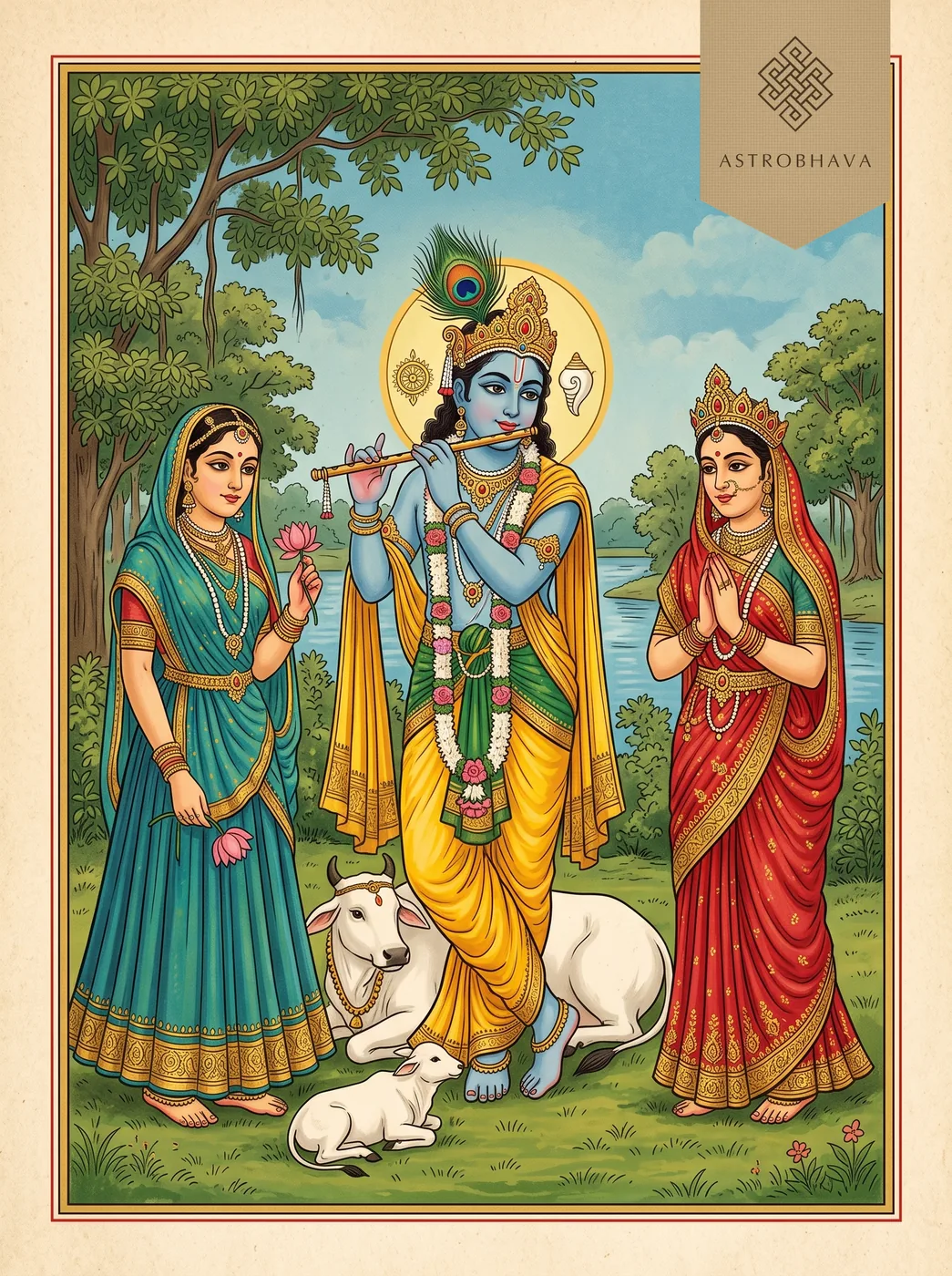
Achyutashtakam
अच्युतं केशवं रामनारायणं कृष्णदामोदरं वासुदेवं हरिम् । श्रीधरं माधवं गोपिकावल्लभं जानकीनायकं रामचन्द्रं भजे ॥Also known as Achyutam Keshavam
In Devanagari, Tamil, Telugu, Kannada, Malayalam and English — with the meaning of every word, and the one syllable most people pronounce wrongly.
What the Achyutashtakam is
The Achyutashtakam, sung by its opening words Achyutam Keshavam, is addressed to Vishnu as Achyuta, 'the one who does not fall' from his own nature, and it moves freely between two of his descents, Rama and Krishna. Tradition attributes it to Adi Shankaracharya; the colophon in the 1910 Vani Vilas edition names Shankara Bhagavatpada, disciple of Govinda Bhagavatpada, though the attribution cannot be proved historically. It has eight verses and a ninth phala verse, all in Sragvini, a twelve-syllable metre made of four long-short-long units, which is why it falls so easily into song. Each verse changes its grammar. Verse 1 lists names ending in bhaje, 'I worship'. Verse 2 holds them in the mind (sandadhe). Verse 3 offers salutation, namah, verse 4 calls out name after name, verses 5 and 6 ask Rama and the child Gopala for protection, and verses 7 and 8 describe his form, from the lightning-bright garment to the tinkling bells.
Two epics folded into eight verses
No account survives of when or where the Achyutashtakam was composed, and the traditional biographies of Shankara tell no story about it. What the hymn carries instead is a compressed retelling of two epics. Verse 5 follows Rama into exile: the Dandaka forest, Lakshmana at his side, the monkey army, and the sage Agastya. In the Ramayana, Agastya lived with his wife Lopamudra on the southern slopes of the Vindhyas, received Rama at his hermitage and gave him a divine bow and arrows; tradition also credits Agastya with the Aditya Hridayam, the hymn to the Sun he taught Rama before the battle with Ravana. Verse 6 moves to Krishna's childhood in Vraja and names the demons sent against him: Putana, the bull Arishta, and the horse Keshi, whom Krishna choked by thrusting his arm into its mouth, the deed behind the name Keshava. The verse also counts Dhenuka, the donkey-demon of the palm forest, among the boy's victims, although the Harivamsa and the Vishnu Purana give that killing to his elder brother Balarama. Verse 4's 'protector of Draupadi' recalls the dice-game scene of the Mahabharata, where her garment kept extending. Following Franklin Edgerton's work on the Critical Edition, scholars regard Krishna's part in that rescue as a later addition, but it is the version the hymn assumes.
The mantra, in six scripts
- अच्युतं
- acyutaṃ — Achyuta, the unfallen one
- केशवं
- keśavaṃ — Keshava
- रामनारायणं
- rāmanārāyaṇaṃ — Rama, Narayana
- कृष्णदामोदरं
- kṛṣṇadāmodaraṃ — Krishna, Damodara
- वासुदेवं
- vāsudevaṃ — Vasudeva
- हरिम्
- harim — Hari
- श्रीधरं
- śrīdharaṃ — Shridhara, bearer of Lakshmi
- माधवं
- mādhavaṃ — Madhava
- गोपिकावल्लभं
- gopikāvallabhaṃ — beloved of the gopis
- जानकीनायकं
- jānakīnāyakaṃ — lord of Janaki (Sita)
- रामचन्द्रं
- rāmacandraṃ — Ramachandra
- भजे
- bhaje — I worship
Achyutam Keshavam lyrics in full
All 9 verses, in Sanskrit, Tamil, Telugu, Kannada, Malayalam and English, each with its meaning. Choose a script:
Download the Achyutam Keshavam PDFAll 9 verses with their meanings, in Sanskrit. Free to print and keep.
अच्युतं केशवं रामनारायणं कृष्णदामोदरं वासुदेवं हरिम् ।
श्रीधरं माधवं गोपिकावल्लभं जानकीनायकं रामचन्द्रं भजे ॥
அச்யுதம் கேஶவம் ராமநாராயணம் க்ருஷ்ணதாமோதரம் வாஸுதேவம் ஹரிம் ।
ஶ்ரீதரம் மாதவம் கோபிகாவல்லபம் ஜாநகீநாயகம் ராமசந்த்ரம் பஜே ॥
అచ్యుతం కేశవం రామనారాయణం కృష్ణదామోదరం వాసుదేవం హరిమ్ ।
శ్రీధరం మాధవం గోపికావల్లభం జానకీనాయకం రామచన్ద్రం భజే ॥
ಅಚ್ಯುತಂ ಕೇಶವಂ ರಾಮನಾರಾಯಣಂ ಕೃಷ್ಣದಾಮೋದರಂ ವಾಸುದೇವಂ ಹರಿಮ್ ।
ಶ್ರೀಧರಂ ಮಾಧವಂ ಗೋಪಿಕಾವಲ್ಲಭಂ ಜಾನಕೀನಾಯಕಂ ರಾಮಚನ್ದ್ರಂ ಭಜೇ ॥
അച്യുതം കേശവം രാമനാരായണം കൃഷ്ണദാമോദരം വാസുദേവം ഹരിമ് ।
ശ്രീധരം മാധവം ഗോപികാവല്ലഭം ജാനകീനായകം രാമചന്ദ്രം ഭജേ ॥
acyutaṃ keśavaṃ rāmanārāyaṇaṃ kṛṣṇadāmodaraṃ vāsudevaṃ harim |
śrīdharaṃ mādhavaṃ gopikāvallabhaṃ jānakīnāyakaṃ rāmacandraṃ bhaje ||
I worship Achyuta, Keshava, Rama, Narayana, Krishna, Damodara, Vasudeva and Hari; Shridhara, Madhava, the beloved of the gopis, and Ramachandra, the lord of Janaki (Sita).
अच्युतं केशवं सत्यभामाधवं माधवं श्रीधरं राधिकाराधितम् ।
इन्दिरामन्दिरं चेतसा सुन्दरं देवकीनन्दनं नन्दजं सन्दधे ॥
அச்யுதம் கேஶவம் ஸத்யபாமாதவம் மாதவம் ஶ்ரீதரம் ராதிகாராதிதம் ।
இந்திராமந்திரம் சேதஸா ஸுந்தரம் தேவகீநந்தநம் நந்தஜம் ஸந்ததே ॥
అచ్యుతం కేశవం సత్యభామాధవం మాధవం శ్రీధరం రాధికారాధితమ్ ।
ఇన్దిరామన్దిరం చేతసా సున్దరం దేవకీనన్దనం నన్దజం సన్దధే ॥
ಅಚ್ಯುತಂ ಕೇಶವಂ ಸತ್ಯಭಾಮಾಧವಂ ಮಾಧವಂ ಶ್ರೀಧರಂ ರಾಧಿಕಾರಾಧಿತಮ್ ।
ಇನ್ದಿರಾಮನ್ದಿರಂ ಚೇತಸಾ ಸುನ್ದರಂ ದೇವಕೀನನ್ದನಂ ನನ್ದಜಂ ಸನ್ದಧೇ ॥
അച്യുതം കേശവം സത്യഭാമാധവം മാധവം ശ്രീധരം രാധികാരാധിതമ് ।
ഇന്ദിരാമന്ദിരം ചേതസാ സുന്ദരം ദേവകീനന്ദനം നന്ദജം സന്ദധേ ॥
acyutaṃ keśavaṃ satyabhāmādhavaṃ mādhavaṃ śrīdharaṃ rādhikārādhitam |
indirāmandiraṃ cetasā sundaraṃ devakīnandanaṃ nandajaṃ sandadhe ||
In my mind I hold Achyuta, Keshava, the husband of Satyabhama, Madhava, Shridhara, the one worshipped by Radha; the dwelling place of Lakshmi, the beautiful one, the son of Devaki who grew up as the son of Nanda.
विष्णवे जिष्णवे शङ्खिने चक्रिणे रुक्मिणीरागिणे जानकीजानये ।
वल्लवीवल्लभायार्चितायात्मने कंसविध्वंसिने वंशिने ते नमः ॥
விஷ்ணவே ஜிஷ்ணவே ஶங்கிநே சக்ரிணே ருக்மிணீராகிணே ஜாநகீஜாநயே ।
வல்லவீவல்லபாயார்சிதாயாத்மநே கம்ஸவித்வம்ஸிநே வம்ஶிநே தே நமஃ ॥
విష్ణవే జిష్ణవే శఙ్ఖినే చక్రిణే రుక్మిణీరాగిణే జానకీజానయే ।
వల్లవీవల్లభాయార్చితాయాత్మనే కంసవిధ్వంసినే వంశినే తే నమః ॥
ವಿಷ್ಣವೇ ಜಿಷ್ಣವೇ ಶಙ್ಖಿನೇ ಚಕ್ರಿಣೇ ರುಕ್ಮಿಣೀರಾಗಿಣೇ ಜಾನಕೀಜಾನಯೇ ।
ವಲ್ಲವೀವಲ್ಲಭಾಯಾರ್ಚಿತಾಯಾತ್ಮನೇ ಕಂಸವಿಧ್ವಂಸಿನೇ ವಂಶಿನೇ ತೇ ನಮಃ ॥
വിഷ്ണവേ ജിഷ്ണവേ ശങ്ഖിനേ ചക്രിണേ രുക്മിണീരാഗിണേ ജാനകീജാനയേ ।
വല്ലവീവല്ലഭായാര്ചിതായാത്മനേ കംസവിധ്വംസിനേ വംശിനേ തേ നമഃ ॥
viṣṇave jiṣṇave śaṅkhine cakriṇe rukmiṇīrāgiṇe jānakījānaye |
vallavīvallabhāyārcitāyātmane kaṃsavidhvaṃsine vaṃśine te namaḥ ||
Salutations to you: to Vishnu, the ever-victorious, who holds the conch and the discus, who loves Rukmini, whose wife is Janaki; to the beloved of the cowherd women, the worshipped one, the inner Self, the destroyer of Kamsa, the flute player.
कृष्ण गोविन्द हे राम नारायण श्रीपते वासुदेवाजित श्रीनिधे ।
अच्युतानन्त हे माधवाधोक्षज द्वारकानायक द्रौपदीरक्षक ॥
க்ருஷ்ண கோவிந்த ஹே ராம நாராயண ஶ்ரீபதே வாஸுதேவாஜித ஶ்ரீநிதே ।
அச்யுதாநந்த ஹே மாதவாதோக்ஷஜ த்வாரகாநாயக த்ரௌபதீரக்ஷக ॥
కృష్ణ గోవిన్ద హే రామ నారాయణ శ్రీపతే వాసుదేవాజిత శ్రీనిధే ।
అచ్యుతానన్త హే మాధవాధోక్షజ ద్వారకానాయక ద్రౌపదీరక్షక ॥
ಕೃಷ್ಣ ಗೋವಿನ್ದ ಹೇ ರಾಮ ನಾರಾಯಣ ಶ್ರೀಪತೇ ವಾಸುದೇವಾಜಿತ ಶ್ರೀನಿಧೇ ।
ಅಚ್ಯುತಾನನ್ತ ಹೇ ಮಾಧವಾಧೋಕ್ಷಜ ದ್ವಾರಕಾನಾಯಕ ದ್ರೌಪದೀರಕ್ಷಕ ॥
കൃഷ്ണ ഗോവിന്ദ ഹേ രാമ നാരായണ ശ്രീപതേ വാസുദേവാജിത ശ്രീനിധേ ।
അച്യുതാനന്ത ഹേ മാധവാധോക്ഷജ ദ്വാരകാനായക ദ്രൌപദീരക്ഷക ॥
kṛṣṇa govinda he rāma nārāyaṇa śrīpate vāsudevājita śrīnidhe |
acyutānanta he mādhavādhokṣaja dvārakānāyaka draupadīrakṣaka ||
O Krishna, O Govinda, O Rama, O Narayana, O lord of Lakshmi, O Vasudeva, O unconquered one, O treasure of splendour; O Achyuta, O endless one, O Madhava, O Adhokshaja, O lord of Dwaraka, O protector of Draupadi.
राक्षसक्षोभितः सीतया शोभितो दण्डकारण्यभूपुण्यताकारणः ।
लक्ष्मणेनान्वितो वानरैः सेवितोऽगस्त्यसम्पूजितो राघवः पातु माम् ॥
ராக்ஷஸக்ஷோபிதஃ ஸீதயா ஶோபிதோ தண்டகாரண்யபூபுண்யதாகாரணஃ ।
லக்ஷ்மணேநாந்விதோ வாநரைஃ ஸேவிதோகஸ்த்யஸம்பூஜிதோ ராகவஃ பாது மாம் ॥
రాక్షసక్షోభితః సీతయా శోభితో దణ్డకారణ్యభూపుణ్యతాకారణః ।
లక్ష్మణేనాన్వితో వానరైః సేవితోఽగస్త్యసమ్పూజితో రాఘవః పాతు మామ్ ॥
ರಾಕ್ಷಸಕ್ಷೋಭಿತಃ ಸೀತಯಾ ಶೋಭಿತೋ ದಣ್ಡಕಾರಣ್ಯಭೂಪುಣ್ಯತಾಕಾರಣಃ ।
ಲಕ್ಷ್ಮಣೇನಾನ್ವಿತೋ ವಾನರೈಃ ಸೇವಿತೋಽಗಸ್ತ್ಯಸಮ್ಪೂಜಿತೋ ರಾಘವಃ ಪಾತು ಮಾಮ್ ॥
രാക്ഷസക്ഷോഭിതഃ സീതയാ ശോഭിതോ ദണ്ഡകാരണ്യഭൂപുണ്യതാകാരണഃ ।
ലക്ഷ്മണേനാന്വിതോ വാനരൈഃ സേവിതോഽഗസ്ത്യസമ്പൂജിതോ രാഘവഃ പാതു മാമ് ॥
rākṣasakṣobhitaḥ sītayā śobhito daṇḍakāraṇyabhūpuṇyatākāraṇaḥ |
lakṣmaṇenānvito vānaraiḥ sevito'gastyasampūjito rāghavaḥ pātu mām ||
May Raghava (Rama) protect me: he who was roused against the demons, who shines with Sita, who made the land of the Dandaka forest holy, who is accompanied by Lakshmana, served by the monkeys and honoured by the sage Agastya.
धेनुकारिष्टहानिष्टकृद्द्वेषिणां केशिहा कंसहृद्वंशिकावादकः ।
पूतनाकोपकः सूरजाखेलनो बालगोपालकः पातु मां सर्वदा ॥
தேநுகாரிஷ்டஹாநிஷ்டக்ருத்த்வேஷிணாம் கேஶிஹா கம்ஸஹ்ருத்வம்ஶிகாவாதகஃ ।
பூதநாகோபகஃ ஸூரஜாகேலநோ பாலகோபாலகஃ பாது மாம் ஸர்வதா ॥
ధేనుకారిష్టహానిష్టకృద్ద్వేషిణాం కేశిహా కంసహృద్వంశికావాదకః ।
పూతనాకోపకః సూరజాఖేలనో బాలగోపాలకః పాతు మాం సర్వదా ॥
ಧೇನುಕಾರಿಷ್ಟಹಾನಿಷ್ಟಕೃದ್ದ್ವೇಷಿಣಾಂ ಕೇಶಿಹಾ ಕಂಸಹೃದ್ವಂಶಿಕಾವಾದಕಃ ।
ಪೂತನಾಕೋಪಕಃ ಸೂರಜಾಖೇಲನೋ ಬಾಲಗೋಪಾಲಕಃ ಪಾತು ಮಾಂ ಸರ್ವದಾ ॥
ധേനുകാരിഷ്ടഹാനിഷ്ടകൃദ്ദ്വേഷിണാം കേശിഹാ കംസഹൃദ്വംശികാവാദകഃ ।
പൂതനാകോപകഃ സൂരജാഖേലനോ ബാലഗോപാലകഃ പാതു മാം സര്വദാ ॥
dhenukāriṣṭahāniṣṭakṛddveṣiṇāṃ keśihā kaṃsahṛdvaṃśikāvādakaḥ |
pūtanākopakaḥ sūrajākhelano bālagopālakaḥ pātu māṃ sarvadā ||
May the child cowherd Gopala protect me always: the slayer of Dhenuka and Arishta, who brings harm to those who hate him, the slayer of Keshi and of Kamsa, the flute player, who turned his anger on Putana and played on the banks of the Yamuna, daughter of the Sun.
विद्युदुद्योतवत्प्रस्फुरद्वाससं प्रावृडम्भोदवत्प्रोल्लसद्विग्रहम् ।
वन्यया मालया शोभितोरःस्थलं लोहिताङ्घ्रिद्वयं वारिजाक्षं भजे ॥
வித்யுதுத்யோதவத்ப்ரஸ்புரத்வாஸஸம் ப்ராவ்ருடம்போதவத்ப்ரோல்லஸத்விக்ரஹம் ।
வந்யயா மாலயா ஶோபிதோரஃஸ்தலம் லோஹிதாங்க்ரித்வயம் வாரிஜாக்ஷம் பஜே ॥
విద్యుదుద్యోతవత్ప్రస్ఫురద్వాససం ప్రావృడమ్భోదవత్ప్రోల్లసద్విగ్రహమ్ ।
వన్యయా మాలయా శోభితోరఃస్థలం లోహితాఙ్ఘ్రిద్వయం వారిజాక్షం భజే ॥
ವಿದ್ಯುದುದ್ಯೋತವತ್ಪ್ರಸ್ಫುರದ್ವಾಸಸಂ ಪ್ರಾವೃಡಮ್ಭೋದವತ್ಪ್ರೋಲ್ಲಸದ್ವಿಗ್ರಹಮ್ ।
ವನ್ಯಯಾ ಮಾಲಯಾ ಶೋಭಿತೋರಃಸ್ಥಲಂ ಲೋಹಿತಾಙ್ಘ್ರಿದ್ವಯಂ ವಾರಿಜಾಕ್ಷಂ ಭಜೇ ॥
വിദ്യുദുദ്യോതവത്പ്രസ്ഫുരദ്വാസസം പ്രാവൃഡമ്ഭോദവത്പ്രോല്ലസദ്വിഗ്രഹമ് ।
വന്യയാ മാലയാ ശോഭിതോരഃസ്ഥലം ലോഹിതാങ്ഘ്രിദ്വയം വാരിജാക്ഷം ഭജേ ॥
vidyududyotavatprasphuradvāsasaṃ prāvṛḍambhodavatprollasadvigraham |
vanyayā mālayā śobhitoraḥsthalaṃ lohitāṅghridvayaṃ vārijākṣaṃ bhaje ||
I worship the lotus-eyed Lord, whose garment gleams like a flash of lightning, whose form glows like a rain cloud of the monsoon, whose chest is adorned with a garland of forest flowers and whose two feet are red.
कुञ्चितैः कुन्तलैर्भ्राजमानाननं रत्नमौलिं लसत्कुण्डलं गण्डयोः ।
हारकेयूरकं कङ्कणप्रोज्ज्वलं किङ्किणीमञ्जुलं श्यामलं तं भजे ॥
குஞ்சிதைஃ குந்தலைர்ப்ராஜமாநாநநம் ரத்நமௌலிம் லஸத்குண்டலம் கண்டயோஃ ।
ஹாரகேயூரகம் கங்கணப்ரோஜ்ஜ்வலம் கிங்கிணீமஞ்ஜுலம் ஶ்யாமலம் தம் பஜே ॥
కుఞ్చితైః కున్తలైర్భ్రాజమానాననం రత్నమౌలిం లసత్కుణ్డలం గణ్డయోః ।
హారకేయూరకం కఙ్కణప్రోజ్జ్వలం కిఙ్కిణీమఞ్జులం శ్యామలం తం భజే ॥
ಕುಞ್ಚಿತೈಃ ಕುನ್ತಲೈರ್ಭ್ರಾಜಮಾನಾನನಂ ರತ್ನಮೌಲಿಂ ಲಸತ್ಕುಣ್ಡಲಂ ಗಣ್ಡಯೋಃ ।
ಹಾರಕೇಯೂರಕಂ ಕಙ್ಕಣಪ್ರೋಜ್ಜ್ವಲಂ ಕಿಙ್ಕಿಣೀಮಞ್ಜುಲಂ ಶ್ಯಾಮಲಂ ತಂ ಭಜೇ ॥
കുഞ്ചിതൈഃ കുന്തലൈര്ഭ്രാജമാനാനനം രത്നമൌലിം ലസത്കുണ്ഡലം ഗണ്ഡയോഃ ।
ഹാരകേയൂരകം കങ്കണപ്രോജ്ജ്വലം കിങ്കിണീമഞ്ജുലം ശ്യാമലം തം ഭജേ ॥
kuñcitaiḥ kuntalairbhrājamānānanaṃ ratnamauliṃ lasatkuṇḍalaṃ gaṇḍayoḥ |
hārakeyūrakaṃ kaṅkaṇaprojjvalaṃ kiṅkiṇīmañjulaṃ śyāmalaṃ taṃ bhaje ||
I worship that dark-hued Lord whose face shines framed by curling locks, who wears a jewelled crown and earrings glinting on his cheeks, who is resplendent with necklace, armlets and bracelets, and charming with tinkling bells.
अच्युतस्याष्टकं यः पठेदिष्टदं प्रेमतः प्रत्यहं पूरुषः सस्पृहम् ।
वृत्ततः सुन्दरं कर्तृविश्वम्भरस्तस्य वश्यो हरिर्जायते सत्वरम् ॥
அச்யுதஸ்யாஷ்டகம் யஃ படேதிஷ்டதம் ப்ரேமதஃ ப்ரத்யஹம் பூருஷஃ ஸஸ்ப்ருஹம் ।
வ்ருத்ததஃ ஸுந்தரம் கர்த்ருவிஶ்வம்பரஸ்தஸ்ய வஶ்யோ ஹரிர்ஜாயதே ஸத்வரம் ॥
అచ్యుతస్యాష్టకం యః పఠేదిష్టదం ప్రేమతః ప్రత్యహం పూరుషః సస్పృహమ్ ।
వృత్తతః సున్దరం కర్తృవిశ్వమ్భరస్తస్య వశ్యో హరిర్జాయతే సత్వరమ్ ॥
ಅಚ್ಯುತಸ್ಯಾಷ್ಟಕಂ ಯಃ ಪಠೇದಿಷ್ಟದಂ ಪ್ರೇಮತಃ ಪ್ರತ್ಯಹಂ ಪೂರುಷಃ ಸಸ್ಪೃಹಮ್ ।
ವೃತ್ತತಃ ಸುನ್ದರಂ ಕರ್ತೃವಿಶ್ವಮ್ಭರಸ್ತಸ್ಯ ವಶ್ಯೋ ಹರಿರ್ಜಾಯತೇ ಸತ್ವರಮ್ ॥
അച്യുതസ്യാഷ്ടകം യഃ പഠേദിഷ്ടദം പ്രേമതഃ പ്രത്യഹം പൂരുഷഃ സസ്പൃഹമ് ।
വൃത്തതഃ സുന്ദരം കര്തൃവിശ്വമ്ഭരസ്തസ്യ വശ്യോ ഹരിര്ജായതേ സത്വരമ് ॥
acyutasyāṣṭakaṃ yaḥ paṭhediṣṭadaṃ premataḥ pratyahaṃ pūruṣaḥ saspṛham |
vṛttataḥ sundaraṃ kartṛviśvambharastasya vaśyo harirjāyate satvaram ||
The verse says that for the person who reads this wish-granting octet of Achyuta, beautiful in its metre, every day with love and longing, Hari, the maker and sustainer of the universe, quickly comes under his loving sway.
The syllable people get wrong
In acyutaṃ, the first word of the hymn, the c is the 'ch' of 'church' and a y glide follows it, so it is said ach-yu-tam with the ch and y run together. The common spelling and sound 'Achutam', seen even in bhajan titles, drops the y of cyuta, 'fallen', which is the very word the name negates.
When the Achyutashtakam is chanted
Weekday. Thursday
Festival. Krishna Janmashtami
Questions
Have your chart read before you decide
Chanting is yours to do, and free. But which deity your situation calls for — and whether a mantra alone is the right response — depends on your chart. Sometimes it is; sometimes it is not.
- Over 30 years in the Guru–Sishya Parampara, from the age of five
- He reads every chart himself — 60 minutes, one to one, never delegated
- Charts are read only between sunrise and sunset, following tradition