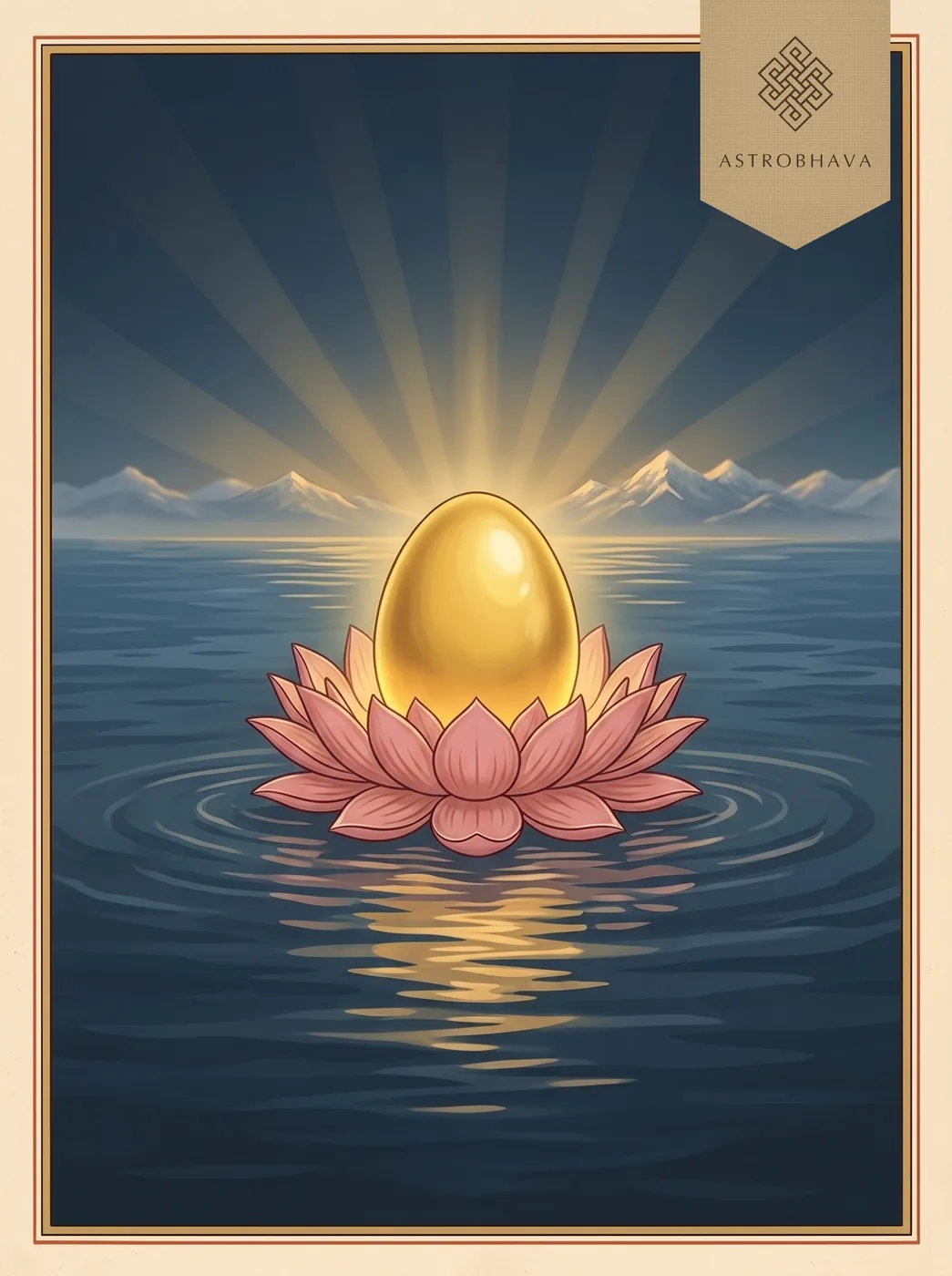
Hiranyagarbha Suktam
हिरण्यगर्भः समवर्तताग्रे भूतस्य जातः पतिरेक आसीत् । स दाधार पृथिवीं द्यामुतेमां कस्मै देवाय हविषा विधेम ॥Also known as Hiranyagarbhah Samavartatagre
In Devanagari, Tamil, Telugu, Kannada, Malayalam and English — with the meaning of every word, and the one syllable most people pronounce wrongly.
 A reading of your birth chartBook →
What the Hiranyagarbha Suktam is
The Hiranyagarbha Suktam is hymn 121 of the tenth mandala of the Rigveda, ten verses in trishtubh metre that look for the one maker behind earth, sky, waters and breath. The Vedic index of seers names its rishi Hiranyagarbha, son of Prajapati, and its deity Ka, the question word 'who' taken as a name. Verses 1 to 9 each draw one picture of that maker: the golden embryo who, once born, was sole lord of all that exists; the giver of life and strength whose shadow is both immortality and death; the greatness by which the snowy mountains stand and the vault of heaven is propped up. Each closes on the same line, kasmai devaya havisha vidhema, 'to which god shall we offer worship with our oblation?' Verse 10 breaks the pattern, names Prajapati and asks that the wish behind the offering be granted. The page prints the text without Vedic accent marks; chanting it with its svaras is learned from a teacher.
How the word 'who' became a name
The refrain of this hymn can be read two ways, and the tradition kept both. Read plainly, kasmai is the question word in the dative, 'to whom', and the poet is asking which god deserves the offering. Read as a name, Ka is the god, and the line turns into 'to Ka, the god, let us offer'. The Aitareya Brahmana (3.21) gives the story behind the second reading, and Sayana retells it in his commentary on the first verse. After Indra had slain Vritra and won every contest, he asked Prajapati for his greatness. Prajapati handed it over and then asked, 'Who, then, shall I be?' Indra replied that he should be exactly that, 'who', and so Prajapati came to be called Ka. Sayana adds two more readings of the syllable: ka as the one who desires to create, from the root kam, and ka as happiness itself. He explains Hiranyagarbha as Prajapati lying as the germ inside a golden egg, or as the cosmic self in whose belly that egg rests like a child in the womb. The picture has roots in an earlier hymn of the same book: the Vishvakarma hymn (Rigveda 10.82) speaks of a first embryo held by the waters and set on the navel of the unborn one.
The mantra, in six scripts
- हिरण्यगर्भः
- hiraṇyagarbhaḥ — the golden embryo
- समवर्तताग्रे
- samavartatāgre — came into being in the beginning
- भूतस्य
- bhūtasya — of all that exists
- जातः
- jātaḥ — once born
- पतिरेक
- patireka — the one lord
- आसीत्
- āsīt — he was
- स
- sa — he
- दाधार
- dādhāra — upheld
- पृथिवीं
- pṛthivīṃ — the earth
- द्यामुतेमां
- dyāmutemāṃ — and this sky
- कस्मै
- kasmai — to which (or: to Ka)
- देवाय
- devāya — god
- हविषा
- haviṣā — with oblation
- विधेम
- vidhema — shall we offer worship
Hiranyagarbha Suktam lyrics in full
All ten verses of Rigveda 10.121, printed without the Vedic accent marks.
All 10 verses, in Sanskrit, Tamil, Telugu, Kannada, Malayalam and English, each with its meaning. Choose a script:
Download the Hiranyagarbha Suktam PDFAll 10 verses with their meanings, in Sanskrit. Free to print and keep.
हिरण्यगर्भः समवर्तताग्रे भूतस्य जातः पतिरेक आसीत् ।
स दाधार पृथिवीं द्यामुतेमां कस्मै देवाय हविषा विधेम ॥
ஹிரண்யகர்பஃ ஸமவர்ததாக்ரே பூதஸ்ய ஜாதஃ பதிரேக ஆஸீத் ।
ஸ தாதார ப்ருதிவீம் த்யாமுதேமாம் கஸ்மை தேவாய ஹவிஷா விதேம ॥
హిరణ్యగర్భః సమవర్తతాగ్రే భూతస్య జాతః పతిరేక ఆసీత్ ।
స దాధార పృథివీం ద్యాముతేమాం కస్మై దేవాయ హవిషా విధేమ ॥
ಹಿರಣ್ಯಗರ್ಭಃ ಸಮವರ್ತತಾಗ್ರೇ ಭೂತಸ್ಯ ಜಾತಃ ಪತಿರೇಕ ಆಸೀತ್ ।
ಸ ದಾಧಾರ ಪೃಥಿವೀಂ ದ್ಯಾಮುತೇಮಾಂ ಕಸ್ಮೈ ದೇವಾಯ ಹವಿಷಾ ವಿಧೇಮ ॥
ഹിരണ്യഗര്ഭഃ സമവര്തതാഗ്രേ ഭൂതസ്യ ജാതഃ പതിരേക ആസീത് ।
സ ദാധാര പൃഥിവീം ദ്യാമുതേമാം കസ്മൈ ദേവായ ഹവിഷാ വിധേമ ॥
hiraṇyagarbhaḥ samavartatāgre bhūtasya jātaḥ patireka āsīt |
sa dādhāra pṛthivīṃ dyāmutemāṃ kasmai devāya haviṣā vidhema ||
In the beginning the Golden Womb came into being; once born, he was the one lord of all that exists. He upheld the earth and this sky. To which god shall we offer worship with our oblation?
य आत्मदा बलदा यस्य विश्व उपासते प्रशिषं यस्य देवाः ।
यस्य छायामृतं यस्य मृत्युः कस्मै देवाय हविषा विधेम ॥
ய ஆத்மதா பலதா யஸ்ய விஶ்வ உபாஸதே ப்ரஶிஷம் யஸ்ய தேவாஃ ।
யஸ்ய சாயாம்ருதம் யஸ்ய ம்ருத்யுஃ கஸ்மை தேவாய ஹவிஷா விதேம ॥
య ఆత్మదా బలదా యస్య విశ్వ ఉపాసతే ప్రశిషం యస్య దేవాః ।
యస్య ఛాయామృతం యస్య మృత్యుః కస్మై దేవాయ హవిషా విధేమ ॥
ಯ ಆತ್ಮದಾ ಬಲದಾ ಯಸ್ಯ ವಿಶ್ವ ಉಪಾಸತೇ ಪ್ರಶಿಷಂ ಯಸ್ಯ ದೇವಾಃ ।
ಯಸ್ಯ ಛಾಯಾಮೃತಂ ಯಸ್ಯ ಮೃತ್ಯುಃ ಕಸ್ಮೈ ದೇವಾಯ ಹವಿಷಾ ವಿಧೇಮ ॥
യ ആത്മദാ ബലദാ യസ്യ വിശ്വ ഉപാസതേ പ്രശിഷം യസ്യ ദേവാഃ ।
യസ്യ ഛായാമൃതം യസ്യ മൃത്യുഃ കസ്മൈ ദേവായ ഹവിഷാ വിധേമ ॥
ya ātmadā baladā yasya viśva upāsate praśiṣaṃ yasya devāḥ |
yasya chāyāmṛtaṃ yasya mṛtyuḥ kasmai devāya haviṣā vidhema ||
He who gives life and gives strength, whose command all beings and all the gods obey, whose shadow is immortality and whose shadow is death. To which god shall we offer worship with our oblation?
यः प्राणतो निमिषतो महित्वैक इद्राजा जगतो बभूव ।
य ईशे अस्य द्विपदश्चतुष्पदः कस्मै देवाय हविषा विधेम ॥
யஃ ப்ராணதோ நிமிஷதோ மஹித்வைக இத்ராஜா ஜகதோ பபூவ ।
ய ஈஶே அஸ்ய த்விபதஶ்சதுஷ்பதஃ கஸ்மை தேவாய ஹவிஷா விதேம ॥
యః ప్రాణతో నిమిషతో మహిత్వైక ఇద్రాజా జగతో బభూవ ।
య ఈశే అస్య ద్విపదశ్చతుష్పదః కస్మై దేవాయ హవిషా విధేమ ॥
ಯಃ ಪ್ರಾಣತೋ ನಿಮಿಷತೋ ಮಹಿತ್ವೈಕ ಇದ್ರಾಜಾ ಜಗತೋ ಬಭೂವ ।
ಯ ಈಶೇ ಅಸ್ಯ ದ್ವಿಪದಶ್ಚತುಷ್ಪದಃ ಕಸ್ಮೈ ದೇವಾಯ ಹವಿಷಾ ವಿಧೇಮ ॥
യഃ പ്രാണതോ നിമിഷതോ മഹിത്വൈക ഇദ്രാജാ ജഗതോ ബഭൂവ ।
യ ഈശേ അസ്യ ദ്വിപദശ്ചതുഷ്പദഃ കസ്മൈ ദേവായ ഹവിഷാ വിധേമ ॥
yaḥ prāṇato nimiṣato mahitvaika idrājā jagato babhūva |
ya īśe asya dvipadaścatuṣpadaḥ kasmai devāya haviṣā vidhema ||
He who by his greatness became the one king of all that breathes and blinks, of the whole moving world, who rules over this world of two-footed and four-footed creatures. To which god shall we offer worship with our oblation?
यस्येमे हिमवन्तो महित्वा यस्य समुद्रं रसया सहाहुः ।
यस्येमाः प्रदिशो यस्य बाहू कस्मै देवाय हविषा विधेम ॥
யஸ்யேமே ஹிமவந்தோ மஹித்வா யஸ்ய ஸமுத்ரம் ரஸயா ஸஹாஹுஃ ।
யஸ்யேமாஃ ப்ரதிஶோ யஸ்ய பாஹூ கஸ்மை தேவாய ஹவிஷா விதேம ॥
యస్యేమే హిమవన్తో మహిత్వా యస్య సముద్రం రసయా సహాహుః ।
యస్యేమాః ప్రదిశో యస్య బాహూ కస్మై దేవాయ హవిషా విధేమ ॥
ಯಸ್ಯೇಮೇ ಹಿಮವನ್ತೋ ಮಹಿತ್ವಾ ಯಸ್ಯ ಸಮುದ್ರಂ ರಸಯಾ ಸಹಾಹುಃ ।
ಯಸ್ಯೇಮಾಃ ಪ್ರದಿಶೋ ಯಸ್ಯ ಬಾಹೂ ಕಸ್ಮೈ ದೇವಾಯ ಹವಿಷಾ ವಿಧೇಮ ॥
യസ്യേമേ ഹിമവന്തോ മഹിത്വാ യസ്യ സമുദ്രം രസയാ സഹാഹുഃ ।
യസ്യേമാഃ പ്രദിശോ യസ്യ ബാഹൂ കസ്മൈ ദേവായ ഹവിഷാ വിധേമ ॥
yasyeme himavanto mahitvā yasya samudraṃ rasayā sahāhuḥ |
yasyemāḥ pradiśo yasya bāhū kasmai devāya haviṣā vidhema ||
By whose greatness these snowy mountains stand, whose, they say, is the ocean with the far river, whose are these directions of space, which are his two arms. To which god shall we offer worship with our oblation?
येन द्यौरुग्रा पृथिवी च दृळ्हा येन स्वः स्तभितं येन नाकः ।
यो अन्तरिक्षे रजसो विमानः कस्मै देवाय हविषा विधेम ॥
யேந த்யௌருக்ரா ப்ருதிவீ ச த்ருள்ஹா யேந ஸ்வஃ ஸ்தபிதம் யேந நாகஃ ।
யோ அந்தரிக்ஷே ரஜஸோ விமாநஃ கஸ்மை தேவாய ஹவிஷா விதேம ॥
యేన ద్యౌరుగ్రా పృథివీ చ దృళ్హా యేన స్వః స్తభితం యేన నాకః ।
యో అన్తరిక్షే రజసో విమానః కస్మై దేవాయ హవిషా విధేమ ॥
ಯೇನ ದ್ಯೌರುಗ್ರಾ ಪೃಥಿವೀ ಚ ದೃಳ್ಹಾ ಯೇನ ಸ್ವಃ ಸ್ತಭಿತಂ ಯೇನ ನಾಕಃ ।
ಯೋ ಅನ್ತರಿಕ್ಷೇ ರಜಸೋ ವಿಮಾನಃ ಕಸ್ಮೈ ದೇವಾಯ ಹವಿಷಾ ವಿಧೇಮ ॥
യേന ദ്യൌരുഗ്രാ പൃഥിവീ ച ദൃള്ഹാ യേന സ്വഃ സ്തഭിതം യേന നാകഃ ।
യോ അന്തരിക്ഷേ രജസോ വിമാനഃ കസ്മൈ ദേവായ ഹവിഷാ വിധേമ ॥
yena dyaurugrā pṛthivī ca dṛḷhā yena svaḥ stabhitaṃ yena nākaḥ |
yo antarikṣe rajaso vimānaḥ kasmai devāya haviṣā vidhema ||
By whom the mighty heaven and the earth were made firm, by whom the light of the sun and the vault of heaven were propped up, who measures out the space of the mid-air. To which god shall we offer worship with our oblation?
यं क्रन्दसी अवसा तस्तभाने अभ्यैक्षेतां मनसा रेजमाने ।
यत्राधि सूर उदितो विभाति कस्मै देवाय हविषा विधेम ॥
யம் க்ரந்தஸீ அவஸா தஸ்தபாநே அப்யைக்ஷேதாம் மநஸா ரேஜமாநே ।
யத்ராதி ஸூர உதிதோ விபாதி கஸ்மை தேவாய ஹவிஷா விதேம ॥
యం క్రన్దసీ అవసా తస్తభానే అభ్యైక్షేతాం మనసా రేజమానే ।
యత్రాధి సూర ఉదితో విభాతి కస్మై దేవాయ హవిషా విధేమ ॥
ಯಂ ಕ್ರನ್ದಸೀ ಅವಸಾ ತಸ್ತಭಾನೇ ಅಭ್ಯೈಕ್ಷೇತಾಂ ಮನಸಾ ರೇಜಮಾನೇ ।
ಯತ್ರಾಧಿ ಸೂರ ಉದಿತೋ ವಿಭಾತಿ ಕಸ್ಮೈ ದೇವಾಯ ಹವಿಷಾ ವಿಧೇಮ ॥
യം ക്രന്ദസീ അവസാ തസ്തഭാനേ അഭ്യൈക്ഷേതാം മനസാ രേജമാനേ ।
യത്രാധി സൂര ഉദിതോ വിഭാതി കസ്മൈ ദേവായ ഹവിഷാ വിധേമ ॥
yaṃ krandasī avasā tastabhāne abhyaikṣetāṃ manasā rejamāne |
yatrādhi sūra udito vibhāti kasmai devāya haviṣā vidhema ||
To whom the two opposing hosts, held firm by his help and trembling in mind, looked up, and over whom the risen sun shines. To which god shall we offer worship with our oblation?
आपो ह यद्बृहतीर्विश्वमायन्गर्भं दधाना जनयन्तीरग्निम् ।
ततो देवानां समवर्ततासुरेकः कस्मै देवाय हविषा विधेम ॥
ஆபோ ஹ யத்ப்ருஹதீர்விஶ்வமாயந்கர்பம் ததாநா ஜநயந்தீரக்நிம் ।
ததோ தேவாநாம் ஸமவர்ததாஸுரேகஃ கஸ்மை தேவாய ஹவிஷா விதேம ॥
ఆపో హ యద్బృహతీర్విశ్వమాయన్గర్భం దధానా జనయన్తీరగ్నిమ్ ।
తతో దేవానాం సమవర్తతాసురేకః కస్మై దేవాయ హవిషా విధేమ ॥
ಆಪೋ ಹ ಯದ್ಬೃಹತೀರ್ವಿಶ್ವಮಾಯನ್ಗರ್ಭಂ ದಧಾನಾ ಜನಯನ್ತೀರಗ್ನಿಮ್ ।
ತತೋ ದೇವಾನಾಂ ಸಮವರ್ತತಾಸುರೇಕಃ ಕಸ್ಮೈ ದೇವಾಯ ಹವಿಷಾ ವಿಧೇಮ ॥
ആപോ ഹ യദ്ബൃഹതീര്വിശ്വമായന്ഗര്ഭം ദധാനാ ജനയന്തീരഗ്നിമ് ।
തതോ ദേവാനാം സമവര്തതാസുരേകഃ കസ്മൈ ദേവായ ഹവിഷാ വിധേമ ॥
āpo ha yadbṛhatīrviśvamāyangarbhaṃ dadhānā janayantīragnim |
tato devānāṃ samavartatāsurekaḥ kasmai devāya haviṣā vidhema ||
When the great waters came, holding all as an embryo and bringing forth fire, from that arose the one life-breath of the gods. To which god shall we offer worship with our oblation?
यश्चिदापो महिना पर्यपश्यद्दक्षं दधाना जनयन्तीर्यज्ञम् ।
यो देवेष्वधि देव एक आसीत्कस्मै देवाय हविषा विधेम ॥
யஶ்சிதாபோ மஹிநா பர்யபஶ்யத்தக்ஷம் ததாநா ஜநயந்தீர்யஜ்ஞம் ।
யோ தேவேஷ்வதி தேவ ஏக ஆஸீத்கஸ்மை தேவாய ஹவிஷா விதேம ॥
యశ్చిదాపో మహినా పర్యపశ్యద్దక్షం దధానా జనయన్తీర్యజ్ఞమ్ ।
యో దేవేష్వధి దేవ ఏక ఆసీత్కస్మై దేవాయ హవిషా విధేమ ॥
ಯಶ್ಚಿದಾಪೋ ಮಹಿನಾ ಪರ್ಯಪಶ್ಯದ್ದಕ್ಷಂ ದಧಾನಾ ಜನಯನ್ತೀರ್ಯಜ್ಞಮ್ ।
ಯೋ ದೇವೇಷ್ವಧಿ ದೇವ ಏಕ ಆಸೀತ್ಕಸ್ಮೈ ದೇವಾಯ ಹವಿಷಾ ವಿಧೇಮ ॥
യശ്ചിദാപോ മഹിനാ പര്യപശ്യദ്ദക്ഷം ദധാനാ ജനയന്തീര്യജ്ഞമ് ।
യോ ദേവേഷ്വധി ദേവ ഏക ആസീത്കസ്മൈ ദേവായ ഹവിഷാ വിധേമ ॥
yaścidāpo mahinā paryapaśyaddakṣaṃ dadhānā janayantīryajñam |
yo deveṣvadhi deva eka āsītkasmai devāya haviṣā vidhema ||
He who by his might looked over the waters, which held creative power and brought forth the sacrifice, he who was the one god above the gods. To which god shall we offer worship with our oblation?
मा नो हिंसीज्जनिता यः पृथिव्या यो वा दिवं सत्यधर्मा जजान ।
यश्चापश्चन्द्रा बृहतीर्जजान कस्मै देवाय हविषा विधेम ॥
மா நோ ஹிம்ஸீஜ்ஜநிதா யஃ ப்ருதிவ்யா யோ வா திவம் ஸத்யதர்மா ஜஜாந ।
யஶ்சாபஶ்சந்த்ரா ப்ருஹதீர்ஜஜாந கஸ்மை தேவாய ஹவிஷா விதேம ॥
మా నో హింసీజ్జనితా యః పృథివ్యా యో వా దివం సత్యధర్మా జజాన ।
యశ్చాపశ్చన్ద్రా బృహతీర్జజాన కస్మై దేవాయ హవిషా విధేమ ॥
ಮಾ ನೋ ಹಿಂಸೀಜ್ಜನಿತಾ ಯಃ ಪೃಥಿವ್ಯಾ ಯೋ ವಾ ದಿವಂ ಸತ್ಯಧರ್ಮಾ ಜಜಾನ ।
ಯಶ್ಚಾಪಶ್ಚನ್ದ್ರಾ ಬೃಹತೀರ್ಜಜಾನ ಕಸ್ಮೈ ದೇವಾಯ ಹವಿಷಾ ವಿಧೇಮ ॥
മാ നോ ഹിംസീജ്ജനിതാ യഃ പൃഥിവ്യാ യോ വാ ദിവം സത്യധര്മാ ജജാന ।
യശ്ചാപശ്ചന്ദ്രാ ബൃഹതീര്ജജാന കസ്മൈ ദേവായ ഹവിഷാ വിധേമ ॥
mā no hiṃsījjanitā yaḥ pṛthivyā yo vā divaṃ satyadharmā jajāna |
yaścāpaścandrā bṛhatīrjajāna kasmai devāya haviṣā vidhema ||
May he not harm us, he who fathered the earth, who, true in his laws, fathered the heaven, and who fathered the bright and mighty waters. To which god shall we offer worship with our oblation?
प्रजापते न त्वदेतान्यन्यो विश्वा जातानि परि ता बभूव ।
यत्कामास्ते जुहुमस्तन्नो अस्तु वयं स्याम पतयो रयीणाम् ॥
ப்ரஜாபதே ந த்வதேதாந்யந்யோ விஶ்வா ஜாதாநி பரி தா பபூவ ।
யத்காமாஸ்தே ஜுஹுமஸ்தந்நோ அஸ்து வயம் ஸ்யாம பதயோ ரயீணாம் ॥
ప్రజాపతే న త్వదేతాన్యన్యో విశ్వా జాతాని పరి తా బభూవ ।
యత్కామాస్తే జుహుమస్తన్నో అస్తు వయం స్యామ పతయో రయీణామ్ ॥
ಪ್ರಜಾಪತೇ ನ ತ್ವದೇತಾನ್ಯನ್ಯೋ ವಿಶ್ವಾ ಜಾತಾನಿ ಪರಿ ತಾ ಬಭೂವ ।
ಯತ್ಕಾಮಾಸ್ತೇ ಜುಹುಮಸ್ತನ್ನೋ ಅಸ್ತು ವಯಂ ಸ್ಯಾಮ ಪತಯೋ ರಯೀಣಾಮ್ ॥
പ്രജാപതേ ന ത്വദേതാന്യന്യോ വിശ്വാ ജാതാനി പരി താ ബഭൂവ ।
യത്കാമാസ്തേ ജുഹുമസ്തന്നോ അസ്തു വയം സ്യാമ പതയോ രയീണാമ് ॥
prajāpate na tvadetānyanyo viśvā jātāni pari tā babhūva |
yatkāmāste juhumastanno astu vayaṃ syāma patayo rayīṇām ||
O Prajapati, none other than you encompasses all these created things. May the wish for which we offer to you be fulfilled for us; may we become lords of riches.
The syllable people get wrong
In verse 5 the text prints dṛḷhā (दृळ्हा), 'made firm', with the old Rigvedic ḷh where later Sanskrit writes dṛḍhā. Say it with the tongue curled back as for ḍ but let the sound slip out at the sides like an l with a breath after it, not as a plain 'dridha'.
Questions
Have your chart read before you decide
Chanting is yours to do, and free. But which deity your situation calls for — and whether a mantra alone is the right response — depends on your chart. Sometimes it is; sometimes it is not.
- Over 30 years in the Guru–Sishya Parampara, from the age of five
- He reads every chart himself — 60 minutes, one to one, never delegated
- Charts are read only between sunrise and sunset, following tradition
