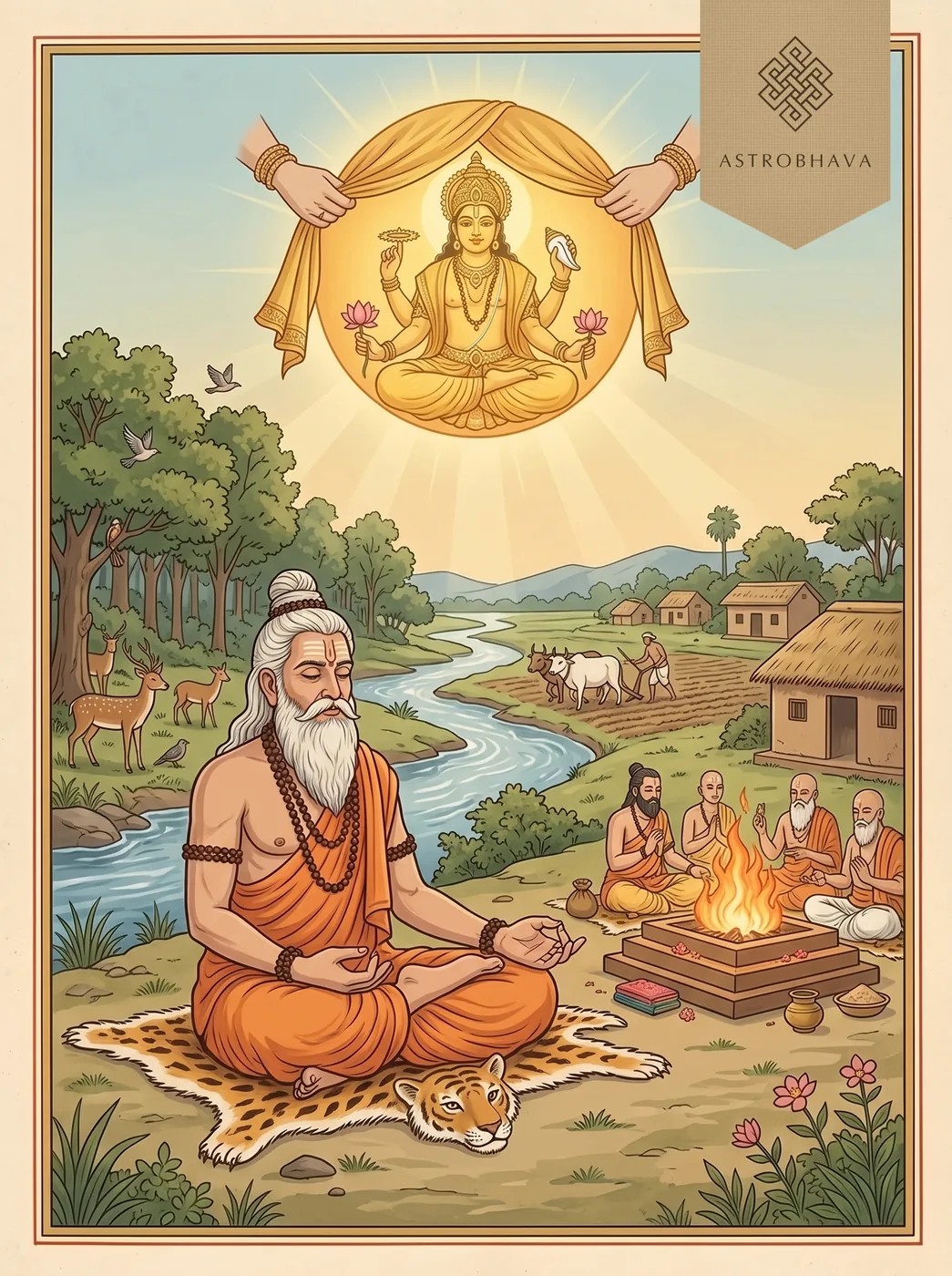
Isha Upanishad
ॐ पूर्णमदः पूर्णमिदं पूर्णात्पूर्णमुदच्यते । पूर्णस्य पूर्णमादाय पूर्णमेवावशिष्यते ॥ ॐ शान्तिः शान्तिः शान्तिः ॥Also known as Ishavasya Upanishad
In Devanagari, Tamil, Telugu, Kannada, Malayalam and English — with the meaning of every word, and the one syllable most people pronounce wrongly.
 A reading of your birth chartBook →
What the Isha Upanishad is
The Isha Upanishad, also called the Ishavasya Upanishad after its opening words isha vasyam, is the fortieth and last chapter of the Vajasaneyi Samhita of the Shukla Yajurveda. It is the only principal Upanishad that stands inside a Samhita rather than in a Brahmana or Aranyaka. The Kanva recension gives it eighteen verses, printed here after the Purnamadah peace invocation. Verse 1 says that everything moving in the world is to be clothed by the Lord, and asks the reader to enjoy by letting go and to covet no one's wealth; verse 2 allows a hundred years of work that does not cling, and verse 3 names the sunless worlds of those who deny the Self. Verses 4 to 8 describe the One that stands still yet outruns the mind, near and far, inside and outside. Verses 9 to 14 weigh knowledge against ignorance and the manifest against the unmanifest, warning against holding either alone. Verses 15 to 18 are prayers to Pushan, the Sun, and to Agni.
The last chapter of a Veda
The Isha has no narrative frame: no teacher, no pupil, no king putting a question, which sets it apart from the Katha or the Chandogya. Its setting is the Yajurveda itself. The thirty-nine chapters before it hold the sacrificial liturgy, and this final chapter turns from the rite to the Self of the one who performs it. Adi Shankara, opening his commentary in the eighth century, observes that these verses are assigned to no ritual act, because they speak of a Self that is pure, bodiless and untouched by any deed. He followed the eighteen-verse Kanva text. The Madhyandina recension has seventeen verses, with verses 9 to 14 in a different order and nothing corresponding to verse 16. The four closing verses also appear at the end of book five of the Brihadaranyaka Upanishad, and Shankara reads them as the prayer of a person at the hour of death: asking the Sun to lift its golden lid from the face of truth, returning breath to the wind and the body to ash, and asking Agni to lead by the good path. That last verse is older still, found first as Rigveda 1.189.1. In the twentieth century Mahatma Gandhi said that if every other scripture were lost and only the first verse of this Upanishad remained, Hinduism would live on.
The mantra, in six scripts
- ॐ
- oṃ — Om, the sacred syllable
- ईशा
- īśā — by the Lord
- वास्यमिदं
- vāsyamidaṃ — is to be clothed, this
- सर्वं
- sarvaṃ — all
- यत्किञ्च
- yatkiñca — whatever
- जगत्यां
- jagatyāṃ — in the moving world
- जगत्
- jagat — moves
- तेन
- tena — by that
- त्यक्तेन
- tyaktena — renounced, let go
- भुञ्जीथा
- bhuñjīthā — you should enjoy
- मा
- mā — do not
- गृधः
- gṛdhaḥ — covet
- कस्यस्विद्धनम्
- kasyasviddhanam — whose indeed is wealth?
Isha Upanishad lyrics in full
The eighteen verses of the Kanva recension, opened by the Purnamadah peace invocation.
All 19 verses, in Sanskrit, Tamil, Telugu, Kannada, Malayalam and English, each with its meaning. Choose a script:
Download the Isha Upanishad PDFAll 19 verses with their meanings, in Sanskrit. Free to print and keep.
ॐ पूर्णमदः पूर्णमिदं पूर्णात्पूर्णमुदच्यते ।
पूर्णस्य पूर्णमादाय पूर्णमेवावशिष्यते ॥ ॐ शान्तिः शान्तिः शान्तिः ॥
ௐ பூர்ணமதஃ பூர்ணமிதம் பூர்ணாத்பூர்ணமுதச்யதே ।
பூர்ணஸ்ய பூர்ணமாதாய பூர்ணமேவாவஶிஷ்யதே ॥ ௐ ஶாந்திஃ ஶாந்திஃ ஶாந்திஃ ॥
ఓం పూర్ణమదః పూర్ణమిదం పూర్ణాత్పూర్ణముదచ్యతే ।
పూర్ణస్య పూర్ణమాదాయ పూర్ణమేవావశిష్యతే ॥ ఓం శాన్తిః శాన్తిః శాన్తిః ॥
ಓಂ ಪೂರ್ಣಮದಃ ಪೂರ್ಣಮಿದಂ ಪೂರ್ಣಾತ್ಪೂರ್ಣಮುದಚ್ಯತೇ ।
ಪೂರ್ಣಸ್ಯ ಪೂರ್ಣಮಾದಾಯ ಪೂರ್ಣಮೇವಾವಶಿಷ್ಯತೇ ॥ ಓಂ ಶಾನ್ತಿಃ ಶಾನ್ತಿಃ ಶಾನ್ತಿಃ ॥
ഓം പൂര്ണമദഃ പൂര്ണമിദം പൂര്ണാത്പൂര്ണമുദച്യതേ ।
പൂര്ണസ്യ പൂര്ണമാദായ പൂര്ണമേവാവശിഷ്യതേ ॥ ഓം ശാന്തിഃ ശാന്തിഃ ശാന്തിഃ ॥
oṃ pūrṇamadaḥ pūrṇamidaṃ pūrṇātpūrṇamudacyate |
pūrṇasya pūrṇamādāya pūrṇamevāvaśiṣyate || oṃ śāntiḥ śāntiḥ śāntiḥ ||
That is whole, this is whole; from the whole the whole comes forth. When the whole is taken from the whole, the whole alone remains. Om, peace, peace, peace.
ॐ ईशा वास्यमिदं सर्वं यत्किञ्च जगत्यां जगत् ।
तेन त्यक्तेन भुञ्जीथा मा गृधः कस्यस्विद्धनम् ॥
ௐ ஈஶா வாஸ்யமிதம் ஸர்வம் யத்கிஞ்ச ஜகத்யாம் ஜகத் ।
தேந த்யக்தேந புஞ்ஜீதா மா க்ருதஃ கஸ்யஸ்வித்தநம் ॥
ఓం ఈశా వాస్యమిదం సర్వం యత్కిఞ్చ జగత్యాం జగత్ ।
తేన త్యక్తేన భుఞ్జీథా మా గృధః కస్యస్విద్ధనమ్ ॥
ಓಂ ಈಶಾ ವಾಸ್ಯಮಿದಂ ಸರ್ವಂ ಯತ್ಕಿಞ್ಚ ಜಗತ್ಯಾಂ ಜಗತ್ ।
ತೇನ ತ್ಯಕ್ತೇನ ಭುಞ್ಜೀಥಾ ಮಾ ಗೃಧಃ ಕಸ್ಯಸ್ವಿದ್ಧನಮ್ ॥
ഓം ഈശാ വാസ്യമിദം സര്വം യത്കിഞ്ച ജഗത്യാം ജഗത് ।
തേന ത്യക്തേന ഭുഞ്ജീഥാ മാ ഗൃധഃ കസ്യസ്വിദ്ധനമ് ॥
oṃ īśā vāsyamidaṃ sarvaṃ yatkiñca jagatyāṃ jagat |
tena tyaktena bhuñjīthā mā gṛdhaḥ kasyasviddhanam ||
All of this, whatever moves in this moving world, is to be clothed by the Lord. Enjoy it by letting go, and do not covet anyone's wealth, for whose is it?
कुर्वन्नेवेह कर्माणि जिजीविषेच्छतं समाः ।
एवं त्वयि नान्यथेतोऽस्ति न कर्म लिप्यते नरे ॥
குர்வந்நேவேஹ கர்மாணி ஜிஜீவிஷேச்சதம் ஸமாஃ ।
ஏவம் த்வயி நாந்யதேதோஸ்தி ந கர்ம லிப்யதே நரே ॥
కుర్వన్నేవేహ కర్మాణి జిజీవిషేచ్ఛతం సమాః ।
ఏవం త్వయి నాన్యథేతోఽస్తి న కర్మ లిప్యతే నరే ॥
ಕುರ್ವನ್ನೇವೇಹ ಕರ್ಮಾಣಿ ಜಿಜೀವಿಷೇಚ್ಛತಂ ಸಮಾಃ ।
ಏವಂ ತ್ವಯಿ ನಾನ್ಯಥೇತೋಽಸ್ತಿ ನ ಕರ್ಮ ಲಿಪ್ಯತೇ ನರೇ ॥
കുര്വന്നേവേഹ കര്മാണി ജിജീവിഷേച്ഛതം സമാഃ ।
ഏവം ത്വയി നാന്യഥേതോഽസ്തി ന കര്മ ലിപ്യതേ നരേ ॥
kurvanneveha karmāṇi jijīviṣecchataṃ samāḥ |
evaṃ tvayi nānyatheto'sti na karma lipyate nare ||
Doing one's works here, one may wish to live a hundred years. For you there is no other way than this: in this way work does not cling to a person.
असुर्या नाम ते लोका अन्धेन तमसाऽऽवृताः ।
तांस्ते प्रेत्याभिगच्छन्ति ये के चात्महनो जनाः ॥
அஸுர்யா நாம தே லோகா அந்தேந தமஸாவ்ருதாஃ ।
தாம்ஸ்தே ப்ரேத்யாபிகச்சந்தி யே கே சாத்மஹநோ ஜநாஃ ॥
అసుర్యా నామ తే లోకా అన్ధేన తమసాఽఽవృతాః ।
తాంస్తే ప్రేత్యాభిగచ్ఛన్తి యే కే చాత్మహనో జనాః ॥
ಅಸುರ್ಯಾ ನಾಮ ತೇ ಲೋಕಾ ಅನ್ಧೇನ ತಮಸಾಽಽವೃತಾಃ ।
ತಾಂಸ್ತೇ ಪ್ರೇತ್ಯಾಭಿಗಚ್ಛನ್ತಿ ಯೇ ಕೇ ಚಾತ್ಮಹನೋ ಜನಾಃ ॥
അസുര്യാ നാമ തേ ലോകാ അന്ധേന തമസാഽഽവൃതാഃ ।
താംസ്തേ പ്രേത്യാഭിഗച്ഛന്തി യേ കേ ചാത്മഹനോ ജനാഃ ॥
asuryā nāma te lokā andhena tamasā''vṛtāḥ |
tāṃste pretyābhigacchanti ye ke cātmahano janāḥ ||
Sunless are those worlds, covered in blind darkness. Those who slay the Self go to them after they depart from here.
अनेजदेकं मनसो जवीयो नैनद्देवा आप्नुवन्पूर्वमर्षत् ।
तद्धावतोऽन्यानत्येति तिष्ठत्तस्मिन्नपो मातरिश्वा दधाति ॥
அநேஜதேகம் மநஸோ ஜவீயோ நைநத்தேவா ஆப்நுவந்பூர்வமர்ஷத் ।
தத்தாவதோந்யாநத்யேதி திஷ்டத்தஸ்மிந்நபோ மாதரிஶ்வா ததாதி ॥
అనేజదేకం మనసో జవీయో నైనద్దేవా ఆప్నువన్పూర్వమర్షత్ ।
తద్ధావతోఽన్యానత్యేతి తిష్ఠత్తస్మిన్నపో మాతరిశ్వా దధాతి ॥
ಅನೇಜದೇಕಂ ಮನಸೋ ಜವೀಯೋ ನೈನದ್ದೇವಾ ಆಪ್ನುವನ್ಪೂರ್ವಮರ್ಷತ್ ।
ತದ್ಧಾವತೋಽನ್ಯಾನತ್ಯೇತಿ ತಿಷ್ಠತ್ತಸ್ಮಿನ್ನಪೋ ಮಾತರಿಶ್ವಾ ದಧಾತಿ ॥
അനേജദേകം മനസോ ജവീയോ നൈനദ്ദേവാ ആപ്നുവന്പൂര്വമര്ഷത് ।
തദ്ധാവതോഽന്യാനത്യേതി തിഷ്ഠത്തസ്മിന്നപോ മാതരിശ്വാ ദധാതി ॥
anejadekaṃ manaso javīyo nainaddevā āpnuvanpūrvamarṣat |
taddhāvato'nyānatyeti tiṣṭhattasminnapo mātariśvā dadhāti ||
The One does not move, yet it is swifter than the mind; the senses never reached it, for it ran ahead of them. Standing still, it passes beyond others who run, and in it the wind upholds the waters of life.
तदेजति तन्नैजति तद्दूरे तद्वन्तिके ।
तदन्तरस्य सर्वस्य तदु सर्वस्यास्य बाह्यतः ॥
ததேஜதி தந்நைஜதி தத்தூரே தத்வந்திகே ।
ததந்தரஸ்ய ஸர்வஸ்ய தது ஸர்வஸ்யாஸ்ய பாஹ்யதஃ ॥
తదేజతి తన్నైజతి తద్దూరే తద్వన్తికే ।
తదన్తరస్య సర్వస్య తదు సర్వస్యాస్య బాహ్యతః ॥
ತದೇಜತಿ ತನ್ನೈಜತಿ ತದ್ದೂರೇ ತದ್ವನ್ತಿಕೇ ।
ತದನ್ತರಸ್ಯ ಸರ್ವಸ್ಯ ತದು ಸರ್ವಸ್ಯಾಸ್ಯ ಬಾಹ್ಯತಃ ॥
തദേജതി തന്നൈജതി തദ്ദൂരേ തദ്വന്തികേ ।
തദന്തരസ്യ സര്വസ്യ തദു സര്വസ്യാസ്യ ബാഹ്യതഃ ॥
tadejati tannaijati taddūre tadvantike |
tadantarasya sarvasya tadu sarvasyāsya bāhyataḥ ||
It moves and it does not move; it is far away and it is near. It is inside all this, and it is also outside all this.
यस्तु सर्वाणि भूतान्यात्मन्येवानुपश्यति ।
सर्वभूतेषु चात्मानं ततो न विजुगुप्सते ॥
யஸ்து ஸர்வாணி பூதாந்யாத்மந்யேவாநுபஶ்யதி ।
ஸர்வபூதேஷு சாத்மாநம் ததோ ந விஜுகுப்ஸதே ॥
యస్తు సర్వాణి భూతాన్యాత్మన్యేవానుపశ్యతి ।
సర్వభూతేషు చాత్మానం తతో న విజుగుప్సతే ॥
ಯಸ್ತು ಸರ್ವಾಣಿ ಭೂತಾನ್ಯಾತ್ಮನ್ಯೇವಾನುಪಶ್ಯತಿ ।
ಸರ್ವಭೂತೇಷು ಚಾತ್ಮಾನಂ ತತೋ ನ ವಿಜುಗುಪ್ಸತೇ ॥
യസ്തു സര്വാണി ഭൂതാന്യാത്മന്യേവാനുപശ്യതി ।
സര്വഭൂതേഷു ചാത്മാനം തതോ ന വിജുഗുപ്സതേ ॥
yastu sarvāṇi bhūtānyātmanyevānupaśyati |
sarvabhūteṣu cātmānaṃ tato na vijugupsate ||
One who sees all beings in the Self, and the Self in all beings, feels no aversion because of it.
यस्मिन्सर्वाणि भूतान्यात्मैवाभूद्विजानतः ।
तत्र को मोहः कः शोक एकत्वमनुपश्यतः ॥
யஸ்மிந்ஸர்வாணி பூதாந்யாத்மைவாபூத்விஜாநதஃ ।
தத்ர கோ மோஹஃ கஃ ஶோக ஏகத்வமநுபஶ்யதஃ ॥
యస్మిన్సర్వాణి భూతాన్యాత్మైవాభూద్విజానతః ।
తత్ర కో మోహః కః శోక ఏకత్వమనుపశ్యతః ॥
ಯಸ್ಮಿನ್ಸರ್ವಾಣಿ ಭೂತಾನ್ಯಾತ್ಮೈವಾಭೂದ್ವಿಜಾನತಃ ।
ತತ್ರ ಕೋ ಮೋಹಃ ಕಃ ಶೋಕ ಏಕತ್ವಮನುಪಶ್ಯತಃ ॥
യസ്മിന്സര്വാണി ഭൂതാന്യാത്മൈവാഭൂദ്വിജാനതഃ ।
തത്ര കോ മോഹഃ കഃ ശോക ഏകത്വമനുപശ്യതഃ ॥
yasminsarvāṇi bhūtānyātmaivābhūdvijānataḥ |
tatra ko mohaḥ kaḥ śoka ekatvamanupaśyataḥ ||
For the knower in whom all beings have become the Self alone, what delusion or what sorrow can there be, when he sees the oneness?
स पर्यगाच्छुक्रमकायमव्रणमस्नाविरं शुद्धमपापविद्धम् ।
कविर्मनीषी परिभूः स्वयम्भूर्याथातथ्यतोऽर्थान् व्यदधाच्छाश्वतीभ्यः समाभ्यः ॥
ஸ பர்யகாச்சுக்ரமகாயமவ்ரணமஸ்நாவிரம் ஶுத்தமபாபவித்தம் ।
கவிர்மநீஷீ பரிபூஃ ஸ்வயம்பூர்யாதாதத்யதோர்தாந் வ்யததாச்சாஶ்வதீப்யஃ ஸமாப்யஃ ॥
స పర్యగాచ్ఛుక్రమకాయమవ్రణమస్నావిరం శుద్ధమపాపవిద్ధమ్ ।
కవిర్మనీషీ పరిభూః స్వయమ్భూర్యాథాతథ్యతోఽర్థాన్ వ్యదధాచ్ఛాశ్వతీభ్యః సమాభ్యః ॥
ಸ ಪರ್ಯಗಾಚ್ಛುಕ್ರಮಕಾಯಮವ್ರಣಮಸ್ನಾವಿರಂ ಶುದ್ಧಮಪಾಪವಿದ್ಧಮ್ ।
ಕವಿರ್ಮನೀಷೀ ಪರಿಭೂಃ ಸ್ವಯಮ್ಭೂರ್ಯಾಥಾತಥ್ಯತೋಽರ್ಥಾನ್ ವ್ಯದಧಾಚ್ಛಾಶ್ವತೀಭ್ಯಃ ಸಮಾಭ್ಯಃ ॥
സ പര്യഗാച്ഛുക്രമകായമവ്രണമസ്നാവിരം ശുദ്ധമപാപവിദ്ധമ് ।
കവിര്മനീഷീ പരിഭൂഃ സ്വയമ്ഭൂര്യാഥാതഥ്യതോഽര്ഥാന് വ്യദധാച്ഛാശ്വതീഭ്യഃ സമാഭ്യഃ ॥
sa paryagācchukramakāyamavraṇamasnāviraṃ śuddhamapāpaviddham |
kavirmanīṣī paribhūḥ svayambhūryāthātathyato'rthān vyadadhācchāśvatībhyaḥ samābhyaḥ ||
He has spread everywhere: bright, bodiless, without wound, without sinews, pure, untouched by evil. The seer, the wise one, all-encompassing and self-existent, he has set out all things rightly for the endless years.
अन्धं तमः प्रविशन्ति येऽविद्यामुपासते ।
ततो भूय इव ते तमो य उ विद्यायां रताः ॥
அந்தம் தமஃ ப்ரவிஶந்தி யேவித்யாமுபாஸதே ।
ததோ பூய இவ தே தமோ ய உ வித்யாயாம் ரதாஃ ॥
అన్ధం తమః ప్రవిశన్తి యేఽవిద్యాముపాసతే ।
తతో భూయ ఇవ తే తమో య ఉ విద్యాయాం రతాః ॥
ಅನ್ಧಂ ತಮಃ ಪ್ರವಿಶನ್ತಿ ಯೇಽವಿದ್ಯಾಮುಪಾಸತೇ ।
ತತೋ ಭೂಯ ಇವ ತೇ ತಮೋ ಯ ಉ ವಿದ್ಯಾಯಾಂ ರತಾಃ ॥
അന്ധം തമഃ പ്രവിശന്തി യേഽവിദ്യാമുപാസതേ ।
തതോ ഭൂയ ഇവ തേ തമോ യ ഉ വിദ്യായാം രതാഃ ॥
andhaṃ tamaḥ praviśanti ye'vidyāmupāsate |
tato bhūya iva te tamo ya u vidyāyāṃ ratāḥ ||
Into blind darkness enter those who worship ignorance; into still greater darkness, as it were, go those who delight in knowledge alone.
अन्यदेवाहुर्विद्ययाऽन्यदाहुरविद्यया ।
इति शुश्रुम धीराणां ये नस्तद्विचचक्षिरे ॥
அந்யதேவாஹுர்வித்யயாந்யதாஹுரவித்யயா ।
இதி ஶுஶ்ரும தீராணாம் யே நஸ்தத்விசசக்ஷிரே ॥
అన్యదేవాహుర్విద్యయాఽన్యదాహురవిద్యయా ।
ఇతి శుశ్రుమ ధీరాణాం యే నస్తద్విచచక్షిరే ॥
ಅನ್ಯದೇವಾಹುರ್ವಿದ್ಯಯಾಽನ್ಯದಾಹುರವಿದ್ಯಯಾ ।
ಇತಿ ಶುಶ್ರುಮ ಧೀರಾಣಾಂ ಯೇ ನಸ್ತದ್ವಿಚಚಕ್ಷಿರೇ ॥
അന്യദേവാഹുര്വിദ്യയാഽന്യദാഹുരവിദ്യയാ ।
ഇതി ശുശ്രുമ ധീരാണാം യേ നസ്തദ്വിചചക്ഷിരേ ॥
anyadevāhurvidyayā'nyadāhuravidyayā |
iti śuśruma dhīrāṇāṃ ye nastadvicacakṣire ||
One result, they say, comes from knowledge, and another, they say, from ignorance. So we have heard from the wise who explained it to us.
विद्यां चाविद्यां च यस्तद्वेदोभयं सह ।
अविद्यया मृत्युं तीर्त्वा विद्ययाऽमृतमश्नुते ॥
வித்யாம் சாவித்யாம் ச யஸ்தத்வேதோபயம் ஸஹ ।
அவித்யயா ம்ருத்யும் தீர்த்வா வித்யயாம்ருதமஶ்நுதே ॥
విద్యాం చావిద్యాం చ యస్తద్వేదోభయం సహ ।
అవిద్యయా మృత్యుం తీర్త్వా విద్యయాఽమృతమశ్నుతే ॥
ವಿದ್ಯಾಂ ಚಾವಿದ್ಯಾಂ ಚ ಯಸ್ತದ್ವೇದೋಭಯಂ ಸಹ ।
ಅವಿದ್ಯಯಾ ಮೃತ್ಯುಂ ತೀರ್ತ್ವಾ ವಿದ್ಯಯಾಽಮೃತಮಶ್ನುತೇ ॥
വിദ്യാം ചാവിദ്യാം ച യസ്തദ്വേദോഭയം സഹ ।
അവിദ്യയാ മൃത്യും തീര്ത്വാ വിദ്യയാഽമൃതമശ്നുതേ ॥
vidyāṃ cāvidyāṃ ca yastadvedobhayaṃ saha |
avidyayā mṛtyuṃ tīrtvā vidyayā'mṛtamaśnute ||
One who knows knowledge and ignorance both together crosses death by ignorance and attains immortality by knowledge.
अन्धं तमः प्रविशन्ति येऽसम्भूतिमुपासते ।
ततो भूय इव ते तमो य उ सम्भूत्यां रताः ॥
அந்தம் தமஃ ப்ரவிஶந்தி யேஸம்பூதிமுபாஸதே ।
ததோ பூய இவ தே தமோ ய உ ஸம்பூத்யாம் ரதாஃ ॥
అన్ధం తమః ప్రవిశన్తి యేఽసమ్భూతిముపాసతే ।
తతో భూయ ఇవ తే తమో య ఉ సమ్భూత్యాం రతాః ॥
ಅನ್ಧಂ ತಮಃ ಪ್ರವಿಶನ್ತಿ ಯೇಽಸಮ್ಭೂತಿಮುಪಾಸತೇ ।
ತತೋ ಭೂಯ ಇವ ತೇ ತಮೋ ಯ ಉ ಸಮ್ಭೂತ್ಯಾಂ ರತಾಃ ॥
അന്ധം തമഃ പ്രവിശന്തി യേഽസമ്ഭൂതിമുപാസതേ ।
തതോ ഭൂയ ഇവ തേ തമോ യ ഉ സമ്ഭൂത്യാം രതാഃ ॥
andhaṃ tamaḥ praviśanti ye'sambhūtimupāsate |
tato bhūya iva te tamo ya u sambhūtyāṃ ratāḥ ||
Into blind darkness enter those who worship the unmanifest; into still greater darkness, as it were, go those who delight in the manifest alone.
अन्यदेवाहुः सम्भवादन्यदाहुरसम्भवात् ।
इति शुश्रुम धीराणां ये नस्तद्विचचक्षिरे ॥
அந்யதேவாஹுஃ ஸம்பவாதந்யதாஹுரஸம்பவாத் ।
இதி ஶுஶ்ரும தீராணாம் யே நஸ்தத்விசசக்ஷிரே ॥
అన్యదేవాహుః సమ్భవాదన్యదాహురసమ్భవాత్ ।
ఇతి శుశ్రుమ ధీరాణాం యే నస్తద్విచచక్షిరే ॥
ಅನ್ಯದೇವಾಹುಃ ಸಮ್ಭವಾದನ್ಯದಾಹುರಸಮ್ಭವಾತ್ ।
ಇತಿ ಶುಶ್ರುಮ ಧೀರಾಣಾಂ ಯೇ ನಸ್ತದ್ವಿಚಚಕ್ಷಿರೇ ॥
അന്യദേവാഹുഃ സമ്ഭവാദന്യദാഹുരസമ്ഭവാത് ।
ഇതി ശുശ്രുമ ധീരാണാം യേ നസ്തദ്വിചചക്ഷിരേ ॥
anyadevāhuḥ sambhavādanyadāhurasambhavāt |
iti śuśruma dhīrāṇāṃ ye nastadvicacakṣire ||
One result, they say, comes from the manifest, and another, they say, from the unmanifest. So we have heard from the wise who explained it to us.
सम्भूतिं च विनाशं च यस्तद्वेदोभयं सह ।
विनाशेन मृत्युं तीर्त्वा सम्भूत्याऽमृतमश्नुते ॥
ஸம்பூதிம் ச விநாஶம் ச யஸ்தத்வேதோபயம் ஸஹ ।
விநாஶேந ம்ருத்யும் தீர்த்வா ஸம்பூத்யாம்ருதமஶ்நுதே ॥
సమ్భూతిం చ వినాశం చ యస్తద్వేదోభయం సహ ।
వినాశేన మృత్యుం తీర్త్వా సమ్భూత్యాఽమృతమశ్నుతే ॥
ಸಮ್ಭೂತಿಂ ಚ ವಿನಾಶಂ ಚ ಯಸ್ತದ್ವೇದೋಭಯಂ ಸಹ ।
ವಿನಾಶೇನ ಮೃತ್ಯುಂ ತೀರ್ತ್ವಾ ಸಮ್ಭೂತ್ಯಾಽಮೃತಮಶ್ನುತೇ ॥
സമ്ഭൂതിം ച വിനാശം ച യസ്തദ്വേദോഭയം സഹ ।
വിനാശേന മൃത്യും തീര്ത്വാ സമ്ഭൂത്യാഽമൃതമശ്നുതേ ॥
sambhūtiṃ ca vināśaṃ ca yastadvedobhayaṃ saha |
vināśena mṛtyuṃ tīrtvā sambhūtyā'mṛtamaśnute ||
One who knows the manifest and destruction both together crosses death by destruction and attains immortality by the manifest.
हिरण्मयेन पात्रेण सत्यस्यापिहितं मुखम् ।
तत्त्वं पूषन्नपावृणु सत्यधर्माय दृष्टये ॥
ஹிரண்மயேந பாத்ரேண ஸத்யஸ்யாபிஹிதம் முகம் ।
தத்த்வம் பூஷந்நபாவ்ருணு ஸத்யதர்மாய த்ருஷ்டயே ॥
హిరణ్మయేన పాత్రేణ సత్యస్యాపిహితం ముఖమ్ ।
తత్త్వం పూషన్నపావృణు సత్యధర్మాయ దృష్టయే ॥
ಹಿರಣ್ಮಯೇನ ಪಾತ್ರೇಣ ಸತ್ಯಸ್ಯಾಪಿಹಿತಂ ಮುಖಮ್ ।
ತತ್ತ್ವಂ ಪೂಷನ್ನಪಾವೃಣು ಸತ್ಯಧರ್ಮಾಯ ದೃಷ್ಟಯೇ ॥
ഹിരണ്മയേന പാത്രേണ സത്യസ്യാപിഹിതം മുഖമ് ।
തത്ത്വം പൂഷന്നപാവൃണു സത്യധര്മായ ദൃഷ്ടയേ ॥
hiraṇmayena pātreṇa satyasyāpihitaṃ mukham |
tattvaṃ pūṣannapāvṛṇu satyadharmāya dṛṣṭaye ||
The face of truth is covered by a golden vessel. O Pushan, uncover it, so that I who hold to truth may see.
पूषन्नेकर्षे यम सूर्य प्राजापत्य व्यूह रश्मीन् समूह तेजः ।
यत्ते रूपं कल्याणतमं तत्ते पश्यामि योऽसावसौ पुरुषः सोऽहमस्मि ॥
பூஷந்நேகர்ஷே யம ஸூர்ய ப்ராஜாபத்ய வ்யூஹ ரஶ்மீந் ஸமூஹ தேஜஃ ।
யத்தே ரூபம் கல்யாணதமம் தத்தே பஶ்யாமி யோஸாவஸௌ புருஷஃ ஸோஹமஸ்மி ॥
పూషన్నేకర్షే యమ సూర్య ప్రాజాపత్య వ్యూహ రశ్మీన్ సమూహ తేజః ।
యత్తే రూపం కల్యాణతమం తత్తే పశ్యామి యోఽసావసౌ పురుషః సోఽహమస్మి ॥
ಪೂಷನ್ನೇಕರ್ಷೇ ಯಮ ಸೂರ್ಯ ಪ್ರಾಜಾಪತ್ಯ ವ್ಯೂಹ ರಶ್ಮೀನ್ ಸಮೂಹ ತೇಜಃ ।
ಯತ್ತೇ ರೂಪಂ ಕಲ್ಯಾಣತಮಂ ತತ್ತೇ ಪಶ್ಯಾಮಿ ಯೋಽಸಾವಸೌ ಪುರುಷಃ ಸೋಽಹಮಸ್ಮಿ ॥
പൂഷന്നേകര്ഷേ യമ സൂര്യ പ്രാജാപത്യ വ്യൂഹ രശ്മീന് സമൂഹ തേജഃ ।
യത്തേ രൂപം കല്യാണതമം തത്തേ പശ്യാമി യോഽസാവസൌ പുരുഷഃ സോഽഹമസ്മി ॥
pūṣannekarṣe yama sūrya prājāpatya vyūha raśmīn samūha tejaḥ |
yatte rūpaṃ kalyāṇatamaṃ tatte paśyāmi yo'sāvasau puruṣaḥ so'hamasmi ||
O Pushan, lone seer, Yama, Surya, son of Prajapati, spread apart your rays and gather in your light. Your most blessed form, that I see; that Person yonder, I am he.
वायुरनिलममृतमथेदं भस्मान्तं शरीरम् ।
ॐ क्रतो स्मर कृतं स्मर क्रतो स्मर कृतं स्मर ॥
வாயுரநிலமம்ருதமதேதம் பஸ்மாந்தம் ஶரீரம் ।
ௐ க்ரதோ ஸ்மர க்ருதம் ஸ்மர க்ரதோ ஸ்மர க்ருதம் ஸ்மர ॥
వాయురనిలమమృతమథేదం భస్మాన్తం శరీరమ్ ।
ఓం క్రతో స్మర కృతం స్మర క్రతో స్మర కృతం స్మర ॥
ವಾಯುರನಿಲಮಮೃತಮಥೇದಂ ಭಸ್ಮಾನ್ತಂ ಶರೀರಮ್ ।
ಓಂ ಕ್ರತೋ ಸ್ಮರ ಕೃತಂ ಸ್ಮರ ಕ್ರತೋ ಸ್ಮರ ಕೃತಂ ಸ್ಮರ ॥
വായുരനിലമമൃതമഥേദം ഭസ്മാന്തം ശരീരമ് ।
ഓം ക്രതോ സ്മര കൃതം സ്മര ക്രതോ സ്മര കൃതം സ്മര ॥
vāyuranilamamṛtamathedaṃ bhasmāntaṃ śarīram |
oṃ krato smara kṛtaṃ smara krato smara kṛtaṃ smara ||
Let my breath now go to the immortal wind, and this body end in ashes. Om, O mind, remember, remember what was done; O mind, remember, remember what was done.
अग्ने नय सुपथा राये अस्मान् विश्वानि देव वयुनानि विद्वान् ।
युयोध्यस्मज्जुहुराणमेनो भूयिष्ठां ते नम उक्तिं विधेम ॥
அக்நே நய ஸுபதா ராயே அஸ்மாந் விஶ்வாநி தேவ வயுநாநி வித்வாந் ।
யுயோத்யஸ்மஜ்ஜுஹுராணமேநோ பூயிஷ்டாம் தே நம உக்திம் விதேம ॥
అగ్నే నయ సుపథా రాయే అస్మాన్ విశ్వాని దేవ వయునాని విద్వాన్ ।
యుయోధ్యస్మజ్జుహురాణమేనో భూయిష్ఠాం తే నమ ఉక్తిం విధేమ ॥
ಅಗ್ನೇ ನಯ ಸುಪಥಾ ರಾಯೇ ಅಸ್ಮಾನ್ ವಿಶ್ವಾನಿ ದೇವ ವಯುನಾನಿ ವಿದ್ವಾನ್ ।
ಯುಯೋಧ್ಯಸ್ಮಜ್ಜುಹುರಾಣಮೇನೋ ಭೂಯಿಷ್ಠಾಂ ತೇ ನಮ ಉಕ್ತಿಂ ವಿಧೇಮ ॥
അഗ്നേ നയ സുപഥാ രായേ അസ്മാന് വിശ്വാനി ദേവ വയുനാനി വിദ്വാന് ।
യുയോധ്യസ്മജ്ജുഹുരാണമേനോ ഭൂയിഷ്ഠാം തേ നമ ഉക്തിം വിധേമ ॥
agne naya supathā rāye asmān viśvāni deva vayunāni vidvān |
yuyodhyasmajjuhurāṇameno bhūyiṣṭhāṃ te nama uktiṃ vidhema ||
O Agni, lead us by the good path to prosperity, O god who knows all our ways. Keep far from us the crooked sin; we offer you our fullest words of homage.
The syllable people get wrong
In verse 15, hiraṇmayena ('golden') is often said as 'hiranya-mayena', adding a syllable borrowed from hiraṇya; the text has no 'ya' there, so say it as four syllables, hi-raṇ-ma-yena, with a retroflex ṇ (tongue curled back) running straight into the m.
Questions
Have your chart read before you decide
Chanting is yours to do, and free. But which deity your situation calls for — and whether a mantra alone is the right response — depends on your chart. Sometimes it is; sometimes it is not.
- Over 30 years in the Guru–Sishya Parampara, from the age of five
- He reads every chart himself — 60 minutes, one to one, never delegated
- Charts are read only between sunrise and sunset, following tradition
