Jai Ganesh Deva Aarti
जय गणेश जय गणेश जय गणेश देवा । माता जाकी पार्वती पिता महादेवा ॥Also known as Shri Ganesh Aarti
In Devanagari, Tamil, Telugu, Kannada, Malayalam and English — with the meaning of every word, and the one syllable most people pronounce wrongly.
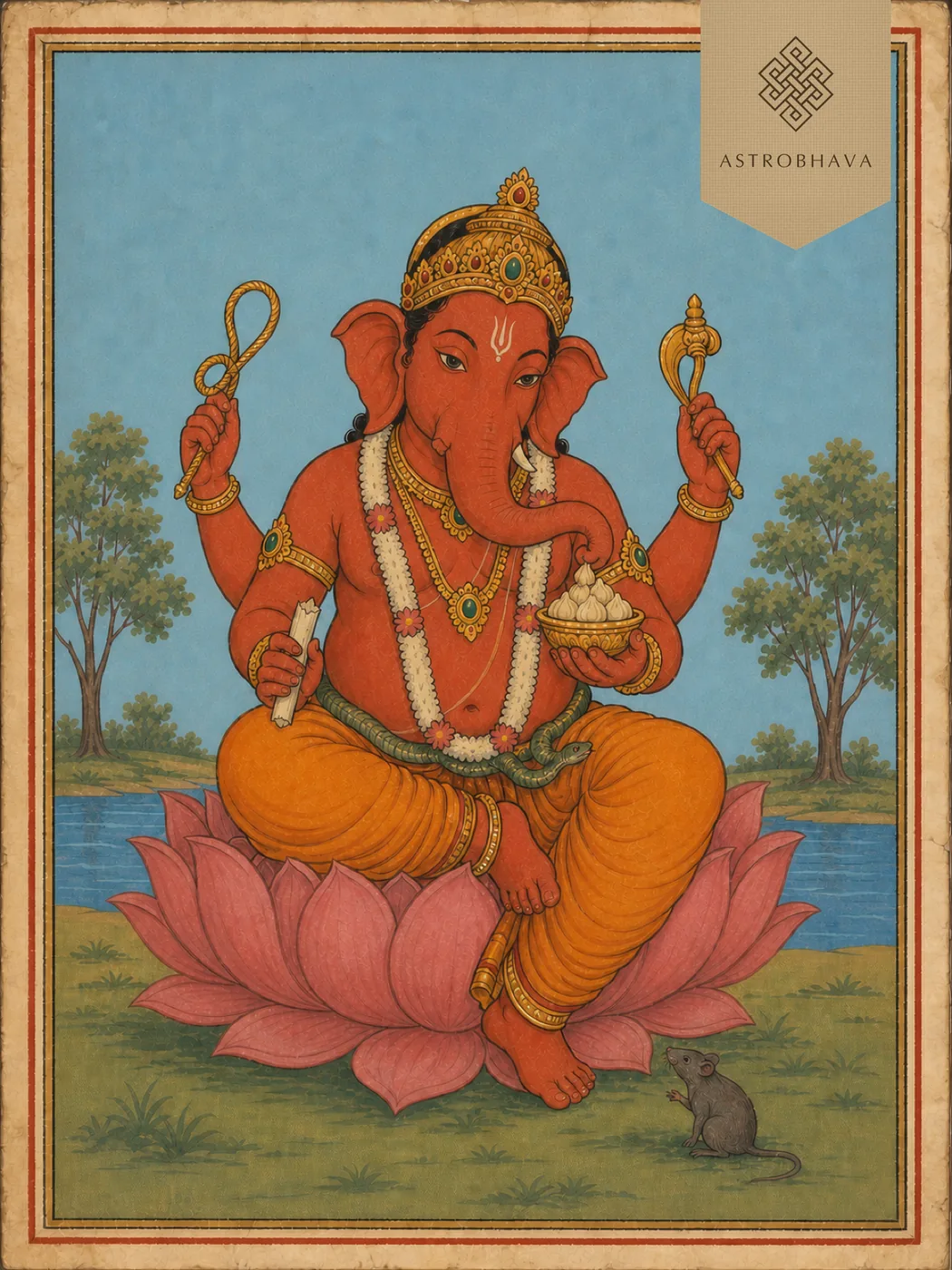 The Ganapathi Homa, performed for youBook →
What the Jai Ganesh Deva Aarti is
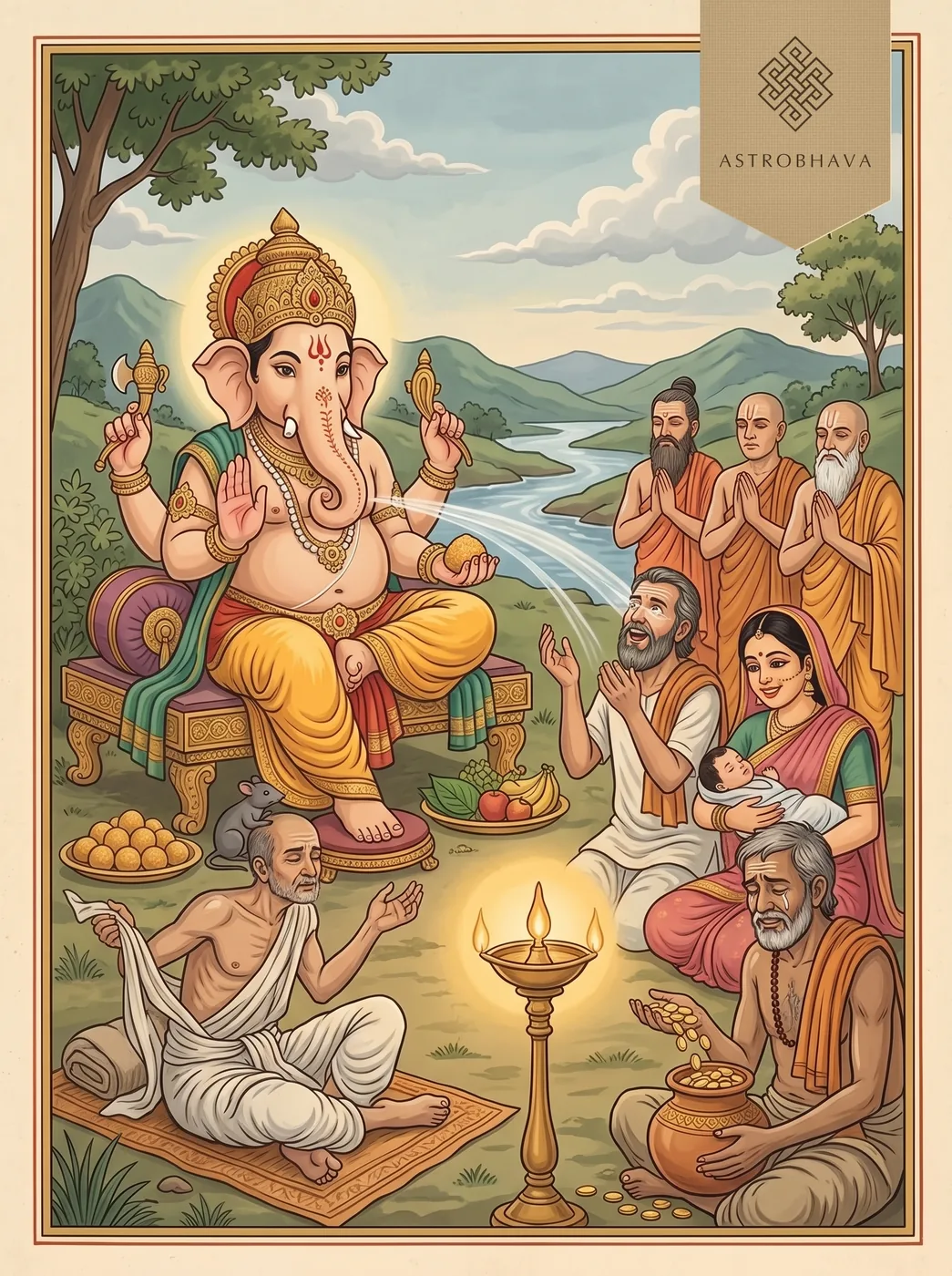
The Jai Ganesh Deva Aarti, also printed as the Shri Ganesh Aarti, is the Hindi lamp song sung to Ganesha across North India while the flame is circled before his image. It is anonymous folk verse in a Hindi and Braj idiom, built from a two-line refrain and four rhymed stanzas, the refrain sung again once every stanza ends. The refrain names Ganesha only through his family: Parvati as mother, Mahadeva as father. The first stanza draws his image, opening with Ekadanta, the one-tusked, counted among his earliest names, then his four arms, the vermilion on his brow and the mouse he rides. The second lists what is laid before him: betel leaf, fruit, dried fruit and laddus, with holy people standing in his service. The third is a list of gifts the verse says he grants to the blind, the sick, the childless and the poor. The last stanza is a signed plea from a poet called Sur.
A lamp song signed by Sur
Aarti takes its name from the Sanskrit aratrika, the lamp waved to remove darkness, and the word came to mean both the flame offered at the close of worship and the song sung while it moves. Jai Ganesh Deva grew up as one of these songs. No manuscript or dated first printing is known, and it passed between households and temples by singing long before printed collections fixed its words. Its only clue to an author sits in the closing stanza, where 'Sur', a devotee of Shyam, asks Ganesha to make the service fruitful. Popular tradition reads this as the signature of Surdas, the sixteenth-century Braj poet of Krishna, because poets of his circle ended their songs with a name-signature. Scholars of Surdas point out, however, that many verses carrying the name Sur were written by later followers, and nothing ties this aarti to him beyond that one word. Printed texts show how fluid the song stayed. The standard aarti collection sets the stanzas in a different order and has no Sur Shyam stanza at all; it closes instead on a plea to the son of Shambhu to guard the honour of the humble, a couplet many families add at the end. Because Ganesha is the deity worshipped first, his aarti usually opens the singing, including on Diwali night ahead of the aarti to Lakshmi.
The mantra, in six scripts
- जय
- jaya — victory
- गणेश
- gaṇeśa — Ganesha
- जय
- jaya — victory
- गणेश
- gaṇeśa — Ganesha
- जय
- jaya — victory
- गणेश
- gaṇeśa — Ganesha
- देवा
- devā — O Lord
- माता
- mātā — mother
- जाकी
- jākī — whose
- पार्वती
- pārvatī — Parvati
- पिता
- pitā — father
- महादेवा
- mahādevā — Mahadeva (Shiva)
Jai Ganesh Jai Ganesh Deva Aarti lyrics in full
The refrain and four stanzas in the form sung in North Indian homes, with the refrain repeated after each stanza.
All 5 verses, in Hindi, Tamil, Telugu, Kannada, Malayalam and English, each with its meaning. Choose a script:
Download the Jai Ganesh Jai Ganesh Deva Aarti PDFAll 5 verses with their meanings, in Hindi. Free to print and keep.
जय गणेश जय गणेश जय गणेश देवा ।
माता जाकी पार्वती पिता महादेवा ॥
ஜய கணேஶ ஜய கணேஶ ஜய கணேஶ தேவா ।
மாதா ஜாகீ பார்வதீ பிதா மஹாதேவா ॥
జయ గణేశ జయ గణేశ జయ గణేశ దేవా ।
మాతా జాకీ పార్వతీ పితా మహాదేవా ॥
ಜಯ ಗಣೇಶ ಜಯ ಗಣೇಶ ಜಯ ಗಣೇಶ ದೇವಾ ।
ಮಾತಾ ಜಾಕೀ ಪಾರ್ವತೀ ಪಿತಾ ಮಹಾದೇವಾ ॥
ജയ ഗണേശ ജയ ഗണേശ ജയ ഗണേശ ദേവാ ।
മാതാ ജാകീ പാര്വതീ പിതാ മഹാദേവാ ॥
jaya gaṇeśa jaya gaṇeśa jaya gaṇeśa devā |
mātā jākī pārvatī pitā mahādevā ||
Victory to Ganesha, victory to Ganesha, victory to Lord Ganesha, whose mother is Parvati and whose father is Mahadeva (Shiva). This refrain is sung at the start and repeated after each stanza.
एक दंत दयावंत चार भुजा धारी ।
माथे सिंदूर सोहे मूसे की सवारी ॥
ஏக தம்த தயாவம்த சார புஜா தாரீ ।
மாதே ஸிம்தூர ஸோஹே மூஸே கீ ஸவாரீ ॥
ఏక దంత దయావంత చార భుజా ధారీ ।
మాథే సిందూర సోహే మూసే కీ సవారీ ॥
ಏಕ ದಂತ ದಯಾವಂತ ಚಾರ ಭುಜಾ ಧಾರೀ ।
ಮಾಥೇ ಸಿಂದೂರ ಸೋಹೇ ಮೂಸೇ ಕೀ ಸವಾರೀ ॥
ഏക ദംത ദയാവംത ചാര ഭുജാ ധാരീ ।
മാഥേ സിംദൂര സോഹേ മൂസേ കീ സവാരീ ॥
eka daṃta dayāvaṃta cāra bhujā dhārī |
māthe siṃdūra sohe mūse kī savārī ||
He has a single tusk, is full of compassion and bears four arms. Vermilion shines on his forehead, and he rides a mouse.
पान चढ़े फल चढ़े और चढ़े मेवा ।
लड्डुअन का भोग लगे संत करें सेवा ॥
பாந சடே பல சடே ஔர சடே மேவா ।
லட்டுஅந கா போக லகே ஸம்த கரேம் ஸேவா ॥
పాన చఢే ఫల చఢే ఔర చఢే మేవా ।
లడ్డుఅన కా భోగ లగే సంత కరేం సేవా ॥
ಪಾನ ಚಢೇ ಫಲ ಚಢೇ ಔರ ಚಢೇ ಮೇವಾ ।
ಲಡ್ಡುಅನ ಕಾ ಭೋಗ ಲಗೇ ಸಂತ ಕರೇಂ ಸೇವಾ ॥
പാന ചഢേ ഫല ചഢേ ഔര ചഢേ മേവാ ।
ലഡ്ഡുഅന കാ ഭോഗ ലഗേ സംത കരേം സേവാ ॥
pāna caṛhe phala caṛhe aura caṛhe mevā |
laḍḍuana kā bhoga lage saṃta kareṃ sevā ||
Betel leaves are offered to him, fruits are offered, and dried fruits and nuts as well. Laddus are set before him as a food offering, and holy people serve him.
अंधन को आंख देत कोढ़िन को काया ।
बांझन को पुत्र देत निर्धन को माया ॥
அம்தந கோ ஆம்க தேத கோடிந கோ காயா ।
பாம்சந கோ புத்ர தேத நிர்தந கோ மாயா ॥
అంధన కో ఆంఖ దేత కోఢిన కో కాయా ।
బాంఝన కో పుత్ర దేత నిర్ధన కో మాయా ॥
ಅಂಧನ ಕೋ ಆಂಖ ದೇತ ಕೋಢಿನ ಕೋ ಕಾಯಾ ।
ಬಾಂಝನ ಕೋ ಪುತ್ರ ದೇತ ನಿರ್ಧನ ಕೋ ಮಾಯಾ ॥
അംധന കോ ആംഖ ദേത കോഢിന കോ കായാ ।
ബാംഝന കോ പുത്ര ദേത നിര്ധന കോ മായാ ॥
aṃdhana ko āṃkha deta koṛhina ko kāyā |
bāṃjhana ko putra deta nirdhana ko māyā ||
The verse says he gives eyes to the blind and a healthy body to those suffering from leprosy. It says he gives a son to childless women and wealth to the poor.
सूर श्याम शरण आए सफल कीजे सेवा ।
माता जाकी पार्वती पिता महादेवा ॥
ஸூர ஶ்யாம ஶரண ஆஏ ஸபல கீஜே ஸேவா ।
மாதா ஜாகீ பார்வதீ பிதா மஹாதேவா ॥
సూర శ్యామ శరణ ఆఏ సఫల కీజే సేవా ।
మాతా జాకీ పార్వతీ పితా మహాదేవా ॥
ಸೂರ ಶ್ಯಾಮ ಶರಣ ಆಏ ಸಫಲ ಕೀಜೇ ಸೇವಾ ।
ಮಾತಾ ಜಾಕೀ ಪಾರ್ವತೀ ಪಿತಾ ಮಹಾದೇವಾ ॥
സൂര ശ്യാമ ശരണ ആഏ സഫല കീജേ സേവാ ।
മാതാ ജാകീ പാര്വതീ പിതാ മഹാദേവാ ॥
sūra śyāma śaraṇa āe saphala kīje sevā |
mātā jākī pārvatī pitā mahādevā ||
Sur, the devotee of Shyam (Krishna), has come to you for refuge: make this service bear fruit. You whose mother is Parvati and whose father is Mahadeva (Shiva).
The syllable people get wrong
In the second stanza, लड्डुअन (laḍḍuana) is often sung as 'laddoo-on'; it has three short syllables, lad-du-an, with a doubled retroflex ḍḍ held briefly and the -an ending sounded lightly, as the Braj plural 'laddus'.
When the Jai Ganesh Deva Aarti is chanted
Weekday. Tuesday
Festival. Ganesh Chaturthi
Questions
Have your chart read before you decide
Chanting is yours to do, and free. But which deity your situation calls for — and whether a mantra alone is the right response — depends on your chart. Sometimes it is; sometimes it is not.
- Over 30 years in the Guru–Sishya Parampara, from the age of five
- He reads every chart himself — 60 minutes, one to one, never delegated
- Charts are read only between sunrise and sunset, following tradition
