Janmashtami Mantra
वासुदेवं समुद्दिश्य सर्वपापप्रशान्तये । उपवासं करिष्यामि कृष्णाष्टम्यां नभस्यहम् ॥Also known as Jatah Kamsavadharthaya
In Devanagari, Tamil, Telugu, Kannada, Malayalam and English — with the meaning of every word, and the one syllable most people pronounce wrongly.
 The Sudarshana Homam, performed for youBook →
What the Janmashtami Mantra is
The Janmashtami mantra is not one formula but the short set of Sanskrit verses said through the Janmashtami vow and its midnight puja, in the order of the rite. The festival falls on the Ashtami of the dark fortnight of Bhadrapada, the night Krishna was born with the Moon in Rohini. Two sankalpa verses open the day: the observer names Vasudeva as the aim of the fast, names the Krishna Ashtami of the month Nabhas, and says food will be taken only on the next day. Both are quoted in the digests as from the Bhavishya Purana. At the birth hour comes the arghya to Krishna, two couplets that list why he was born, from the death of Kamsa to the setting up of dharma, and offer the water to Hari with Devaki. A third arghya goes to the rising Moon, hailed as born of the milk ocean and of the sage Atri's eye, with Rohini beside him. A salutation from the Garuda and Bhavishya Puranas closes the puja.
How Mathura first kept the birth night
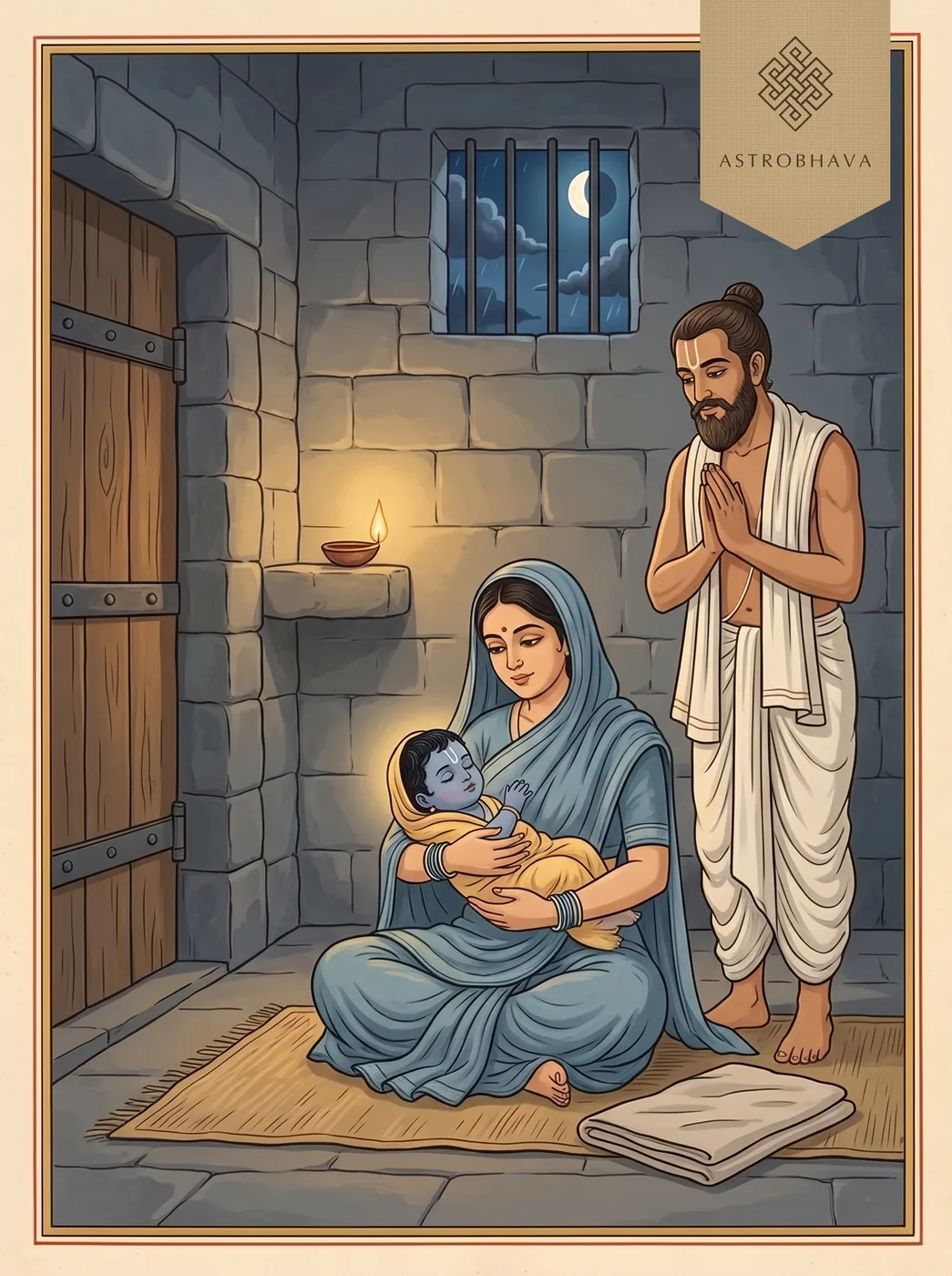
The Bhavishya Purana, in the fifty-fifth chapter of its Uttara Parva, has Yudhishthira ask Krishna when the Janmashtami vow began. Krishna answers with a scene from Mathura. Kamsa had just fallen at the wrestling ground, and Devaki drew her son onto her lap and wept; Vasudeva held both Krishna and Balabhadra and called them his sons, saying his life had borne fruit. The townspeople, watching, asked a favour: that the day Devaki gave birth be kept each year. At his father's word the vow was announced before the whole crowd. Krishna then names the moment itself: the Sun in Leo, the sky crowded with rain clouds, the eighth night of the dark half of Bhadrapada, midnight, the Moon in Taurus joined with Rohini. The chapter goes on to describe the rite as a re-staging of that night. A lying-in room for Devaki is built and dressed like Gokula, with her image resting on a couch beside the nursing infant, Yashoda nearby with her newborn daughter, Kamsa's guards fallen asleep and Vasudeva standing with sword and shield. The text adds that some twice-born also give water to the Moon when it rises, and that the sixth-day and naming rites of the child follow next morning, on Navami. A later manual ascribed to Madhvacharya calls this same night Jayanti when Ashtami and Rohini meet at midnight.
The mantra, in six scripts
- वासुदेवं
- vāsudevaṃ — Vasudeva (Krishna)
- समुद्दिश्य
- samuddiśya — keeping in view
- सर्वपापप्रशान्तये
- sarvapāpapraśāntaye — for quieting all sins
- उपवासं
- upavāsaṃ — the fast
- करिष्यामि
- kariṣyāmi — I will keep
- कृष्णाष्टम्यां
- kṛṣṇāṣṭamyāṃ — on Krishna Ashtami
- नभस्यहम्
- nabhasyaham — in Nabhas, I
Janmashtami Mantra lyrics in full
Six verses in the order of the rite: the two vow verses of the morning, the two-couplet arghya to Krishna at his birth, the arghya to the rising Moon and the closing salutation.
All 6 verses, in Sanskrit, Tamil, Telugu, Kannada, Malayalam and English, each with its meaning. Choose a script:
Download the Janmashtami Mantra PDFAll 6 verses with their meanings, in Sanskrit. Free to print and keep.
वासुदेवं समुद्दिश्य सर्वपापप्रशान्तये ।
उपवासं करिष्यामि कृष्णाष्टम्यां नभस्यहम् ॥
வாஸுதேவம் ஸமுத்திஶ்ய ஸர்வபாபப்ரஶாந்தயே ।
உபவாஸம் கரிஷ்யாமி க்ருஷ்ணாஷ்டம்யாம் நபஸ்யஹம் ॥
వాసుదేవం సముద్దిశ్య సర్వపాపప్రశాన్తయే ।
ఉపవాసం కరిష్యామి కృష్ణాష్టమ్యాం నభస్యహమ్ ॥
ವಾಸುದೇವಂ ಸಮುದ್ದಿಶ್ಯ ಸರ್ವಪಾಪಪ್ರಶಾನ್ತಯೇ ।
ಉಪವಾಸಂ ಕರಿಷ್ಯಾಮಿ ಕೃಷ್ಣಾಷ್ಟಮ್ಯಾಂ ನಭಸ್ಯಹಮ್ ॥
വാസുദേവം സമുദ്ദിശ്യ സര്വപാപപ്രശാന്തയേ ।
ഉപവാസം കരിഷ്യാമി കൃഷ്ണാഷ്ടമ്യാം നഭസ്യഹമ് ॥
vāsudevaṃ samuddiśya sarvapāpapraśāntaye |
upavāsaṃ kariṣyāmi kṛṣṇāṣṭamyāṃ nabhasyaham ||
Keeping Vasudeva in mind, and for the quieting of all sins, I will keep the fast on the Krishna Ashtami of the month of Nabhas (Bhadrapada).
अद्य कृष्णाष्टमीं देवीं नभश्चन्द्रसरोहिणीम् ।
अर्चयित्वोपवासेन भोक्ष्येऽहमपरेऽहनि ॥
அத்ய க்ருஷ்ணாஷ்டமீம் தேவீம் நபஶ்சந்த்ரஸரோஹிணீம் ।
அர்சயித்வோபவாஸேந போக்ஷ்யேஹமபரேஹநி ॥
అద్య కృష్ణాష్టమీం దేవీం నభశ్చన్ద్రసరోహిణీమ్ ।
అర్చయిత్వోపవాసేన భోక్ష్యేఽహమపరేఽహని ॥
ಅದ್ಯ ಕೃಷ್ಣಾಷ್ಟಮೀಂ ದೇವೀಂ ನಭಶ್ಚನ್ದ್ರಸರೋಹಿಣೀಮ್ ।
ಅರ್ಚಯಿತ್ವೋಪವಾಸೇನ ಭೋಕ್ಷ್ಯೇಽಹಮಪರೇಽಹನಿ ॥
അദ്യ കൃഷ്ണാഷ്ടമീം ദേവീം നഭശ്ചന്ദ്രസരോഹിണീമ് ।
അര്ചയിത്വോപവാസേന ഭോക്ഷ്യേഽഹമപരേഽഹനി ॥
adya kṛṣṇāṣṭamīṃ devīṃ nabhaścandrasarohiṇīm |
arcayitvopavāsena bhokṣye'hamapare'hani ||
Today I worship the holy Krishna Ashtami of Nabhas, together with the Moon and Rohini, by fasting; I will eat only on the following day.
जातः कंसवधार्थाय भूभारोत्तारणाय च ।
कौरवाणां विनाशाय दैत्यानां निधनाय च ॥
ஜாதஃ கம்ஸவதார்தாய பூபாரோத்தாரணாய ச ।
கௌரவாணாம் விநாஶாய தைத்யாநாம் நிதநாய ச ॥
జాతః కంసవధార్థాయ భూభారోత్తారణాయ చ ।
కౌరవాణాం వినాశాయ దైత్యానాం నిధనాయ చ ॥
ಜಾತಃ ಕಂಸವಧಾರ್ಥಾಯ ಭೂಭಾರೋತ್ತಾರಣಾಯ ಚ ।
ಕೌರವಾಣಾಂ ವಿನಾಶಾಯ ದೈತ್ಯಾನಾಂ ನಿಧನಾಯ ಚ ॥
ജാതഃ കംസവധാര്ഥായ ഭൂഭാരോത്താരണായ ച ।
കൌരവാണാം വിനാശായ ദൈത്യാനാം നിധനായ ച ॥
jātaḥ kaṃsavadhārthāya bhūbhārottāraṇāya ca |
kauravāṇāṃ vināśāya daityānāṃ nidhanāya ca ||
You were born to slay Kamsa and to lift the burden from the earth, to bring about the fall of the Kauravas and the end of the demons.
पाण्डवानां हितार्थाय धर्मसंस्थापनाय च ।
गृहाणार्घ्यं मया दत्तं देवक्या सहितो हरे ॥
பாண்டவாநாம் ஹிதார்தாய தர்மஸம்ஸ்தாபநாய ச ।
க்ருஹாணார்க்யம் மயா தத்தம் தேவக்யா ஸஹிதோ ஹரே ॥
పాణ్డవానాం హితార్థాయ ధర్మసంస్థాపనాయ చ ।
గృహాణార్ఘ్యం మయా దత్తం దేవక్యా సహితో హరే ॥
ಪಾಣ್ಡವಾನಾಂ ಹಿತಾರ್ಥಾಯ ಧರ್ಮಸಂಸ್ಥಾಪನಾಯ ಚ ।
ಗೃಹಾಣಾರ್ಘ್ಯಂ ಮಯಾ ದತ್ತಂ ದೇವಕ್ಯಾ ಸಹಿತೋ ಹರೇ ॥
പാണ്ഡവാനാം ഹിതാര്ഥായ ധര്മസംസ്ഥാപനായ ച ।
ഗൃഹാണാര്ഘ്യം മയാ ദത്തം ദേവക്യാ സഹിതോ ഹരേ ॥
pāṇḍavānāṃ hitārthāya dharmasaṃsthāpanāya ca |
gṛhāṇārghyaṃ mayā dattaṃ devakyā sahito hare ||
You came for the good of the Pandavas and to establish dharma. O Hari, together with Devaki, accept this water offering I give you.
क्षीरोदार्णवसम्भूत अत्रिनेत्रसमुद्भव ।
गृहाणार्घ्यं शशाङ्केदं रोहिण्या सहितो मम ॥
க்ஷீரோதார்ணவஸம்பூத அத்ரிநேத்ரஸமுத்பவ ।
க்ருஹாணார்க்யம் ஶஶாங்கேதம் ரோஹிண்யா ஸஹிதோ மம ॥
క్షీరోదార్ణవసమ్భూత అత్రినేత్రసముద్భవ ।
గృహాణార్ఘ్యం శశాఙ్కేదం రోహిణ్యా సహితో మమ ॥
ಕ್ಷೀರೋದಾರ್ಣವಸಮ್ಭೂತ ಅತ್ರಿನೇತ್ರಸಮುದ್ಭವ ।
ಗೃಹಾಣಾರ್ಘ್ಯಂ ಶಶಾಙ್ಕೇದಂ ರೋಹಿಣ್ಯಾ ಸಹಿತೋ ಮಮ ॥
ക്ഷീരോദാര്ണവസമ്ഭൂത അത്രിനേത്രസമുദ്ഭവ ।
ഗൃഹാണാര്ഘ്യം ശശാങ്കേദം രോഹിണ്യാ സഹിതോ മമ ॥
kṣīrodārṇavasambhūta atrinetrasamudbhava |
gṛhāṇārghyaṃ śaśāṅkedaṃ rohiṇyā sahito mama ||
O Moon, risen from the ocean of milk and born from the eye of the sage Atri, accept this water offering of mine, together with Rohini.
यं देवं देवकी देवी वसुदेवादजीजनत् ।
भौमस्य ब्रह्मणो गुप्त्यै तस्मै ब्रह्मात्मने नमः ॥
யம் தேவம் தேவகீ தேவீ வஸுதேவாதஜீஜநத் ।
பௌமஸ்ய ப்ரஹ்மணோ குப்த்யை தஸ்மை ப்ரஹ்மாத்மநே நமஃ ॥
యం దేవం దేవకీ దేవీ వసుదేవాదజీజనత్ ।
భౌమస్య బ్రహ్మణో గుప్త్యై తస్మై బ్రహ్మాత్మనే నమః ॥
ಯಂ ದೇವಂ ದೇವಕೀ ದೇವೀ ವಸುದೇವಾದಜೀಜನತ್ ।
ಭೌಮಸ್ಯ ಬ್ರಹ್ಮಣೋ ಗುಪ್ತ್ಯೈ ತಸ್ಮೈ ಬ್ರಹ್ಮಾತ್ಮನೇ ನಮಃ ॥
യം ദേവം ദേവകീ ദേവീ വസുദേവാദജീജനത് ।
ഭൌമസ്യ ബ്രഹ്മണോ ഗുപ്ത്യൈ തസ്മൈ ബ്രഹ്മാത്മനേ നമഃ ॥
yaṃ devaṃ devakī devī vasudevādajījanat |
bhaumasya brahmaṇo guptyai tasmai brahmātmane namaḥ ||
Salutation to that God, whose very self is Brahman, whom the goddess Devaki bore to Vasudeva for the protection of the sacred order on earth.
The syllable people get wrong
In gṛhāṇārghyaṃ, said in all three offerings, the word arghya carries an aspirated gh: ar-GHYAM, with a breath after the g, and the ā of gṛhāṇa is held long (gri-HAA-naar-ghyam). It is often flattened to 'grihana argyam', which drops both.
When the Janmashtami Mantra is chanted
Weekday. Thursday
Festival. Krishna Janmashtami (Bhadrapada Krishna Ashtami)
Questions
Have your chart read before you decide
Chanting is yours to do, and free. But which deity your situation calls for — and whether a mantra alone is the right response — depends on your chart. Sometimes it is; sometimes it is not.
- Over 30 years in the Guru–Sishya Parampara, from the age of five
- He reads every chart himself — 60 minutes, one to one, never delegated
- Charts are read only between sunrise and sunset, following tradition