Kali Chalisa
जयकाली कलिमलहरण, महिमा अगम अपार । महिष मर्दिनी कालिका, देहु अभय अपार ॥Also known as Jai Kali Kalimal Haran
In Devanagari, Tamil, Telugu, Kannada, Malayalam and English — with the meaning of every word, and the one syllable most people pronounce wrongly.
What the Kali Chalisa is
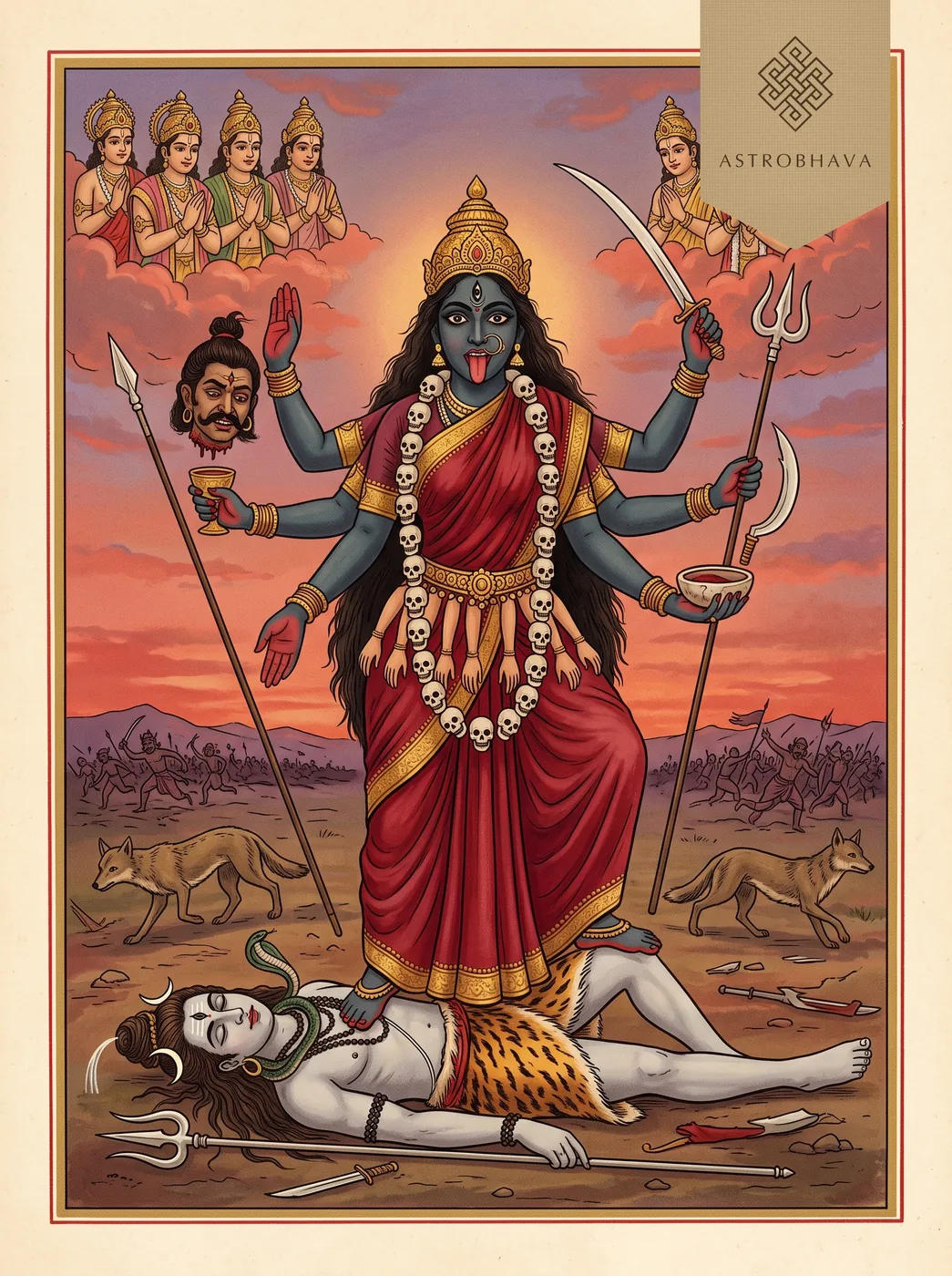
The Kali Chalisa, printed as Shri Kali Chalisa, is a set of forty Hindi chaupai couplets addressed to Kali that opens 'jayakali kalimalaharana' and carries no poet's name. Its language is the Braj-coloured Hindi of north-Indian devotional song, framed by an opening and a closing doha. Chaupais 2 to 8 picture an eight-armed Kali and take the hands one at a time: a severed head, a cup of madhu, a spear, a skull-bowl, a sword, a trident, a second blade and a hand that grants boons. Chaupais 9 to 20 identify her with Sita, with Gauri and with Time itself. Chaupais 21 and 22 list her retinue, and 23 to 32 retell her battles in an order of their own. Chaupais 34 to 37 and the closing doha state what the verse says the reciter receives, and Chaupais 38 to 40 end in a direct plea: why, Mother, have you delayed?
Rama's war and Shiva at her feet
The middle of the chalisa tells a story that no single scripture tells in this order. Chaupai 23 places Kali in the Treta age, fighting for Rama and destroying the army of ten-headed Ravana. Behind it stands the Adbhuta Ramayana, a Shakta retelling in 27 sargas: in sarga 23, after Rama falls unconscious, Sita gives up her human appearance, becomes Mahakali and severs the thousand heads of Sahasra Ravana, and in sarga 25 Rama praises her with 1,008 names. Chaupai 9, 'you alone are Kali, you alone are Sita', rests on the same idea. The chalisa then has her fury rise until she can no longer tell her own people from strangers (Chaupai 26). Here two older tellings meet. The Linga Purana (1.106) relates that Kali, sent against the demon Daruka, grew so drunk on battle that the world itself was threatened; in one widely told ending Shiva calms her by appearing on the field as a thirsty, crying infant. In the other, best known in Bengal, he lies down in her path, and when her foot touches him she puts out her tongue in shame. The chalisa joins the two: Shankara comes as a child, blocks her way and falls at her feet, and the tongue that came out then, Chaupai 28 says, is the form known everywhere.
The mantra, in six scripts
- जयकाली
- jayakālī — victory to Kali
- कलिमलहरण
- kalimalaharaṇa — remover of the Kali age's impurity
- महिमा
- mahimā — greatness
- अगम
- agama — unfathomable
- अपार
- apāra — boundless
- महिष
- mahiṣa — Mahisha, the buffalo demon
- मर्दिनी
- mardinī — slayer
- कालिका
- kālikā — Kalika
- देहु
- dehu — grant
- अभय
- abhaya — fearlessness
- अपार
- apāra — boundless
Kali Chalisa lyrics in full
An opening doha, forty chaupais and a closing doha, in the north-Indian Hindi wording most often sung today.
All 42 verses, in Hindi, Tamil, Telugu, Kannada, Malayalam and English, each with its meaning. Choose a script:
Download the Kali Chalisa PDFAll 42 verses with their meanings, in Hindi. Free to print and keep.
जयकाली कलिमलहरण, महिमा अगम अपार ।
महिष मर्दिनी कालिका, देहु अभय अपार ॥
ஜயகாலீ கலிமலஹரண, மஹிமா அகம அபார ।
மஹிஷ மர்திநீ காலிகா, தேஹு அபய அபார ॥
జయకాలీ కలిమలహరణ, మహిమా అగమ అపార ।
మహిష మర్దినీ కాలికా, దేహు అభయ అపార ॥
ಜಯಕಾಲೀ ಕಲಿಮಲಹರಣ, ಮಹಿಮಾ ಅಗಮ ಅಪಾರ ।
ಮಹಿಷ ಮರ್ದಿನೀ ಕಾಲಿಕಾ, ದೇಹು ಅಭಯ ಅಪಾರ ॥
ജയകാലീ കലിമലഹരണ, മഹിമാ അഗമ അപാര ।
മഹിഷ മര്ദിനീ കാലികാ, ദേഹു അഭയ അപാര ॥
jayakālī kalimalaharaṇa, mahimā agama apāra |
mahiṣa mardinī kālikā, dehu abhaya apāra ||
Victory to Kali, who removes the impurity of the Kali age; your greatness is unfathomable and boundless. Kalika, slayer of the buffalo demon Mahisha, grant boundless fearlessness.
अरि मद मान मिटावन हारी ।
मुण्डमाल गल सोहत प्यारी ॥
அரி மத மாந மிடாவந ஹாரீ ।
முண்டமால கல ஸோஹத ப்யாரீ ॥
అరి మద మాన మిటావన హారీ ।
ముణ్డమాల గల సోహత ప్యారీ ॥
ಅರಿ ಮದ ಮಾನ ಮಿಟಾವನ ಹಾರೀ ।
ಮುಣ್ಡಮಾಲ ಗಲ ಸೋಹತ ಪ್ಯಾರೀ ॥
അരി മദ മാന മിടാവന ഹാരീ ।
മുണ്ഡമാല ഗല സോഹത പ്യാരീ ॥
ari mada māna miṭāvana hārī |
muṇḍamāla gala sohata pyārī ||
You destroy the pride and arrogance of enemies; a lovely garland of severed heads adorns your neck.
अष्टभुजी सुखदायक माता ।
दुष्टदलन जग में विख्याता ॥
அஷ்டபுஜீ ஸுகதாயக மாதா ।
துஷ்டதலந ஜக மேம் விக்யாதா ॥
అష్టభుజీ సుఖదాయక మాతా ।
దుష్టదలన జగ మేం విఖ్యాతా ॥
ಅಷ್ಟಭುಜೀ ಸುಖದಾಯಕ ಮಾತಾ ।
ದುಷ್ಟದಲನ ಜಗ ಮೇಂ ವಿಖ್ಯಾತಾ ॥
അഷ്ടഭുജീ സുഖദായക മാതാ ।
ദുഷ്ടദലന ജഗ മേം വിഖ്യാതാ ॥
aṣṭabhujī sukhadāyaka mātā |
duṣṭadalana jaga meṃ vikhyātā ||
Eight-armed Mother, giver of happiness, you are famed in the world as the crusher of the wicked.
भाल विशाल मुकुट छवि छाजै ।
कर में शीश शत्रु का साजै ॥
பால விஶால முகுட சவி சாஜை ।
கர மேம் ஶீஶ ஶத்ரு கா ஸாஜை ॥
భాల విశాల ముకుట ఛవి ఛాజై ।
కర మేం శీశ శత్రు కా సాజై ॥
ಭಾಲ ವಿಶಾಲ ಮುಕುಟ ಛವಿ ಛಾಜೈ ।
ಕರ ಮೇಂ ಶೀಶ ಶತ್ರು ಕಾ ಸಾಜೈ ॥
ഭാല വിശാല മുകുട ഛവി ഛാജൈ ।
കര മേം ശീശ ശത്രു കാ സാജൈ ॥
bhāla viśāla mukuṭa chavi chājai |
kara meṃ śīśa śatru kā sājai ||
A crown shines in splendour on your broad forehead, and one hand holds the severed head of an enemy.
दूजे हाथ लिए मधु प्याला ।
हाथ तीसरे सोहत भाला ॥
தூஜே ஹாத லிஏ மது ப்யாலா ।
ஹாத தீஸரே ஸோஹத பாலா ॥
దూజే హాథ లిఏ మధు ప్యాలా ।
హాథ తీసరే సోహత భాలా ॥
ದೂಜೇ ಹಾಥ ಲಿಏ ಮಧು ಪ್ಯಾಲಾ ।
ಹಾಥ ತೀಸರೇ ಸೋಹತ ಭಾಲಾ ॥
ദൂജേ ഹാഥ ലിഏ മധു പ്യാലാ ।
ഹാഥ തീസരേ സോഹത ഭാലാ ॥
dūje hātha lie madhu pyālā |
hātha tīsare sohata bhālā ||
Your second hand holds a cup of madhu (sweet drink), and a spear gleams in your third hand.
चौथे खप्पर खड्ग कर पांचे ।
छठे त्रिशूल शत्रु बल जांचे ॥
சௌதே கப்பர கட்க கர பாம்சே ।
சடே த்ரிஶூல ஶத்ரு பல ஜாம்சே ॥
చౌథే ఖప్పర ఖడ్గ కర పాంచే ।
ఛఠే త్రిశూల శత్రు బల జాంచే ॥
ಚೌಥೇ ಖಪ್ಪರ ಖಡ್ಗ ಕರ ಪಾಂಚೇ ।
ಛಠೇ ತ್ರಿಶೂಲ ಶತ್ರು ಬಲ ಜಾಂಚೇ ॥
ചൌഥേ ഖപ്പര ഖഡ്ഗ കര പാംചേ ।
ഛഠേ ത്രിശൂല ശത്രു ബല ജാംചേ ॥
cauthe khappara khaḍga kara pāṃce |
chaṭhe triśūla śatru bala jāṃce ||
The fourth hand holds a skull-bowl and the fifth a sword; with the trident in the sixth you test the strength of enemies.
सप्तम कर दमकत असि प्यारी ।
शोभा अद्भुत मात तुम्हारी ॥
ஸப்தம கர தமகத அஸி ப்யாரீ ।
ஶோபா அத்புத மாத தும்ஹாரீ ॥
సప్తమ కర దమకత అసి ప్యారీ ।
శోభా అద్భుత మాత తుమ్హారీ ॥
ಸಪ್ತಮ ಕರ ದಮಕತ ಅಸಿ ಪ್ಯಾರೀ ।
ಶೋಭಾ ಅದ್ಭುತ ಮಾತ ತುಮ್ಹಾರೀ ॥
സപ്തമ കര ദമകത അസി പ്യാരീ ।
ശോഭാ അദ്ഭുത മാത തുമ്ഹാരീ ॥
saptama kara damakata asi pyārī |
śobhā adbhuta māta tumhārī ||
In your seventh hand a fine sword flashes; Mother, your beauty is wondrous.
अष्टम कर भक्तन वर दाता ।
जग मनहरण रूप ये माता ॥
அஷ்டம கர பக்தந வர தாதா ।
ஜக மநஹரண ரூப யே மாதா ॥
అష్టమ కర భక్తన వర దాతా ।
జగ మనహరణ రూప యే మాతా ॥
ಅಷ್ಟಮ ಕರ ಭಕ್ತನ ವರ ದಾತಾ ।
ಜಗ ಮನಹರಣ ರೂಪ ಯೇ ಮಾತಾ ॥
അഷ്ടമ കര ഭക്തന വര ദാതാ ।
ജഗ മനഹരണ രൂപ യേ മാതാ ॥
aṣṭama kara bhaktana vara dātā |
jaga manaharaṇa rūpa ye mātā ||
Your eighth hand grants boons to devotees; Mother, this form of yours captivates the heart of the world.
भक्तन में अनुरक्त भवानी ।
निशदिन रटें ऋषी-मुनि ज्ञानी ॥
பக்தந மேம் அநுரக்த பவாநீ ।
நிஶதிந ரடேம் ருஷீ-முநி ஜ்ஞாநீ ॥
భక్తన మేం అనురక్త భవానీ ।
నిశదిన రటేం ఋషీ-ముని జ్ఞానీ ॥
ಭಕ್ತನ ಮೇಂ ಅನುರಕ್ತ ಭವಾನೀ ।
ನಿಶದಿನ ರಟೇಂ ಋಷೀ-ಮುನಿ ಜ್ಞಾನೀ ॥
ഭക്തന മേം അനുരക്ത ഭവാനീ ।
നിശദിന രടേം ഋഷീ-മുനി ജ്ഞാനീ ॥
bhaktana meṃ anurakta bhavānī |
niśadina raṭeṃ ṛṣī-muni jñānī ||
Bhavani, you are devoted to your devotees; seers, sages and the wise repeat your name day and night.
महाशक्ति अति प्रबल पुनीता ।
तू ही काली तू ही सीता ॥
மஹாஶக்தி அதி ப்ரபல புநீதா ।
தூ ஹீ காலீ தூ ஹீ ஸீதா ॥
మహాశక్తి అతి ప్రబల పునీతా ।
తూ హీ కాలీ తూ హీ సీతా ॥
ಮಹಾಶಕ್ತಿ ಅತಿ ಪ್ರಬಲ ಪುನೀತಾ ।
ತೂ ಹೀ ಕಾಲೀ ತೂ ಹೀ ಸೀತಾ ॥
മഹാശക്തി അതി പ്രബല പുനീതാ ।
തൂ ഹീ കാലീ തൂ ഹീ സീതാ ॥
mahāśakti ati prabala punītā |
tū hī kālī tū hī sītā ||
Great Shakti, exceedingly mighty and pure, you alone are Kali and you alone are Sita.
पतित तारिणी हे जग पालक ।
कल्याणी पापी कुल घालक ॥
பதித தாரிணீ ஹே ஜக பாலக ।
கல்யாணீ பாபீ குல காலக ॥
పతిత తారిణీ హే జగ పాలక ।
కల్యాణీ పాపీ కుల ఘాలక ॥
ಪತಿತ ತಾರಿಣೀ ಹೇ ಜಗ ಪಾಲಕ ।
ಕಲ್ಯಾಣೀ ಪಾಪೀ ಕುಲ ಘಾಲಕ ॥
പതിത താരിണീ ഹേ ജഗ പാലക ।
കല്യാണീ പാപീ കുല ഘാലക ॥
patita tāriṇī he jaga pālaka |
kalyāṇī pāpī kula ghālaka ||
You lift up the fallen and sustain the world; auspicious one, you destroy the line of the sinful.
शेष सुरेश न पावत पारा ।
गौरी रूप धर्यो इक बारा ॥
ஶேஷ ஸுரேஶ ந பாவத பாரா ।
கௌரீ ரூப தர்யோ இக பாரா ॥
శేష సురేశ న పావత పారా ।
గౌరీ రూప ధర్యో ఇక బారా ॥
ಶೇಷ ಸುರೇಶ ನ ಪಾವತ ಪಾರಾ ।
ಗೌರೀ ರೂಪ ಧರ್ಯೋ ಇಕ ಬಾರಾ ॥
ശേഷ സുരേശ ന പാവത പാരാ ।
ഗൌരീ രൂപ ധര്യോ ഇക ബാരാ ॥
śeṣa sureśa na pāvata pārā |
gaurī rūpa dharyo ika bārā ||
Even Shesha and Indra cannot reach the end of your glory; once you took the form of Gauri.
तुम समान दाता नहिं दूजा ।
विधिवत करें भक्तजन पूजा ॥
தும ஸமாந தாதா நஹிம் தூஜா ।
விதிவத கரேம் பக்தஜந பூஜா ॥
తుమ సమాన దాతా నహిం దూజా ।
విధివత కరేం భక్తజన పూజా ॥
ತುಮ ಸಮಾನ ದಾತಾ ನಹಿಂ ದೂಜಾ ।
ವಿಧಿವತ ಕರೇಂ ಭಕ್ತಜನ ಪೂಜಾ ॥
തുമ സമാന ദാതാ നഹിം ദൂജാ ।
വിധിവത കരേം ഭക്തജന പൂജാ ॥
tuma samāna dātā nahiṃ dūjā |
vidhivata kareṃ bhaktajana pūjā ||
There is no giver equal to you; devotees worship you with due rites.
रूप भयंकर जब तुम धारा ।
दुष्टदलन कीन्हेहु संहारा ॥
ரூப பயம்கர ஜப தும தாரா ।
துஷ்டதலந கீந்ஹேஹு ஸம்ஹாரா ॥
రూప భయంకర జబ తుమ ధారా ।
దుష్టదలన కీన్హేహు సంహారా ॥
ರೂಪ ಭಯಂಕರ ಜಬ ತುಮ ಧಾರಾ ।
ದುಷ್ಟದಲನ ಕೀನ್ಹೇಹು ಸಂಹಾರಾ ॥
രൂപ ഭയംകര ജബ തുമ ധാരാ ।
ദുഷ്ടദലന കീന്ഹേഹു സംഹാരാ ॥
rūpa bhayaṃkara jaba tuma dhārā |
duṣṭadalana kīnhehu saṃhārā ||
When you took on a terrifying form, you crushed the wicked and destroyed them.
नाम अनेकन मात तुम्हारे ।
भक्तजनों के संकट टारे ॥
நாம அநேகந மாத தும்ஹாரே ।
பக்தஜநோம் கே ஸம்கட டாரே ॥
నామ అనేకన మాత తుమ్హారే ।
భక్తజనోం కే సంకట టారే ॥
ನಾಮ ಅನೇಕನ ಮಾತ ತುಮ್ಹಾರೇ ।
ಭಕ್ತಜನೋಂ ಕೇ ಸಂಕಟ ಟಾರೇ ॥
നാമ അനേകന മാത തുമ്ഹാരേ ।
ഭക്തജനോം കേ സംകട ടാരേ ॥
nāma anekana māta tumhāre |
bhaktajanoṃ ke saṃkaṭa ṭāre ||
Mother, you have many names, and you have removed the troubles of your devotees.
कलि के कष्ट कलेशन हरनी ।
भव भय मोचन मंगल करनी ॥
கலி கே கஷ்ட கலேஶந ஹரநீ ।
பவ பய மோசந மம்கல கரநீ ॥
కలి కే కష్ట కలేశన హరనీ ।
భవ భయ మోచన మంగల కరనీ ॥
ಕಲಿ ಕೇ ಕಷ್ಟ ಕಲೇಶನ ಹರನೀ ।
ಭವ ಭಯ ಮೋಚನ ಮಂಗಲ ಕರನೀ ॥
കലി കേ കഷ്ട കലേശന ഹരനീ ।
ഭവ ഭയ മോചന മംഗല കരനീ ॥
kali ke kaṣṭa kaleśana haranī |
bhava bhaya mocana maṃgala karanī ||
You take away the pains and afflictions of the Kali age; you release from the fear of worldly existence and bring what is auspicious.
महिमा अगम वेद यश गावैं ।
नारद शारद पार न पावैं ॥
மஹிமா அகம வேத யஶ காவைம் ।
நாரத ஶாரத பார ந பாவைம் ॥
మహిమా అగమ వేద యశ గావైం ।
నారద శారద పార న పావైం ॥
ಮಹಿಮಾ ಅಗಮ ವೇದ ಯಶ ಗಾವೈಂ ।
ನಾರದ ಶಾರದ ಪಾರ ನ ಪಾವೈಂ ॥
മഹിമാ അഗമ വേദ യശ ഗാവൈം ।
നാരദ ശാരദ പാര ന പാവൈം ॥
mahimā agama veda yaśa gāvaiṃ |
nārada śārada pāra na pāvaiṃ ||
Your greatness is beyond reach; the Vedas sing your fame, and even Narada and Sharada cannot find its end.
भू पर भार बढ्यौ जब भारी ।
तब तब तुम प्रकटीं महतारी ॥
பூ பர பார பட்யௌ ஜப பாரீ ।
தப தப தும ப்ரகடீம் மஹதாரீ ॥
భూ పర భార బఢ్యౌ జబ భారీ ।
తబ తబ తుమ ప్రకటీం మహతారీ ॥
ಭೂ ಪರ ಭಾರ ಬಢ್ಯೌ ಜಬ ಭಾರೀ ।
ತಬ ತಬ ತುಮ ಪ್ರಕಟೀಂ ಮಹತಾರೀ ॥
ഭൂ പര ഭാര ബഢ്യൌ ജബ ഭാരീ ।
തബ തബ തുമ പ്രകടീം മഹതാരീ ॥
bhū para bhāra baḍhyau jaba bhārī |
taba taba tuma prakaṭīṃ mahatārī ||
Whenever the burden on the earth grew heavy, then, Mother, you appeared.
आदि अनादि अभय वरदाता ।
विश्वविदित भव संकट त्राता ॥
ஆதி அநாதி அபய வரதாதா ।
விஶ்வவிதித பவ ஸம்கட த்ராதா ॥
ఆది అనాది అభయ వరదాతా ।
విశ్వవిదిత భవ సంకట త్రాతా ॥
ಆದಿ ಅನಾದಿ ಅಭಯ ವರದಾತಾ ।
ವಿಶ್ವವಿದಿತ ಭವ ಸಂಕಟ ತ್ರಾತಾ ॥
ആദി അനാദി അഭയ വരദാതാ ।
വിശ്വവിദിത ഭവ സംകട ത്രാതാ ॥
ādi anādi abhaya varadātā |
viśvavidita bhava saṃkaṭa trātā ||
You are the first and the beginningless, giver of the boon of fearlessness, known to the whole world as the rescuer from the troubles of existence.
कुसमय नाम तुम्हारौ लीन्हा ।
उसको सदा अभय वर दीन्हा ॥
குஸமய நாம தும்ஹாரௌ லீந்ஹா ।
உஸகோ ஸதா அபய வர தீந்ஹா ॥
కుసమయ నామ తుమ్హారౌ లీన్హా ।
ఉసకో సదా అభయ వర దీన్హా ॥
ಕುಸಮಯ ನಾಮ ತುಮ್ಹಾರೌ ಲೀನ್ಹಾ ।
ಉಸಕೋ ಸದಾ ಅಭಯ ವರ ದೀನ್ಹಾ ॥
കുസമയ നാമ തുമ്ഹാരൌ ലീന്ഹാ ।
ഉസകോ സദാ അഭയ വര ദീന്ഹാ ॥
kusamaya nāma tumhārau līnhā |
usako sadā abhaya vara dīnhā ||
Whoever took your name in an evil hour, you always gave them the boon of fearlessness.
ध्यान धरें श्रुति शेष सुरेशा ।
काल रूप लखि तुमरो भेषा ॥
த்யாந தரேம் ஶ்ருதி ஶேஷ ஸுரேஶா ।
கால ரூப லகி துமரோ பேஷா ॥
ధ్యాన ధరేం శ్రుతి శేష సురేశా ।
కాల రూప లఖి తుమరో భేషా ॥
ಧ್ಯಾನ ಧರೇಂ ಶ್ರುತಿ ಶೇಷ ಸುರೇಶಾ ।
ಕಾಲ ರೂಪ ಲಖಿ ತುಮರೋ ಭೇಷಾ ॥
ധ്യാന ധരേം ശ്രുതി ശേഷ സുരേശാ ।
കാല രൂപ ലഖി തുമരോ ഭേഷാ ॥
dhyāna dhareṃ śruti śeṣa sureśā |
kāla rūpa lakhi tumaro bheṣā ||
The Vedas, Shesha and Indra meditate on you, beholding your guise as Time (Kala) itself.
कलुआ भैंरों संग तुम्हारे ।
अरि हित रूप भयानक धारे ॥
கலுஆ பைம்ரோம் ஸம்க தும்ஹாரே ।
அரி ஹித ரூப பயாநக தாரே ॥
కలుఆ భైంరోం సంగ తుమ్హారే ।
అరి హిత రూప భయానక ధారే ॥
ಕಲುಆ ಭೈಂರೋಂ ಸಂಗ ತುಮ್ಹಾರೇ ।
ಅರಿ ಹಿತ ರೂಪ ಭಯಾನಕ ಧಾರೇ ॥
കലുആ ഭൈംരോം സംഗ തുമ്ഹാരേ ।
അരി ഹിത രൂപ ഭയാനക ധാരേ ॥
kaluā bhaiṃroṃ saṃga tumhāre |
ari hita rūpa bhayānaka dhāre ||
Kalua Bhairon is at your side, taking on a fearsome form against enemies.
सेवक लांगुर रहत अगारी ।
चौसठ जोगन आज्ञाकारी ॥
ஸேவக லாம்குர ரஹத அகாரீ ।
சௌஸட ஜோகந ஆஜ்ஞாகாரீ ॥
సేవక లాంగుర రహత అగారీ ।
చౌసఠ జోగన ఆజ్ఞాకారీ ॥
ಸೇವಕ ಲಾಂಗುರ ರಹತ ಅಗಾರೀ ।
ಚೌಸಠ ಜೋಗನ ಆಜ್ಞಾಕಾರೀ ॥
സേവക ലാംഗുര രഹത അഗാരീ ।
ചൌസഠ ജോഗന ആജ്ഞാകാരീ ॥
sevaka lāṃgura rahata agārī |
causaṭha jogana ājñākārī ||
Your servant Langur stays before you, and the sixty-four yoginis obey your command.
त्रेता में रघुवर हित आई ।
दशकंधर की सैन नसाई ॥
த்ரேதா மேம் ரகுவர ஹித ஆஈ ।
தஶகம்தர கீ ஸைந நஸாஈ ॥
త్రేతా మేం రఘువర హిత ఆఈ ।
దశకంధర కీ సైన నసాఈ ॥
ತ್ರೇತಾ ಮೇಂ ರಘುವರ ಹಿತ ಆಈ ।
ದಶಕಂಧರ ಕೀ ಸೈನ ನಸಾಈ ॥
ത്രേതാ മേം രഘുവര ഹിത ആഈ ।
ദശകംധര കീ സൈന നസാഈ ॥
tretā meṃ raghuvara hita āī |
daśakaṃdhara kī saina nasāī ||
In the Treta age you came for the sake of Rama and destroyed the army of ten-headed Ravana.
खेला रण का खेल निराला ।
भरा मांस-मज्जा से प्याला ॥
கேலா ரண கா கேல நிராலா ।
பரா மாம்ஸ-மஜ்ஜா ஸே ப்யாலா ॥
ఖేలా రణ కా ఖేల నిరాలా ।
భరా మాంస-మజ్జా సే ప్యాలా ॥
ಖೇಲಾ ರಣ ಕಾ ಖೇಲ ನಿರಾಲಾ ।
ಭರಾ ಮಾಂಸ-ಮಜ್ಜಾ ಸೇ ಪ್ಯಾಲಾ ॥
ഖേലാ രണ കാ ഖേല നിരാലാ ।
ഭരാ മാംസ-മജ്ജാ സേ പ്യാലാ ॥
khelā raṇa kā khela nirālā |
bharā māṃsa-majjā se pyālā ||
You played the extraordinary game of battle and filled your cup with flesh and marrow.
रौद्र रूप लखि दानव भागे ।
कियौ गवन भवन निज त्यागे ॥
ரௌத்ர ரூப லகி தாநவ பாகே ।
கியௌ கவந பவந நிஜ த்யாகே ॥
రౌద్ర రూప లఖి దానవ భాగే ।
కియౌ గవన భవన నిజ త్యాగే ॥
ರೌದ್ರ ರೂಪ ಲಖಿ ದಾನವ ಭಾಗೇ ।
ಕಿಯೌ ಗವನ ಭವನ ನಿಜ ತ್ಯಾಗೇ ॥
രൌദ്ര രൂപ ലഖി ദാനവ ഭാഗേ ।
കിയൌ ഗവന ഭവന നിജ ത്യാഗേ ॥
raudra rūpa lakhi dānava bhāge |
kiyau gavana bhavana nija tyāge ||
Seeing your fierce form, the demons fled, leaving their own homes behind.
तब ऐसौ तामस चढ़ आयो ।
स्वजन विजन को भेद भुलायो ॥
தப ஐஸௌ தாமஸ சட ஆயோ ।
ஸ்வஜந விஜந கோ பேத புலாயோ ॥
తబ ఐసౌ తామస చఢ ఆయో ।
స్వజన విజన కో భేద భులాయో ॥
ತಬ ಐಸೌ ತಾಮಸ ಚಢ ಆಯೋ ।
ಸ್ವಜನ ವಿಜನ ಕೋ ಭೇದ ಭುಲಾಯೋ ॥
തബ ഐസൌ താമസ ചഢ ആയോ ।
സ്വജന വിജന കോ ഭേദ ഭുലായോ ॥
taba aisau tāmasa caṛha āyo |
svajana vijana ko bheda bhulāyo ||
Then such fury rose in you that you forgot the difference between your own people and strangers.
ये बालक लखि शंकर आए ।
राह रोक चरनन में धाए ॥
யே பாலக லகி ஶம்கர ஆஏ ।
ராஹ ரோக சரநந மேம் தாஏ ॥
యే బాలక లఖి శంకర ఆఏ ।
రాహ రోక చరనన మేం ధాఏ ॥
ಯೇ ಬಾಲಕ ಲಖಿ ಶಂಕರ ಆಏ ।
ರಾಹ ರೋಕ ಚರನನ ಮೇಂ ಧಾಏ ॥
യേ ബാലക ലഖി ശംകര ആഏ ।
രാഹ രോക ചരനന മേം ധാഏ ॥
ye bālaka lakhi śaṃkara āe |
rāha roka caranana meṃ dhāe ||
Seeing this, Shankara came as a child, blocked your path and threw himself at your feet.
तब मुख जीभ निकर जो आई ।
यही रूप प्रचलित है माई ॥
தப முக ஜீப நிகர ஜோ ஆஈ ।
யஹீ ரூப ப்ரசலித ஹை மாஈ ॥
తబ ముఖ జీభ నికర జో ఆఈ ।
యహీ రూప ప్రచలిత హై మాఈ ॥
ತಬ ಮುಖ ಜೀಭ ನಿಕರ ಜೋ ಆಈ ।
ಯಹೀ ರೂಪ ಪ್ರಚಲಿತ ಹೈ ಮಾಈ ॥
തബ മുഖ ജീഭ നികര ജോ ആഈ ।
യഹീ രൂപ പ്രചലിത ഹൈ മാഈ ॥
taba mukha jībha nikara jo āī |
yahī rūpa pracalita hai māī ||
Then your tongue came out of your mouth; Mother, this is the form that is known everywhere.
बाढ्यो महिषासुर मद भारी ।
पीड़ित किए सकल नर-नारी ॥
பாட்யோ மஹிஷாஸுர மத பாரீ ।
பீடித கிஏ ஸகல நர-நாரீ ॥
బాఢ్యో మహిషాసుర మద భారీ ।
పీడిత కిఏ సకల నర-నారీ ॥
ಬಾಢ್ಯೋ ಮಹಿಷಾಸುರ ಮದ ಭಾರೀ ।
ಪೀಡಿತ ಕಿಏ ಸಕಲ ನರ-ನಾರೀ ॥
ബാഢ്യോ മഹിഷാസുര മദ ഭാരീ ।
പീഡിത കിഏ സകല നര-നാരീ ॥
bāḍhyo mahiṣāsura mada bhārī |
pīṛita kie sakala nara-nārī ||
The arrogance of Mahishasura grew great, and he tormented all men and women.
करुण पुकार सुनी भक्तन की ।
पीर मिटावन हित जन-जन की ॥
கருண புகார ஸுநீ பக்தந கீ ।
பீர மிடாவந ஹித ஜந-ஜந கீ ॥
కరుణ పుకార సునీ భక్తన కీ ।
పీర మిటావన హిత జన-జన కీ ॥
ಕರುಣ ಪುಕಾರ ಸುನೀ ಭಕ್ತನ ಕೀ ।
ಪೀರ ಮಿಟಾವನ ಹಿತ ಜನ-ಜನ ಕೀ ॥
കരുണ പുകാര സുനീ ഭക്തന കീ ।
പീര മിടാവന ഹിത ജന-ജന കീ ॥
karuṇa pukāra sunī bhaktana kī |
pīra miṭāvana hita jana-jana kī ||
You heard the pitiful cry of your devotees, and came to take away the pain of every person.
तब प्रगटी निज सैन समेता ।
नाम पड़ा मां महिष विजेता ॥
தப ப்ரகடீ நிஜ ஸைந ஸமேதா ।
நாம படா மாம் மஹிஷ விஜேதா ॥
తబ ప్రగటీ నిజ సైన సమేతా ।
నామ పడా మాం మహిష విజేతా ॥
ತಬ ಪ್ರಗಟೀ ನಿಜ ಸೈನ ಸಮೇತಾ ।
ನಾಮ ಪಡಾ ಮಾಂ ಮಹಿಷ ವಿಜೇತಾ ॥
തബ പ്രഗടീ നിജ സൈന സമേതാ ।
നാമ പഡാ മാം മഹിഷ വിജേതാ ॥
taba pragaṭī nija saina sametā |
nāma paṛā māṃ mahiṣa vijetā ||
Then you appeared with your own army, and, Mother, you came to be called the conqueror of Mahisha.
शुंभ निशुंभ हने छन माहीं ।
तुम सम जग दूसर कोउ नाहीं ॥
ஶும்ப நிஶும்ப ஹநே சந மாஹீம் ।
தும ஸம ஜக தூஸர கோஉ நாஹீம் ॥
శుంభ నిశుంభ హనే ఛన మాహీం ।
తుమ సమ జగ దూసర కోఉ నాహీం ॥
ಶುಂಭ ನಿಶುಂಭ ಹನೇ ಛನ ಮಾಹೀಂ ।
ತುಮ ಸಮ ಜಗ ದೂಸರ ಕೋಉ ನಾಹೀಂ ॥
ശുംഭ നിശുംഭ ഹനേ ഛന മാഹീം ।
തുമ സമ ജഗ ദൂസര കോഉ നാഹീം ॥
śuṃbha niśuṃbha hane chana māhīṃ |
tuma sama jaga dūsara kou nāhīṃ ||
You slew Shumbha and Nishumbha in an instant; there is no one in the world like you.
मान मथनहारी खल दल के ।
सदा सहायक भक्त विकल के ॥
மாந மதநஹாரீ கல தல கே ।
ஸதா ஸஹாயக பக்த விகல கே ॥
మాన మథనహారీ ఖల దల కే ।
సదా సహాయక భక్త వికల కే ॥
ಮಾನ ಮಥನಹಾರೀ ಖಲ ದಲ ಕೇ ।
ಸದಾ ಸಹಾಯಕ ಭಕ್ತ ವಿಕಲ ಕೇ ॥
മാന മഥനഹാരീ ഖല ദല കേ ।
സദാ സഹായക ഭക്ത വികല കേ ॥
māna mathanahārī khala dala ke |
sadā sahāyaka bhakta vikala ke ||
You crush the pride of the hosts of the wicked and always help devotees in distress.
दीन विहीन करैं नित सेवा ।
पावैं मनवांछित फल मेवा ॥
தீந விஹீந கரைம் நித ஸேவா ।
பாவைம் மநவாம்சித பல மேவா ॥
దీన విహీన కరైం నిత సేవా ।
పావైం మనవాంఛిత ఫల మేవా ॥
ದೀನ ವಿಹೀನ ಕರೈಂ ನಿತ ಸೇವಾ ।
ಪಾವೈಂ ಮನವಾಂಛಿತ ಫಲ ಮೇವಾ ॥
ദീന വിഹീന കരൈം നിത സേവാ ।
പാവൈം മനവാംഛിത ഫല മേവാ ॥
dīna vihīna karaiṃ nita sevā |
pāvaiṃ manavāṃchita phala mevā ||
The verse says that the humble and destitute who serve you daily receive the reward they desire.
संकट में जो सुमिरन करहीं ।
उनके कष्ट मातु तुम हरहीं ॥
ஸம்கட மேம் ஜோ ஸுமிரந கரஹீம் ।
உநகே கஷ்ட மாது தும ஹரஹீம் ॥
సంకట మేం జో సుమిరన కరహీం ।
ఉనకే కష్ట మాతు తుమ హరహీం ॥
ಸಂಕಟ ಮೇಂ ಜೋ ಸುಮಿರನ ಕರಹೀಂ ।
ಉನಕೇ ಕಷ್ಟ ಮಾತು ತುಮ ಹರಹೀಂ ॥
സംകട മേം ജോ സുമിരന കരഹീം ।
ഉനകേ കഷ്ട മാതു തുമ ഹരഹീം ॥
saṃkaṭa meṃ jo sumirana karahīṃ |
unake kaṣṭa mātu tuma harahīṃ ||
Those who remember you in trouble, Mother, you take away their suffering.
प्रेम सहित जो कीरति गावैं ।
भव बन्धन सों मुक्ती पावैं ॥
ப்ரேம ஸஹித ஜோ கீரதி காவைம் ।
பவ பந்தந ஸோம் முக்தீ பாவைம் ॥
ప్రేమ సహిత జో కీరతి గావైం ।
భవ బన్ధన సోం ముక్తీ పావైం ॥
ಪ್ರೇಮ ಸಹಿತ ಜೋ ಕೀರತಿ ಗಾವೈಂ ।
ಭವ ಬನ್ಧನ ಸೋಂ ಮುಕ್ತೀ ಪಾವೈಂ ॥
പ്രേമ സഹിത ജോ കീരതി ഗാവൈം ।
ഭവ ബന്ധന സോം മുക്തീ പാവൈം ॥
prema sahita jo kīrati gāvaiṃ |
bhava bandhana soṃ muktī pāvaiṃ ||
The verse says that those who sing your glory with love gain release from the bonds of worldly existence.
काली चालीसा जो पढ़हीं ।
स्वर्गलोक बिनु बंधन चढ़हीं ॥
காலீ சாலீஸா ஜோ படஹீம் ।
ஸ்வர்கலோக பிநு பம்தந சடஹீம் ॥
కాలీ చాలీసా జో పఢహీం ।
స్వర్గలోక బిను బంధన చఢహీం ॥
ಕಾಲೀ ಚಾಲೀಸಾ ಜೋ ಪಢಹೀಂ ।
ಸ್ವರ್ಗಲೋಕ ಬಿನು ಬಂಧನ ಚಢಹೀಂ ॥
കാലീ ചാലീസാ ജോ പഢഹീം ।
സ്വര്ഗലോക ബിനു ബംധന ചഢഹീം ॥
kālī cālīsā jo paṛhahīṃ |
svargaloka binu baṃdhana caṛhahīṃ ||
The verse says that those who read the Kali Chalisa rise, free of bonds, to the heavenly world.
दया दृष्टि हेरौ जगदम्बा ।
केहि कारण मां कियौ विलम्बा ॥
தயா த்ருஷ்டி ஹேரௌ ஜகதம்பா ।
கேஹி காரண மாம் கியௌ விலம்பா ॥
దయా దృష్టి హేరౌ జగదమ్బా ।
కేహి కారణ మాం కియౌ విలమ్బా ॥
ದಯಾ ದೃಷ್ಟಿ ಹೇರೌ ಜಗದಮ್ಬಾ ।
ಕೇಹಿ ಕಾರಣ ಮಾಂ ಕಿಯೌ ವಿಲಮ್ಬಾ ॥
ദയാ ദൃഷ്ടി ഹേരൌ ജഗദമ്ബാ ।
കേഹി കാരണ മാം കിയൌ വിലമ്ബാ ॥
dayā dṛṣṭi herau jagadambā |
kehi kāraṇa māṃ kiyau vilambā ||
Look upon me with a merciful glance, Mother of the world; why, Mother, have you delayed?
करहु मातु भक्तन रखवाली ।
जयति जयति काली कंकाली ॥
கரஹு மாது பக்தந ரகவாலீ ।
ஜயதி ஜயதி காலீ கம்காலீ ॥
కరహు మాతు భక్తన రఖవాలీ ।
జయతి జయతి కాలీ కంకాలీ ॥
ಕರಹು ಮಾತು ಭಕ್ತನ ರಖವಾಲೀ ।
ಜಯತಿ ಜಯತಿ ಕಾಲೀ ಕಂಕಾಲೀ ॥
കരഹു മാതു ഭക്തന രഖവാലീ ।
ജയതി ജയതി കാലീ കംകാലീ ॥
karahu mātu bhaktana rakhavālī |
jayati jayati kālī kaṃkālī ||
Mother, protect your devotees; victory, victory to Kali, Kankali.
सेवक दीन अनाथ अनारी ।
भक्तिभाव युति शरण तुम्हारी ॥
ஸேவக தீந அநாத அநாரீ ।
பக்திபாவ யுதி ஶரண தும்ஹாரீ ॥
సేవక దీన అనాథ అనారీ ।
భక్తిభావ యుతి శరణ తుమ్హారీ ॥
ಸೇವಕ ದೀನ ಅನಾಥ ಅನಾರೀ ।
ಭಕ್ತಿಭಾವ ಯುತಿ ಶರಣ ತುಮ್ಹಾರೀ ॥
സേവക ദീന അനാഥ അനാരീ ।
ഭക്തിഭാവ യുതി ശരണ തുമ്ഹാരീ ॥
sevaka dīna anātha anārī |
bhaktibhāva yuti śaraṇa tumhārī ||
This servant is humble, without a protector and unskilled; with devotion, he takes refuge in you.
प्रेम सहित जो करे, काली चालीसा पाठ ।
तिनकी पूरन कामना, होय सकल जग ठाठ ॥
ப்ரேம ஸஹித ஜோ கரே, காலீ சாலீஸா பாட ।
திநகீ பூரந காமநா, ஹோய ஸகல ஜக டாட ॥
ప్రేమ సహిత జో కరే, కాలీ చాలీసా పాఠ ।
తినకీ పూరన కామనా, హోయ సకల జగ ఠాఠ ॥
ಪ್ರೇಮ ಸಹಿತ ಜೋ ಕರೇ, ಕಾಲೀ ಚಾಲೀಸಾ ಪಾಠ ।
ತಿನಕೀ ಪೂರನ ಕಾಮನಾ, ಹೋಯ ಸಕಲ ಜಗ ಠಾಠ ॥
പ്രേമ സഹിത ജോ കരേ, കാലീ ചാലീസാ പാഠ ।
തിനകീ പൂരന കാമനാ, ഹോയ സകല ജഗ ഠാഠ ॥
prema sahita jo kare, kālī cālīsā pāṭha |
tinakī pūrana kāmanā, hoya sakala jaga ṭhāṭha ||
The verse says that whoever recites the Kali Chalisa with love has every wish fulfilled and enjoys all the splendour of the world.
The syllable people get wrong
The first line sets jayakālī beside kalimalaharaṇa: Kālī, the goddess, has two long vowels (KAA-lee), while kali, the dark age whose impurity (mala) she removes, has two short ones (KA-li). Saying both as 'kaali' flattens the play on sound that the opening is built on.
When the Kali Chalisa is chanted
Weekday. Friday
Festival. Kali Puja, on the new-moon night of Diwali
Questions
Have your chart read before you decide
Chanting is yours to do, and free. But which deity your situation calls for — and whether a mantra alone is the right response — depends on your chart. Sometimes it is; sometimes it is not.
- Over 30 years in the Guru–Sishya Parampara, from the age of five
- He reads every chart himself — 60 minutes, one to one, never delegated
- Charts are read only between sunrise and sunset, following tradition