Karwa Chauth Mantra
मम सुखसौभाग्य पुत्रपौत्रादि सुस्थिर श्री प्राप्तये करक चतुर्थी व्रतमहं करिष्ये ।Also known as Karaka Chaturthi Mantra
In Devanagari, Tamil, Telugu, Kannada, Malayalam and English — with the meaning of every word, and the one syllable most people pronounce wrongly.
 The Uma Maheshwari Homam, performed for youBook →
What the Karwa Chauth Mantra is
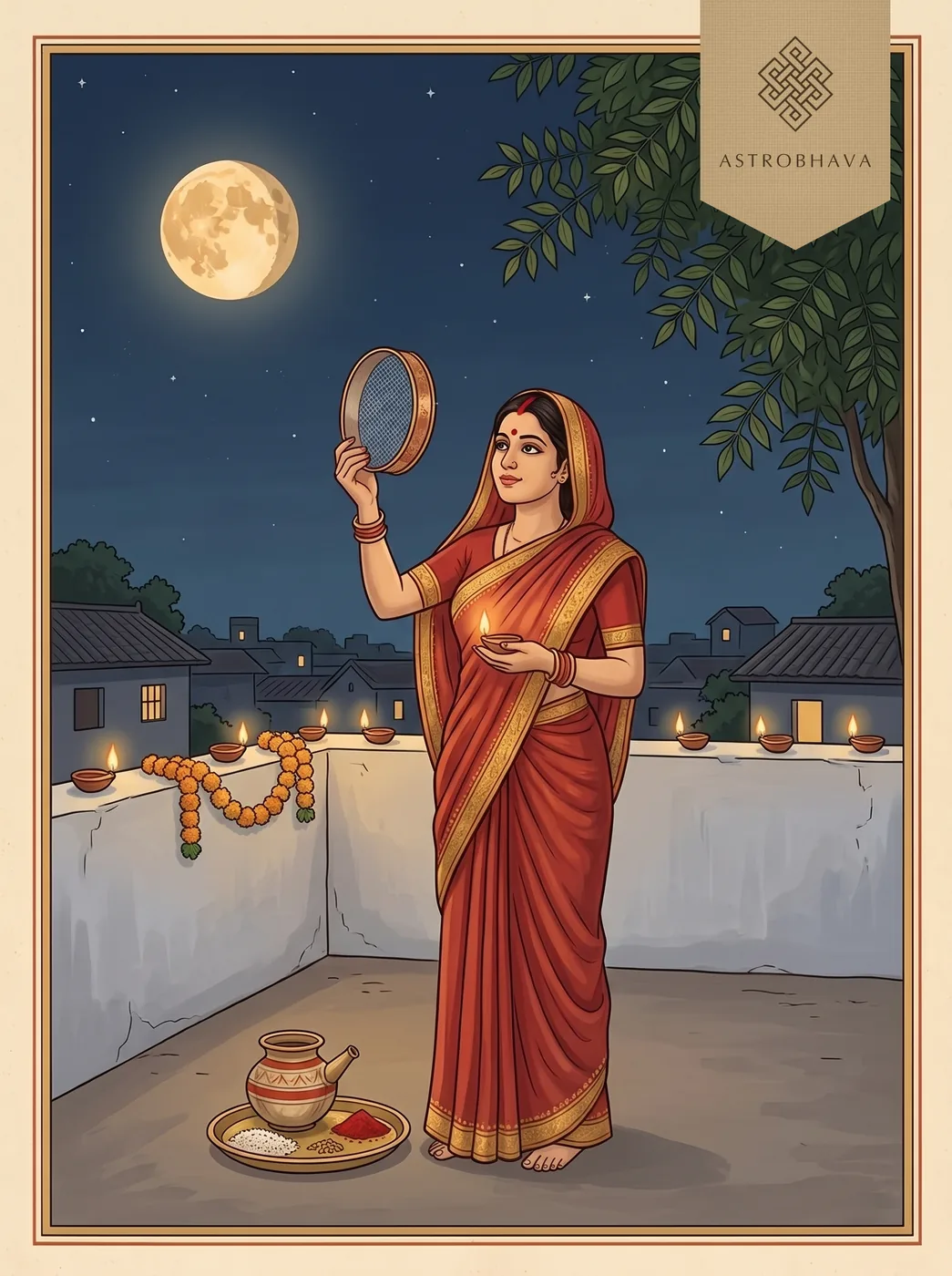
The Karwa Chauth mantra, printed in the vrat manuals as the Karaka Chaturthi sankalpa and the prayer to Gauri, is the pair of Sanskrit formulas that frames the one-day fast of Kartika Krishna Chaturthi, the fourth day of the waning moon in the month of Kartika. Karwa is the spoken form of karaka, the spouted clay pot at the centre of the rite, and chauth is chaturthi; the sankalpa itself keeps the older name, karaka chaturthi vratam. The first row is prose rather than verse. Said in the morning after the bath, it states what the vow is kept for: happiness, saubhagya or married good fortune, sons and grandsons, and lasting prosperity, and it closes on karishye, 'I shall keep'. The second row is a single couplet in the anushtubh metre, said at the evening worship of Gauri, the clay image of the Goddess. It asks her to grant saubhagya and good offspring to the women who worship her with devotion. Neither formula has a named author, and the manuals that print them name no scripture as their source.
Ten pots and a moonrise in the Narada Purana
The vow is older than the two formulas printed here. The Narada Purana, in chapter 113 of its first part, walks through the Chaturthi vows of the year and comes to the fourth day of the dark half of Kartika, which it calls the Karaka vrata and reserves for women. After bathing and putting on her ornaments, the woman worships Ganesha and sets before him ten karakas, pots filled with cooked food, offering them with the words 'may the god be pleased with me'; the pots then go to married women and to brahmins. At moonrise an arghya is offered, and only after that is a sweet meal taken. The chapter allows another form: one pot filled with milk or water, with areca nut, rice and a gem, given to a brahmin. It says the vow may be kept for twelve or sixteen years and then formally concluded, or kept for life. The Purana gives none of the words on this page; they come from the later household manuals. In the home rite those manuals describe, kept by married women chiefly in Uttar Pradesh, Punjab, Rajasthan and Gujarat, Gauri is shaped from yellow clay with a small Ganesha in her lap, a karwa is drawn on the wall in rice paste, and the fast ends only after the moon has been seen and offered water.
The mantra, in six scripts
- मम
- mama — my, for me
- सुखसौभाग्य
- sukhasaubhāgya — happiness and married good fortune
- पुत्रपौत्रादि
- putrapautrādi — sons, grandsons and the rest
- सुस्थिर
- susthira — lasting, steady
- श्री
- śrī — prosperity
- प्राप्तये
- prāptaye — for the gaining of
- करक
- karaka — of the karaka (pot)
- चतुर्थी
- caturthī — Chaturthi, the fourth lunar day
- व्रतमहं
- vratamahaṃ — the vow, I
- करिष्ये
- kariṣye — shall keep
- नमः
- namaḥ — salutation
- शिवायै
- śivāyai — to Shivaa (Shiva's consort)
- शर्वाण्यै
- śarvāṇyai — to Sharvani (consort of Sharva)
- सौभाग्यं
- saubhāgyaṃ — married good fortune
- सन्ततिं
- santatiṃ — offspring
- शुभाम्
- śubhām — fine, auspicious
- प्रयच्छ
- prayaccha — grant
- भक्तियुक्तानां
- bhaktiyuktānāṃ — to those joined in devotion
- नारीणां
- nārīṇāṃ — to the women
- हरवल्लभे
- haravallabhe — O beloved of Hara
Karwa Chauth Mantra lyrics in full
The morning vow and the evening prayer to Gauri, in the order they come in the rite.
All 2 verses, in Sanskrit, Tamil, Telugu, Kannada, Malayalam and English, each with its meaning. Choose a script:
Download the Karwa Chauth Mantra PDFAll 2 verses with their meanings, in Sanskrit. Free to print and keep.
मम सुखसौभाग्य पुत्रपौत्रादि सुस्थिर श्री प्राप्तये करक चतुर्थी व्रतमहं करिष्ये ।
மம ஸுகஸௌபாக்ய புத்ரபௌத்ராதி ஸுஸ்திர ஶ்ரீ ப்ராப்தயே கரக சதுர்தீ வ்ரதமஹம் கரிஷ்யே ।
మమ సుఖసౌభాగ్య పుత్రపౌత్రాది సుస్థిర శ్రీ ప్రాప్తయే కరక చతుర్థీ వ్రతమహం కరిష్యే ।
ಮಮ ಸುಖಸೌಭಾಗ್ಯ ಪುತ್ರಪೌತ್ರಾದಿ ಸುಸ್ಥಿರ ಶ್ರೀ ಪ್ರಾಪ್ತಯೇ ಕರಕ ಚತುರ್ಥೀ ವ್ರತಮಹಂ ಕರಿಷ್ಯೇ ।
മമ സുഖസൌഭാഗ്യ പുത്രപൌത്രാദി സുസ്ഥിര ശ്രീ പ്രാപ്തയേ കരക ചതുര്ഥീ വ്രതമഹം കരിഷ്യേ ।
mama sukhasaubhāgya putrapautrādi susthira śrī prāptaye karaka caturthī vratamahaṃ kariṣye |
This is the morning vow of the fast: for happiness, married good fortune, sons, grandsons and the rest, and lasting prosperity, I shall keep the Karaka Chaturthi fast.
नमः शिवायै शर्वाण्यै सौभाग्यं सन्ततिं शुभाम् ।
प्रयच्छ भक्तियुक्तानां नारीणां हरवल्लभे ॥
நமஃ ஶிவாயை ஶர்வாண்யை ஸௌபாக்யம் ஸந்ததிம் ஶுபாம் ।
ப்ரயச்ச பக்தியுக்தாநாம் நாரீணாம் ஹரவல்லபே ॥
నమః శివాయై శర్వాణ్యై సౌభాగ్యం సన్తతిం శుభామ్ ।
ప్రయచ్ఛ భక్తియుక్తానాం నారీణాం హరవల్లభే ॥
ನಮಃ ಶಿವಾಯೈ ಶರ್ವಾಣ್ಯೈ ಸೌಭಾಗ್ಯಂ ಸನ್ತತಿಂ ಶುಭಾಮ್ ।
ಪ್ರಯಚ್ಛ ಭಕ್ತಿಯುಕ್ತಾನಾಂ ನಾರೀಣಾಂ ಹರವಲ್ಲಭೇ ॥
നമഃ ശിവായൈ ശര്വാണ്യൈ സൌഭാഗ്യം സന്തതിം ശുഭാമ് ।
പ്രയച്ഛ ഭക്തിയുക്താനാം നാരീണാം ഹരവല്ലഭേ ॥
namaḥ śivāyai śarvāṇyai saubhāgyaṃ santatiṃ śubhām |
prayaccha bhaktiyuktānāṃ nārīṇāṃ haravallabhe ||
Salutation to Shivaa, to Sharvani. O beloved of Hara, grant married good fortune and fine offspring to the women who worship you with devotion.
The syllable people get wrong
In śarvāṇyai the first sound is the palatal ś and the n is the retroflex ṇ, so it is said shar-VAAN-yai, 'to Sharvani', the consort of Sharva, a name of Shiva. Said with a plain s it turns into sarva, 'all', and some printings have in fact slipped to sarvāyai.
When the Karwa Chauth Mantra is chanted
Weekday. Friday
Festival. Karwa Chauth (Kartika Krishna Chaturthi)
Questions
Have your chart read before you decide
Chanting is yours to do, and free. But which deity your situation calls for — and whether a mantra alone is the right response — depends on your chart. Sometimes it is; sometimes it is not.
- Over 30 years in the Guru–Sishya Parampara, from the age of five
- He reads every chart himself — 60 minutes, one to one, never delegated
- Charts are read only between sunrise and sunset, following tradition