Kolaru Pathigam
வேயுறு தோளிபங்கன் விடமுண்டகண்டன் மிகநல்ல வீணை தடவி மாசறு திங்கள்கங்கை முடிமே லணிந்தென் உளமே புகுந்த அதனால்Also known as Veyuru Tholi Pangan
In Tamil and English — with the meaning of every word, and the one sound most people pronounce wrongly.
What the Kolaru Pathigam is
The Kolaru Pathigam, also called the Kolaru Thiruppathigam, is a Tamil hymn of eleven verses by the seventh-century Shaiva saint Thirugnana Sambandar, and its name states its purpose: kol is a planet and aru means to cut away. It is pathigam 85 of the Second Thirumurai in the Thevaram, set to the pan Piyanthaikkantharam, and it is a pothu or common pathigam, tied to no single temple. The first ten verses share one design. Two lines picture Shiva with Uma beside him and the moon, the Ganga, konrai blossoms or datura on his crown, and end on the same words: he has entered my heart. The third line names what is therefore disarmed, moving from the nine planets in verse 1 to the lunar stars, Death and Yama, wild beasts, fevers, Ravana of Lanka and the ages themselves. The fourth line closes on the refrain nalla nalla, good, good, to his devotees. Verse 11 is the poet's signature verse.
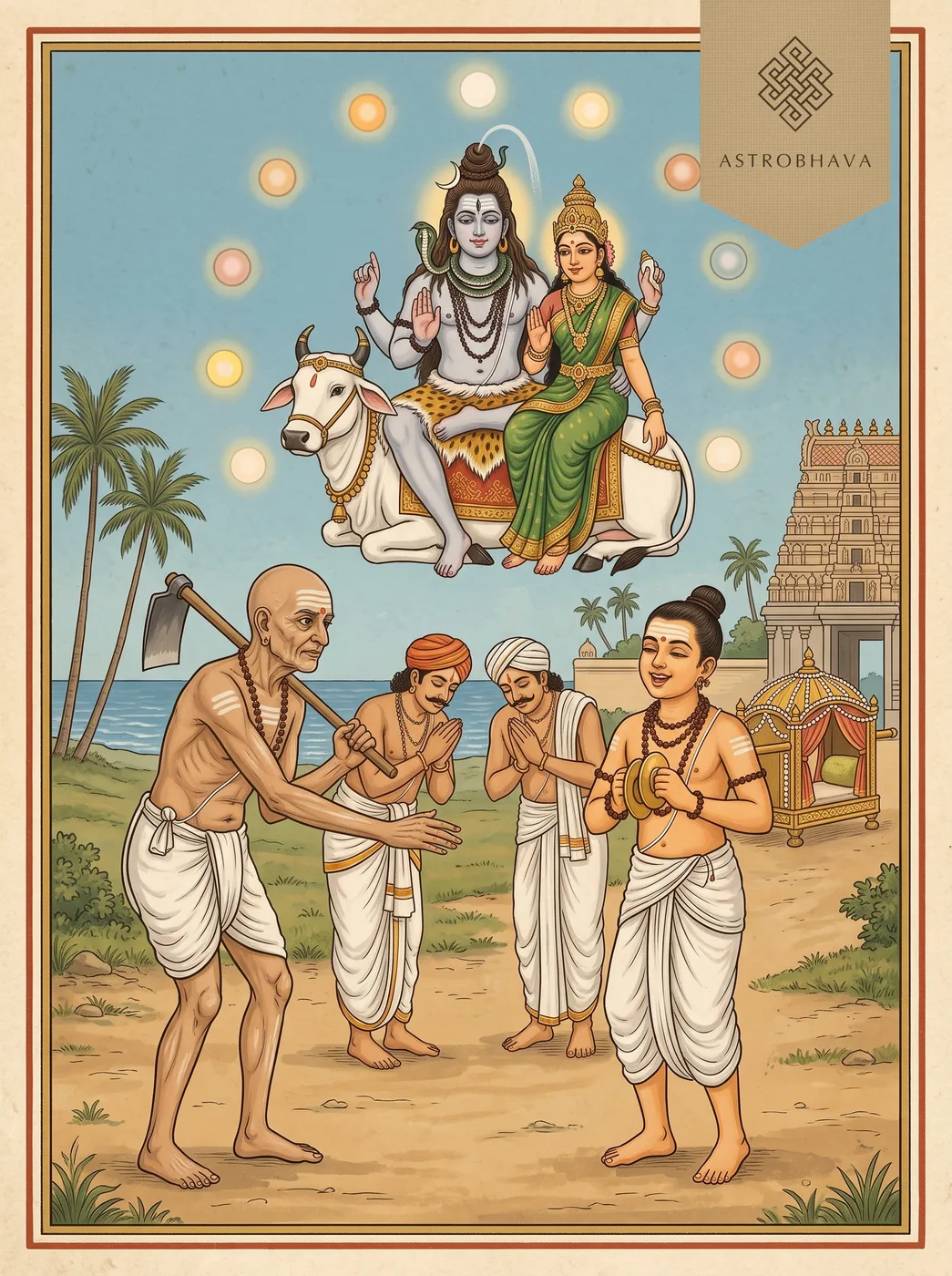
A warning at Vedaranyam before Madurai
The setting comes from Sekkizhar's Periya Puranam, the Tamil lives of the sixty-three Nayanmars. Sambandar was staying at Thirumaraikkadu, the present Vedaranyam, with the elder saint Appar (Thirunavukkarasar) when messengers came from the Pandya country. Queen Mangaiyarkkarasi and the minister Kulachirai, both Shaivas at a court whose king, Koon Pandiyan, had turned to the Jains, asked him to come to Madurai. Appar tried to hold him back. According to the account, he feared what the Jain monks might do and judged that the planets and the day were set against the journey. Sambandar's answer was this pathigam: because Shiva dwells in the heart, planets and stars can only be good to his devotees. He then set out. Tradition goes on to tell how the hall where he lodged in Madurai was set alight, how the king fell into a burning fever, and how Sambandar cured him with holy ash while singing another hymn, Mandiramavathu Neeru. Verse 10 here already looks ahead to the contests that followed, praising the lord whose holy ash overcomes the Buddhists and Jains in debate. The hymn was called on again in modern times: within the Kanchi Matha, the Shankaracharya Chandrasekharendra Saraswati is remembered as the one who began the custom of singing it as a hymn for the nine planets.
The opening lines, in Tamil and English
- வேயுறு
- vēyuṟu — bamboo-like
- தோளிபங்கன்
- tōḷipaṅkaṉ — shoulders' lady, sharing half (with Uma)
- விடமுண்டகண்டன்
- viṭamuṇṭakaṇṭaṉ — throat that holds the poison drunk
- மிகநல்ல
- mikanalla — very fine
- வீணை
- vīṇai — vina
- தடவி
- taṭavi — stroking
- மாசறு
- mācaṟu — spotless
- திங்கள்கங்கை
- tiṅkaḷkaṅkai — moon and Ganga
- முடிமே
- muṭimē — on the crown (mudimel)
- லணிந்தென்
- laṇinteṉ — (l-) wearing, my
- உளமே
- uḷamē — heart itself
- புகுந்த
- pukunta — entered
- அதனால்
- ataṉāl — therefore
- ஞாயிறு
- ñāyiṟu — the Sun
- திங்கள்செவ்வாய்
- tiṅkaḷcevvāy — Moon, Mars
- புதன்வியாழம்
- putaṉviyāḻam — Mercury, Jupiter
- வெள்ளி
- veḷḷi — Venus
- சனிபாம்
- caṉipām — Saturn, serpents (pambu)
- பிரண்டு
- piraṇṭu — (p-) two (irandu)
- முடனே
- muṭaṉē — (u)m, together
- ஆசறு
- ācaṟu — free of fault
- நல்லநல்ல
- nallanalla — good, good
- வவைநல்ல
- vavainalla — they are good
- நல்ல
- nalla — good
- அடியா
- aṭiyā — devotees (adiyar)
- ரவர்க்கு
- ravarkku — (r-) to them
- மிகவே
- mikavē — exceedingly
Kolaru Pathigam lyrics in full
Ten verses and the poet's signature verse, as printed in the Second Thirumurai of the Thevaram.
All 44 lines, in Tamil and English, each with its meaning. Choose a script:
Download the Kolaru Pathigam PDFAll 44 lines with their meanings, in Tamil. Free to print and keep.
வேயுறு தோளிபங்கன் விடமுண்டகண்டன் மிகநல்ல வீணை தடவி
மாசறு திங்கள்கங்கை முடிமே லணிந்தென் உளமே புகுந்த அதனால்
ஞாயிறு திங்கள்செவ்வாய் புதன்வியாழம் வெள்ளி சனிபாம் பிரண்டு முடனே
ஆசறு நல்லநல்ல வவைநல்ல நல்ல அடியா ரவர்க்கு மிகவே
vēyuṟu tōḷipaṅkaṉ viṭamuṇṭakaṇṭaṉ mikanalla vīṇai taṭavi
mācaṟu tiṅkaḷkaṅkai muṭimē laṇinteṉ uḷamē pukunta ataṉāl
ñāyiṟu tiṅkaḷcevvāy putaṉviyāḻam veḷḷi caṉipām piraṇṭu muṭaṉē
ācaṟu nallanalla vavainalla nalla aṭiyā ravarkku mikavē
Shiva, who shares half his body with Uma whose shoulders are like smooth bamboo, whose throat holds the poison he swallowed, who strokes the finest vina and wears the spotless moon and the Ganga on his crown, has entered my heart. Therefore the sun, moon, Mars, Mercury, Jupiter, Venus, Saturn and the two serpents (Rahu and Ketu) are all good and free of fault; the verse says they are very good indeed to his devotees.
என்பொடு கொம்பொடாமை யிவைமார் பிலங்க எருதேறி யேழை யுடனே
பொன்பொதி மத்தமாலை புனல்சூடி வந்தென் உளமே புகுந்த அதனால்
ஒன்பதொ டொன்றொடேழு பதினெட்டொ டாறும் உடனாய நாள்க ளவைதாம்
அன்பொடு நல்லநல்ல வவைநல்ல நல்ல அடியா ரவர்க்கு மிகவே
eṉpoṭu kompoṭāmai yivaimār pilaṅka erutēṟi yēḻai yuṭaṉē
poṉpoti mattamālai puṉalcūṭi vanteṉ uḷamē pukunta ataṉāl
oṉpato ṭoṉṟoṭēḻu patiṉeṭṭo ṭāṟum uṭaṉāya nāḷka ḷavaitām
aṉpoṭu nallanalla vavainalla nalla aṭiyā ravarkku mikavē
With bone, boar's tusk and tortoise shell shining on his chest, riding the bull with his consort, wearing a garland of golden datura flowers and the river, he came and entered my heart. Therefore the lunar asterisms reckoned by the numbers nine, one, seven, eighteen and six turn kindly and good; the verse says they are very good indeed to his devotees.
உருவளர் பவளமேனி யொளிநீ றணிந்து உமையோடும் வெள்ளை விடைமேல்
முருகலர் கொன்றைதிங்கண் முடிமே லணிந்தென் உளமே புகுந்த அதனால்
திருமகள் கலையதூர்தி செயமாது பூமி திசைதெய்வ மான பலவும்
அருநெதி நல்லநல்ல வவைநல்ல நல்ல அடியா ரவர்க்கு மிகவே
uruvaḷar pavaḷamēṉi yoḷinī ṟaṇintu umaiyōṭum veḷḷai viṭaimēl
murukalar koṉṟaitiṅkaṇ muṭimē laṇinteṉ uḷamē pukunta ataṉāl
tirumakaḷ kalaiyatūrti ceyamātu pūmi ticaiteyva māṉa palavum
aruneti nallanalla vavainalla nalla aṭiyā ravarkku mikavē
Wearing bright holy ash on his coral-red body, riding the white bull with Uma, wearing fragrant konrai blossoms and the moon on his crown, he entered my heart. Therefore Lakshmi, the goddess who rides the stag, the goddess of victory, the Earth and the many deities of the directions become good like a rare treasure; the verse says they are very good indeed to his devotees.
மதிநுதன் மங்கையோடு வடபா லிருந்து மறையோது மெங்கள் பரமன்
நதியொடு கொன்றைமாலை முடிமே லணிந்தென் உளமே புகுந்த அதனால்
கொதியுறு காலனங்கி நமனோடு தூதர் கொடுநோய்க ளான பலவும்
அதிகுணம் நல்லநல்ல வவைநல்ல நல்ல அடியா ரவர்க்கு மிகவே
matinutaṉ maṅkaiyōṭu vaṭapā liruntu maṟaiyōtu meṅkaḷ paramaṉ
natiyoṭu koṉṟaimālai muṭimē laṇinteṉ uḷamē pukunta ataṉāl
kotiyuṟu kālaṉaṅki namaṉōṭu tūtar koṭunōyka ḷāṉa palavum
atikuṇam nallanalla vavainalla nalla aṭiyā ravarkku mikavē
Our supreme lord, who sits beneath the banyan with the lady whose brow is like the crescent and expounds the Vedas, wearing the river and a garland of konrai on his crown, entered my heart. Therefore raging Death, Fire, Yama with his messengers and the many cruel diseases turn to great good; the verse says they are very good indeed to his devotees.
நஞ்சணி கண்டனெந்தை மடவாள் தனோடும் விடையேறும் நங்கள் பரமன்
துஞ்சிருள் வன்னிகொன்றை முடிமே லணிந்தென் உளமே புகுந்த அதனால்
வெஞ்சின அவுணரோடு முருமிடியும் மின்னும் மிகையான பூத மவையும்
அஞ்சிடு நல்லநல்ல வவைநல்ல நல்ல அடியா ரவர்க்கு மிகவே
nañcaṇi kaṇṭaṉentai maṭavāḷ taṉōṭum viṭaiyēṟum naṅkaḷ paramaṉ
tuñciruḷ vaṉṉikoṉṟai muṭimē laṇinteṉ uḷamē pukunta ataṉāl
veñciṉa avuṇarōṭu murumiṭiyum miṉṉum mikaiyāṉa pūta mavaiyum
añciṭu nallanalla vavainalla nalla aṭiyā ravarkku mikavē
Our father with the poison-adorned throat, our supreme lord who rides the bull with his consort, wearing vanni leaves and konrai on his crown, entered my heart. Therefore the fierce asuras, thunderbolts, lightning and the overpowering elemental spirits shrink back in fear and all is good; the verse says it is very good indeed to his devotees.
வாள்வரி யதளதாடை வரிகோ வணத்தர் மடவாள் தனோடும் உடனாய்
நாண்மலர் வன்னிகொன்றை நதிசூடி வந்தென் உளமே புகுந்த அதனால்
கோளரி யுழுவையோடு கொலையானை கேழல் கொடுநாக மோடு கரடி
ஆளரி நல்லநல்ல வவைநல்ல நல்ல அடியா ரவர்க்கு மிகவே
vāḷvari yataḷatāṭai varikō vaṇattar maṭavāḷ taṉōṭum uṭaṉāy
nāṇmalar vaṉṉikoṉṟai naticūṭi vanteṉ uḷamē pukunta ataṉāl
kōḷari yuḻuvaiyōṭu kolaiyāṉai kēḻal koṭunāka mōṭu karaṭi
āḷari nallanalla vavainalla nalla aṭiyā ravarkku mikavē
Clad in the hide of the striped tiger and a striped loincloth, together with his consort, wearing fresh vanni flowers, konrai and the river, he came and entered my heart. Therefore the killing lion, the tiger, the murderous elephant, the boar, the cruel serpent, the bear and the man-slaying lion all become good; the verse says they are very good indeed to his devotees.
செப்பிள முலைநன்மங்கை யொருபாக மாக விடையேறு செல்வ னடைவார்
ஒப்பிள மதியுமப்பும் முடிமே லணிந்தென் உளமே புகுந்த அதனால்
வெப்பொடு குளிரும்வாத மிகையான பித்தும் வினையான வந்து நலியா
அப்படி நல்லநல்ல வவைநல்ல நல்ல அடியா ரவர்க்கு மிகவே
ceppiḷa mulainaṉmaṅkai yorupāka māka viṭaiyēṟu celva ṉaṭaivār
oppiḷa matiyumappum muṭimē laṇinteṉ uḷamē pukunta ataṉāl
veppoṭu kuḷirumvāta mikaiyāṉa pittum viṉaiyāṉa vantu naliyā
appaṭi nallanalla vavainalla nalla aṭiyā ravarkku mikavē
The gracious lord who rides the bull with the young lady as one half of his body, wearing the young crescent and the waters on his crown, entered my heart. Therefore fever, chill, wind disorders, excess bile and the ills born of past deeds will not come to afflict; the verse says all is good, very good indeed to his devotees.
வேள்பட விழிசெய்தன்று விடைமே லிருந்து மடவாள் தனோடும் உடனாய்
வாண்மதி வன்னிகொன்றை மலர்சூடி வந்தென் உளமே புகுந்த அதனால்
ஏழ்கடல் சூழிலங்கை அரையன்ற னோடும் இடரான வந்து நலியா
ஆழ்கடல் நல்லநல்ல வவைநல்ல நல்ல அடியா ரவர்க்கு மிகவே
vēḷpaṭa viḻiceytaṉṟu viṭaimē liruntu maṭavāḷ taṉōṭum uṭaṉāy
vāṇmati vaṉṉikoṉṟai malarcūṭi vanteṉ uḷamē pukunta ataṉāl
ēḻkaṭal cūḻilaṅkai araiyaṉṟa ṉōṭum iṭarāṉa vantu naliyā
āḻkaṭal nallanalla vavainalla nalla aṭiyā ravarkku mikavē
He who long ago burned Kama with his eye, seated on the bull with his consort, wearing the bright moon, vanni and konrai flowers, came and entered my heart. Therefore the king of Lanka ringed by the seven seas and other troubles will not come to afflict, and even the deep sea is good; the verse says it is very good indeed to his devotees.
பலபல வேடமாகும் பரனாரி பாகன் பசுவேறும் எங்கள் பரமன்
சலமக ளோடெருக்கு முடிமே லணிந்தென் உளமே புகுந்த அதனால்
மலர்மிசை யோனுமாலு மறையோடு தேவர் வருகால மான பலவும்
அலைகடல் மேருநல்ல வவைநல்ல நல்ல அடியா ரவர்க்கு மிகவே
palapala vēṭamākum paraṉāri pākaṉ pacuvēṟum eṅkaḷ paramaṉ
calamaka ḷōṭerukku muṭimē laṇinteṉ uḷamē pukunta ataṉāl
malarmicai yōṉumālu maṟaiyōṭu tēvar varukāla māṉa palavum
alaikaṭal mērunalla vavainalla nalla aṭiyā ravarkku mikavē
The supreme one of many forms, who has a woman as half of himself, our lord who rides the bull, wearing the river goddess and erukku flowers on his crown, entered my heart. Therefore Brahma on the lotus, Vishnu, the Vedas, the gods, the passing ages, the wave-tossed sea and Mount Meru are all good; the verse says they are very good indeed to his devotees.
கொத்தலர் குழலியோடு விசயற்கு நல்கு குணமாய வேட விகிர்தன்
மத்தமு மதியுநாக முடிமே லணிந்தென் உளமே புகுந்த அதனால்
புத்தரொ டமணைவாதில் அழிவிக்கும் அண்ணல் திருநீறு செம்மை திடமே
அத்தகு நல்லநல்ல வவைநல்ல நல்ல அடியா ரவர்க்கு மிகவே
kottalar kuḻaliyōṭu vicayaṟku nalku kuṇamāya vēṭa vikirtaṉ
mattamu matiyunāka muṭimē laṇinteṉ uḷamē pukunta ataṉāl
puttaro ṭamaṇaivātil aḻivikkum aṇṇal tirunīṟu cemmai tiṭamē
attaku nallanalla vavainalla nalla aṭiyā ravarkku mikavē
The wondrous lord who, with the lady of flower-clustered tresses, took the form of a hunter to grant grace to Arjuna, wearing datura, the moon and the serpent on his crown, entered my heart. Therefore the holy ash of the lord who overcame the Buddhists and Jains in debate stands true and firm; the verse says it is very good indeed to his devotees.
தேனமர் பொழில்கொளாலை விளைசெந்நெல் துன்னி வளர்செம்பொன் எங்கும் நிகழ
நான்முகன் ஆதியாய பிரமா புரத்து மறைஞான ஞான முனிவன்
தானுறு கோளுநாளும் அடியாரை வந்து நலியாத வண்ணம் உரைசெய்
ஆனசொல் மாலையோதும் அடியார்கள் வானில் அரசாள்வர் ஆணை நமதே
tēṉamar poḻilkoḷālai viḷaicennel tuṉṉi vaḷarcempoṉ eṅkum nikaḻa
nāṉmukaṉ ātiyāya piramā purattu maṟaiñāṉa ñāṉa muṉivaṉ
tāṉuṟu kōḷunāḷum aṭiyārai vantu naliyāta vaṇṇam uraicey
āṉacol mālaiyōtum aṭiyārkaḷ vāṉil aracāḷvar āṇai namatē
The sage of Vedic wisdom from Brahmapuram, the town of four-faced Brahma, where honey-filled groves, sugarcane mills and ripening paddy crowd together and gold abounds, spoke this garland of words so that the planets and days would not come to trouble devotees. The verse says the devotees who recite it will rule in heaven, and declares: this is our command.
The syllable people get wrong
The kōḷ of the title appears in verse 11 as kōḷunāḷum, 'the planets and the days'; both ḷ sounds are retroflex, made with the tongue tip curled back to the roof of the mouth, and the ō and ā are long. Say KOH-lu-NAA-lum, not 'kolu-nalum' with a flat English l.
Questions
Have your chart read before you decide
Chanting is yours to do, and free. But which deity your situation calls for — and whether a mantra alone is the right response — depends on your chart. Sometimes it is; sometimes it is not.
- Over 30 years in the Guru–Sishya Parampara, from the age of five
- He reads every chart himself — 60 minutes, one to one, never delegated
- Charts are read only between sunrise and sunset, following tradition