Madhurashtakam
अधरं मधुरं वदनं मधुरं नयनं मधुरं हसितं मधुरम् । हृदयं मधुरं गमनं मधुरं मधुराधिपतेरखिलं मधुरम् ॥Also known as Adharam Madhuram
In Devanagari, Tamil, Telugu, Kannada, Malayalam and English — with the meaning of every word, and the one syllable most people pronounce wrongly.
What the Madhurashtakam is
The Madhurashtakam, also known by its opening words Adharam Madhuram, is a Sanskrit hymn of eight verses to Krishna by Sri Vallabhacharya, the teacher who founded the Pushtimarg, the 'path of grace', at the end of the fifteenth century. Its whole vocabulary of praise is one adjective, madhura, sweet, attached to forty-eight things in turn, and every verse closes on the same refrain: madhuradhipater akhilam madhuram, everything of the Lord of sweetness is sweet. The first three verses stay close to Krishna himself: lips, eyes, smile, words, flute, the dust of his feet. Verses four and five turn to ordinary acts, eating, drinking, sleeping, even what he casts off. Verse six leaves his body for his gunja-berry necklace and the ripples and lotuses of the Yamuna, and the last two take in the gopis, the cowherds, the cows, his staff and finally srishti, creation itself. Vallabha taught that the world is a real manifestation of Brahman rather than an illusion, and the hymn reads as that teaching in song.
A midnight vision at Govind Ghat
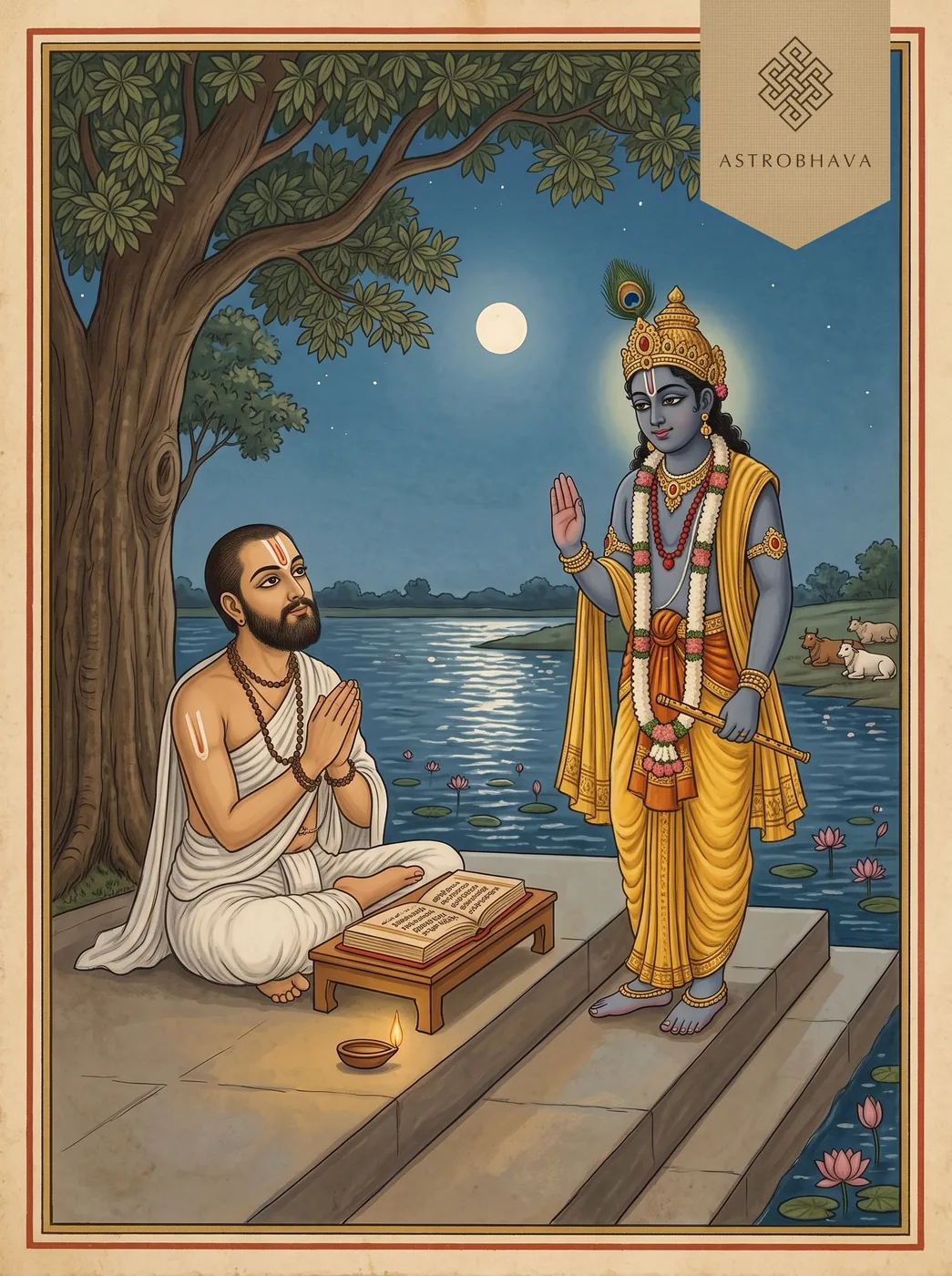
Pushtimarg tradition places the hymn on the bank of the Yamuna at Gokul, beside the town where Krishna is said to have spent his infancy. Two neighbouring bathing steps matter here. At Thakurani Ghat, according to tradition, the river goddess Yamuna appeared to Vallabhacharya as a young girl and showed him the spot, and he composed his Yamunashtakam there. At Govind Ghat, a few steps to its right, he sat under a shami tree and recited the Bhagavata Purana for a week. He was troubled by a question: how could ordinary, flawed souls be made fit to approach Krishna. At midnight on the eleventh day of the bright half of Shravana, the account continues, Krishna appeared before him in yellow silk, with the flute, the Vaijayanti garland and the peacock feather, and gave him the Brahmasambandha, a short mantra of self-offering, with a promise to accept everyone Vallabha brought to him. Vallabha is said to have described the form he had just seen in the eight verses of the Madhurashtakam, and to have given the first Brahmasambandha initiation to his companion Damodardas Harsani. Accounts differ on the year, placing it between 1492 and 1494. The date is kept in Pushtimarg temples as Pavitra Ekadashi, when garlands of cotton thread are offered to the image of Krishna.
The mantra, in six scripts
- अधरं
- adharaṃ — lips
- मधुरं
- madhuraṃ — sweet
- वदनं
- vadanaṃ — face
- मधुरं
- madhuraṃ — sweet
- नयनं
- nayanaṃ — eyes
- मधुरं
- madhuraṃ — sweet
- हसितं
- hasitaṃ — smile
- मधुरम्
- madhuram — sweet
- हृदयं
- hṛdayaṃ — heart
- मधुरं
- madhuraṃ — sweet
- गमनं
- gamanaṃ — walk
- मधुरं
- madhuraṃ — sweet
- मधुराधिपतेरखिलं
- madhurādhipaterakhilaṃ — all of the Lord of sweetness
- मधुरम्
- madhuram — is sweet
Madhurashtakam lyrics in full
The eight verses as Vallabhacharya composed them, each ending in the same refrain, with no added verse of benefits.
All 8 verses, in Sanskrit, Tamil, Telugu, Kannada, Malayalam and English, each with its meaning. Choose a script:
Download the Madhurashtakam PDFAll 8 verses with their meanings, in Sanskrit. Free to print and keep.
अधरं मधुरं वदनं मधुरं नयनं मधुरं हसितं मधुरम् ।
हृदयं मधुरं गमनं मधुरं मधुराधिपतेरखिलं मधुरम् ॥
அதரம் மதுரம் வதநம் மதுரம் நயநம் மதுரம் ஹஸிதம் மதுரம் ।
ஹ்ருதயம் மதுரம் கமநம் மதுரம் மதுராதிபதேரகிலம் மதுரம் ॥
అధరం మధురం వదనం మధురం నయనం మధురం హసితం మధురమ్ ।
హృదయం మధురం గమనం మధురం మధురాధిపతేరఖిలం మధురమ్ ॥
ಅಧರಂ ಮಧುರಂ ವದನಂ ಮಧುರಂ ನಯನಂ ಮಧುರಂ ಹಸಿತಂ ಮಧುರಮ್ ।
ಹೃದಯಂ ಮಧುರಂ ಗಮನಂ ಮಧುರಂ ಮಧುರಾಧಿಪತೇರಖಿಲಂ ಮಧುರಮ್ ॥
അധരം മധുരം വദനം മധുരം നയനം മധുരം ഹസിതം മധുരമ് ।
ഹൃദയം മധുരം ഗമനം മധുരം മധുരാധിപതേരഖിലം മധുരമ് ॥
adharaṃ madhuraṃ vadanaṃ madhuraṃ nayanaṃ madhuraṃ hasitaṃ madhuram |
hṛdayaṃ madhuraṃ gamanaṃ madhuraṃ madhurādhipaterakhilaṃ madhuram ||
His lips are sweet, his face is sweet, his eyes are sweet, his smile is sweet. His heart is sweet, his walk is sweet; everything about the Lord of sweetness is sweet.
वचनं मधुरं चरितं मधुरं वसनं मधुरं वलितं मधुरम् ।
चलितं मधुरं भ्रमितं मधुरं मधुराधिपतेरखिलं मधुरम् ॥
வசநம் மதுரம் சரிதம் மதுரம் வஸநம் மதுரம் வலிதம் மதுரம் ।
சலிதம் மதுரம் ப்ரமிதம் மதுரம் மதுராதிபதேரகிலம் மதுரம் ॥
వచనం మధురం చరితం మధురం వసనం మధురం వలితం మధురమ్ ।
చలితం మధురం భ్రమితం మధురం మధురాధిపతేరఖిలం మధురమ్ ॥
ವಚನಂ ಮಧುರಂ ಚರಿತಂ ಮಧುರಂ ವಸನಂ ಮಧುರಂ ವಲಿತಂ ಮಧುರಮ್ ।
ಚಲಿತಂ ಮಧುರಂ ಭ್ರಮಿತಂ ಮಧುರಂ ಮಧುರಾಧಿಪತೇರಖಿಲಂ ಮಧುರಮ್ ॥
വചനം മധുരം ചരിതം മധുരം വസനം മധുരം വലിതം മധുരമ് ।
ചലിതം മധുരം ഭ്രമിതം മധുരം മധുരാധിപതേരഖിലം മധുരമ് ॥
vacanaṃ madhuraṃ caritaṃ madhuraṃ vasanaṃ madhuraṃ valitaṃ madhuram |
calitaṃ madhuraṃ bhramitaṃ madhuraṃ madhurādhipaterakhilaṃ madhuram ||
His words are sweet, his deeds are sweet, his clothing is sweet, the curve of his form is sweet. His movements are sweet, his wanderings are sweet; everything about the Lord of sweetness is sweet.
वेणुर्मधुरो रेणुर्मधुरः पाणिर्मधुरः पादौ मधुरौ ।
नृत्यं मधुरं सख्यं मधुरं मधुराधिपतेरखिलं मधुरम् ॥
வேணுர்மதுரோ ரேணுர்மதுரஃ பாணிர்மதுரஃ பாதௌ மதுரௌ ।
ந்ருத்யம் மதுரம் ஸக்யம் மதுரம் மதுராதிபதேரகிலம் மதுரம் ॥
వేణుర్మధురో రేణుర్మధురః పాణిర్మధురః పాదౌ మధురౌ ।
నృత్యం మధురం సఖ్యం మధురం మధురాధిపతేరఖిలం మధురమ్ ॥
ವೇಣುರ್ಮಧುರೋ ರೇಣುರ್ಮಧುರಃ ಪಾಣಿರ್ಮಧುರಃ ಪಾದೌ ಮಧುರೌ ।
ನೃತ್ಯಂ ಮಧುರಂ ಸಖ್ಯಂ ಮಧುರಂ ಮಧುರಾಧಿಪತೇರಖಿಲಂ ಮಧುರಮ್ ॥
വേണുര്മധുരോ രേണുര്മധുരഃ പാണിര്മധുരഃ പാദൌ മധുരൌ ।
നൃത്യം മധുരം സഖ്യം മധുരം മധുരാധിപതേരഖിലം മധുരമ് ॥
veṇurmadhuro reṇurmadhuraḥ pāṇirmadhuraḥ pādau madhurau |
nṛtyaṃ madhuraṃ sakhyaṃ madhuraṃ madhurādhipaterakhilaṃ madhuram ||
His flute is sweet, the dust of his feet is sweet, his hands are sweet, his feet are sweet. His dancing is sweet, his friendship is sweet; everything about the Lord of sweetness is sweet.
गीतं मधुरं पीतं मधुरं भुक्तं मधुरं सुप्तं मधुरम् ।
रूपं मधुरं तिलकं मधुरं मधुराधिपतेरखिलं मधुरम् ॥
கீதம் மதுரம் பீதம் மதுரம் புக்தம் மதுரம் ஸுப்தம் மதுரம் ।
ரூபம் மதுரம் திலகம் மதுரம் மதுராதிபதேரகிலம் மதுரம் ॥
గీతం మధురం పీతం మధురం భుక్తం మధురం సుప్తం మధురమ్ ।
రూపం మధురం తిలకం మధురం మధురాధిపతేరఖిలం మధురమ్ ॥
ಗೀತಂ ಮಧುರಂ ಪೀತಂ ಮಧುರಂ ಭುಕ್ತಂ ಮಧುರಂ ಸುಪ್ತಂ ಮಧುರಮ್ ।
ರೂಪಂ ಮಧುರಂ ತಿಲಕಂ ಮಧುರಂ ಮಧುರಾಧಿಪತೇರಖಿಲಂ ಮಧುರಮ್ ॥
ഗീതം മധുരം പീതം മധുരം ഭുക്തം മധുരം സുപ്തം മധുരമ് ।
രൂപം മധുരം തിലകം മധുരം മധുരാധിപതേരഖിലം മധുരമ് ॥
gītaṃ madhuraṃ pītaṃ madhuraṃ bhuktaṃ madhuraṃ suptaṃ madhuram |
rūpaṃ madhuraṃ tilakaṃ madhuraṃ madhurādhipaterakhilaṃ madhuram ||
His singing is sweet, his drinking is sweet, his eating is sweet, his sleeping is sweet. His form is sweet, the mark on his forehead is sweet; everything about the Lord of sweetness is sweet.
करणं मधुरं तरणं मधुरं हरणं मधुरं रमणं मधुरम् ।
वमितं मधुरं शमितं मधुरं मधुराधिपतेरखिलं मधुरम् ॥
கரணம் மதுரம் தரணம் மதுரம் ஹரணம் மதுரம் ரமணம் மதுரம் ।
வமிதம் மதுரம் ஶமிதம் மதுரம் மதுராதிபதேரகிலம் மதுரம் ॥
కరణం మధురం తరణం మధురం హరణం మధురం రమణం మధురమ్ ।
వమితం మధురం శమితం మధురం మధురాధిపతేరఖిలం మధురమ్ ॥
ಕರಣಂ ಮಧುರಂ ತರಣಂ ಮಧುರಂ ಹರಣಂ ಮಧುರಂ ರಮಣಂ ಮಧುರಮ್ ।
ವಮಿತಂ ಮಧುರಂ ಶಮಿತಂ ಮಧುರಂ ಮಧುರಾಧಿಪತೇರಖಿಲಂ ಮಧುರಮ್ ॥
കരണം മധുരം തരണം മധുരം ഹരണം മധുരം രമണം മധുരമ് ।
വമിതം മധുരം ശമിതം മധുരം മധുരാധിപതേരഖിലം മധുരമ് ॥
karaṇaṃ madhuraṃ taraṇaṃ madhuraṃ haraṇaṃ madhuraṃ ramaṇaṃ madhuram |
vamitaṃ madhuraṃ śamitaṃ madhuraṃ madhurādhipaterakhilaṃ madhuram ||
His actions are sweet, his crossing of the river is sweet, his stealing is sweet, his play is sweet. What he casts off is sweet, his calm is sweet; everything about the Lord of sweetness is sweet.
गुञ्जा मधुरा माला मधुरा यमुना मधुरा वीची मधुरा ।
सलिलं मधुरं कमलं मधुरं मधुराधिपतेरखिलं मधुरम् ॥
குஞ்ஜா மதுரா மாலா மதுரா யமுநா மதுரா வீசீ மதுரா ।
ஸலிலம் மதுரம் கமலம் மதுரம் மதுராதிபதேரகிலம் மதுரம் ॥
గుఞ్జా మధురా మాలా మధురా యమునా మధురా వీచీ మధురా ।
సలిలం మధురం కమలం మధురం మధురాధిపతేరఖిలం మధురమ్ ॥
ಗುಞ್ಜಾ ಮಧುರಾ ಮಾಲಾ ಮಧುರಾ ಯಮುನಾ ಮಧುರಾ ವೀಚೀ ಮಧುರಾ ।
ಸಲಿಲಂ ಮಧುರಂ ಕಮಲಂ ಮಧುರಂ ಮಧುರಾಧಿಪತೇರಖಿಲಂ ಮಧುರಮ್ ॥
ഗുഞ്ജാ മധുരാ മാലാ മധുരാ യമുനാ മധുരാ വീചീ മധുരാ ।
സലിലം മധുരം കമലം മധുരം മധുരാധിപതേരഖിലം മധുരമ് ॥
guñjā madhurā mālā madhurā yamunā madhurā vīcī madhurā |
salilaṃ madhuraṃ kamalaṃ madhuraṃ madhurādhipaterakhilaṃ madhuram ||
His gunja-berry necklace is sweet, his garland is sweet, the Yamuna is sweet, its ripples are sweet. Its water is sweet, its lotuses are sweet; everything about the Lord of sweetness is sweet.
गोपी मधुरा लीला मधुरा युक्तं मधुरं मुक्तं मधुरम् ।
दृष्टं मधुरं शिष्टं मधुरं मधुराधिपतेरखिलं मधुरम् ॥
கோபீ மதுரா லீலா மதுரா யுக்தம் மதுரம் முக்தம் மதுரம் ।
த்ருஷ்டம் மதுரம் ஶிஷ்டம் மதுரம் மதுராதிபதேரகிலம் மதுரம் ॥
గోపీ మధురా లీలా మధురా యుక్తం మధురం ముక్తం మధురమ్ ।
దృష్టం మధురం శిష్టం మధురం మధురాధిపతేరఖిలం మధురమ్ ॥
ಗೋಪೀ ಮಧುರಾ ಲೀಲಾ ಮಧುರಾ ಯುಕ್ತಂ ಮಧುರಂ ಮುಕ್ತಂ ಮಧುರಮ್ ।
ದೃಷ್ಟಂ ಮಧುರಂ ಶಿಷ್ಟಂ ಮಧುರಂ ಮಧುರಾಧಿಪತೇರಖಿಲಂ ಮಧುರಮ್ ॥
ഗോപീ മധുരാ ലീലാ മധുരാ യുക്തം മധുരം മുക്തം മധുരമ് ।
ദൃഷ്ടം മധുരം ശിഷ്ടം മധുരം മധുരാധിപതേരഖിലം മധുരമ് ॥
gopī madhurā līlā madhurā yuktaṃ madhuraṃ muktaṃ madhuram |
dṛṣṭaṃ madhuraṃ śiṣṭaṃ madhuraṃ madhurādhipaterakhilaṃ madhuram ||
The gopis are sweet, his play is sweet, his being with them is sweet, his letting go is sweet. His glance is sweet, his courtesy is sweet; everything about the Lord of sweetness is sweet.
गोपा मधुरा गावो मधुरा यष्टिर्मधुरा सृष्टिर्मधुरा ।
दलितं मधुरं फलितं मधुरं मधुराधिपतेरखिलं मधुरम् ॥
கோபா மதுரா காவோ மதுரா யஷ்டிர்மதுரா ஸ்ருஷ்டிர்மதுரா ।
தலிதம் மதுரம் பலிதம் மதுரம் மதுராதிபதேரகிலம் மதுரம் ॥
గోపా మధురా గావో మధురా యష్టిర్మధురా సృష్టిర్మధురా ।
దలితం మధురం ఫలితం మధురం మధురాధిపతేరఖిలం మధురమ్ ॥
ಗೋಪಾ ಮಧುರಾ ಗಾವೋ ಮಧುರಾ ಯಷ್ಟಿರ್ಮಧುರಾ ಸೃಷ್ಟಿರ್ಮಧುರಾ ।
ದಲಿತಂ ಮಧುರಂ ಫಲಿತಂ ಮಧುರಂ ಮಧುರಾಧಿಪತೇರಖಿಲಂ ಮಧುರಮ್ ॥
ഗോപാ മധുരാ ഗാവോ മധുരാ യഷ്ടിര്മധുരാ സൃഷ്ടിര്മധുരാ ।
ദലിതം മധുരം ഫലിതം മധുരം മധുരാധിപതേരഖിലം മധുരമ് ॥
gopā madhurā gāvo madhurā yaṣṭirmadhurā sṛṣṭirmadhurā |
dalitaṃ madhuraṃ phalitaṃ madhuraṃ madhurādhipaterakhilaṃ madhuram ||
The cowherds are sweet, the cows are sweet, his staff is sweet, his creation is sweet. His crushing of evil is sweet, the fruit he grants is sweet; everything about the Lord of sweetness is sweet.
The syllable people get wrong
The refrain मधुराधिपतेरखिलं (madhurādhipaterakhilaṃ) is often split as 'madhuradhipate rakhilam', which makes no sense. It is madhurādhipateḥ, 'of the Lord of sweetness', whose final ḥ turns to r before akhilaṃ, 'all': say ma-dhu-RAA-dhi-pa-ter A-khi-lam, holding the long ā and starting the second word on a clean 'a'.
When the Madhurashtakam is chanted
Weekday. Thursday
Festival. Pavitra Ekadashi (Shravana Shukla Ekadashi)
Questions
Have your chart read before you decide
Chanting is yours to do, and free. But which deity your situation calls for — and whether a mantra alone is the right response — depends on your chart. Sometimes it is; sometimes it is not.
- Over 30 years in the Guru–Sishya Parampara, from the age of five
- He reads every chart himself — 60 minutes, one to one, never delegated
- Charts are read only between sunrise and sunset, following tradition