Hare Krishna Maha Mantra
नारदः पुनः पप्रच्छ तन्नाम किमिति । स होवाच हिरण्यगर्भः ॥Also known as Hare Rama Hare Krishna
In Devanagari, Tamil, Telugu, Kannada, Malayalam and English — with the meaning of every word, and the one syllable most people pronounce wrongly.
What the Hare Krishna Maha Mantra is
The Hare Krishna Maha Mantra is a string of three names in the vocative, each one a direct call: Hare eight times, Rama four times and Krishna four times, sixteen words in all. Its source is the Kali-Santarana Upanishad, a short Vaishnava Upanishad attached to the Krishna Yajurveda and listed 103rd among the 108 Upanishads of the Muktika canon; scholars place its composition before about 1500 CE. The mantra sits in the second of the text's three passages. The first sets the question of the Kali age, the second gives the sixteen names and two verses that explain them, and the third answers whether any rule governs their use. Those two verses call the set a shodashaka, a group of sixteen, and say it removes the stains of Kali. They then describe the living being wrapped in sixteen kalas, or parts, and compare the lifting of that covering to the sun's rays appearing once clouds have cleared.
Narada asks how to cross Kali
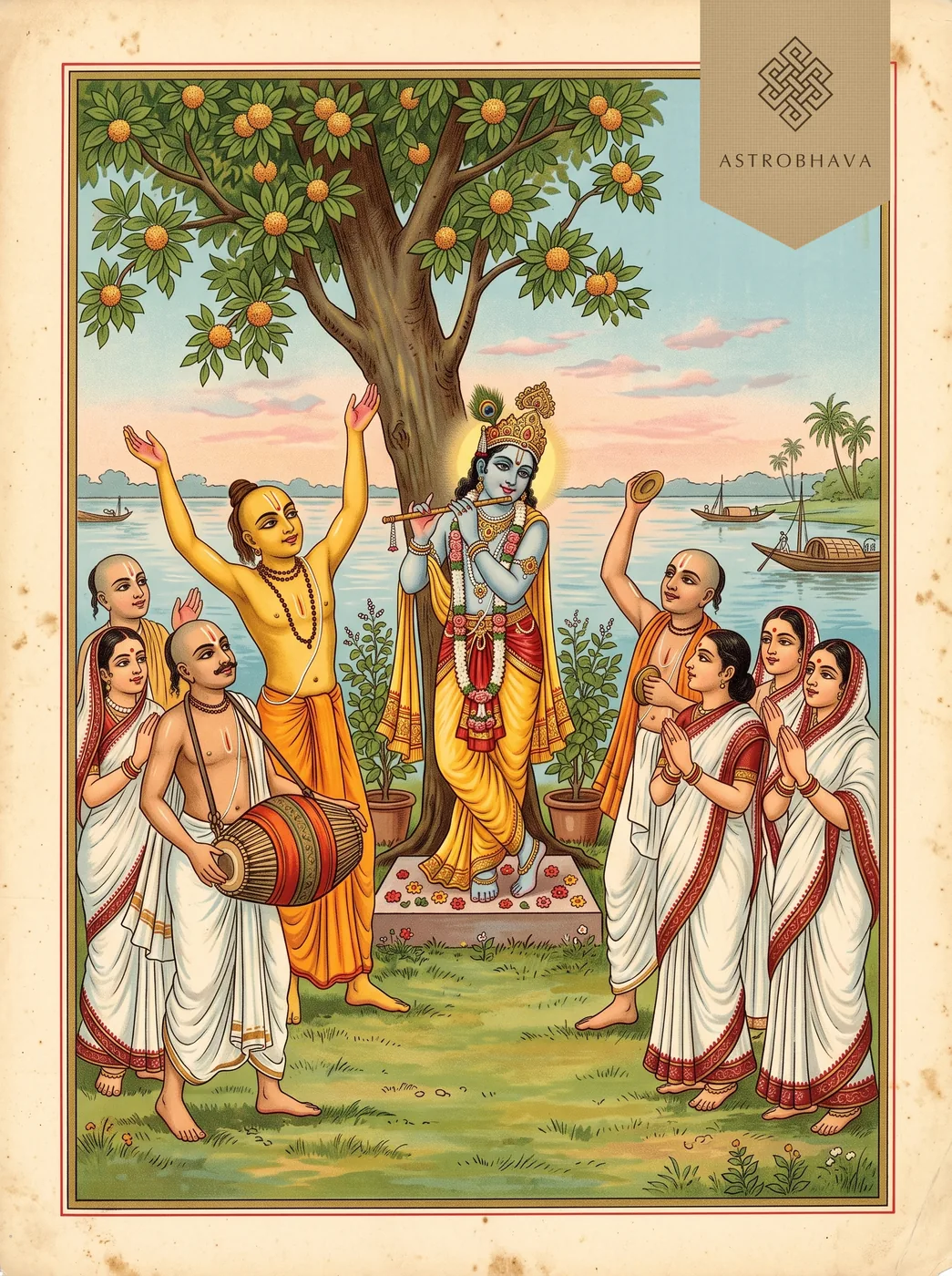
The Upanishad opens as the Dvapara age is closing. Narada, who roams the earth, goes to Brahma with one question: how can a person get across the age of Kali that is about to begin? Brahma praises the question and answers that he will tell Narada something kept hidden, the secret of all the shruti. Merely uttering the name of Narayana, the first Person, shakes Kali off. Narada presses further and asks which name is meant. Here the text calls Brahma Hiranyagarbha, the golden womb, and in reply he recites the sixteen names, Rama half first. Narada then asks what procedure goes with them. Brahma's reply is that there is none: whether clean or unclean, the one who recites them reaches the Lord's world, nearness, likeness of form and union. The Upanishad closes with a list of grave wrongs it says the recitation washes away. The text names no author and no place. Its later history is better known. Chaitanya Mahaprabhu of Nabadwip, after his initiation at Gaya around 1508, led the congregational singing called sankirtana in Bengal and later Puri, and the Gaudiya tradition that follows him chants the mantra with the Krishna half first. In 1966 A. C. Bhaktivedanta Swami led it in public in a New York park, and from there it spread across the world.
The mantra, in six scripts
- हरे
- hare — O Hari
- राम
- rāma — O Rama
- हरे
- hare — O Hari
- राम
- rāma — O Rama
- राम
- rāma — O Rama
- राम
- rāma — O Rama
- हरे
- hare — O Hari
- हरे
- hare — O Hari
- हरे
- hare — O Hari
- कृष्ण
- kṛṣṇa — O Krishna
- हरे
- hare — O Hari
- कृष्ण
- kṛṣṇa — O Krishna
- कृष्ण
- kṛṣṇa — O Krishna
- कृष्ण
- kṛṣṇa — O Krishna
- हरे
- hare — O Hari
- हरे
- hare — O Hari
Hare Krishna Maha Mantra lyrics in full
The passage of the Kali-Santarana Upanishad that gives the sixteen names, in the Upanishad's own order with Rama first, followed by the order most widely chanted today, with Krishna first.
All 5 verses, in Sanskrit, Tamil, Telugu, Kannada, Malayalam and English, each with its meaning. Choose a script:
Download the Hare Krishna Maha Mantra PDFAll 5 verses with their meanings, in Sanskrit. Free to print and keep.
नारदः पुनः पप्रच्छ तन्नाम किमिति ।
स होवाच हिरण्यगर्भः ॥
நாரதஃ புநஃ பப்ரச்ச தந்நாம கிமிதி ।
ஸ ஹோவாச ஹிரண்யகர்பஃ ॥
నారదః పునః పప్రచ్ఛ తన్నామ కిమితి ।
స హోవాచ హిరణ్యగర్భః ॥
ನಾರದಃ ಪುನಃ ಪಪ್ರಚ್ಛ ತನ್ನಾಮ ಕಿಮಿತಿ ।
ಸ ಹೋವಾಚ ಹಿರಣ್ಯಗರ್ಭಃ ॥
നാരദഃ പുനഃ പപ്രച്ഛ തന്നാമ കിമിതി ।
സ ഹോവാച ഹിരണ്യഗര്ഭഃ ॥
nāradaḥ punaḥ papraccha tannāma kimiti |
sa hovāca hiraṇyagarbhaḥ ||
Narada asked once more, "What is that name?" Hiranyagarbha (Brahma) replied:
हरे राम हरे राम राम राम हरे हरे ।
हरे कृष्ण हरे कृष्ण कृष्ण कृष्ण हरे हरे ॥
ஹரே ராம ஹரே ராம ராம ராம ஹரே ஹரே ।
ஹரே க்ருஷ்ண ஹரே க்ருஷ்ண க்ருஷ்ண க்ருஷ்ண ஹரே ஹரே ॥
హరే రామ హరే రామ రామ రామ హరే హరే ।
హరే కృష్ణ హరే కృష్ణ కృష్ణ కృష్ణ హరే హరే ॥
ಹರೇ ರಾಮ ಹರೇ ರಾಮ ರಾಮ ರಾಮ ಹರೇ ಹರೇ ।
ಹರೇ ಕೃಷ್ಣ ಹರೇ ಕೃಷ್ಣ ಕೃಷ್ಣ ಕೃಷ್ಣ ಹರೇ ಹರೇ ॥
ഹരേ രാമ ഹരേ രാമ രാമ രാമ ഹരേ ഹരേ ।
ഹരേ കൃഷ്ണ ഹരേ കൃഷ്ണ കൃഷ്ണ കൃഷ്ണ ഹരേ ഹരേ ॥
hare rāma hare rāma rāma rāma hare hare |
hare kṛṣṇa hare kṛṣṇa kṛṣṇa kṛṣṇa hare hare ||
O Hari, O Rama; O Hari, O Rama; Rama, Rama; O Hari, O Hari. O Hari, O Krishna; O Hari, O Krishna; Krishna, Krishna; O Hari, O Hari.
इति षोडशकं नाम्नां कलिकल्मषनाशनम् ।
नातः परतरोपायः सर्ववेदेषु दृश्यते ॥
இதி ஷோடஶகம் நாம்நாம் கலிகல்மஷநாஶநம் ।
நாதஃ பரதரோபாயஃ ஸர்வவேதேஷு த்ருஶ்யதே ॥
ఇతి షోడశకం నామ్నాం కలికల్మషనాశనమ్ ।
నాతః పరతరోపాయః సర్వవేదేషు దృశ్యతే ॥
ಇತಿ ಷೋಡಶಕಂ ನಾಮ್ನಾಂ ಕಲಿಕಲ್ಮಷನಾಶನಮ್ ।
ನಾತಃ ಪರತರೋಪಾಯಃ ಸರ್ವವೇದೇಷು ದೃಶ್ಯತೇ ॥
ഇതി ഷോഡശകം നാമ്നാം കലികല്മഷനാശനമ് ।
നാതഃ പരതരോപായഃ സര്വവേദേഷു ദൃശ്യതേ ॥
iti ṣoḍaśakaṃ nāmnāṃ kalikalmaṣanāśanam |
nātaḥ parataropāyaḥ sarvavedeṣu dṛśyate ||
This set of sixteen names destroys the impurities of the Kali age. The verse says no means higher than this is seen in all the Vedas.
षोडशकलावृतस्य जीवस्यावरणविनाशनम् ।
ततः प्रकाशते परं ब्रह्म मेघापाये रविरश्मिमण्डलीवेति ॥
ஷோடஶகலாவ்ருதஸ்ய ஜீவஸ்யாவரணவிநாஶநம் ।
ததஃ ப்ரகாஶதே பரம் ப்ரஹ்ம மேகாபாயே ரவிரஶ்மிமண்டலீவேதி ॥
షోడశకలావృతస్య జీవస్యావరణవినాశనమ్ ।
తతః ప్రకాశతే పరం బ్రహ్మ మేఘాపాయే రవిరశ్మిమణ్డలీవేతి ॥
ಷೋಡಶಕಲಾವೃತಸ್ಯ ಜೀವಸ್ಯಾವರಣವಿನಾಶನಮ್ ।
ತತಃ ಪ್ರಕಾಶತೇ ಪರಂ ಬ್ರಹ್ಮ ಮೇಘಾಪಾಯೇ ರವಿರಶ್ಮಿಮಣ್ಡಲೀವೇತಿ ॥
ഷോഡശകലാവൃതസ്യ ജീവസ്യാവരണവിനാശനമ് ।
തതഃ പ്രകാശതേ പരം ബ്രഹ്മ മേഘാപായേ രവിരശ്മിമണ്ഡലീവേതി ॥
ṣoḍaśakalāvṛtasya jīvasyāvaraṇavināśanam |
tataḥ prakāśate paraṃ brahma meghāpāye raviraśmimaṇḍalīveti ||
It removes the covering of the living being, who is enveloped by sixteen parts. Then the supreme Brahman shines forth, like the sun's disc of rays when the clouds have passed.
हरे कृष्ण हरे कृष्ण कृष्ण कृष्ण हरे हरे ।
हरे राम हरे राम राम राम हरे हरे ॥
ஹரே க்ருஷ்ண ஹரே க்ருஷ்ண க்ருஷ்ண க்ருஷ்ண ஹரே ஹரே ।
ஹரே ராம ஹரே ராம ராம ராம ஹரே ஹரே ॥
హరే కృష్ణ హరే కృష్ణ కృష్ణ కృష్ణ హరే హరే ।
హరే రామ హరే రామ రామ రామ హరే హరే ॥
ಹರೇ ಕೃಷ್ಣ ಹರೇ ಕೃಷ್ಣ ಕೃಷ್ಣ ಕೃಷ್ಣ ಹರೇ ಹರೇ ।
ಹರೇ ರಾಮ ಹರೇ ರಾಮ ರಾಮ ರಾಮ ಹರೇ ಹರೇ ॥
ഹരേ കൃഷ്ണ ഹരേ കൃഷ്ണ കൃഷ്ണ കൃഷ്ണ ഹരേ ഹരേ ।
ഹരേ രാമ ഹരേ രാമ രാമ രാമ ഹരേ ഹരേ ॥
hare kṛṣṇa hare kṛṣṇa kṛṣṇa kṛṣṇa hare hare |
hare rāma hare rāma rāma rāma hare hare ||
The same sixteen names with the Krishna half first, the order in which the mantra is most widely chanted today, following Chaitanya Mahaprabhu and the Gaudiya Vaishnava tradition.
The syllable people get wrong
The word hare, which occurs eight times, has two syllables: ha-ray, with the final e long as in 'they', since Sanskrit e is always long. Said as one syllable to rhyme with 'hair', or like the English animal, it loses the vocative ending that makes each hare a call to Hari.
When the Hare Krishna Maha Mantra is chanted
Weekday. Thursday
Festival. Gaura Purnima and Krishna Janmashtami
Questions
Have your chart read before you decide
Chanting is yours to do, and free. But which deity your situation calls for — and whether a mantra alone is the right response — depends on your chart. Sometimes it is; sometimes it is not.
- Over 30 years in the Guru–Sishya Parampara, from the age of five
- He reads every chart himself — 60 minutes, one to one, never delegated
- Charts are read only between sunrise and sunset, following tradition