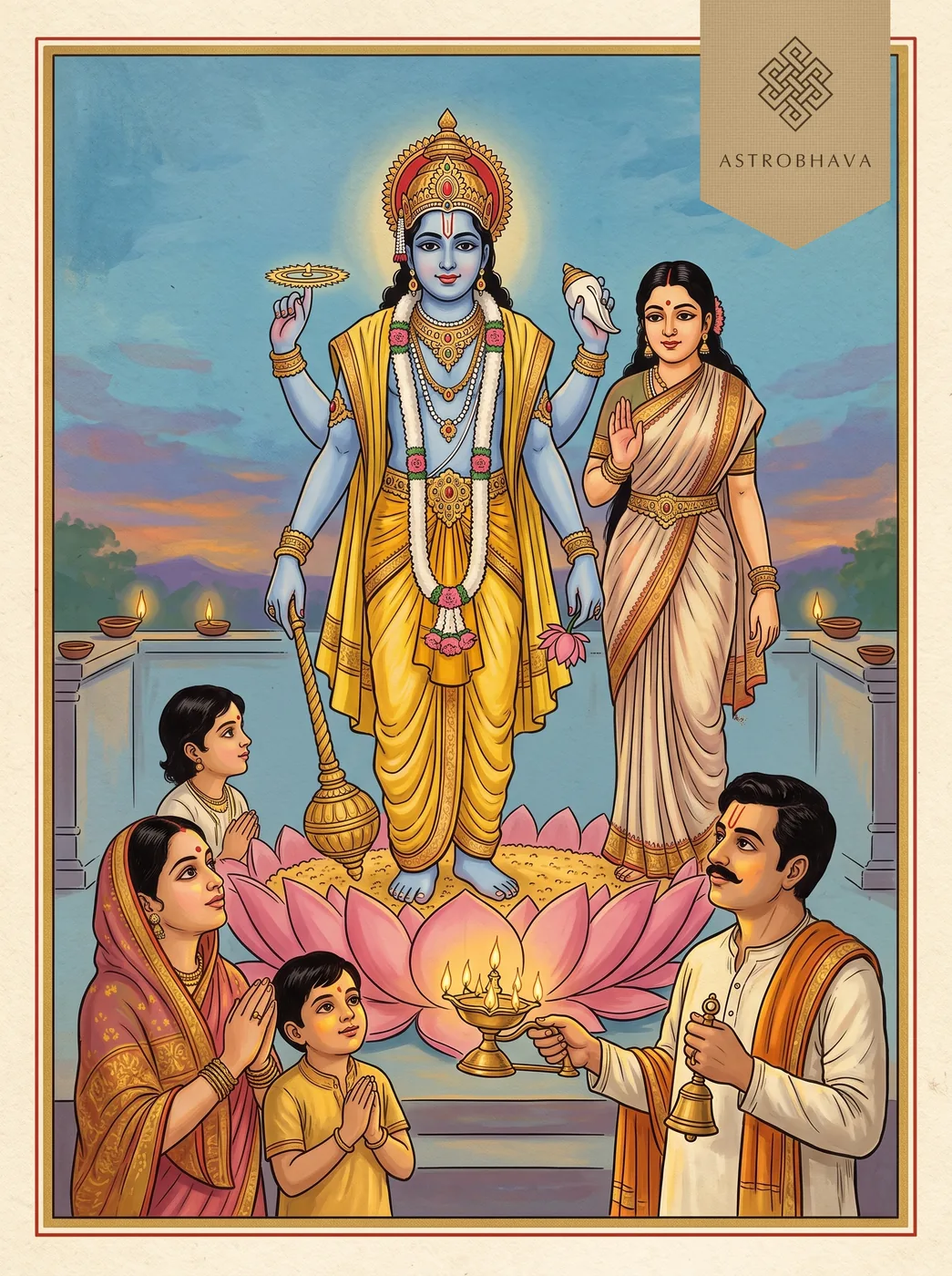
Om Jai Jagdish Hare Aarti
ॐ जय जगदीश हरे, स्वामी जय जगदीश हरे । भक्त जनों के संकट, क्षण में दूर करे ॥Also known as Om Jai Jagadish Hare
In Devanagari, Tamil, Telugu, Kannada, Malayalam and English — with the meaning of every word, and the one syllable most people pronounce wrongly.
What the Om Jai Jagdish Hare Aarti is
Om Jai Jagdish Hare is a Hindi aarti, a song for the waving of the lamp, addressed to Vishnu as Jagadisha, Lord of the world, and Hari. It was written around 1870 in Punjab by Pandit Shardha Ram Phillauri. The form printed here is a refrain and eight short stanzas, with the refrain sung again after each one. The stanzas move in a clear line. The first states what comes to the one who meditates on the Lord. The second calls him mother and father, and the third names him Paramatma, Antaryami and Parabrahma. The fourth sets his ocean of compassion against the singer, who calls themselves foolish, wicked and full of desire. The fifth asks how one so poor in understanding can reach a Lord beyond the senses. The sixth lies at his door, the seventh asks for faith and service of the saints, and the eighth hands body, mind and wealth back to their owner.
A Phillaur pandit's hymn, revived by film
Shardha Ram was born in September 1837 at Phillaur, in Punjab under Ranjit Singh, to a Brahmin family; his father Jai Dyalu was an astrologer and hereditary priest. He had no formal schooling, yet by ten he had studied Hindi, Sanskrit, Persian, astrology and music, and later read the Vedas and Upanishads at Rishikesh. He worked as a language tutor and translator for the American Presbyterian Mission at Ludhiana, lectured in the streets on the Mahabharata, and in 1865 was sent out of Phillaur by the British on a charge of preaching against the government. In Ludhiana he helped found a Hindu school and the Hindu Dharm Prakashik Sabha, which ran its own press. He also wrote Bhagyawati, counted among the first Hindi novels. The aarti dates from about 1870; nothing reliable is recorded about the day or reason he wrote it. He died in Lahore on 24 June 1881, aged 43. For a century the hymn stayed modest in reach. In 1970 Manoj Kumar's film Purab Aur Paschim used it, sung by Mahendra Kapoor with others to music by Kalyanji-Anandji, and from there it entered temple worship. Scholars have since recorded it in New Delhi, Toledo in Ohio and Leicester, sung before Krishna, Ganesha and Murugan as well as Vishnu.
The mantra, in six scripts
- ॐ
- oṃ — Om
- जय
- jaya — victory
- जगदीश
- jagadīśa — O Lord of the world
- हरे
- hare — O Hari
- स्वामी
- svāmī — O Master
- जय
- jaya — victory
- जगदीश
- jagadīśa — O Lord of the world
- हरे
- hare — O Hari
- भक्त
- bhakta — devoted
- जनों
- janoṃ — people
- के
- ke — of
- संकट
- saṃkaṭa — troubles
- क्षण
- kṣaṇa — an instant
- में
- meṃ — in
- दूर
- dūra — away
- करे
- kare — removes
Om Jai Jagdish Hare lyrics in full
All 9 verses, in Hindi, Tamil, Telugu, Kannada, Malayalam and English, each with its meaning. Choose a script:
Download the Om Jai Jagdish Hare PDFAll 9 verses with their meanings, in Hindi. Free to print and keep.
ॐ जय जगदीश हरे, स्वामी जय जगदीश हरे ।
भक्त जनों के संकट, क्षण में दूर करे ॥
ௐ ஜய ஜகதீஶ ஹரே, ஸ்வாமீ ஜய ஜகதீஶ ஹரே ।
பக்த ஜநோம் கே ஸம்கட, க்ஷண மேம் தூர கரே ॥
ఓం జయ జగదీశ హరే, స్వామీ జయ జగదీశ హరే ।
భక్త జనోం కే సంకట, క్షణ మేం దూర కరే ॥
ಓಂ ಜಯ ಜಗದೀಶ ಹರೇ, ಸ್ವಾಮೀ ಜಯ ಜಗದೀಶ ಹರೇ ।
ಭಕ್ತ ಜನೋಂ ಕೇ ಸಂಕಟ, ಕ್ಷಣ ಮೇಂ ದೂರ ಕರೇ ॥
ഓം ജയ ജഗദീശ ഹരേ, സ്വാമീ ജയ ജഗദീശ ഹരേ ।
ഭക്ത ജനോം കേ സംകട, ക്ഷണ മേം ദൂര കരേ ॥
oṃ jaya jagadīśa hare, svāmī jaya jagadīśa hare |
bhakta janoṃ ke saṃkaṭa, kṣaṇa meṃ dūra kare ||
Om, victory to you, Jagadish, Hari, Lord of the universe; victory, O Master. You remove the troubles of your devotees in an instant.
जो ध्यावे फल पावे, दुःख विनसे मन का ।
सुख सम्पत्ति घर आवे, कष्ट मिटे तन का ॥
ஜோ த்யாவே பல பாவே, துஃக விநஸே மந கா ।
ஸுக ஸம்பத்தி கர ஆவே, கஷ்ட மிடே தந கா ॥
జో ధ్యావే ఫల పావే, దుఃఖ వినసే మన కా ।
సుఖ సమ్పత్తి ఘర ఆవే, కష్ట మిటే తన కా ॥
ಜೋ ಧ್ಯಾವೇ ಫಲ ಪಾವೇ, ದುಃಖ ವಿನಸೇ ಮನ ಕಾ ।
ಸುಖ ಸಮ್ಪತ್ತಿ ಘರ ಆವೇ, ಕಷ್ಟ ಮಿಟೇ ತನ ಕಾ ॥
ജോ ധ്യാവേ ഫല പാവേ, ദുഃഖ വിനസേ മന കാ ।
സുഖ സമ്പത്തി ഘര ആവേ, കഷ്ട മിടേ തന കാ ॥
jo dhyāve phala pāve, duḥkha vinase mana kā |
sukha sampatti ghara āve, kaṣṭa miṭe tana kā ||
Whoever meditates on you gains the fruit and the sorrow of the mind fades. The verse says happiness and wealth come into the home and the body's suffering ends.
मात-पिता तुम मेरे, शरण गहूँ मैं किसकी ।
तुम बिन और न दूजा, आस करूँ जिसकी ॥
மாத-பிதா தும மேரே, ஶரண கஹூம் மைம் கிஸகீ ।
தும பிந ஔர ந தூஜா, ஆஸ கரூம் ஜிஸகீ ॥
మాత-పితా తుమ మేరే, శరణ గహూఁ మైం కిసకీ ।
తుమ బిన ఔర న దూజా, ఆస కరూఁ జిసకీ ॥
ಮಾತ-ಪಿತಾ ತುಮ ಮೇರೇ, ಶರಣ ಗಹೂಁ ಮೈಂ ಕಿಸಕೀ ।
ತುಮ ಬಿನ ಔರ ನ ದೂಜಾ, ಆಸ ಕರೂಁ ಜಿಸಕೀ ॥
മാത-പിതാ തുമ മേരേ, ശരണ ഗഹൂഁ മൈം കിസകീ ।
തുമ ബിന ഔര ന ദൂജാ, ആസ കരൂഁ ജിസകീ ॥
māta-pitā tuma mere, śaraṇa gahūṃ maiṃ kisakī |
tuma bina aura na dūjā, āsa karūṃ jisakī ||
You are my mother and father; whose shelter should I seek but yours? Apart from you there is no other in whom I could place my hope.
तुम पूरण परमात्मा, तुम अन्तर्यामी ।
पारब्रह्म परमेश्वर, तुम सबके स्वामी ॥
தும பூரண பரமாத்மா, தும அந்தர்யாமீ ।
பாரப்ரஹ்ம பரமேஶ்வர, தும ஸபகே ஸ்வாமீ ॥
తుమ పూరణ పరమాత్మా, తుమ అన్తర్యామీ ।
పారబ్రహ్మ పరమేశ్వర, తుమ సబకే స్వామీ ॥
ತುಮ ಪೂರಣ ಪರಮಾತ್ಮಾ, ತುಮ ಅನ್ತರ್ಯಾಮೀ ।
ಪಾರಬ್ರಹ್ಮ ಪರಮೇಶ್ವರ, ತುಮ ಸಬಕೇ ಸ್ವಾಮೀ ॥
തുമ പൂരണ പരമാത്മാ, തുമ അന്തര്യാമീ ।
പാരബ്രഹ്മ പരമേശ്വര, തുമ സബകേ സ്വാമീ ॥
tuma pūraṇa paramātmā, tuma antaryāmī |
pārabrahma parameśvara, tuma sabake svāmī ||
You are the complete Supreme Self, the one who dwells within and knows every heart. You are the transcendent Brahman, the Supreme Lord, the master of all.
तुम करुणा के सागर, तुम पालन-कर्ता ।
मैं मूरख खल कामी, कृपा करो भर्ता ॥
தும கருணா கே ஸாகர, தும பாலந-கர்தா ।
மைம் மூரக கல காமீ, க்ருபா கரோ பர்தா ॥
తుమ కరుణా కే సాగర, తుమ పాలన-కర్తా ।
మైం మూరఖ ఖల కామీ, కృపా కరో భర్తా ॥
ತುಮ ಕರುಣಾ ಕೇ ಸಾಗರ, ತುಮ ಪಾಲನ-ಕರ್ತಾ ।
ಮೈಂ ಮೂರಖ ಖಲ ಕಾಮೀ, ಕೃಪಾ ಕರೋ ಭರ್ತಾ ॥
തുമ കരുണാ കേ സാഗര, തുമ പാലന-കര്താ ।
മൈം മൂരഖ ഖല കാമീ, കൃപാ കരോ ഭര്താ ॥
tuma karuṇā ke sāgara, tuma pālana-kartā |
maiṃ mūrakha khala kāmī, kṛpā karo bhartā ||
You are the ocean of compassion and the sustainer of all. I am foolish, wicked and full of desire; show me your grace, O Upholder.
तुम हो एक अगोचर, सबके प्राणपति ।
किस विधि मिलूँ दयामय, तुमको मैं कुमति ॥
தும ஹோ ஏக அகோசர, ஸபகே ப்ராணபதி ।
கிஸ விதி மிலூம் தயாமய, துமகோ மைம் குமதி ॥
తుమ హో ఏక అగోచర, సబకే ప్రాణపతి ।
కిస విధి మిలూఁ దయామయ, తుమకో మైం కుమతి ॥
ತುಮ ಹೋ ಏಕ ಅಗೋಚರ, ಸಬಕೇ ಪ್ರಾಣಪತಿ ।
ಕಿಸ ವಿಧಿ ಮಿಲೂಁ ದಯಾಮಯ, ತುಮಕೋ ಮೈಂ ಕುಮತಿ ॥
തുമ ഹോ ഏക അഗോചര, സബകേ പ്രാണപതി ।
കിസ വിധി മിലൂഁ ദയാമയ, തുമകോ മൈം കുമതി ॥
tuma ho eka agocara, sabake prāṇapati |
kisa vidhi milūṃ dayāmaya, tumako maiṃ kumati ||
You are the One beyond the reach of the senses, the lord of every life-breath. O merciful one, by what means can I, so poor in understanding, come to meet you?
दीनबन्धु दुखहर्ता, तुम ठाकुर मेरे ।
अपने हाथ उठाओ, द्वार पड़ा तेरे ॥
தீநபந்து துகஹர்தா, தும டாகுர மேரே ।
அபநே ஹாத உடாஓ, த்வார படா தேரே ॥
దీనబన్ధు దుఖహర్తా, తుమ ఠాకుర మేరే ।
అపనే హాథ ఉఠాఓ, ద్వార పడా తేరే ॥
ದೀನಬನ್ಧು ದುಖಹರ್ತಾ, ತುಮ ಠಾಕುರ ಮೇರೇ ।
ಅಪನೇ ಹಾಥ ಉಠಾಓ, ದ್ವಾರ ಪಡಾ ತೇರೇ ॥
ദീനബന്ധു ദുഖഹര്താ, തുമ ഠാകുര മേരേ ।
അപനേ ഹാഥ ഉഠാഓ, ദ്വാര പഡാ തേരേ ॥
dīnabandhu dukhahartā, tuma ṭhākura mere |
apane hātha uṭhāo, dvāra paṛā tere ||
Friend of the lowly and remover of sorrow, you are my Lord. Raise your hand to bless me; I lie at your door.
विषय-विकार मिटाओ, पाप हरो देवा ।
श्रद्धा-भक्ति बढ़ाओ, सन्तन की सेवा ॥
விஷய-விகார மிடாஓ, பாப ஹரோ தேவா ।
ஶ்ரத்தா-பக்தி படாஓ, ஸந்தந கீ ஸேவா ॥
విషయ-వికార మిటాఓ, పాప హరో దేవా ।
శ్రద్ధా-భక్తి బఢాఓ, సన్తన కీ సేవా ॥
ವಿಷಯ-ವಿಕಾರ ಮಿಟಾಓ, ಪಾಪ ಹರೋ ದೇವಾ ।
ಶ್ರದ್ಧಾ-ಭಕ್ತಿ ಬಢಾಓ, ಸನ್ತನ ಕೀ ಸೇವಾ ॥
വിഷയ-വികാര മിടാഓ, പാപ ഹരോ ദേവാ ।
ശ്രദ്ധാ-ഭക്തി ബഢാഓ, സന്തന കീ സേവാ ॥
viṣaya-vikāra miṭāo, pāpa haro devā |
śraddhā-bhakti baṛhāo, santana kī sevā ||
Wipe away the cravings and distortions born of the senses, and take away my sins, O God. Increase my faith and devotion, and my service to the saints.
तन-मन-धन सब कुछ है तेरा ।
तेरा तुझको अर्पण, क्या लागे मेरा ॥
தந-மந-தந ஸப குச ஹை தேரா ।
தேரா துசகோ அர்பண, க்யா லாகே மேரா ॥
తన-మన-ధన సబ కుఛ హై తేరా ।
తేరా తుఝకో అర్పణ, క్యా లాగే మేరా ॥
ತನ-ಮನ-ಧನ ಸಬ ಕುಛ ಹೈ ತೇರಾ ।
ತೇರಾ ತುಝಕೋ ಅರ್ಪಣ, ಕ್ಯಾ ಲಾಗೇ ಮೇರಾ ॥
തന-മന-ധന സബ കുഛ ഹൈ തേരാ ।
തേരാ തുഝകോ അര്പണ, ക്യാ ലാഗേ മേരാ ॥
tana-mana-dhana saba kucha hai terā |
terā tujhako arpaṇa, kyā lāge merā ||
Body, mind and wealth, everything is yours. I offer you only what is already yours; what of it is mine?
The syllable people get wrong
In jagadīśa (जगदीश), the third syllable has a long ī and ends in the palatal ś, so it rhymes with 'leash': jug-the-EESH, or jug-DEESH as it is sung. Saying 'Jag-dish' with the short i of the English word 'dish' shortens the very vowel the refrain holds.
When the Om Jai Jagdish Hare Aarti is chanted
Weekday. Thursday
Festival. Closing aarti of the Satyanarayan Puja
Questions
Have your chart read before you decide
Chanting is yours to do, and free. But which deity your situation calls for — and whether a mantra alone is the right response — depends on your chart. Sometimes it is; sometimes it is not.
- Over 30 years in the Guru–Sishya Parampara, from the age of five
- He reads every chart himself — 60 minutes, one to one, never delegated
- Charts are read only between sunrise and sunset, following tradition