Manasa Devi Mantra
श्वेतचम्पकवर्णाभां रत्नभूषणभूषिताम् । वह्निशुद्धांशुकाधानां नागयज्ञोपवीतिनीम् ॥Also known as Manasa Devi Dvadashanama Stotram
In Devanagari, Tamil, Telugu, Kannada, Malayalam and English — with the meaning of every word, and the one syllable most people pronounce wrongly.
 The Naga Homam, performed for youBook →
What the Manasa Devi Mantra is
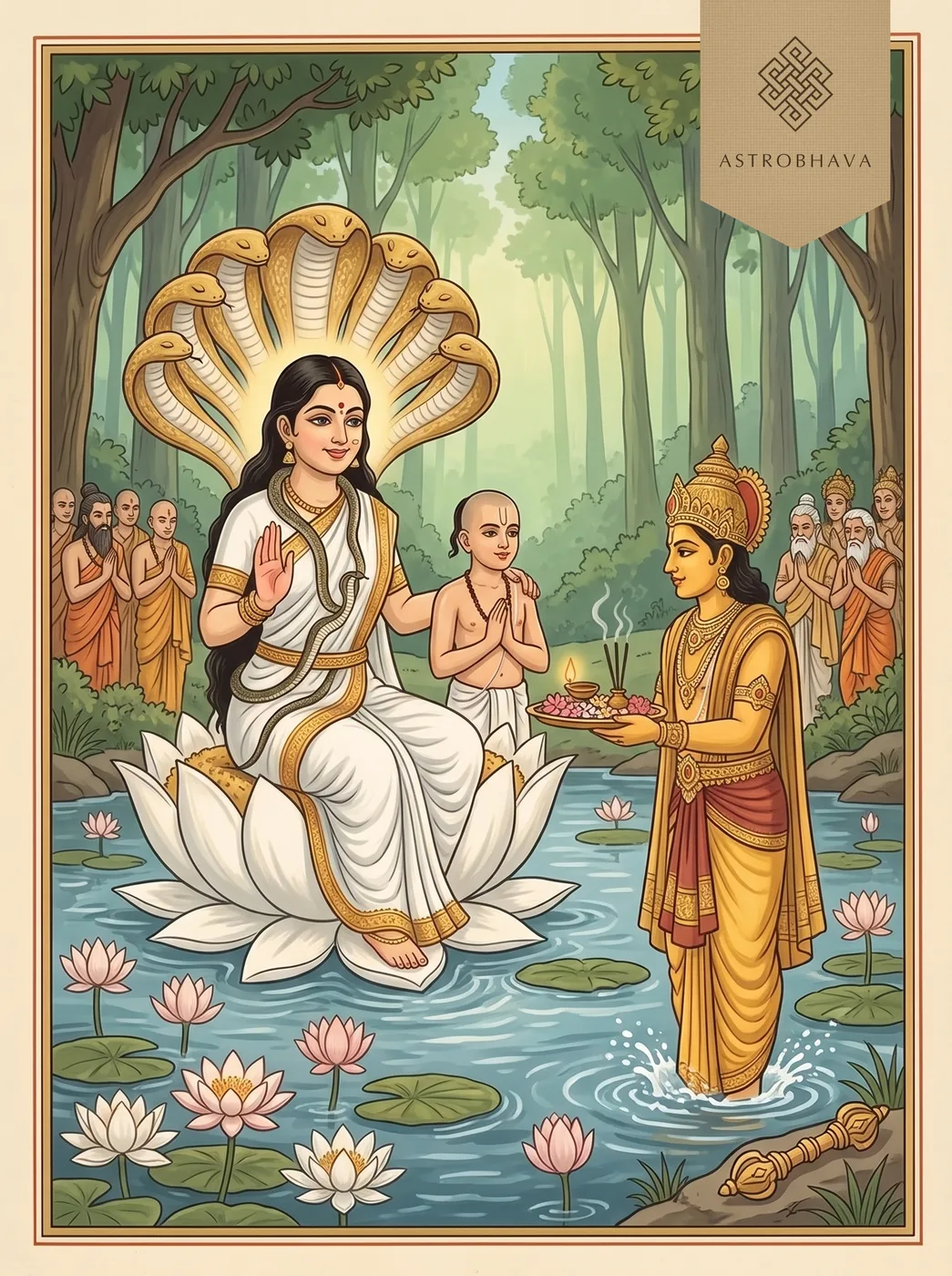
The Manasa Devi mantra, in the form the Puranas give it, has three parts, all addressed to Manasa, the goddess of serpents who is called the sister of Vasuki and the mother of the sage Astika. First comes a two-verse dhyana from the Devi Bhagavata Purana (9.48), which that chapter assigns to the Sama Veda branch: it pictures her the colour of a white champaka flower, in fire-purified cloth, with a serpent for her sacred thread. Next is the short name mantra, Om namo manasayai, which the Brahmavaivarta Purana (Prakriti Khanda 45) sets just before her names. Last is the Dvadashanama Stotram, taken from the same chapter of the Brahmavaivarta Purana (Prakriti Khanda 45), with a parallel in the Devi Bhagavata (9.47): two verses carrying twelve names, from Jaratkaru to Mahajnanayuta, followed by four verses of phala shruti about release from fear of snakes. The Puranas also give a twelve-syllable mula mantra with seed syllables; it is passed on through initiation and is not printed here.
The mind-born daughter of Kashyapa
The Brahmavaivarta Purana and the Devi Bhagavata tell her life in two linked chapters. She was born from the mind of the sage Kashyapa, which is why she is Manasa, and the texts add that her own mind rested always on the Supreme. On Kailasa, Shiva taught her sacred learning and song and gave her a mantra of Krishna, so she is called Shaivi as well as Vaishnavi. She then kept penance to Krishna for three ages; seeing her body worn thin, he named her Jaratkaru, granted her a boon at Pushkara and worshipped her first, after which Shiva, Kashyapa, the gods and the nagas did the same. Kashyapa gave her in marriage to the ascetic Jaratkaru. As he slept under a banyan, sunset came, and she woke him so that he would not miss the evening rite. He took it as an insult and resolved to leave, the Sun god calmed the quarrel, and before going he foretold a son devoted to Vishnu. That son, Astika, was raised and taught by Shiva. When a king's fire rite threatened Takshaka and Indra with him, Astika, at his mother's bidding, asked that they be spared. Indra then worshipped Manasa with sixteen offerings and a long hymn of praise.
The mantra, in six scripts
- ॐ
- oṃ — Om, the sacred syllable
- नमो
- namo — salutations
- मनसायै
- manasāyai — to Manasa
Manasa Devi Mantra lyrics in full
The two-verse dhyana and the name mantra, then the six-verse twelve-name stotra as it is printed on its own.
All 9 verses, in Sanskrit, Tamil, Telugu, Kannada, Malayalam and English, each with its meaning. Choose a script:
Download the Manasa Devi Mantra PDFAll 9 verses with their meanings, in Sanskrit. Free to print and keep.
श्वेतचम्पकवर्णाभां रत्नभूषणभूषिताम् ।
वह्निशुद्धांशुकाधानां नागयज्ञोपवीतिनीम् ॥
ஶ்வேதசம்பகவர்ணாபாம் ரத்நபூஷணபூஷிதாம் ।
வஹ்நிஶுத்தாம்ஶுகாதாநாம் நாகயஜ்ஞோபவீதிநீம் ॥
శ్వేతచమ్పకవర్ణాభాం రత్నభూషణభూషితామ్ ।
వహ్నిశుద్ధాంశుకాధానాం నాగయజ్ఞోపవీతినీమ్ ॥
ಶ್ವೇತಚಮ್ಪಕವರ್ಣಾಭಾಂ ರತ್ನಭೂಷಣಭೂಷಿತಾಮ್ ।
ವಹ್ನಿಶುದ್ಧಾಂಶುಕಾಧಾನಾಂ ನಾಗಯಜ್ಞೋಪವೀತಿನೀಮ್ ॥
ശ്വേതചമ്പകവര്ണാഭാം രത്നഭൂഷണഭൂഷിതാമ് ।
വഹ്നിശുദ്ധാംശുകാധാനാം നാഗയജ്ഞോപവീതിനീമ് ॥
śvetacampakavarṇābhāṃ ratnabhūṣaṇabhūṣitām |
vahniśuddhāṃśukādhānāṃ nāgayajñopavītinīm ||
I meditate on the goddess who glows with the colour of the white champaka flower and is decked in jewelled ornaments. She wears garments made pure by fire and a serpent as her sacred thread.
महाज्ञानयुतां तां च प्रवरज्ञानिनां वराम् ।
सिद्धाधिष्ठातृदेवीं च सिद्धां सिद्धिप्रदां भजे ॥
மஹாஜ்ஞாநயுதாம் தாம் ச ப்ரவரஜ்ஞாநிநாம் வராம் ।
ஸித்தாதிஷ்டாத்ருதேவீம் ச ஸித்தாம் ஸித்திப்ரதாம் பஜே ॥
మహాజ్ఞానయుతాం తాం చ ప్రవరజ్ఞానినాం వరామ్ ।
సిద్ధాధిష్ఠాతృదేవీం చ సిద్ధాం సిద్ధిప్రదాం భజే ॥
ಮಹಾಜ್ಞಾನಯುತಾಂ ತಾಂ ಚ ಪ್ರವರಜ್ಞಾನಿನಾಂ ವರಾಮ್ ।
ಸಿದ್ಧಾಧಿಷ್ಠಾತೃದೇವೀಂ ಚ ಸಿದ್ಧಾಂ ಸಿದ್ಧಿಪ್ರದಾಂ ಭಜೇ ॥
മഹാജ്ഞാനയുതാം താം ച പ്രവരജ്ഞാനിനാം വരാമ് ।
സിദ്ധാധിഷ്ഠാതൃദേവീം ച സിദ്ധാം സിദ്ധിപ്രദാം ഭജേ ॥
mahājñānayutāṃ tāṃ ca pravarajñānināṃ varām |
siddhādhiṣṭhātṛdevīṃ ca siddhāṃ siddhipradāṃ bhaje ||
I worship her who is endowed with great knowledge, the foremost among the wisest. She is the presiding goddess of the perfected ones, perfect herself and the giver of perfection.
ॐ नमो मनसायै ।
ௐ நமோ மநஸாயை ।
ఓం నమో మనసాయై ।
ಓಂ ನಮೋ ಮನಸಾಯೈ ।
ഓം നമോ മനസായൈ ।
oṃ namo manasāyai |
Om, salutations to Manasa.
जरत्कारुर्जगद्गौरी मनसा सिद्धयोगिनी ।
वैष्णवी नागभगिनी शैवी नागेश्वरी तथा ॥
ஜரத்காருர்ஜகத்கௌரீ மநஸா ஸித்தயோகிநீ ।
வைஷ்ணவீ நாகபகிநீ ஶைவீ நாகேஶ்வரீ ததா ॥
జరత్కారుర్జగద్గౌరీ మనసా సిద్ధయోగినీ ।
వైష్ణవీ నాగభగినీ శైవీ నాగేశ్వరీ తథా ॥
ಜರತ್ಕಾರುರ್ಜಗದ್ಗೌರೀ ಮನಸಾ ಸಿದ್ಧಯೋಗಿನೀ ।
ವೈಷ್ಣವೀ ನಾಗಭಗಿನೀ ಶೈವೀ ನಾಗೇಶ್ವರೀ ತಥಾ ॥
ജരത്കാരുര്ജഗദ്ഗൌരീ മനസാ സിദ്ധയോഗിനീ ।
വൈഷ്ണവീ നാഗഭഗിനീ ശൈവീ നാഗേശ്വരീ തഥാ ॥
jaratkārurjagadgaurī manasā siddhayoginī |
vaiṣṇavī nāgabhaginī śaivī nāgeśvarī tathā ||
Jaratkaru, Jagadgauri (fair one of the world), Manasa, Siddhayogini (perfected yogini), Vaishnavi, Nagabhagini (sister of the serpents), Shaivi, and also Nageshvari (queen of the serpents).
जरत्कारुप्रियाऽऽस्तीकमाता विषहरीति च ।
महाज्ञानयुता चैव सा देवी विश्वपूजिता ॥
ஜரத்காருப்ரியாஸ்தீகமாதா விஷஹரீதி ச ।
மஹாஜ்ஞாநயுதா சைவ ஸா தேவீ விஶ்வபூஜிதா ॥
జరత్కారుప్రియాఽఽస్తీకమాతా విషహరీతి చ ।
మహాజ్ఞానయుతా చైవ సా దేవీ విశ్వపూజితా ॥
ಜರತ್ಕಾರುಪ್ರಿಯಾಽಽಸ್ತೀಕಮಾತಾ ವಿಷಹರೀತಿ ಚ ।
ಮಹಾಜ್ಞಾನಯುತಾ ಚೈವ ಸಾ ದೇವೀ ವಿಶ್ವಪೂಜಿತಾ ॥
ജരത്കാരുപ്രിയാഽഽസ്തീകമാതാ വിഷഹരീതി ച ।
മഹാജ്ഞാനയുതാ ചൈവ സാ ദേവീ വിശ്വപൂജിതാ ॥
jaratkārupriyā''stīkamātā viṣaharīti ca |
mahājñānayutā caiva sā devī viśvapūjitā ||
Jaratkarupriya (beloved of the sage Jaratkaru), Astikamata (mother of Astika), Vishahari (remover of poison), and Mahajnanayuta (endowed with great knowledge): that goddess is worshipped by the whole world.
द्वादशैतानि नामानि पूजाकाले च यः पठेत् ।
तस्य नागभयं नास्ति तस्य वंशोद्भवस्य च ॥
த்வாதஶைதாநி நாமாநி பூஜாகாலே ச யஃ படேத் ।
தஸ்ய நாகபயம் நாஸ்தி தஸ்ய வம்ஶோத்பவஸ்ய ச ॥
ద్వాదశైతాని నామాని పూజాకాలే చ యః పఠేత్ ।
తస్య నాగభయం నాస్తి తస్య వంశోద్భవస్య చ ॥
ದ್ವಾದಶೈತಾನಿ ನಾಮಾನಿ ಪೂಜಾಕಾಲೇ ಚ ಯಃ ಪಠೇತ್ ।
ತಸ್ಯ ನಾಗಭಯಂ ನಾಸ್ತಿ ತಸ್ಯ ವಂಶೋದ್ಭವಸ್ಯ ಚ ॥
ദ്വാദശൈതാനി നാമാനി പൂജാകാലേ ച യഃ പഠേത് ।
തസ്യ നാഗഭയം നാസ്തി തസ്യ വംശോദ്ഭവസ്യ ച ॥
dvādaśaitāni nāmāni pūjākāle ca yaḥ paṭhet |
tasya nāgabhayaṃ nāsti tasya vaṃśodbhavasya ca ||
The verse says that whoever recites these twelve names at the time of worship has no fear of serpents, nor does anyone born in that person's family.
नागभीते च शयने नागग्रस्ते च मन्दिरे ।
नागशोभे महादुर्गे नागवेष्टितविग्रहे ॥
நாகபீதே ச ஶயநே நாகக்ரஸ்தே ச மந்திரே ।
நாகஶோபே மஹாதுர்கே நாகவேஷ்டிதவிக்ரஹே ॥
నాగభీతే చ శయనే నాగగ్రస్తే చ మన్దిరే ।
నాగశోభే మహాదుర్గే నాగవేష్టితవిగ్రహే ॥
ನಾಗಭೀತೇ ಚ ಶಯನೇ ನಾಗಗ್ರಸ್ತೇ ಚ ಮನ್ದಿರೇ ।
ನಾಗಶೋಭೇ ಮಹಾದುರ್ಗೇ ನಾಗವೇಷ್ಟಿತವಿಗ್ರಹೇ ॥
നാഗഭീതേ ച ശയനേ നാഗഗ്രസ്തേ ച മന്ദിരേ ।
നാഗശോഭേ മഹാദുര്ഗേ നാഗവേഷ്ടിതവിഗ്രഹേ ॥
nāgabhīte ca śayane nāgagraste ca mandire |
nāgaśobhe mahādurge nāgaveṣṭitavigrahe ||
When the bed is feared to hold a serpent, when the house is overrun by serpents, in a great fortress astir with serpents, or when the body is coiled about by a serpent,
इदं स्तोत्रं पठित्वा तु मुच्यते नात्र संशयः ।
नित्यं पठेद्यस्तं दृष्ट्वा नागवर्गः पलायते ॥
இதம் ஸ்தோத்ரம் படித்வா து முச்யதே நாத்ர ஸம்ஶயஃ ।
நித்யம் படேத்யஸ்தம் த்ருஷ்ட்வா நாகவர்கஃ பலாயதே ॥
ఇదం స్తోత్రం పఠిత్వా తు ముచ్యతే నాత్ర సంశయః ।
నిత్యం పఠేద్యస్తం దృష్ట్వా నాగవర్గః పలాయతే ॥
ಇದಂ ಸ್ತೋತ್ರಂ ಪಠಿತ್ವಾ ತು ಮುಚ್ಯತೇ ನಾತ್ರ ಸಂಶಯಃ ।
ನಿತ್ಯಂ ಪಠೇದ್ಯಸ್ತಂ ದೃಷ್ಟ್ವಾ ನಾಗವರ್ಗಃ ಪಲಾಯತೇ ॥
ഇദം സ്തോത്രം പഠിത്വാ തു മുച്യതേ നാത്ര സംശയഃ ।
നിത്യം പഠേദ്യസ്തം ദൃഷ്ട്വാ നാഗവര്ഗഃ പലായതേ ॥
idaṃ stotraṃ paṭhitvā tu mucyate nātra saṃśayaḥ |
nityaṃ paṭhedyastaṃ dṛṣṭvā nāgavargaḥ palāyate ||
The verse says that by reciting this hymn one is set free, without doubt, and that the serpents flee on seeing one who recites it every day.
नागौघं भूषणं कृत्वा स भवेन्नागवाहनः ।
नागासनो नागतल्पो महासिद्धो भवेन्नरः ॥
நாகௌகம் பூஷணம் க்ருத்வா ஸ பவேந்நாகவாஹநஃ ।
நாகாஸநோ நாகதல்போ மஹாஸித்தோ பவேந்நரஃ ॥
నాగౌఘం భూషణం కృత్వా స భవేన్నాగవాహనః ।
నాగాసనో నాగతల్పో మహాసిద్ధో భవేన్నరః ॥
ನಾಗೌಘಂ ಭೂಷಣಂ ಕೃತ್ವಾ ಸ ಭವೇನ್ನಾಗವಾಹನಃ ।
ನಾಗಾಸನೋ ನಾಗತಲ್ಪೋ ಮಹಾಸಿದ್ಧೋ ಭವೇನ್ನರಃ ॥
നാഗൌഘം ഭൂഷണം കൃത്വാ സ ഭവേന്നാഗവാഹനഃ ।
നാഗാസനോ നാഗതല്പോ മഹാസിദ്ധോ ഭവേന്നരഃ ॥
nāgaughaṃ bhūṣaṇaṃ kṛtvā sa bhavennāgavāhanaḥ |
nāgāsano nāgatalpo mahāsiddho bhavennaraḥ ||
The verse says that such a person may wear a host of serpents as ornaments and ride upon a serpent; with a serpent for a seat and a serpent for a bed, that person becomes a great adept.
The syllable people get wrong
In Verse 2 the son's name is āstīka, with a long ā and a long ī, said AAS-tee-ka; said with short vowels as āstika it becomes the ordinary word for a believer, so āstīkamātā is the mother of the sage, not of a believer.
When the Manasa Devi Mantra is chanted
Weekday. Friday
Festival. Manasa Puja on Shravana Sankranti
Questions
Have your chart read before you decide
Chanting is yours to do, and free. But which deity your situation calls for — and whether a mantra alone is the right response — depends on your chart. Sometimes it is; sometimes it is not.
- Over 30 years in the Guru–Sishya Parampara, from the age of five
- He reads every chart himself — 60 minutes, one to one, never delegated
- Charts are read only between sunrise and sunset, following tradition
