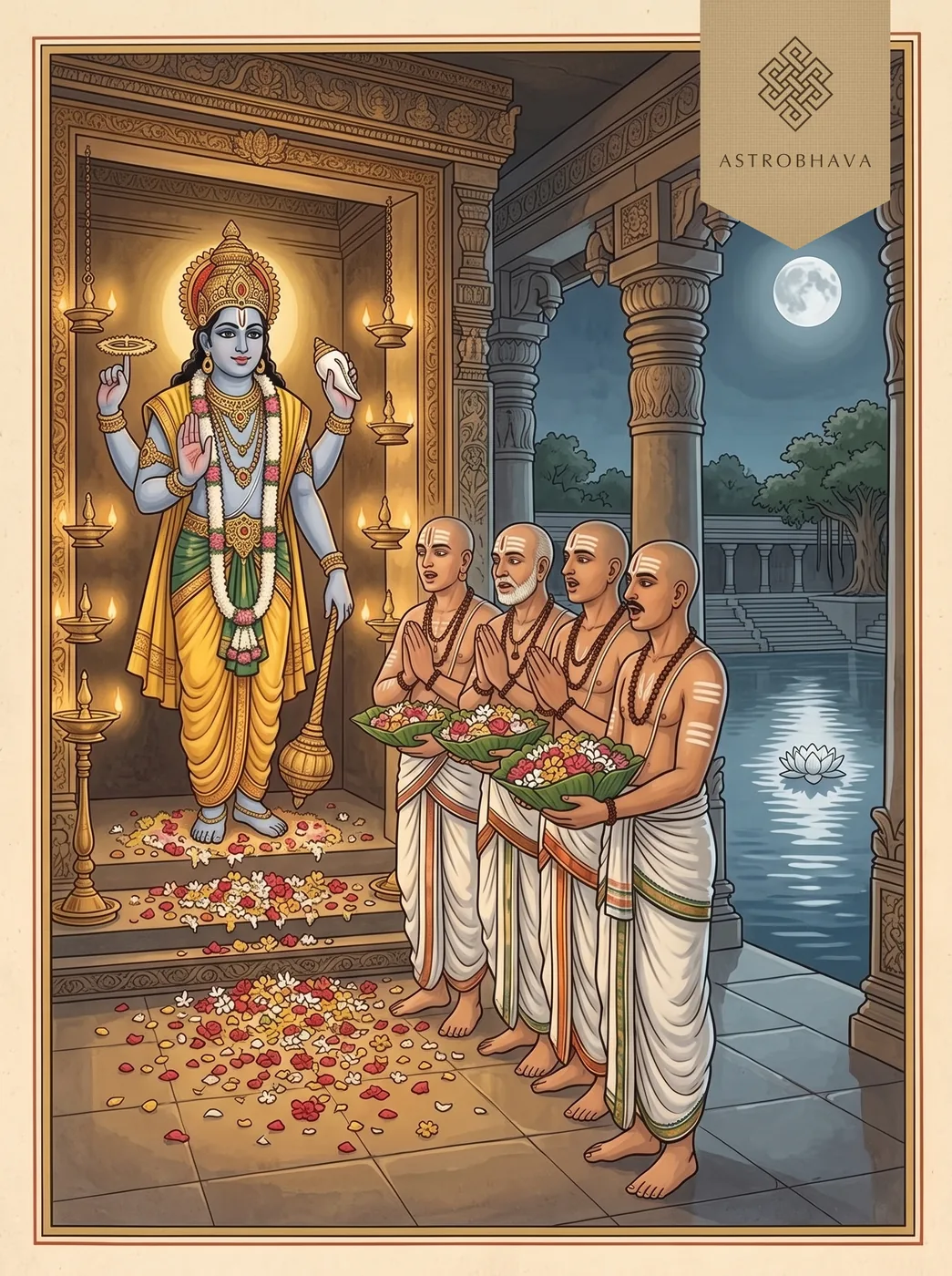
Mantra Pushpam
योऽपां पुष्पं वेद । पुष्पवान् प्रजावान् पशुमान् भवति । चन्द्रमा वा अपां पुष्पम् । पुष्पवान् प्रजावान् पशुमान् भवति । य एवं वेद । योऽपामायतनं वेद । आयतनवान् भवति ॥Also known as Yo'pam Pushpam Veda
In Devanagari, Tamil, Telugu, Kannada, Malayalam and English — with the meaning of every word, and the one syllable most people pronounce wrongly.
 A reading of your birth chartBook →
What the Mantra Pushpam is
Mantra Pushpam, the 'flower of mantras', is the Vedic passage priests chant together as flowers are offered at the close of a puja, and it opens with the words 'yo'pam pushpam veda'. It is the twenty-second anuvaka of the Aruna Prashna, the first book of the Taittiriya Aranyaka of the Krishna Yajurveda, a section also called the Surya Namaskara Prashna. The text is prose, not metre. It begins by naming the moon as the flower of the waters, then works through seven pairs: fire, air, the blazing sun, the moon, the stars, the rain cloud and the year are each the ayatana, the resting place, of the waters, and the waters are in turn the resting place of each. Every section ends with the same refrain about the one who knows this. The last section turns to a boat standing firm upon the waters. In temples the passage is closed with 'Rajadhirajaya', a salutation to Kubera Vaishravana taken from Taittiriya Aranyaka 1.31.
A question about where time comes to rest
The Aruna Prashna has thirty-two anuvakas, and the commentator Sri Varadachari Sathakopan of Oppiliappan Koil reads the Mantra Pushpam as the answer to a puzzle set fourteen sections earlier. The eighth anuvaka asks where the rain cloud goes to rest, where the year dissolves, where day and night, months, fortnights and moments find their home, and where water goes when ponds and rivers run dry. Its own answer is that the units of time enter water, water enters fire, and fire merges into the sun. The twenty-second anuvaka returns to that chain and states it as mutual support: each power rests in water, and water rests in it. The same commentary links these verses to the Arunaketuka rite, the fire altar of the Aruna Prashna, and notes that the passage is recited daily in Srivaishnava Bhagavad Aradhanam, the household worship of Vishnu. The classical commentators Sayana and Bhatta Bhaskara both treated water here as a name for the supreme reality. How the passage came to be the standard flower offering at the end of worship is not recorded; even the translator P. R. Ramachander wrote that he did not know why it is repeated at every function. The closing Kubera salutation was joined to it by temple practice, where priests recite it while distributing prasada.
The mantra, in six scripts
- योऽपां
- yo'pāṃ — he who, of the waters
- पुष्पं
- puṣpaṃ — the flower
- वेद
- veda — knows
- पुष्पवान्
- puṣpavān — rich in flowers
- प्रजावान्
- prajāvān — rich in offspring
- पशुमान्
- paśumān — rich in cattle
- भवति
- bhavati — becomes
- चन्द्रमा
- candramā — the moon
- वा
- vā — indeed
- अपां
- apāṃ — of the waters
- पुष्पम्
- puṣpam — the flower
- पुष्पवान्
- puṣpavān — rich in flowers
- प्रजावान्
- prajāvān — rich in offspring
- पशुमान्
- paśumān — rich in cattle
- भवति
- bhavati — becomes
- य
- ya — he who
- एवं
- evaṃ — thus
- वेद
- veda — knows
- योऽपामायतनं
- yo'pāmāyatanaṃ — he who, the resting place of the waters
- वेद
- veda — knows
- आयतनवान्
- āyatanavān — possessed of a resting place
- भवति
- bhavati — becomes
Mantra Pushpam lyrics in full
The eight sections of Taittiriya Aranyaka 1.22, closed by the Rajadhirajaya salutation to Kubera; some temples add further mantras after it.
All 9 verses, in Sanskrit, Tamil, Telugu, Kannada, Malayalam and English, each with its meaning. Choose a script:
Download the Mantra Pushpam PDFAll 9 verses with their meanings, in Sanskrit. Free to print and keep.
योऽपां पुष्पं वेद ।
पुष्पवान् प्रजावान् पशुमान् भवति ।
चन्द्रमा वा अपां पुष्पम् ।
पुष्पवान् प्रजावान् पशुमान् भवति ।
य एवं वेद ।
योऽपामायतनं वेद ।
आयतनवान् भवति ॥
யோபாம் புஷ்பம் வேத ।
புஷ்பவாந் ப்ரஜாவாந் பஶுமாந் பவதி ।
சந்த்ரமா வா அபாம் புஷ்பம் ।
புஷ்பவாந் ப்ரஜாவாந் பஶுமாந் பவதி ।
ய ஏவம் வேத ।
யோபாமாயதநம் வேத ।
ஆயதநவாந் பவதி ॥
యోఽపాం పుష్పం వేద ।
పుష్పవాన్ ప్రజావాన్ పశుమాన్ భవతి ।
చన్ద్రమా వా అపాం పుష్పమ్ ।
పుష్పవాన్ ప్రజావాన్ పశుమాన్ భవతి ।
య ఏవం వేద ।
యోఽపామాయతనం వేద ।
ఆయతనవాన్ భవతి ॥
ಯೋಽಪಾಂ ಪುಷ್ಪಂ ವೇದ ।
ಪುಷ್ಪವಾನ್ ಪ್ರಜಾವಾನ್ ಪಶುಮಾನ್ ಭವತಿ ।
ಚನ್ದ್ರಮಾ ವಾ ಅಪಾಂ ಪುಷ್ಪಮ್ ।
ಪುಷ್ಪವಾನ್ ಪ್ರಜಾವಾನ್ ಪಶುಮಾನ್ ಭವತಿ ।
ಯ ಏವಂ ವೇದ ।
ಯೋಽಪಾಮಾಯತನಂ ವೇದ ।
ಆಯತನವಾನ್ ಭವತಿ ॥
യോഽപാം പുഷ്പം വേദ ।
പുഷ്പവാന് പ്രജാവാന് പശുമാന് ഭവതി ।
ചന്ദ്രമാ വാ അപാം പുഷ്പമ് ।
പുഷ്പവാന് പ്രജാവാന് പശുമാന് ഭവതി ।
യ ഏവം വേദ ।
യോഽപാമായതനം വേദ ।
ആയതനവാന് ഭവതി ॥
yo'pāṃ puṣpaṃ veda |
puṣpavān prajāvān paśumān bhavati |
candramā vā apāṃ puṣpam |
puṣpavān prajāvān paśumān bhavati |
ya evaṃ veda |
yo'pāmāyatanaṃ veda |
āyatanavān bhavati ||
He who knows the flower of the waters becomes rich in flowers, in offspring and in cattle. The moon is the flower of the waters; he who knows this becomes rich in flowers, offspring and cattle. He who knows the resting place (source) of the waters comes to have a firm resting place.
अग्निर्वा अपामायतनम् ।
आयतनवान् भवति ।
योऽग्नेरायतनं वेद ।
आयतनवान् भवति ।
आपो वा अग्नेरायतनम् ।
आयतनवान् भवति ।
य एवं वेद ।
योऽपामायतनं वेद ।
आयतनवान् भवति ॥
அக்நிர்வா அபாமாயதநம் ।
ஆயதநவாந் பவதி ।
யோக்நேராயதநம் வேத ।
ஆயதநவாந் பவதி ।
ஆபோ வா அக்நேராயதநம் ।
ஆயதநவாந் பவதி ।
ய ஏவம் வேத ।
யோபாமாயதநம் வேத ।
ஆயதநவாந் பவதி ॥
అగ్నిర్వా అపామాయతనమ్ ।
ఆయతనవాన్ భవతి ।
యోఽగ్నేరాయతనం వేద ।
ఆయతనవాన్ భవతి ।
ఆపో వా అగ్నేరాయతనమ్ ।
ఆయతనవాన్ భవతి ।
య ఏవం వేద ।
యోఽపామాయతనం వేద ।
ఆయతనవాన్ భవతి ॥
ಅಗ್ನಿರ್ವಾ ಅಪಾಮಾಯತನಮ್ ।
ಆಯತನವಾನ್ ಭವತಿ ।
ಯೋಽಗ್ನೇರಾಯತನಂ ವೇದ ।
ಆಯತನವಾನ್ ಭವತಿ ।
ಆಪೋ ವಾ ಅಗ್ನೇರಾಯತನಮ್ ।
ಆಯತನವಾನ್ ಭವತಿ ।
ಯ ಏವಂ ವೇದ ।
ಯೋಽಪಾಮಾಯತನಂ ವೇದ ।
ಆಯತನವಾನ್ ಭವತಿ ॥
അഗ്നിര്വാ അപാമായതനമ് ।
ആയതനവാന് ഭവതി ।
യോഽഗ്നേരായതനം വേദ ।
ആയതനവാന് ഭവതി ।
ആപോ വാ അഗ്നേരായതനമ് ।
ആയതനവാന് ഭവതി ।
യ ഏവം വേദ ।
യോഽപാമായതനം വേദ ।
ആയതനവാന് ഭവതി ॥
agnirvā apāmāyatanam |
āyatanavān bhavati |
yo'gnerāyatanaṃ veda |
āyatanavān bhavati |
āpo vā agnerāyatanam |
āyatanavān bhavati |
ya evaṃ veda |
yo'pāmāyatanaṃ veda |
āyatanavān bhavati ||
Fire is the resting place of the waters; he who knows the resting place of fire comes to have a firm resting place. The waters in turn are the resting place of fire. He who knows this, he who knows the resting place of the waters, comes to have a firm resting place.
वायुर्वा अपामायतनम् ।
आयतनवान् भवति ।
यो वायोरायतनं वेद ।
आयतनवान् भवति ।
आपो वै वायोरायतनम् ।
आयतनवान् भवति ।
य एवं वेद ।
योऽपामायतनं वेद ।
आयतनवान् भवति ॥
வாயுர்வா அபாமாயதநம் ।
ஆயதநவாந் பவதி ।
யோ வாயோராயதநம் வேத ।
ஆயதநவாந் பவதி ।
ஆபோ வை வாயோராயதநம் ।
ஆயதநவாந் பவதி ।
ய ஏவம் வேத ।
யோபாமாயதநம் வேத ।
ஆயதநவாந் பவதி ॥
వాయుర్వా అపామాయతనమ్ ।
ఆయతనవాన్ భవతి ।
యో వాయోరాయతనం వేద ।
ఆయతనవాన్ భవతి ।
ఆపో వై వాయోరాయతనమ్ ।
ఆయతనవాన్ భవతి ।
య ఏవం వేద ।
యోఽపామాయతనం వేద ।
ఆయతనవాన్ భవతి ॥
ವಾಯುರ್ವಾ ಅಪಾಮಾಯತನಮ್ ।
ಆಯತನವಾನ್ ಭವತಿ ।
ಯೋ ವಾಯೋರಾಯತನಂ ವೇದ ।
ಆಯತನವಾನ್ ಭವತಿ ।
ಆಪೋ ವೈ ವಾಯೋರಾಯತನಮ್ ।
ಆಯತನವಾನ್ ಭವತಿ ।
ಯ ಏವಂ ವೇದ ।
ಯೋಽಪಾಮಾಯತನಂ ವೇದ ।
ಆಯತನವಾನ್ ಭವತಿ ॥
വായുര്വാ അപാമായതനമ് ।
ആയതനവാന് ഭവതി ।
യോ വായോരായതനം വേദ ।
ആയതനവാന് ഭവതി ।
ആപോ വൈ വായോരായതനമ് ।
ആയതനവാന് ഭവതി ।
യ ഏവം വേദ ।
യോഽപാമായതനം വേദ ।
ആയതനവാന് ഭവതി ॥
vāyurvā apāmāyatanam |
āyatanavān bhavati |
yo vāyorāyatanaṃ veda |
āyatanavān bhavati |
āpo vai vāyorāyatanam |
āyatanavān bhavati |
ya evaṃ veda |
yo'pāmāyatanaṃ veda |
āyatanavān bhavati ||
Air (Vayu) is the resting place of the waters; he who knows the resting place of air comes to have a firm resting place. The waters in turn are the resting place of air. He who knows this, he who knows the resting place of the waters, comes to have a firm resting place.
असौ वै तपन्नपामायतनम् ।
आयतनवान् भवति ।
योऽमुष्य तपत आयतनं वेद ।
आयतनवान् भवति ।
आपो वा अमुष्य तपत आयतनम् ।
आयतनवान् भवति ।
य एवं वेद ।
योऽपामायतनं वेद ।
आयतनवान् भवति ॥
அஸௌ வை தபந்நபாமாயதநம் ।
ஆயதநவாந் பவதி ।
யோமுஷ்ய தபத ஆயதநம் வேத ।
ஆயதநவாந் பவதி ।
ஆபோ வா அமுஷ்ய தபத ஆயதநம் ।
ஆயதநவாந் பவதி ।
ய ஏவம் வேத ।
யோபாமாயதநம் வேத ।
ஆயதநவாந் பவதி ॥
అసౌ వై తపన్నపామాయతనమ్ ।
ఆయతనవాన్ భవతి ।
యోఽముష్య తపత ఆయతనం వేద ।
ఆయతనవాన్ భవతి ।
ఆపో వా అముష్య తపత ఆయతనమ్ ।
ఆయతనవాన్ భవతి ।
య ఏవం వేద ।
యోఽపామాయతనం వేద ।
ఆయతనవాన్ భవతి ॥
ಅಸೌ ವೈ ತಪನ್ನಪಾಮಾಯತನಮ್ ।
ಆಯತನವಾನ್ ಭವತಿ ।
ಯೋಽಮುಷ್ಯ ತಪತ ಆಯತನಂ ವೇದ ।
ಆಯತನವಾನ್ ಭವತಿ ।
ಆಪೋ ವಾ ಅಮುಷ್ಯ ತಪತ ಆಯತನಮ್ ।
ಆಯತನವಾನ್ ಭವತಿ ।
ಯ ಏವಂ ವೇದ ।
ಯೋಽಪಾಮಾಯತನಂ ವೇದ ।
ಆಯತನವಾನ್ ಭವತಿ ॥
അസൌ വൈ തപന്നപാമായതനമ് ।
ആയതനവാന് ഭവതി ।
യോഽമുഷ്യ തപത ആയതനം വേദ ।
ആയതനവാന് ഭവതി ।
ആപോ വാ അമുഷ്യ തപത ആയതനമ് ।
ആയതനവാന് ഭവതി ।
യ ഏവം വേദ ।
യോഽപാമായതനം വേദ ।
ആയതനവാന് ഭവതി ॥
asau vai tapannapāmāyatanam |
āyatanavān bhavati |
yo'muṣya tapata āyatanaṃ veda |
āyatanavān bhavati |
āpo vā amuṣya tapata āyatanam |
āyatanavān bhavati |
ya evaṃ veda |
yo'pāmāyatanaṃ veda |
āyatanavān bhavati ||
Yonder blazing sun is the resting place of the waters; he who knows the resting place of the blazing sun comes to have a firm resting place. The waters in turn are the resting place of the blazing sun. He who knows this, he who knows the resting place of the waters, comes to have a firm resting place.
चन्द्रमा वा अपामायतनम् ।
आयतनवान् भवति ।
यश्चन्द्रमस आयतनं वेद ।
आयतनवान् भवति ।
आपो वै चन्द्रमस आयतनम् ।
आयतनवान् भवति ।
य एवं वेद ।
योऽपामायतनं वेद ।
आयतनवान् भवति ॥
சந்த்ரமா வா அபாமாயதநம் ।
ஆயதநவாந் பவதி ।
யஶ்சந்த்ரமஸ ஆயதநம் வேத ।
ஆயதநவாந் பவதி ।
ஆபோ வை சந்த்ரமஸ ஆயதநம் ।
ஆயதநவாந் பவதி ।
ய ஏவம் வேத ।
யோபாமாயதநம் வேத ।
ஆயதநவாந் பவதி ॥
చన్ద్రమా వా అపామాయతనమ్ ।
ఆయతనవాన్ భవతి ।
యశ్చన్ద్రమస ఆయతనం వేద ।
ఆయతనవాన్ భవతి ।
ఆపో వై చన్ద్రమస ఆయతనమ్ ।
ఆయతనవాన్ భవతి ।
య ఏవం వేద ।
యోఽపామాయతనం వేద ।
ఆయతనవాన్ భవతి ॥
ಚನ್ದ್ರಮಾ ವಾ ಅಪಾಮಾಯತನಮ್ ।
ಆಯತನವಾನ್ ಭವತಿ ।
ಯಶ್ಚನ್ದ್ರಮಸ ಆಯತನಂ ವೇದ ।
ಆಯತನವಾನ್ ಭವತಿ ।
ಆಪೋ ವೈ ಚನ್ದ್ರಮಸ ಆಯತನಮ್ ।
ಆಯತನವಾನ್ ಭವತಿ ।
ಯ ಏವಂ ವೇದ ।
ಯೋಽಪಾಮಾಯತನಂ ವೇದ ।
ಆಯತನವಾನ್ ಭವತಿ ॥
ചന്ദ്രമാ വാ അപാമായതനമ് ।
ആയതനവാന് ഭവതി ।
യശ്ചന്ദ്രമസ ആയതനം വേദ ।
ആയതനവാന് ഭവതി ।
ആപോ വൈ ചന്ദ്രമസ ആയതനമ് ।
ആയതനവാന് ഭവതി ।
യ ഏവം വേദ ।
യോഽപാമായതനം വേദ ।
ആയതനവാന് ഭവതി ॥
candramā vā apāmāyatanam |
āyatanavān bhavati |
yaścandramasa āyatanaṃ veda |
āyatanavān bhavati |
āpo vai candramasa āyatanam |
āyatanavān bhavati |
ya evaṃ veda |
yo'pāmāyatanaṃ veda |
āyatanavān bhavati ||
The moon is the resting place of the waters; he who knows the resting place of the moon comes to have a firm resting place. The waters in turn are the resting place of the moon. He who knows this, he who knows the resting place of the waters, comes to have a firm resting place.
नक्षत्राणि वा अपामायतनम् ।
आयतनवान् भवति ।
यो नक्षत्राणामायतनं वेद ।
आयतनवान् भवति ।
आपो वै नक्षत्राणामायतनम् ।
आयतनवान् भवति ।
य एवं वेद ।
योऽपामायतनं वेद ।
आयतनवान् भवति ॥
நக்ஷத்ராணி வா அபாமாயதநம் ।
ஆயதநவாந் பவதி ।
யோ நக்ஷத்ராணாமாயதநம் வேத ।
ஆயதநவாந் பவதி ।
ஆபோ வை நக்ஷத்ராணாமாயதநம் ।
ஆயதநவாந் பவதி ।
ய ஏவம் வேத ।
யோபாமாயதநம் வேத ।
ஆயதநவாந் பவதி ॥
నక్షత్రాణి వా అపామాయతనమ్ ।
ఆయతనవాన్ భవతి ।
యో నక్షత్రాణామాయతనం వేద ।
ఆయతనవాన్ భవతి ।
ఆపో వై నక్షత్రాణామాయతనమ్ ।
ఆయతనవాన్ భవతి ।
య ఏవం వేద ।
యోఽపామాయతనం వేద ।
ఆయతనవాన్ భవతి ॥
ನಕ್ಷತ್ರಾಣಿ ವಾ ಅಪಾಮಾಯತನಮ್ ।
ಆಯತನವಾನ್ ಭವತಿ ।
ಯೋ ನಕ್ಷತ್ರಾಣಾಮಾಯತನಂ ವೇದ ।
ಆಯತನವಾನ್ ಭವತಿ ।
ಆಪೋ ವೈ ನಕ್ಷತ್ರಾಣಾಮಾಯತನಮ್ ।
ಆಯತನವಾನ್ ಭವತಿ ।
ಯ ಏವಂ ವೇದ ।
ಯೋಽಪಾಮಾಯತನಂ ವೇದ ।
ಆಯತನವಾನ್ ಭವತಿ ॥
നക്ഷത്രാണി വാ അപാമായതനമ് ।
ആയതനവാന് ഭവതി ।
യോ നക്ഷത്രാണാമായതനം വേദ ।
ആയതനവാന് ഭവതി ।
ആപോ വൈ നക്ഷത്രാണാമായതനമ് ।
ആയതനവാന് ഭവതി ।
യ ഏവം വേദ ।
യോഽപാമായതനം വേദ ।
ആയതനവാന് ഭവതി ॥
nakṣatrāṇi vā apāmāyatanam |
āyatanavān bhavati |
yo nakṣatrāṇāmāyatanaṃ veda |
āyatanavān bhavati |
āpo vai nakṣatrāṇāmāyatanam |
āyatanavān bhavati |
ya evaṃ veda |
yo'pāmāyatanaṃ veda |
āyatanavān bhavati ||
The stars are the resting place of the waters; he who knows the resting place of the stars comes to have a firm resting place. The waters in turn are the resting place of the stars. He who knows this, he who knows the resting place of the waters, comes to have a firm resting place.
पर्जन्यो वा अपामायतनम् ।
आयतनवान् भवति ।
यः पर्जन्यस्यायतनं वेद ।
आयतनवान् भवति ।
आपो वै पर्जन्यस्यायतनम् ।
आयतनवान् भवति ।
य एवं वेद ।
योऽपामायतनं वेद ।
आयतनवान् भवति ॥
பர்ஜந்யோ வா அபாமாயதநம் ।
ஆயதநவாந் பவதி ।
யஃ பர்ஜந்யஸ்யாயதநம் வேத ।
ஆயதநவாந் பவதி ।
ஆபோ வை பர்ஜந்யஸ்யாயதநம் ।
ஆயதநவாந் பவதி ।
ய ஏவம் வேத ।
யோபாமாயதநம் வேத ।
ஆயதநவாந் பவதி ॥
పర్జన్యో వా అపామాయతనమ్ ।
ఆయతనవాన్ భవతి ।
యః పర్జన్యస్యాయతనం వేద ।
ఆయతనవాన్ భవతి ।
ఆపో వై పర్జన్యస్యాయతనమ్ ।
ఆయతనవాన్ భవతి ।
య ఏవం వేద ।
యోఽపామాయతనం వేద ।
ఆయతనవాన్ భవతి ॥
ಪರ್ಜನ್ಯೋ ವಾ ಅಪಾಮಾಯತನಮ್ ।
ಆಯತನವಾನ್ ಭವತಿ ।
ಯಃ ಪರ್ಜನ್ಯಸ್ಯಾಯತನಂ ವೇದ ।
ಆಯತನವಾನ್ ಭವತಿ ।
ಆಪೋ ವೈ ಪರ್ಜನ್ಯಸ್ಯಾಯತನಮ್ ।
ಆಯತನವಾನ್ ಭವತಿ ।
ಯ ಏವಂ ವೇದ ।
ಯೋಽಪಾಮಾಯತನಂ ವೇದ ।
ಆಯತನವಾನ್ ಭವತಿ ॥
പര്ജന്യോ വാ അപാമായതനമ് ।
ആയതനവാന് ഭവതി ।
യഃ പര്ജന്യസ്യായതനം വേദ ।
ആയതനവാന് ഭവതി ।
ആപോ വൈ പര്ജന്യസ്യായതനമ് ।
ആയതനവാന് ഭവതി ।
യ ഏവം വേദ ।
യോഽപാമായതനം വേദ ।
ആയതനവാന് ഭവതി ॥
parjanyo vā apāmāyatanam |
āyatanavān bhavati |
yaḥ parjanyasyāyatanaṃ veda |
āyatanavān bhavati |
āpo vai parjanyasyāyatanam |
āyatanavān bhavati |
ya evaṃ veda |
yo'pāmāyatanaṃ veda |
āyatanavān bhavati ||
The rain cloud (Parjanya) is the resting place of the waters; he who knows the resting place of the rain cloud comes to have a firm resting place. The waters in turn are the resting place of the rain cloud. He who knows this, he who knows the resting place of the waters, comes to have a firm resting place.
संवत्सरो वा अपामायतनम् ।
आयतनवान् भवति ।
यस्संवत्सरस्यायतनं वेद ।
आयतनवान् भवति ।
आपो वै संवत्सरस्यायतनम् ।
आयतनवान् भवति ।
य एवं वेद ।
योऽप्सु नावं प्रतिष्ठितां वेद ।
प्रत्येव तिष्ठति ॥
ஸம்வத்ஸரோ வா அபாமாயதநம் ।
ஆயதநவாந் பவதி ।
யஸ்ஸம்வத்ஸரஸ்யாயதநம் வேத ।
ஆயதநவாந் பவதி ।
ஆபோ வை ஸம்வத்ஸரஸ்யாயதநம் ।
ஆயதநவாந் பவதி ।
ய ஏவம் வேத ।
யோப்ஸு நாவம் ப்ரதிஷ்டிதாம் வேத ।
ப்ரத்யேவ திஷ்டதி ॥
సంవత్సరో వా అపామాయతనమ్ ।
ఆయతనవాన్ భవతి ।
యస్సంవత్సరస్యాయతనం వేద ।
ఆయతనవాన్ భవతి ।
ఆపో వై సంవత్సరస్యాయతనమ్ ।
ఆయతనవాన్ భవతి ।
య ఏవం వేద ।
యోఽప్సు నావం ప్రతిష్ఠితాం వేద ।
ప్రత్యేవ తిష్ఠతి ॥
ಸಂವತ್ಸರೋ ವಾ ಅಪಾಮಾಯತನಮ್ ।
ಆಯತನವಾನ್ ಭವತಿ ।
ಯಸ್ಸಂವತ್ಸರಸ್ಯಾಯತನಂ ವೇದ ।
ಆಯತನವಾನ್ ಭವತಿ ।
ಆಪೋ ವೈ ಸಂವತ್ಸರಸ್ಯಾಯತನಮ್ ।
ಆಯತನವಾನ್ ಭವತಿ ।
ಯ ಏವಂ ವೇದ ।
ಯೋಽಪ್ಸು ನಾವಂ ಪ್ರತಿಷ್ಠಿತಾಂ ವೇದ ।
ಪ್ರತ್ಯೇವ ತಿಷ್ಠತಿ ॥
സംവത്സരോ വാ അപാമായതനമ് ।
ആയതനവാന് ഭവതി ।
യസ്സംവത്സരസ്യായതനം വേദ ।
ആയതനവാന് ഭവതി ।
ആപോ വൈ സംവത്സരസ്യായതനമ് ।
ആയതനവാന് ഭവതി ।
യ ഏവം വേദ ।
യോഽപ്സു നാവം പ്രതിഷ്ഠിതാം വേദ ।
പ്രത്യേവ തിഷ്ഠതി ॥
saṃvatsaro vā apāmāyatanam |
āyatanavān bhavati |
yassaṃvatsarasyāyatanaṃ veda |
āyatanavān bhavati |
āpo vai saṃvatsarasyāyatanam |
āyatanavān bhavati |
ya evaṃ veda |
yo'psu nāvaṃ pratiṣṭhitāṃ veda |
pratyeva tiṣṭhati ||
The year is the resting place of the waters; he who knows the resting place of the year comes to have a firm resting place. The waters in turn are the resting place of the year. The verse says that he who knows the boat that stands firm upon the waters stands firm himself.
राजाधिराजाय प्रसह्यसाहिने ।
नमो वयं वैश्रवणाय कुर्महे ।
स मे कामान्कामकामाय मह्यम् ।
कामेश्वरो वैश्रवणो ददातु ।
कुबेराय वैश्रवणाय ।
महाराजाय नमः ॥
ராஜாதிராஜாய ப்ரஸஹ்யஸாஹிநே ।
நமோ வயம் வைஶ்ரவணாய குர்மஹே ।
ஸ மே காமாந்காமகாமாய மஹ்யம் ।
காமேஶ்வரோ வைஶ்ரவணோ ததாது ।
குபேராய வைஶ்ரவணாய ।
மஹாராஜாய நமஃ ॥
రాజాధిరాజాయ ప్రసహ్యసాహినే ।
నమో వయం వైశ్రవణాయ కుర్మహే ।
స మే కామాన్కామకామాయ మహ్యమ్ ।
కామేశ్వరో వైశ్రవణో దదాతు ।
కుబేరాయ వైశ్రవణాయ ।
మహారాజాయ నమః ॥
ರಾಜಾಧಿರಾಜಾಯ ಪ್ರಸಹ್ಯಸಾಹಿನೇ ।
ನಮೋ ವಯಂ ವೈಶ್ರವಣಾಯ ಕುರ್ಮಹೇ ।
ಸ ಮೇ ಕಾಮಾನ್ಕಾಮಕಾಮಾಯ ಮಹ್ಯಮ್ ।
ಕಾಮೇಶ್ವರೋ ವೈಶ್ರವಣೋ ದದಾತು ।
ಕುಬೇರಾಯ ವೈಶ್ರವಣಾಯ ।
ಮಹಾರಾಜಾಯ ನಮಃ ॥
രാജാധിരാജായ പ്രസഹ്യസാഹിനേ ।
നമോ വയം വൈശ്രവണായ കുര്മഹേ ।
സ മേ കാമാന്കാമകാമായ മഹ്യമ് ।
കാമേശ്വരോ വൈശ്രവണോ ദദാതു ।
കുബേരായ വൈശ്രവണായ ।
മഹാരാജായ നമഃ ॥
rājādhirājāya prasahyasāhine |
namo vayaṃ vaiśravaṇāya kurmahe |
sa me kāmānkāmakāmāya mahyam |
kāmeśvaro vaiśravaṇo dadātu |
kuberāya vaiśravaṇāya |
mahārājāya namaḥ ||
To the king of kings, who overcomes by his might, to Vaishravana we offer our salutation. May he, Vaishravana, the lord of desires, grant me, who long for them, the things I desire. To Kubera, son of Vishravas, the great king, salutations.
The syllable people get wrong
The opening word yo'pāṃ (योऽपां) carries an avagraha: the a of apāṃ has merged into yo, so it is said 'yo-paam' in two syllables, not 'yo-apaam'. The same elision recurs in every refrain as yo'pāmāyatanaṃ, 'yo-paa-maa-ya-ta-nam'.
When the Mantra Pushpam is chanted
Festival. Pushpanjali, the flower offering at the close of puja
Questions
Have your chart read before you decide
Chanting is yours to do, and free. But which deity your situation calls for — and whether a mantra alone is the right response — depends on your chart. Sometimes it is; sometimes it is not.
- Over 30 years in the Guru–Sishya Parampara, from the age of five
- He reads every chart himself — 60 minutes, one to one, never delegated
- Charts are read only between sunrise and sunset, following tradition
