Matsya Mantra
ॐ तत्पुरुषाय विद्महे महामीनाय धीमहि । तन्नो विष्णुः प्रचोदयात् ॥Also known as Matsya Gayatri
In Devanagari, Tamil, Telugu, Kannada, Malayalam and English — with the meaning of every word, and the one syllable most people pronounce wrongly.
 The Matsya Homam, performed for youBook →
What the Matsya Mantra is
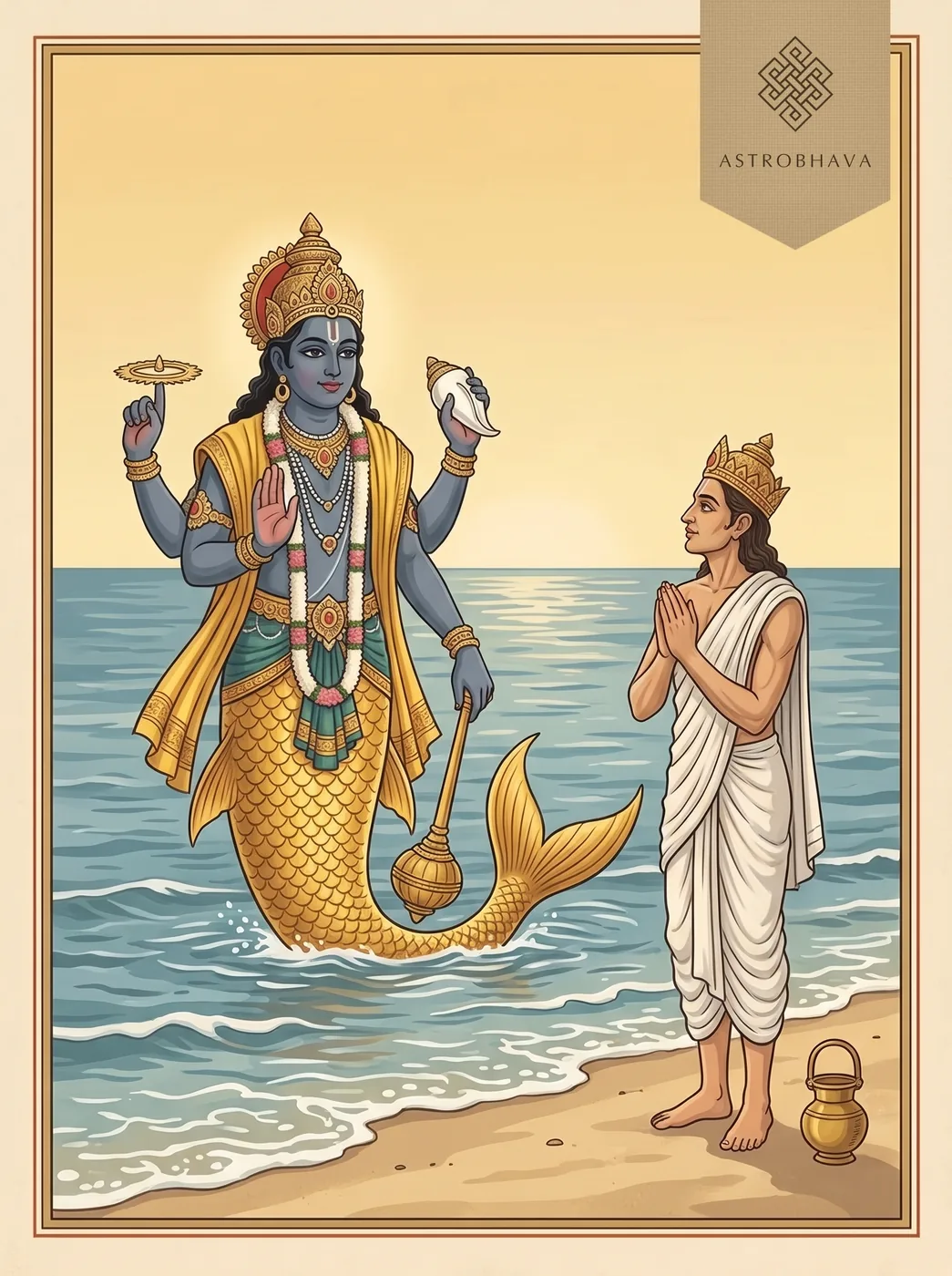
This Matsya Mantra page gathers the Matsya avatar mantra forms used for Vishnu as the Fish: a Gayatri, a name mantra, and two passages of the Bhagavata Purana. Mantra 1, the Matsya Gayatri, follows the three-line pattern shared by the Gayatris of Vishnu's avatars and names its subject Mahamina, the Great Fish; it is a devotional formula carried in printed editions, and no scripture is known to contain it. Mantra 2, "Om matsyaya namah", is the plain salutation to Matsya and also opens the common list of his 108 names. Mantra 3 and Verses 1-3 are Bhagavata Purana 5.18.25-28, where Manu hails the Great Fish as breath, vigour and strength, then recalls the flood he crossed with it. Verses 4-7 are Bhagavata 8.24.27-30, the four verses King Satyavrata speaks when he grasps that the fish is Narayana; these are often printed on their own as the Matsya Stotram.
A Fish in King Satyavrata's Cupped Hands
The Bhagavata Purana, Book 8, chapter 24, gives the account as Shuka's answer to King Parikshit, who asks why Vishnu would take a form as humble as a fish. In the age of the Chakshusha Manu, King Satyavrata, who lived on water alone as an austerity, stood in the Kritamala river making a water offering from his joined palms. A tiny fish appeared in them. When he let it go, it pleaded that bigger creatures of the river would eat it, so he carried it home in his water jug. By morning it filled the jug. He moved it to a well, then a pool, then a lake, and each time it outgrew the water within a day. At last he released it into the sea, and it protested that sharks lived there. The bewildered king asked what creature could swell by hundreds of miles in a single day, and then answered his own question with the four verses printed here as Verses 4-7. The fish replied that on the seventh day the three worlds would sink, and a boat would come for him, the seven sages and the seeds of every plant. Satyavrata later became Vaivasvata Manu, and Book 5 of the same Purana says he still worships the Fish in Ramyaka-varsha with Mantra 3. An older telling of the flood appears in the Shatapatha Brahmana (1.8.1).
The mantra, in six scripts
- ॐ
- oṃ — Om, the sacred syllable
- तत्पुरुषाय
- tatpuruṣāya — the Supreme Person
- विद्महे
- vidmahe — may we know
- महामीनाय
- mahāmīnāya — the Great Fish
- धीमहि
- dhīmahi — we meditate on
- तन्नो
- tanno — may that (one), us
- विष्णुः
- viṣṇuḥ — Vishnu
- प्रचोदयात्
- pracodayāt — inspire, guide
Matsya Mantra lyrics in full
Two short mantras, then Manu's prose mantra and three verses from Bhagavata Purana 5.18, and the four-verse Matsya Stotram from Bhagavata Purana 8.24.
All 10 verses, in Sanskrit, Tamil, Telugu, Kannada, Malayalam and English, each with its meaning. Choose a script:
Download the Matsya Mantra PDFAll 10 verses with their meanings, in Sanskrit. Free to print and keep.
ॐ तत्पुरुषाय विद्महे महामीनाय धीमहि ।
तन्नो विष्णुः प्रचोदयात् ॥
ௐ தத்புருஷாய வித்மஹே மஹாமீநாய தீமஹி ।
தந்நோ விஷ்ணுஃ ப்ரசோதயாத் ॥
ఓం తత్పురుషాయ విద్మహే మహామీనాయ ధీమహి ।
తన్నో విష్ణుః ప్రచోదయాత్ ॥
ಓಂ ತತ್ಪುರುಷಾಯ ವಿದ್ಮಹೇ ಮಹಾಮೀನಾಯ ಧೀಮಹಿ ।
ತನ್ನೋ ವಿಷ್ಣುಃ ಪ್ರಚೋದಯಾತ್ ॥
ഓം തത്പുരുഷായ വിദ്മഹേ മഹാമീനായ ധീമഹി ।
തന്നോ വിഷ്ണുഃ പ്രചോദയാത് ॥
oṃ tatpuruṣāya vidmahe mahāmīnāya dhīmahi |
tanno viṣṇuḥ pracodayāt ||
Om. May we come to know the Supreme Person; may we meditate on the Great Fish. May Vishnu inspire and guide our understanding.
ॐ मत्स्याय नमः ॥
ௐ மத்ஸ்யாய நமஃ ॥
ఓం మత్స్యాయ నమః ॥
ಓಂ ಮತ್ಸ್ಯಾಯ ನಮಃ ॥
ഓം മത്സ്യായ നമഃ ॥
oṃ matsyāya namaḥ ||
Om, salutations to Matsya, the Fish form of Vishnu.
ॐ नमो भगवते मुख्यतमाय नमः सत्त्वाय प्राणायौजसे सहसे बलाय महामत्स्याय नम इति ॥
ௐ நமோ பகவதே முக்யதமாய நமஃ ஸத்த்வாய ப்ராணாயௌஜஸே ஸஹஸே பலாய மஹாமத்ஸ்யாய நம இதி ॥
ఓం నమో భగవతే ముఖ్యతమాయ నమః సత్త్వాయ ప్రాణాయౌజసే సహసే బలాయ మహామత్స్యాయ నమ ఇతి ॥
ಓಂ ನಮೋ ಭಗವತೇ ಮುಖ್ಯತಮಾಯ ನಮಃ ಸತ್ತ್ವಾಯ ಪ್ರಾಣಾಯೌಜಸೇ ಸಹಸೇ ಬಲಾಯ ಮಹಾಮತ್ಸ್ಯಾಯ ನಮ ಇತಿ ॥
ഓം നമോ ഭഗവതേ മുഖ്യതമായ നമഃ സത്ത്വായ പ്രാണായൌജസേ സഹസേ ബലായ മഹാമത്സ്യായ നമ ഇതി ॥
oṃ namo bhagavate mukhyatamāya namaḥ sattvāya prāṇāyaujase sahase balāya mahāmatsyāya nama iti ||
Om, salutations to the Lord, the foremost of all. Salutations to Him who is pure being, the life breath, vigour, endurance and strength; salutations to the Great Fish. This is the mantra with which Manu worships Matsya.
अन्तर्बहिश्चाखिललोकपालकैरदृष्टरूपो विचरस्युरुस्वनः ।
स ईश्वरस्त्वं य इदं वशेऽनयन्नाम्ना यथा दारुमयीं नरः स्त्रियम् ॥
அந்தர்பஹிஶ்சாகிலலோகபாலகைரத்ருஷ்டரூபோ விசரஸ்யுருஸ்வநஃ ।
ஸ ஈஶ்வரஸ்த்வம் ய இதம் வஶேநயந்நாம்நா யதா தாருமயீம் நரஃ ஸ்த்ரியம் ॥
అన్తర్బహిశ్చాఖిలలోకపాలకైరదృష్టరూపో విచరస్యురుస్వనః ।
స ఈశ్వరస్త్వం య ఇదం వశేఽనయన్నామ్నా యథా దారుమయీం నరః స్త్రియమ్ ॥
ಅನ್ತರ್ಬಹಿಶ್ಚಾಖಿಲಲೋಕಪಾಲಕೈರದೃಷ್ಟರೂಪೋ ವಿಚರಸ್ಯುರುಸ್ವನಃ ।
ಸ ಈಶ್ವರಸ್ತ್ವಂ ಯ ಇದಂ ವಶೇಽನಯನ್ನಾಮ್ನಾ ಯಥಾ ದಾರುಮಯೀಂ ನರಃ ಸ್ತ್ರಿಯಮ್ ॥
അന്തര്ബഹിശ്ചാഖിലലോകപാലകൈരദൃഷ്ടരൂപോ വിചരസ്യുരുസ്വനഃ ।
സ ഈശ്വരസ്ത്വം യ ഇദം വശേഽനയന്നാമ്നാ യഥാ ദാരുമയീം നരഃ സ്ത്രിയമ് ॥
antarbahiścākhilalokapālakairadṛṣṭarūpo vicarasyurusvanaḥ |
sa īśvarastvaṃ ya idaṃ vaśe'nayannāmnā yathā dārumayīṃ naraḥ striyam ||
Unseen in form by all the guardians of the worlds, You move within and outside every being, and Your great voice is the Veda. You are the Lord who keeps this whole world under Your control through Your word, as a man moves a wooden puppet.
यं लोकपालाः किल मत्सरज्वरा हित्वा यतन्तोऽपि पृथक्समेत्य च ।
पातुं न शेकुर्द्विपदश्चतुष्पदः सरीसृपं स्थाणु यदत्र दृश्यते ॥
யம் லோகபாலாஃ கில மத்ஸரஜ்வரா ஹித்வா யதந்தோபி ப்ருதக்ஸமேத்ய ச ।
பாதும் ந ஶேகுர்த்விபதஶ்சதுஷ்பதஃ ஸரீஸ்ருபம் ஸ்தாணு யதத்ர த்ருஶ்யதே ॥
యం లోకపాలాః కిల మత్సరజ్వరా హిత్వా యతన్తోఽపి పృథక్సమేత్య చ ।
పాతుం న శేకుర్ద్విపదశ్చతుష్పదః సరీసృపం స్థాణు యదత్ర దృశ్యతే ॥
ಯಂ ಲೋಕಪಾಲಾಃ ಕಿಲ ಮತ್ಸರಜ್ವರಾ ಹಿತ್ವಾ ಯತನ್ತೋಽಪಿ ಪೃಥಕ್ಸಮೇತ್ಯ ಚ ।
ಪಾತುಂ ನ ಶೇಕುರ್ದ್ವಿಪದಶ್ಚತುಷ್ಪದಃ ಸರೀಸೃಪಂ ಸ್ಥಾಣು ಯದತ್ರ ದೃಶ್ಯತೇ ॥
യം ലോകപാലാഃ കില മത്സരജ്വരാ ഹിത്വാ യതന്തോഽപി പൃഥക്സമേത്യ ച ।
പാതും ന ശേകുര്ദ്വിപദശ്ചതുഷ്പദഃ സരീസൃപം സ്ഥാണു യദത്ര ദൃശ്യതേ ॥
yaṃ lokapālāḥ kila matsarajvarā hitvā yatanto'pi pṛthaksametya ca |
pātuṃ na śekurdvipadaścatuṣpadaḥ sarīsṛpaṃ sthāṇu yadatra dṛśyate ||
The guardians of the worlds, burning with rivalry, set You aside and strove, each alone and all together, yet they could not protect what is seen here: the two-footed, the four-footed, the creeping and the unmoving.
भवान् युगान्तार्णव ऊर्मिमालिनि क्षोणीमिमामोषधिवीरुधां निधिम् ।
मया सहोरु क्रमतेऽज ओजसा तस्मै जगत्प्राणगणात्मने नम इति ॥
பவாந் யுகாந்தார்ணவ ஊர்மிமாலிநி க்ஷோணீமிமாமோஷதிவீருதாம் நிதிம் ।
மயா ஸஹோரு க்ரமதேஜ ஓஜஸா தஸ்மை ஜகத்ப்ராணகணாத்மநே நம இதி ॥
భవాన్ యుగాన్తార్ణవ ఊర్మిమాలిని క్షోణీమిమామోషధివీరుధాం నిధిమ్ ।
మయా సహోరు క్రమతేఽజ ఓజసా తస్మై జగత్ప్రాణగణాత్మనే నమ ఇతి ॥
ಭವಾನ್ ಯುಗಾನ್ತಾರ್ಣವ ಊರ್ಮಿಮಾಲಿನಿ ಕ್ಷೋಣೀಮಿಮಾಮೋಷಧಿವೀರುಧಾಂ ನಿಧಿಮ್ ।
ಮಯಾ ಸಹೋರು ಕ್ರಮತೇಽಜ ಓಜಸಾ ತಸ್ಮೈ ಜಗತ್ಪ್ರಾಣಗಣಾತ್ಮನೇ ನಮ ಇತಿ ॥
ഭവാന് യുഗാന്താര്ണവ ഊര്മിമാലിനി ക്ഷോണീമിമാമോഷധിവീരുധാം നിധിമ് ।
മയാ സഹോരു ക്രമതേഽജ ഓജസാ തസ്മൈ ജഗത്പ്രാണഗണാത്മനേ നമ ഇതി ॥
bhavān yugāntārṇava ūrmimālini kṣoṇīmimāmoṣadhivīrudhāṃ nidhim |
mayā sahoru kramate'ja ojasā tasmai jagatprāṇagaṇātmane nama iti ||
At the end of the age, on the ocean crowded with waves, You, the Unborn One, moved swiftly with Your strength, bearing this earth, the store of all herbs and plants, together with me. Salutations to You, the Self of all living beings in the world.
नूनं त्वं भगवान् साक्षाद्धरिर्नारायणोऽव्ययः ।
अनुग्रहाय भूतानां धत्से रूपं जलौकसाम् ॥
நூநம் த்வம் பகவாந் ஸாக்ஷாத்தரிர்நாராயணோவ்யயஃ ।
அநுக்ரஹாய பூதாநாம் தத்ஸே ரூபம் ஜலௌகஸாம் ॥
నూనం త్వం భగవాన్ సాక్షాద్ధరిర్నారాయణోఽవ్యయః ।
అనుగ్రహాయ భూతానాం ధత్సే రూపం జలౌకసామ్ ॥
ನೂನಂ ತ್ವಂ ಭಗವಾನ್ ಸಾಕ್ಷಾದ್ಧರಿರ್ನಾರಾಯಣೋಽವ್ಯಯಃ ।
ಅನುಗ್ರಹಾಯ ಭೂತಾನಾಂ ಧತ್ಸೇ ರೂಪಂ ಜಲೌಕಸಾಮ್ ॥
നൂനം ത്വം ഭഗവാന് സാക്ഷാദ്ധരിര്നാരായണോഽവ്യയഃ ।
അനുഗ്രഹായ ഭൂതാനാം ധത്സേ രൂപം ജലൌകസാമ് ॥
nūnaṃ tvaṃ bhagavān sākṣāddharirnārāyaṇo'vyayaḥ |
anugrahāya bhūtānāṃ dhatse rūpaṃ jalaukasām ||
Surely You are the Lord Himself, Hari, the imperishable Narayana. Out of kindness to all beings You have taken the form of a creature of the waters.
नमस्ते पुरुषश्रेष्ठ स्थित्युत्पत्त्यप्ययेश्वर ।
भक्तानां नः प्रपन्नानां मुख्यो ह्यात्मगतिर्विभो ॥
நமஸ்தே புருஷஶ்ரேஷ்ட ஸ்தித்யுத்பத்த்யப்யயேஶ்வர ।
பக்தாநாம் நஃ ப்ரபந்நாநாம் முக்யோ ஹ்யாத்மகதிர்விபோ ॥
నమస్తే పురుషశ్రేష్ఠ స్థిత్యుత్పత్త్యప్యయేశ్వర ।
భక్తానాం నః ప్రపన్నానాం ముఖ్యో హ్యాత్మగతిర్విభో ॥
ನಮಸ್ತೇ ಪುರುಷಶ್ರೇಷ್ಠ ಸ್ಥಿತ್ಯುತ್ಪತ್ತ್ಯಪ್ಯಯೇಶ್ವರ ।
ಭಕ್ತಾನಾಂ ನಃ ಪ್ರಪನ್ನಾನಾಂ ಮುಖ್ಯೋ ಹ್ಯಾತ್ಮಗತಿರ್ವಿಭೋ ॥
നമസ്തേ പുരുഷശ്രേഷ്ഠ സ്ഥിത്യുത്പത്ത്യപ്യയേശ്വര ।
ഭക്താനാം നഃ പ്രപന്നാനാം മുഖ്യോ ഹ്യാത്മഗതിര്വിഭോ ॥
namaste puruṣaśreṣṭha sthityutpattyapyayeśvara |
bhaktānāṃ naḥ prapannānāṃ mukhyo hyātmagatirvibho ||
Salutations to You, best of beings, Lord of the keeping, rising and dissolving of the world. O all-pervading One, You are the chief refuge and goal of us devotees who have come to You.
सर्वे लीलावतारास्ते भूतानां भूतिहेतवः ।
ज्ञातुमिच्छाम्यदो रूपं यदर्थं भवता धृतम् ॥
ஸர்வே லீலாவதாராஸ்தே பூதாநாம் பூதிஹேதவஃ ।
ஜ்ஞாதுமிச்சாம்யதோ ரூபம் யதர்தம் பவதா த்ருதம் ॥
సర్వే లీలావతారాస్తే భూతానాం భూతిహేతవః ।
జ్ఞాతుమిచ్ఛామ్యదో రూపం యదర్థం భవతా ధృతమ్ ॥
ಸರ್ವೇ ಲೀಲಾವತಾರಾಸ್ತೇ ಭೂತಾನಾಂ ಭೂತಿಹೇತವಃ ।
ಜ್ಞಾತುಮಿಚ್ಛಾಮ್ಯದೋ ರೂಪಂ ಯದರ್ಥಂ ಭವತಾ ಧೃತಮ್ ॥
സര്വേ ലീലാവതാരാസ്തേ ഭൂതാനാം ഭൂതിഹേതവഃ ।
ജ്ഞാതുമിച്ഛാമ്യദോ രൂപം യദര്ഥം ഭവതാ ധൃതമ് ॥
sarve līlāvatārāste bhūtānāṃ bhūtihetavaḥ |
jñātumicchāmyado rūpaṃ yadarthaṃ bhavatā dhṛtam ||
All Your playful descents are for the welfare of beings. I wish to know why You have taken this form.
न तेऽरविन्दाक्ष पदोपसर्पणं मृषा भवेत्सर्वसुहृत्प्रियात्मनः ।
यथेतरेषां पृथगात्मनां सतामदीदृशो यद्वपुरद्भुतं हि नः ॥
ந தேரவிந்தாக்ஷ பதோபஸர்பணம் ம்ருஷா பவேத்ஸர்வஸுஹ்ருத்ப்ரியாத்மநஃ ।
யதேதரேஷாம் ப்ருதகாத்மநாம் ஸதாமதீத்ருஶோ யத்வபுரத்புதம் ஹி நஃ ॥
న తేఽరవిన్దాక్ష పదోపసర్పణం మృషా భవేత్సర్వసుహృత్ప్రియాత్మనః ।
యథేతరేషాం పృథగాత్మనాం సతామదీదృశో యద్వపురద్భుతం హి నః ॥
ನ ತೇಽರವಿನ್ದಾಕ್ಷ ಪದೋಪಸರ್ಪಣಂ ಮೃಷಾ ಭವೇತ್ಸರ್ವಸುಹೃತ್ಪ್ರಿಯಾತ್ಮನಃ ।
ಯಥೇತರೇಷಾಂ ಪೃಥಗಾತ್ಮನಾಂ ಸತಾಮದೀದೃಶೋ ಯದ್ವಪುರದ್ಭುತಂ ಹಿ ನಃ ॥
ന തേഽരവിന്ദാക്ഷ പദോപസര്പണം മൃഷാ ഭവേത്സര്വസുഹൃത്പ്രിയാത്മനഃ ।
യഥേതരേഷാം പൃഥഗാത്മനാം സതാമദീദൃശോ യദ്വപുരദ്ഭുതം ഹി നഃ ॥
na te'ravindākṣa padopasarpaṇaṃ mṛṣā bhavetsarvasuhṛtpriyātmanaḥ |
yathetareṣāṃ pṛthagātmanāṃ satāmadīdṛśo yadvapuradbhutaṃ hi naḥ ||
O lotus-eyed Lord, friend and dear Self of all, approaching Your feet can never be in vain, as it may be with other beings who stand apart from You. That is why You have shown us this wondrous form.
The syllable people get wrong
In matsyāya (Mantra 2), the t, s and y form one cluster: say "mat-SYAA-ya", keeping the s and gliding straight into the y, not "mat-si-ya" with an added vowel or "machh-ya" with the s dropped; the second a is long.
When the Matsya Mantra is chanted
Weekday. Thursday
Festival. Matsya Jayanti (Chaitra Shukla Tritiya)
Questions
Have your chart read before you decide
Chanting is yours to do, and free. But which deity your situation calls for — and whether a mantra alone is the right response — depends on your chart. Sometimes it is; sometimes it is not.
- Over 30 years in the Guru–Sishya Parampara, from the age of five
- He reads every chart himself — 60 minutes, one to one, never delegated
- Charts are read only between sunrise and sunset, following tradition
