Narayana Kavacham
यया गुप्तः सहस्राक्षः सवाहान्रिपुसैनिकान् । क्रीडन्निव विनिर्जित्य त्रिलोक्या बुभुजे श्रियम् ॥Also known as Narayana Varma
In Devanagari, Tamil, Telugu, Kannada, Malayalam and English — with the meaning of every word, and the one syllable most people pronounce wrongly.
 A reading of your birth chartBook →
What the Narayana Kavacham is
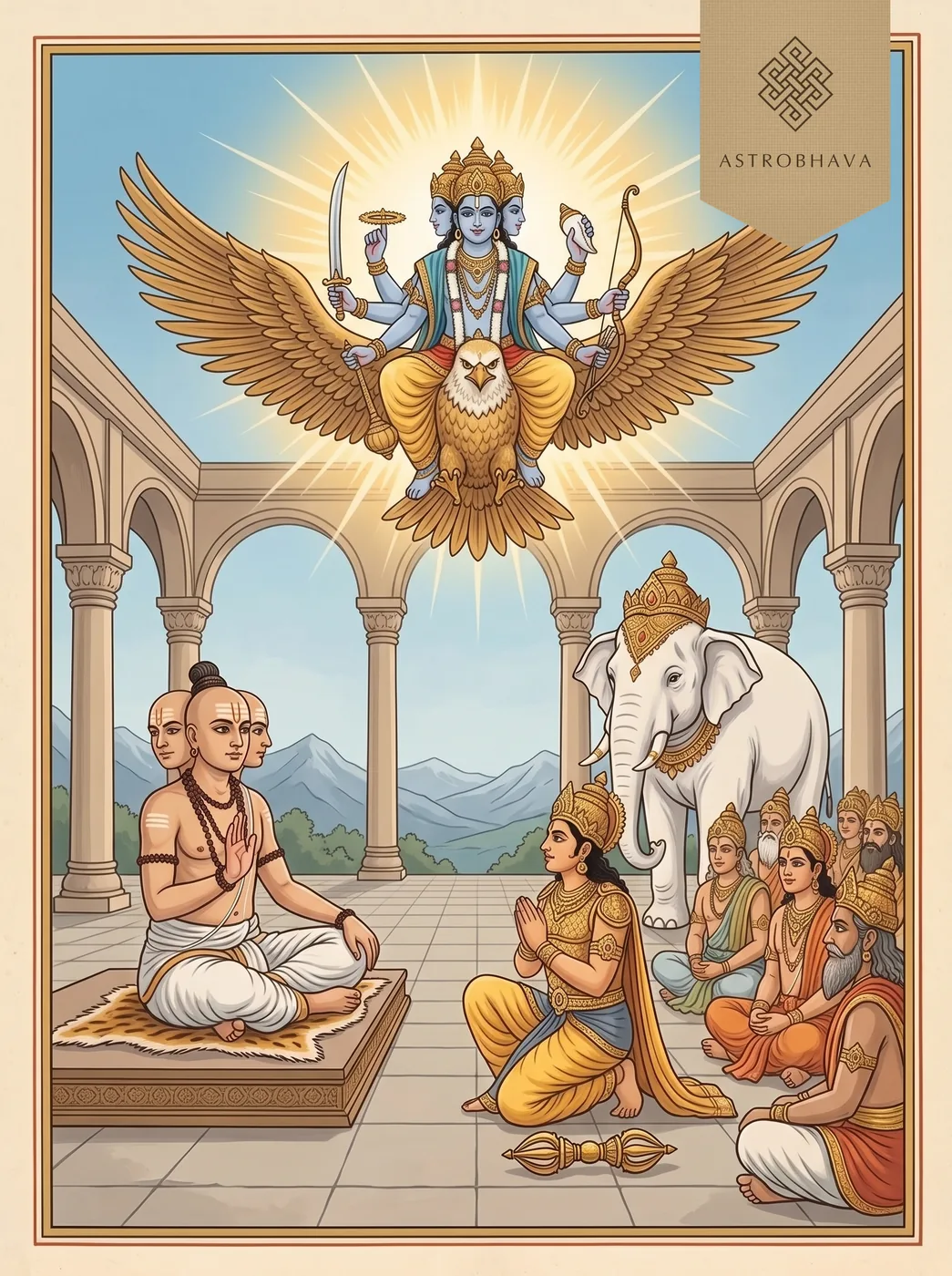
The Narayana Kavacham, called Narayana Varma in the text itself, is the 'armour made of Narayana' set out in the eighth chapter of the sixth book of the Bhagavata Purana, the scripture tradition ascribes to Vyasa. Its 42 verses are told by the sage Shuka to King Parikshit, who asks how Indra was guarded in battle. Shuka answers by repeating what Vishvarupa, son of Tvashta, taught Indra. Verses 4 to 11 are preparation: three mantras are laid on the body, the eight-syllable Om namo Narayanaya on the limbs, the twelve-syllable mantra on the fingers, and the syllables of Om Vishnave namah, one at a time, on heart, crown, brows, eyes and joints. Verse 12 then pictures Vishnu on Garuda with eight weapons. Verses 13 to 19 post an avatara at each danger, verses 20 to 22 a name of Vishnu at each hour, and verses 23 to 26 address the discus, mace, conch, sword and shield directly. The chapter closes with the story of a Brahmin of the Kaushika line.
Indra's insult and a three-headed priest
The armour is the answer to a crisis Indra brought on himself. The Bhagavata Purana, in the chapter just before the kavacham, relates that Brihaspati, teacher of the gods, entered Indra's assembly and the king, full of his own splendour, did not rise to greet him. Brihaspati left without a word and could not be found. The asuras, guided by their own teacher Shukra, attacked and wounded the gods, who ran to Brahma. Brahma rebuked them for slighting their guru and told them to take Vishvarupa, the son of Tvashta, as their priest instead. Vishvarupa accepted, though he called priesthood a calling the wise look down on, and taught Indra this Vaishnava armour, with which, the text says, Indra drove off the asura armies and recovered the wealth of the three worlds. The story does not end in triumph. The next chapter tells that Vishvarupa had three heads, one drinking soma, one drinking wine and one eating food, and that his mother's family were asuras. Indra found that he was secretly passing offerings to them and cut off all three heads. Tvashta then raised Vritra from the sacrificial fire to avenge his son, and the long war with Vritra fills the chapters that follow.
The mantra, in six scripts
- यया
- yayā — by which
- गुप्तः
- guptaḥ — guarded
- सहस्राक्षः
- sahasrākṣaḥ — the thousand-eyed (Indra)
- सवाहान्रिपुसैनिकान्
- savāhānripusainikān — enemy soldiers with their mounts
- क्रीडन्निव
- krīḍanniva — as if at play
- विनिर्जित्य
- vinirjitya — having conquered
- त्रिलोक्या
- trilokyā — of the three worlds
- बुभुजे
- bubhuje — enjoyed
- श्रियम्
- śriyam — the fortune
Narayana Kavacham lyrics in full
The full eighth chapter of the sixth book of the Bhagavata Purana, 42 verses from Parikshit's question to Indra's victory.
All 42 verses, in Sanskrit, Tamil, Telugu, Kannada, Malayalam and English, each with its meaning. Choose a script:
Download the Narayana Kavacham PDFAll 42 verses with their meanings, in Sanskrit. Free to print and keep.
यया गुप्तः सहस्राक्षः सवाहान्रिपुसैनिकान् ।
क्रीडन्निव विनिर्जित्य त्रिलोक्या बुभुजे श्रियम् ॥
யயா குப்தஃ ஸஹஸ்ராக்ஷஃ ஸவாஹாந்ரிபுஸைநிகாந் ।
க்ரீடந்நிவ விநிர்ஜித்ய த்ரிலோக்யா புபுஜே ஶ்ரியம் ॥
యయా గుప్తః సహస్రాక్షః సవాహాన్రిపుసైనికాన్ ।
క్రీడన్నివ వినిర్జిత్య త్రిలోక్యా బుభుజే శ్రియమ్ ॥
ಯಯಾ ಗುಪ್ತಃ ಸಹಸ್ರಾಕ್ಷಃ ಸವಾಹಾನ್ರಿಪುಸೈನಿಕಾನ್ ।
ಕ್ರೀಡನ್ನಿವ ವಿನಿರ್ಜಿತ್ಯ ತ್ರಿಲೋಕ್ಯಾ ಬುಭುಜೇ ಶ್ರಿಯಮ್ ॥
യയാ ഗുപ്തഃ സഹസ്രാക്ഷഃ സവാഹാന്രിപുസൈനികാന് ।
ക്രീഡന്നിവ വിനിര്ജിത്യ ത്രിലോക്യാ ബുഭുജേ ശ്രിയമ് ॥
yayā guptaḥ sahasrākṣaḥ savāhānripusainikān |
krīḍanniva vinirjitya trilokyā bubhuje śriyam ||
King Parikshit said: Tell me about the protection by which thousand-eyed Indra, guarded, defeated the enemy soldiers with their mounts as if in play, and then enjoyed the fortune of the three worlds.
भगवंस्तन्ममाख्याहि वर्म नारायणात्मकम् ।
यथाततायिनः शत्रून् येन गुप्तोऽजयन्मृधे ॥
பகவம்ஸ்தந்மமாக்யாஹி வர்ம நாராயணாத்மகம் ।
யதாததாயிநஃ ஶத்ரூந் யேந குப்தோஜயந்ம்ருதே ॥
భగవంస్తన్మమాఖ్యాహి వర్మ నారాయణాత్మకమ్ ।
యథాతతాయినః శత్రూన్ యేన గుప్తోఽజయన్మృధే ॥
ಭಗವಂಸ್ತನ್ಮಮಾಖ್ಯಾಹಿ ವರ್ಮ ನಾರಾಯಣಾತ್ಮಕಮ್ ।
ಯಥಾತತಾಯಿನಃ ಶತ್ರೂನ್ ಯೇನ ಗುಪ್ತೋಽಜಯನ್ಮೃಧೇ ॥
ഭഗവംസ്തന്മമാഖ്യാഹി വര്മ നാരായണാത്മകമ് ।
യഥാതതായിനഃ ശത്രൂന് യേന ഗുപ്തോഽജയന്മൃധേ ॥
bhagavaṃstanmamākhyāhi varma nārāyaṇātmakam |
yathātatāyinaḥ śatrūn yena gupto'jayanmṛdhe ||
O revered one, explain to me that armour made of Narayana, guarded by which Indra conquered in battle the enemies who had risen to kill him.
वृतः पुरोहितस्त्वाष्ट्रो महेन्द्रायानुपृच्छते ।
नारायणाख्यं वर्माह तदिहैकमनाः शृणु ॥
வ்ருதஃ புரோஹிதஸ்த்வாஷ்ட்ரோ மஹேந்த்ராயாநுப்ருச்சதே ।
நாராயணாக்யம் வர்மாஹ ததிஹைகமநாஃ ஶ்ருணு ॥
వృతః పురోహితస్త్వాష్ట్రో మహేన్ద్రాయానుపృచ్ఛతే ।
నారాయణాఖ్యం వర్మాహ తదిహైకమనాః శృణు ॥
ವೃತಃ ಪುರೋಹಿತಸ್ತ್ವಾಷ್ಟ್ರೋ ಮಹೇನ್ದ್ರಾಯಾನುಪೃಚ್ಛತೇ ।
ನಾರಾಯಣಾಖ್ಯಂ ವರ್ಮಾಹ ತದಿಹೈಕಮನಾಃ ಶೃಣು ॥
വൃതഃ പുരോഹിതസ്ത്വാഷ്ട്രോ മഹേന്ദ്രായാനുപൃച്ഛതേ ।
നാരായണാഖ്യം വര്മാഹ തദിഹൈകമനാഃ ശൃണു ॥
vṛtaḥ purohitastvāṣṭro mahendrāyānupṛcchate |
nārāyaṇākhyaṃ varmāha tadihaikamanāḥ śṛṇu ||
Shuka said: Vishvarupa, son of Tvashta, chosen as priest of the gods, explained the armour called Narayana to great Indra when he asked; listen to it here with a single mind.
धौताङ्घ्रिपाणिराचम्य सपवित्र उदङ्मुखः ।
कृतस्वाङ्गकरन्यासो मन्त्राभ्यां वाग्यतः शुचिः ॥
தௌதாங்க்ரிபாணிராசம்ய ஸபவித்ர உதங்முகஃ ।
க்ருதஸ்வாங்ககரந்யாஸோ மந்த்ராப்யாம் வாக்யதஃ ஶுசிஃ ॥
ధౌతాఙ్ఘ్రిపాణిరాచమ్య సపవిత్ర ఉదఙ్ముఖః ।
కృతస్వాఙ్గకరన్యాసో మన్త్రాభ్యాం వాగ్యతః శుచిః ॥
ಧೌತಾಙ್ಘ್ರಿಪಾಣಿರಾಚಮ್ಯ ಸಪವಿತ್ರ ಉದಙ್ಮುಖಃ ।
ಕೃತಸ್ವಾಙ್ಗಕರನ್ಯಾಸೋ ಮನ್ತ್ರಾಭ್ಯಾಂ ವಾಗ್ಯತಃ ಶುಚಿಃ ॥
ധൌതാങ്ഘ്രിപാണിരാചമ്യ സപവിത്ര ഉദങ്മുഖഃ ।
കൃതസ്വാങ്ഗകരന്യാസോ മന്ത്രാഭ്യാം വാഗ്യതഃ ശുചിഃ ॥
dhautāṅghripāṇirācamya sapavitra udaṅmukhaḥ |
kṛtasvāṅgakaranyāso mantrābhyāṃ vāgyataḥ śuciḥ ||
Vishvarupa said: Having washed the feet and hands, sipped water, holding sacred kusha grass, facing north, silent and pure, one should place the mantra on one's body and hands with the two mantras.
नारायणपरं वर्म सन्नह्येद्भय आगते ।
पादयोर्जानुनोरूर्वोरुदरे हृद्यथोरसि ॥
நாராயணபரம் வர்ம ஸந்நஹ்யேத்பய ஆகதே ।
பாதயோர்ஜாநுநோரூர்வோருதரே ஹ்ருத்யதோரஸி ॥
నారాయణపరం వర్మ సన్నహ్యేద్భయ ఆగతే ।
పాదయోర్జానునోరూర్వోరుదరే హృద్యథోరసి ॥
ನಾರಾಯಣಪರಂ ವರ್ಮ ಸನ್ನಹ್ಯೇದ್ಭಯ ಆಗತೇ ।
ಪಾದಯೋರ್ಜಾನುನೋರೂರ್ವೋರುದರೇ ಹೃದ್ಯಥೋರಸಿ ॥
നാരായണപരം വര്മ സന്നഹ്യേദ്ഭയ ആഗതേ ।
പാദയോര്ജാനുനോരൂര്വോരുദരേ ഹൃദ്യഥോരസി ॥
nārāyaṇaparaṃ varma sannahyedbhaya āgate |
pādayorjānunorūrvorudare hṛdyathorasi ||
When danger comes, one should put on the armour that has Narayana as its highest. One places the syllables on the feet, knees, thighs, belly, heart and chest,
मुखे शिरस्यानुपूर्व्यादोङ्कारादीनि विन्यसेत् ।
ॐ नमो नारायणायेति विपर्ययमथापि वा ॥
முகே ஶிரஸ்யாநுபூர்வ்யாதோங்காராதீநி விந்யஸேத் ।
ௐ நமோ நாராயணாயேதி விபர்யயமதாபி வா ॥
ముఖే శిరస్యానుపూర్వ్యాదోఙ్కారాదీని విన్యసేత్ ।
ఓం నమో నారాయణాయేతి విపర్యయమథాపి వా ॥
ಮುಖೇ ಶಿರಸ್ಯಾನುಪೂರ್ವ್ಯಾದೋಙ್ಕಾರಾದೀನಿ ವಿನ್ಯಸೇತ್ ।
ಓಂ ನಮೋ ನಾರಾಯಣಾಯೇತಿ ವಿಪರ್ಯಯಮಥಾಪಿ ವಾ ॥
മുഖേ ശിരസ്യാനുപൂര്വ്യാദോങ്കാരാദീനി വിന്യസേത് ।
ഓം നമോ നാരായണായേതി വിപര്യയമഥാപി വാ ॥
mukhe śirasyānupūrvyādoṅkārādīni vinyaset |
oṃ namo nārāyaṇāyeti viparyayamathāpi vā ||
then on the mouth and head in order, beginning with Om - the mantra Om namo Narayanaya - or else in the reverse order.
करन्यासं ततः कुर्याद्द्वादशाक्षरविद्यया ।
प्रणवादियकारान्तमङ्गुल्यङ्गुष्ठपर्वसु ॥
கரந்யாஸம் ததஃ குர்யாத்த்வாதஶாக்ஷரவித்யயா ।
ப்ரணவாதியகாராந்தமங்குல்யங்குஷ்டபர்வஸு ॥
కరన్యాసం తతః కుర్యాద్ద్వాదశాక్షరవిద్యయా ।
ప్రణవాదియకారాన్తమఙ్గుల్యఙ్గుష్ఠపర్వసు ॥
ಕರನ್ಯಾಸಂ ತತಃ ಕುರ್ಯಾದ್ದ್ವಾದಶಾಕ್ಷರವಿದ್ಯಯಾ ।
ಪ್ರಣವಾದಿಯಕಾರಾನ್ತಮಙ್ಗುಲ್ಯಙ್ಗುಷ್ಠಪರ್ವಸು ॥
കരന്യാസം തതഃ കുര്യാദ്ദ്വാദശാക്ഷരവിദ്യയാ ।
പ്രണവാദിയകാരാന്തമങ്ഗുല്യങ്ഗുഷ്ഠപര്വസു ॥
karanyāsaṃ tataḥ kuryāddvādaśākṣaravidyayā |
praṇavādiyakārāntamaṅgulyaṅguṣṭhaparvasu ||
Then one should do the placing on the hands with the twelve-syllable mantra, from the syllable Om up to the syllable ya, on the fingers and the joints of the thumbs.
न्यसेद्धृदय ओङ्कारं विकारमनु मूर्धनि ।
षकारं तु भ्रुवोर्मध्ये णकारं शिखया न्यसेत् ॥
ந்யஸேத்த்ருதய ஓங்காரம் விகாரமநு மூர்தநி ।
ஷகாரம் து ப்ருவோர்மத்யே ணகாரம் ஶிகயா ந்யஸேத் ॥
న్యసేద్ధృదయ ఓఙ్కారం వికారమను మూర్ధని ।
షకారం తు భ్రువోర్మధ్యే ణకారం శిఖయా న్యసేత్ ॥
ನ್ಯಸೇದ್ಧೃದಯ ಓಙ್ಕಾರಂ ವಿಕಾರಮನು ಮೂರ್ಧನಿ ।
ಷಕಾರಂ ತು ಭ್ರುವೋರ್ಮಧ್ಯೇ ಣಕಾರಂ ಶಿಖಯಾ ನ್ಯಸೇತ್ ॥
ന്യസേദ്ധൃദയ ഓങ്കാരം വികാരമനു മൂര്ധനി ।
ഷകാരം തു ഭ്രുവോര്മധ്യേ ണകാരം ശിഖയാ ന്യസേത് ॥
nyaseddhṛdaya oṅkāraṃ vikāramanu mūrdhani |
ṣakāraṃ tu bhruvormadhye ṇakāraṃ śikhayā nyaset ||
One should place Om on the heart, Vi on the top of the head, Sha between the eyebrows and Na on the tuft of hair.
वेकारं नेत्रयोर्युञ्ज्यान्नकारं सर्वसन्धिषु ।
मकारमस्त्रमुद्दिश्य मन्त्रमूर्तिर्भवेद्बुधः ॥
வேகாரம் நேத்ரயோர்யுஞ்ஜ்யாந்நகாரம் ஸர்வஸந்திஷு ।
மகாரமஸ்த்ரமுத்திஶ்ய மந்த்ரமூர்திர்பவேத்புதஃ ॥
వేకారం నేత్రయోర్యుఞ్జ్యాన్నకారం సర్వసన్ధిషు ।
మకారమస్త్రముద్దిశ్య మన్త్రమూర్తిర్భవేద్బుధః ॥
ವೇಕಾರಂ ನೇತ್ರಯೋರ್ಯುಞ್ಜ್ಯಾನ್ನಕಾರಂ ಸರ್ವಸನ್ಧಿಷು ।
ಮಕಾರಮಸ್ತ್ರಮುದ್ದಿಶ್ಯ ಮನ್ತ್ರಮೂರ್ತಿರ್ಭವೇದ್ಬುಧಃ ॥
വേകാരം നേത്രയോര്യുഞ്ജ്യാന്നകാരം സര്വസന്ധിഷു ।
മകാരമസ്ത്രമുദ്ദിശ്യ മന്ത്രമൂര്തിര്ഭവേദ്ബുധഃ ॥
vekāraṃ netrayoryuñjyānnakāraṃ sarvasandhiṣu |
makāramastramuddiśya mantramūrtirbhavedbudhaḥ ||
One should set Ve on the eyes and Na on all the joints, and use Ma as the weapon; so the wise one becomes the mantra in bodily form.
सविसर्गं फडन्तं तत्सर्वदिक्षु विनिर्दिशेत् ।
ॐ विष्णवे नम इति ॥
ஸவிஸர்கம் படந்தம் தத்ஸர்வதிக்ஷு விநிர்திஶேத் ।
ௐ விஷ்ணவே நம இதி ॥
సవిసర్గం ఫడన్తం తత్సర్వదిక్షు వినిర్దిశేత్ ।
ఓం విష్ణవే నమ ఇతి ॥
ಸವಿಸರ್ಗಂ ಫಡನ್ತಂ ತತ್ಸರ್ವದಿಕ್ಷು ವಿನಿರ್ದಿಶೇತ್ ।
ಓಂ ವಿಷ್ಣವೇ ನಮ ಇತಿ ॥
സവിസര്ഗം ഫഡന്തം തത്സര്വദിക്ഷു വിനിര്ദിശേത് ।
ഓം വിഷ്ണവേ നമ ഇതി ॥
savisargaṃ phaḍantaṃ tatsarvadikṣu vinirdiśet |
oṃ viṣṇave nama iti ||
With the visarga and ending in phat, one should point that syllable to all the directions, saying: Om Vishnave namah.
आत्मानं परमं ध्यायेद्ध्येयं षट्शक्तिभिर्युतम् ।
विद्यातेजस्तपोमूर्तिमिमं मन्त्रमुदाहरेत् ॥
ஆத்மாநம் பரமம் த்யாயேத்த்யேயம் ஷட்ஶக்திபிர்யுதம் ।
வித்யாதேஜஸ்தபோமூர்திமிமம் மந்த்ரமுதாஹரேத் ॥
ఆత్మానం పరమం ధ్యాయేద్ధ్యేయం షట్శక్తిభిర్యుతమ్ ।
విద్యాతేజస్తపోమూర్తిమిమం మన్త్రముదాహరేత్ ॥
ಆತ್ಮಾನಂ ಪರಮಂ ಧ್ಯಾಯೇದ್ಧ್ಯೇಯಂ ಷಟ್ಶಕ್ತಿಭಿರ್ಯುತಮ್ ।
ವಿದ್ಯಾತೇಜಸ್ತಪೋಮೂರ್ತಿಮಿಮಂ ಮನ್ತ್ರಮುದಾಹರೇತ್ ॥
ആത്മാനം പരമം ധ്യായേദ്ധ്യേയം ഷട്ശക്തിഭിര്യുതമ് ।
വിദ്യാതേജസ്തപോമൂര്തിമിമം മന്ത്രമുദാഹരേത് ॥
ātmānaṃ paramaṃ dhyāyeddhyeyaṃ ṣaṭśaktibhiryutam |
vidyātejastapomūrtimimaṃ mantramudāharet ||
One should meditate on oneself as the Supreme, the one worthy of meditation, endowed with the six powers, the very form of knowledge, splendour and austerity, and then recite this prayer.
ॐ हरिर्विदध्यान्मम सर्वरक्षां न्यस्ताङ्घ्रिपद्मः पतगेन्द्रपृष्ठे ।
दरारिचर्मासिगदेषुचापपाशान्दधानोऽष्टगुणोऽष्टबाहुः ॥
ௐ ஹரிர்விதத்யாந்மம ஸர்வரக்ஷாம் ந்யஸ்தாங்க்ரிபத்மஃ பதகேந்த்ரப்ருஷ்டே ।
தராரிசர்மாஸிகதேஷுசாபபாஶாந்ததாநோஷ்டகுணோஷ்டபாஹுஃ ॥
ఓం హరిర్విదధ్యాన్మమ సర్వరక్షాం న్యస్తాఙ్ఘ్రిపద్మః పతగేన్ద్రపృష్ఠే ।
దరారిచర్మాసిగదేషుచాపపాశాన్దధానోఽష్టగుణోఽష్టబాహుః ॥
ಓಂ ಹರಿರ್ವಿದಧ್ಯಾನ್ಮಮ ಸರ್ವರಕ್ಷಾಂ ನ್ಯಸ್ತಾಙ್ಘ್ರಿಪದ್ಮಃ ಪತಗೇನ್ದ್ರಪೃಷ್ಠೇ ।
ದರಾರಿಚರ್ಮಾಸಿಗದೇಷುಚಾಪಪಾಶಾನ್ದಧಾನೋಽಷ್ಟಗುಣೋಽಷ್ಟಬಾಹುಃ ॥
ഓം ഹരിര്വിദധ്യാന്മമ സര്വരക്ഷാം ന്യസ്താങ്ഘ്രിപദ്മഃ പതഗേന്ദ്രപൃഷ്ഠേ ।
ദരാരിചര്മാസിഗദേഷുചാപപാശാന്ദധാനോഽഷ്ടഗുണോഽഷ്ടബാഹുഃ ॥
oṃ harirvidadhyānmama sarvarakṣāṃ nyastāṅghripadmaḥ patagendrapṛṣṭhe |
darāricarmāsigadeṣucāpapāśāndadhāno'ṣṭaguṇo'ṣṭabāhuḥ ||
May Lord Hari, his lotus feet set on the back of Garuda, king of birds, eight-armed, holding conch, discus, shield, sword, mace, arrows, bow and noose, and possessed of the eight powers, give me protection in every way.
जलेषु मां रक्षतु मत्स्यमूर्तिर्यादोगणेभ्यो वरुणस्य पाशात् ।
स्थलेषु मायावटुवामनोऽव्यात् त्रिविक्रमः खेऽवतु विश्वरूपः ॥
ஜலேஷு மாம் ரக்ஷது மத்ஸ்யமூர்திர்யாதோகணேப்யோ வருணஸ்ய பாஶாத் ।
ஸ்தலேஷு மாயாவடுவாமநோவ்யாத் த்ரிவிக்ரமஃ கேவது விஶ்வரூபஃ ॥
జలేషు మాం రక్షతు మత్స్యమూర్తిర్యాదోగణేభ్యో వరుణస్య పాశాత్ ।
స్థలేషు మాయావటువామనోఽవ్యాత్ త్రివిక్రమః ఖేఽవతు విశ్వరూపః ॥
ಜಲೇಷು ಮಾಂ ರಕ್ಷತು ಮತ್ಸ್ಯಮೂರ್ತಿರ್ಯಾದೋಗಣೇಭ್ಯೋ ವರುಣಸ್ಯ ಪಾಶಾತ್ ।
ಸ್ಥಲೇಷು ಮಾಯಾವಟುವಾಮನೋಽವ್ಯಾತ್ ತ್ರಿವಿಕ್ರಮಃ ಖೇಽವತು ವಿಶ್ವರೂಪಃ ॥
ജലേഷു മാം രക്ഷതു മത്സ്യമൂര്തിര്യാദോഗണേഭ്യോ വരുണസ്യ പാശാത് ।
സ്ഥലേഷു മായാവടുവാമനോഽവ്യാത് ത്രിവിക്രമഃ ഖേഽവതു വിശ്വരൂപഃ ॥
jaleṣu māṃ rakṣatu matsyamūrtiryādogaṇebhyo varuṇasya pāśāt |
sthaleṣu māyāvaṭuvāmano'vyāt trivikramaḥ khe'vatu viśvarūpaḥ ||
In the waters may the Fish form protect me from sea creatures and from the noose of Varuna; on land may the dwarf Vamana, the boy who used his maya, guard me; and in the sky may Trivikrama, whose form is the universe, protect me.
दुर्गेष्वटव्याजिमुखादिषु प्रभुः पायान्नृसिंहोऽसुरयूथपारिः ।
विमुञ्चतो यस्य महाट्टहासं दिशो विनेदुर्न्यपतंश्च गर्भाः ॥
துர்கேஷ்வடவ்யாஜிமுகாதிஷு ப்ரபுஃ பாயாந்ந்ருஸிம்ஹோஸுரயூதபாரிஃ ।
விமுஞ்சதோ யஸ்ய மஹாட்டஹாஸம் திஶோ விநேதுர்ந்யபதம்ஶ்ச கர்பாஃ ॥
దుర్గేష్వటవ్యాజిముఖాదిషు ప్రభుః పాయాన్నృసింహోఽసురయూథపారిః ।
విముఞ్చతో యస్య మహాట్టహాసం దిశో వినేదుర్న్యపతంశ్చ గర్భాః ॥
ದುರ್ಗೇಷ್ವಟವ್ಯಾಜಿಮುಖಾದಿಷು ಪ್ರಭುಃ ಪಾಯಾನ್ನೃಸಿಂಹೋಽಸುರಯೂಥಪಾರಿಃ ।
ವಿಮುಞ್ಚತೋ ಯಸ್ಯ ಮಹಾಟ್ಟಹಾಸಂ ದಿಶೋ ವಿನೇದುರ್ನ್ಯಪತಂಶ್ಚ ಗರ್ಭಾಃ ॥
ദുര്ഗേഷ്വടവ്യാജിമുഖാദിഷു പ്രഭുഃ പായാന്നൃസിംഹോഽസുരയൂഥപാരിഃ ।
വിമുഞ്ചതോ യസ്യ മഹാട്ടഹാസം ദിശോ വിനേദുര്ന്യപതംശ്ച ഗര്ഭാഃ ॥
durgeṣvaṭavyājimukhādiṣu prabhuḥ pāyānnṛsiṃho'surayūthapāriḥ |
vimuñcato yasya mahāṭṭahāsaṃ diśo vinedurnyapataṃśca garbhāḥ ||
In forts, forests, battle fronts and such places may Lord Narasimha, enemy of the demon chiefs, protect us; when he let out his great laugh the directions resounded and the unborn children of the demons fell.
रक्षत्वसौ माध्वनि यज्ञकल्पः स्वदंष्ट्रयोन्नीतधरो वराहः ।
रामोऽद्रिकूटेष्वथ विप्रवासे सलक्ष्मणोऽव्याद्भरताग्रजोऽस्मान् ॥
ரக்ஷத்வஸௌ மாத்வநி யஜ்ஞகல்பஃ ஸ்வதம்ஷ்ட்ரயோந்நீததரோ வராஹஃ ।
ராமோத்ரிகூடேஷ்வத விப்ரவாஸே ஸலக்ஷ்மணோவ்யாத்பரதாக்ரஜோஸ்மாந் ॥
రక్షత్వసౌ మాధ్వని యజ్ఞకల్పః స్వదంష్ట్రయోన్నీతధరో వరాహః ।
రామోఽద్రికూటేష్వథ విప్రవాసే సలక్ష్మణోఽవ్యాద్భరతాగ్రజోఽస్మాన్ ॥
ರಕ್ಷತ್ವಸೌ ಮಾಧ್ವನಿ ಯಜ್ಞಕಲ್ಪಃ ಸ್ವದಂಷ್ಟ್ರಯೋನ್ನೀತಧರೋ ವರಾಹಃ ।
ರಾಮೋಽದ್ರಿಕೂಟೇಷ್ವಥ ವಿಪ್ರವಾಸೇ ಸಲಕ್ಷ್ಮಣೋಽವ್ಯಾದ್ಭರತಾಗ್ರಜೋಽಸ್ಮಾನ್ ॥
രക്ഷത്വസൌ മാധ്വനി യജ്ഞകല്പഃ സ്വദംഷ്ട്രയോന്നീതധരോ വരാഹഃ ।
രാമോഽദ്രികൂടേഷ്വഥ വിപ്രവാസേ സലക്ഷ്മണോഽവ്യാദ്ഭരതാഗ്രജോഽസ്മാന് ॥
rakṣatvasau mādhvani yajñakalpaḥ svadaṃṣṭrayonnītadharo varāhaḥ |
rāmo'drikūṭeṣvatha vipravāse salakṣmaṇo'vyādbharatāgrajo'smān ||
On the road may Varaha, the form of sacrifice, who lifted the earth on his tusk, protect me; on mountain peaks and in foreign lands may Rama, elder brother of Bharata, together with Lakshmana, protect us.
मामुग्रधर्मादखिलात्प्रमादान्नारायणः पातु नरश्च हासात् ।
दत्तस्त्वयोगादथ योगनाथः पायाद्गुणेशः कपिलः कर्मबन्धात् ॥
மாமுக்ரதர்மாதகிலாத்ப்ரமாதாந்நாராயணஃ பாது நரஶ்ச ஹாஸாத் ।
தத்தஸ்த்வயோகாதத யோகநாதஃ பாயாத்குணேஶஃ கபிலஃ கர்மபந்தாத் ॥
మాముగ్రధర్మాదఖిలాత్ప్రమాదాన్నారాయణః పాతు నరశ్చ హాసాత్ ।
దత్తస్త్వయోగాదథ యోగనాథః పాయాద్గుణేశః కపిలః కర్మబన్ధాత్ ॥
ಮಾಮುಗ್ರಧರ್ಮಾದಖಿಲಾತ್ಪ್ರಮಾದಾನ್ನಾರಾಯಣಃ ಪಾತು ನರಶ್ಚ ಹಾಸಾತ್ ।
ದತ್ತಸ್ತ್ವಯೋಗಾದಥ ಯೋಗನಾಥಃ ಪಾಯಾದ್ಗುಣೇಶಃ ಕಪಿಲಃ ಕರ್ಮಬನ್ಧಾತ್ ॥
മാമുഗ്രധര്മാദഖിലാത്പ്രമാദാന്നാരായണഃ പാതു നരശ്ച ഹാസാത് ।
ദത്തസ്ത്വയോഗാദഥ യോഗനാഥഃ പായാദ്ഗുണേശഃ കപിലഃ കര്മബന്ധാത് ॥
māmugradharmādakhilātpramādānnārāyaṇaḥ pātu naraśca hāsāt |
dattastvayogādatha yoganāthaḥ pāyādguṇeśaḥ kapilaḥ karmabandhāt ||
May Narayana protect me from wrong rites done with fierce intent and from every carelessness, and Nara from pride; may Datta, lord of yoga, protect me from straying from yoga, and Kapila, lord of the qualities, from the bondage of action.
सनत्कुमारोऽवतु कामदेवाद्धयशीर्षा मां पथि देवहेलनात् ।
देवर्षिवर्यः पुरुषार्चनान्तरात् कूर्मो हरिर्मां निरयादशेषात् ॥
ஸநத்குமாரோவது காமதேவாத்தயஶீர்ஷா மாம் பதி தேவஹேலநாத் ।
தேவர்ஷிவர்யஃ புருஷார்சநாந்தராத் கூர்மோ ஹரிர்மாம் நிரயாதஶேஷாத் ॥
సనత్కుమారోఽవతు కామదేవాద్ధయశీర్షా మాం పథి దేవహేలనాత్ ।
దేవర్షివర్యః పురుషార్చనాన్తరాత్ కూర్మో హరిర్మాం నిరయాదశేషాత్ ॥
ಸನತ್ಕುಮಾರೋಽವತು ಕಾಮದೇವಾದ್ಧಯಶೀರ್ಷಾ ಮಾಂ ಪಥಿ ದೇವಹೇಲನಾತ್ ।
ದೇವರ್ಷಿವರ್ಯಃ ಪುರುಷಾರ್ಚನಾನ್ತರಾತ್ ಕೂರ್ಮೋ ಹರಿರ್ಮಾಂ ನಿರಯಾದಶೇಷಾತ್ ॥
സനത്കുമാരോഽവതു കാമദേവാദ്ധയശീര്ഷാ മാം പഥി ദേവഹേലനാത് ।
ദേവര്ഷിവര്യഃ പുരുഷാര്ചനാന്തരാത് കൂര്മോ ഹരിര്മാം നിരയാദശേഷാത് ॥
sanatkumāro'vatu kāmadevāddhayaśīrṣā māṃ pathi devahelanāt |
devarṣivaryaḥ puruṣārcanāntarāt kūrmo harirmāṃ nirayādaśeṣāt ||
May Sanatkumara protect me from desire, Hayagriva on the road from offence against the gods, Narada, best of divine sages, from faults in worship, and Hari as the Tortoise from every hell.
धन्वन्तरिर्भगवान्पात्वपथ्याद्द्वन्द्वाद्भयादृषभो निर्जितात्मा ।
यज्ञश्च लोकादवताज्जनान्ताद्बलो गणात्क्रोधवशादहीन्द्रः ॥
தந்வந்தரிர்பகவாந்பாத்வபத்யாத்த்வந்த்வாத்பயாத்ருஷபோ நிர்ஜிதாத்மா ।
யஜ்ஞஶ்ச லோகாதவதாஜ்ஜநாந்தாத்பலோ கணாத்க்ரோதவஶாதஹீந்த்ரஃ ॥
ధన్వన్తరిర్భగవాన్పాత్వపథ్యాద్ద్వన్ద్వాద్భయాదృషభో నిర్జితాత్మా ।
యజ్ఞశ్చ లోకాదవతాజ్జనాన్తాద్బలో గణాత్క్రోధవశాదహీన్ద్రః ॥
ಧನ್ವನ್ತರಿರ್ಭಗವಾನ್ಪಾತ್ವಪಥ್ಯಾದ್ದ್ವನ್ದ್ವಾದ್ಭಯಾದೃಷಭೋ ನಿರ್ಜಿತಾತ್ಮಾ ।
ಯಜ್ಞಶ್ಚ ಲೋಕಾದವತಾಜ್ಜನಾನ್ತಾದ್ಬಲೋ ಗಣಾತ್ಕ್ರೋಧವಶಾದಹೀನ್ದ್ರಃ ॥
ധന്വന്തരിര്ഭഗവാന്പാത്വപഥ്യാദ്ദ്വന്ദ്വാദ്ഭയാദൃഷഭോ നിര്ജിതാത്മാ ।
യജ്ഞശ്ച ലോകാദവതാജ്ജനാന്താദ്ബലോ ഗണാത്ക്രോധവശാദഹീന്ദ്രഃ ॥
dhanvantarirbhagavānpātvapathyāddvandvādbhayādṛṣabho nirjitātmā |
yajñaśca lokādavatājjanāntādbalo gaṇātkrodhavaśādahīndraḥ ||
May Lord Dhanvantari protect me from unwholesome food, Rishabha, master of himself, from the fear of the pairs of opposites, Yajna from public blame and from harm caused by people, and Balarama as Shesha from the hosts of angry serpents.
द्वैपायनो भगवानप्रबोधाद्बुद्धस्तु पाषण्डगणप्रमादात् ।
कल्किः कलेः कालमलात्प्रपातु धर्मावनायोरुकृतावतारः ॥
த்வைபாயநோ பகவாநப்ரபோதாத்புத்தஸ்து பாஷண்டகணப்ரமாதாத் ।
கல்கிஃ கலேஃ காலமலாத்ப்ரபாது தர்மாவநாயோருக்ருதாவதாரஃ ॥
ద్వైపాయనో భగవానప్రబోధాద్బుద్ధస్తు పాషణ్డగణప్రమాదాత్ ।
కల్కిః కలేః కాలమలాత్ప్రపాతు ధర్మావనాయోరుకృతావతారః ॥
ದ್ವೈಪಾಯನೋ ಭಗವಾನಪ್ರಬೋಧಾದ್ಬುದ್ಧಸ್ತು ಪಾಷಣ್ಡಗಣಪ್ರಮಾದಾತ್ ।
ಕಲ್ಕಿಃ ಕಲೇಃ ಕಾಲಮಲಾತ್ಪ್ರಪಾತು ಧರ್ಮಾವನಾಯೋರುಕೃತಾವತಾರಃ ॥
ദ്വൈപായനോ ഭഗവാനപ്രബോധാദ്ബുദ്ധസ്തു പാഷണ്ഡഗണപ്രമാദാത് ।
കല്കിഃ കലേഃ കാലമലാത്പ്രപാതു ധര്മാവനായോരുകൃതാവതാരഃ ॥
dvaipāyano bhagavānaprabodhādbuddhastu pāṣaṇḍagaṇapramādāt |
kalkiḥ kaleḥ kālamalātprapātu dharmāvanāyorukṛtāvatāraḥ ||
May Lord Vyasa, the island-born, protect me from ignorance, Buddha from the hosts of heretics and from carelessness, and Kalki, who took a great form to guard dharma, from the impurity of the age of Kali.
मां केशवो गदया प्रातरव्याद्गोविन्द आसङ्गवमात्तवेणुः ।
नारायणः प्राह्ण उदात्तशक्तिर्मध्यन्दिने विष्णुररीन्द्रपाणिः ॥
மாம் கேஶவோ கதயா ப்ராதரவ்யாத்கோவிந்த ஆஸங்கவமாத்தவேணுஃ ।
நாராயணஃ ப்ராஹ்ண உதாத்தஶக்திர்மத்யந்திநே விஷ்ணுரரீந்த்ரபாணிஃ ॥
మాం కేశవో గదయా ప్రాతరవ్యాద్గోవిన్ద ఆసఙ్గవమాత్తవేణుః ।
నారాయణః ప్రాహ్ణ ఉదాత్తశక్తిర్మధ్యన్దినే విష్ణురరీన్ద్రపాణిః ॥
ಮಾಂ ಕೇಶವೋ ಗದಯಾ ಪ್ರಾತರವ್ಯಾದ್ಗೋವಿನ್ದ ಆಸಙ್ಗವಮಾತ್ತವೇಣುಃ ।
ನಾರಾಯಣಃ ಪ್ರಾಹ್ಣ ಉದಾತ್ತಶಕ್ತಿರ್ಮಧ್ಯನ್ದಿನೇ ವಿಷ್ಣುರರೀನ್ದ್ರಪಾಣಿಃ ॥
മാം കേശവോ ഗദയാ പ്രാതരവ്യാദ്ഗോവിന്ദ ആസങ്ഗവമാത്തവേണുഃ ।
നാരായണഃ പ്രാഹ്ണ ഉദാത്തശക്തിര്മധ്യന്ദിനേ വിഷ്ണുരരീന്ദ്രപാണിഃ ॥
māṃ keśavo gadayā prātaravyādgovinda āsaṅgavamāttaveṇuḥ |
nārāyaṇaḥ prāhṇa udāttaśaktirmadhyandine viṣṇurarīndrapāṇiḥ ||
In the early morning may Keshava protect me with his mace; Govinda, holding his flute, a little later in the morning; Narayana, of lofty power, in the forenoon; and Vishnu, discus in hand, at midday.
देवोऽपराह्णे मधुहोग्रधन्वा सायं त्रिधामावतु माधवो माम् ।
दोषे हृषीकेश उतार्धरात्रे निशीथ एकोऽवतु पद्मनाभः ॥
தேவோபராஹ்ணே மதுஹோக்ரதந்வா ஸாயம் த்ரிதாமாவது மாதவோ மாம் ।
தோஷே ஹ்ருஷீகேஶ உதார்தராத்ரே நிஶீத ஏகோவது பத்மநாபஃ ॥
దేవోఽపరాహ్ణే మధుహోగ్రధన్వా సాయం త్రిధామావతు మాధవో మామ్ ।
దోషే హృషీకేశ ఉతార్ధరాత్రే నిశీథ ఏకోఽవతు పద్మనాభః ॥
ದೇವೋಽಪರಾಹ್ಣೇ ಮಧುಹೋಗ್ರಧನ್ವಾ ಸಾಯಂ ತ್ರಿಧಾಮಾವತು ಮಾಧವೋ ಮಾಮ್ ।
ದೋಷೇ ಹೃಷೀಕೇಶ ಉತಾರ್ಧರಾತ್ರೇ ನಿಶೀಥ ಏಕೋಽವತು ಪದ್ಮನಾಭಃ ॥
ദേവോഽപരാഹ്ണേ മധുഹോഗ്രധന്വാ സായം ത്രിധാമാവതു മാധവോ മാമ് ।
ദോഷേ ഹൃഷീകേശ ഉതാര്ധരാത്രേ നിശീഥ ഏകോഽവതു പദ്മനാഭഃ ॥
devo'parāhṇe madhuhogradhanvā sāyaṃ tridhāmāvatu mādhavo mām |
doṣe hṛṣīkeśa utārdharātre niśītha eko'vatu padmanābhaḥ ||
In the afternoon may the god Madhusudana with his fierce bow protect me; in the evening Madhava, lord of the three worlds; at dusk Hrishikesha; at midnight and in the dead of night Padmanabha alone.
श्रीवत्सधामापररात्र ईशः प्रत्यूष ईशोऽसिधरो जनार्दनः ।
दामोदरोऽव्यादनुसन्ध्यं प्रभाते विश्वेश्वरो भगवान् कालमूर्तिः ॥
ஶ்ரீவத்ஸதாமாபரராத்ர ஈஶஃ ப்ரத்யூஷ ஈஶோஸிதரோ ஜநார்தநஃ ।
தாமோதரோவ்யாதநுஸந்த்யம் ப்ரபாதே விஶ்வேஶ்வரோ பகவாந் காலமூர்திஃ ॥
శ్రీవత్సధామాపరరాత్ర ఈశః ప్రత్యూష ఈశోఽసిధరో జనార్దనః ।
దామోదరోఽవ్యాదనుసన్ధ్యం ప్రభాతే విశ్వేశ్వరో భగవాన్ కాలమూర్తిః ॥
ಶ್ರೀವತ್ಸಧಾಮಾಪರರಾತ್ರ ಈಶಃ ಪ್ರತ್ಯೂಷ ಈಶೋಽಸಿಧರೋ ಜನಾರ್ದನಃ ।
ದಾಮೋದರೋಽವ್ಯಾದನುಸನ್ಧ್ಯಂ ಪ್ರಭಾತೇ ವಿಶ್ವೇಶ್ವರೋ ಭಗವಾನ್ ಕಾಲಮೂರ್ತಿಃ ॥
ശ്രീവത്സധാമാപരരാത്ര ഈശഃ പ്രത്യൂഷ ഈശോഽസിധരോ ജനാര്ദനഃ ।
ദാമോദരോഽവ്യാദനുസന്ധ്യം പ്രഭാതേ വിശ്വേശ്വരോ ഭഗവാന് കാലമൂര്തിഃ ॥
śrīvatsadhāmāpararātra īśaḥ pratyūṣa īśo'sidharo janārdanaḥ |
dāmodaro'vyādanusandhyaṃ prabhāte viśveśvaro bhagavān kālamūrtiḥ ||
In the last part of the night may the Lord who bears the Shrivatsa mark protect me; at dawn Janardana, holding the sword; at the time of each twilight and at daybreak Damodara; and Lord Vishveshvara, who is Time itself.
चक्रं युगान्तानलतिग्मनेमि भ्रमत्समन्ताद्भगवत्प्रयुक्तम् ।
दन्दग्धि दन्दग्ध्यरिसैन्यमाशु कक्षं यथा वातसखो हुताशः ॥
சக்ரம் யுகாந்தாநலதிக்மநேமி ப்ரமத்ஸமந்தாத்பகவத்ப்ரயுக்தம் ।
தந்தக்தி தந்தக்த்யரிஸைந்யமாஶு கக்ஷம் யதா வாதஸகோ ஹுதாஶஃ ॥
చక్రం యుగాన్తానలతిగ్మనేమి భ్రమత్సమన్తాద్భగవత్ప్రయుక్తమ్ ।
దన్దగ్ధి దన్దగ్ధ్యరిసైన్యమాశు కక్షం యథా వాతసఖో హుతాశః ॥
ಚಕ್ರಂ ಯುಗಾನ್ತಾನಲತಿಗ್ಮನೇಮಿ ಭ್ರಮತ್ಸಮನ್ತಾದ್ಭಗವತ್ಪ್ರಯುಕ್ತಮ್ ।
ದನ್ದಗ್ಧಿ ದನ್ದಗ್ಧ್ಯರಿಸೈನ್ಯಮಾಶು ಕಕ್ಷಂ ಯಥಾ ವಾತಸಖೋ ಹುತಾಶಃ ॥
ചക്രം യുഗാന്താനലതിഗ്മനേമി ഭ്രമത്സമന്താദ്ഭഗവത്പ്രയുക്തമ് ।
ദന്ദഗ്ധി ദന്ദഗ്ധ്യരിസൈന്യമാശു കക്ഷം യഥാ വാതസഖോ ഹുതാശഃ ॥
cakraṃ yugāntānalatigmanemi bhramatsamantādbhagavatprayuktam |
dandagdhi dandagdhyarisainyamāśu kakṣaṃ yathā vātasakho hutāśaḥ ||
O discus, sent by the Lord, whose rim is fierce as the fire at the end of the age, spinning on every side, burn and burn the enemy army at once, as fire, friend of the wind, burns dry grass.
गदेऽशनिस्पर्शनविस्फुलिङ्गे निष्पिण्ढि निष्पिण्ढ्यजितप्रियासि ।
कुष्माण्डवैनायकयक्षरक्षोभूतग्रहांश्चूर्णय चूर्णयारीन् ॥
கதேஶநிஸ்பர்ஶநவிஸ்புலிங்கே நிஷ்பிண்டி நிஷ்பிண்ட்யஜிதப்ரியாஸி ।
குஷ்மாண்டவைநாயகயக்ஷரக்ஷோபூதக்ரஹாம்ஶ்சூர்ணய சூர்ணயாரீந் ॥
గదేఽశనిస్పర్శనవిస్ఫులిఙ్గే నిష్పిణ్ఢి నిష్పిణ్ఢ్యజితప్రియాసి ।
కుష్మాణ్డవైనాయకయక్షరక్షోభూతగ్రహాంశ్చూర్ణయ చూర్ణయారీన్ ॥
ಗದೇಽಶನಿಸ್ಪರ್ಶನವಿಸ್ಫುಲಿಙ್ಗೇ ನಿಷ್ಪಿಣ್ಢಿ ನಿಷ್ಪಿಣ್ಢ್ಯಜಿತಪ್ರಿಯಾಸಿ ।
ಕುಷ್ಮಾಣ್ಡವೈನಾಯಕಯಕ್ಷರಕ್ಷೋಭೂತಗ್ರಹಾಂಶ್ಚೂರ್ಣಯ ಚೂರ್ಣಯಾರೀನ್ ॥
ഗദേഽശനിസ്പര്ശനവിസ്ഫുലിങ്ഗേ നിഷ്പിണ്ഢി നിഷ്പിണ്ഢ്യജിതപ്രിയാസി ।
കുഷ്മാണ്ഡവൈനായകയക്ഷരക്ഷോഭൂതഗ്രഹാംശ്ചൂര്ണയ ചൂര്ണയാരീന് ॥
gade'śanisparśanavisphuliṅge niṣpiṇḍhi niṣpiṇḍhyajitapriyāsi |
kuṣmāṇḍavaināyakayakṣarakṣobhūtagrahāṃścūrṇaya cūrṇayārīn ||
O mace, dear to the Unconquered Lord, giving off sparks that strike like thunderbolts, crush and crush; pound to powder the Kushmanda and Vinayaka spirits, Yakshas, Rakshasas, ghosts, grahas and enemies.
त्वं यातुधानप्रमथप्रेतमातृपिशाचविप्रग्रहघोरदृष्टीन् ।
दरेन्द्र विद्रावय कृष्णपूरितो भीमस्वनोऽरेर्हृदयानि कम्पयन् ॥
த்வம் யாதுதாநப்ரமதப்ரேதமாத்ருபிஶாசவிப்ரக்ரஹகோரத்ருஷ்டீந் ।
தரேந்த்ர வித்ராவய க்ருஷ்ணபூரிதோ பீமஸ்வநோரேர்ஹ்ருதயாநி கம்பயந் ॥
త్వం యాతుధానప్రమథప్రేతమాతృపిశాచవిప్రగ్రహఘోరదృష్టీన్ ।
దరేన్ద్ర విద్రావయ కృష్ణపూరితో భీమస్వనోఽరేర్హృదయాని కమ్పయన్ ॥
ತ್ವಂ ಯಾತುಧಾನಪ್ರಮಥಪ್ರೇತಮಾತೃಪಿಶಾಚವಿಪ್ರಗ್ರಹಘೋರದೃಷ್ಟೀನ್ ।
ದರೇನ್ದ್ರ ವಿದ್ರಾವಯ ಕೃಷ್ಣಪೂರಿತೋ ಭೀಮಸ್ವನೋಽರೇರ್ಹೃದಯಾನಿ ಕಮ್ಪಯನ್ ॥
ത്വം യാതുധാനപ്രമഥപ്രേതമാതൃപിശാചവിപ്രഗ്രഹഘോരദൃഷ്ടീന് ।
ദരേന്ദ്ര വിദ്രാവയ കൃഷ്ണപൂരിതോ ഭീമസ്വനോഽരേര്ഹൃദയാനി കമ്പയന് ॥
tvaṃ yātudhānapramathapretamātṛpiśācavipragrahaghoradṛṣṭīn |
darendra vidrāvaya kṛṣṇapūrito bhīmasvano'rerhṛdayāni kampayan ||
O best of conches, filled by the breath of Krishna, roaring terribly and shaking the hearts of the enemy, drive away the Yatudhanas, Pramathas, Pretas, Matrikas, Pishachas, Brahma-rakshasas and those of evil eye.
त्वं तिग्मधारासिवरारिसैन्यमीशप्रयुक्तो मम छिन्धि छिन्धि ।
चक्षूंषि चर्मञ्छतचन्द्र छादय द्विषामघोनां हर पापचक्षुषाम् ॥
த்வம் திக்மதாராஸிவராரிஸைந்யமீஶப்ரயுக்தோ மம சிந்தி சிந்தி ।
சக்ஷூம்ஷி சர்மஞ்சதசந்த்ர சாதய த்விஷாமகோநாம் ஹர பாபசக்ஷுஷாம் ॥
త్వం తిగ్మధారాసివరారిసైన్యమీశప్రయుక్తో మమ ఛిన్ధి ఛిన్ధి ।
చక్షూంషి చర్మఞ్ఛతచన్ద్ర ఛాదయ ద్విషామఘోనాం హర పాపచక్షుషామ్ ॥
ತ್ವಂ ತಿಗ್ಮಧಾರಾಸಿವರಾರಿಸೈನ್ಯಮೀಶಪ್ರಯುಕ್ತೋ ಮಮ ಛಿನ್ಧಿ ಛಿನ್ಧಿ ।
ಚಕ್ಷೂಂಷಿ ಚರ್ಮಞ್ಛತಚನ್ದ್ರ ಛಾದಯ ದ್ವಿಷಾಮಘೋನಾಂ ಹರ ಪಾಪಚಕ್ಷುಷಾಮ್ ॥
ത്വം തിഗ്മധാരാസിവരാരിസൈന്യമീശപ്രയുക്തോ മമ ഛിന്ധി ഛിന്ധി ।
ചക്ഷൂംഷി ചര്മഞ്ഛതചന്ദ്ര ഛാദയ ദ്വിഷാമഘോനാം ഹര പാപചക്ഷുഷാമ് ॥
tvaṃ tigmadhārāsivarārisainyamīśaprayukto mama chindhi chindhi |
cakṣūṃṣi carmañchatacandra chādaya dviṣāmaghonāṃ hara pāpacakṣuṣām ||
O sword with the sharp edge, sent by the Lord, cut and cut the enemy armies; O shield marked with a hundred moons, cover the eyes of the sinful enemies and take away the sight of those with evil eyes.
यन्नो भयं ग्रहेभ्योऽभूत्केतुभ्यो नृभ्य एव च ।
सरीसृपेभ्यो दंष्ट्रिभ्यो भूतेभ्योंऽहोभ्य एव च ॥
யந்நோ பயம் க்ரஹேப்யோபூத்கேதுப்யோ ந்ருப்ய ஏவ ச ।
ஸரீஸ்ருபேப்யோ தம்ஷ்ட்ரிப்யோ பூதேப்யோம்ஹோப்ய ஏவ ச ॥
యన్నో భయం గ్రహేభ్యోఽభూత్కేతుభ్యో నృభ్య ఏవ చ ।
సరీసృపేభ్యో దంష్ట్రిభ్యో భూతేభ్యోంఽహోభ్య ఏవ చ ॥
ಯನ್ನೋ ಭಯಂ ಗ್ರಹೇಭ್ಯೋಽಭೂತ್ಕೇತುಭ್ಯೋ ನೃಭ್ಯ ಏವ ಚ ।
ಸರೀಸೃಪೇಭ್ಯೋ ದಂಷ್ಟ್ರಿಭ್ಯೋ ಭೂತೇಭ್ಯೋಂಽಹೋಭ್ಯ ಏವ ಚ ॥
യന്നോ ഭയം ഗ്രഹേഭ്യോഽഭൂത്കേതുഭ്യോ നൃഭ്യ ഏവ ച ।
സരീസൃപേഭ്യോ ദംഷ്ട്രിഭ്യോ ഭൂതേഭ്യോംഽഹോഭ്യ ഏവ ച ॥
yanno bhayaṃ grahebhyo'bhūtketubhyo nṛbhya eva ca |
sarīsṛpebhyo daṃṣṭribhyo bhūtebhyoṃ'hobhya eva ca ||
Whatever fear has come to us from the planets, comets and people, from snakes and creatures with fangs, from spirits and from sins -
सर्वाण्येतानि भगवन्नामरूपानुकीर्तनात् ।
प्रयान्तु सङ्क्षयं सद्यो ये नः श्रेयःप्रतीपकाः ॥
ஸர்வாண்யேதாநி பகவந்நாமரூபாநுகீர்தநாத் ।
ப்ரயாந்து ஸங்க்ஷயம் ஸத்யோ யே நஃ ஶ்ரேயஃப்ரதீபகாஃ ॥
సర్వాణ్యేతాని భగవన్నామరూపానుకీర్తనాత్ ।
ప్రయాన్తు సఙ్క్షయం సద్యో యే నః శ్రేయఃప్రతీపకాః ॥
ಸರ್ವಾಣ್ಯೇತಾನಿ ಭಗವನ್ನಾಮರೂಪಾನುಕೀರ್ತನಾತ್ ।
ಪ್ರಯಾನ್ತು ಸಙ್ಕ್ಷಯಂ ಸದ್ಯೋ ಯೇ ನಃ ಶ್ರೇಯಃಪ್ರತೀಪಕಾಃ ॥
സര്വാണ്യേതാനി ഭഗവന്നാമരൂപാനുകീര്തനാത് ।
പ്രയാന്തു സങ്ക്ഷയം സദ്യോ യേ നഃ ശ്രേയഃപ്രതീപകാഃ ॥
sarvāṇyetāni bhagavannāmarūpānukīrtanāt |
prayāntu saṅkṣayaṃ sadyo ye naḥ śreyaḥpratīpakāḥ ||
may all these, and all who stand against our welfare, be destroyed at once by the chanting of the Lord's names and forms.
गरुडो भगवान् स्तोत्रस्तोभश्छन्दोमयः प्रभुः ।
रक्षत्वशेषकृच्छ्रेभ्यो विष्वक्सेनः स्वनामभिः ॥
கருடோ பகவாந் ஸ்தோத்ரஸ்தோபஶ்சந்தோமயஃ ப்ரபுஃ ।
ரக்ஷத்வஶேஷக்ருச்ச்ரேப்யோ விஷ்வக்ஸேநஃ ஸ்வநாமபிஃ ॥
గరుడో భగవాన్ స్తోత్రస్తోభశ్ఛన్దోమయః ప్రభుః ।
రక్షత్వశేషకృచ్ఛ్రేభ్యో విష్వక్సేనః స్వనామభిః ॥
ಗರುಡೋ ಭಗವಾನ್ ಸ್ತೋತ್ರಸ್ತೋಭಶ್ಛನ್ದೋಮಯಃ ಪ್ರಭುಃ ।
ರಕ್ಷತ್ವಶೇಷಕೃಚ್ಛ್ರೇಭ್ಯೋ ವಿಷ್ವಕ್ಸೇನಃ ಸ್ವನಾಮಭಿಃ ॥
ഗരുഡോ ഭഗവാന് സ്തോത്രസ്തോഭശ്ഛന്ദോമയഃ പ്രഭുഃ ।
രക്ഷത്വശേഷകൃച്ഛ്രേഭ്യോ വിഷ്വക്സേനഃ സ്വനാമഭിഃ ॥
garuḍo bhagavān stotrastobhaśchandomayaḥ prabhuḥ |
rakṣatvaśeṣakṛcchrebhyo viṣvaksenaḥ svanāmabhiḥ ||
May Garuda, the lord whose body is the Vedic hymns and metres and who is praised in them, and Vishvaksena with his own names, protect us from every hardship.
सर्वापद्भ्यो हरेर्नामरूपयानायुधानि नः ।
बुद्धीन्द्रियमनःप्राणान्पान्तु पार्षदभूषणाः ॥
ஸர்வாபத்ப்யோ ஹரேர்நாமரூபயாநாயுதாநி நஃ ।
புத்தீந்த்ரியமநஃப்ராணாந்பாந்து பார்ஷதபூஷணாஃ ॥
సర్వాపద్భ్యో హరేర్నామరూపయానాయుధాని నః ।
బుద్ధీన్ద్రియమనఃప్రాణాన్పాన్తు పార్షదభూషణాః ॥
ಸರ್ವಾಪದ್ಭ್ಯೋ ಹರೇರ್ನಾಮರೂಪಯಾನಾಯುಧಾನಿ ನಃ ।
ಬುದ್ಧೀನ್ದ್ರಿಯಮನಃಪ್ರಾಣಾನ್ಪಾನ್ತು ಪಾರ್ಷದಭೂಷಣಾಃ ॥
സര്വാപദ്ഭ്യോ ഹരേര്നാമരൂപയാനായുധാനി നഃ ।
ബുദ്ധീന്ദ്രിയമനഃപ്രാണാന്പാന്തു പാര്ഷദഭൂഷണാഃ ॥
sarvāpadbhyo harernāmarūpayānāyudhāni naḥ |
buddhīndriyamanaḥprāṇānpāntu pārṣadabhūṣaṇāḥ ||
May the names, forms, carriers and weapons of Hari, and his chief attendants who are his ornaments, protect our intellect, senses, mind and life from all calamities.
यथा हि भगवानेव वस्तुतः सदसच्च यत् ।
सत्येनानेन नः सर्वे यान्तु नाशमुपद्रवाः ॥
யதா ஹி பகவாநேவ வஸ்துதஃ ஸதஸச்ச யத் ।
ஸத்யேநாநேந நஃ ஸர்வே யாந்து நாஶமுபத்ரவாஃ ॥
యథా హి భగవానేవ వస్తుతః సదసచ్చ యత్ ।
సత్యేనానేన నః సర్వే యాన్తు నాశముపద్రవాః ॥
ಯಥಾ ಹಿ ಭಗವಾನೇವ ವಸ್ತುತಃ ಸದಸಚ್ಚ ಯತ್ ।
ಸತ್ಯೇನಾನೇನ ನಃ ಸರ್ವೇ ಯಾನ್ತು ನಾಶಮುಪದ್ರವಾಃ ॥
യഥാ ഹി ഭഗവാനേവ വസ്തുതഃ സദസച്ച യത് ।
സത്യേനാനേന നഃ സര്വേ യാന്തു നാശമുപദ്രവാഃ ॥
yathā hi bhagavāneva vastutaḥ sadasacca yat |
satyenānena naḥ sarve yāntu nāśamupadravāḥ ||
Just as the Lord alone is truly all that exists, the seen and the unseen, by this truth may all our troubles be destroyed.
यथैकात्म्यानुभावानां विकल्परहितः स्वयम् ।
भूषणायुधलिङ्गाख्या धत्ते शक्तीः स्वमायया ॥
யதைகாத்ம்யாநுபாவாநாம் விகல்பரஹிதஃ ஸ்வயம் ।
பூஷணாயுதலிங்காக்யா தத்தே ஶக்தீஃ ஸ்வமாயயா ॥
యథైకాత్మ్యానుభావానాం వికల్పరహితః స్వయమ్ ।
భూషణాయుధలిఙ్గాఖ్యా ధత్తే శక్తీః స్వమాయయా ॥
ಯಥೈಕಾತ್ಮ್ಯಾನುಭಾವಾನಾಂ ವಿಕಲ್ಪರಹಿತಃ ಸ್ವಯಮ್ ।
ಭೂಷಣಾಯುಧಲಿಙ್ಗಾಖ್ಯಾ ಧತ್ತೇ ಶಕ್ತೀಃ ಸ್ವಮಾಯಯಾ ॥
യഥൈകാത്മ്യാനുഭാവാനാം വികല്പരഹിതഃ സ്വയമ് ।
ഭൂഷണായുധലിങ്ഗാഖ്യാ ധത്തേ ശക്തീഃ സ്വമായയാ ॥
yathaikātmyānubhāvānāṃ vikalparahitaḥ svayam |
bhūṣaṇāyudhaliṅgākhyā dhatte śaktīḥ svamāyayā ||
For those who know oneness, the Lord is free from all division, yet by his own power he bears powers called his ornaments, weapons and marks.
तेनैव सत्यमानेन सर्वज्ञो भगवान् हरिः ।
पातु सर्वैः स्वरूपैर्नः सदा सर्वत्र सर्वगः ॥
தேநைவ ஸத்யமாநேந ஸர்வஜ்ஞோ பகவாந் ஹரிஃ ।
பாது ஸர்வைஃ ஸ்வரூபைர்நஃ ஸதா ஸர்வத்ர ஸர்வகஃ ॥
తేనైవ సత్యమానేన సర్వజ్ఞో భగవాన్ హరిః ।
పాతు సర్వైః స్వరూపైర్నః సదా సర్వత్ర సర్వగః ॥
ತೇನೈವ ಸತ್ಯಮಾನೇನ ಸರ್ವಜ್ಞೋ ಭಗವಾನ್ ಹರಿಃ ।
ಪಾತು ಸರ್ವೈಃ ಸ್ವರೂಪೈರ್ನಃ ಸದಾ ಸರ್ವತ್ರ ಸರ್ವಗಃ ॥
തേനൈവ സത്യമാനേന സര്വജ്ഞോ ഭഗവാന് ഹരിഃ ।
പാതു സര്വൈഃ സ്വരൂപൈര്നഃ സദാ സര്വത്ര സര്വഗഃ ॥
tenaiva satyamānena sarvajño bhagavān hariḥ |
pātu sarvaiḥ svarūpairnaḥ sadā sarvatra sarvagaḥ ||
By that same truth, may the all-knowing Lord Hari, present everywhere, protect us always and in every place with all his forms.
विदिक्षु दिक्षूर्ध्वमधः समन्तादन्तर्बहिर्भगवान्नारसिंहः ।
प्रहापयँल्लोकभयं स्वनेन स्वतेजसा ग्रस्तसमस्ततेजाः ॥
விதிக்ஷு திக்ஷூர்த்வமதஃ ஸமந்தாதந்தர்பஹிர்பகவாந்நாரஸிம்ஹஃ ।
ப்ரஹாபயம்ல்லோகபயம் ஸ்வநேந ஸ்வதேஜஸா க்ரஸ்தஸமஸ்ததேஜாஃ ॥
విదిక్షు దిక్షూర్ధ్వమధః సమన్తాదన్తర్బహిర్భగవాన్నారసింహః ।
ప్రహాపయఁల్లోకభయం స్వనేన స్వతేజసా గ్రస్తసమస్తతేజాః ॥
ವಿದಿಕ್ಷು ದಿಕ್ಷೂರ್ಧ್ವಮಧಃ ಸಮನ್ತಾದನ್ತರ್ಬಹಿರ್ಭಗವಾನ್ನಾರಸಿಂಹಃ ।
ಪ್ರಹಾಪಯಁಲ್ಲೋಕಭಯಂ ಸ್ವನೇನ ಸ್ವತೇಜಸಾ ಗ್ರಸ್ತಸಮಸ್ತತೇಜಾಃ ॥
വിദിക്ഷു ദിക്ഷൂര്ധ്വമധഃ സമന്താദന്തര്ബഹിര്ഭഗവാന്നാരസിംഹഃ ।
പ്രഹാപയഁല്ലോകഭയം സ്വനേന സ്വതേജസാ ഗ്രസ്തസമസ്തതേജാഃ ॥
vidikṣu dikṣūrdhvamadhaḥ samantādantarbahirbhagavānnārasiṃhaḥ |
prahāpayaṃllokabhayaṃ svanena svatejasā grastasamastatejāḥ ||
In the intermediate quarters and the directions, above, below, on all sides, inside and outside, may Lord Narasimha protect us, driving away the fear of the world with his roar and swallowing every other splendour with his own.
मघवन्निदमाख्यातं वर्म नारायणात्मकम् ।
विजेष्यसेऽञ्जसा येन दंशितोऽसुरयूथपान् ॥
மகவந்நிதமாக்யாதம் வர்ம நாராயணாத்மகம் ।
விஜேஷ்யஸேஞ்ஜஸா யேந தம்ஶிதோஸுரயூதபாந் ॥
మఘవన్నిదమాఖ్యాతం వర్మ నారాయణాత్మకమ్ ।
విజేష్యసేఽఞ్జసా యేన దంశితోఽసురయూథపాన్ ॥
ಮಘವನ್ನಿದಮಾಖ್ಯಾತಂ ವರ್ಮ ನಾರಾಯಣಾತ್ಮಕಮ್ ।
ವಿಜೇಷ್ಯಸೇಽಞ್ಜಸಾ ಯೇನ ದಂಶಿತೋಽಸುರಯೂಥಪಾನ್ ॥
മഘവന്നിദമാഖ്യാതം വര്മ നാരായണാത്മകമ് ।
വിജേഷ്യസേഽഞ്ജസാ യേന ദംശിതോഽസുരയൂഥപാന് ॥
maghavannidamākhyātaṃ varma nārāyaṇātmakam |
vijeṣyase'ñjasā yena daṃśito'surayūthapān ||
O Indra, this armour made of Narayana has been told to you; wearing it, you will easily defeat the demon chiefs.
एतद्धारयमाणस्तु यं यं पश्यति चक्षुषा ।
पदा वा संस्पृशेत्सद्यः साध्वसात्स विमुच्यते ॥
ஏதத்தாரயமாணஸ்து யம் யம் பஶ்யதி சக்ஷுஷா ।
பதா வா ஸம்ஸ்ப்ருஶேத்ஸத்யஃ ஸாத்வஸாத்ஸ விமுச்யதே ॥
ఏతద్ధారయమాణస్తు యం యం పశ్యతి చక్షుషా ।
పదా వా సంస్పృశేత్సద్యః సాధ్వసాత్స విముచ్యతే ॥
ಏತದ್ಧಾರಯಮಾಣಸ್ತು ಯಂ ಯಂ ಪಶ್ಯತಿ ಚಕ್ಷುಷಾ ।
ಪದಾ ವಾ ಸಂಸ್ಪೃಶೇತ್ಸದ್ಯಃ ಸಾಧ್ವಸಾತ್ಸ ವಿಮುಚ್ಯತೇ ॥
ഏതദ്ധാരയമാണസ്തു യം യം പശ്യതി ചക്ഷുഷാ ।
പദാ വാ സംസ്പൃശേത്സദ്യഃ സാധ്വസാത്സ വിമുച്യതേ ॥
etaddhārayamāṇastu yaṃ yaṃ paśyati cakṣuṣā |
padā vā saṃspṛśetsadyaḥ sādhvasātsa vimucyate ||
The verse says that whoever wears this armour frees from fear at once whomever he looks upon with his eyes or touches with his foot.
न कुतश्चिद्भयं तस्य विद्यां धारयतो भवेत् ।
राजदस्युग्रहादिभ्यो व्याध्यादिभ्यश्च कर्हिचित् ॥
ந குதஶ்சித்பயம் தஸ்ய வித்யாம் தாரயதோ பவேத் ।
ராஜதஸ்யுக்ரஹாதிப்யோ வ்யாத்யாதிப்யஶ்ச கர்ஹிசித் ॥
న కుతశ్చిద్భయం తస్య విద్యాం ధారయతో భవేత్ ।
రాజదస్యుగ్రహాదిభ్యో వ్యాధ్యాదిభ్యశ్చ కర్హిచిత్ ॥
ನ ಕುತಶ್ಚಿದ್ಭಯಂ ತಸ್ಯ ವಿದ್ಯಾಂ ಧಾರಯತೋ ಭವೇತ್ ।
ರಾಜದಸ್ಯುಗ್ರಹಾದಿಭ್ಯೋ ವ್ಯಾಧ್ಯಾದಿಭ್ಯಶ್ಚ ಕರ್ಹಿಚಿತ್ ॥
ന കുതശ്ചിദ്ഭയം തസ്യ വിദ്യാം ധാരയതോ ഭവേത് ।
രാജദസ്യുഗ്രഹാദിഭ്യോ വ്യാധ്യാദിഭ്യശ്ച കര്ഹിചിത് ॥
na kutaścidbhayaṃ tasya vidyāṃ dhārayato bhavet |
rājadasyugrahādibhyo vyādhyādibhyaśca karhicit ||
The verse says that for one who holds this knowledge there is never fear from any side, from the king, robbers, planets and the like, or from diseases and other such ills.
इमां विद्यां पुरा कश्चित्कौशिको धारयन् द्विजः ।
योगधारणया स्वाङ्गं जहौ स मरुधन्वनि ॥
இமாம் வித்யாம் புரா கஶ்சித்கௌஶிகோ தாரயந் த்விஜஃ ।
யோகதாரணயா ஸ்வாங்கம் ஜஹௌ ஸ மருதந்வநி ॥
ఇమాం విద్యాం పురా కశ్చిత్కౌశికో ధారయన్ ద్విజః ।
యోగధారణయా స్వాఙ్గం జహౌ స మరుధన్వని ॥
ಇಮಾಂ ವಿದ್ಯಾಂ ಪುರಾ ಕಶ್ಚಿತ್ಕೌಶಿಕೋ ಧಾರಯನ್ ದ್ವಿಜಃ ।
ಯೋಗಧಾರಣಯಾ ಸ್ವಾಙ್ಗಂ ಜಹೌ ಸ ಮರುಧನ್ವನಿ ॥
ഇമാം വിദ്യാം പുരാ കശ്ചിത്കൌശികോ ധാരയന് ദ്വിജഃ ।
യോഗധാരണയാ സ്വാങ്ഗം ജഹൌ സ മരുധന്വനി ॥
imāṃ vidyāṃ purā kaścitkauśiko dhārayan dvijaḥ |
yogadhāraṇayā svāṅgaṃ jahau sa marudhanvani ||
Long ago a Brahmin of the Kaushika line who held this knowledge gave up his body by yogic concentration in a desert land.
तस्योपरि विमानेन गन्धर्वपतिरेकदा ।
ययौ चित्ररथः स्त्रीभिर्वृतो यत्र द्विजक्षयः ॥
தஸ்யோபரி விமாநேந கந்தர்வபதிரேகதா ।
யயௌ சித்ரரதஃ ஸ்த்ரீபிர்வ்ருதோ யத்ர த்விஜக்ஷயஃ ॥
తస్యోపరి విమానేన గన్ధర్వపతిరేకదా ।
యయౌ చిత్రరథః స్త్రీభిర్వృతో యత్ర ద్విజక్షయః ॥
ತಸ್ಯೋಪರಿ ವಿಮಾನೇನ ಗನ್ಧರ್ವಪತಿರೇಕದಾ ।
ಯಯೌ ಚಿತ್ರರಥಃ ಸ್ತ್ರೀಭಿರ್ವೃತೋ ಯತ್ರ ದ್ವಿಜಕ್ಷಯಃ ॥
തസ്യോപരി വിമാനേന ഗന്ധര്വപതിരേകദാ ।
യയൌ ചിത്രരഥഃ സ്ത്രീഭിര്വൃതോ യത്ര ദ്വിജക്ഷയഃ ॥
tasyopari vimānena gandharvapatirekadā |
yayau citrarathaḥ strībhirvṛto yatra dvijakṣayaḥ ||
Once Chitraratha, king of the Gandharvas, surrounded by women, passed in his sky chariot above the place where the Brahmin had died.
गगनान्न्यपतत्सद्यः सविमानो ह्यवाक्शिराः ।
स वालखिल्यवचनादस्थीन्यादाय विस्मितः ।
प्रास्य प्राचीसरस्वत्यां स्नात्वा धाम स्वमन्वगात् ॥
ககநாந்ந்யபதத்ஸத்யஃ ஸவிமாநோ ஹ்யவாக்ஶிராஃ ।
ஸ வாலகில்யவசநாதஸ்தீந்யாதாய விஸ்மிதஃ ।
ப்ராஸ்ய ப்ராசீஸரஸ்வத்யாம் ஸ்நாத்வா தாம ஸ்வமந்வகாத் ॥
గగనాన్న్యపతత్సద్యః సవిమానో హ్యవాక్శిరాః ।
స వాలఖిల్యవచనాదస్థీన్యాదాయ విస్మితః ।
ప్రాస్య ప్రాచీసరస్వత్యాం స్నాత్వా ధామ స్వమన్వగాత్ ॥
ಗಗನಾನ್ನ್ಯಪತತ್ಸದ್ಯಃ ಸವಿಮಾನೋ ಹ್ಯವಾಕ್ಶಿರಾಃ ।
ಸ ವಾಲಖಿಲ್ಯವಚನಾದಸ್ಥೀನ್ಯಾದಾಯ ವಿಸ್ಮಿತಃ ।
ಪ್ರಾಸ್ಯ ಪ್ರಾಚೀಸರಸ್ವತ್ಯಾಂ ಸ್ನಾತ್ವಾ ಧಾಮ ಸ್ವಮನ್ವಗಾತ್ ॥
ഗഗനാന്ന്യപതത്സദ്യഃ സവിമാനോ ഹ്യവാക്ശിരാഃ ।
സ വാലഖില്യവചനാദസ്ഥീന്യാദായ വിസ്മിതഃ ।
പ്രാസ്യ പ്രാചീസരസ്വത്യാം സ്നാത്വാ ധാമ സ്വമന്വഗാത് ॥
gaganānnyapatatsadyaḥ savimāno hyavākśirāḥ |
sa vālakhilyavacanādasthīnyādāya vismitaḥ |
prāsya prācīsarasvatyāṃ snātvā dhāma svamanvagāt ||
At once he fell from the sky, chariot and all, head downward. On the advice of the Valakhilya sages, astonished, he took up the bones, cast them into the eastward-flowing Sarasvati, bathed, and returned to his own abode.
य इदं शृणुयात्काले यो धारयति चादृतः ।
तं नमस्यन्ति भूतानि मुच्यते सर्वतो भयात् ॥
ய இதம் ஶ்ருணுயாத்காலே யோ தாரயதி சாத்ருதஃ ।
தம் நமஸ்யந்தி பூதாநி முச்யதே ஸர்வதோ பயாத் ॥
య ఇదం శృణుయాత్కాలే యో ధారయతి చాదృతః ।
తం నమస్యన్తి భూతాని ముచ్యతే సర్వతో భయాత్ ॥
ಯ ಇದಂ ಶೃಣುಯಾತ್ಕಾಲೇ ಯೋ ಧಾರಯತಿ ಚಾದೃತಃ ।
ತಂ ನಮಸ್ಯನ್ತಿ ಭೂತಾನಿ ಮುಚ್ಯತೇ ಸರ್ವತೋ ಭಯಾತ್ ॥
യ ഇദം ശൃണുയാത്കാലേ യോ ധാരയതി ചാദൃതഃ ।
തം നമസ്യന്തി ഭൂതാനി മുച്യതേ സര്വതോ ഭയാത് ॥
ya idaṃ śṛṇuyātkāle yo dhārayati cādṛtaḥ |
taṃ namasyanti bhūtāni mucyate sarvato bhayāt ||
Shuka said: The verse says that one who hears this at the right time and holds it with reverence is honoured by all beings and is freed from fear on every side.
एतां विद्यामधिगतो विश्वरूपाच्छतक्रतुः ।
त्रैलोक्यलक्ष्मीं बुभुजे विनिर्जित्य मृधेऽसुरान् ॥
ஏதாம் வித்யாமதிகதோ விஶ்வரூபாச்சதக்ரதுஃ ।
த்ரைலோக்யலக்ஷ்மீம் புபுஜே விநிர்ஜித்ய ம்ருதேஸுராந் ॥
ఏతాం విద్యామధిగతో విశ్వరూపాచ్ఛతక్రతుః ।
త్రైలోక్యలక్ష్మీం బుభుజే వినిర్జిత్య మృధేఽసురాన్ ॥
ಏತಾಂ ವಿದ್ಯಾಮಧಿಗತೋ ವಿಶ್ವರೂಪಾಚ್ಛತಕ್ರತುಃ ।
ತ್ರೈಲೋಕ್ಯಲಕ್ಷ್ಮೀಂ ಬುಭುಜೇ ವಿನಿರ್ಜಿತ್ಯ ಮೃಧೇಽಸುರಾನ್ ॥
ഏതാം വിദ്യാമധിഗതോ വിശ്വരൂപാച്ഛതക്രതുഃ ।
ത്രൈലോക്യലക്ഷ്മീം ബുഭുജേ വിനിര്ജിത്യ മൃധേഽസുരാന് ॥
etāṃ vidyāmadhigato viśvarūpācchatakratuḥ |
trailokyalakṣmīṃ bubhuje vinirjitya mṛdhe'surān ||
Having received this knowledge from Vishvarupa, Indra of the hundred sacrifices defeated the demons in battle and enjoyed the fortune of the three worlds.
The syllable people get wrong
The first verse names Indra as sahasrākṣaḥ (सहस्राक्षः), 'the thousand-eyed', and the cluster kṣ is often flattened to a plain 's' or split into 'saha-sraksha'. Say it sa-ha-SRAAK-shah, with the long aa carrying the stress, kṣ as 'ksh', and the final visarga as a soft breath that echoes the vowel.
When the Narayana Kavacham is chanted
Weekday. Thursday
Questions
Have your chart read before you decide
Chanting is yours to do, and free. But which deity your situation calls for — and whether a mantra alone is the right response — depends on your chart. Sometimes it is; sometimes it is not.
- Over 30 years in the Guru–Sishya Parampara, from the age of five
- He reads every chart himself — 60 minutes, one to one, never delegated
- Charts are read only between sunrise and sunset, following tradition
