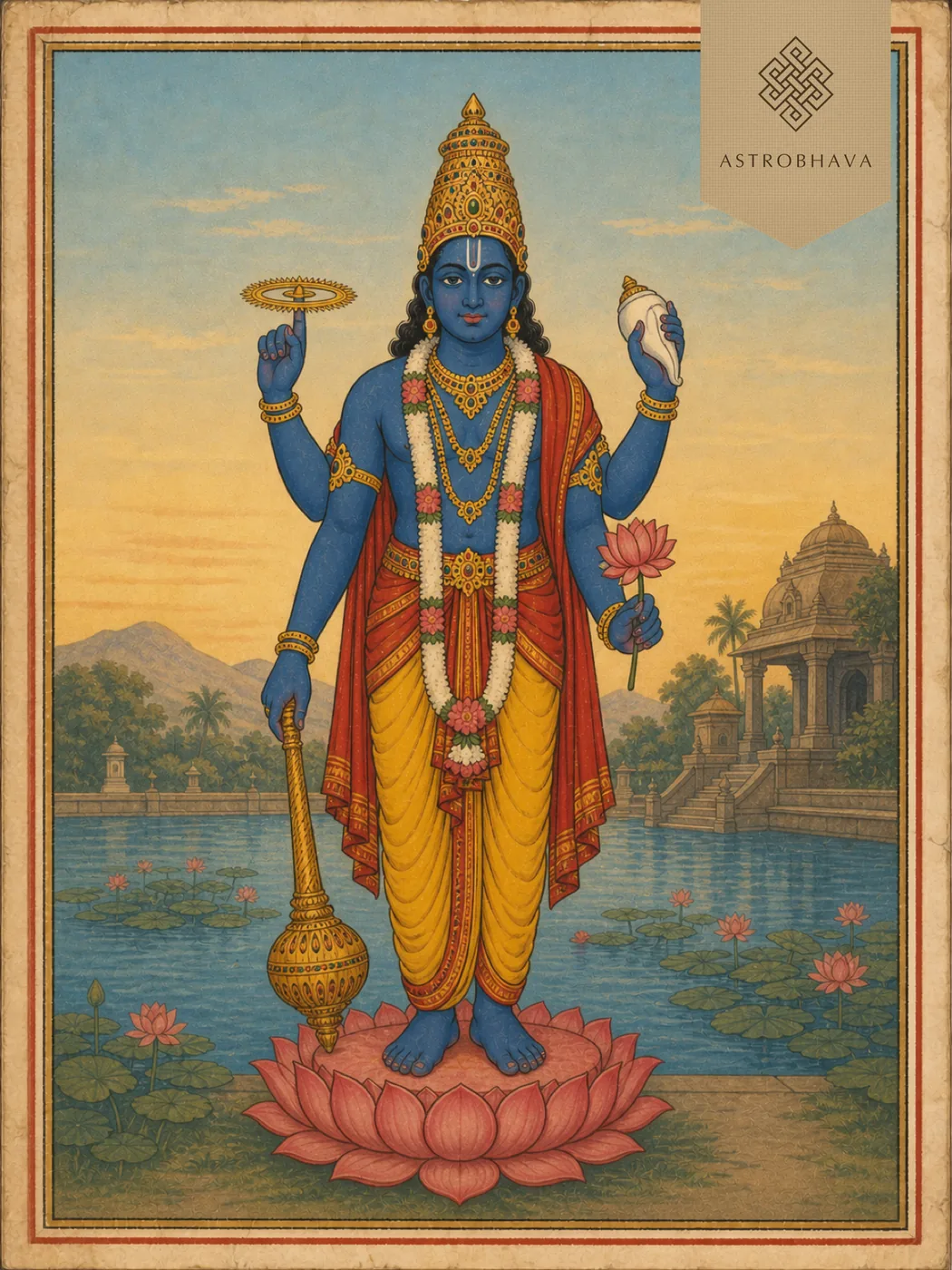
Narayana Suktam
सहस्रशीर्षं देवं विश्वाक्षं विश्वशम्भुवम्In Devanagari, Tamil, Telugu, Kannada, Malayalam and English — with the meaning of every word, and the one syllable most people pronounce wrongly.
What the Narayana Suktam is
Narayana is the resting place of all beings, the one who reclines upon the waters of dissolution and from whose navel the lotus of Brahma arises. In the Narayana Sukta of the Taittiriya Aranyaka he is praised as the thousand-headed deity whose eyes are the universe, who dwells both within the heart and beyond the farthest heaven. The name itself is traditionally derived from nārā, the waters, and ayana, the abode, so that Narayana is the ground upon which the cosmic waters settle. He is not portrayed here as an avatar who descends into history but as the unchanging person who remains after names, forms and cycles have withdrawn. The sukta places him at the centre of the heart-cave, surrounded by a network of luminous channels, making the inward journey and the cosmic vision a single continuous movement.
The Heart as Dwelling
The Narayana Sukta, preserved in the tenth prapathaka of the Taittiriya Aranyaka, does not recount a battle or a childhood exploit. Instead it maps the presence of Narayana inside the human body and simultaneously across the expanse of the worlds. The seer describes the heart as a lotus bud hanging downward, a span below the throat and above the navel. Within it is a subtle cavity in which all is established, and in it a flame as thin as the awn of wild rice, in the midst of which dwells the supreme self, Narayana. From him proceed the vital breaths, the senses and the mind; into him they return. The same passage identifies him with the supreme brahman, with the purusha of a thousand heads, and with the light that never sets. Later Vaishnava reading takes this interior geography as the warrant for meditating on Narayana as both the transcendent source and the intimate companion seated in the cavity of the heart, so that the recitation of the sukta becomes a guided entry into that inner chamber rather than a petition addressed to a distant deity.
The mantra, in six scripts
- सहस्रशीर्षं
- sahasraśīrṣaṃ — thousand-headed
- देवं
- devaṃ — god
- विश्वाक्षं
- viśvākṣaṃ — universe-eyed
- विश्वशम्भुवम्
- viśvaśambhuvam — all-auspicious
Narayana Suktam lyrics in full
From the Taittiriya Aranyaka (10.13), with the Narayana Gayatri that is traditionally chanted after it.
All 15 verses, in Sanskrit, Tamil, Telugu, Kannada, Malayalam and English, each with its meaning. Choose a script:
Download the Narayana Suktam PDFAll 15 verses with their meanings, in Sanskrit. Free to print and keep.
सहस्रशीर्षं देवं विश्वाक्षं विश्वशम्भुवम् ।
विश्वं नारायणं देवमक्षरं परमं पदम् ॥
ஸஹஸ்ரஶீர்ஷம் தேவம் விஶ்வாக்ஷம் விஶ்வஶம்புவம் ।
விஶ்வம் நாராயணம் தேவமக்ஷரம் பரமம் பதம் ॥
సహస్రశీర్షం దేవం విశ్వాక్షం విశ్వశమ్భువమ్ ।
విశ్వం నారాయణం దేవమక్షరం పరమం పదమ్ ॥
ಸಹಸ್ರಶೀರ್ಷಂ ದೇವಂ ವಿಶ್ವಾಕ್ಷಂ ವಿಶ್ವಶಮ್ಭುವಮ್ ।
ವಿಶ್ವಂ ನಾರಾಯಣಂ ದೇವಮಕ್ಷರಂ ಪರಮಂ ಪದಮ್ ॥
സഹസ്രശീര്ഷം ദേവം വിശ്വാക്ഷം വിശ്വശമ്ഭുവമ് ।
വിശ്വം നാരായണം ദേവമക്ഷരം പരമം പദമ് ॥
sahasraśīrṣaṃ devaṃ viśvākṣaṃ viśvaśambhuvam |
viśvaṃ nārāyaṇaṃ devamakṣaraṃ paramaṃ padam ||
The thousand-headed god, all-seeing, the source of the well-being of all: Narayana, the god who is the universe, the imperishable, the supreme abode.
विश्वतः परमान्नित्यं विश्वं नारायणं हरिम् ।
विश्वमेवेदं पुरुषस्तद्विश्वमुपजीवति ॥
விஶ்வதஃ பரமாந்நித்யம் விஶ்வம் நாராயணம் ஹரிம் ।
விஶ்வமேவேதம் புருஷஸ்தத்விஶ்வமுபஜீவதி ॥
విశ్వతః పరమాన్నిత్యం విశ్వం నారాయణం హరిమ్ ।
విశ్వమేవేదం పురుషస్తద్విశ్వముపజీవతి ॥
ವಿಶ್ವತಃ ಪರಮಾನ್ನಿತ್ಯಂ ವಿಶ್ವಂ ನಾರಾಯಣಂ ಹರಿಮ್ ।
ವಿಶ್ವಮೇವೇದಂ ಪುರುಷಸ್ತದ್ವಿಶ್ವಮುಪಜೀವತಿ ॥
വിശ്വതഃ പരമാന്നിത്യം വിശ്വം നാരായണം ഹരിമ് ।
വിശ്വമേവേദം പുരുഷസ്തദ്വിശ്വമുപജീവതി ॥
viśvataḥ paramānnityaṃ viśvaṃ nārāyaṇaṃ harim |
viśvamevedaṃ puruṣastadviśvamupajīvati ||
Higher than the universe, eternal, and yet the universe itself, is Narayana, Hari. This whole universe is the Purusha alone, and the universe lives by him.
पतिं विश्वस्यात्मेश्वरं शाश्वतं शिवमच्युतम् ।
नारायणं महाज्ञेयं विश्वात्मानं परायणम् ॥
பதிம் விஶ்வஸ்யாத்மேஶ்வரம் ஶாஶ்வதம் ஶிவமச்யுதம் ।
நாராயணம் மஹாஜ்ஞேயம் விஶ்வாத்மாநம் பராயணம் ॥
పతిం విశ్వస్యాత్మేశ్వరం శాశ్వతం శివమచ్యుతమ్ ।
నారాయణం మహాజ్ఞేయం విశ్వాత్మానం పరాయణమ్ ॥
ಪತಿಂ ವಿಶ್ವಸ್ಯಾತ್ಮೇಶ್ವರಂ ಶಾಶ್ವತಂ ಶಿವಮಚ್ಯುತಮ್ ।
ನಾರಾಯಣಂ ಮಹಾಜ್ಞೇಯಂ ವಿಶ್ವಾತ್ಮಾನಂ ಪರಾಯಣಮ್ ॥
പതിം വിശ്വസ്യാത്മേശ്വരം ശാശ്വതം ശിവമച്യുതമ് ।
നാരായണം മഹാജ്ഞേയം വിശ്വാത്മാനം പരായണമ് ॥
patiṃ viśvasyātmeśvaraṃ śāśvataṃ śivamacyutam |
nārāyaṇaṃ mahājñeyaṃ viśvātmānaṃ parāyaṇam ||
He is the lord of the universe, the ruler of all selves, eternal, auspicious and unfailing: Narayana, the great one who is to be known, the self of all, the supreme refuge.
नारायण परो ज्योतिरात्मा नारायणः परः ।
नारायण परं ब्रह्म तत्त्वं नारायणः परः ॥
நாராயண பரோ ஜ்யோதிராத்மா நாராயணஃ பரஃ ।
நாராயண பரம் ப்ரஹ்ம தத்த்வம் நாராயணஃ பரஃ ॥
నారాయణ పరో జ్యోతిరాత్మా నారాయణః పరః ।
నారాయణ పరం బ్రహ్మ తత్త్వం నారాయణః పరః ॥
ನಾರಾಯಣ ಪರೋ ಜ್ಯೋತಿರಾತ್ಮಾ ನಾರಾಯಣಃ ಪರಃ ।
ನಾರಾಯಣ ಪರಂ ಬ್ರಹ್ಮ ತತ್ತ್ವಂ ನಾರಾಯಣಃ ಪರಃ ॥
നാരായണ പരോ ജ്യോതിരാത്മാ നാരായണഃ പരഃ ।
നാരായണ പരം ബ്രഹ്മ തത്ത്വം നാരായണഃ പരഃ ॥
nārāyaṇa paro jyotirātmā nārāyaṇaḥ paraḥ |
nārāyaṇa paraṃ brahma tattvaṃ nārāyaṇaḥ paraḥ ||
Narayana is the supreme light; Narayana is the supreme self. Narayana is the supreme Brahman; Narayana is the supreme reality.
नारायण परो ध्याता ध्यानं नारायणः परः ।
यच्च किञ्चिज्जगत्सर्वं दृश्यते श्रूयतेऽपि वा ॥
நாராயண பரோ த்யாதா த்யாநம் நாராயணஃ பரஃ ।
யச்ச கிஞ்சிஜ்ஜகத்ஸர்வம் த்ருஶ்யதே ஶ்ரூயதேபி வா ॥
నారాయణ పరో ధ్యాతా ధ్యానం నారాయణః పరః ।
యచ్చ కిఞ్చిజ్జగత్సర్వం దృశ్యతే శ్రూయతేఽపి వా ॥
ನಾರಾಯಣ ಪರೋ ಧ್ಯಾತಾ ಧ್ಯಾನಂ ನಾರಾಯಣಃ ಪರಃ ।
ಯಚ್ಚ ಕಿಞ್ಚಿಜ್ಜಗತ್ಸರ್ವಂ ದೃಶ್ಯತೇ ಶ್ರೂಯತೇಽಪಿ ವಾ ॥
നാരായണ പരോ ധ്യാതാ ധ്യാനം നാരായണഃ പരഃ ।
യച്ച കിഞ്ചിജ്ജഗത്സര്വം ദൃശ്യതേ ശ്രൂയതേഽപി വാ ॥
nārāyaṇa paro dhyātā dhyānaṃ nārāyaṇaḥ paraḥ |
yacca kiñcijjagatsarvaṃ dṛśyate śrūyate'pi vā ||
Narayana is the supreme meditator; Narayana is the supreme meditation. Whatever there is in this whole world, whether seen or heard of,
अन्तर्बहिश्च तत्सर्वं व्याप्य नारायणः स्थितः ।
अनन्तमव्ययं कविं समुद्रेऽन्तं विश्वशम्भुवम् ॥
அந்தர்பஹிஶ்ச தத்ஸர்வம் வ்யாப்ய நாராயணஃ ஸ்திதஃ ।
அநந்தமவ்யயம் கவிம் ஸமுத்ரேந்தம் விஶ்வஶம்புவம் ॥
అన్తర్బహిశ్చ తత్సర్వం వ్యాప్య నారాయణః స్థితః ।
అనన్తమవ్యయం కవిం సముద్రేఽన్తం విశ్వశమ్భువమ్ ॥
ಅನ್ತರ್ಬಹಿಶ್ಚ ತತ್ಸರ್ವಂ ವ್ಯಾಪ್ಯ ನಾರಾಯಣಃ ಸ್ಥಿತಃ ।
ಅನನ್ತಮವ್ಯಯಂ ಕವಿಂ ಸಮುದ್ರೇಽನ್ತಂ ವಿಶ್ವಶಮ್ಭುವಮ್ ॥
അന്തര്ബഹിശ്ച തത്സര്വം വ്യാപ്യ നാരായണഃ സ്ഥിതഃ ।
അനന്തമവ്യയം കവിം സമുദ്രേഽന്തം വിശ്വശമ്ഭുവമ് ॥
antarbahiśca tatsarvaṃ vyāpya nārāyaṇaḥ sthitaḥ |
anantamavyayaṃ kaviṃ samudre'ntaṃ viśvaśambhuvam ||
all of it Narayana pervades, inside and outside, and abides. He is the infinite, the imperishable, the all-knowing seer, the final goal dwelling in the ocean, the source of the well-being of all.
पद्मकोशप्रतीकाशं हृदयं चाप्यधोमुखम् ।
अधो निष्ट्या वितस्त्यान्ते नाभ्यामुपरि तिष्ठति ॥
பத்மகோஶப்ரதீகாஶம் ஹ்ருதயம் சாப்யதோமுகம் ।
அதோ நிஷ்ட்யா விதஸ்த்யாந்தே நாப்யாமுபரி திஷ்டதி ॥
పద్మకోశప్రతీకాశం హృదయం చాప్యధోముఖమ్ ।
అధో నిష్ట్యా వితస్త్యాన్తే నాభ్యాముపరి తిష్ఠతి ॥
ಪದ್ಮಕೋಶಪ್ರತೀಕಾಶಂ ಹೃದಯಂ ಚಾಪ್ಯಧೋಮುಖಮ್ ।
ಅಧೋ ನಿಷ್ಟ್ಯಾ ವಿತಸ್ತ್ಯಾನ್ತೇ ನಾಭ್ಯಾಮುಪರಿ ತಿಷ್ಠತಿ ॥
പദ്മകോശപ്രതീകാശം ഹൃദയം ചാപ്യധോമുഖമ് ।
അധോ നിഷ്ട്യാ വിതസ്ത്യാന്തേ നാഭ്യാമുപരി തിഷ്ഠതി ॥
padmakośapratīkāśaṃ hṛdayaṃ cāpyadhomukham |
adho niṣṭyā vitastyānte nābhyāmupari tiṣṭhati ||
The heart, which resembles a lotus bud and hangs downward, lies a span below the base of the throat and above the navel.
ज्वालमालाकुलं भाती विश्वस्यायतनं महत् ।
सन्ततं शिलाभिस्तु लम्बत्याकोशसन्निभम् ॥
ஜ்வாலமாலாகுலம் பாதீ விஶ்வஸ்யாயதநம் மஹத் ।
ஸந்ததம் ஶிலாபிஸ்து லம்பத்யாகோஶஸந்நிபம் ॥
జ్వాలమాలాకులం భాతీ విశ్వస్యాయతనం మహత్ ।
సన్తతం శిలాభిస్తు లమ్బత్యాకోశసన్నిభమ్ ॥
ಜ್ವಾಲಮಾಲಾಕುಲಂ ಭಾತೀ ವಿಶ್ವಸ್ಯಾಯತನಂ ಮಹತ್ ।
ಸನ್ತತಂ ಶಿಲಾಭಿಸ್ತು ಲಮ್ಬತ್ಯಾಕೋಶಸನ್ನಿಭಮ್ ॥
ജ്വാലമാലാകുലം ഭാതീ വിശ്വസ്യായതനം മഹത് ।
സന്തതം ശിലാഭിസ്തു ലമ്ബത്യാകോശസന്നിഭമ് ॥
jvālamālākulaṃ bhātī viśvasyāyatanaṃ mahat |
santataṃ śilābhistu lambatyākośasannibham ||
Encircled as if by a garland of flames, it shines as the great dwelling place of the universe. Surrounded by channels on every side, it hangs down like a lotus bud.
तस्यान्ते सुषिरं सूक्ष्मं तस्मिन् सर्वं प्रतिष्ठितम् ।
तस्य मध्ये महानग्निर्विश्वार्चिर्विश्वतोमुखः ॥
தஸ்யாந்தே ஸுஷிரம் ஸூக்ஷ்மம் தஸ்மிந் ஸர்வம் ப்ரதிஷ்டிதம் ।
தஸ்ய மத்யே மஹாநக்நிர்விஶ்வார்சிர்விஶ்வதோமுகஃ ॥
తస్యాన్తే సుషిరం సూక్ష్మం తస్మిన్ సర్వం ప్రతిష్ఠితమ్ ।
తస్య మధ్యే మహానగ్నిర్విశ్వార్చిర్విశ్వతోముఖః ॥
ತಸ್ಯಾನ್ತೇ ಸುಷಿರಂ ಸೂಕ್ಷ್ಮಂ ತಸ್ಮಿನ್ ಸರ್ವಂ ಪ್ರತಿಷ್ಠಿತಮ್ ।
ತಸ್ಯ ಮಧ್ಯೇ ಮಹಾನಗ್ನಿರ್ವಿಶ್ವಾರ್ಚಿರ್ವಿಶ್ವತೋಮುಖಃ ॥
തസ്യാന്തേ സുഷിരം സൂക്ഷ്മം തസ്മിന് സര്വം പ്രതിഷ്ഠിതമ് ।
തസ്യ മധ്യേ മഹാനഗ്നിര്വിശ്വാര്ചിര്വിശ്വതോമുഖഃ ॥
tasyānte suṣiraṃ sūkṣmaṃ tasmin sarvaṃ pratiṣṭhitam |
tasya madhye mahānagnirviśvārcirviśvatomukhaḥ ||
Within it is a subtle opening, and in that everything is established. In its centre is a great fire, with flames spreading everywhere and facing in every direction.
सोऽग्रभुग्विभजन्तिष्ठन्नाहारमजरः कविः ।
तिर्यगूर्ध्वमधश्शायी रश्मयस्तस्य सन्तता ॥
ஸோக்ரபுக்விபஜந்திஷ்டந்நாஹாரமஜரஃ கவிஃ ।
திர்யகூர்த்வமதஶ்ஶாயீ ரஶ்மயஸ்தஸ்ய ஸந்ததா ॥
సోఽగ్రభుగ్విభజన్తిష్ఠన్నాహారమజరః కవిః ।
తిర్యగూర్ధ్వమధశ్శాయీ రశ్మయస్తస్య సన్తతా ॥
ಸೋಽಗ್ರಭುಗ್ವಿಭಜನ್ತಿಷ್ಠನ್ನಾಹಾರಮಜರಃ ಕವಿಃ ।
ತಿರ್ಯಗೂರ್ಧ್ವಮಧಶ್ಶಾಯೀ ರಶ್ಮಯಸ್ತಸ್ಯ ಸನ್ತತಾ ॥
സോഽഗ്രഭുഗ്വിഭജന്തിഷ്ഠന്നാഹാരമജരഃ കവിഃ ।
തിര്യഗൂര്ധ്വമധശ്ശായീ രശ്മയസ്തസ്യ സന്തതാ ॥
so'grabhugvibhajantiṣṭhannāhāramajaraḥ kaviḥ |
tiryagūrdhvamadhaśśāyī raśmayastasya santatā ||
That ageless and wise fire receives food first and, abiding there, distributes the nourishment. Its rays spread out on every side, upward and downward.
सन्तापयति स्वं देहमापादतलमस्तकः ।
तस्य मध्ये वह्निशिखा अणीयोर्ध्वा व्यवस्थितः ॥
ஸந்தாபயதி ஸ்வம் தேஹமாபாததலமஸ்தகஃ ।
தஸ்ய மத்யே வஹ்நிஶிகா அணீயோர்த்வா வ்யவஸ்திதஃ ॥
సన్తాపయతి స్వం దేహమాపాదతలమస్తకః ।
తస్య మధ్యే వహ్నిశిఖా అణీయోర్ధ్వా వ్యవస్థితః ॥
ಸನ್ತಾಪಯತಿ ಸ್ವಂ ದೇಹಮಾಪಾದತಲಮಸ್ತಕಃ ।
ತಸ್ಯ ಮಧ್ಯೇ ವಹ್ನಿಶಿಖಾ ಅಣೀಯೋರ್ಧ್ವಾ ವ್ಯವಸ್ಥಿತಃ ॥
സന്താപയതി സ്വം ദേഹമാപാദതലമസ്തകഃ ।
തസ്യ മധ്യേ വഹ്നിശിഖാ അണീയോര്ധ്വാ വ്യവസ്ഥിതഃ ॥
santāpayati svaṃ dehamāpādatalamastakaḥ |
tasya madhye vahniśikhā aṇīyordhvā vyavasthitaḥ ||
It warms its own body from the soles of the feet to the crown of the head. In its centre stands a tongue of flame, very subtle and pointing upward.
नीलतोयदमध्यस्थाद्विद्युल्लेखेव भास्वरा ।
नीवारशूकवत्तन्वी पीता भास्वत्यणूपमा ॥
நீலதோயதமத்யஸ்தாத்வித்யுல்லேகேவ பாஸ்வரா ।
நீவாரஶூகவத்தந்வீ பீதா பாஸ்வத்யணூபமா ॥
నీలతోయదమధ్యస్థాద్విద్యుల్లేఖేవ భాస్వరా ।
నీవారశూకవత్తన్వీ పీతా భాస్వత్యణూపమా ॥
ನೀಲತೋಯದಮಧ್ಯಸ್ಥಾದ್ವಿದ್ಯುಲ್ಲೇಖೇವ ಭಾಸ್ವರಾ ।
ನೀವಾರಶೂಕವತ್ತನ್ವೀ ಪೀತಾ ಭಾಸ್ವತ್ಯಣೂಪಮಾ ॥
നീലതോയദമധ്യസ്ഥാദ്വിദ്യുല്ലേഖേവ ഭാസ്വരാ ।
നീവാരശൂകവത്തന്വീ പീതാ ഭാസ്വത്യണൂപമാ ॥
nīlatoyadamadhyasthādvidyullekheva bhāsvarā |
nīvāraśūkavattanvī pītā bhāsvatyaṇūpamā ||
It is as brilliant as a streak of lightning in the middle of a dark rain cloud, as slender as the tip of a grain of wild rice, golden in colour, shining, and as fine as an atom.
तस्याः शिखाया मध्ये परमात्मा व्यवस्थितः ।
स ब्रह्म स शिवः स हरिः सेन्द्रः सोऽक्षरः परमः स्वराट् ॥
தஸ்யாஃ ஶிகாயா மத்யே பரமாத்மா வ்யவஸ்திதஃ ।
ஸ ப்ரஹ்ம ஸ ஶிவஃ ஸ ஹரிஃ ஸேந்த்ரஃ ஸோக்ஷரஃ பரமஃ ஸ்வராட் ॥
తస్యాః శిఖాయా మధ్యే పరమాత్మా వ్యవస్థితః ।
స బ్రహ్మ స శివః స హరిః సేన్ద్రః సోఽక్షరః పరమః స్వరాట్ ॥
ತಸ್ಯಾಃ ಶಿಖಾಯಾ ಮಧ್ಯೇ ಪರಮಾತ್ಮಾ ವ್ಯವಸ್ಥಿತಃ ।
ಸ ಬ್ರಹ್ಮ ಸ ಶಿವಃ ಸ ಹರಿಃ ಸೇನ್ದ್ರಃ ಸೋಽಕ್ಷರಃ ಪರಮಃ ಸ್ವರಾಟ್ ॥
തസ്യാഃ ശിഖായാ മധ്യേ പരമാത്മാ വ്യവസ്ഥിതഃ ।
സ ബ്രഹ്മ സ ശിവഃ സ ഹരിഃ സേന്ദ്രഃ സോഽക്ഷരഃ പരമഃ സ്വരാട് ॥
tasyāḥ śikhāyā madhye paramātmā vyavasthitaḥ |
sa brahma sa śivaḥ sa hariḥ sendraḥ so'kṣaraḥ paramaḥ svarāṭ ||
In the middle of that flame the Supreme Self abides. He is Brahma, he is Shiva, he is Hari, he is Indra; he is the imperishable, the supreme, the self-ruling one.
ऋतं सत्यं परं ब्रह्म पुरुषं कृष्णपिङ्गलम् ।
ऊर्ध्वरेतं विरूपाक्षं विश्वरूपाय वै नमो नमः ॥
ருதம் ஸத்யம் பரம் ப்ரஹ்ம புருஷம் க்ருஷ்ணபிங்கலம் ।
ஊர்த்வரேதம் விரூபாக்ஷம் விஶ்வரூபாய வை நமோ நமஃ ॥
ఋతం సత్యం పరం బ్రహ్మ పురుషం కృష్ణపిఙ్గలమ్ ।
ఊర్ధ్వరేతం విరూపాక్షం విశ్వరూపాయ వై నమో నమః ॥
ಋತಂ ಸತ್ಯಂ ಪರಂ ಬ್ರಹ್ಮ ಪುರುಷಂ ಕೃಷ್ಣಪಿಙ್ಗಲಮ್ ।
ಊರ್ಧ್ವರೇತಂ ವಿರೂಪಾಕ್ಷಂ ವಿಶ್ವರೂಪಾಯ ವೈ ನಮೋ ನಮಃ ॥
ഋതം സത്യം പരം ബ്രഹ്മ പുരുഷം കൃഷ്ണപിങ്ഗലമ് ।
ഊര്ധ്വരേതം വിരൂപാക്ഷം വിശ്വരൂപായ വൈ നമോ നമഃ ॥
ṛtaṃ satyaṃ paraṃ brahma puruṣaṃ kṛṣṇapiṅgalam |
ūrdhvaretaṃ virūpākṣaṃ viśvarūpāya vai namo namaḥ ||
He is cosmic order and truth, the supreme Brahman, the Purusha dark and tawny, whose vital power rises upward, whose eyes are unlike any other. To him whose form is the universe, salutations again and again.
नारायणाय विद्महे वासुदेवाय धीमहि ।
तन्नो विष्णुः प्रचोदयात् ॥
நாராயணாய வித்மஹே வாஸுதேவாய தீமஹி ।
தந்நோ விஷ்ணுஃ ப்ரசோதயாத் ॥
నారాయణాయ విద్మహే వాసుదేవాయ ధీమహి ।
తన్నో విష్ణుః ప్రచోదయాత్ ॥
ನಾರಾಯಣಾಯ ವಿದ್ಮಹೇ ವಾಸುದೇವಾಯ ಧೀಮಹಿ ।
ತನ್ನೋ ವಿಷ್ಣುಃ ಪ್ರಚೋದಯಾತ್ ॥
നാരായണായ വിദ്മഹേ വാസുദേവായ ധീമഹി ।
തന്നോ വിഷ്ണുഃ പ്രചോദയാത് ॥
nārāyaṇāya vidmahe vāsudevāya dhīmahi |
tanno viṣṇuḥ pracodayāt ||
We come to know Narayana; we meditate on Vasudeva. May that Vishnu inspire and guide us.
The syllable people get wrong
In viśvaśambhuvam the aspirated bh of śambhu is the sound most often lost. Speakers frequently say a soft “shambu”, dropping the breath after the b. The bh must be released with a clear puff of air; otherwise the ancient epithet that calls him the source of all welfare is blurred.
When the Narayana Suktam is chanted
Weekday. Thursday
Questions
Have your chart read before you decide
Chanting is yours to do, and free. But which deity your situation calls for — and whether a mantra alone is the right response — depends on your chart. Sometimes it is; sometimes it is not.
- Over 30 years in the Guru–Sishya Parampara, from the age of five
- He reads every chart himself — 60 minutes, one to one, never delegated
- Charts are read only between sunrise and sunset, following tradition