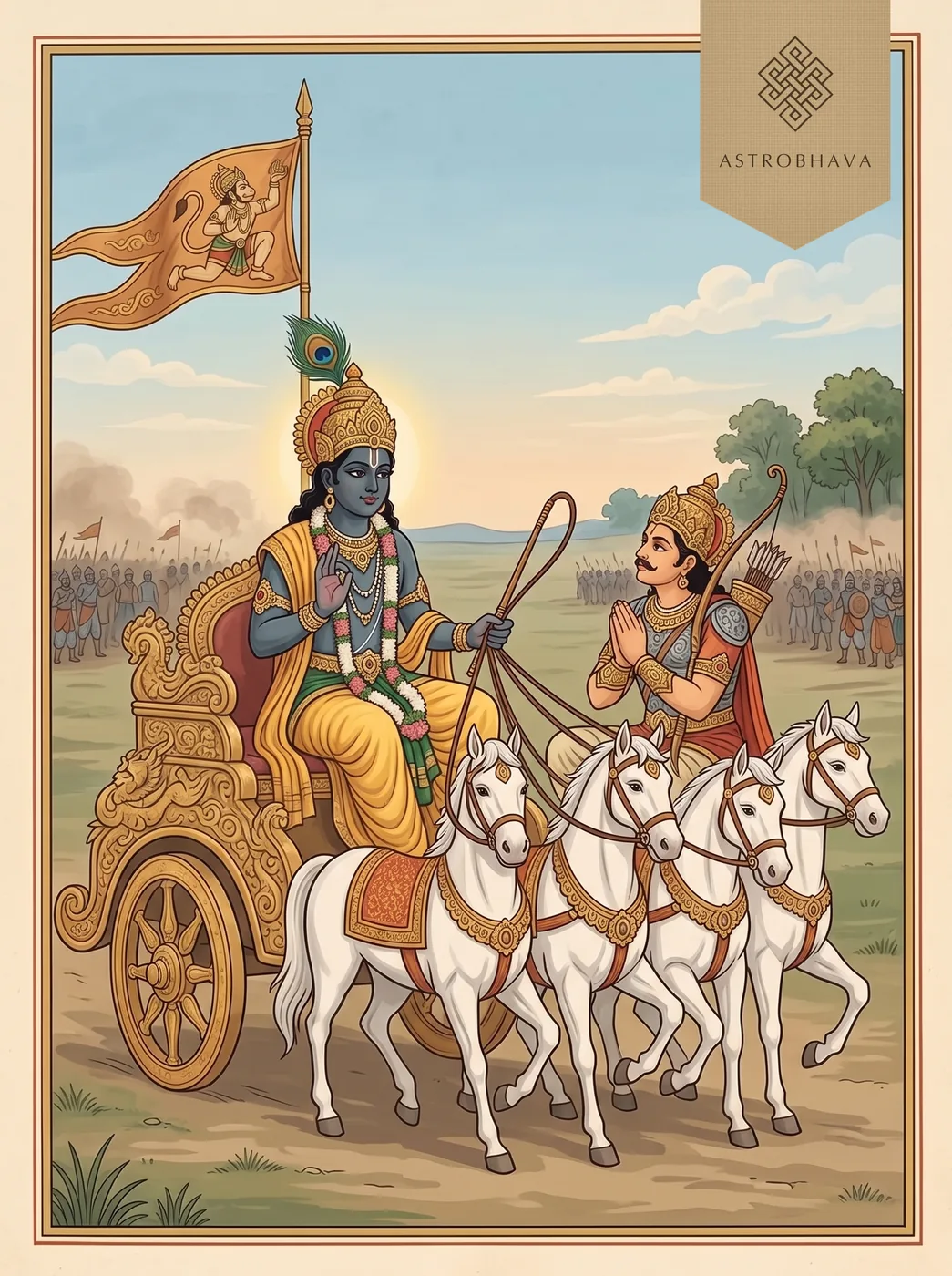
Gita Dhyanam
ॐ पार्थाय प्रतिबोधितां भगवता नारायणेन स्वयं व्यासेन ग्रथितां पुराणमुनिना मध्ये महाभारतम् । अद्वैतामृतवर्षिणीं भगवतीमष्टादशाध्यायिनीं अम्ब त्वामनुसन्दधामि भगवद्गीते भवद्वेषिणीम् ॥Also known as Om Parthaya Pratibodhitam
In Devanagari, Tamil, Telugu, Kannada, Malayalam and English — with the meaning of every word, and the one syllable most people pronounce wrongly.
 The Narayana Sukta Homam, performed for youBook →
What the Gita Dhyanam is
The Gita Dhyanam, the nine meditation verses that open with 'Om parthaya pratibodhitam', is the invocation that most printed editions set before the first chapter of the Bhagavad Gita; it is not one of the Gita's own 700 verses. The first verse addresses the Gita itself as a mother, Amba, taught by Narayana to Arjuna and woven into the Mahabharata by Vyasa. The second salutes Vyasa, who lit the lamp of knowledge with the oil of the epic, and the third and fourth turn to Krishna, the fourth picturing the Upanishads as cows he milks with Arjuna as the calf. Verse five bows to the son of Vasudeva and Devaki, and verse six retells the Kurukshetra war as a river the Pandavas crossed with Krishna as ferryman. Verse seven praises the Mahabharata as a lotus, verse eight the grace that makes the mute speak, and verse nine the God whose limit no being knows.
An Invocation Without a Known Author
The Gita Dhyanam has no tale of composition, and its origin is disputed. Its first verse places the Gita 'madhye mahabharatam', in the middle of the epic, and that is where the eighteen chapters sit, inside the Bhishma Parva as the two armies face each other. The meditation verses are a later preface fixed to that teaching. Several twentieth-century commentators on the Gita traced the set to a work called the Vaishnaviya Tantrasara. Another line of tradition ascribes it to Madhusudana Sarasvati, the Advaita commentator on the Gita, an attribution that suits the phrase 'advaitamritavarshinim', she who rains the nectar of non-duality. Others suggest Sridhara Swami, who wrote on both the Gita and the Bhagavata, or say plainly that the composer is unknown. The set is also partly gathered from elsewhere. The ninth verse is the first verse of the thirteenth chapter of the Bhagavata Purana's twelfth book, where the narrator Suta begins his closing praise of that Purana, and the fourth verse also circulates within the Gita Mahatmya. By the early twentieth century the nine verses were already printed ahead of the Sanskrit text in English translations of the Gita. The eighth verse travelled furthest: Swami Vivekananda quoted its opening words in a letter from Chicago after the 1893 Parliament of Religions, trusting that the One who makes the mute eloquent would help him.
The mantra, in six scripts
- ॐ
- oṃ — Om, the sacred syllable
- पार्थाय
- pārthāya — to Partha (Arjuna)
- प्रतिबोधितां
- pratibodhitāṃ — taught, awakened
- भगवता
- bhagavatā — by the Lord
- नारायणेन
- nārāyaṇena — by Narayana
- स्वयं
- svayaṃ — himself
- व्यासेन
- vyāsena — by Vyasa
- ग्रथितां
- grathitāṃ — woven, composed
- पुराणमुनिना
- purāṇamuninā — by the ancient sage
- मध्ये
- madhye — in the middle of
- महाभारतम्
- mahābhāratam — the Mahabharata
- अद्वैतामृतवर्षिणीं
- advaitāmṛtavarṣiṇīṃ — raining the nectar of non-duality
- भगवतीमष्टादशाध्यायिनीं
- bhagavatīmaṣṭādaśādhyāyinīṃ — the blessed one of eighteen chapters
- अम्ब
- amba — O Mother
- त्वामनुसन्दधामि
- tvāmanusandadhāmi — on you I meditate
- भगवद्गीते
- bhagavadgīte — O Bhagavad Gita
- भवद्वेषिणीम्
- bhavadveṣiṇīm — foe of worldly bondage
Gita Dhyanam lyrics in full
All nine verses, in the order most editions print them before the first chapter of the Bhagavad Gita.
All 9 verses, in Sanskrit, Tamil, Telugu, Kannada, Malayalam and English, each with its meaning. Choose a script:
Download the Gita Dhyanam PDFAll 9 verses with their meanings, in Sanskrit. Free to print and keep.
ॐ पार्थाय प्रतिबोधितां भगवता नारायणेन स्वयं व्यासेन ग्रथितां पुराणमुनिना मध्ये महाभारतम् ।
अद्वैतामृतवर्षिणीं भगवतीमष्टादशाध्यायिनीं अम्ब त्वामनुसन्दधामि भगवद्गीते भवद्वेषिणीम् ॥
ௐ பார்தாய ப்ரதிபோதிதாம் பகவதா நாராயணேந ஸ்வயம் வ்யாஸேந க்ரதிதாம் புராணமுநிநா மத்யே மஹாபாரதம் ।
அத்வைதாம்ருதவர்ஷிணீம் பகவதீமஷ்டாதஶாத்யாயிநீம் அம்ப த்வாமநுஸந்ததாமி பகவத்கீதே பவத்வேஷிணீம் ॥
ఓం పార్థాయ ప్రతిబోధితాం భగవతా నారాయణేన స్వయం వ్యాసేన గ్రథితాం పురాణమునినా మధ్యే మహాభారతమ్ ।
అద్వైతామృతవర్షిణీం భగవతీమష్టాదశాధ్యాయినీం అమ్బ త్వామనుసన్దధామి భగవద్గీతే భవద్వేషిణీమ్ ॥
ಓಂ ಪಾರ್ಥಾಯ ಪ್ರತಿಬೋಧಿತಾಂ ಭಗವತಾ ನಾರಾಯಣೇನ ಸ್ವಯಂ ವ್ಯಾಸೇನ ಗ್ರಥಿತಾಂ ಪುರಾಣಮುನಿನಾ ಮಧ್ಯೇ ಮಹಾಭಾರತಮ್ ।
ಅದ್ವೈತಾಮೃತವರ್ಷಿಣೀಂ ಭಗವತೀಮಷ್ಟಾದಶಾಧ್ಯಾಯಿನೀಂ ಅಮ್ಬ ತ್ವಾಮನುಸನ್ದಧಾಮಿ ಭಗವದ್ಗೀತೇ ಭವದ್ವೇಷಿಣೀಮ್ ॥
ഓം പാര്ഥായ പ്രതിബോധിതാം ഭഗവതാ നാരായണേന സ്വയം വ്യാസേന ഗ്രഥിതാം പുരാണമുനിനാ മധ്യേ മഹാഭാരതമ് ।
അദ്വൈതാമൃതവര്ഷിണീം ഭഗവതീമഷ്ടാദശാധ്യായിനീം അമ്ബ ത്വാമനുസന്ദധാമി ഭഗവദ്ഗീതേ ഭവദ്വേഷിണീമ് ॥
oṃ pārthāya pratibodhitāṃ bhagavatā nārāyaṇena svayaṃ vyāsena grathitāṃ purāṇamuninā madhye mahābhāratam |
advaitāmṛtavarṣiṇīṃ bhagavatīmaṣṭādaśādhyāyinīṃ amba tvāmanusandadhāmi bhagavadgīte bhavadveṣiṇīm ||
Om. O Mother Bhagavad Gita, taught to Arjuna (Partha) by Lord Narayana himself and set down by the ancient sage Vyasa in the middle of the Mahabharata; O blessed one of eighteen chapters, who rains the nectar of non-duality and is the enemy of worldly bondage - on you I meditate.
नमोऽस्तु ते व्यास विशालबुद्धे फुल्लारविन्दायतपत्रनेत्र ।
येन त्वया भारततैलपूर्णः प्रज्वालितो ज्ञानमयः प्रदीपः ॥
நமோஸ்து தே வ்யாஸ விஶாலபுத்தே புல்லாரவிந்தாயதபத்ரநேத்ர ।
யேந த்வயா பாரததைலபூர்ணஃ ப்ரஜ்வாலிதோ ஜ்ஞாநமயஃ ப்ரதீபஃ ॥
నమోఽస్తు తే వ్యాస విశాలబుద్ధే ఫుల్లారవిన్దాయతపత్రనేత్ర ।
యేన త్వయా భారతతైలపూర్ణః ప్రజ్వాలితో జ్ఞానమయః ప్రదీపః ॥
ನಮೋಽಸ್ತು ತೇ ವ್ಯಾಸ ವಿಶಾಲಬುದ್ಧೇ ಫುಲ್ಲಾರವಿನ್ದಾಯತಪತ್ರನೇತ್ರ ।
ಯೇನ ತ್ವಯಾ ಭಾರತತೈಲಪೂರ್ಣಃ ಪ್ರಜ್ವಾಲಿತೋ ಜ್ಞಾನಮಯಃ ಪ್ರದೀಪಃ ॥
നമോഽസ്തു തേ വ്യാസ വിശാലബുദ്ധേ ഫുല്ലാരവിന്ദായതപത്രനേത്ര ।
യേന ത്വയാ ഭാരതതൈലപൂര്ണഃ പ്രജ്വാലിതോ ജ്ഞാനമയഃ പ്രദീപഃ ॥
namo'stu te vyāsa viśālabuddhe phullāravindāyatapatranetra |
yena tvayā bhāratatailapūrṇaḥ prajvālito jñānamayaḥ pradīpaḥ ||
Salutations to you, O Vyasa of vast intellect, whose eyes are long like the petals of a full-blown lotus, by whom the lamp of knowledge, filled with the oil of the Mahabharata, was lit.
प्रपन्नपारिजाताय तोत्रवेत्रैकपाणये ।
ज्ञानमुद्राय कृष्णाय गीतामृतदुहे नमः ॥
ப்ரபந்நபாரிஜாதாய தோத்ரவேத்ரைகபாணயே ।
ஜ்ஞாநமுத்ராய க்ருஷ்ணாய கீதாம்ருததுஹே நமஃ ॥
ప్రపన్నపారిజాతాయ తోత్రవేత్రైకపాణయే ।
జ్ఞానముద్రాయ కృష్ణాయ గీతామృతదుహే నమః ॥
ಪ್ರಪನ್ನಪಾರಿಜಾತಾಯ ತೋತ್ರವೇತ್ರೈಕಪಾಣಯೇ ।
ಜ್ಞಾನಮುದ್ರಾಯ ಕೃಷ್ಣಾಯ ಗೀತಾಮೃತದುಹೇ ನಮಃ ॥
പ്രപന്നപാരിജാതായ തോത്രവേത്രൈകപാണയേ ।
ജ്ഞാനമുദ്രായ കൃഷ്ണായ ഗീതാമൃതദുഹേ നമഃ ॥
prapannapārijātāya totravetraikapāṇaye |
jñānamudrāya kṛṣṇāya gītāmṛtaduhe namaḥ ||
Salutations to Krishna, the wish-granting parijata tree for those who take refuge in him, who holds a goad-whip in one hand, who shows the gesture of knowledge, and who milks the nectar of the Gita.
सर्वोपनिषदो गावो दोग्धा गोपालनन्दनः ।
पार्थो वत्सः सुधीर्भोक्ता दुग्धं गीतामृतं महत् ॥
ஸர்வோபநிஷதோ காவோ தோக்தா கோபாலநந்தநஃ ।
பார்தோ வத்ஸஃ ஸுதீர்போக்தா துக்தம் கீதாம்ருதம் மஹத் ॥
సర్వోపనిషదో గావో దోగ్ధా గోపాలనన్దనః ।
పార్థో వత్సః సుధీర్భోక్తా దుగ్ధం గీతామృతం మహత్ ॥
ಸರ್ವೋಪನಿಷದೋ ಗಾವೋ ದೋಗ್ಧಾ ಗೋಪಾಲನನ್ದನಃ ।
ಪಾರ್ಥೋ ವತ್ಸಃ ಸುಧೀರ್ಭೋಕ್ತಾ ದುಗ್ಧಂ ಗೀತಾಮೃತಂ ಮಹತ್ ॥
സര്വോപനിഷദോ ഗാവോ ദോഗ്ധാ ഗോപാലനന്ദനഃ ।
പാര്ഥോ വത്സഃ സുധീര്ഭോക്താ ദുഗ്ധം ഗീതാമൃതം മഹത് ॥
sarvopaniṣado gāvo dogdhā gopālanandanaḥ |
pārtho vatsaḥ sudhīrbhoktā dugdhaṃ gītāmṛtaṃ mahat ||
All the Upanishads are the cows, the milker is the son of the cowherd (Krishna), Arjuna is the calf, the person of pure mind is the one who drinks, and the milk is the great nectar of the Gita.
वसुदेवसुतं देवं कंसचाणूरमर्दनम् ।
देवकीपरमानन्दं कृष्णं वन्दे जगद्गुरुम् ॥
வஸுதேவஸுதம் தேவம் கம்ஸசாணூரமர்தநம் ।
தேவகீபரமாநந்தம் க்ருஷ்ணம் வந்தே ஜகத்குரும் ॥
వసుదేవసుతం దేవం కంసచాణూరమర్దనమ్ ।
దేవకీపరమానన్దం కృష్ణం వన్దే జగద్గురుమ్ ॥
ವಸುದೇವಸುತಂ ದೇವಂ ಕಂಸಚಾಣೂರಮರ್ದನಮ್ ।
ದೇವಕೀಪರಮಾನನ್ದಂ ಕೃಷ್ಣಂ ವನ್ದೇ ಜಗದ್ಗುರುಮ್ ॥
വസുദേവസുതം ദേവം കംസചാണൂരമര്ദനമ് ।
ദേവകീപരമാനന്ദം കൃഷ്ണം വന്ദേ ജഗദ്ഗുരുമ് ॥
vasudevasutaṃ devaṃ kaṃsacāṇūramardanam |
devakīparamānandaṃ kṛṣṇaṃ vande jagadgurum ||
I bow to Krishna, the divine son of Vasudeva, the crusher of Kamsa and Chanura, the supreme joy of Devaki, the teacher of the world.
भीष्मद्रोणतटा जयद्रथजला गान्धारनीलोत्पला शल्यग्राहवती कृपेण वहनी कर्णेन वेलाकुला ।
अश्वत्थामविकर्णघोरमकरा दुर्योधनावर्तिनी सोत्तीर्णा खलु पाण्डवै रणनदी कैवर्तकः केशवः ॥
பீஷ்மத்ரோணதடா ஜயத்ரதஜலா காந்தாரநீலோத்பலா ஶல்யக்ராஹவதீ க்ருபேண வஹநீ கர்ணேந வேலாகுலா ।
அஶ்வத்தாமவிகர்ணகோரமகரா துர்யோதநாவர்திநீ ஸோத்தீர்ணா கலு பாண்டவை ரணநதீ கைவர்தகஃ கேஶவஃ ॥
భీష్మద్రోణతటా జయద్రథజలా గాన్ధారనీలోత్పలా శల్యగ్రాహవతీ కృపేణ వహనీ కర్ణేన వేలాకులా ।
అశ్వత్థామవికర్ణఘోరమకరా దుర్యోధనావర్తినీ సోత్తీర్ణా ఖలు పాణ్డవై రణనదీ కైవర్తకః కేశవః ॥
ಭೀಷ್ಮದ್ರೋಣತಟಾ ಜಯದ್ರಥಜಲಾ ಗಾನ್ಧಾರನೀಲೋತ್ಪಲಾ ಶಲ್ಯಗ್ರಾಹವತೀ ಕೃಪೇಣ ವಹನೀ ಕರ್ಣೇನ ವೇಲಾಕುಲಾ ।
ಅಶ್ವತ್ಥಾಮವಿಕರ್ಣಘೋರಮಕರಾ ದುರ್ಯೋಧನಾವರ್ತಿನೀ ಸೋತ್ತೀರ್ಣಾ ಖಲು ಪಾಣ್ಡವೈ ರಣನದೀ ಕೈವರ್ತಕಃ ಕೇಶವಃ ॥
ഭീഷ്മദ്രോണതടാ ജയദ്രഥജലാ ഗാന്ധാരനീലോത്പലാ ശല്യഗ്രാഹവതീ കൃപേണ വഹനീ കര്ണേന വേലാകുലാ ।
അശ്വത്ഥാമവികര്ണഘോരമകരാ ദുര്യോധനാവര്തിനീ സോത്തീര്ണാ ഖലു പാണ്ഡവൈ രണനദീ കൈവര്തകഃ കേശവഃ ॥
bhīṣmadroṇataṭā jayadrathajalā gāndhāranīlotpalā śalyagrāhavatī kṛpeṇa vahanī karṇena velākulā |
aśvatthāmavikarṇaghoramakarā duryodhanāvartinī sottīrṇā khalu pāṇḍavai raṇanadī kaivartakaḥ keśavaḥ ||
The river of battle, whose banks were Bhishma and Drona, whose water was Jayadratha, whose blue lotus was the king of Gandhara, whose crocodile was Shalya, whose current was Kripa, whose surging wave was Karna, whose fearsome sea-beasts were Ashvatthama and Vikarna, and whose whirlpool was Duryodhana - that river was indeed crossed by the Pandavas, with Keshava (Krishna) as the ferryman.
पाराशर्यवचः सरोजममलं गीतार्थगन्धोत्कटं नानाख्यानककेसरं हरिकथासम्बोधनाबोधितम् ।
लोके सज्जनषट्पदैरहरहः पेपीयमानं मुदा भूयाद्भारतपङ्कजं कलिमलप्रध्वंसि नः श्रेयसे ॥
பாராஶர்யவசஃ ஸரோஜமமலம் கீதார்தகந்தோத்கடம் நாநாக்யாநககேஸரம் ஹரிகதாஸம்போதநாபோதிதம் ।
லோகே ஸஜ்ஜநஷட்பதைரஹரஹஃ பேபீயமாநம் முதா பூயாத்பாரதபங்கஜம் கலிமலப்ரத்வம்ஸி நஃ ஶ்ரேயஸே ॥
పారాశర్యవచః సరోజమమలం గీతార్థగన్ధోత్కటం నానాఖ్యానకకేసరం హరికథాసమ్బోధనాబోధితమ్ ।
లోకే సజ్జనషట్పదైరహరహః పేపీయమానం ముదా భూయాద్భారతపఙ్కజం కలిమలప్రధ్వంసి నః శ్రేయసే ॥
ಪಾರಾಶರ್ಯವಚಃ ಸರೋಜಮಮಲಂ ಗೀತಾರ್ಥಗನ್ಧೋತ್ಕಟಂ ನಾನಾಖ್ಯಾನಕಕೇಸರಂ ಹರಿಕಥಾಸಮ್ಬೋಧನಾಬೋಧಿತಮ್ ।
ಲೋಕೇ ಸಜ್ಜನಷಟ್ಪದೈರಹರಹಃ ಪೇಪೀಯಮಾನಂ ಮುದಾ ಭೂಯಾದ್ಭಾರತಪಙ್ಕಜಂ ಕಲಿಮಲಪ್ರಧ್ವಂಸಿ ನಃ ಶ್ರೇಯಸೇ ॥
പാരാശര്യവചഃ സരോജമമലം ഗീതാര്ഥഗന്ധോത്കടം നാനാഖ്യാനകകേസരം ഹരികഥാസമ്ബോധനാബോധിതമ് ।
ലോകേ സജ്ജനഷട്പദൈരഹരഹഃ പേപീയമാനം മുദാ ഭൂയാദ്ഭാരതപങ്കജം കലിമലപ്രധ്വംസി നഃ ശ്രേയസേ ॥
pārāśaryavacaḥ sarojamamalaṃ gītārthagandhotkaṭaṃ nānākhyānakakesaraṃ harikathāsambodhanābodhitam |
loke sajjanaṣaṭpadairaharahaḥ pepīyamānaṃ mudā bhūyādbhāratapaṅkajaṃ kalimalapradhvaṃsi naḥ śreyase ||
May the spotless lotus of the Mahabharata, born of the words of Vyasa (son of Parashara), heavy with the fragrance of the Gita's meaning, with its many stories as stamens, opened fully by the telling of Hari's deeds, drunk joyfully day after day by the bees who are the good people of the world, and destroying the impurities of the Kali age, be for our highest good.
मूकं करोति वाचालं पङ्गुं लङ्घयते गिरिम् ।
यत्कृपा तमहं वन्दे परमानन्दमाधवम् ॥
மூகம் கரோதி வாசாலம் பங்கும் லங்கயதே கிரிம் ।
யத்க்ருபா தமஹம் வந்தே பரமாநந்தமாதவம் ॥
మూకం కరోతి వాచాలం పఙ్గుం లఙ్ఘయతే గిరిమ్ ।
యత్కృపా తమహం వన్దే పరమానన్దమాధవమ్ ॥
ಮೂಕಂ ಕರೋತಿ ವಾಚಾಲಂ ಪಙ್ಗುಂ ಲಙ್ಘಯತೇ ಗಿರಿಮ್ ।
ಯತ್ಕೃಪಾ ತಮಹಂ ವನ್ದೇ ಪರಮಾನನ್ದಮಾಧವಮ್ ॥
മൂകം കരോതി വാചാലം പങ്ഗും ലങ്ഘയതേ ഗിരിമ് ।
യത്കൃപാ തമഹം വന്ദേ പരമാനന്ദമാധവമ് ॥
mūkaṃ karoti vācālaṃ paṅguṃ laṅghayate girim |
yatkṛpā tamahaṃ vande paramānandamādhavam ||
I bow to that Madhava, the supreme bliss, whose grace makes the mute eloquent and makes the lame cross a mountain.
यं ब्रह्मा वरुणेन्द्ररुद्रमरुतः स्तुन्वन्ति दिव्यैः स्तवैः वेदैः साङ्गपदक्रमोपनिषदैर्गायन्ति यं सामगाः ।
ध्यानावस्थिततद्गतेन मनसा पश्यन्ति यं योगिनो यस्यान्तं न विदुः सुरासुरगणा देवाय तस्मै नमः ॥
யம் ப்ரஹ்மா வருணேந்த்ரருத்ரமருதஃ ஸ்துந்வந்தி திவ்யைஃ ஸ்தவைஃ வேதைஃ ஸாங்கபதக்ரமோபநிஷதைர்காயந்தி யம் ஸாமகாஃ ।
த்யாநாவஸ்திததத்கதேந மநஸா பஶ்யந்தி யம் யோகிநோ யஸ்யாந்தம் ந விதுஃ ஸுராஸுரகணா தேவாய தஸ்மை நமஃ ॥
యం బ్రహ్మా వరుణేన్ద్రరుద్రమరుతః స్తున్వన్తి దివ్యైః స్తవైః వేదైః సాఙ్గపదక్రమోపనిషదైర్గాయన్తి యం సామగాః ।
ధ్యానావస్థితతద్గతేన మనసా పశ్యన్తి యం యోగినో యస్యాన్తం న విదుః సురాసురగణా దేవాయ తస్మై నమః ॥
ಯಂ ಬ್ರಹ್ಮಾ ವರುಣೇನ್ದ್ರರುದ್ರಮರುತಃ ಸ್ತುನ್ವನ್ತಿ ದಿವ್ಯೈಃ ಸ್ತವೈಃ ವೇದೈಃ ಸಾಙ್ಗಪದಕ್ರಮೋಪನಿಷದೈರ್ಗಾಯನ್ತಿ ಯಂ ಸಾಮಗಾಃ ।
ಧ್ಯಾನಾವಸ್ಥಿತತದ್ಗತೇನ ಮನಸಾ ಪಶ್ಯನ್ತಿ ಯಂ ಯೋಗಿನೋ ಯಸ್ಯಾನ್ತಂ ನ ವಿದುಃ ಸುರಾಸುರಗಣಾ ದೇವಾಯ ತಸ್ಮೈ ನಮಃ ॥
യം ബ്രഹ്മാ വരുണേന്ദ്രരുദ്രമരുതഃ സ്തുന്വന്തി ദിവ്യൈഃ സ്തവൈഃ വേദൈഃ സാങ്ഗപദക്രമോപനിഷദൈര്ഗായന്തി യം സാമഗാഃ ।
ധ്യാനാവസ്ഥിതതദ്ഗതേന മനസാ പശ്യന്തി യം യോഗിനോ യസ്യാന്തം ന വിദുഃ സുരാസുരഗണാ ദേവായ തസ്മൈ നമഃ ॥
yaṃ brahmā varuṇendrarudramarutaḥ stunvanti divyaiḥ stavaiḥ vedaiḥ sāṅgapadakramopaniṣadairgāyanti yaṃ sāmagāḥ |
dhyānāvasthitatadgatena manasā paśyanti yaṃ yogino yasyāntaṃ na viduḥ surāsuragaṇā devāya tasmai namaḥ ||
Salutations to that God whom Brahma, Varuna, Indra, Rudra and the Maruts praise with divine hymns; whom the singers of the Sama Veda sing through the Vedas with their limbs, in the pada and krama ways of chanting, and through the Upanishads; whom yogis see with minds settled in meditation and fixed on him; and whose limit neither the hosts of gods nor of demons know.
The syllable people get wrong
In verse four, dogdhā ('the milker') is often flattened to 'dog-da'; the g closes the first syllable and is followed by a breathy dh, so it is said 'dog-dhaa' with the final ā held long.
When the Gita Dhyanam is chanted
Weekday. Thursday
Festival. Gita Jayanti (Mokshada Ekadashi)
Questions
Have your chart read before you decide
Chanting is yours to do, and free. But which deity your situation calls for — and whether a mantra alone is the right response — depends on your chart. Sometimes it is; sometimes it is not.
- Over 30 years in the Guru–Sishya Parampara, from the age of five
- He reads every chart himself — 60 minutes, one to one, never delegated
- Charts are read only between sunrise and sunset, following tradition
