Narmada Ashtakam
सबिन्दुसिन्धुसुस्खलत्तरङ्गभङ्गरञ्जितं द्विषत्सु पापजातजातकारिवारिसंयुतम् । कृतान्तदूतकालभूतभीतिहारिवर्मदे त्वदीयपादपङ्कजं नमामि देवि नर्मदे ॥Also known as Sabindu Sindhu Suskhalat
In Devanagari, Tamil, Telugu, Kannada, Malayalam and English — with the meaning of every word, and the one syllable most people pronounce wrongly.
 A reading of your birth chartBook →
What the Narmada Ashtakam is
The Narmada Ashtakam, also printed as Narmadashtakam, is an eight-verse Sanskrit hymn to the river Narmada as a goddess, attributed by tradition to Adi Shankaracharya. Every verse closes on one refrain, tvadiya-pada-pankajam namami devi narmade, 'O Goddess Narmada, I bow to your lotus feet', and a ninth verse states the reward of reciting it. The metre is Panchachamara, sixteen syllables a line with short and long beats alternating, the same rocking pattern as the Shiva Tandava Stotra. The sequence opens on the water itself, its spray and breaking waves, then fills the banks with life: fish, tortoises, crocodiles, chakravaka birds, and sages such as Vasishtha, Pippalada, Kardama, Narada and Nachiketa. Twice it names Markandeya, the sage the river sheltered when the world dissolved. The eighth verse calls her born from Shiva's matted locks and says her sound reaches hunter, scholar and rogue alike.
A flood stopped at Omkareshwar
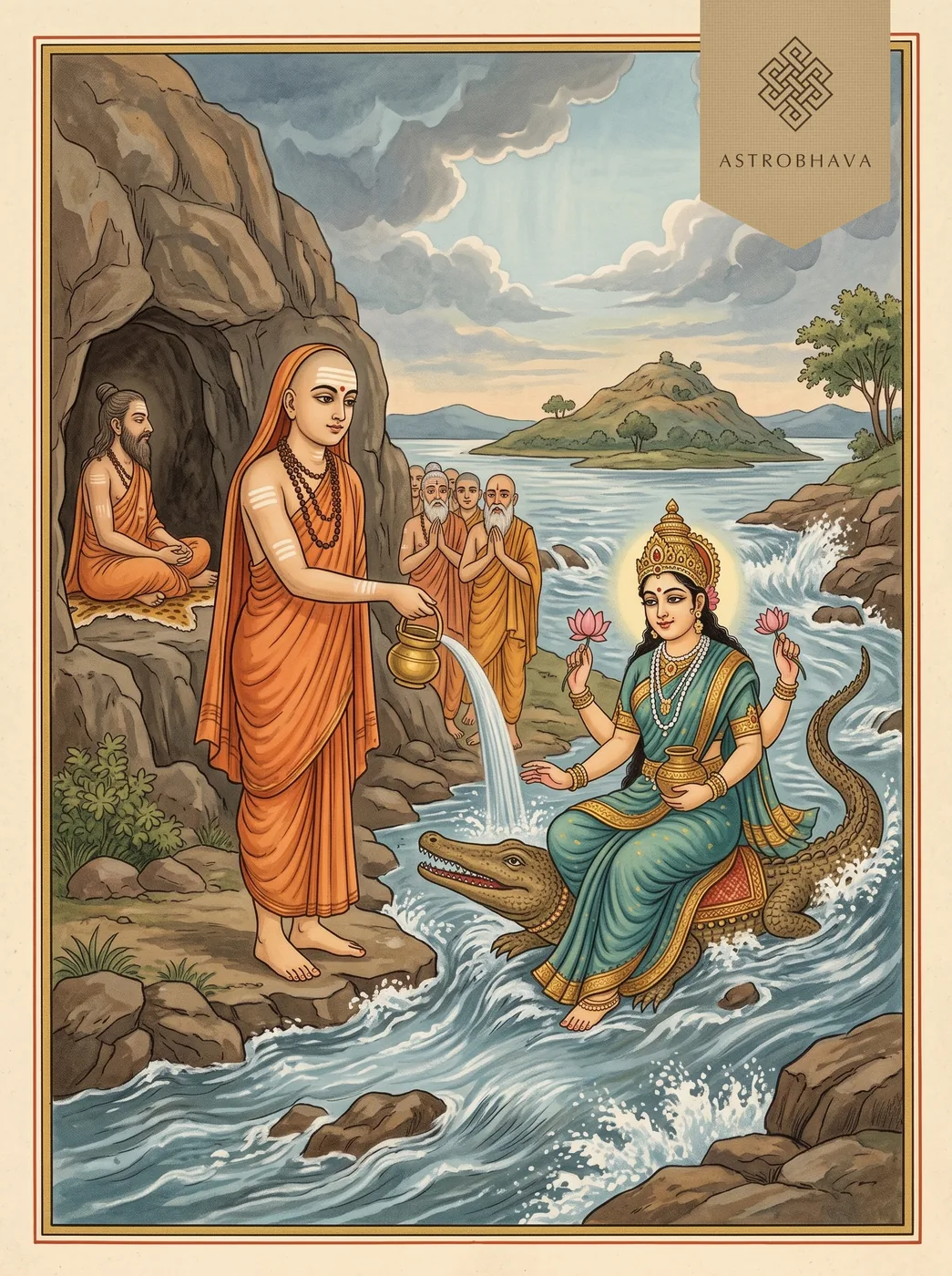
The Madhaviya Shankara Vijaya, the traditional verse biography of Shankara, says the young ascetic left Kaladi in Kerala and travelled north until he reached the Narmada at Omkareshwar, where Govinda Bhagavatpada lived in a cave on the riverbank. While the teacher sat absorbed in samadhi, the river rose in flood and threatened the cave. Shankara set his kamandalu, the ascetic's water pot, in the path of the water, and the flood is said to have drawn into the pot and subsided. Temple tradition at Omkareshwar holds that the Narmada Ashtakam was sung at that moment, as a plea to the river to spare the teacher. Other retellings attach the Nirvana Shatkam to the same meeting instead, as Shankara's answer when Govindapada asked who he was. The cave, now called Govindeshwar Gufa, is still kept below the Omkareshwar temple on the road to Koti Tirtha ghat. The hymn's own imagery reaches much further back. Its third verse alludes to an episode in the Reva Khanda of the Skanda Purana, in which Markandeya, swimming exhausted through the ocean of cosmic dissolution, meets the Narmada in the form of a woman. She brings him a boat with Shankara, that is Shiva, seated in it, so that neither the sage nor the river perishes when all else does.
The mantra, in six scripts
- सबिन्दुसिन्धुसुस्खलत्तरङ्गभङ्गरञ्जितं
- sabindusindhususkhalattaraṅgabhaṅgarañjitaṃ — graced by spray-filled, rippling, breaking waves
- द्विषत्सु
- dviṣatsu — even among those who hate
- पापजातजातकारिवारिसंयुतम्
- pāpajātajātakārivārisaṃyutam — with water that ends the mass of sins
- कृतान्तदूतकालभूतभीतिहारिवर्मदे
- kṛtāntadūtakālabhūtabhītihārivarmade — giver of armour against fear of death's envoys and time
- त्वदीयपादपङ्कजं
- tvadīyapādapaṅkajaṃ — your lotus feet
- नमामि
- namāmi — I bow to
- देवि
- devi — O Goddess
- नर्मदे
- narmade — O Narmada
Narmada Ashtakam lyrics in full
Eight verses, each ending on the refrain to the Narmada's lotus feet, followed by a verse that states the fruit of reciting the hymn.
All 9 verses, in Sanskrit, Tamil, Telugu, Kannada, Malayalam and English, each with its meaning. Choose a script:
Download the Narmada Ashtakam PDFAll 9 verses with their meanings, in Sanskrit. Free to print and keep.
सबिन्दुसिन्धुसुस्खलत्तरङ्गभङ्गरञ्जितं द्विषत्सु पापजातजातकारिवारिसंयुतम् ।
कृतान्तदूतकालभूतभीतिहारिवर्मदे त्वदीयपादपङ्कजं नमामि देवि नर्मदे ॥
ஸபிந்துஸிந்துஸுஸ்கலத்தரங்கபங்கரஞ்ஜிதம் த்விஷத்ஸு பாபஜாதஜாதகாரிவாரிஸம்யுதம் ।
க்ருதாந்ததூதகாலபூதபீதிஹாரிவர்மதே த்வதீயபாதபங்கஜம் நமாமி தேவி நர்மதே ॥
సబిన్దుసిన్ధుసుస్ఖలత్తరఙ్గభఙ్గరఞ్జితం ద్విషత్సు పాపజాతజాతకారివారిసంయుతమ్ ।
కృతాన్తదూతకాలభూతభీతిహారివర్మదే త్వదీయపాదపఙ్కజం నమామి దేవి నర్మదే ॥
ಸಬಿನ್ದುಸಿನ್ಧುಸುಸ್ಖಲತ್ತರಙ್ಗಭಙ್ಗರಞ್ಜಿತಂ ದ್ವಿಷತ್ಸು ಪಾಪಜಾತಜಾತಕಾರಿವಾರಿಸಂಯುತಮ್ ।
ಕೃತಾನ್ತದೂತಕಾಲಭೂತಭೀತಿಹಾರಿವರ್ಮದೇ ತ್ವದೀಯಪಾದಪಙ್ಕಜಂ ನಮಾಮಿ ದೇವಿ ನರ್ಮದೇ ॥
സബിന്ദുസിന്ധുസുസ്ഖലത്തരങ്ഗഭങ്ഗരഞ്ജിതം ദ്വിഷത്സു പാപജാതജാതകാരിവാരിസംയുതമ് ।
കൃതാന്തദൂതകാലഭൂതഭീതിഹാരിവര്മദേ ത്വദീയപാദപങ്കജം നമാമി ദേവി നര്മദേ ॥
sabindusindhususkhalattaraṅgabhaṅgarañjitaṃ dviṣatsu pāpajātajātakārivārisaṃyutam |
kṛtāntadūtakālabhūtabhītihārivarmade tvadīyapādapaṅkajaṃ namāmi devi narmade ||
O Goddess Narmada, your waters are adorned with rippling waves full of spray, and they wipe away the mass of sins, even of those who bear hatred. You give armour against the fear of death, of Yama's messengers and of time; I bow to your lotus feet.
त्वदम्बुलीनदीनमीनदिव्यसम्प्रदायकं कलौ मलौघभारहारिसर्वतीर्थनायकम् ।
सुमच्छकच्छनक्रचक्रवाकचक्रशर्मदे त्वदीयपादपङ्कजं नमामि देवि नर्मदे ॥
த்வதம்புலீநதீநமீநதிவ்யஸம்ப்ரதாயகம் கலௌ மலௌகபாரஹாரிஸர்வதீர்தநாயகம் ।
ஸுமச்சகச்சநக்ரசக்ரவாகசக்ரஶர்மதே த்வதீயபாதபங்கஜம் நமாமி தேவி நர்மதே ॥
త్వదమ్బులీనదీనమీనదివ్యసమ్ప్రదాయకం కలౌ మలౌఘభారహారిసర్వతీర్థనాయకమ్ ।
సుమచ్ఛకచ్ఛనక్రచక్రవాకచక్రశర్మదే త్వదీయపాదపఙ్కజం నమామి దేవి నర్మదే ॥
ತ್ವದಮ್ಬುಲೀನದೀನಮೀನದಿವ್ಯಸಮ್ಪ್ರದಾಯಕಂ ಕಲೌ ಮಲೌಘಭಾರಹಾರಿಸರ್ವತೀರ್ಥನಾಯಕಮ್ ।
ಸುಮಚ್ಛಕಚ್ಛನಕ್ರಚಕ್ರವಾಕಚಕ್ರಶರ್ಮದೇ ತ್ವದೀಯಪಾದಪಙ್ಕಜಂ ನಮಾಮಿ ದೇವಿ ನರ್ಮದೇ ॥
ത്വദമ്ബുലീനദീനമീനദിവ്യസമ്പ്രദായകം കലൌ മലൌഘഭാരഹാരിസര്വതീര്ഥനായകമ് ।
സുമച്ഛകച്ഛനക്രചക്രവാകചക്രശര്മദേ ത്വദീയപാദപങ്കജം നമാമി ദേവി നര്മദേ ॥
tvadambulīnadīnamīnadivyasampradāyakaṃ kalau malaughabhārahārisarvatīrthanāyakam |
sumacchakacchanakracakravākacakraśarmade tvadīyapādapaṅkajaṃ namāmi devi narmade ||
O Goddess Narmada, you grant a divine state even to the humble fish that live in your waters, and in the Kali age you lift the heavy load of impurity as the leader of all holy places. You give joy to the fish, tortoises, crocodiles and chakravaka birds; I bow to your lotus feet.
महागभीरनीरपूरपापधूतभूतलं ध्वनत्समस्तपातकारिदारितापदाचलम् ।
जगल्लये महाभये मृकण्डुसूनुहर्म्यदे त्वदीयपादपङ्कजं नमामि देवि नर्मदे ॥
மஹாகபீரநீரபூரபாபதூதபூதலம் த்வநத்ஸமஸ்தபாதகாரிதாரிதாபதாசலம் ।
ஜகல்லயே மஹாபயே ம்ருகண்டுஸூநுஹர்ம்யதே த்வதீயபாதபங்கஜம் நமாமி தேவி நர்மதே ॥
మహాగభీరనీరపూరపాపధూతభూతలం ధ్వనత్సమస్తపాతకారిదారితాపదాచలమ్ ।
జగల్లయే మహాభయే మృకణ్డుసూనుహర్మ్యదే త్వదీయపాదపఙ్కజం నమామి దేవి నర్మదే ॥
ಮಹಾಗಭೀರನೀರಪೂರಪಾಪಧೂತಭೂತಲಂ ಧ್ವನತ್ಸಮಸ್ತಪಾತಕಾರಿದಾರಿತಾಪದಾಚಲಮ್ ।
ಜಗಲ್ಲಯೇ ಮಹಾಭಯೇ ಮೃಕಣ್ಡುಸೂನುಹರ್ಮ್ಯದೇ ತ್ವದೀಯಪಾದಪಙ್ಕಜಂ ನಮಾಮಿ ದೇವಿ ನರ್ಮದೇ ॥
മഹാഗഭീരനീരപൂരപാപധൂതഭൂതലം ധ്വനത്സമസ്തപാതകാരിദാരിതാപദാചലമ് ।
ജഗല്ലയേ മഹാഭയേ മൃകണ്ഡുസൂനുഹര്മ്യദേ ത്വദീയപാദപങ്കജം നമാമി ദേവി നര്മദേ ॥
mahāgabhīranīrapūrapāpadhūtabhūtalaṃ dhvanatsamastapātakāridāritāpadācalam |
jagallaye mahābhaye mṛkaṇḍusūnuharmyade tvadīyapādapaṅkajaṃ namāmi devi narmade ||
O Goddess Narmada, your deep, abundant waters wash the sins from the earth, and your roaring current shatters every sin and every mountain of misfortune. In the great terror of the world's dissolution you gave shelter to the son of Mrikandu (Markandeya); I bow to your lotus feet.
गतं तदैव मे भयं त्वदम्बु वीक्षितं यदा मृकण्डुसूनुशौनकासुरारिसेवितं सदा ।
पुनर्भवाब्धिजन्मजं भवाब्धिदुःखवर्मदे त्वदीयपादपङ्कजं नमामि देवि नर्मदे ॥
கதம் ததைவ மே பயம் த்வதம்பு வீக்ஷிதம் யதா ம்ருகண்டுஸூநுஶௌநகாஸுராரிஸேவிதம் ஸதா ।
புநர்பவாப்திஜந்மஜம் பவாப்திதுஃகவர்மதே த்வதீயபாதபங்கஜம் நமாமி தேவி நர்மதே ॥
గతం తదైవ మే భయం త్వదమ్బు వీక్షితం యదా మృకణ్డుసూనుశౌనకాసురారిసేవితం సదా ।
పునర్భవాబ్ధిజన్మజం భవాబ్ధిదుఃఖవర్మదే త్వదీయపాదపఙ్కజం నమామి దేవి నర్మదే ॥
ಗತಂ ತದೈವ ಮೇ ಭಯಂ ತ್ವದಮ್ಬು ವೀಕ್ಷಿತಂ ಯದಾ ಮೃಕಣ್ಡುಸೂನುಶೌನಕಾಸುರಾರಿಸೇವಿತಂ ಸದಾ ।
ಪುನರ್ಭವಾಬ್ಧಿಜನ್ಮಜಂ ಭವಾಬ್ಧಿದುಃಖವರ್ಮದೇ ತ್ವದೀಯಪಾದಪಙ್ಕಜಂ ನಮಾಮಿ ದೇವಿ ನರ್ಮದೇ ॥
ഗതം തദൈവ മേ ഭയം ത്വദമ്ബു വീക്ഷിതം യദാ മൃകണ്ഡുസൂനുശൌനകാസുരാരിസേവിതം സദാ ।
പുനര്ഭവാബ്ധിജന്മജം ഭവാബ്ധിദുഃഖവര്മദേ ത്വദീയപാദപങ്കജം നമാമി ദേവി നര്മദേ ॥
gataṃ tadaiva me bhayaṃ tvadambu vīkṣitaṃ yadā mṛkaṇḍusūnuśaunakāsurārisevitaṃ sadā |
punarbhavābdhijanmajaṃ bhavābdhiduḥkhavarmade tvadīyapādapaṅkajaṃ namāmi devi narmade ||
O Goddess Narmada, my fear left me the very moment I saw your waters, which Markandeya, Shaunaka and the gods always worship. You are armour against rebirth and against the sorrows of the ocean of worldly life; I bow to your lotus feet.
अलक्ष्यलक्षकिन्नरामरासुरादिपूजितं सुलक्षनीरतीरधीरपक्षिलक्षकूजितम् ।
वसिष्ठशिष्टपिप्पलादिकर्दमादिशर्मदे त्वदीयपादपङ्कजं नमामि देवि नर्मदे ॥
அலக்ஷ்யலக்ஷகிந்நராமராஸுராதிபூஜிதம் ஸுலக்ஷநீரதீரதீரபக்ஷிலக்ஷகூஜிதம் ।
வஸிஷ்டஶிஷ்டபிப்பலாதிகர்தமாதிஶர்மதே த்வதீயபாதபங்கஜம் நமாமி தேவி நர்மதே ॥
అలక్ష్యలక్షకిన్నరామరాసురాదిపూజితం సులక్షనీరతీరధీరపక్షిలక్షకూజితమ్ ।
వసిష్ఠశిష్టపిప్పలాదికర్దమాదిశర్మదే త్వదీయపాదపఙ్కజం నమామి దేవి నర్మదే ॥
ಅಲಕ್ಷ್ಯಲಕ್ಷಕಿನ್ನರಾಮರಾಸುರಾದಿಪೂಜಿತಂ ಸುಲಕ್ಷನೀರತೀರಧೀರಪಕ್ಷಿಲಕ್ಷಕೂಜಿತಮ್ ।
ವಸಿಷ್ಠಶಿಷ್ಟಪಿಪ್ಪಲಾದಿಕರ್ದಮಾದಿಶರ್ಮದೇ ತ್ವದೀಯಪಾದಪಙ್ಕಜಂ ನಮಾಮಿ ದೇವಿ ನರ್ಮದೇ ॥
അലക്ഷ്യലക്ഷകിന്നരാമരാസുരാദിപൂജിതം സുലക്ഷനീരതീരധീരപക്ഷിലക്ഷകൂജിതമ് ।
വസിഷ്ഠശിഷ്ടപിപ്പലാദികര്ദമാദിശര്മദേ ത്വദീയപാദപങ്കജം നമാമി ദേവി നര്മദേ ॥
alakṣyalakṣakinnarāmarāsurādipūjitaṃ sulakṣanīratīradhīrapakṣilakṣakūjitam |
vasiṣṭhaśiṣṭapippalādikardamādiśarmade tvadīyapādapaṅkajaṃ namāmi devi narmade ||
O Goddess Narmada, you are worshipped by countless unseen Kinnaras, gods and asuras, and on your clear banks hundreds of thousands of birds sing without fear. You bring blessing to Vasishtha, Pippalada, Kardama and other noble sages; I bow to your lotus feet.
सनत्कुमारनाचिकेतकश्यपात्रिषट्पदैः धृतं स्वकीयमानसेषु नारदादिषट्पदैः ।
रवीन्दुरन्तिदेवदेवराजकर्मशर्मदे त्वदीयपादपङ्कजं नमामि देवि नर्मदे ॥
ஸநத்குமாரநாசிகேதகஶ்யபாத்ரிஷட்பதைஃ த்ருதம் ஸ்வகீயமாநஸேஷு நாரதாதிஷட்பதைஃ ।
ரவீந்துரந்திதேவதேவராஜகர்மஶர்மதே த்வதீயபாதபங்கஜம் நமாமி தேவி நர்மதே ॥
సనత్కుమారనాచికేతకశ్యపాత్రిషట్పదైః ధృతం స్వకీయమానసేషు నారదాదిషట్పదైః ।
రవీన్దురన్తిదేవదేవరాజకర్మశర్మదే త్వదీయపాదపఙ్కజం నమామి దేవి నర్మదే ॥
ಸನತ್ಕುಮಾರನಾಚಿಕೇತಕಶ್ಯಪಾತ್ರಿಷಟ್ಪದೈಃ ಧೃತಂ ಸ್ವಕೀಯಮಾನಸೇಷು ನಾರದಾದಿಷಟ್ಪದೈಃ ।
ರವೀನ್ದುರನ್ತಿದೇವದೇವರಾಜಕರ್ಮಶರ್ಮದೇ ತ್ವದೀಯಪಾದಪಙ್ಕಜಂ ನಮಾಮಿ ದೇವಿ ನರ್ಮದೇ ॥
സനത്കുമാരനാചികേതകശ്യപാത്രിഷട്പദൈഃ ധൃതം സ്വകീയമാനസേഷു നാരദാദിഷട്പദൈഃ ।
രവീന്ദുരന്തിദേവദേവരാജകര്മശര്മദേ ത്വദീയപാദപങ്കജം നമാമി ദേവി നര്മദേ ॥
sanatkumāranāciketakaśyapātriṣaṭpadaiḥ dhṛtaṃ svakīyamānaseṣu nāradādiṣaṭpadaiḥ |
ravīndurantidevadevarājakarmaśarmade tvadīyapādapaṅkajaṃ namāmi devi narmade ||
O Goddess Narmada, Sanatkumara, Nachiketa, Kashyapa, Atri, Narada and others hold your feet in their hearts as bees hold to a lotus. You make the deeds of the Sun, the Moon, Rantideva and Indra, king of the gods, bear fruit; I bow to your lotus feet.
अलक्षलक्षलक्षपापलक्षसारसायुधं ततस्तु जीवजन्तुतन्तुभुक्तिमुक्तिदायकम् ।
विरिञ्चिविष्णुशंकरस्वकीयधामवर्मदे त्वदीयपादपङ्कजं नमामि देवि नर्मदे ॥
அலக்ஷலக்ஷலக்ஷபாபலக்ஷஸாரஸாயுதம் ததஸ்து ஜீவஜந்துதந்துபுக்திமுக்திதாயகம் ।
விரிஞ்சிவிஷ்ணுஶம்கரஸ்வகீயதாமவர்மதே த்வதீயபாதபங்கஜம் நமாமி தேவி நர்மதே ॥
అలక్షలక్షలక్షపాపలక్షసారసాయుధం తతస్తు జీవజన్తుతన్తుభుక్తిముక్తిదాయకమ్ ।
విరిఞ్చివిష్ణుశంకరస్వకీయధామవర్మదే త్వదీయపాదపఙ్కజం నమామి దేవి నర్మదే ॥
ಅಲಕ್ಷಲಕ್ಷಲಕ್ಷಪಾಪಲಕ್ಷಸಾರಸಾಯುಧಂ ತತಸ್ತು ಜೀವಜನ್ತುತನ್ತುಭುಕ್ತಿಮುಕ್ತಿದಾಯಕಮ್ ।
ವಿರಿಞ್ಚಿವಿಷ್ಣುಶಂಕರಸ್ವಕೀಯಧಾಮವರ್ಮದೇ ತ್ವದೀಯಪಾದಪಙ್ಕಜಂ ನಮಾಮಿ ದೇವಿ ನರ್ಮದೇ ॥
അലക്ഷലക്ഷലക്ഷപാപലക്ഷസാരസായുധം തതസ്തു ജീവജന്തുതന്തുഭുക്തിമുക്തിദായകമ് ।
വിരിഞ്ചിവിഷ്ണുശംകരസ്വകീയധാമവര്മദേ ത്വദീയപാദപങ്കജം നമാമി ദേവി നര്മദേ ॥
alakṣalakṣalakṣapāpalakṣasārasāyudhaṃ tatastu jīvajantutantubhuktimuktidāyakam |
viriñciviṣṇuśaṃkarasvakīyadhāmavarmade tvadīyapādapaṅkajaṃ namāmi devi narmade ||
O Goddess Narmada, you are the weapon that destroys countless sins, seen and unseen, and you grant worldly enjoyment and liberation to every living creature. You protect the very abodes of Brahma, Vishnu and Shiva; I bow to your lotus feet.
अहो धृतं स्वनं श्रुतं महेशकेशजातटे किरातसूतबाडबेषु पण्डिते शठे नटे ।
दुरन्तपापतापहारि सर्वजन्तुशर्मदे त्वदीयपादपङ्कजं नमामि देवि नर्मदे ॥
அஹோ த்ருதம் ஸ்வநம் ஶ்ருதம் மஹேஶகேஶஜாதடே கிராதஸூதபாடபேஷு பண்டிதே ஶடே நடே ।
துரந்தபாபதாபஹாரி ஸர்வஜந்துஶர்மதே த்வதீயபாதபங்கஜம் நமாமி தேவி நர்மதே ॥
అహో ధృతం స్వనం శ్రుతం మహేశకేశజాతటే కిరాతసూతబాడబేషు పణ్డితే శఠే నటే ।
దురన్తపాపతాపహారి సర్వజన్తుశర్మదే త్వదీయపాదపఙ్కజం నమామి దేవి నర్మదే ॥
ಅಹೋ ಧೃತಂ ಸ್ವನಂ ಶ್ರುತಂ ಮಹೇಶಕೇಶಜಾತಟೇ ಕಿರಾತಸೂತಬಾಡಬೇಷು ಪಣ್ಡಿತೇ ಶಠೇ ನಟೇ ।
ದುರನ್ತಪಾಪತಾಪಹಾರಿ ಸರ್ವಜನ್ತುಶರ್ಮದೇ ತ್ವದೀಯಪಾದಪಙ್ಕಜಂ ನಮಾಮಿ ದೇವಿ ನರ್ಮದೇ ॥
അഹോ ധൃതം സ്വനം ശ്രുതം മഹേശകേശജാതടേ കിരാതസൂതബാഡബേഷു പണ്ഡിതേ ശഠേ നടേ ।
ദുരന്തപാപതാപഹാരി സര്വജന്തുശര്മദേ ത്വദീയപാദപങ്കജം നമാമി ദേവി നര്മദേ ॥
aho dhṛtaṃ svanaṃ śrutaṃ maheśakeśajātaṭe kirātasūtabāḍabeṣu paṇḍite śaṭhe naṭe |
durantapāpatāpahāri sarvajantuśarmade tvadīyapādapaṅkajaṃ namāmi devi narmade ||
O Goddess Narmada, born from the matted locks of Shiva, your sound is heard on your banks by hunters, charioteers, the lowly, the learned, the wicked and the actor alike. You remove sin and suffering that are hard to end and bring good to all beings; I bow to your lotus feet.
इदं तु नर्मदाष्टकं त्रिकालमेव ये सदा पठन्ति ते निरन्तरं न यान्ति दुर्गतिं कदा ।
सुलभ्यदेहदुर्लभं महेशधामगौरवं पुनर्भवा नरा न वै विलोकयन्ति रौरवम् ॥
இதம் து நர்மதாஷ்டகம் த்ரிகாலமேவ யே ஸதா படந்தி தே நிரந்தரம் ந யாந்தி துர்கதிம் கதா ।
ஸுலப்யதேஹதுர்லபம் மஹேஶதாமகௌரவம் புநர்பவா நரா ந வை விலோகயந்தி ரௌரவம் ॥
ఇదం తు నర్మదాష్టకం త్రికాలమేవ యే సదా పఠన్తి తే నిరన్తరం న యాన్తి దుర్గతిం కదా ।
సులభ్యదేహదుర్లభం మహేశధామగౌరవం పునర్భవా నరా న వై విలోకయన్తి రౌరవమ్ ॥
ಇದಂ ತು ನರ್ಮದಾಷ್ಟಕಂ ತ್ರಿಕಾಲಮೇವ ಯೇ ಸದಾ ಪಠನ್ತಿ ತೇ ನಿರನ್ತರಂ ನ ಯಾನ್ತಿ ದುರ್ಗತಿಂ ಕದಾ ।
ಸುಲಭ್ಯದೇಹದುರ್ಲಭಂ ಮಹೇಶಧಾಮಗೌರವಂ ಪುನರ್ಭವಾ ನರಾ ನ ವೈ ವಿಲೋಕಯನ್ತಿ ರೌರವಮ್ ॥
ഇദം തു നര്മദാഷ്ടകം ത്രികാലമേവ യേ സദാ പഠന്തി തേ നിരന്തരം ന യാന്തി ദുര്ഗതിം കദാ ।
സുലഭ്യദേഹദുര്ലഭം മഹേശധാമഗൌരവം പുനര്ഭവാ നരാ ന വൈ വിലോകയന്തി രൌരവമ് ॥
idaṃ tu narmadāṣṭakaṃ trikālameva ye sadā paṭhanti te nirantaraṃ na yānti durgatiṃ kadā |
sulabhyadehadurlabhaṃ maheśadhāmagauravaṃ punarbhavā narā na vai vilokayanti rauravam ||
The verse says that those who always recite this Narmada Ashtakam at the three times of the day never fall into misfortune. It says they gain the glory of Shiva's abode, so rare for an embodied being, are not born again, and never see the hell called Raurava.
The syllable people get wrong
मृकण्डु (mṛkaṇḍu), the name of Markandeya's father in verses 3 and 4, is often flattened to 'mur-kan-du' with a dental 'nd'. The first syllable carries the vowel ṛ, said 'mri' in the north or 'mru' in the south, and ṇḍ is retroflex, with the tongue curled back to the roof of the mouth: 'mri-KUN-du'.
When the Narmada Ashtakam is chanted
Weekday. Friday
Festival. Narmada Jayanti (Magha Shukla Saptami)
Questions
Have your chart read before you decide
Chanting is yours to do, and free. But which deity your situation calls for — and whether a mantra alone is the right response — depends on your chart. Sometimes it is; sometimes it is not.
- Over 30 years in the Guru–Sishya Parampara, from the age of five
- He reads every chart himself — 60 minutes, one to one, never delegated
- Charts are read only between sunrise and sunset, following tradition
