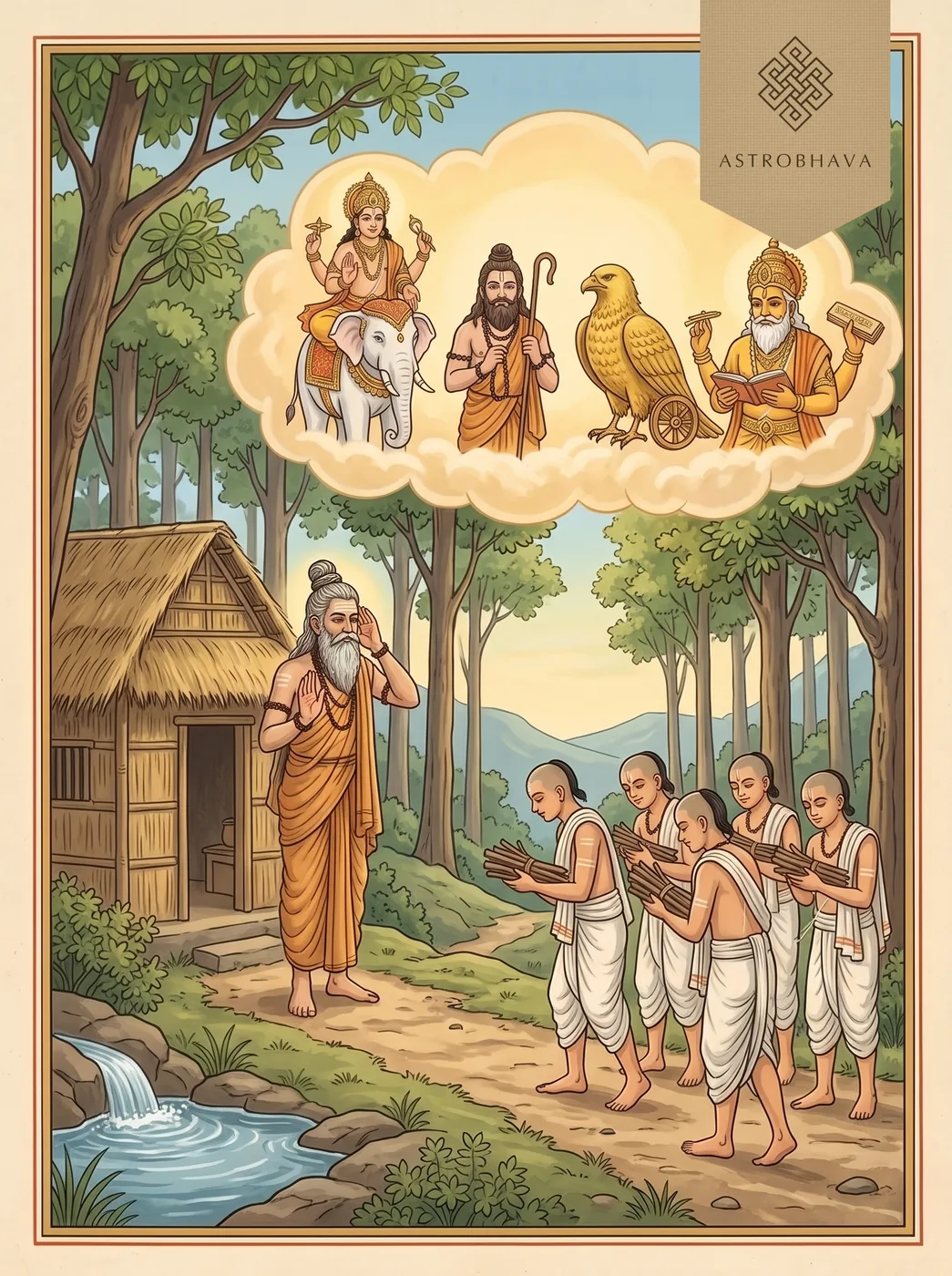
Om Bhadram Karnebhih
ॐ भद्रं कर्णेभिः शृणुयाम देवा भद्रं पश्येमाक्षभिर्यजत्राः । स्थिरैरङ्गैस्तुष्टुवांसस्तनूभिर्व्यशेम देवहितं यदायुः ॥Also known as Svasti Na Indro
In Devanagari, Tamil, Telugu, Kannada, Malayalam and English — with the meaning of every word, and the one syllable most people pronounce wrongly.
 The Shanthi Homam, performed for youBook →
What the Om Bhadram Karnebhih is
Om Bhadram Karnebhih is the peace invocation that opens the Mundaka, Prashna and Mandukya Upanishads, the three principal Upanishads of the Atharvaveda. Its two verses are far older than those Upanishads: both come from hymn 89 of the first book of the Rigveda, a hymn of the seer Gotama Rahugana to the Vishvedevas, the gods taken together. The first verse is Rigveda 1.89.8 and the second, beginning svasti na indro, is 1.89.6, so the chant takes verse 8 first and then steps back to verse 6. The first verse is a request for the senses and the body: that the ears hear only what is auspicious, that the eyes see it, and that with steady limbs the speakers may praise the gods through the whole span of life the gods have set. The second calls on four deities in turn for svasti, well-being: Indra of wide fame, Pushan who knows all, Tarkshya of the unharmed wheel-rim, and Brihaspati. The threefold Om shantih closes it. The text is printed here without Vedic accent marks; chanting with the svaras is learned from a teacher.
From a Rigveda hymn to the pupil's doorway
In the Rigveda the two verses sit inside a ten-verse hymn whose first line asks that auspicious intentions come to the singers from every side. The old metre lists give most of the hymn in jagati, mark verse 6 as virat-sthana and set verses 8 to 10 in trishtubh. The verse after bhadram karnebhih explains its phrase about the god-given span of life: a hundred autumns lie before us, O gods, it says, and it asks that the singers not be cut off midway, while sons in their turn become fathers. The medieval commentator Sayana records ritual uses for verse 8, among them its recitation in the Saumya charu offering when the performer cannot see their reflection in the ghee. The Atharvaveda teachers lifted the pair out of the sacrifice and set it at the doorway of study. The Prashna Upanishad then opens on six seekers, among them Sukesha Bharadvaja and Satyakama Shaibya, who come to the sage Pippalada with fuel in their hands, the sign of pupils asking to be taught. Pippalada sends them to live one more year in austerity, chastity and faith before they may question him. A prayer for ears that hear only what is good fits that setting, where everything is received by listening to the teacher. The Mundaka opens in the same spirit, with the householder Shaunaka approaching the sage Angiras.
The mantra, in six scripts
- ॐ
- oṃ — Om, the sacred syllable
- भद्रं
- bhadraṃ — what is auspicious
- कर्णेभिः
- karṇebhiḥ — with our ears
- शृणुयाम
- śṛṇuyāma — may we hear
- देवा
- devā — O gods
- भद्रं
- bhadraṃ — what is auspicious
- पश्येमाक्षभिर्यजत्राः
- paśyemākṣabhiryajatrāḥ — may we see with our eyes, O worshipful ones
- स्थिरैरङ्गैस्तुष्टुवांसस्तनूभिर्व्यशेम
- sthirairaṅgaistuṣṭuvāṃsastanūbhirvyaśema — praising with steady limbs and bodies, may we attain
- देवहितं
- devahitaṃ — set by the gods
- यदायुः
- yadāyuḥ — the life span that is
- स्वस्ति
- svasti — well-being
- न
- na — to us
- इन्द्रो
- indro — Indra
- वृद्धश्रवाः
- vṛddhaśravāḥ — of great fame
- स्वस्ति
- svasti — well-being
- नः
- naḥ — to us
- पूषा
- pūṣā — Pushan
- विश्ववेदाः
- viśvavedāḥ — who knows all
- स्वस्ति
- svasti — well-being
- नस्तार्क्ष्यो
- nastārkṣyo — to us, Tarkshya
- अरिष्टनेमिः
- ariṣṭanemiḥ — whose wheel-rim is unharmed
- स्वस्ति
- svasti — well-being
- नो
- no — to us
- बृहस्पतिर्दधातु
- bṛhaspatirdadhātu — may Brihaspati grant
- ॐ
- oṃ — Om
- शान्तिः
- śāntiḥ — peace
- शान्तिः
- śāntiḥ — peace
- शान्तिः
- śāntiḥ — peace
Om Bhadram Karnebhih lyrics in full
Rigveda 1.89.8 and 1.89.6, in the order they are chanted before the Mundaka, Prashna and Mandukya Upanishads, closed by Om shantih shantih shantih.
All 3 verses, in Sanskrit, Tamil, Telugu, Kannada, Malayalam and English, each with its meaning. Choose a script:
Download the Om Bhadram Karnebhih PDFAll 3 verses with their meanings, in Sanskrit. Free to print and keep.
ॐ भद्रं कर्णेभिः शृणुयाम देवा भद्रं पश्येमाक्षभिर्यजत्राः ।
स्थिरैरङ्गैस्तुष्टुवांसस्तनूभिर्व्यशेम देवहितं यदायुः ॥
ௐ பத்ரம் கர்ணேபிஃ ஶ்ருணுயாம தேவா பத்ரம் பஶ்யேமாக்ஷபிர்யஜத்ராஃ ।
ஸ்திரைரங்கைஸ்துஷ்டுவாம்ஸஸ்தநூபிர்வ்யஶேம தேவஹிதம் யதாயுஃ ॥
ఓం భద్రం కర్ణేభిః శృణుయామ దేవా భద్రం పశ్యేమాక్షభిర్యజత్రాః ।
స్థిరైరఙ్గైస్తుష్టువాంసస్తనూభిర్వ్యశేమ దేవహితం యదాయుః ॥
ಓಂ ಭದ್ರಂ ಕರ್ಣೇಭಿಃ ಶೃಣುಯಾಮ ದೇವಾ ಭದ್ರಂ ಪಶ್ಯೇಮಾಕ್ಷಭಿರ್ಯಜತ್ರಾಃ ।
ಸ್ಥಿರೈರಙ್ಗೈಸ್ತುಷ್ಟುವಾಂಸಸ್ತನೂಭಿರ್ವ್ಯಶೇಮ ದೇವಹಿತಂ ಯದಾಯುಃ ॥
ഓം ഭദ്രം കര്ണേഭിഃ ശൃണുയാമ ദേവാ ഭദ്രം പശ്യേമാക്ഷഭിര്യജത്രാഃ ।
സ്ഥിരൈരങ്ഗൈസ്തുഷ്ടുവാംസസ്തനൂഭിര്വ്യശേമ ദേവഹിതം യദായുഃ ॥
oṃ bhadraṃ karṇebhiḥ śṛṇuyāma devā bhadraṃ paśyemākṣabhiryajatrāḥ |
sthirairaṅgaistuṣṭuvāṃsastanūbhirvyaśema devahitaṃ yadāyuḥ ||
O gods, may we hear with our ears what is auspicious; O you who are worthy of worship, may we see with our eyes what is auspicious. Praising you with steady limbs and bodies, may we live out the span of life the gods have granted.
स्वस्ति न इन्द्रो वृद्धश्रवाः स्वस्ति नः पूषा विश्ववेदाः ।
स्वस्ति नस्तार्क्ष्यो अरिष्टनेमिः स्वस्ति नो बृहस्पतिर्दधातु ॥
ஸ்வஸ்தி ந இந்த்ரோ வ்ருத்தஶ்ரவாஃ ஸ்வஸ்தி நஃ பூஷா விஶ்வவேதாஃ ।
ஸ்வஸ்தி நஸ்தார்க்ஷ்யோ அரிஷ்டநேமிஃ ஸ்வஸ்தி நோ ப்ருஹஸ்பதிர்ததாது ॥
స్వస్తి న ఇన్ద్రో వృద్ధశ్రవాః స్వస్తి నః పూషా విశ్వవేదాః ।
స్వస్తి నస్తార్క్ష్యో అరిష్టనేమిః స్వస్తి నో బృహస్పతిర్దధాతు ॥
ಸ್ವಸ್ತಿ ನ ಇನ್ದ್ರೋ ವೃದ್ಧಶ್ರವಾಃ ಸ್ವಸ್ತಿ ನಃ ಪೂಷಾ ವಿಶ್ವವೇದಾಃ ।
ಸ್ವಸ್ತಿ ನಸ್ತಾರ್ಕ್ಷ್ಯೋ ಅರಿಷ್ಟನೇಮಿಃ ಸ್ವಸ್ತಿ ನೋ ಬೃಹಸ್ಪತಿರ್ದಧಾತು ॥
സ്വസ്തി ന ഇന്ദ്രോ വൃദ്ധശ്രവാഃ സ്വസ്തി നഃ പൂഷാ വിശ്വവേദാഃ ।
സ്വസ്തി നസ്താര്ക്ഷ്യോ അരിഷ്ടനേമിഃ സ്വസ്തി നോ ബൃഹസ്പതിര്ദധാതു ॥
svasti na indro vṛddhaśravāḥ svasti naḥ pūṣā viśvavedāḥ |
svasti nastārkṣyo ariṣṭanemiḥ svasti no bṛhaspatirdadhātu ||
May Indra of great fame grant us well-being; may Pushan, who knows all, grant us well-being. May Tarkshya, whose wheel-rim is never harmed, grant us well-being; may Brihaspati grant us well-being.
ॐ शान्तिः शान्तिः शान्तिः ॥
ௐ ஶாந்திஃ ஶாந்திஃ ஶாந்திஃ ॥
ఓం శాన్తిః శాన్తిః శాన్తిః ॥
ಓಂ ಶಾನ್ತಿಃ ಶಾನ್ತಿಃ ಶಾನ್ತಿಃ ॥
ഓം ശാന്തിഃ ശാന്തിഃ ശാന്തിഃ ॥
oṃ śāntiḥ śāntiḥ śāntiḥ ||
Om, peace, peace, peace.
The syllable people get wrong
Inside the long word sthirairaṅgaistuṣṭuvāṃsastanūbhir sits tuṣṭuvāṃsas, 'praising', which has two retroflex sounds, ṣ and ṭ, made with the tongue curled back; many readers flatten it to a dental 'tustuvamsas'. Say tush-tu-VAAM-sas, keeping the ṣṭ cluster together.
Questions
Have your chart read before you decide
Chanting is yours to do, and free. But which deity your situation calls for — and whether a mantra alone is the right response — depends on your chart. Sometimes it is; sometimes it is not.
- Over 30 years in the Guru–Sishya Parampara, from the age of five
- He reads every chart himself — 60 minutes, one to one, never delegated
- Charts are read only between sunrise and sunset, following tradition
