Pitru Stotra
अर्चितानाममूर्तानां पितॄणां दीप्ततेजसाम् । नमस्यामि सदा तेषां ध्यानिनां दिव्यचक्षुषाम् ॥Also known as Pitru Stotram
In Devanagari, Tamil, Telugu, Kannada, Malayalam and English — with the meaning of every word, and the one syllable most people pronounce wrongly.
 The Pitra Dosha Nivaran Homam, performed for youBook →
What the Pitru Stotra is
The Pitru Stotra of Ruchi, also printed as the Pitru Stotram, is the hymn in which Ruchi bows to the Pitris, the ancestors, in chapter 94 (verses 3 to 13) of the Markandeya Purana. It has eleven verses in the shloka metre. The first verse salutes the ancestors themselves: radiant, absorbed in meditation, with divine sight. Verses 2 to 5 make them the leaders of Indra and the gods, of Daksha, Marichi, the seven sages and Manu, of the sun, moon, stars, planets, wind, fire, sky, heaven and earth. Verse 6 names Kashyapa, Soma and Varuna; verse 7 the seven groups of ancestors in the seven worlds and Brahma. Verses 8 to 10 turn to Soma and Agni, since the universe, the hymn says, is made of fire and Soma. The last verse asks the receivers of svadha to be pleased. The Purana's own text opens 'amurtanam ca murtanam' (formless and embodied); the printed form opens 'architanam amurtanam' (worshipped and formless), as the Garuda Purana does.
Ruchi, the ascetic told to marry
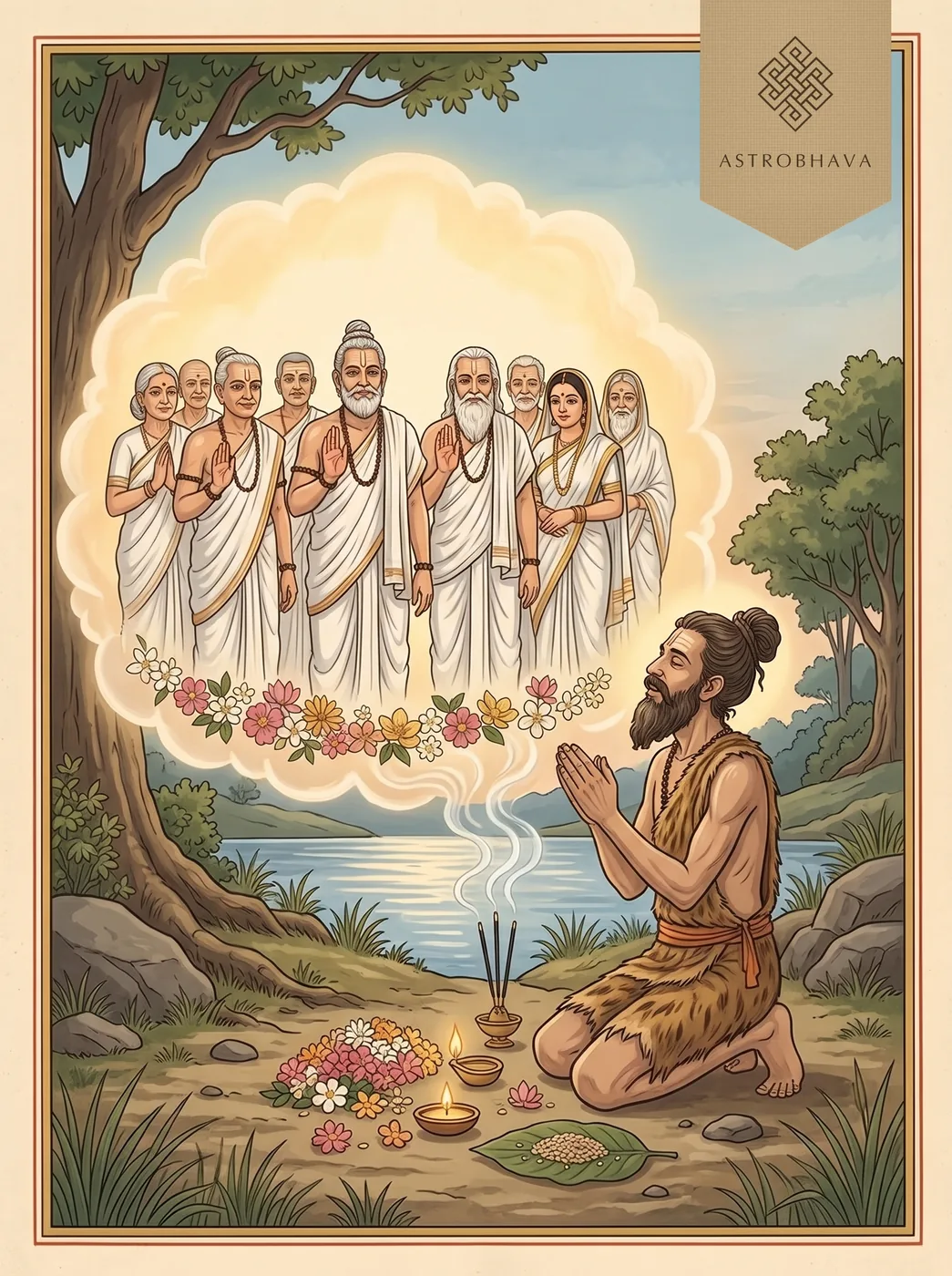
The sage Markandeya tells the story across chapters 92 to 95, the account of the thirteenth Manu's age. Ruchi, a Prajapati, wandered the earth without a sacred fire, a house or a wife, eating once a day and sleeping wherever sunset found him. His own ancestors appeared and asked why he had not married: a householder, they said, repays the gods by uttering svaha and the ancestors by uttering svadha. Ruchi answered that possessions only bind. They replied that leaving prescribed duty undone binds just as surely, warned that both they and he would fall, and vanished like lamps struck by wind. Unable to find a bride, Ruchi spent a hundred divine years in austerity until Brahma appeared and told him to worship the Pitris. He praised them first with a longer hymn; as he did so a mass of light rose and filled the sky, and kneeling on the ground he sang these eleven verses. The ancestors stood before him among the flowers and scents he had offered and granted his wish for a wife. The next chapter relates that the apsara Pramlocha rose from a river with her daughter Malini; Ruchi married her on the riverbank, and their son became Raucya, the Manu named after his father.
The mantra, in six scripts
- अर्चितानाममूर्तानां
- arcitānāmamūrtānāṃ — of the worshipped, the formless
- पितॄणां
- pitṝṇāṃ — of the ancestors
- दीप्ततेजसाम्
- dīptatejasām — of blazing radiance
- नमस्यामि
- namasyāmi — I bow
- सदा
- sadā — always
- तेषां
- teṣāṃ — to them
- ध्यानिनां
- dhyānināṃ — the meditating ones
- दिव्यचक्षुषाम्
- divyacakṣuṣām — of divine sight
Pitru Stotra lyrics in full
The eleven verses Ruchi sings in chapter 94 of the Markandeya Purana.
All 11 verses, in Sanskrit, Tamil, Telugu, Kannada, Malayalam and English, each with its meaning. Choose a script:
Download the Pitru Stotra PDFAll 11 verses with their meanings, in Sanskrit. Free to print and keep.
अर्चितानाममूर्तानां पितॄणां दीप्ततेजसाम् ।
नमस्यामि सदा तेषां ध्यानिनां दिव्यचक्षुषाम् ॥
அர்சிதாநாமமூர்தாநாம் பித்ரூணாம் தீப்ததேஜஸாம் ।
நமஸ்யாமி ஸதா தேஷாம் த்யாநிநாம் திவ்யசக்ஷுஷாம் ॥
అర్చితానామమూర్తానాం పితౄణాం దీప్తతేజసామ్ ।
నమస్యామి సదా తేషాం ధ్యానినాం దివ్యచక్షుషామ్ ॥
ಅರ್ಚಿತಾನಾಮಮೂರ್ತಾನಾಂ ಪಿತೄಣಾಂ ದೀಪ್ತತೇಜಸಾಮ್ ।
ನಮಸ್ಯಾಮಿ ಸದಾ ತೇಷಾಂ ಧ್ಯಾನಿನಾಂ ದಿವ್ಯಚಕ್ಷುಷಾಮ್ ॥
അര്ചിതാനാമമൂര്താനാം പിതൄണാം ദീപ്തതേജസാമ് ।
നമസ്യാമി സദാ തേഷാം ധ്യാനിനാം ദിവ്യചക്ഷുഷാമ് ॥
arcitānāmamūrtānāṃ pitṝṇāṃ dīptatejasām |
namasyāmi sadā teṣāṃ dhyānināṃ divyacakṣuṣām ||
Ruchi said: I always bow to the ancestors (Pitris), who are worshipped, who are without bodily form, and who shine with blazing radiance. I bow to them, the ones absorbed in meditation, whose sight is divine.
इन्द्रादीनां च नेतारो दक्षमारीचयोस्तथा ।
सप्तर्षीणां तथान्येषां तान्नमस्यामि कामदान् ॥
இந்த்ராதீநாம் ச நேதாரோ தக்ஷமாரீசயோஸ்ததா ।
ஸப்தர்ஷீணாம் ததாந்யேஷாம் தாந்நமஸ்யாமி காமதாந் ॥
ఇన్ద్రాదీనాం చ నేతారో దక్షమారీచయోస్తథా ।
సప్తర్షీణాం తథాన్యేషాం తాన్నమస్యామి కామదాన్ ॥
ಇನ್ದ್ರಾದೀನಾಂ ಚ ನೇತಾರೋ ದಕ್ಷಮಾರೀಚಯೋಸ್ತಥಾ ।
ಸಪ್ತರ್ಷೀಣಾಂ ತಥಾನ್ಯೇಷಾಂ ತಾನ್ನಮಸ್ಯಾಮಿ ಕಾಮದಾನ್ ॥
ഇന്ദ്രാദീനാം ച നേതാരോ ദക്ഷമാരീചയോസ്തഥാ ।
സപ്തര്ഷീണാം തഥാന്യേഷാം താന്നമസ്യാമി കാമദാന് ॥
indrādīnāṃ ca netāro dakṣamārīcayostathā |
saptarṣīṇāṃ tathānyeṣāṃ tānnamasyāmi kāmadān ||
They are the leaders of Indra and the other gods, of Daksha and Marichi, of the seven sages and of others as well. I bow to those ancestors who grant what is wished for.
मन्वादीनां मुनीन्द्राणां सूर्याचन्द्रमसोस्तथा ।
तान्नमस्याम्यहं सर्वान्पितॄनप्सूदधावपि ॥
மந்வாதீநாம் முநீந்த்ராணாம் ஸூர்யாசந்த்ரமஸோஸ்ததா ।
தாந்நமஸ்யாம்யஹம் ஸர்வாந்பித்ரூநப்ஸூததாவபி ॥
మన్వాదీనాం మునీన్ద్రాణాం సూర్యాచన్ద్రమసోస్తథా ।
తాన్నమస్యామ్యహం సర్వాన్పితౄనప్సూదధావపి ॥
ಮನ್ವಾದೀನಾಂ ಮುನೀನ್ದ್ರಾಣಾಂ ಸೂರ್ಯಾಚನ್ದ್ರಮಸೋಸ್ತಥಾ ।
ತಾನ್ನಮಸ್ಯಾಮ್ಯಹಂ ಸರ್ವಾನ್ಪಿತೄನಪ್ಸೂದಧಾವಪಿ ॥
മന്വാദീനാം മുനീന്ദ്രാണാം സൂര്യാചന്ദ്രമസോസ്തഥാ ।
താന്നമസ്യാമ്യഹം സര്വാന്പിതൄനപ്സൂദധാവപി ॥
manvādīnāṃ munīndrāṇāṃ sūryācandramasostathā |
tānnamasyāmyahaṃ sarvānpitṝnapsūdadhāvapi ||
They lead Manu and the others, the foremost of sages, and the sun and the moon as well. I bow to all those ancestors, including those who dwell in the waters and in the ocean.
नक्षत्राणां ग्रहाणां च वाय्वग्न्योर्नभसस्तथा ।
द्यावापृथिव्योश्च तथा नमस्यामि कृताञ्जलिः ॥
நக்ஷத்ராணாம் க்ரஹாணாம் ச வாய்வக்ந்யோர்நபஸஸ்ததா ।
த்யாவாப்ருதிவ்யோஶ்ச ததா நமஸ்யாமி க்ருதாஞ்ஜலிஃ ॥
నక్షత్రాణాం గ్రహాణాం చ వాయ్వగ్న్యోర్నభసస్తథా ।
ద్యావాపృథివ్యోశ్చ తథా నమస్యామి కృతాఞ్జలిః ॥
ನಕ್ಷತ್ರಾಣಾಂ ಗ್ರಹಾಣಾಂ ಚ ವಾಯ್ವಗ್ನ್ಯೋರ್ನಭಸಸ್ತಥಾ ।
ದ್ಯಾವಾಪೃಥಿವ್ಯೋಶ್ಚ ತಥಾ ನಮಸ್ಯಾಮಿ ಕೃತಾಞ್ಜಲಿಃ ॥
നക്ഷത്രാണാം ഗ്രഹാണാം ച വായ്വഗ്ന്യോര്നഭസസ്തഥാ ।
ദ്യാവാപൃഥിവ്യോശ്ച തഥാ നമസ്യാമി കൃതാഞ്ജലിഃ ॥
nakṣatrāṇāṃ grahāṇāṃ ca vāyvagnyornabhasastathā |
dyāvāpṛthivyośca tathā namasyāmi kṛtāñjaliḥ ||
With joined palms I bow to the ancestors who lead the stars and the planets, wind and fire, the sky, and heaven and earth.
देवर्षीणां जनितॄंश्च सर्वलोकनमस्कृतान् ।
अक्षय्यस्य सदा दातॄन्नमस्येऽहं कृताञ्जलिः ॥
தேவர்ஷீணாம் ஜநித்ரூம்ஶ்ச ஸர்வலோகநமஸ்க்ருதாந் ।
அக்ஷய்யஸ்ய ஸதா தாத்ரூந்நமஸ்யேஹம் க்ருதாஞ்ஜலிஃ ॥
దేవర్షీణాం జనితౄంశ్చ సర్వలోకనమస్కృతాన్ ।
అక్షయ్యస్య సదా దాతౄన్నమస్యేఽహం కృతాఞ్జలిః ॥
ದೇವರ್ಷೀಣಾಂ ಜನಿತೄಂಶ್ಚ ಸರ್ವಲೋಕನಮಸ್ಕೃತಾನ್ ।
ಅಕ್ಷಯ್ಯಸ್ಯ ಸದಾ ದಾತೄನ್ನಮಸ್ಯೇಽಹಂ ಕೃತಾಞ್ಜಲಿಃ ॥
ദേവര്ഷീണാം ജനിതൄംശ്ച സര്വലോകനമസ്കൃതാന് ।
അക്ഷയ്യസ്യ സദാ ദാതൄന്നമസ്യേഽഹം കൃതാഞ്ജലിഃ ॥
devarṣīṇāṃ janitṝṃśca sarvalokanamaskṛtān |
akṣayyasya sadā dātṝnnamasye'haṃ kṛtāñjaliḥ ||
With joined palms I bow to the begetters of the divine sages, who are honoured by all the worlds and who always give what never decays.
प्रजापतेः कश्यपाय सोमाय वरुणाय च ।
योगेश्वरेभ्यश्च सदा नमस्यामि कृताञ्जलिः ॥
ப்ரஜாபதேஃ கஶ்யபாய ஸோமாய வருணாய ச ।
யோகேஶ்வரேப்யஶ்ச ஸதா நமஸ்யாமி க்ருதாஞ்ஜலிஃ ॥
ప్రజాపతేః కశ్యపాయ సోమాయ వరుణాయ చ ।
యోగేశ్వరేభ్యశ్చ సదా నమస్యామి కృతాఞ్జలిః ॥
ಪ್ರಜಾಪತೇಃ ಕಶ್ಯಪಾಯ ಸೋಮಾಯ ವರುಣಾಯ ಚ ।
ಯೋಗೇಶ್ವರೇಭ್ಯಶ್ಚ ಸದಾ ನಮಸ್ಯಾಮಿ ಕೃತಾಞ್ಜಲಿಃ ॥
പ്രജാപതേഃ കശ്യപായ സോമായ വരുണായ ച ।
യോഗേശ്വരേഭ്യശ്ച സദാ നമസ്യാമി കൃതാഞ്ജലിഃ ॥
prajāpateḥ kaśyapāya somāya varuṇāya ca |
yogeśvarebhyaśca sadā namasyāmi kṛtāñjaliḥ ||
With joined palms I always bow to the ancestors of Prajapati, to Kashyapa, to Soma and to Varuna, and to the masters of yoga.
नमो गणेभ्यः सप्तभ्यस्तथा लोकेषु सप्तसु ।
स्वयम्भुवे नमस्यामि ब्रह्मणे योगचक्षुषे ॥
நமோ கணேப்யஃ ஸப்தப்யஸ்ததா லோகேஷு ஸப்தஸு ।
ஸ்வயம்புவே நமஸ்யாமி ப்ரஹ்மணே யோகசக்ஷுஷே ॥
నమో గణేభ్యః సప్తభ్యస్తథా లోకేషు సప్తసు ।
స్వయమ్భువే నమస్యామి బ్రహ్మణే యోగచక్షుషే ॥
ನಮೋ ಗಣೇಭ್ಯಃ ಸಪ್ತಭ್ಯಸ್ತಥಾ ಲೋಕೇಷು ಸಪ್ತಸು ।
ಸ್ವಯಮ್ಭುವೇ ನಮಸ್ಯಾಮಿ ಬ್ರಹ್ಮಣೇ ಯೋಗಚಕ್ಷುಷೇ ॥
നമോ ഗണേഭ്യഃ സപ്തഭ്യസ്തഥാ ലോകേഷു സപ്തസു ।
സ്വയമ്ഭുവേ നമസ്യാമി ബ്രഹ്മണേ യോഗചക്ഷുഷേ ॥
namo gaṇebhyaḥ saptabhyastathā lokeṣu saptasu |
svayambhuve namasyāmi brahmaṇe yogacakṣuṣe ||
Salutation to the seven groups of ancestors in the seven worlds. I bow to the self-born Brahma, whose eye is yoga.
सोमाधारान्पितृगणान्योगमूर्तिधरांस्तथा ।
नमस्यामि तथा सोमं पितरं जगतामहम् ॥
ஸோமாதாராந்பித்ருகணாந்யோகமூர்திதராம்ஸ்ததா ।
நமஸ்யாமி ததா ஸோமம் பிதரம் ஜகதாமஹம் ॥
సోమాధారాన్పితృగణాన్యోగమూర్తిధరాంస్తథా ।
నమస్యామి తథా సోమం పితరం జగతామహమ్ ॥
ಸೋಮಾಧಾರಾನ್ಪಿತೃಗಣಾನ್ಯೋಗಮೂರ್ತಿಧರಾಂಸ್ತಥಾ ।
ನಮಸ್ಯಾಮಿ ತಥಾ ಸೋಮಂ ಪಿತರಂ ಜಗತಾಮಹಮ್ ॥
സോമാധാരാന്പിതൃഗണാന്യോഗമൂര്തിധരാംസ്തഥാ ।
നമസ്യാമി തഥാ സോമം പിതരം ജഗതാമഹമ് ॥
somādhārānpitṛgaṇānyogamūrtidharāṃstathā |
namasyāmi tathā somaṃ pitaraṃ jagatāmaham ||
I bow to the hosts of ancestors who rest upon the moon and who bear forms made of yoga. I bow also to Soma, the father of the worlds.
अग्निरूपांस्तथैवान्यान्नमस्यामि पितॄनहम् ।
अग्नीषोममयं विश्वं यत एतदशेषतः ॥
அக்நிரூபாம்ஸ்ததைவாந்யாந்நமஸ்யாமி பித்ரூநஹம் ।
அக்நீஷோமமயம் விஶ்வம் யத ஏததஶேஷதஃ ॥
అగ్నిరూపాంస్తథైవాన్యాన్నమస్యామి పితౄనహమ్ ।
అగ్నీషోమమయం విశ్వం యత ఏతదశేషతః ॥
ಅಗ್ನಿರೂಪಾಂಸ್ತಥೈವಾನ್ಯಾನ್ನಮಸ್ಯಾಮಿ ಪಿತೄನಹಮ್ ।
ಅಗ್ನೀಷೋಮಮಯಂ ವಿಶ್ವಂ ಯತ ಏತದಶೇಷತಃ ॥
അഗ്നിരൂപാംസ്തഥൈവാന്യാന്നമസ്യാമി പിതൄനഹമ് ।
അഗ്നീഷോമമയം വിശ്വം യത ഏതദശേഷതഃ ॥
agnirūpāṃstathaivānyānnamasyāmi pitṝnaham |
agnīṣomamayaṃ viśvaṃ yata etadaśeṣataḥ ||
In the same way I bow to the other ancestors, those whose form is fire, since this whole universe, without remainder, is made of fire and Soma.
ये तु तेजसि ये चैते सोमसूर्याग्निमूर्तयः ।
जगत्स्वरूपिणश्चैव तथा ब्रह्मस्वरूपिणः ॥
யே து தேஜஸி யே சைதே ஸோமஸூர்யாக்நிமூர்தயஃ ।
ஜகத்ஸ்வரூபிணஶ்சைவ ததா ப்ரஹ்மஸ்வரூபிணஃ ॥
యే తు తేజసి యే చైతే సోమసూర్యాగ్నిమూర్తయః ।
జగత్స్వరూపిణశ్చైవ తథా బ్రహ్మస్వరూపిణః ॥
ಯೇ ತು ತೇಜಸಿ ಯೇ ಚೈತೇ ಸೋಮಸೂರ್ಯಾಗ್ನಿಮೂರ್ತಯಃ ।
ಜಗತ್ಸ್ವರೂಪಿಣಶ್ಚೈವ ತಥಾ ಬ್ರಹ್ಮಸ್ವರೂಪಿಣಃ ॥
യേ തു തേജസി യേ ചൈതേ സോമസൂര്യാഗ്നിമൂര്തയഃ ।
ജഗത്സ്വരൂപിണശ്ചൈവ തഥാ ബ്രഹ്മസ്വരൂപിണഃ ॥
ye tu tejasi ye caite somasūryāgnimūrtayaḥ |
jagatsvarūpiṇaścaiva tathā brahmasvarūpiṇaḥ ||
There are those who abide in radiance, those who take the forms of the moon, the sun and fire, those whose nature is the world, and those whose nature is Brahman.
तेभ्योऽखिलेभ्यो योगिभ्यः पितृभ्यो यतमानसः ।
नमो नमो नमस्ते मे प्रसीदन्तु स्वधाभुजः ॥
தேப்யோகிலேப்யோ யோகிப்யஃ பித்ருப்யோ யதமாநஸஃ ।
நமோ நமோ நமஸ்தே மே ப்ரஸீதந்து ஸ்வதாபுஜஃ ॥
తేభ్యోఽఖిలేభ్యో యోగిభ్యః పితృభ్యో యతమానసః ।
నమో నమో నమస్తే మే ప్రసీదన్తు స్వధాభుజః ॥
ತೇಭ್ಯೋಽಖಿಲೇಭ್ಯೋ ಯೋಗಿಭ್ಯಃ ಪಿತೃಭ್ಯೋ ಯತಮಾನಸಃ ।
ನಮೋ ನಮೋ ನಮಸ್ತೇ ಮೇ ಪ್ರಸೀದನ್ತು ಸ್ವಧಾಭುಜಃ ॥
തേഭ്യോഽഖിലേഭ്യോ യോഗിഭ്യഃ പിതൃഭ്യോ യതമാനസഃ ।
നമോ നമോ നമസ്തേ മേ പ്രസീദന്തു സ്വധാഭുജഃ ॥
tebhyo'khilebhyo yogibhyaḥ pitṛbhyo yatamānasaḥ |
namo namo namaste me prasīdantu svadhābhujaḥ ||
With a controlled mind I bow again and again to all those ancestors who are yogis. May the ancestors who receive the svadha offering be pleased with me.
The syllable people get wrong
In verse 1, pitṝṇāṃ (of the ancestors) has the long vocalic ṝ, not 'pitru' and not 'pitra': hold the ri sound twice as long, 'pi-trree-naam', with a retroflex ṇ made with the tongue curled back.
When the Pitru Stotra is chanted
Festival. Pitru Paksha and the annual shraddha
Questions
Have your chart read before you decide
Chanting is yours to do, and free. But which deity your situation calls for — and whether a mantra alone is the right response — depends on your chart. Sometimes it is; sometimes it is not.
- Over 30 years in the Guru–Sishya Parampara, from the age of five
- He reads every chart himself — 60 minutes, one to one, never delegated
- Charts are read only between sunrise and sunset, following tradition
