Pitru Tarpan Mantra
ऊर्जं वहन्तीरमृतं घृतं पयः कीलालं परिस्रुतम् । स्वधा स्थ तर्पयत मे पितॄन् ॥Also known as Pitru Tarpanam
In Devanagari, Tamil, Telugu, Kannada, Malayalam and English — with the meaning of every word, and the one syllable most people pronounce wrongly.
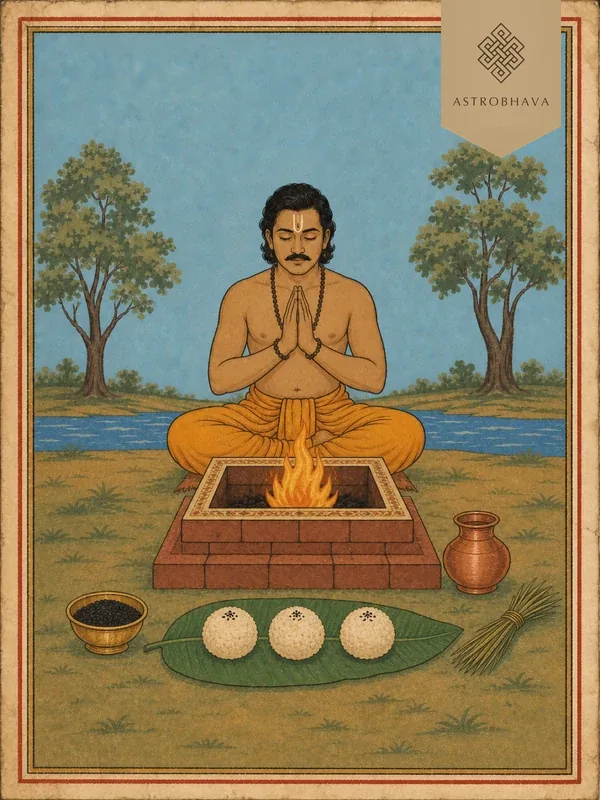 The Pitra Dosha Nivaran Homam, performed for youBook →
What the Pitru Tarpan Mantra is
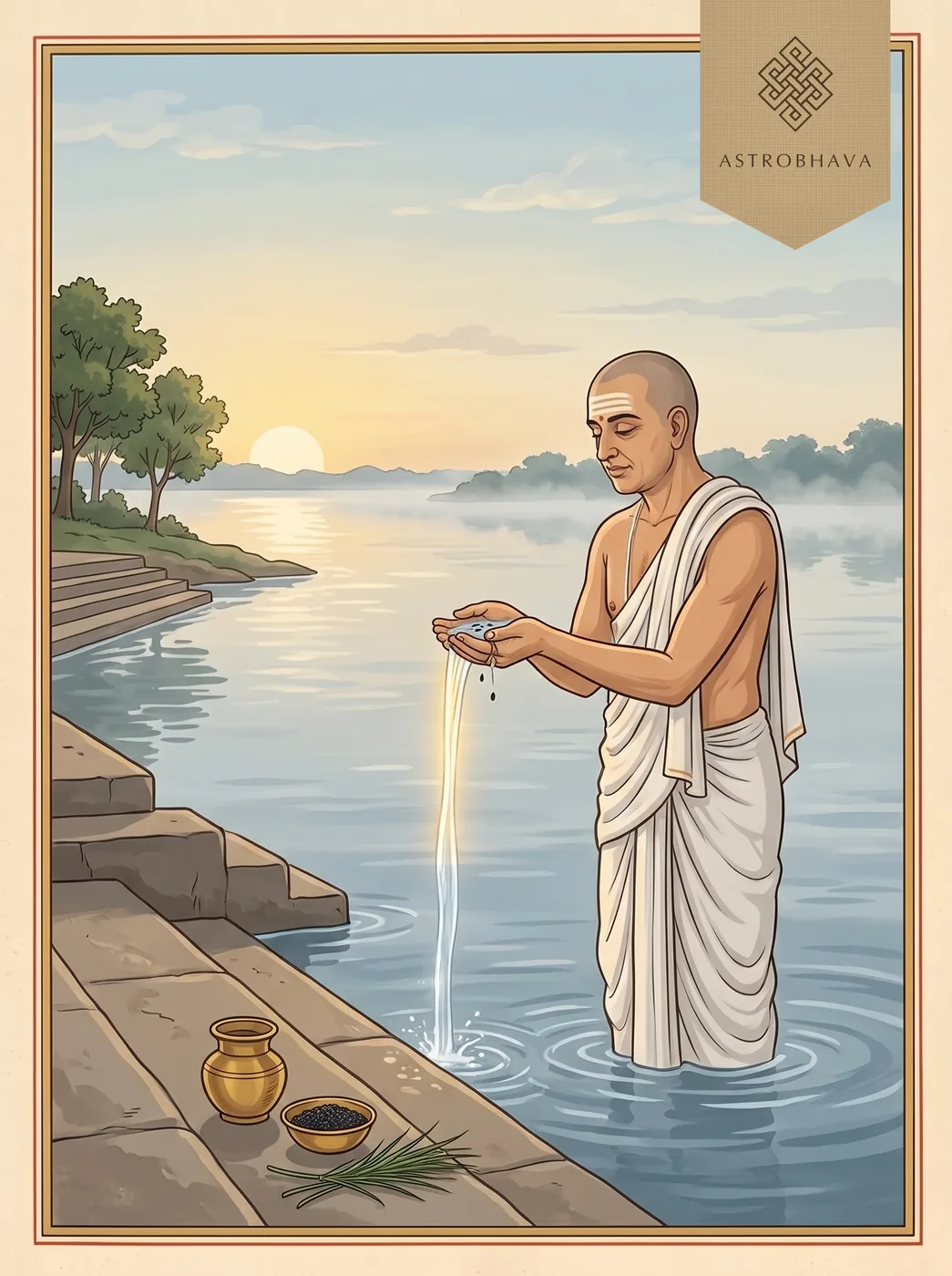
The Pitru Tarpan Mantra, as the North Indian manuals of the Shukla Yajurveda print it, is not one hymn but the run of verses said while water is poured for the ancestors after the morning bath. The rite keeps a fixed order: water for the gods facing east, for the sages, for the divine humans facing north; then, with the sacred thread moved to the right shoulder and the face turned south, sesame-water for the divine ancestors, the fourteen names of Yama and the family's own forebears, each named with gotra. Mantra 1 and Mantra 2, from the Vajasaneyi Samhita (2.34 and 19.36), belong to the nine Vedic verses said over that offering; they appear without accent marks, as the svaras are learned from a teacher. Verses 1 and 2 follow facing east, for every kind of being. Verses 3 to 8 turn south again, for those in torment, the forgotten and the childless. Verse 9 accompanies the wringing of the bathing cloth; Verse 10 opens and closes a shraddha.
Aurva's water for every living being
The oldest setting for these verses is the Vishnu Purana, book 3, chapter 11, where the sage Aurva teaches King Sagara the day of a householder. After bathing and putting on clean cloth, Aurva says, one offers water through the proper part of the hand to the gods, the sages and Prajapati, then to father, grandfather and great-grandfather, to the mother's father and his line, to mothers, the teacher's wife, maternal uncles and a dear friend. Then he adds: hear another, optional offering. It is given, the Purana says, for the help of all beings, and its words are close to the verses printed here as Verses 1 to 4. The Skanda Purana's Kashi Khanda, chapter 35, gives the fuller sequence in Skanda's teaching to Agastya: doubled darbha with sesame, the thread reversed, the fourteen Yamas, the reciter's own gotra, and the nine Vedic verses that include Mantra 1 and Mantra 2. It names the parts of the hand, fingertips for the gods and the place between thumb and forefinger for the ancestors, and closes with Verses 6 and 7 and a form of Verse 9. The Vayu Purana, chapter 48 of its later half, sets Verses 6 and 7 at Gaya, in Sanatkumara's account to Narada of the pilgrimage where sesame-water precedes the pinda.
The mantra, in six scripts
- ऊर्जं
- ūrjaṃ — strength, nourishment
- वहन्तीरमृतं
- vahantīramṛtaṃ — you (waters) carrying nectar
- घृतं
- ghṛtaṃ — ghee
- पयः
- payaḥ — milk
- कीलालं
- kīlālaṃ — food, sweet drink
- परिस्रुतम्
- parisrutam — flowing juice
- स्वधा
- svadhā — svadha, the ancestors' food
- स्थ
- stha — you are
- तर्पयत
- tarpayata — satisfy
- मे
- me — my
- पितॄन्
- pitṝn — ancestors
Pitru Tarpan Mantra lyrics in full
Two Vedic mantras and ten verses, in the order the tarpana manuals say them; the lines that call each ancestor by name and gotra are taken from the family's own manual.
All 12 verses, in Sanskrit, Tamil, Telugu, Kannada, Malayalam and English, each with its meaning. Choose a script:
Download the Pitru Tarpan Mantra PDFAll 12 verses with their meanings, in Sanskrit. Free to print and keep.
ऊर्जं वहन्तीरमृतं घृतं पयः कीलालं परिस्रुतम् ।
स्वधा स्थ तर्पयत मे पितॄन् ॥
ஊர்ஜம் வஹந்தீரம்ருதம் க்ருதம் பயஃ கீலாலம் பரிஸ்ருதம் ।
ஸ்வதா ஸ்த தர்பயத மே பித்ரூந் ॥
ఊర్జం వహన్తీరమృతం ఘృతం పయః కీలాలం పరిస్రుతమ్ ।
స్వధా స్థ తర్పయత మే పితౄన్ ॥
ಊರ್ಜಂ ವಹನ್ತೀರಮೃತಂ ಘೃತಂ ಪಯಃ ಕೀಲಾಲಂ ಪರಿಸ್ರುತಮ್ ।
ಸ್ವಧಾ ಸ್ಥ ತರ್ಪಯತ ಮೇ ಪಿತೄನ್ ॥
ഊര്ജം വഹന്തീരമൃതം ഘൃതം പയഃ കീലാലം പരിസ്രുതമ് ।
സ്വധാ സ്ഥ തര്പയത മേ പിതൄന് ॥
ūrjaṃ vahantīramṛtaṃ ghṛtaṃ payaḥ kīlālaṃ parisrutam |
svadhā stha tarpayata me pitṝn ||
O waters, you carry strength, nectar, ghee, milk, food and flowing juices. You are svadha, the food of the ancestors: satisfy my ancestors.
पितृभ्यः स्वधायिभ्यः स्वधा नमः पितामहेभ्यः स्वधायिभ्यः स्वधा नमः प्रपितामहेभ्यः स्वधायिभ्यः स्वधा नमः ।
अक्षन् पितरोऽमीमदन्त पितरोऽतीतृपन्त पितरः पितरः शुन्धध्वम् ॥
பித்ருப்யஃ ஸ்வதாயிப்யஃ ஸ்வதா நமஃ பிதாமஹேப்யஃ ஸ்வதாயிப்யஃ ஸ்வதா நமஃ ப்ரபிதாமஹேப்யஃ ஸ்வதாயிப்யஃ ஸ்வதா நமஃ ।
அக்ஷந் பிதரோமீமதந்த பிதரோதீத்ருபந்த பிதரஃ பிதரஃ ஶுந்தத்வம் ॥
పితృభ్యః స్వధాయిభ్యః స్వధా నమః పితామహేభ్యః స్వధాయిభ్యః స్వధా నమః ప్రపితామహేభ్యః స్వధాయిభ్యః స్వధా నమః ।
అక్షన్ పితరోఽమీమదన్త పితరోఽతీతృపన్త పితరః పితరః శున్ధధ్వమ్ ॥
ಪಿತೃಭ್ಯಃ ಸ್ವಧಾಯಿಭ್ಯಃ ಸ್ವಧಾ ನಮಃ ಪಿತಾಮಹೇಭ್ಯಃ ಸ್ವಧಾಯಿಭ್ಯಃ ಸ್ವಧಾ ನಮಃ ಪ್ರಪಿತಾಮಹೇಭ್ಯಃ ಸ್ವಧಾಯಿಭ್ಯಃ ಸ್ವಧಾ ನಮಃ ।
ಅಕ್ಷನ್ ಪಿತರೋಽಮೀಮದನ್ತ ಪಿತರೋಽತೀತೃಪನ್ತ ಪಿತರಃ ಪಿತರಃ ಶುನ್ಧಧ್ವಮ್ ॥
പിതൃഭ്യഃ സ്വധായിഭ്യഃ സ്വധാ നമഃ പിതാമഹേഭ്യഃ സ്വധായിഭ്യഃ സ്വധാ നമഃ പ്രപിതാമഹേഭ്യഃ സ്വധായിഭ്യഃ സ്വധാ നമഃ ।
അക്ഷന് പിതരോഽമീമദന്ത പിതരോഽതീതൃപന്ത പിതരഃ പിതരഃ ശുന്ധധ്വമ് ॥
pitṛbhyaḥ svadhāyibhyaḥ svadhā namaḥ pitāmahebhyaḥ svadhāyibhyaḥ svadhā namaḥ prapitāmahebhyaḥ svadhāyibhyaḥ svadhā namaḥ |
akṣan pitaro'mīmadanta pitaro'tītṛpanta pitaraḥ pitaraḥ śundhadhvam ||
Svadha and salutation to the fathers who come to the svadha offering; svadha and salutation to the grandfathers and to the great-grandfathers who come to it. The fathers have eaten, the fathers have rejoiced, the fathers are satisfied; O fathers, be purified.
देवासुरास्तथा यक्षा नागा गन्धर्वराक्षसाः ।
पिशाचा गुह्यकाः सिद्धाः कूष्माण्डास्तरवः खगाः ॥
தேவாஸுராஸ்ததா யக்ஷா நாகா கந்தர்வராக்ஷஸாஃ ।
பிஶாசா குஹ்யகாஃ ஸித்தாஃ கூஷ்மாண்டாஸ்தரவஃ ககாஃ ॥
దేవాసురాస్తథా యక్షా నాగా గన్ధర్వరాక్షసాః ।
పిశాచా గుహ్యకాః సిద్ధాః కూష్మాణ్డాస్తరవః ఖగాః ॥
ದೇವಾಸುರಾಸ್ತಥಾ ಯಕ್ಷಾ ನಾಗಾ ಗನ್ಧರ್ವರಾಕ್ಷಸಾಃ ।
ಪಿಶಾಚಾ ಗುಹ್ಯಕಾಃ ಸಿದ್ಧಾಃ ಕೂಷ್ಮಾಣ್ಡಾಸ್ತರವಃ ಖಗಾಃ ॥
ദേവാസുരാസ്തഥാ യക്ഷാ നാഗാ ഗന്ധര്വരാക്ഷസാഃ ।
പിശാചാ ഗുഹ്യകാഃ സിദ്ധാഃ കൂഷ്മാണ്ഡാസ്തരവഃ ഖഗാഃ ॥
devāsurāstathā yakṣā nāgā gandharvarākṣasāḥ |
piśācā guhyakāḥ siddhāḥ kūṣmāṇḍāstaravaḥ khagāḥ ||
Gods and asuras, yakshas, nagas, gandharvas and rakshasas, pishachas, guhyakas, siddhas, kushmandas, trees and birds.
जलेचरा भूनिलया वाय्वाधाराश्च जन्तवः ।
प्रीतिमेते प्रयान्त्वाशु मद्दत्तेनाम्बुनाखिलाः ॥
ஜலேசரா பூநிலயா வாய்வாதாராஶ்ச ஜந்தவஃ ।
ப்ரீதிமேதே ப்ரயாந்த்வாஶு மத்தத்தேநாம்புநாகிலாஃ ॥
జలేచరా భూనిలయా వాయ్వాధారాశ్చ జన్తవః ।
ప్రీతిమేతే ప్రయాన్త్వాశు మద్దత్తేనామ్బునాఖిలాః ॥
ಜಲೇಚರಾ ಭೂನಿಲಯಾ ವಾಯ್ವಾಧಾರಾಶ್ಚ ಜನ್ತವಃ ।
ಪ್ರೀತಿಮೇತೇ ಪ್ರಯಾನ್ತ್ವಾಶು ಮದ್ದತ್ತೇನಾಮ್ಬುನಾಖಿಲಾಃ ॥
ജലേചരാ ഭൂനിലയാ വായ്വാധാരാശ്ച ജന്തവഃ ।
പ്രീതിമേതേ പ്രയാന്ത്വാശു മദ്ദത്തേനാമ്ബുനാഖിലാഃ ॥
jalecarā bhūnilayā vāyvādhārāśca jantavaḥ |
prītimete prayāntvāśu maddattenāmbunākhilāḥ ||
and creatures that move in water, that live on the earth and that live upon the air: may all of these quickly be pleased by the water I offer.
नरकेषु समस्तेषु यातनासु च ये स्थिताः ।
तेषामाप्यायनायैतद्दीयते सलिलं मया ॥
நரகேஷு ஸமஸ்தேஷு யாதநாஸு ச யே ஸ்திதாஃ ।
தேஷாமாப்யாயநாயைதத்தீயதே ஸலிலம் மயா ॥
నరకేషు సమస్తేషు యాతనాసు చ యే స్థితాః ।
తేషామాప్యాయనాయైతద్దీయతే సలిలం మయా ॥
ನರಕೇಷು ಸಮಸ್ತೇಷು ಯಾತನಾಸು ಚ ಯೇ ಸ್ಥಿತಾಃ ।
ತೇಷಾಮಾಪ್ಯಾಯನಾಯೈತದ್ದೀಯತೇ ಸಲಿಲಂ ಮಯಾ ॥
നരകേഷു സമസ്തേഷു യാതനാസു ച യേ സ്ഥിതാഃ ।
തേഷാമാപ്യായനായൈതദ്ദീയതേ സലിലം മയാ ॥
narakeṣu samasteṣu yātanāsu ca ye sthitāḥ |
teṣāmāpyāyanāyaitaddīyate salilaṃ mayā ||
For those who are in any of the hells and in their torments, I give this water to refresh and strengthen them.
येऽबान्धवा बान्धवाश्च येऽन्यजन्मनि बान्धवाः ।
ते तृप्तिमखिला यान्तु यश्चास्मत्तोऽभिवाञ्छति ॥
யேபாந்தவா பாந்தவாஶ்ச யேந்யஜந்மநி பாந்தவாஃ ।
தே த்ருப்திமகிலா யாந்து யஶ்சாஸ்மத்தோபிவாஞ்சதி ॥
యేఽబాన్ధవా బాన్ధవాశ్చ యేఽన్యజన్మని బాన్ధవాః ।
తే తృప్తిమఖిలా యాన్తు యశ్చాస్మత్తోఽభివాఞ్ఛతి ॥
ಯೇಽಬಾನ್ಧವಾ ಬಾನ್ಧವಾಶ್ಚ ಯೇಽನ್ಯಜನ್ಮನಿ ಬಾನ್ಧವಾಃ ।
ತೇ ತೃಪ್ತಿಮಖಿಲಾ ಯಾನ್ತು ಯಶ್ಚಾಸ್ಮತ್ತೋಽಭಿವಾಞ್ಛತಿ ॥
യേഽബാന്ധവാ ബാന്ധവാശ്ച യേഽന്യജന്മനി ബാന്ധവാഃ ।
തേ തൃപ്തിമഖിലാ യാന്തു യശ്ചാസ്മത്തോഽഭിവാഞ്ഛതി ॥
ye'bāndhavā bāndhavāśca ye'nyajanmani bāndhavāḥ |
te tṛptimakhilā yāntu yaścāsmatto'bhivāñchati ||
Those who were not my kin, those who were my kin, and those who were my kin in another birth: may all of them be satisfied, and whoever else longs for water from me.
ये मे कुले लुप्तपिण्डाः पुत्रदारविवर्जिताः ।
तेषां हि दत्तमक्षय्यमिदमस्तु तिलोदकम् ॥
யே மே குலே லுப்தபிண்டாஃ புத்ரதாரவிவர்ஜிதாஃ ।
தேஷாம் ஹி தத்தமக்ஷய்யமிதமஸ்து திலோதகம் ॥
యే మే కులే లుప్తపిణ్డాః పుత్రదారవివర్జితాః ।
తేషాం హి దత్తమక్షయ్యమిదమస్తు తిలోదకమ్ ॥
ಯೇ ಮೇ ಕುಲೇ ಲುಪ್ತಪಿಣ್ಡಾಃ ಪುತ್ರದಾರವಿವರ್ಜಿತಾಃ ।
ತೇಷಾಂ ಹಿ ದತ್ತಮಕ್ಷಯ್ಯಮಿದಮಸ್ತು ತಿಲೋದಕಮ್ ॥
യേ മേ കുലേ ലുപ്തപിണ്ഡാഃ പുത്രദാരവിവര്ജിതാഃ ।
തേഷാം ഹി ദത്തമക്ഷയ്യമിദമസ്തു തിലോദകമ് ॥
ye me kule luptapiṇḍāḥ putradāravivarjitāḥ |
teṣāṃ hi dattamakṣayyamidamastu tilodakam ||
Those of my family whose pinda offerings have stopped, who died without son or wife: may this water with sesame, given to them, never run out.
आब्रह्मस्तम्बपर्यन्तं देवर्षिपितृमानवाः ।
तृप्यन्तु पितरः सर्वे मातृमातामहादयः ॥
ஆப்ரஹ்மஸ்தம்பபர்யந்தம் தேவர்ஷிபித்ருமாநவாஃ ।
த்ருப்யந்து பிதரஃ ஸர்வே மாத்ருமாதாமஹாதயஃ ॥
ఆబ్రహ్మస్తమ్బపర్యన్తం దేవర్షిపితృమానవాః ।
తృప్యన్తు పితరః సర్వే మాతృమాతామహాదయః ॥
ಆಬ್ರಹ್ಮಸ್ತಮ್ಬಪರ್ಯನ್ತಂ ದೇವರ್ಷಿಪಿತೃಮಾನವಾಃ ।
ತೃಪ್ಯನ್ತು ಪಿತರಃ ಸರ್ವೇ ಮಾತೃಮಾತಾಮಹಾದಯಃ ॥
ആബ്രഹ്മസ്തമ്ബപര്യന്തം ദേവര്ഷിപിതൃമാനവാഃ ।
തൃപ്യന്തു പിതരഃ സര്വേ മാതൃമാതാമഹാദയഃ ॥
ābrahmastambaparyantaṃ devarṣipitṛmānavāḥ |
tṛpyantu pitaraḥ sarve mātṛmātāmahādayaḥ ||
From Brahma down to a blade of grass, may the gods, sages, ancestors and human beings be satisfied. May all the ancestors be satisfied, with the mothers, the maternal grandfathers and the rest.
अतीतकुलकोटीनां सप्तद्वीपनिवासिनाम् ।
आब्रह्मभुवनाल्लोकादिदमस्तु तिलोदकम् ॥
அதீதகுலகோடீநாம் ஸப்தத்வீபநிவாஸிநாம் ।
ஆப்ரஹ்மபுவநால்லோகாதிதமஸ்து திலோதகம் ॥
అతీతకులకోటీనాం సప్తద్వీపనివాసినామ్ ।
ఆబ్రహ్మభువనాల్లోకాదిదమస్తు తిలోదకమ్ ॥
ಅತೀತಕುಲಕೋಟೀನಾಂ ಸಪ್ತದ್ವೀಪನಿವಾಸಿನಾಮ್ ।
ಆಬ್ರಹ್ಮಭುವನಾಲ್ಲೋಕಾದಿದಮಸ್ತು ತಿಲೋದಕಮ್ ॥
അതീതകുലകോടീനാം സപ്തദ്വീപനിവാസിനാമ് ।
ആബ്രഹ്മഭുവനാല്ലോകാദിദമസ്തു തിലോദകമ് ॥
atītakulakoṭīnāṃ saptadvīpanivāsinām |
ābrahmabhuvanāllokādidamastu tilodakam ||
For the countless past generations of my family, dwelling anywhere in the seven continents and in every world up to the world of Brahma, let this be the water with sesame.
येऽबान्धवा बान्धवा वा येऽन्यजन्मनि बान्धवाः ।
ते सर्वे तृप्तिमायान्तु मया दत्तेन वारिणा ॥
யேபாந்தவா பாந்தவா வா யேந்யஜந்மநி பாந்தவாஃ ।
தே ஸர்வே த்ருப்திமாயாந்து மயா தத்தேந வாரிணா ॥
యేఽబాన్ధవా బాన్ధవా వా యేఽన్యజన్మని బాన్ధవాః ।
తే సర్వే తృప్తిమాయాన్తు మయా దత్తేన వారిణా ॥
ಯೇಽಬಾನ್ಧವಾ ಬಾನ್ಧವಾ ವಾ ಯೇಽನ್ಯಜನ್ಮನಿ ಬಾನ್ಧವಾಃ ।
ತೇ ಸರ್ವೇ ತೃಪ್ತಿಮಾಯಾನ್ತು ಮಯಾ ದತ್ತೇನ ವಾರಿಣಾ ॥
യേഽബാന്ധവാ ബാന്ധവാ വാ യേഽന്യജന്മനി ബാന്ധവാഃ ।
തേ സര്വേ തൃപ്തിമായാന്തു മയാ ദത്തേന വാരിണാ ॥
ye'bāndhavā bāndhavā vā ye'nyajanmani bāndhavāḥ |
te sarve tṛptimāyāntu mayā dattena vāriṇā ||
Those who were not my kin or were my kin, and those who were my kin in another birth: may all of them be satisfied by the water I give.
ये के चास्मत्कुले जाता अपुत्रा गोत्रिणो मृताः ।
ते गृह्णन्तु मया दत्तं वस्त्रनिष्पीडनोदकम् ॥
யே கே சாஸ்மத்குலே ஜாதா அபுத்ரா கோத்ரிணோ ம்ருதாஃ ।
தே க்ருஹ்ணந்து மயா தத்தம் வஸ்த்ரநிஷ்பீடநோதகம் ॥
యే కే చాస్మత్కులే జాతా అపుత్రా గోత్రిణో మృతాః ।
తే గృహ్ణన్తు మయా దత్తం వస్త్రనిష్పీడనోదకమ్ ॥
ಯೇ ಕೇ ಚಾಸ್ಮತ್ಕುಲೇ ಜಾತಾ ಅಪುತ್ರಾ ಗೋತ್ರಿಣೋ ಮೃತಾಃ ।
ತೇ ಗೃಹ್ಣನ್ತು ಮಯಾ ದತ್ತಂ ವಸ್ತ್ರನಿಷ್ಪೀಡನೋದಕಮ್ ॥
യേ കേ ചാസ്മത്കുലേ ജാതാ അപുത്രാ ഗോത്രിണോ മൃതാഃ ।
തേ ഗൃഹ്ണന്തു മയാ ദത്തം വസ്ത്രനിഷ്പീഡനോദകമ് ॥
ye ke cāsmatkule jātā aputrā gotriṇo mṛtāḥ |
te gṛhṇantu mayā dattaṃ vastraniṣpīḍanodakam ||
Whoever was born in our family and died without a son, kinsmen of our line: may they accept the water I give, wrung from my cloth.
देवताभ्यः पितृभ्यश्च महायोगिभ्य एव च ।
नमः स्वाहायै स्वधायै नित्यमेव नमो नमः ॥
தேவதாப்யஃ பித்ருப்யஶ்ச மஹாயோகிப்ய ஏவ ச ।
நமஃ ஸ்வாஹாயை ஸ்வதாயை நித்யமேவ நமோ நமஃ ॥
దేవతాభ్యః పితృభ్యశ్చ మహాయోగిభ్య ఏవ చ ।
నమః స్వాహాయై స్వధాయై నిత్యమేవ నమో నమః ॥
ದೇವತಾಭ್ಯಃ ಪಿತೃಭ್ಯಶ್ಚ ಮಹಾಯೋಗಿಭ್ಯ ಏವ ಚ ।
ನಮಃ ಸ್ವಾಹಾಯೈ ಸ್ವಧಾಯೈ ನಿತ್ಯಮೇವ ನಮೋ ನಮಃ ॥
ദേവതാഭ്യഃ പിതൃഭ്യശ്ച മഹായോഗിഭ്യ ഏവ ച ।
നമഃ സ്വാഹായൈ സ്വധായൈ നിത്യമേവ നമോ നമഃ ॥
devatābhyaḥ pitṛbhyaśca mahāyogibhya eva ca |
namaḥ svāhāyai svadhāyai nityameva namo namaḥ ||
Salutation to the gods, to the ancestors and to the great yogis. Salutation to Svaha and to Svadha, always, again and again.
The syllable people get wrong
In Verse 5, akṣayyam (never running out) has a doubled y: say 'ak-shay-yam', holding the y across both syllables, not 'akshayam' or 'akshasya'. The kṣ is one cluster, k sliding straight into a palatal sh.
When the Pitru Tarpan Mantra is chanted
Festival. Pitru Paksha (Mahalaya)
Questions
Have your chart read before you decide
Chanting is yours to do, and free. But which deity your situation calls for — and whether a mantra alone is the right response — depends on your chart. Sometimes it is; sometimes it is not.
- Over 30 years in the Guru–Sishya Parampara, from the age of five
- He reads every chart himself — 60 minutes, one to one, never delegated
- Charts are read only between sunrise and sunset, following tradition
