Pratah Smarana Stotram
प्रातः स्मरामि हृदि संस्फुरदात्मतत्त्वं सच्चित्सुखं परमहंसगतिं तुरीयम् । यत्स्वप्नजागरसुषुप्तिमवैति नित्यं तद्ब्रह्म निष्कलमहं न च भूतसङ्घः ॥Also known as Pratah Smarami Hridi
In Devanagari, Tamil, Telugu, Kannada, Malayalam and English — with the meaning of every word, and the one syllable most people pronounce wrongly.
 A reading of your birth chartBook →
What the Pratah Smarana Stotram is
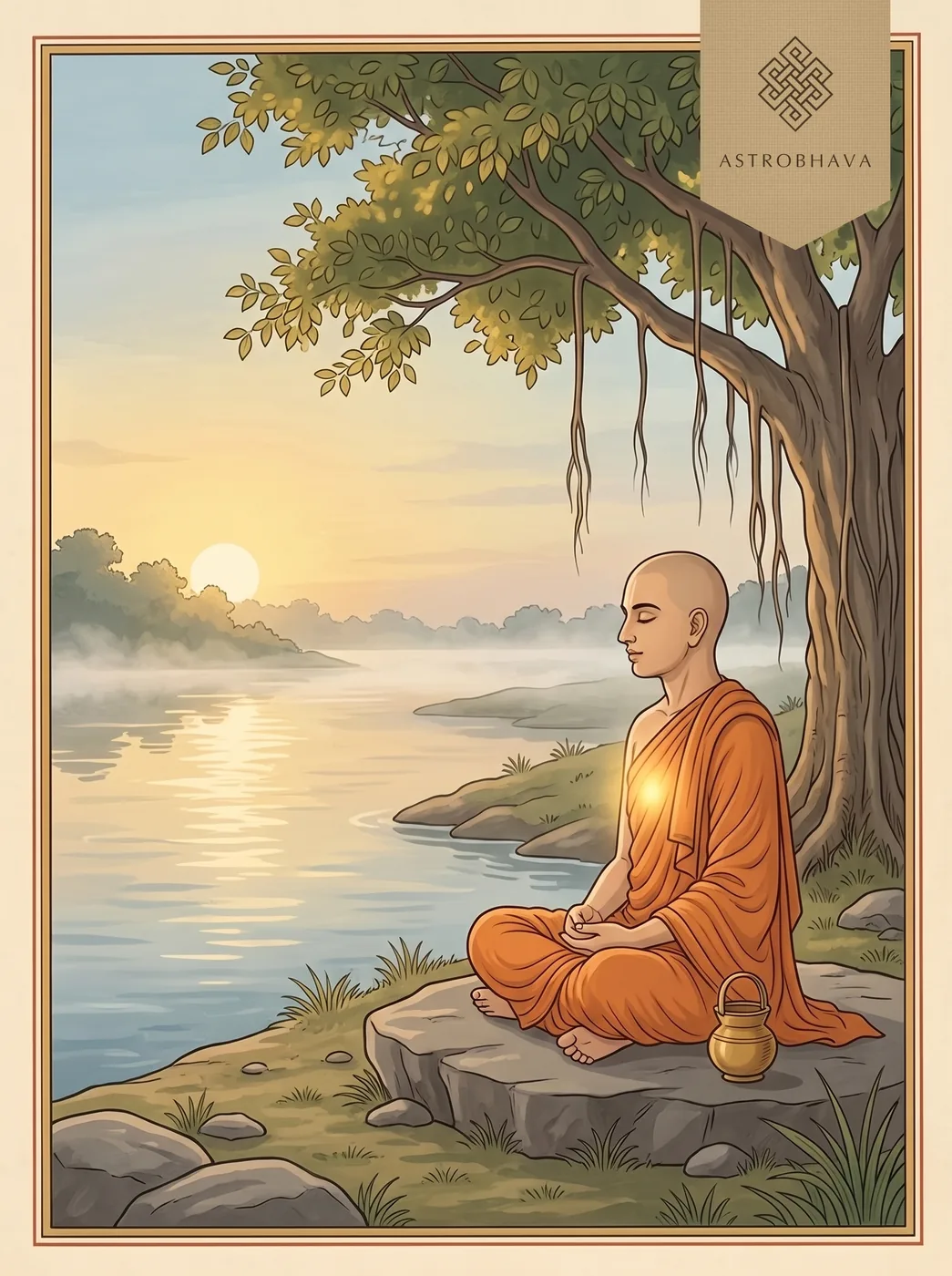
The Pratah Smarana Stotram, the dawn hymn that opens 'pratah smarami hridi samsphurad atmatattvam', is a short Advaita text attributed to Adi Shankaracharya and printed among his collected stotras. It addresses no single deity. Its subject is Brahman, the one reality, and the Self that the reciter recognises as identical with it. The form is three verses in the vasantatilaka metre followed by one anushtubh verse of benefit, and the printed closing calls the set a morning remembrance in three verses. Each verse begins with 'pratah', at dawn, and then a different verb. Verse 1 says 'I remember' and identifies the reciter with the witness of waking, dream and deep sleep. Verse 2 says 'I worship' the reality that speech cannot reach, which the Vedas describe as 'not this, not this'. Verse 3 says 'I bow' to the Supreme Person in whom the world appears as a snake appears in a rope. One traditional reading takes the three verbs as an offering of mind, speech and body in turn.
Three Upanishad teachings at the moment of waking
No story of the hymn's composition has come down with it. Tradition places it among the works of Adi Shankaracharya, and the older printed collections of his stotras include it, one of them closing with a colophon that names him as the disciple of Govinda Bhagavatpada. What the text gives instead is a setting: the first minutes after waking. Each verse compresses a teaching of the Upanishads into that moment. Verse 1 draws on the Mandukya Upanishad (verse 7), which calls the Self a fourth, turiya, beyond waking, dream and dreamless sleep. A person who has just come up out of sleep is reminded that the witness of all three states never slept, and that this witness is what they are, not the body of elements. Verse 2 takes up the formula 'neti neti' of the Brihadaranyaka Upanishad (2.3.6), the Veda's way of pointing to Brahman by setting aside every description, adding that this same reality lets all speech shine. Verse 3 uses the rope-and-snake image of Advaita teaching: in dim light a rope is taken for a snake, and the fear lasts until the rope is seen. So, the verse says, the whole world appears on Brahman. The fourth verse calls the three an ornament of the three worlds, and the hymn is kept as a dawn prayer; some collections file it with the hymns of waking.
The mantra, in six scripts
- प्रातः
- prātaḥ — at dawn
- स्मरामि
- smarāmi — I remember
- हृदि
- hṛdi — in the heart
- संस्फुरदात्मतत्त्वं
- saṃsphuradātmatattvaṃ — the shining truth of the Self
- सच्चित्सुखं
- saccitsukhaṃ — being, awareness, bliss
- परमहंसगतिं
- paramahaṃsagatiṃ — goal of the highest renunciates
- तुरीयम्
- turīyam — the fourth state
- यत्स्वप्नजागरसुषुप्तिमवैति
- yatsvapnajāgarasuṣuptimavaiti — which knows dream, waking and deep sleep
- नित्यं
- nityaṃ — always
- तद्ब्रह्म
- tadbrahma — that Brahman
- निष्कलमहं
- niṣkalamahaṃ — partless, I am
- न
- na — not
- च
- ca — and
- भूतसङ्घः
- bhūtasaṅghaḥ — the gathering of elements
Pratah Smarana Stotram lyrics in full
Three verses with their verse of benefit, as the hymn is printed. The printed closing line is given at the end.
All 5 verses, in Sanskrit, Tamil, Telugu, Kannada, Malayalam and English, each with its meaning. Choose a script:
Download the Pratah Smarana Stotram PDFAll 5 verses with their meanings, in Sanskrit. Free to print and keep.
प्रातः स्मरामि हृदि संस्फुरदात्मतत्त्वं सच्चित्सुखं परमहंसगतिं तुरीयम् ।
यत्स्वप्नजागरसुषुप्तिमवैति नित्यं तद्ब्रह्म निष्कलमहं न च भूतसङ्घः ॥
ப்ராதஃ ஸ்மராமி ஹ்ருதி ஸம்ஸ்புரதாத்மதத்த்வம் ஸச்சித்ஸுகம் பரமஹம்ஸகதிம் துரீயம் ।
யத்ஸ்வப்நஜாகரஸுஷுப்திமவைதி நித்யம் தத்ப்ரஹ்ம நிஷ்கலமஹம் ந ச பூதஸங்கஃ ॥
ప్రాతః స్మరామి హృది సంస్ఫురదాత్మతత్త్వం సచ్చిత్సుఖం పరమహంసగతిం తురీయమ్ ।
యత్స్వప్నజాగరసుషుప్తిమవైతి నిత్యం తద్బ్రహ్మ నిష్కలమహం న చ భూతసఙ్ఘః ॥
ಪ್ರಾತಃ ಸ್ಮರಾಮಿ ಹೃದಿ ಸಂಸ್ಫುರದಾತ್ಮತತ್ತ್ವಂ ಸಚ್ಚಿತ್ಸುಖಂ ಪರಮಹಂಸಗತಿಂ ತುರೀಯಮ್ ।
ಯತ್ಸ್ವಪ್ನಜಾಗರಸುಷುಪ್ತಿಮವೈತಿ ನಿತ್ಯಂ ತದ್ಬ್ರಹ್ಮ ನಿಷ್ಕಲಮಹಂ ನ ಚ ಭೂತಸಙ್ಘಃ ॥
പ്രാതഃ സ്മരാമി ഹൃദി സംസ്ഫുരദാത്മതത്ത്വം സച്ചിത്സുഖം പരമഹംസഗതിം തുരീയമ് ।
യത്സ്വപ്നജാഗരസുഷുപ്തിമവൈതി നിത്യം തദ്ബ്രഹ്മ നിഷ്കലമഹം ന ച ഭൂതസങ്ഘഃ ॥
prātaḥ smarāmi hṛdi saṃsphuradātmatattvaṃ saccitsukhaṃ paramahaṃsagatiṃ turīyam |
yatsvapnajāgarasuṣuptimavaiti nityaṃ tadbrahma niṣkalamahaṃ na ca bhūtasaṅghaḥ ||
At dawn I call to mind the reality of the Self shining in the heart: being, awareness and bliss, the goal of the highest renunciates, the fourth state. That partless Brahman which always witnesses dream, waking and deep sleep is what I am, not this gathering of elements.
प्रातर्भजामि मनसा वचसामगम्यं वाचो विभान्ति निखिला यदनुग्रहेण ।
यन्नेतिनेतिवचनैर्निगमा अवोचुस्तं देवदेवमजमच्युतमाहुरग्र्यम् ॥
ப்ராதர்பஜாமி மநஸா வசஸாமகம்யம் வாசோ விபாந்தி நிகிலா யதநுக்ரஹேண ।
யந்நேதிநேதிவசநைர்நிகமா அவோசுஸ்தம் தேவதேவமஜமச்யுதமாஹுரக்ர்யம் ॥
ప్రాతర్భజామి మనసా వచసామగమ్యం వాచో విభాన్తి నిఖిలా యదనుగ్రహేణ ।
యన్నేతినేతివచనైర్నిగమా అవోచుస్తం దేవదేవమజమచ్యుతమాహురగ్ర్యమ్ ॥
ಪ್ರಾತರ್ಭಜಾಮಿ ಮನಸಾ ವಚಸಾಮಗಮ್ಯಂ ವಾಚೋ ವಿಭಾನ್ತಿ ನಿಖಿಲಾ ಯದನುಗ್ರಹೇಣ ।
ಯನ್ನೇತಿನೇತಿವಚನೈರ್ನಿಗಮಾ ಅವೋಚುಸ್ತಂ ದೇವದೇವಮಜಮಚ್ಯುತಮಾಹುರಗ್ರ್ಯಮ್ ॥
പ്രാതര്ഭജാമി മനസാ വചസാമഗമ്യം വാചോ വിഭാന്തി നിഖിലാ യദനുഗ്രഹേണ ।
യന്നേതിനേതിവചനൈര്നിഗമാ അവോചുസ്തം ദേവദേവമജമച്യുതമാഹുരഗ്ര്യമ് ॥
prātarbhajāmi manasā vacasāmagamyaṃ vāco vibhānti nikhilā yadanugraheṇa |
yannetinetivacanairnigamā avocustaṃ devadevamajamacyutamāhuragryam ||
At dawn I worship with the mind That which words cannot reach, yet by whose grace all words shine. The Vedas spoke of It by saying 'not this, not this'; the sages call It the God of gods, unborn, unfailing and supreme.
प्रातर्नमामि तमसः परमर्कवर्णं पूर्णं सनातनपदं पुरुषोत्तमाख्यम् ।
यस्मिन्निदं जगदशेषमशेषमूर्तौ रज्ज्वां भुजङ्गम इव प्रतिभासितं वै ॥
ப்ராதர்நமாமி தமஸஃ பரமர்கவர்ணம் பூர்ணம் ஸநாதநபதம் புருஷோத்தமாக்யம் ।
யஸ்மிந்நிதம் ஜகதஶேஷமஶேஷமூர்தௌ ரஜ்ஜ்வாம் புஜங்கம இவ ப்ரதிபாஸிதம் வை ॥
ప్రాతర్నమామి తమసః పరమర్కవర్ణం పూర్ణం సనాతనపదం పురుషోత్తమాఖ్యమ్ ।
యస్మిన్నిదం జగదశేషమశేషమూర్తౌ రజ్జ్వాం భుజఙ్గమ ఇవ ప్రతిభాసితం వై ॥
ಪ್ರಾತರ್ನಮಾಮಿ ತಮಸಃ ಪರಮರ್ಕವರ್ಣಂ ಪೂರ್ಣಂ ಸನಾತನಪದಂ ಪುರುಷೋತ್ತಮಾಖ್ಯಮ್ ।
ಯಸ್ಮಿನ್ನಿದಂ ಜಗದಶೇಷಮಶೇಷಮೂರ್ತೌ ರಜ್ಜ್ವಾಂ ಭುಜಙ್ಗಮ ಇವ ಪ್ರತಿಭಾಸಿತಂ ವೈ ॥
പ്രാതര്നമാമി തമസഃ പരമര്കവര്ണം പൂര്ണം സനാതനപദം പുരുഷോത്തമാഖ്യമ് ।
യസ്മിന്നിദം ജഗദശേഷമശേഷമൂര്തൌ രജ്ജ്വാം ഭുജങ്ഗമ ഇവ പ്രതിഭാസിതം വൈ ॥
prātarnamāmi tamasaḥ paramarkavarṇaṃ pūrṇaṃ sanātanapadaṃ puruṣottamākhyam |
yasminnidaṃ jagadaśeṣamaśeṣamūrtau rajjvāṃ bhujaṅgama iva pratibhāsitaṃ vai ||
At dawn I bow to That beyond darkness, bright as the sun, full and complete, the eternal state called the Supreme Person. In that whole and undivided Being this entire world only appears, as a snake appears in a rope.
श्लोकत्रयमिदं पुण्यं लोकत्रयविभूषणम् ।
प्रातःकाले पठेद्यस्तु स गच्छेत्परमं पदम् ॥
ஶ்லோகத்ரயமிதம் புண்யம் லோகத்ரயவிபூஷணம் ।
ப்ராதஃகாலே படேத்யஸ்து ஸ கச்சேத்பரமம் பதம் ॥
శ్లోకత్రయమిదం పుణ్యం లోకత్రయవిభూషణమ్ ।
ప్రాతఃకాలే పఠేద్యస్తు స గచ్ఛేత్పరమం పదమ్ ॥
ಶ್ಲೋಕತ್ರಯಮಿದಂ ಪುಣ್ಯಂ ಲೋಕತ್ರಯವಿಭೂಷಣಮ್ ।
ಪ್ರಾತಃಕಾಲೇ ಪಠೇದ್ಯಸ್ತು ಸ ಗಚ್ಛೇತ್ಪರಮಂ ಪದಮ್ ॥
ശ്ലോകത്രയമിദം പുണ്യം ലോകത്രയവിഭൂഷണമ് ।
പ്രാതഃകാലേ പഠേദ്യസ്തു സ ഗച്ഛേത്പരമം പദമ് ॥
ślokatrayamidaṃ puṇyaṃ lokatrayavibhūṣaṇam |
prātaḥkāle paṭhedyastu sa gacchetparamaṃ padam ||
These three holy verses are an ornament of the three worlds. The verse says that whoever recites them at dawn reaches the highest state.
इति श्रीशङ्करभगवत्पादविरचितं प्रातस्स्मरणत्रयम् ॥
இதி ஶ்ரீஶங்கரபகவத்பாதவிரசிதம் ப்ராதஸ்ஸ்மரணத்ரயம் ॥
ఇతి శ్రీశఙ్కరభగవత్పాదవిరచితం ప్రాతస్స్మరణత్రయమ్ ॥
ಇತಿ ಶ್ರೀಶಙ್ಕರಭಗವತ್ಪಾದವಿರಚಿತಂ ಪ್ರಾತಸ್ಸ್ಮರಣತ್ರಯಮ್ ॥
ഇതി ശ്രീശങ്കരഭഗവത്പാദവിരചിതം പ്രാതസ്സ്മരണത്രയമ് ॥
iti śrīśaṅkarabhagavatpādaviracitaṃ prātassmaraṇatrayam ||
Thus ends the morning remembrance in three verses composed by Shri Shankara Bhagavatpada.
The syllable people get wrong
In verse 3, rajjvāṃ ('in a rope') is often said as 'raj-vam' or 'raju-vam'. Hold the doubled j across the syllables, raj-jvāṃ, with the v gliding straight off the second j and a long ā before the nasal.
Questions
Have your chart read before you decide
Chanting is yours to do, and free. But which deity your situation calls for — and whether a mantra alone is the right response — depends on your chart. Sometimes it is; sometimes it is not.
- Over 30 years in the Guru–Sishya Parampara, from the age of five
- He reads every chart himself — 60 minutes, one to one, never delegated
- Charts are read only between sunrise and sunset, following tradition
