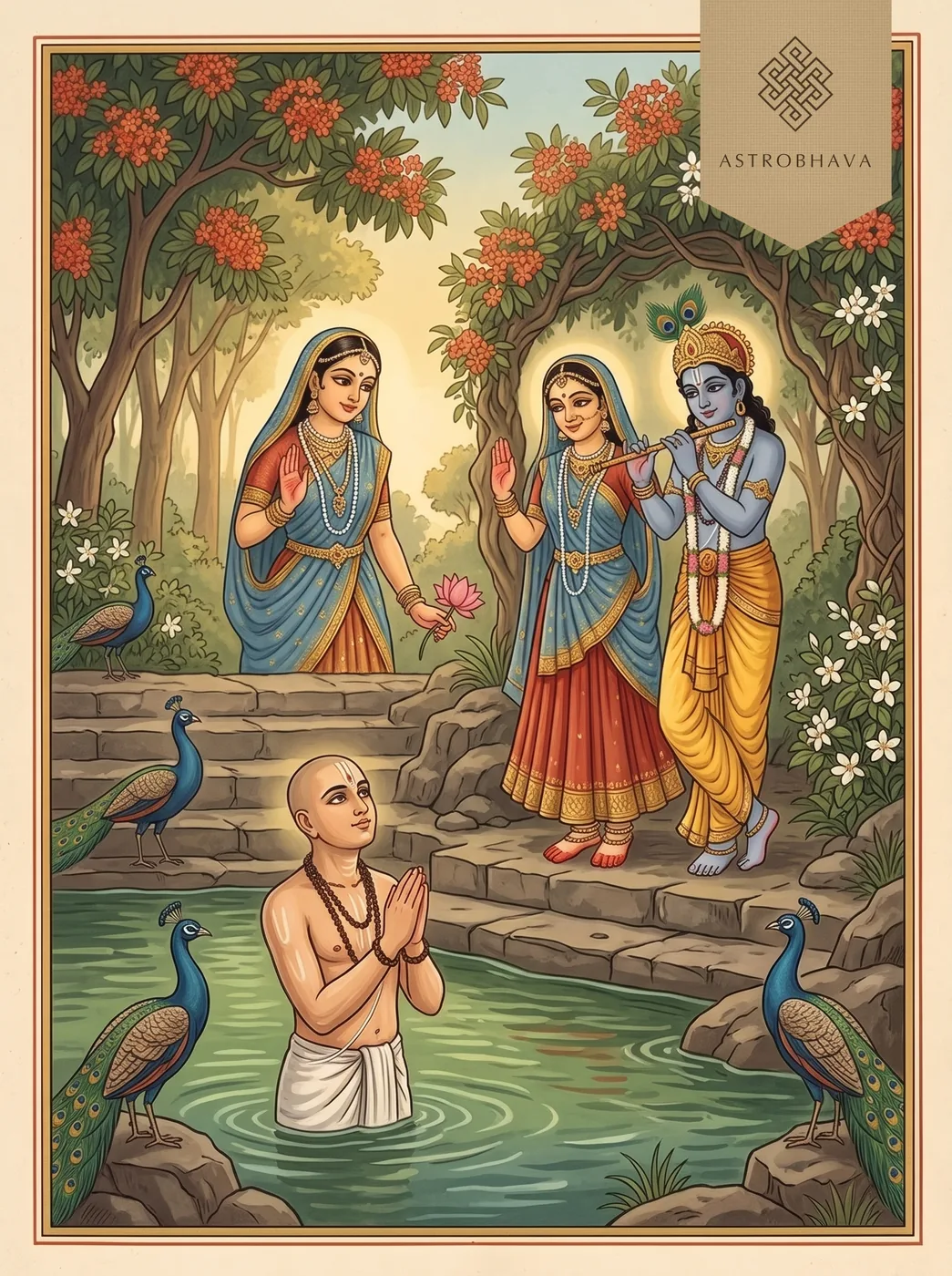
Radha Kripa Kataksh Stotra
मुनीन्द्रवृन्दवन्दिते त्रिलोकशोकहारिणि प्रसन्नवक्त्रपङ्कजे निकुञ्जभूविलासिनि । व्रजेन्द्रभानुनन्दिनि व्रजेन्द्रसूनुसङ्गते कदा करिष्यसीह मां कृपाकटाक्षभाजनम् ॥Also known as Radha Kripa Kataksha Stotram
In Devanagari, Tamil, Telugu, Kannada, Malayalam and English — with the meaning of every word, and the one syllable most people pronounce wrongly.
 A reading of your birth chartBook →
What the Radha Kripa Kataksh Stotra is
The Radha Kripa Kataksh Stotra, known in full as the Sri Radha Kripa Kataksha Stava Raja, the 'king of hymns for the merciful sidelong glance', is a Sanskrit prayer to Radha that tradition places in the Urdhvamnaya Tantra, spoken by Shiva to Parvati. Kataksha is a look from the corner of the eye, and the whole hymn asks to receive one. The first eleven verses, in the brisk panchachamara metre, each pile up titles for Radha and end on the same question: kada karishyasiha mam kripa-kataksha-bhajanam, when will you make me, here, the receiver of your merciful glance. They begin with her bower among ashoka trees and her feet the colour of coral, turn to the glances that keep Krishna captive, and then travel down her ornaments from necklace to anklets. Verse twelve drops the question for a run of titles ending in -ishvari, queen, and a plain salutation. Verse thirteen blesses whoever hears the hymn, and six shorter verses of phala shruti close it.
Shiva asks for Radha's glance
According to the tradition that keeps it, the hymn comes from the Urdhvamnaya Tantra, in a passage where Shiva teaches Parvati the mantras and worship of Radha. That setting gives the text its unusual voice: the lord of Kailasa speaks as a seeker standing outside the groves of Vraja, asking for a single look. Verse eleven even names Parvati, with Shachi and Saraswati, among the goddesses to whom Radha grants boons, so Shiva is describing to his consort a grace she herself receives. The hymn is known mainly through quotation. The Sadhana Dipika, a Gaudiya manual of Radha-Krishna worship, copies it in full in its sixth chapter under the heading 'atha stavah', 'now the hymn', after a series of Radha mantras introduced with the words 'Ishvara uvacha', the Lord said, and a rite of offering lamps. The phala shruti ties the text to one place, Radha Kunda, the sacred pond near Govardhana: it pictures a seeker standing in its water to the thigh, the navel, the chest or the neck while reciting, and says that Radha, pleased, grants the sight of Shyamasundara. In Vraja the hymn is said to be recited daily in many temples and villages, often to a fixed tune, and some residents call it the anthem of Vrindavan.
The mantra, in six scripts
- मुनीन्द्रवृन्दवन्दिते
- munīndravṛndavandite — worshipped by hosts of great sages
- त्रिलोकशोकहारिणि
- trilokaśokahāriṇi — remover of the three worlds' sorrow
- प्रसन्नवक्त्रपङ्कजे
- prasannavaktrapaṅkaje — whose lotus face is cheerful
- निकुञ्जभूविलासिनि
- nikuñjabhūvilāsini — who delights in the groves
- व्रजेन्द्रभानुनन्दिनि
- vrajendrabhānunandini — daughter of Bhanu, chief of Vraja
- व्रजेन्द्रसूनुसङ्गते
- vrajendrasūnusaṅgate — companion of the Vraja chief's son
- कदा
- kadā — when
- करिष्यसीह
- kariṣyasīha — will you make, here
- मां
- māṃ — me
- कृपाकटाक्षभाजनम्
- kṛpākaṭākṣabhājanam — receiver of your merciful glance
Radha Kripa Kataksh Stotra lyrics in full
Thirteen verses of praise and six verses of phala shruti, in the form sung in Vraja. The printed closing line is given at the end.
All 20 verses, in Sanskrit, Tamil, Telugu, Kannada, Malayalam and English, each with its meaning. Choose a script:
Download the Radha Kripa Kataksh Stotra PDFAll 20 verses with their meanings, in Sanskrit. Free to print and keep.
मुनीन्द्रवृन्दवन्दिते त्रिलोकशोकहारिणि प्रसन्नवक्त्रपङ्कजे निकुञ्जभूविलासिनि ।
व्रजेन्द्रभानुनन्दिनि व्रजेन्द्रसूनुसङ्गते कदा करिष्यसीह मां कृपाकटाक्षभाजनम् ॥
முநீந்த்ரவ்ருந்தவந்திதே த்ரிலோகஶோகஹாரிணி ப்ரஸந்நவக்த்ரபங்கஜே நிகுஞ்ஜபூவிலாஸிநி ।
வ்ரஜேந்த்ரபாநுநந்திநி வ்ரஜேந்த்ரஸூநுஸங்கதே கதா கரிஷ்யஸீஹ மாம் க்ருபாகடாக்ஷபாஜநம் ॥
మునీన్ద్రవృన్దవన్దితే త్రిలోకశోకహారిణి ప్రసన్నవక్త్రపఙ్కజే నికుఞ్జభూవిలాసిని ।
వ్రజేన్ద్రభానునన్దిని వ్రజేన్ద్రసూనుసఙ్గతే కదా కరిష్యసీహ మాం కృపాకటాక్షభాజనమ్ ॥
ಮುನೀನ್ದ್ರವೃನ್ದವನ್ದಿತೇ ತ್ರಿಲೋಕಶೋಕಹಾರಿಣಿ ಪ್ರಸನ್ನವಕ್ತ್ರಪಙ್ಕಜೇ ನಿಕುಞ್ಜಭೂವಿಲಾಸಿನಿ ।
ವ್ರಜೇನ್ದ್ರಭಾನುನನ್ದಿನಿ ವ್ರಜೇನ್ದ್ರಸೂನುಸಙ್ಗತೇ ಕದಾ ಕರಿಷ್ಯಸೀಹ ಮಾಂ ಕೃಪಾಕಟಾಕ್ಷಭಾಜನಮ್ ॥
മുനീന്ദ്രവൃന്ദവന്ദിതേ ത്രിലോകശോകഹാരിണി പ്രസന്നവക്ത്രപങ്കജേ നികുഞ്ജഭൂവിലാസിനി ।
വ്രജേന്ദ്രഭാനുനന്ദിനി വ്രജേന്ദ്രസൂനുസങ്ഗതേ കദാ കരിഷ്യസീഹ മാം കൃപാകടാക്ഷഭാജനമ് ॥
munīndravṛndavandite trilokaśokahāriṇi prasannavaktrapaṅkaje nikuñjabhūvilāsini |
vrajendrabhānunandini vrajendrasūnusaṅgate kadā kariṣyasīha māṃ kṛpākaṭākṣabhājanam ||
O you who are worshipped by hosts of the greatest sages, who take away the sorrow of the three worlds, whose lotus face is always cheerful and who delight in the groves of Vraja; O daughter of King Vrishabhanu, companion of the son of the lord of Vraja: when will you make me, here and now, a receiver of your merciful sidelong glance?
अशोकवृक्षवल्लरीवितानमण्डपस्थिते प्रवालबालपल्लवप्रभारुणाङ्घ्रिकोमले ।
वराभयस्फुरत्करे प्रभूतसम्पदालये कदा करिष्यसीह मां कृपाकटाक्षभाजनम् ॥
அஶோகவ்ருக்ஷவல்லரீவிதாநமண்டபஸ்திதே ப்ரவாலபாலபல்லவப்ரபாருணாங்க்ரிகோமலே ।
வராபயஸ்புரத்கரே ப்ரபூதஸம்பதாலயே கதா கரிஷ்யஸீஹ மாம் க்ருபாகடாக்ஷபாஜநம் ॥
అశోకవృక్షవల్లరీవితానమణ్డపస్థితే ప్రవాలబాలపల్లవప్రభారుణాఙ్ఘ్రికోమలే ।
వరాభయస్ఫురత్కరే ప్రభూతసమ్పదాలయే కదా కరిష్యసీహ మాం కృపాకటాక్షభాజనమ్ ॥
ಅಶೋಕವೃಕ್ಷವಲ್ಲರೀವಿತಾನಮಣ್ಡಪಸ್ಥಿತೇ ಪ್ರವಾಲಬಾಲಪಲ್ಲವಪ್ರಭಾರುಣಾಙ್ಘ್ರಿಕೋಮಲೇ ।
ವರಾಭಯಸ್ಫುರತ್ಕರೇ ಪ್ರಭೂತಸಮ್ಪದಾಲಯೇ ಕದಾ ಕರಿಷ್ಯಸೀಹ ಮಾಂ ಕೃಪಾಕಟಾಕ್ಷಭಾಜನಮ್ ॥
അശോകവൃക്ഷവല്ലരീവിതാനമണ്ഡപസ്ഥിതേ പ്രവാലബാലപല്ലവപ്രഭാരുണാങ്ഘ്രികോമലേ ।
വരാഭയസ്ഫുരത്കരേ പ്രഭൂതസമ്പദാലയേ കദാ കരിഷ്യസീഹ മാം കൃപാകടാക്ഷഭാജനമ് ॥
aśokavṛkṣavallarīvitānamaṇḍapasthite pravālabālapallavaprabhāruṇāṅghrikomale |
varābhayasphuratkare prabhūtasampadālaye kadā kariṣyasīha māṃ kṛpākaṭākṣabhājanam ||
O you who sit in a bower roofed by creepers spread over the ashoka trees, whose soft feet are rosy like coral and fresh young shoots; O you whose hand shines with the gestures of boon and fearlessness, home of abundant riches: when will you make me a receiver of your merciful sidelong glance?
अनङ्गरङ्गमङ्गलप्रसङ्गभङ्गुरभ्रुवां सविभ्रमं ससम्भ्रमं दृगन्तबाणपातनैः ।
निरन्तरं वशीकृतप्रतीतिनन्दनन्दने कदा करिष्यसीह मां कृपाकटाक्षभाजनम् ॥
அநங்கரங்கமங்கலப்ரஸங்கபங்குரப்ருவாம் ஸவிப்ரமம் ஸஸம்ப்ரமம் த்ருகந்தபாணபாதநைஃ ।
நிரந்தரம் வஶீக்ருதப்ரதீதிநந்தநந்தநே கதா கரிஷ்யஸீஹ மாம் க்ருபாகடாக்ஷபாஜநம் ॥
అనఙ్గరఙ్గమఙ్గలప్రసఙ్గభఙ్గురభ్రువాం సవిభ్రమం ససమ్భ్రమం దృగన్తబాణపాతనైః ।
నిరన్తరం వశీకృతప్రతీతినన్దనన్దనే కదా కరిష్యసీహ మాం కృపాకటాక్షభాజనమ్ ॥
ಅನಙ್ಗರಙ್ಗಮಙ್ಗಲಪ್ರಸಙ್ಗಭಙ್ಗುರಭ್ರುವಾಂ ಸವಿಭ್ರಮಂ ಸಸಮ್ಭ್ರಮಂ ದೃಗನ್ತಬಾಣಪಾತನೈಃ ।
ನಿರನ್ತರಂ ವಶೀಕೃತಪ್ರತೀತಿನನ್ದನನ್ದನೇ ಕದಾ ಕರಿಷ್ಯಸೀಹ ಮಾಂ ಕೃಪಾಕಟಾಕ್ಷಭಾಜನಮ್ ॥
അനങ്ഗരങ്ഗമങ്ഗലപ്രസങ്ഗഭങ്ഗുരഭ്രുവാം സവിഭ്രമം സസമ്ഭ്രമം ദൃഗന്തബാണപാതനൈഃ ।
നിരന്തരം വശീകൃതപ്രതീതിനന്ദനന്ദനേ കദാ കരിഷ്യസീഹ മാം കൃപാകടാക്ഷഭാജനമ് ॥
anaṅgaraṅgamaṅgalaprasaṅgabhaṅgurabhruvāṃ savibhramaṃ sasambhramaṃ dṛgantabāṇapātanaiḥ |
nirantaraṃ vaśīkṛtapratītinandanandane kadā kariṣyasīha māṃ kṛpākaṭākṣabhājanam ||
With the arrows of glances shot from the corners of your eyes, playful and eager, under brows that arch in the auspicious sport of love, you hold the son of Nanda for ever under your spell. When will you make me a receiver of your merciful sidelong glance?
तडित्सुवर्णचम्पकप्रदीप्तगौरविग्रहे मुखप्रभापरास्तकोटिशारदेन्दुमण्डले ।
विचित्रचित्रसञ्चरच्चकोरशावलोचने कदा करिष्यसीह मां कृपाकटाक्षभाजनम् ॥
தடித்ஸுவர்ணசம்பகப்ரதீப்தகௌரவிக்ரஹே முகப்ரபாபராஸ்தகோடிஶாரதேந்துமண்டலே ।
விசித்ரசித்ரஸஞ்சரச்சகோரஶாவலோசநே கதா கரிஷ்யஸீஹ மாம் க்ருபாகடாக்ஷபாஜநம் ॥
తడిత్సువర్ణచమ్పకప్రదీప్తగౌరవిగ్రహే ముఖప్రభాపరాస్తకోటిశారదేన్దుమణ్డలే ।
విచిత్రచిత్రసఞ్చరచ్చకోరశావలోచనే కదా కరిష్యసీహ మాం కృపాకటాక్షభాజనమ్ ॥
ತಡಿತ್ಸುವರ್ಣಚಮ್ಪಕಪ್ರದೀಪ್ತಗೌರವಿಗ್ರಹೇ ಮುಖಪ್ರಭಾಪರಾಸ್ತಕೋಟಿಶಾರದೇನ್ದುಮಣ್ಡಲೇ ।
ವಿಚಿತ್ರಚಿತ್ರಸಞ್ಚರಚ್ಚಕೋರಶಾವಲೋಚನೇ ಕದಾ ಕರಿಷ್ಯಸೀಹ ಮಾಂ ಕೃಪಾಕಟಾಕ್ಷಭಾಜನಮ್ ॥
തഡിത്സുവര്ണചമ്പകപ്രദീപ്തഗൌരവിഗ്രഹേ മുഖപ്രഭാപരാസ്തകോടിശാരദേന്ദുമണ്ഡലേ ।
വിചിത്രചിത്രസഞ്ചരച്ചകോരശാവലോചനേ കദാ കരിഷ്യസീഹ മാം കൃപാകടാക്ഷഭാജനമ് ॥
taḍitsuvarṇacampakapradīptagauravigrahe mukhaprabhāparāstakoṭiśāradendumaṇḍale |
vicitracitrasañcaraccakoraśāvalocane kadā kariṣyasīha māṃ kṛpākaṭākṣabhājanam ||
O you whose fair form glows like lightning, gold and the champaka flower, whose radiant face outshines millions of autumn full moons, whose wondrous eyes dart about like young chakora birds: when will you make me a receiver of your merciful sidelong glance?
मदोन्मदातियौवने प्रमोदमानमण्डिते प्रियानुरागरञ्जिते कलाविलासपण्डिते ।
अनन्यधन्यकुञ्जराज्यकामकेलिकोविदे कदा करिष्यसीह मां कृपाकटाक्षभाजनम् ॥
மதோந்மதாதியௌவநே ப்ரமோதமாநமண்டிதே ப்ரியாநுராகரஞ்ஜிதே கலாவிலாஸபண்டிதே ।
அநந்யதந்யகுஞ்ஜராஜ்யகாமகேலிகோவிதே கதா கரிஷ்யஸீஹ மாம் க்ருபாகடாக்ஷபாஜநம் ॥
మదోన్మదాతియౌవనే ప్రమోదమానమణ్డితే ప్రియానురాగరఞ్జితే కలావిలాసపణ్డితే ।
అనన్యధన్యకుఞ్జరాజ్యకామకేలికోవిదే కదా కరిష్యసీహ మాం కృపాకటాక్షభాజనమ్ ॥
ಮದೋನ್ಮದಾತಿಯೌವನೇ ಪ್ರಮೋದಮಾನಮಣ್ಡಿತೇ ಪ್ರಿಯಾನುರಾಗರಞ್ಜಿತೇ ಕಲಾವಿಲಾಸಪಣ್ಡಿತೇ ।
ಅನನ್ಯಧನ್ಯಕುಞ್ಜರಾಜ್ಯಕಾಮಕೇಲಿಕೋವಿದೇ ಕದಾ ಕರಿಷ್ಯಸೀಹ ಮಾಂ ಕೃಪಾಕಟಾಕ್ಷಭಾಜನಮ್ ॥
മദോന്മദാതിയൌവനേ പ്രമോദമാനമണ്ഡിതേ പ്രിയാനുരാഗരഞ്ജിതേ കലാവിലാസപണ്ഡിതേ ।
അനന്യധന്യകുഞ്ജരാജ്യകാമകേലികോവിദേ കദാ കരിഷ്യസീഹ മാം കൃപാകടാക്ഷഭാജനമ് ॥
madonmadātiyauvane pramodamānamaṇḍite priyānurāgarañjite kalāvilāsapaṇḍite |
ananyadhanyakuñjarājyakāmakelikovide kadā kariṣyasīha māṃ kṛpākaṭākṣabhājanam ||
O you who are in the full bloom of youth and rapture, adorned with joy and loving pride, coloured by love for your beloved and learned in the graceful arts; O you who know every play of love in the matchless, blessed kingdom of the groves: when will you make me a receiver of your merciful sidelong glance?
अशेषहावभावधीरहीरहारभूषिते प्रभूतशातकुम्भकुम्भकुम्भिकुम्भसुस्तनि ।
प्रशस्तमन्दहास्यचूर्णपूर्णसौख्यसागरे कदा करिष्यसीह मां कृपाकटाक्षभाजनम् ॥
அஶேஷஹாவபாவதீரஹீரஹாரபூஷிதே ப்ரபூதஶாதகும்பகும்பகும்பிகும்பஸுஸ்தநி ।
ப்ரஶஸ்தமந்தஹாஸ்யசூர்ணபூர்ணஸௌக்யஸாகரே கதா கரிஷ்யஸீஹ மாம் க்ருபாகடாக்ஷபாஜநம் ॥
అశేషహావభావధీరహీరహారభూషితే ప్రభూతశాతకుమ్భకుమ్భకుమ్భికుమ్భసుస్తని ।
ప్రశస్తమన్దహాస్యచూర్ణపూర్ణసౌఖ్యసాగరే కదా కరిష్యసీహ మాం కృపాకటాక్షభాజనమ్ ॥
ಅಶೇಷಹಾವಭಾವಧೀರಹೀರಹಾರಭೂಷಿತೇ ಪ್ರಭೂತಶಾತಕುಮ್ಭಕುಮ್ಭಕುಮ್ಭಿಕುಮ್ಭಸುಸ್ತನಿ ।
ಪ್ರಶಸ್ತಮನ್ದಹಾಸ್ಯಚೂರ್ಣಪೂರ್ಣಸೌಖ್ಯಸಾಗರೇ ಕದಾ ಕರಿಷ್ಯಸೀಹ ಮಾಂ ಕೃಪಾಕಟಾಕ್ಷಭಾಜನಮ್ ॥
അശേഷഹാവഭാവധീരഹീരഹാരഭൂഷിതേ പ്രഭൂതശാതകുമ്ഭകുമ്ഭകുമ്ഭികുമ്ഭസുസ്തനി ।
പ്രശസ്തമന്ദഹാസ്യചൂര്ണപൂര്ണസൌഖ്യസാഗരേ കദാ കരിഷ്യസീഹ മാം കൃപാകടാക്ഷഭാജനമ് ॥
aśeṣahāvabhāvadhīrahīrahārabhūṣite prabhūtaśātakumbhakumbhakumbhikumbhasustani |
praśastamandahāsyacūrṇapūrṇasaukhyasāgare kadā kariṣyasīha māṃ kṛpākaṭākṣabhājanam ||
O you who are adorned with every graceful gesture and feeling as with a necklace of fine diamonds, whose full bosom is likened to pots of pure gold and to the temples of an elephant; O ocean of happiness filled with the fragrant powder of your gentle smile: when will you make me a receiver of your merciful sidelong glance?
मृणालवालवल्लरी तरङ्गरङ्गदोर्लते लताग्रलास्यलोलनीललोचनावलोकने ।
ललल्लुलन्मिलन्मनोज्ञमुग्धमोहनाश्रिते कदा करिष्यसीह मां कृपाकटाक्षभाजनम् ॥
ம்ருணாலவாலவல்லரீ தரங்கரங்கதோர்லதே லதாக்ரலாஸ்யலோலநீலலோசநாவலோகநே ।
லலல்லுலந்மிலந்மநோஜ்ஞமுக்தமோஹநாஶ்ரிதே கதா கரிஷ்யஸீஹ மாம் க்ருபாகடாக்ஷபாஜநம் ॥
మృణాలవాలవల్లరీ తరఙ్గరఙ్గదోర్లతే లతాగ్రలాస్యలోలనీలలోచనావలోకనే ।
లలల్లులన్మిలన్మనోజ్ఞముగ్ధమోహనాశ్రితే కదా కరిష్యసీహ మాం కృపాకటాక్షభాజనమ్ ॥
ಮೃಣಾಲವಾಲವಲ್ಲರೀ ತರಙ್ಗರಙ್ಗದೋರ್ಲತೇ ಲತಾಗ್ರಲಾಸ್ಯಲೋಲನೀಲಲೋಚನಾವಲೋಕನೇ ।
ಲಲಲ್ಲುಲನ್ಮಿಲನ್ಮನೋಜ್ಞಮುಗ್ಧಮೋಹನಾಶ್ರಿತೇ ಕದಾ ಕರಿಷ್ಯಸೀಹ ಮಾಂ ಕೃಪಾಕಟಾಕ್ಷಭಾಜನಮ್ ॥
മൃണാലവാലവല്ലരീ തരങ്ഗരങ്ഗദോര്ലതേ ലതാഗ്രലാസ്യലോലനീലലോചനാവലോകനേ ।
ലലല്ലുലന്മിലന്മനോജ്ഞമുഗ്ധമോഹനാശ്രിതേ കദാ കരിഷ്യസീഹ മാം കൃപാകടാക്ഷഭാജനമ് ॥
mṛṇālavālavallarī taraṅgaraṅgadorlate latāgralāsyalolanīlalocanāvalokane |
lalallulanmilanmanojñamugdhamohanāśrite kadā kariṣyasīha māṃ kṛpākaṭākṣabhājanam ||
O you whose creeper-like arms sway like young lotus stalks on the waves, whose dark restless eyes dance like the tips of vines; O charming one, sought as refuge by the enchanted Mohana (Krishna), who is drawn to your playful, lovely ways: when will you make me a receiver of your merciful sidelong glance?
सुवर्णमालिकाञ्चितत्रिरेखकम्बुकण्ठगे त्रिसूत्रमङ्गलीगुणत्रिरत्नदीप्तिदीधिते ।
सलोलनीलकुन्तलप्रसूनगुच्छगुम्फिते कदा करिष्यसीह मां कृपाकटाक्षभाजनम् ॥
ஸுவர்ணமாலிகாஞ்சிதத்ரிரேககம்புகண்டகே த்ரிஸூத்ரமங்கலீகுணத்ரிரத்நதீப்திதீதிதே ।
ஸலோலநீலகுந்தலப்ரஸூநகுச்சகும்பிதே கதா கரிஷ்யஸீஹ மாம் க்ருபாகடாக்ஷபாஜநம் ॥
సువర్ణమాలికాఞ్చితత్రిరేఖకమ్బుకణ్ఠగే త్రిసూత్రమఙ్గలీగుణత్రిరత్నదీప్తిదీధితే ।
సలోలనీలకున్తలప్రసూనగుచ్ఛగుమ్ఫితే కదా కరిష్యసీహ మాం కృపాకటాక్షభాజనమ్ ॥
ಸುವರ್ಣಮಾಲಿಕಾಞ್ಚಿತತ್ರಿರೇಖಕಮ್ಬುಕಣ್ಠಗೇ ತ್ರಿಸೂತ್ರಮಙ್ಗಲೀಗುಣತ್ರಿರತ್ನದೀಪ್ತಿದೀಧಿತೇ ।
ಸಲೋಲನೀಲಕುನ್ತಲಪ್ರಸೂನಗುಚ್ಛಗುಮ್ಫಿತೇ ಕದಾ ಕರಿಷ್ಯಸೀಹ ಮಾಂ ಕೃಪಾಕಟಾಕ್ಷಭಾಜನಮ್ ॥
സുവര്ണമാലികാഞ്ചിതത്രിരേഖകമ്ബുകണ്ഠഗേ ത്രിസൂത്രമങ്ഗലീഗുണത്രിരത്നദീപ്തിദീധിതേ ।
സലോലനീലകുന്തലപ്രസൂനഗുച്ഛഗുമ്ഫിതേ കദാ കരിഷ്യസീഹ മാം കൃപാകടാക്ഷഭാജനമ് ॥
suvarṇamālikāñcitatrirekhakambukaṇṭhage trisūtramaṅgalīguṇatriratnadīptidīdhite |
salolanīlakuntalaprasūnagucchagumphite kadā kariṣyasīha māṃ kṛpākaṭākṣabhājanam ||
O you whose conch-like neck with its three lines is graced by a golden necklace, who shine with the light of an auspicious three-stranded cord set with three gems; O you whose dark, flowing locks are braided with clusters of flowers: when will you make me a receiver of your merciful sidelong glance?
नितम्बबिम्बलम्बमानपुष्पमेखलागुणे प्रशस्तरत्नकिङ्किणीकलापमध्यमञ्जुले ।
करीन्द्रशुण्डदण्डिकावरोहसौभगोरुके कदा करिष्यसीह मां कृपाकटाक्षभाजनम् ॥
நிதம்பபிம்பலம்பமாநபுஷ்பமேகலாகுணே ப்ரஶஸ்தரத்நகிங்கிணீகலாபமத்யமஞ்ஜுலே ।
கரீந்த்ரஶுண்டதண்டிகாவரோஹஸௌபகோருகே கதா கரிஷ்யஸீஹ மாம் க்ருபாகடாக்ஷபாஜநம் ॥
నితమ్బబిమ్బలమ్బమానపుష్పమేఖలాగుణే ప్రశస్తరత్నకిఙ్కిణీకలాపమధ్యమఞ్జులే ।
కరీన్ద్రశుణ్డదణ్డికావరోహసౌభగోరుకే కదా కరిష్యసీహ మాం కృపాకటాక్షభాజనమ్ ॥
ನಿತಮ್ಬಬಿಮ್ಬಲಮ್ಬಮಾನಪುಷ್ಪಮೇಖಲಾಗುಣೇ ಪ್ರಶಸ್ತರತ್ನಕಿಙ್ಕಿಣೀಕಲಾಪಮಧ್ಯಮಞ್ಜುಲೇ ।
ಕರೀನ್ದ್ರಶುಣ್ಡದಣ್ಡಿಕಾವರೋಹಸೌಭಗೋರುಕೇ ಕದಾ ಕರಿಷ್ಯಸೀಹ ಮಾಂ ಕೃಪಾಕಟಾಕ್ಷಭಾಜನಮ್ ॥
നിതമ്ബബിമ്ബലമ്ബമാനപുഷ്പമേഖലാഗുണേ പ്രശസ്തരത്നകിങ്കിണീകലാപമധ്യമഞ്ജുലേ ।
കരീന്ദ്രശുണ്ഡദണ്ഡികാവരോഹസൌഭഗോരുകേ കദാ കരിഷ്യസീഹ മാം കൃപാകടാക്ഷഭാജനമ് ॥
nitambabimbalambamānapuṣpamekhalāguṇe praśastaratnakiṅkiṇīkalāpamadhyamañjule |
karīndraśuṇḍadaṇḍikāvarohasaubhagoruke kadā kariṣyasīha māṃ kṛpākaṭākṣabhājanam ||
O you whose rounded hips carry a hanging girdle of flowers, whose waist is lovely with a string of fine jewelled bells, whose graceful thighs taper like the trunk of a lordly elephant: when will you make me a receiver of your merciful sidelong glance?
अनेकमन्त्रनादमञ्जुनूपुरारवस्खलत् समाजराजहंसवंशनिक्वणातिगौरवे ।
विलोलहेमवल्लरीविडम्बिचारुचङ्क्रमे कदा करिष्यसीह मां कृपाकटाक्षभाजनम् ॥
அநேகமந்த்ரநாதமஞ்ஜுநூபுராரவஸ்கலத் ஸமாஜராஜஹம்ஸவம்ஶநிக்வணாதிகௌரவே ।
விலோலஹேமவல்லரீவிடம்பிசாருசங்க்ரமே கதா கரிஷ்யஸீஹ மாம் க்ருபாகடாக்ஷபாஜநம் ॥
అనేకమన్త్రనాదమఞ్జునూపురారవస్ఖలత్ సమాజరాజహంసవంశనిక్వణాతిగౌరవే ।
విలోలహేమవల్లరీవిడమ్బిచారుచఙ్క్రమే కదా కరిష్యసీహ మాం కృపాకటాక్షభాజనమ్ ॥
ಅನೇಕಮನ್ತ್ರನಾದಮಞ್ಜುನೂಪುರಾರವಸ್ಖಲತ್ ಸಮಾಜರಾಜಹಂಸವಂಶನಿಕ್ವಣಾತಿಗೌರವೇ ।
ವಿಲೋಲಹೇಮವಲ್ಲರೀವಿಡಮ್ಬಿಚಾರುಚಙ್ಕ್ರಮೇ ಕದಾ ಕರಿಷ್ಯಸೀಹ ಮಾಂ ಕೃಪಾಕಟಾಕ್ಷಭಾಜನಮ್ ॥
അനേകമന്ത്രനാദമഞ്ജുനൂപുരാരവസ്ഖലത് സമാജരാജഹംസവംശനിക്വണാതിഗൌരവേ ।
വിലോലഹേമവല്ലരീവിഡമ്ബിചാരുചങ്ക്രമേ കദാ കരിഷ്യസീഹ മാം കൃപാകടാക്ഷഭാജനമ് ॥
anekamantranādamañjunūpurāravaskhalat samājarājahaṃsavaṃśanikvaṇātigaurave |
vilolahemavallarīviḍambicārucaṅkrame kadā kariṣyasīha māṃ kṛpākaṭākṣabhājanam ||
O you whose sweet anklets chime like the sound of many mantras, surpassing in grace the calls of a flock of royal swans; O you whose lovely gait mocks a swaying golden creeper: when will you make me a receiver of your merciful sidelong glance?
अनन्तकोटिविष्णुलोकनम्रपद्मजार्चिते हिमाद्रिजापुलोमजाविरिञ्चजावरप्रदे ।
अपारसिद्धिऋद्धिदिग्धसत्पदाङ्गुलीनखे कदा करिष्यसीह मां कृपाकटाक्षभाजनम् ॥
அநந்தகோடிவிஷ்ணுலோகநம்ரபத்மஜார்சிதே ஹிமாத்ரிஜாபுலோமஜாவிரிஞ்சஜாவரப்ரதே ।
அபாரஸித்திருத்திதிக்தஸத்பதாங்குலீநகே கதா கரிஷ்யஸீஹ மாம் க்ருபாகடாக்ஷபாஜநம் ॥
అనన్తకోటివిష్ణులోకనమ్రపద్మజార్చితే హిమాద్రిజాపులోమజావిరిఞ్చజావరప్రదే ।
అపారసిద్ధిఋద్ధిదిగ్ధసత్పదాఙ్గులీనఖే కదా కరిష్యసీహ మాం కృపాకటాక్షభాజనమ్ ॥
ಅನನ್ತಕೋಟಿವಿಷ್ಣುಲೋಕನಮ್ರಪದ್ಮಜಾರ್ಚಿತೇ ಹಿಮಾದ್ರಿಜಾಪುಲೋಮಜಾವಿರಿಞ್ಚಜಾವರಪ್ರದೇ ।
ಅಪಾರಸಿದ್ಧಿಋದ್ಧಿದಿಗ್ಧಸತ್ಪದಾಙ್ಗುಲೀನಖೇ ಕದಾ ಕರಿಷ್ಯಸೀಹ ಮಾಂ ಕೃಪಾಕಟಾಕ್ಷಭಾಜನಮ್ ॥
അനന്തകോടിവിഷ്ണുലോകനമ്രപദ്മജാര്ചിതേ ഹിമാദ്രിജാപുലോമജാവിരിഞ്ചജാവരപ്രദേ ।
അപാരസിദ്ധിഋദ്ധിദിഗ്ധസത്പദാങ്ഗുലീനഖേ കദാ കരിഷ്യസീഹ മാം കൃപാകടാക്ഷഭാജനമ് ॥
anantakoṭiviṣṇulokanamrapadmajārcite himādrijāpulomajāviriñcajāvaraprade |
apārasiddhiṛddhidigdhasatpadāṅgulīnakhe kadā kariṣyasīha māṃ kṛpākaṭākṣabhājanam ||
O you who are worshipped by Brahma and bowed to in countless millions of worlds of Vishnu, who grant boons to Parvati, to Shachi the daughter of Puloma and to Saraswati; O you whose holy toenails are anointed with boundless powers and prosperity: when will you make me a receiver of your merciful sidelong glance?
मखेश्वरि क्रियेश्वरि स्वधेश्वरि सुरेश्वरि त्रिवेदभारतीश्वरि प्रमाणशासनेश्वरि ।
रमेश्वरि क्षमेश्वरि प्रमोदकाननेश्वरि व्रजेश्वरि व्रजाधिपे श्रीराधिके नमोऽस्तु ते ॥
மகேஶ்வரி க்ரியேஶ்வரி ஸ்வதேஶ்வரி ஸுரேஶ்வரி த்ரிவேதபாரதீஶ்வரி ப்ரமாணஶாஸநேஶ்வரி ।
ரமேஶ்வரி க்ஷமேஶ்வரி ப்ரமோதகாநநேஶ்வரி வ்ரஜேஶ்வரி வ்ரஜாதிபே ஶ்ரீராதிகே நமோஸ்து தே ॥
మఖేశ్వరి క్రియేశ్వరి స్వధేశ్వరి సురేశ్వరి త్రివేదభారతీశ్వరి ప్రమాణశాసనేశ్వరి ।
రమేశ్వరి క్షమేశ్వరి ప్రమోదకాననేశ్వరి వ్రజేశ్వరి వ్రజాధిపే శ్రీరాధికే నమోఽస్తు తే ॥
ಮಖೇಶ್ವರಿ ಕ್ರಿಯೇಶ್ವರಿ ಸ್ವಧೇಶ್ವರಿ ಸುರೇಶ್ವರಿ ತ್ರಿವೇದಭಾರತೀಶ್ವರಿ ಪ್ರಮಾಣಶಾಸನೇಶ್ವರಿ ।
ರಮೇಶ್ವರಿ ಕ್ಷಮೇಶ್ವರಿ ಪ್ರಮೋದಕಾನನೇಶ್ವರಿ ವ್ರಜೇಶ್ವರಿ ವ್ರಜಾಧಿಪೇ ಶ್ರೀರಾಧಿಕೇ ನಮೋಽಸ್ತು ತೇ ॥
മഖേശ്വരി ക്രിയേശ്വരി സ്വധേശ്വരി സുരേശ്വരി ത്രിവേദഭാരതീശ്വരി പ്രമാണശാസനേശ്വരി ।
രമേശ്വരി ക്ഷമേശ്വരി പ്രമോദകാനനേശ്വരി വ്രജേശ്വരി വ്രജാധിപേ ശ്രീരാധികേ നമോഽസ്തു തേ ॥
makheśvari kriyeśvari svadheśvari sureśvari trivedabhāratīśvari pramāṇaśāsaneśvari |
rameśvari kṣameśvari pramodakānaneśvari vrajeśvari vrajādhipe śrīrādhike namo'stu te ||
O queen of sacrifice, queen of sacred rites, queen of offerings to the ancestors, queen of the gods, queen of the speech of the three Vedas, queen of right knowledge and its rule; O queen of Lakshmi, queen of patience, queen of the forest of delight, queen and ruler of Vraja, O Sri Radhika: salutations to you.
इतीममद्भुतं स्तवं निशम्य भानुनन्दिनी करोतु सन्ततं जनं कृपाकटाक्षभाजनम् ।
भवेत्तदैव सञ्चितत्रिरूपकर्मनाशनं भवेत्तदा व्रजेन्द्रसूनुमण्डलप्रवेशनम् ॥
இதீமமத்புதம் ஸ்தவம் நிஶம்ய பாநுநந்திநீ கரோது ஸந்ததம் ஜநம் க்ருபாகடாக்ஷபாஜநம் ।
பவேத்ததைவ ஸஞ்சிதத்ரிரூபகர்மநாஶநம் பவேத்ததா வ்ரஜேந்த்ரஸூநுமண்டலப்ரவேஶநம் ॥
ఇతీమమద్భుతం స్తవం నిశమ్య భానునన్దినీ కరోతు సన్తతం జనం కృపాకటాక్షభాజనమ్ ।
భవేత్తదైవ సఞ్చితత్రిరూపకర్మనాశనం భవేత్తదా వ్రజేన్ద్రసూనుమణ్డలప్రవేశనమ్ ॥
ಇತೀಮಮದ್ಭುತಂ ಸ್ತವಂ ನಿಶಮ್ಯ ಭಾನುನನ್ದಿನೀ ಕರೋತು ಸನ್ತತಂ ಜನಂ ಕೃಪಾಕಟಾಕ್ಷಭಾಜನಮ್ ।
ಭವೇತ್ತದೈವ ಸಞ್ಚಿತತ್ರಿರೂಪಕರ್ಮನಾಶನಂ ಭವೇತ್ತದಾ ವ್ರಜೇನ್ದ್ರಸೂನುಮಣ್ಡಲಪ್ರವೇಶನಮ್ ॥
ഇതീമമദ്ഭുതം സ്തവം നിശമ്യ ഭാനുനന്ദിനീ കരോതു സന്തതം ജനം കൃപാകടാക്ഷഭാജനമ് ।
ഭവേത്തദൈവ സഞ്ചിതത്രിരൂപകര്മനാശനം ഭവേത്തദാ വ്രജേന്ദ്രസൂനുമണ്ഡലപ്രവേശനമ് ॥
itīmamadbhutaṃ stavaṃ niśamya bhānunandinī karotu santataṃ janaṃ kṛpākaṭākṣabhājanam |
bhavettadaiva sañcitatrirūpakarmanāśanaṃ bhavettadā vrajendrasūnumaṇḍalapraveśanam ||
On hearing this wondrous hymn, may the daughter of Vrishabhanu make that person for ever a receiver of her merciful sidelong glance. The verse says that at once his stored karma of all three kinds is destroyed, and he enters the circle of the son of the lord of Vraja.
राकायां च सिताष्टम्यां दशम्यां च विशुद्धधीः ।
एकादश्यां त्रयोदश्यां यः पठेत्साधकः सुधीः ॥
ராகாயாம் ச ஸிதாஷ்டம்யாம் தஶம்யாம் ச விஶுத்ததீஃ ।
ஏகாதஶ்யாம் த்ரயோதஶ்யாம் யஃ படேத்ஸாதகஃ ஸுதீஃ ॥
రాకాయాం చ సితాష్టమ్యాం దశమ్యాం చ విశుద్ధధీః ।
ఏకాదశ్యాం త్రయోదశ్యాం యః పఠేత్సాధకః సుధీః ॥
ರಾಕಾಯಾಂ ಚ ಸಿತಾಷ್ಟಮ್ಯಾಂ ದಶಮ್ಯಾಂ ಚ ವಿಶುದ್ಧಧೀಃ ।
ಏಕಾದಶ್ಯಾಂ ತ್ರಯೋದಶ್ಯಾಂ ಯಃ ಪಠೇತ್ಸಾಧಕಃ ಸುಧೀಃ ॥
രാകായാം ച സിതാഷ്ടമ്യാം ദശമ്യാം ച വിശുദ്ധധീഃ ।
ഏകാദശ്യാം ത്രയോദശ്യാം യഃ പഠേത്സാധകഃ സുധീഃ ॥
rākāyāṃ ca sitāṣṭamyāṃ daśamyāṃ ca viśuddhadhīḥ |
ekādaśyāṃ trayodaśyāṃ yaḥ paṭhetsādhakaḥ sudhīḥ ||
The wise seeker of pure mind who recites this on the full moon day, on the eighth day of the bright fortnight, and on the tenth, eleventh and thirteenth lunar days -
यं यं कामयते कामं तं तमाप्नोति साधकः ।
राधाकृपाकटाक्षेण भक्तिः स्यात् प्रेमलक्षणा ॥
யம் யம் காமயதே காமம் தம் தமாப்நோதி ஸாதகஃ ।
ராதாக்ருபாகடாக்ஷேண பக்திஃ ஸ்யாத் ப்ரேமலக்ஷணா ॥
యం యం కామయతే కామం తం తమాప్నోతి సాధకః ।
రాధాకృపాకటాక్షేణ భక్తిః స్యాత్ ప్రేమలక్షణా ॥
ಯಂ ಯಂ ಕಾಮಯತೇ ಕಾಮಂ ತಂ ತಮಾಪ್ನೋತಿ ಸಾಧಕಃ ।
ರಾಧಾಕೃಪಾಕಟಾಕ್ಷೇಣ ಭಕ್ತಿಃ ಸ್ಯಾತ್ ಪ್ರೇಮಲಕ್ಷಣಾ ॥
യം യം കാമയതേ കാമം തം തമാപ്നോതി സാധകഃ ।
രാധാകൃപാകടാക്ഷേണ ഭക്തിഃ സ്യാത് പ്രേമലക്ഷണാ ॥
yaṃ yaṃ kāmayate kāmaṃ taṃ tamāpnoti sādhakaḥ |
rādhākṛpākaṭākṣeṇa bhaktiḥ syāt premalakṣaṇā ||
- that seeker, the verse says, obtains whatever he wishes for, and by the merciful glance of Radha gains devotion whose mark is pure love.
ऊरुदघ्ने नाभिदघ्ने हृद्दघ्ने कण्ठदघ्नके ।
राधाकुण्डजले स्थिता यः पठेत् साधकः शतम् ॥
ஊருதக்நே நாபிதக்நே ஹ்ருத்தக்நே கண்டதக்நகே ।
ராதாகுண்டஜலே ஸ்திதா யஃ படேத் ஸாதகஃ ஶதம் ॥
ఊరుదఘ్నే నాభిదఘ్నే హృద్దఘ్నే కణ్ఠదఘ్నకే ।
రాధాకుణ్డజలే స్థితా యః పఠేత్ సాధకః శతమ్ ॥
ಊರುದಘ್ನೇ ನಾಭಿದಘ್ನೇ ಹೃದ್ದಘ್ನೇ ಕಣ್ಠದಘ್ನಕೇ ।
ರಾಧಾಕುಣ್ಡಜಲೇ ಸ್ಥಿತಾ ಯಃ ಪಠೇತ್ ಸಾಧಕಃ ಶತಮ್ ॥
ഊരുദഘ്നേ നാഭിദഘ്നേ ഹൃദ്ദഘ്നേ കണ്ഠദഘ്നകേ ।
രാധാകുണ്ഡജലേ സ്ഥിതാ യഃ പഠേത് സാധകഃ ശതമ് ॥
ūrudaghne nābhidaghne hṛddaghne kaṇṭhadaghnake |
rādhākuṇḍajale sthitā yaḥ paṭhet sādhakaḥ śatam ||
The seeker who stands in the water of Radha Kunda up to the thighs, the navel, the chest or the neck and recites this a hundred times -
तस्य सर्वार्थसिद्धिः स्याद् वाक्सामर्थ्यं तथा लभेत् ।
ऐश्वर्यं च लभेत् साक्षाद्दृशा पश्यति राधिकाम् ॥
தஸ்ய ஸர்வார்தஸித்திஃ ஸ்யாத் வாக்ஸாமர்த்யம் ததா லபேத் ।
ஐஶ்வர்யம் ச லபேத் ஸாக்ஷாத்த்ருஶா பஶ்யதி ராதிகாம் ॥
తస్య సర్వార్థసిద్ధిః స్యాద్ వాక్సామర్థ్యం తథా లభేత్ ।
ఐశ్వర్యం చ లభేత్ సాక్షాద్దృశా పశ్యతి రాధికామ్ ॥
ತಸ್ಯ ಸರ್ವಾರ್ಥಸಿದ್ಧಿಃ ಸ್ಯಾದ್ ವಾಕ್ಸಾಮರ್ಥ್ಯಂ ತಥಾ ಲಭೇತ್ ।
ಐಶ್ವರ್ಯಂ ಚ ಲಭೇತ್ ಸಾಕ್ಷಾದ್ದೃಶಾ ಪಶ್ಯತಿ ರಾಧಿಕಾಮ್ ॥
തസ്യ സര്വാര്ഥസിദ്ധിഃ സ്യാദ് വാക്സാമര്ഥ്യം തഥാ ലഭേത് ।
ഐശ്വര്യം ച ലഭേത് സാക്ഷാദ്ദൃശാ പശ്യതി രാധികാമ് ॥
tasya sarvārthasiddhiḥ syād vāksāmarthyaṃ tathā labhet |
aiśvaryaṃ ca labhet sākṣāddṛśā paśyati rādhikām ||
- for him, the verse says, every aim is fulfilled; he gains power of speech and also lordly splendour, and sees Radhika directly with his own eyes.
तेन स तत्क्षणादेव तुष्टा दत्ते महावरम् ।
येन पश्यति नेत्राभ्यां तत्प्रियं श्यामसुन्दरम् ॥
தேந ஸ தத்க்ஷணாதேவ துஷ்டா தத்தே மஹாவரம் ।
யேந பஶ்யதி நேத்ராப்யாம் தத்ப்ரியம் ஶ்யாமஸுந்தரம் ॥
తేన స తత్క్షణాదేవ తుష్టా దత్తే మహావరమ్ ।
యేన పశ్యతి నేత్రాభ్యాం తత్ప్రియం శ్యామసున్దరమ్ ॥
ತೇನ ಸ ತತ್ಕ್ಷಣಾದೇವ ತುಷ್ಟಾ ದತ್ತೇ ಮಹಾವರಮ್ ।
ಯೇನ ಪಶ್ಯತಿ ನೇತ್ರಾಭ್ಯಾಂ ತತ್ಪ್ರಿಯಂ ಶ್ಯಾಮಸುನ್ದರಮ್ ॥
തേന സ തത്ക്ഷണാദേവ തുഷ്ടാ ദത്തേ മഹാവരമ് ।
യേന പശ്യതി നേത്രാഭ്യാം തത്പ്രിയം ശ്യാമസുന്ദരമ് ॥
tena sa tatkṣaṇādeva tuṣṭā datte mahāvaram |
yena paśyati netrābhyāṃ tatpriyaṃ śyāmasundaram ||
Pleased by this, she grants him at that very moment a great boon, by which he sees her beloved Shyamasundara (Krishna) with his own eyes.
नित्यलीलाप्रवेशं च ददाति श्रीव्रजाधिपः ।
अतः परतरं प्रार्थ्यं वैष्णवस्य न विद्यते ॥
நித்யலீலாப்ரவேஶம் ச ததாதி ஶ்ரீவ்ரஜாதிபஃ ।
அதஃ பரதரம் ப்ரார்த்யம் வைஷ்ணவஸ்ய ந வித்யதே ॥
నిత్యలీలాప్రవేశం చ దదాతి శ్రీవ్రజాధిపః ।
అతః పరతరం ప్రార్థ్యం వైష్ణవస్య న విద్యతే ॥
ನಿತ್ಯಲೀಲಾಪ್ರವೇಶಂ ಚ ದದಾತಿ ಶ್ರೀವ್ರಜಾಧಿಪಃ ।
ಅತಃ ಪರತರಂ ಪ್ರಾರ್ಥ್ಯಂ ವೈಷ್ಣವಸ್ಯ ನ ವಿದ್ಯತೇ ॥
നിത്യലീലാപ്രവേശം ച ദദാതി ശ്രീവ്രജാധിപഃ ।
അതഃ പരതരം പ്രാര്ഥ്യം വൈഷ്ണവസ്യ ന വിദ്യതേ ॥
nityalīlāpraveśaṃ ca dadāti śrīvrajādhipaḥ |
ataḥ parataraṃ prārthyaṃ vaiṣṇavasya na vidyate ||
And the lord of Vraja grants him entry into the eternal divine play. For a Vaishnava there is nothing higher than this to pray for.
इति श्रीमदूर्ध्वाम्नाये श्रीराधिकायाः कृपाकटाक्षस्तोत्रं सम्पूर्णम् ॥
இதி ஶ்ரீமதூர்த்வாம்நாயே ஶ்ரீராதிகாயாஃ க்ருபாகடாக்ஷஸ்தோத்ரம் ஸம்பூர்ணம் ॥
ఇతి శ్రీమదూర్ధ్వామ్నాయే శ్రీరాధికాయాః కృపాకటాక్షస్తోత్రం సమ్పూర్ణమ్ ॥
ಇತಿ ಶ್ರೀಮದೂರ್ಧ್ವಾಮ್ನಾಯೇ ಶ್ರೀರಾಧಿಕಾಯಾಃ ಕೃಪಾಕಟಾಕ್ಷಸ್ತೋತ್ರಂ ಸಮ್ಪೂರ್ಣಮ್ ॥
ഇതി ശ്രീമദൂര്ധ്വാമ്നായേ ശ്രീരാധികായാഃ കൃപാകടാക്ഷസ്തോത്രം സമ്പൂര്ണമ് ॥
iti śrīmadūrdhvāmnāye śrīrādhikāyāḥ kṛpākaṭākṣastotraṃ sampūrṇam ||
Thus ends the hymn of the merciful glance of Sri Radhika, from the Urdhvamnaya.
The syllable people get wrong
In the refrain, kariṣyasīha is two words fused, kariṣyasi (you will make) and iha (here); the two short i sounds merge into one long ī, so say ka-rish-ya-SEE-ha, never 'karishyasi ha'.
When the Radha Kripa Kataksh Stotra is chanted
Weekday. Thursday
Questions
Have your chart read before you decide
Chanting is yours to do, and free. But which deity your situation calls for — and whether a mantra alone is the right response — depends on your chart. Sometimes it is; sometimes it is not.
- Over 30 years in the Guru–Sishya Parampara, from the age of five
- He reads every chart himself — 60 minutes, one to one, never delegated
- Charts are read only between sunrise and sunset, following tradition
