Radha Krishna Mantra
तप्तकाञ्चनगौराङ्गि राधे वृन्दावनेश्वरि । वृषभानुसुते देवि प्रणमामि हरिप्रिये ॥Also known as Radha Mantra
In Devanagari, Tamil, Telugu, Kannada, Malayalam and English — with the meaning of every word, and the one syllable most people pronounce wrongly.
 The Madhurashtakam Homam, performed for youBook →
What the Radha Krishna Mantra is
The Radha Krishna mantra, as it is usually asked for, is not one formula but three short pieces said together in the Gaudiya Vaishnava tradition of Bengal and Vraja. The first is the Radha pranama, a single anushtubh couplet that calls Radha by five titles in turn: golden-limbed, queen of Vrindavan, daughter of Vrishabhanu, goddess, and beloved of Hari, before the one verb, pranamami, I bow. The second is the Radha Gayatri, built on the three-step frame of the deity Gayatris: knowing, meditating, and asking to be moved. Where the Krishna Gayatri names him as the son of Devaki, this one names her through her father Vrishabhanu and as the one dear to Krishna. The third is the Krishna pranama 'He Krishna karunasindho', eight calls to Krishna that narrow from lord of the world to lord of the cowherds, to lover of the gopis, and end on Radhakanta, Radha's beloved.
A bow at the close of night
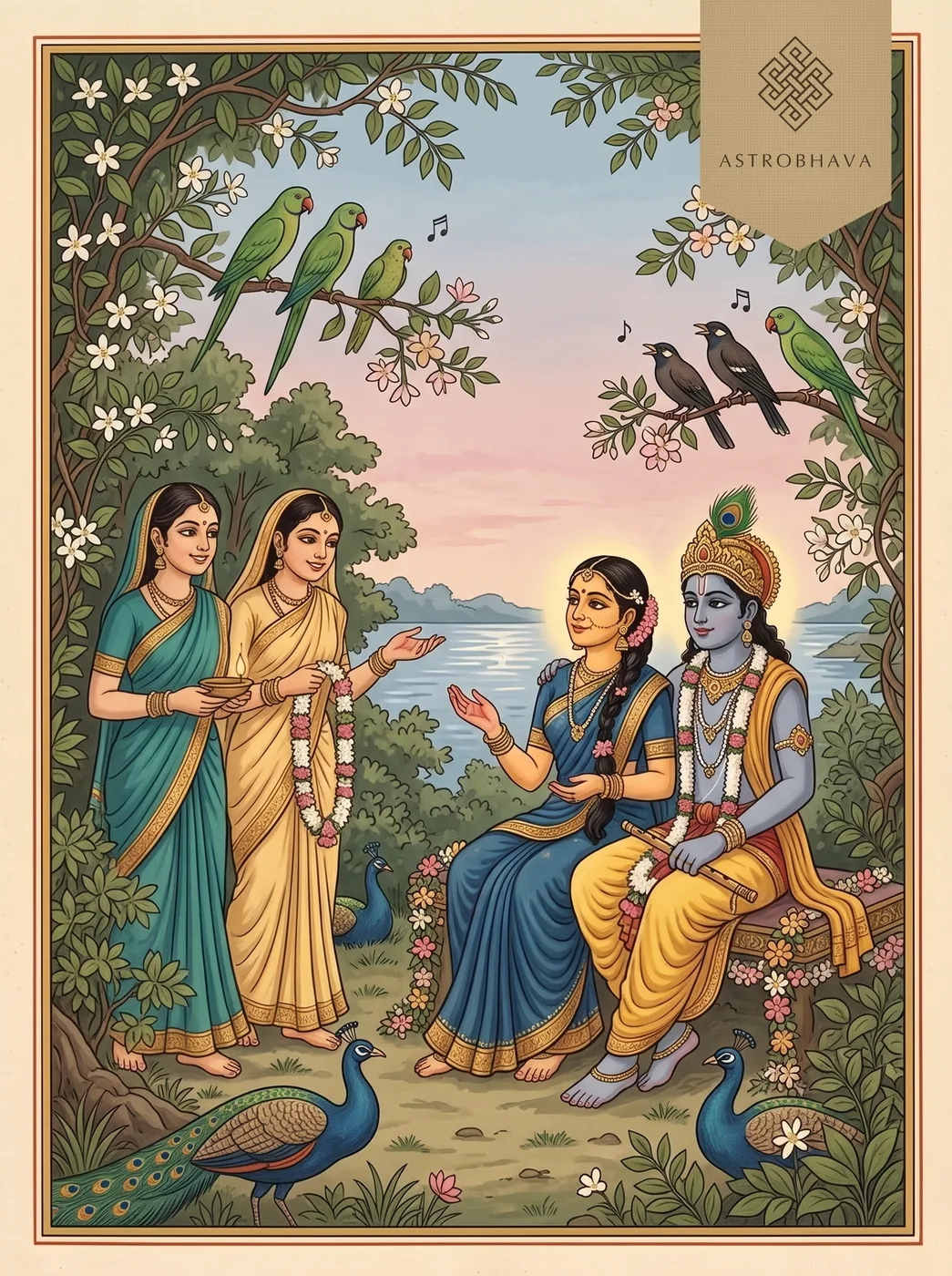
The Radha pranama is printed as verse 25 of the Gaura-Govindarchana-Smarana-Paddhati, an eighteenth-century Gaudiya manual of worship and inner remembrance compiled by Dhyanachandra Goswami. The manual does not name the verse's author; it places it inside a sequence. The practitioner rises before dawn and calls to mind the end-of-night scene of Radha and Krishna in the forest bower: parrots and mynas reciting verses to wake them, the friends Lalita and Vishakha arriving, and the pair hurrying home for fear that Jatila, Radha's mother-in-law in the story, will find them out. Only then come the bows, in a fixed order. First the guru, then Chaitanya, Nityananda, Advaita, Gadadhara and Srivasa, then Navadvipa and the Ganga. Next Krishna is saluted as the son of the cowherd king, and at once Radha with this couplet. After her come Ananga Manjari, her younger sister in the tradition, and the circles of her companions. Later chapters of the same manual record her household as the tradition remembers it: Kirtida her mother, Vrishabhanu her father, her home at Yavata. In present-day use the couplet closes the opening prayers before scripture reading, with 'He Krishna karunasindho' said a few verses earlier, and at Gaudiya initiation fire rites each of the two is recited with svaha.
The mantra, in six scripts
- तप्तकाञ्चनगौराङ्गि
- taptakāñcanagaurāṅgi — O you with limbs like molten gold
- राधे
- rādhe — O Radha
- वृन्दावनेश्वरि
- vṛndāvaneśvari — O queen of Vrindavan
- वृषभानुसुते
- vṛṣabhānusute — O daughter of Vrishabhanu
- देवि
- devi — O goddess
- प्रणमामि
- praṇamāmi — I bow down
- हरिप्रिये
- haripriye — O beloved of Hari
Radha Krishna Mantra lyrics in full
Three short pieces in the order they are said together: the Radha pranama, the Radha Gayatri, and the Krishna pranama that ends on Radhakanta.
All 3 verses, in Sanskrit, Tamil, Telugu, Kannada, Malayalam and English, each with its meaning. Choose a script:
Download the Radha Krishna Mantra PDFAll 3 verses with their meanings, in Sanskrit. Free to print and keep.
तप्तकाञ्चनगौराङ्गि राधे वृन्दावनेश्वरि ।
वृषभानुसुते देवि प्रणमामि हरिप्रिये ॥
தப்தகாஞ்சநகௌராங்கி ராதே வ்ருந்தாவநேஶ்வரி ।
வ்ருஷபாநுஸுதே தேவி ப்ரணமாமி ஹரிப்ரியே ॥
తప్తకాఞ్చనగౌరాఙ్గి రాధే వృన్దావనేశ్వరి ।
వృషభానుసుతే దేవి ప్రణమామి హరిప్రియే ॥
ತಪ್ತಕಾಞ್ಚನಗೌರಾಙ್ಗಿ ರಾಧೇ ವೃನ್ದಾವನೇಶ್ವರಿ ।
ವೃಷಭಾನುಸುತೇ ದೇವಿ ಪ್ರಣಮಾಮಿ ಹರಿಪ್ರಿಯೇ ॥
തപ്തകാഞ്ചനഗൌരാങ്ഗി രാധേ വൃന്ദാവനേശ്വരി ।
വൃഷഭാനുസുതേ ദേവി പ്രണമാമി ഹരിപ്രിയേ ॥
taptakāñcanagaurāṅgi rādhe vṛndāvaneśvari |
vṛṣabhānusute devi praṇamāmi haripriye ||
O Radha, golden of form like molten gold, queen of Vrindavan; O goddess, daughter of Vrishabhanu, beloved of Hari, I bow to you.
ॐ वृषभानुजायै विद्महे कृष्णप्रियायै धीमहि ।
तन्नो राधा प्रचोदयात् ॥
ௐ வ்ருஷபாநுஜாயை வித்மஹே க்ருஷ்ணப்ரியாயை தீமஹி ।
தந்நோ ராதா ப்ரசோதயாத் ॥
ఓం వృషభానుజాయై విద్మహే కృష్ణప్రియాయై ధీమహి ।
తన్నో రాధా ప్రచోదయాత్ ॥
ಓಂ ವೃಷಭಾನುಜಾಯೈ ವಿದ್ಮಹೇ ಕೃಷ್ಣಪ್ರಿಯಾಯೈ ಧೀಮಹಿ ।
ತನ್ನೋ ರಾಧಾ ಪ್ರಚೋದಯಾತ್ ॥
ഓം വൃഷഭാനുജായൈ വിദ്മഹേ കൃഷ്ണപ്രിയായൈ ധീമഹി ।
തന്നോ രാധാ പ്രചോദയാത് ॥
oṃ vṛṣabhānujāyai vidmahe kṛṣṇapriyāyai dhīmahi |
tanno rādhā pracodayāt ||
Om. We come to know the daughter of Vrishabhanu; we meditate on the beloved of Krishna. May Radha inspire and guide us.
हे कृष्ण करुणासिन्धो दीनबन्धो जगत्पते ।
गोपेश गोपिकाकान्त राधाकान्त नमोऽस्तु ते ॥
ஹே க்ருஷ்ண கருணாஸிந்தோ தீநபந்தோ ஜகத்பதே ।
கோபேஶ கோபிகாகாந்த ராதாகாந்த நமோஸ்து தே ॥
హే కృష్ణ కరుణాసిన్ధో దీనబన్ధో జగత్పతే ।
గోపేశ గోపికాకాన్త రాధాకాన్త నమోఽస్తు తే ॥
ಹೇ ಕೃಷ್ಣ ಕರುಣಾಸಿನ್ಧೋ ದೀನಬನ್ಧೋ ಜಗತ್ಪತೇ ।
ಗೋಪೇಶ ಗೋಪಿಕಾಕಾನ್ತ ರಾಧಾಕಾನ್ತ ನಮೋಽಸ್ತು ತೇ ॥
ഹേ കൃഷ്ണ കരുണാസിന്ധോ ദീനബന്ധോ ജഗത്പതേ ।
ഗോപേശ ഗോപികാകാന്ത രാധാകാന്ത നമോഽസ്തു തേ ॥
he kṛṣṇa karuṇāsindho dīnabandho jagatpate |
gopeśa gopikākānta rādhākānta namo'stu te ||
O Krishna, ocean of compassion, friend of the helpless, lord of the world; lord of the cowherds, beloved of the gopis, beloved of Radha, salutations to you.
The syllable people get wrong
In vṛṣabhānusute the ṛ is a short 'ri', the ṣ a retroflex 'sh', and the bhā takes an aspirated b and a long ā: vri-sha-BHAA-nu-su-tay. It is often flattened to 'Vrishbanu', which drops both the aspiration and the long vowel of bhānu, the sun.
When the Radha Krishna Mantra is chanted
Weekday. Thursday
Festival. Radhashtami
Questions
Have your chart read before you decide
Chanting is yours to do, and free. But which deity your situation calls for — and whether a mantra alone is the right response — depends on your chart. Sometimes it is; sometimes it is not.
- Over 30 years in the Guru–Sishya Parampara, from the age of five
- He reads every chart himself — 60 minutes, one to one, never delegated
- Charts are read only between sunrise and sunset, following tradition
