Santhana Ganapathi Stotram
नमोऽस्तु गणनाथाय सिद्धिबुद्धियुताय च । सर्वप्रदाय देवाय पुत्रवृद्धिप्रदाय च ॥Also known as Santana Ganapati Stotram
In Devanagari, Tamil, Telugu, Kannada, Malayalam and English — with the meaning of every word, and the one syllable most people pronounce wrongly.
 The Ganapathi Homam, performed for youBook →
What the Santhana Ganapathi Stotram is
The Santhana Ganapathi Stotram, printed here under the Sanskrit spelling Santana Ganapati Stotram, is a six-verse prayer to Ganesha for children and for the continuance of a family line; santana means offspring or lineage. No printed edition names an author or a Purana for it, and it is handed down as a traditional, anonymous stotra. The verses fall into two movements. Verses 1 to 4 are a chain of salutations, each name a small portrait: the master of the ganas joined with Siddhi and Buddhi, the great-bellied teacher who dwells in what is hidden, the root and maker of the universe, the one-tusked god with the gracious face who guards those who take refuge in him. Verse 5 turns to direct petition: be my refuge, make my line firm. Its sentence runs on into verse 6, asking that the sons yet to be born in the family be devoted to Ganesha's worship. The second half of verse 6 is the phala shruti, the hymn's own statement of what it grants.
Siddhi, Buddhi and the circled parents
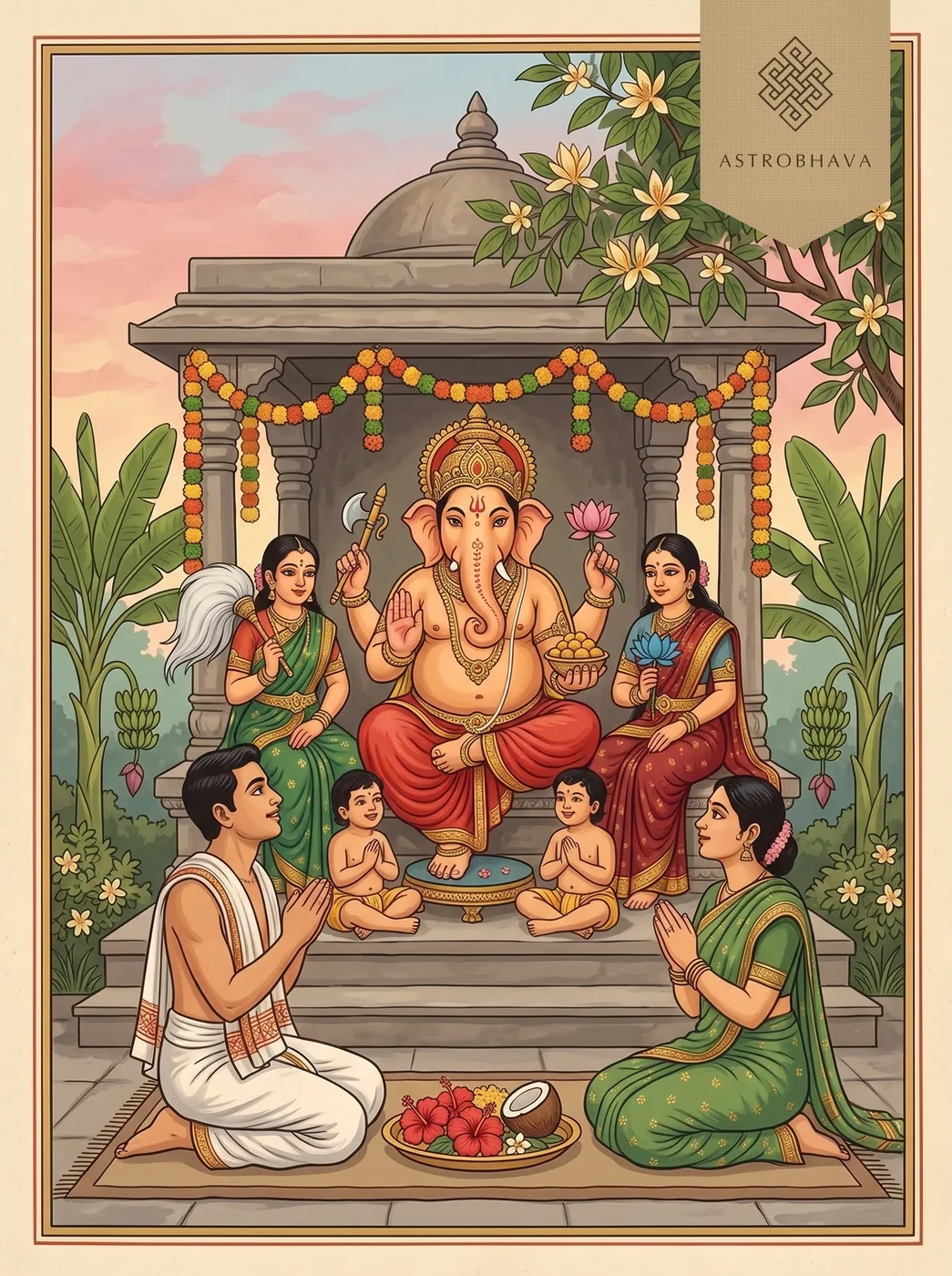
The stotra carries no story of its own composition, and its printings give no account of who first recited it. Its opening line, however, points to a narrative that explains why Ganesha is approached as a giver of sons. The Kumara Khanda of the Shiva Purana's Rudra Samhita relates that Shiva and Parvati told their two sons that whoever first went round the whole earth and returned would be married first. Skanda set off at once. Ganesha, judging the journey beyond him, bathed, seated his parents, worshipped them and walked around them seven times, then argued from the Vedas and Shastras that circling one's parents earns the merit of circling the earth. His parents accepted the reasoning, and he was married to Siddhi and Buddhi, the daughters of Prajapati Vishvarupa. The following chapter adds that Siddhi bore him a son named Kshema and Buddhi a son named Labha; northern Indian tellings often call the sons Shubha and Labha. A hymn that opens by naming Ganesha as joined with Siddhi and Buddhi, and then asks for the increase of sons, therefore addresses him as a householder and a father, not only as the remover of obstacles. At the Ganesha temple at Morgaon in Maharashtra, the sanctum image stands with Siddhi and Buddhi on either side.
The mantra, in six scripts
- नमोऽस्तु
- namo'stu — let there be salutation
- गणनाथाय
- gaṇanāthāya — to the master of the ganas
- सिद्धिबुद्धियुताय
- siddhibuddhiyutāya — joined with Siddhi and Buddhi
- च
- ca — and
- सर्वप्रदाय
- sarvapradāya — to the giver of all
- देवाय
- devāya — to the god
- पुत्रवृद्धिप्रदाय
- putravṛddhipradāya — to the granter of the increase of sons
- च
- ca — and
Santhana Ganapathi Stotram lyrics in full
Six verses, the last of which closes with the hymn's statement of what it grants. The printed closing line is given at the end.
All 7 verses, in Sanskrit, Tamil, Telugu, Kannada, Malayalam and English, each with its meaning. Choose a script:
Download the Santhana Ganapathi Stotram PDFAll 7 verses with their meanings, in Sanskrit. Free to print and keep.
नमोऽस्तु गणनाथाय सिद्धिबुद्धियुताय च ।
सर्वप्रदाय देवाय पुत्रवृद्धिप्रदाय च ॥
நமோஸ்து கணநாதாய ஸித்திபுத்தியுதாய ச ।
ஸர்வப்ரதாய தேவாய புத்ரவ்ருத்திப்ரதாய ச ॥
నమోఽస్తు గణనాథాయ సిద్ధిబుద్ధియుతాయ చ ।
సర్వప్రదాయ దేవాయ పుత్రవృద్ధిప్రదాయ చ ॥
ನಮೋಽಸ್ತು ಗಣನಾಥಾಯ ಸಿದ್ಧಿಬುದ್ಧಿಯುತಾಯ ಚ ।
ಸರ್ವಪ್ರದಾಯ ದೇವಾಯ ಪುತ್ರವೃದ್ಧಿಪ್ರದಾಯ ಚ ॥
നമോഽസ്തു ഗണനാഥായ സിദ്ധിബുദ്ധിയുതായ ച ।
സര്വപ്രദായ ദേവായ പുത്രവൃദ്ധിപ്രദായ ച ॥
namo'stu gaṇanāthāya siddhibuddhiyutāya ca |
sarvapradāya devāya putravṛddhipradāya ca ||
Salutation to the lord of the ganas, who is joined with Siddhi and Buddhi. Salutation to the god who gives everything and who grants the increase of sons.
गुरूदराय गुरवे गोप्त्रे गुह्यासिताय ते ।
गोप्याय गोपिताशेषभुवनाय चिदात्मने ॥
குரூதராய குரவே கோப்த்ரே குஹ்யாஸிதாய தே ।
கோப்யாய கோபிதாஶேஷபுவநாய சிதாத்மநே ॥
గురూదరాయ గురవే గోప్త్రే గుహ్యాసితాయ తే ।
గోప్యాయ గోపితాశేషభువనాయ చిదాత్మనే ॥
ಗುರೂದರಾಯ ಗುರವೇ ಗೋಪ್ತ್ರೇ ಗುಹ್ಯಾಸಿತಾಯ ತೇ ।
ಗೋಪ್ಯಾಯ ಗೋಪಿತಾಶೇಷಭುವನಾಯ ಚಿದಾತ್ಮನೇ ॥
ഗുരൂദരായ ഗുരവേ ഗോപ്ത്രേ ഗുഹ്യാസിതായ തേ ।
ഗോപ്യായ ഗോപിതാശേഷഭുവനായ ചിദാത്മനേ ॥
gurūdarāya gurave goptre guhyāsitāya te |
gopyāya gopitāśeṣabhuvanāya cidātmane ||
Salutation to you, the great-bellied one, the teacher, the protector, who dwells in what is secret. Salutation to the one who is to be guarded in the heart, who protects all the worlds, whose very self is consciousness.
विश्वमूलाय भव्याय विश्वसृष्टिकराय ते ।
नमो नमस्ते सत्याय सत्यपूर्णाय शुण्डिने ॥
விஶ்வமூலாய பவ்யாய விஶ்வஸ்ருஷ்டிகராய தே ।
நமோ நமஸ்தே ஸத்யாய ஸத்யபூர்ணாய ஶுண்டிநே ॥
విశ్వమూలాయ భవ్యాయ విశ్వసృష్టికరాయ తే ।
నమో నమస్తే సత్యాయ సత్యపూర్ణాయ శుణ్డినే ॥
ವಿಶ್ವಮೂಲಾಯ ಭವ್ಯಾಯ ವಿಶ್ವಸೃಷ್ಟಿಕರಾಯ ತೇ ।
ನಮೋ ನಮಸ್ತೇ ಸತ್ಯಾಯ ಸತ್ಯಪೂರ್ಣಾಯ ಶುಣ್ಡಿನೇ ॥
വിശ്വമൂലായ ഭവ്യായ വിശ്വസൃഷ്ടികരായ തേ ।
നമോ നമസ്തേ സത്യായ സത്യപൂര്ണായ ശുണ്ഡിനേ ॥
viśvamūlāya bhavyāya viśvasṛṣṭikarāya te |
namo namaste satyāya satyapūrṇāya śuṇḍine ||
To you, the root of the universe, the auspicious one, the maker of the world's creation. Again and again salutation to you, who are truth, full of truth, the one with the trunk.
एकदन्ताय शुद्धाय सुमुखाय नमो नमः ।
प्रपन्नजनपालाय प्रणतार्तिविनाशिने ॥
ஏகதந்தாய ஶுத்தாய ஸுமுகாய நமோ நமஃ ।
ப்ரபந்நஜநபாலாய ப்ரணதார்திவிநாஶிநே ॥
ఏకదన్తాయ శుద్ధాయ సుముఖాయ నమో నమః ।
ప్రపన్నజనపాలాయ ప్రణతార్తివినాశినే ॥
ಏಕದನ್ತಾಯ ಶುದ್ಧಾಯ ಸುಮುಖಾಯ ನಮೋ ನಮಃ ।
ಪ್ರಪನ್ನಜನಪಾಲಾಯ ಪ್ರಣತಾರ್ತಿವಿನಾಶಿನೇ ॥
ഏകദന്തായ ശുദ്ധായ സുമുഖായ നമോ നമഃ ।
പ്രപന്നജനപാലായ പ്രണതാര്തിവിനാശിനേ ॥
ekadantāya śuddhāya sumukhāya namo namaḥ |
prapannajanapālāya praṇatārtivināśine ||
Salutation again and again to the one-tusked, the pure, the one with the gracious face. Salutation to the guardian of those who take refuge in him, the destroyer of the distress of those who bow down.
शरणं भव देवेश सन्ततिं सुदृढा कुरु ।
भविष्यन्ति च ये पुत्रा मत्कुले गणनायक ॥
ஶரணம் பவ தேவேஶ ஸந்ததிம் ஸுத்ருடா குரு ।
பவிஷ்யந்தி ச யே புத்ரா மத்குலே கணநாயக ॥
శరణం భవ దేవేశ సన్తతిం సుదృఢా కురు ।
భవిష్యన్తి చ యే పుత్రా మత్కులే గణనాయక ॥
ಶರಣಂ ಭವ ದೇವೇಶ ಸನ್ತತಿಂ ಸುದೃಢಾ ಕುರು ।
ಭವಿಷ್ಯನ್ತಿ ಚ ಯೇ ಪುತ್ರಾ ಮತ್ಕುಲೇ ಗಣನಾಯಕ ॥
ശരണം ഭവ ദേവേശ സന്തതിം സുദൃഢാ കുരു ।
ഭവിഷ്യന്തി ച യേ പുത്രാ മത്കുലേ ഗണനായക ॥
śaraṇaṃ bhava deveśa santatiṃ sudṛḍhā kuru |
bhaviṣyanti ca ye putrā matkule gaṇanāyaka ||
O lord of the gods, be my refuge and make my line of descendants firm. O leader of the ganas, the sons who will be born in my family...
ते सर्वे तव पूजार्थं निरताः स्युर्वरोमतः ।
पुत्रप्रदमिदं स्तोत्रं सर्वसिद्धिप्रदायकम् ॥
தே ஸர்வே தவ பூஜார்தம் நிரதாஃ ஸ்யுர்வரோமதஃ ।
புத்ரப்ரதமிதம் ஸ்தோத்ரம் ஸர்வஸித்திப்ரதாயகம் ॥
తే సర్వే తవ పూజార్థం నిరతాః స్యుర్వరోమతః ।
పుత్రప్రదమిదం స్తోత్రం సర్వసిద్ధిప్రదాయకమ్ ॥
ತೇ ಸರ್ವೇ ತವ ಪೂಜಾರ್ಥಂ ನಿರತಾಃ ಸ್ಯುರ್ವರೋಮತಃ ।
ಪುತ್ರಪ್ರದಮಿದಂ ಸ್ತೋತ್ರಂ ಸರ್ವಸಿದ್ಧಿಪ್ರದಾಯಕಮ್ ॥
തേ സര്വേ തവ പൂജാര്ഥം നിരതാഃ സ്യുര്വരോമതഃ ।
പുത്രപ്രദമിദം സ്തോത്രം സര്വസിദ്ധിപ്രദായകമ് ॥
te sarve tava pūjārthaṃ niratāḥ syurvaromataḥ |
putrapradamidaṃ stotraṃ sarvasiddhipradāyakam ||
...may all of them, by your boon, be devoted to your worship. The verse says this hymn grants sons and bestows every kind of accomplishment.
इति सन्तानगणपतिस्तोत्रं सम्पूर्णम् ।
இதி ஸந்தாநகணபதிஸ்தோத்ரம் ஸம்பூர்ணம் ।
ఇతి సన్తానగణపతిస్తోత్రం సమ్పూర్ణమ్ ।
ಇತಿ ಸನ್ತಾನಗಣಪತಿಸ್ತೋತ್ರಂ ಸಮ್ಪೂರ್ಣಮ್ ।
ഇതി സന്താനഗണപതിസ്തോത്രം സമ്പൂര്ണമ് ।
iti santānagaṇapatistotraṃ sampūrṇam |
Thus ends the Santana Ganapati Stotram.
The syllable people get wrong
The word goptre (गोप्त्रे, 'to the protector') in verse 2 is often broken up as 'go-pa-tre' or softened to 'gop-three'. Say it in two syllables, gop-tre, with the p and a dental t closing straight onto the r and no vowel slipped between them.
When the Santhana Ganapathi Stotram is chanted
Weekday. Tuesday
Questions
Have your chart read before you decide
Chanting is yours to do, and free. But which deity your situation calls for — and whether a mantra alone is the right response — depends on your chart. Sometimes it is; sometimes it is not.
- Over 30 years in the Guru–Sishya Parampara, from the age of five
- He reads every chart himself — 60 minutes, one to one, never delegated
- Charts are read only between sunrise and sunset, following tradition
