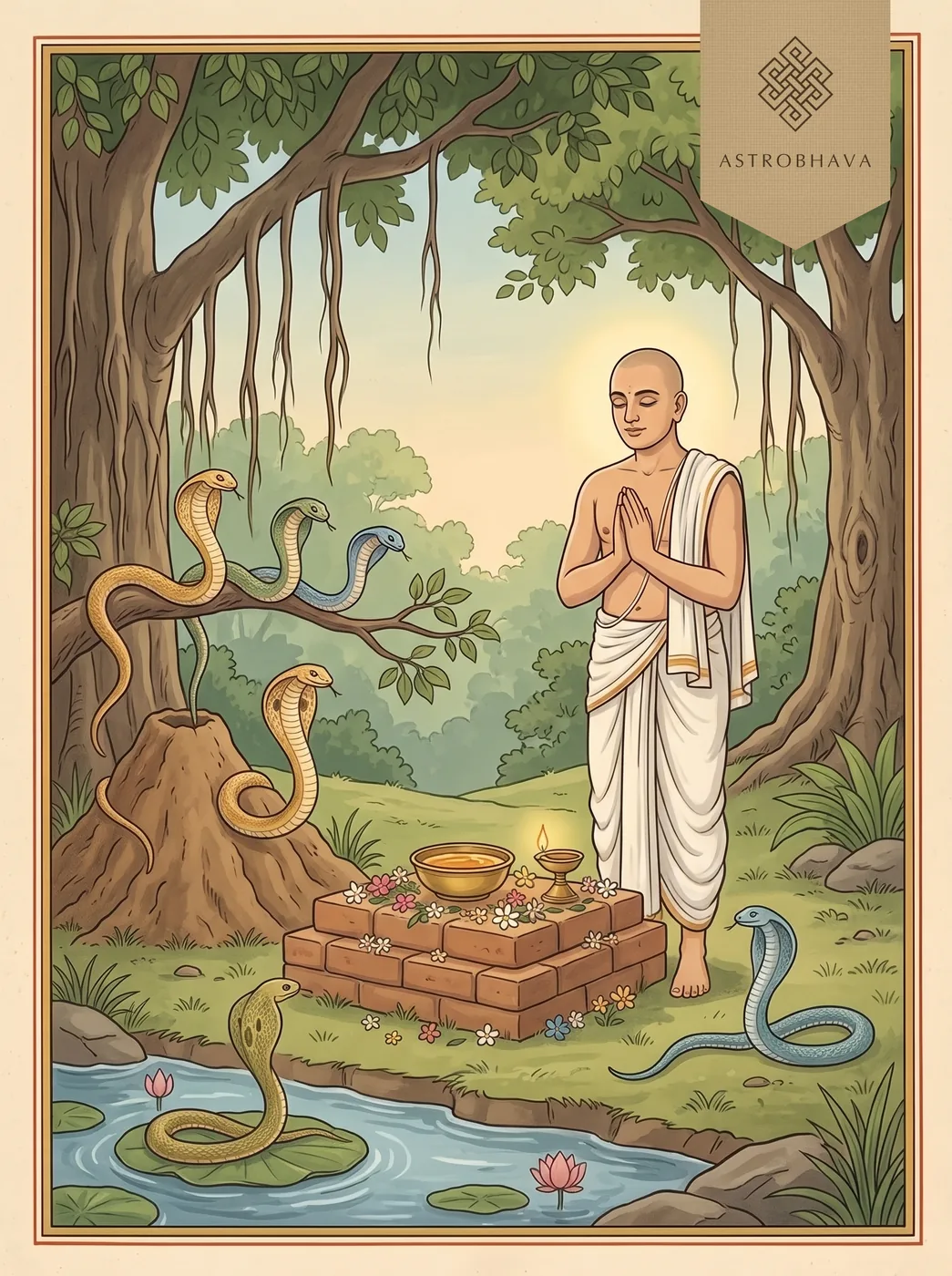
Sarpa Suktam
नमो अस्तु सर्पेभ्यो ये के च पृथिवीमनु । ये अन्तरिक्षे ये दिवि तेभ्यः सर्पेभ्यो नमः ॥Also known as Namo Astu Sarpebhyo
In Devanagari, Tamil, Telugu, Kannada, Malayalam and English — with the meaning of every word, and the one syllable most people pronounce wrongly.
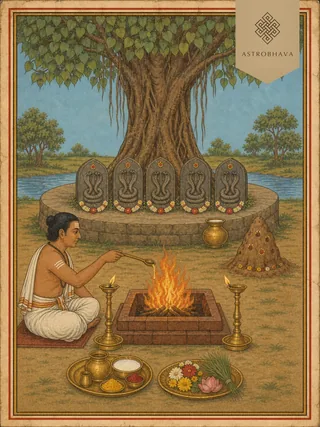 The Naga Dosha Nivaran Homam, performed for youBook →
What the Sarpa Suktam is
The Sarpa Suktam, the Vedic salutation to the serpents that opens 'Namo astu sarpebhyo', is not one hymn of the Veda but three passages of the Krishna Yajurveda's Taittiriya school, chanted as one. Verses 1-3 close Taittiriya Samhita 4.2.8 and hail the serpents of earth, mid-air and sky, of the sun's rays, the waters, the trees and the hollows in the ground. Verses 4-5 are the Ashlesha lines of the Nakshatra Suktam, Taittiriya Brahmana 3.1.1.5-6, which offer honeyed oblation to the serpents as the rulers of that star. Verses 6-8 come from Taittiriya Aranyaka 1.12 and turn to Indra and his retinue. The chant stops at the third 'subrahmanyom', although the Aranyaka paragraph runs on. No author is named. The page prints the text without accent marks; chanting with the svaras is learned from a teacher.
Holding the worlds from gliding away
The three verses that open the chant have a parallel in the White Yajurveda (Vajasaneyi Samhita 13.6-8), and the Shatapatha Brahmana (7.4.1.25-31) explains why they are said. They belong to the piling of the great fire altar. When a golden human figure has been laid in the altar, the sacrificer stands beside it and salutes with these verses. The Brahmana reasons from a pun: serpents are the worlds, since sarpa comes from sarp, to glide, and the worlds glide along with all they hold. The gods, having laid their own self on the altar, feared the worlds would slide away with it. They saw these formulas, and with them stopped the worlds and made them bow, which the text hears in the name Sarpanama, from nam, to bend. The sacrificer does the same, and whatever fiend or devourer lives in those worlds is appeased. There are three verses, the Brahmana notes, because the worlds are three, and they are said standing, because the worlds stand. The other two passages have settings of their own. The Ashlesha lines served the rite that gave each star its oblation, and the Aranyaka lines picture gods arriving in procession. When the three parts were first joined is not recorded.
The mantra, in six scripts
- नमो
- namo — salutation
- अस्तु
- astu — let there be
- सर्पेभ्यो
- sarpebhyo — to the serpents
- ये
- ye — those who
- के
- ke — whichever
- च
- ca — and, any
- पृथिवीमनु
- pṛthivīmanu — along the earth
- ये
- ye — those who
- अन्तरिक्षे
- antarikṣe — in the mid-air
- ये
- ye — those who
- दिवि
- divi — in the sky
- तेभ्यः
- tebhyaḥ — to those
- सर्पेभ्यो
- sarpebhyo — to the serpents
- नमः
- namaḥ — salutation
Sarpa Suktam lyrics in full
The three Taittiriya passages in the order they are chanted, eight verses in all, ending at the threefold 'subrahmanyom'.
All 8 verses, in Sanskrit, Tamil, Telugu, Kannada, Malayalam and English, each with its meaning. Choose a script:
Download the Sarpa Suktam PDFAll 8 verses with their meanings, in Sanskrit. Free to print and keep.
नमो अस्तु सर्पेभ्यो ये के च पृथिवीमनु ।
ये अन्तरिक्षे ये दिवि तेभ्यः सर्पेभ्यो नमः ॥
நமோ அஸ்து ஸர்பேப்யோ யே கே ச ப்ருதிவீமநு ।
யே அந்தரிக்ஷே யே திவி தேப்யஃ ஸர்பேப்யோ நமஃ ॥
నమో అస్తు సర్పేభ్యో యే కే చ పృథివీమను ।
యే అన్తరిక్షే యే దివి తేభ్యః సర్పేభ్యో నమః ॥
ನಮೋ ಅಸ್ತು ಸರ್ಪೇಭ್ಯೋ ಯೇ ಕೇ ಚ ಪೃಥಿವೀಮನು ।
ಯೇ ಅನ್ತರಿಕ್ಷೇ ಯೇ ದಿವಿ ತೇಭ್ಯಃ ಸರ್ಪೇಭ್ಯೋ ನಮಃ ॥
നമോ അസ്തു സര്പേഭ്യോ യേ കേ ച പൃഥിവീമനു ।
യേ അന്തരിക്ഷേ യേ ദിവി തേഭ്യഃ സര്പേഭ്യോ നമഃ ॥
namo astu sarpebhyo ye ke ca pṛthivīmanu |
ye antarikṣe ye divi tebhyaḥ sarpebhyo namaḥ ||
Salutation to the serpents, whichever move along the earth; to those in the mid-air and those in the sky, to those serpents, salutation.
येऽदो रोचने दिवो ये वा सूर्यस्य रश्मिषु ।
येषामप्सु सदः कृतं तेभ्यः सर्पेभ्यो नमः ॥
யேதோ ரோசநே திவோ யே வா ஸூர்யஸ்ய ரஶ்மிஷு ।
யேஷாமப்ஸு ஸதஃ க்ருதம் தேப்யஃ ஸர்பேப்யோ நமஃ ॥
యేఽదో రోచనే దివో యే వా సూర్యస్య రశ్మిషు ।
యేషామప్సు సదః కృతం తేభ్యః సర్పేభ్యో నమః ॥
ಯೇಽದೋ ರೋಚನೇ ದಿವೋ ಯೇ ವಾ ಸೂರ್ಯಸ್ಯ ರಶ್ಮಿಷು ।
ಯೇಷಾಮಪ್ಸು ಸದಃ ಕೃತಂ ತೇಭ್ಯಃ ಸರ್ಪೇಭ್ಯೋ ನಮಃ ॥
യേഽദോ രോചനേ ദിവോ യേ വാ സൂര്യസ്യ രശ്മിഷു ।
യേഷാമപ്സു സദഃ കൃതം തേഭ്യഃ സര്പേഭ്യോ നമഃ ॥
ye'do rocane divo ye vā sūryasya raśmiṣu |
yeṣāmapsu sadaḥ kṛtaṃ tebhyaḥ sarpebhyo namaḥ ||
Those in the bright realm of heaven up there, or in the rays of the sun; those whose seat is made in the waters, to those serpents, salutation.
या इषवो यातुधानानां ये वा वनस्पतींरनु ।
ये वाऽवटेषु शेरते तेभ्यः सर्पेभ्यो नमः ॥
யா இஷவோ யாதுதாநாநாம் யே வா வநஸ்பதீம்ரநு ।
யே வாவடேஷு ஶேரதே தேப்யஃ ஸர்பேப்யோ நமஃ ॥
యా ఇషవో యాతుధానానాం యే వా వనస్పతీంరను ।
యే వాఽవటేషు శేరతే తేభ్యః సర్పేభ్యో నమః ॥
ಯಾ ಇಷವೋ ಯಾತುಧಾನಾನಾಂ ಯೇ ವಾ ವನಸ್ಪತೀಂರನು ।
ಯೇ ವಾಽವಟೇಷು ಶೇರತೇ ತೇಭ್ಯಃ ಸರ್ಪೇಭ್ಯೋ ನಮಃ ॥
യാ ഇഷവോ യാതുധാനാനാം യേ വാ വനസ്പതീംരനു ।
യേ വാഽവടേഷു ശേരതേ തേഭ്യഃ സര്പേഭ്യോ നമഃ ॥
yā iṣavo yātudhānānāṃ ye vā vanaspatīṃranu |
ye vā'vaṭeṣu śerate tebhyaḥ sarpebhyo namaḥ ||
Those that are the arrows of the sorcerers, or those that live along the trees, or those that lie in holes in the ground: to those serpents, salutations.
इदं सर्पेभ्यो हविरस्तु जुष्टम् ।
आश्रेषा येषामनुयन्ति चेतः ।
ये अन्तरिक्षं पृथिवीं क्षियन्ति ।
ते नः सर्पासो हवमागमिष्ठाः ॥
இதம் ஸர்பேப்யோ ஹவிரஸ்து ஜுஷ்டம் ।
ஆஶ்ரேஷா யேஷாமநுயந்தி சேதஃ ।
யே அந்தரிக்ஷம் ப்ருதிவீம் க்ஷியந்தி ।
தே நஃ ஸர்பாஸோ ஹவமாகமிஷ்டாஃ ॥
ఇదం సర్పేభ్యో హవిరస్తు జుష్టమ్ ।
ఆశ్రేషా యేషామనుయన్తి చేతః ।
యే అన్తరిక్షం పృథివీం క్షియన్తి ।
తే నః సర్పాసో హవమాగమిష్ఠాః ॥
ಇದಂ ಸರ್ಪೇಭ್ಯೋ ಹವಿರಸ್ತು ಜುಷ್ಟಮ್ ।
ಆಶ್ರೇಷಾ ಯೇಷಾಮನುಯನ್ತಿ ಚೇತಃ ।
ಯೇ ಅನ್ತರಿಕ್ಷಂ ಪೃಥಿವೀಂ ಕ್ಷಿಯನ್ತಿ ।
ತೇ ನಃ ಸರ್ಪಾಸೋ ಹವಮಾಗಮಿಷ್ಠಾಃ ॥
ഇദം സര്പേഭ്യോ ഹവിരസ്തു ജുഷ്ടമ് ।
ആശ്രേഷാ യേഷാമനുയന്തി ചേതഃ ।
യേ അന്തരിക്ഷം പൃഥിവീം ക്ഷിയന്തി ।
തേ നഃ സര്പാസോ ഹവമാഗമിഷ്ഠാഃ ॥
idaṃ sarpebhyo havirastu juṣṭam |
āśreṣā yeṣāmanuyanti cetaḥ |
ye antarikṣaṃ pṛthivīṃ kṣiyanti |
te naḥ sarpāso havamāgamiṣṭhāḥ ||
May this offering be pleasing to the serpents, whose thought the Ashlesha stars follow. Those who dwell in the mid-air and on the earth, may those serpents come to our call.
ये रोचने सूर्यस्यापि सर्पाः ।
ये दिवं देवीमनु संचरन्ति ।
येषामाश्रेषा अनुयन्ति कामम् ।
तेभ्यः सर्पेभ्यो मधुमज्जुहोमि ॥
யே ரோசநே ஸூர்யஸ்யாபி ஸர்பாஃ ।
யே திவம் தேவீமநு ஸம்சரந்தி ।
யேஷாமாஶ்ரேஷா அநுயந்தி காமம் ।
தேப்யஃ ஸர்பேப்யோ மதுமஜ்ஜுஹோமி ॥
యే రోచనే సూర్యస్యాపి సర్పాః ।
యే దివం దేవీమను సంచరన్తి ।
యేషామాశ్రేషా అనుయన్తి కామమ్ ।
తేభ్యః సర్పేభ్యో మధుమజ్జుహోమి ॥
ಯೇ ರೋಚನೇ ಸೂರ್ಯಸ್ಯಾಪಿ ಸರ್ಪಾಃ ।
ಯೇ ದಿವಂ ದೇವೀಮನು ಸಂಚರನ್ತಿ ।
ಯೇಷಾಮಾಶ್ರೇಷಾ ಅನುಯನ್ತಿ ಕಾಮಮ್ ।
ತೇಭ್ಯಃ ಸರ್ಪೇಭ್ಯೋ ಮಧುಮಜ್ಜುಹೋಮಿ ॥
യേ രോചനേ സൂര്യസ്യാപി സര്പാഃ ।
യേ ദിവം ദേവീമനു സംചരന്തി ।
യേഷാമാശ്രേഷാ അനുയന്തി കാമമ് ।
തേഭ്യഃ സര്പേഭ്യോ മധുമജ്ജുഹോമി ॥
ye rocane sūryasyāpi sarpāḥ |
ye divaṃ devīmanu saṃcaranti |
yeṣāmāśreṣā anuyanti kāmam |
tebhyaḥ sarpebhyo madhumajjuhomi ||
Serpents who are in the brightness of the sun, those who move along the shining sky, whose wish the Ashlesha stars follow: to those serpents I offer this honeyed oblation.
निघृष्वैरसमायुतैः ।
कालैर्हरित्वमापन्नैः ।
इन्द्रायाहि सहस्रयुक् ॥
நிக்ருஷ்வைரஸமாயுதைஃ ।
காலைர்ஹரித்வமாபந்நைஃ ।
இந்த்ராயாஹி ஸஹஸ்ரயுக் ॥
నిఘృష్వైరసమాయుతైః ।
కాలైర్హరిత్వమాపన్నైః ।
ఇన్ద్రాయాహి సహస్రయుక్ ॥
ನಿಘೃಷ್ವೈರಸಮಾಯುತೈಃ ।
ಕಾಲೈರ್ಹರಿತ್ವಮಾಪನ್ನೈಃ ।
ಇನ್ದ್ರಾಯಾಹಿ ಸಹಸ್ರಯುಕ್ ॥
നിഘൃഷ്വൈരസമായുതൈഃ ।
കാലൈര്ഹരിത്വമാപന്നൈഃ ।
ഇന്ദ്രായാഹി സഹസ്രയുക് ॥
nighṛṣvairasamāyutaiḥ |
kālairharitvamāpannaiḥ |
indrāyāhi sahasrayuk ||
With swift horses beyond compare, dark ones turned golden, come here, Indra, you who are drawn by a thousand.
अग्निर्विभ्राष्टिवसनः ।
वायुः श्वेतसिकद्रुकः ।
संवथ्सरो विषूवर्णैः ।
नित्यास्तेऽनुचरास्तव ॥
அக்நிர்விப்ராஷ்டிவஸநஃ ।
வாயுஃ ஶ்வேதஸிகத்ருகஃ ।
ஸம்வத்ஸரோ விஷூவர்ணைஃ ।
நித்யாஸ்தேநுசராஸ்தவ ॥
అగ్నిర్విభ్రాష్టివసనః ।
వాయుః శ్వేతసికద్రుకః ।
సంవథ్సరో విషూవర్ణైః ।
నిత్యాస్తేఽనుచరాస్తవ ॥
ಅಗ್ನಿರ್ವಿಭ್ರಾಷ್ಟಿವಸನಃ ।
ವಾಯುಃ ಶ್ವೇತಸಿಕದ್ರುಕಃ ।
ಸಂವಥ್ಸರೋ ವಿಷೂವರ್ಣೈಃ ।
ನಿತ್ಯಾಸ್ತೇಽನುಚರಾಸ್ತವ ॥
അഗ്നിര്വിഭ്രാഷ്ടിവസനഃ ।
വായുഃ ശ്വേതസികദ്രുകഃ ।
സംവഥ്സരോ വിഷൂവര്ണൈഃ ।
നിത്യാസ്തേഽനുചരാസ്തവ ॥
agnirvibhrāṣṭivasanaḥ |
vāyuḥ śvetasikadrukaḥ |
saṃvathsaro viṣūvarṇaiḥ |
nityāste'nucarāstava ||
Agni is clothed in glowing light, Vayu in pale white, and the Year in many colours. These are ever your attendants.
सुब्रह्मण्यों सुब्रह्मण्यों सुब्रह्मण्योम् ॥
ஸுப்ரஹ்மண்யோம் ஸுப்ரஹ்மண்யோம் ஸுப்ரஹ்மண்யோம் ॥
సుబ్రహ్మణ్యోం సుబ్రహ్మణ్యోం సుబ్రహ్మణ్యోమ్ ॥
ಸುಬ್ರಹ್ಮಣ್ಯೋಂ ಸುಬ್ರಹ್ಮಣ್ಯೋಂ ಸುಬ್ರಹ್ಮಣ್ಯೋಮ್ ॥
സുബ്രഹ്മണ്യോം സുബ്രഹ്മണ്യോം സുബ്രഹ്മണ്യോമ് ॥
subrahmaṇyoṃ subrahmaṇyoṃ subrahmaṇyom ||
Subrahmanyom, Subrahmanyom, Subrahmanyom: a ritual call, given three times.
The syllable people get wrong
Verses 4 and 5 give the star's name as āśreṣā, with an r, not the later spelling Ashlesha. Say it aa-SHRAY-shaa: a long first vowel, then a clear r inside the 'shr' cluster, with no l.
Questions
Have your chart read before you decide
Chanting is yours to do, and free. But which deity your situation calls for — and whether a mantra alone is the right response — depends on your chart. Sometimes it is; sometimes it is not.
- Over 30 years in the Guru–Sishya Parampara, from the age of five
- He reads every chart himself — 60 minutes, one to one, never delegated
- Charts are read only between sunrise and sunset, following tradition
