Shailaputri Mantra
ॐ देवी शैलपुत्र्यै नमः ॥Also known as Om Devi Shailaputryai Namah
In Devanagari, Tamil, Telugu, Kannada, Malayalam and English — with the meaning of every word, and the one syllable most people pronounce wrongly.
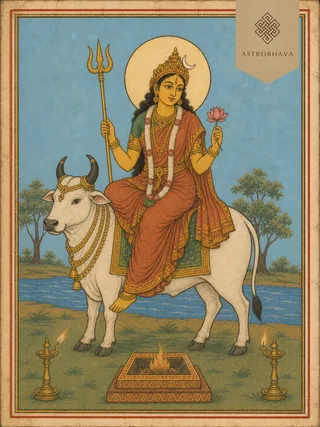 The Shailaputri Homam, performed for youBook →
What the Shailaputri Mantra is
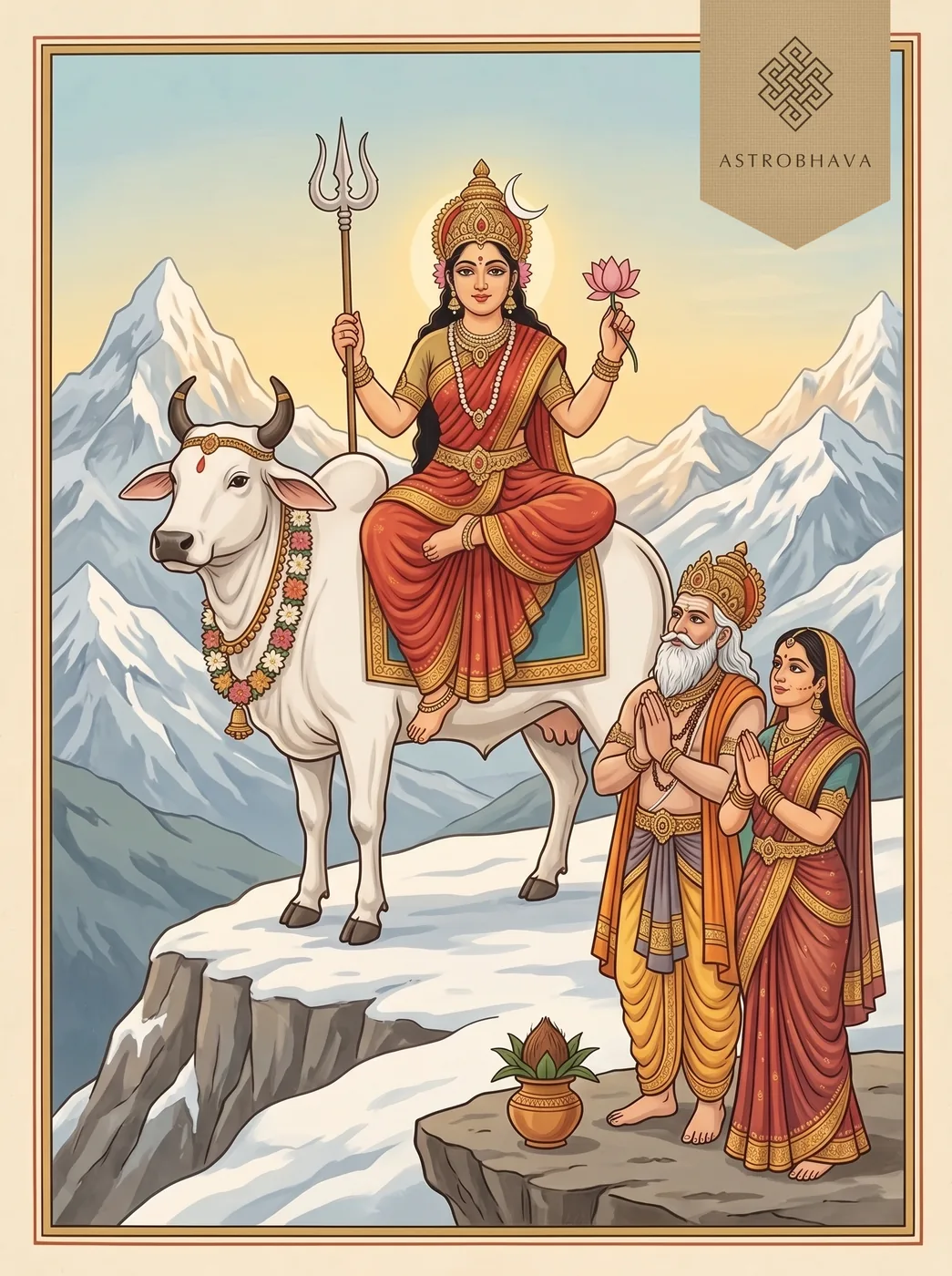
The Shailaputri Mantra is the set of three short texts with which Shailaputri, the mountain's daughter and first of the nine Durgas, is addressed on the opening day of Navaratri. None of the three has a named author. The first is the name mantra, Om Devi Shailaputryai Namah: the syllable Om, her title, and her name in the dative case, 'to Shailaputri', closed by namah, a plain act of salutation. The second is a dhyana shloka in the anushtubh metre, the opening verse of the traditional Navadurga Stotram, a ten-verse hymn that gives each of the nine forms one verse and Kalaratri two. It asks only for 'what is wished for' and gives three marks of her image: the half moon worn as a crest, the bull she rides and the trident she holds. The third is a stuti line built on the refrain of the gods' hymn in chapter 5 of the Devi Mahatmya. That hymn names the states in which the Goddess abides in all beings, from intelligence to delusion; the Navaratri line keeps its frame and sets Maa Shailaputri in the place of the changing word.
Sati's return as the mountain's daughter
Her name carries her story. According to the Puranic tradition, Sati, the daughter of Daksha, went uninvited to her father's sacrifice, heard Shiva insulted there and gave up her body in its fire. She was born again to Himavat, lord of the Himalaya, and his queen Mena, and as the child of the rock, shaila, she is called Shailaputri; tradition links the same birth to her names Parvati and Hemavati. A far older text already knows her by her father. In the third section of the Kena Upanishad, after Agni cannot burn a blade of grass and Vayu cannot stir it, Indra meets in the sky a woman 'shining with great beauty', Uma Haimavati, the daughter of Himavat, and it is she who tells him that the being they failed to recognise was Brahman. Her first place among the nine Durgas is fixed in the Devi Kavacham, where Brahma, answering the sage Markandeya, counts the nine forms and begins with her. In Kashi her temple stands in the narrow lanes near Marhia Ghat in the north of the city, a small shrine where a Shivalinga faces Nandi in the hall and her image stands to one side. On the first morning of Navaratri those lanes fill with devotees who come for her darshan.
The mantra, in six scripts
- ॐ
- oṃ — Om, the sacred syllable
- देवी
- devī — Goddess
- शैलपुत्र्यै
- śailaputryai — to Shailaputri, daughter of the mountain
- नमः
- namaḥ — salutation
Shailaputri Mantra lyrics in full
The name mantra, the dhyana shloka and the stuti line, in the order they are said on the first day of Navaratri.
All 3 verses, in Sanskrit, Tamil, Telugu, Kannada, Malayalam and English, each with its meaning. Choose a script:
Download the Shailaputri Mantra PDFAll 3 verses with their meanings, in Sanskrit. Free to print and keep.
ॐ देवी शैलपुत्र्यै नमः ॥
ௐ தேவீ ஶைலபுத்ர்யை நமஃ ॥
ఓం దేవీ శైలపుత్ర్యై నమః ॥
ಓಂ ದೇವೀ ಶೈಲಪುತ್ರ್ಯೈ ನಮಃ ॥
ഓം ദേവീ ശൈലപുത്ര്യൈ നമഃ ॥
oṃ devī śailaputryai namaḥ ||
Om, salutations to the Goddess Shailaputri, the daughter of the mountain.
वन्दे वाञ्छितलाभाय चन्द्रार्धकृतशेखराम् ।
वृषारूढां शूलधरां शैलपुत्रीं यशस्विनीम् ॥
வந்தே வாஞ்சிதலாபாய சந்த்ரார்தக்ருதஶேகராம் ।
வ்ருஷாரூடாம் ஶூலதராம் ஶைலபுத்ரீம் யஶஸ்விநீம் ॥
వన్దే వాఞ్ఛితలాభాయ చన్ద్రార్ధకృతశేఖరామ్ ।
వృషారూఢాం శూలధరాం శైలపుత్రీం యశస్వినీమ్ ॥
ವನ್ದೇ ವಾಞ್ಛಿತಲಾಭಾಯ ಚನ್ದ್ರಾರ್ಧಕೃತಶೇಖರಾಮ್ ।
ವೃಷಾರೂಢಾಂ ಶೂಲಧರಾಂ ಶೈಲಪುತ್ರೀಂ ಯಶಸ್ವಿನೀಮ್ ॥
വന്ദേ വാഞ്ഛിതലാഭായ ചന്ദ്രാര്ധകൃതശേഖരാമ് ।
വൃഷാരൂഢാം ശൂലധരാം ശൈലപുത്രീം യശസ്വിനീമ് ॥
vande vāñchitalābhāya candrārdhakṛtaśekharām |
vṛṣārūḍhāṃ śūladharāṃ śailaputrīṃ yaśasvinīm ||
For the gaining of what I wish for, I bow to the glorious Shailaputri, who wears the half moon as her crest, who rides a bull and holds a trident.
या देवी सर्वभूतेषु माँ शैलपुत्री रूपेण संस्थिता ।
नमस्तस्यै नमस्तस्यै नमस्तस्यै नमो नमः ॥
யா தேவீ ஸர்வபூதேஷு மாம் ஶைலபுத்ரீ ரூபேண ஸம்ஸ்திதா ।
நமஸ்தஸ்யை நமஸ்தஸ்யை நமஸ்தஸ்யை நமோ நமஃ ॥
యా దేవీ సర్వభూతేషు మాఁ శైలపుత్రీ రూపేణ సంస్థితా ।
నమస్తస్యై నమస్తస్యై నమస్తస్యై నమో నమః ॥
ಯಾ ದೇವೀ ಸರ್ವಭೂತೇಷು ಮಾಁ ಶೈಲಪುತ್ರೀ ರೂಪೇಣ ಸಂಸ್ಥಿತಾ ।
ನಮಸ್ತಸ್ಯೈ ನಮಸ್ತಸ್ಯೈ ನಮಸ್ತಸ್ಯೈ ನಮೋ ನಮಃ ॥
യാ ദേവീ സര്വഭൂതേഷു മാഁ ശൈലപുത്രീ രൂപേണ സംസ്ഥിതാ ।
നമസ്തസ്യൈ നമസ്തസ്യൈ നമസ്തസ്യൈ നമോ നമഃ ॥
yā devī sarvabhūteṣu māṃ śailaputrī rūpeṇa saṃsthitā |
namastasyai namastasyai namastasyai namo namaḥ ||
To the Goddess who dwells in all beings in the form of Mother Shailaputri: salutations to her, salutations to her, salutations to her, again and again salutations.
The syllable people get wrong
Shailaputryai (śailaputryai) has four syllables, śai-la-pu-tryai: the t, r and y run together into one syllable that rhymes with 'try' plus the 'ai' of 'aisle'. Saying 'Shailaputri-yai', with an extra i, adds a fifth syllable the word does not have.
When the Shailaputri Mantra is chanted
Weekday. Friday
Festival. Navaratri, first day (Pratipada)
Questions
Have your chart read before you decide
Chanting is yours to do, and free. But which deity your situation calls for — and whether a mantra alone is the right response — depends on your chart. Sometimes it is; sometimes it is not.
- Over 30 years in the Guru–Sishya Parampara, from the age of five
- He reads every chart himself — 60 minutes, one to one, never delegated
- Charts are read only between sunrise and sunset, following tradition
