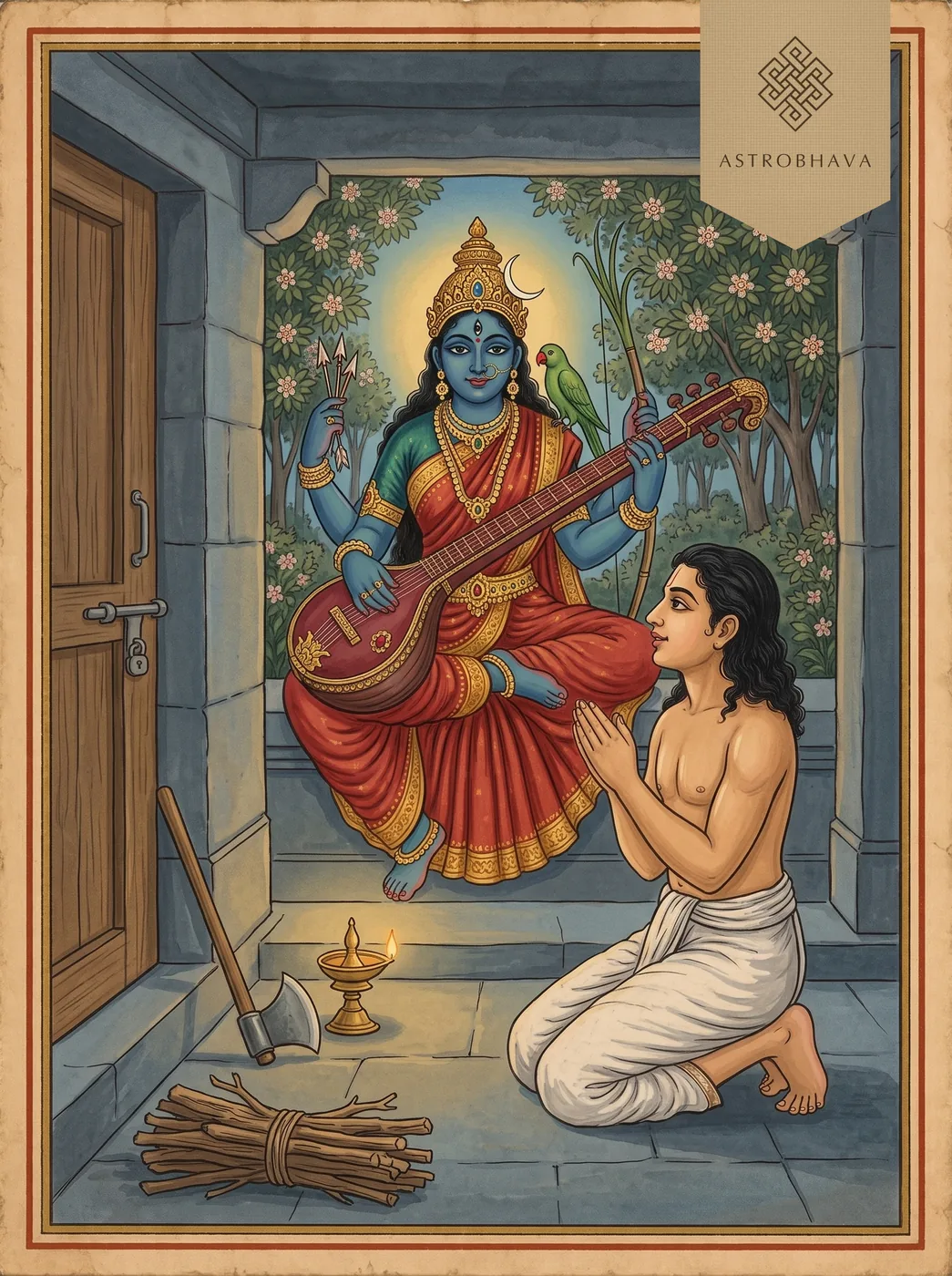
Shyamala Dandakam
माणिक्यवीणामुपलालयन्तीं मदालसां मञ्जुलवाग्विलासाम् । माहेन्द्रनीलद्युतिकोमलाङ्गीं मातङ्गकन्यां सततं स्मरामि ॥Also known as Manikya Veenam
In Devanagari, Tamil, Telugu, Kannada, Malayalam and English — with the meaning of every word, and the one syllable most people pronounce wrongly.
What the Shyamala Dandakam is
The Shyamala Dandakam is a Sanskrit hymn to Shyamala, the dark daughter of the sage Matanga, and tradition gives it to the poet Kalidasa. It opens with four short meditation verses that set her before the eye: a ruby-studded vina in her hands, a body the colour of sapphire, a Kadamba grove for a home and a pet parrot for company. Then the metre changes. What follows is a dandaka, a long chain of compound epithets in the vocative, each ending in -e, that places her on a jewelled island in an ocean of nectar and then describes her from hair-knot to toenails. Gods bow until their crowns redden her feet, and Ganesha, the eight Bhairavas and the Matrikas attend her throne. The prose then turns to who worships her, Krishna and Brahma among them, and to the parrot, described down to the three coloured lines on its throat. It closes by naming her the soul of every mantra, yantra and holy seat.
The woodcutter locked in Kali's shrine
The text carries no account of its own composition; the story comes from folk tradition about Kalidasa. In one telling he began as an unlettered woodcutter. Courtiers of a proud princess coached him to pass as a scholar, and she married him. On discovering the deception she sent him to a temple of Kali. He shut himself inside, and when the Goddess returned he would not open the door until she made him wise. She granted it, and the Shyamala Dandakam is told as the first hymn he uttered. A quieter telling says only that the hymn was composed and recited when Kalidasa had a vision of Kali in the temple his wife had sent him to. Ujjain claims the place. Temple tradition at Gadhkalika, on the old fort site of the city, holds that Kalidasa worshipped there and first recited the hymn within its grounds, and the spot is honoured each year before the Kalidasa festival. Two points are worth keeping apart. The legend speaks of Kali, while the verses address Matangi, the daughter of Matanga; and the ascription to the author of the Meghaduta is traditional rather than proven. In the last century the hymn moved from the shrine to the concert stage, popularised in recording by D. K. Pattammal and set to a sequence of ragas by K. S. Kameswaran.
The mantra, in six scripts
- माणिक्यवीणामुपलालयन्तीं
- māṇikyavīṇāmupalālayantīṃ — fondly playing a ruby-set vina
- मदालसां
- madālasāṃ — languid with rapture
- मञ्जुलवाग्विलासाम्
- mañjulavāgvilāsām — graceful in charming speech
- माहेन्द्रनीलद्युतिकोमलाङ्गीं
- māhendranīladyutikomalāṅgīṃ — tender-limbed, glowing like sapphire
- मातङ्गकन्यां
- mātaṅgakanyāṃ — the daughter of Matanga
- सततं
- satataṃ — ever, always
- स्मरामि
- smarāmi — I remember
Shyamala Dandakam lyrics in full
The four meditation verses followed by the prose dandaka, in the reading of the 1886 Kavyamala edition.
All 28 verses, in Sanskrit, Tamil, Telugu, Kannada, Malayalam and English, each with its meaning. Choose a script:
Download the Shyamala Dandakam PDFAll 28 verses with their meanings, in Sanskrit. Free to print and keep.
माणिक्यवीणामुपलालयन्तीं मदालसां मञ्जुलवाग्विलासाम् ।
माहेन्द्रनीलद्युतिकोमलाङ्गीं मातङ्गकन्यां सततं स्मरामि ॥
மாணிக்யவீணாமுபலாலயந்தீம் மதாலஸாம் மஞ்ஜுலவாக்விலாஸாம் ।
மாஹேந்த்ரநீலத்யுதிகோமலாங்கீம் மாதங்ககந்யாம் ஸததம் ஸ்மராமி ॥
మాణిక్యవీణాముపలాలయన్తీం మదాలసాం మఞ్జులవాగ్విలాసామ్ ।
మాహేన్ద్రనీలద్యుతికోమలాఙ్గీం మాతఙ్గకన్యాం సతతం స్మరామి ॥
ಮಾಣಿಕ್ಯವೀಣಾಮುಪಲಾಲಯನ್ತೀಂ ಮದಾಲಸಾಂ ಮಞ್ಜುಲವಾಗ್ವಿಲಾಸಾಮ್ ।
ಮಾಹೇನ್ದ್ರನೀಲದ್ಯುತಿಕೋಮಲಾಙ್ಗೀಂ ಮಾತಙ್ಗಕನ್ಯಾಂ ಸತತಂ ಸ್ಮರಾಮಿ ॥
മാണിക്യവീണാമുപലാലയന്തീം മദാലസാം മഞ്ജുലവാഗ്വിലാസാമ് ।
മാഹേന്ദ്രനീലദ്യുതികോമലാങ്ഗീം മാതങ്ഗകന്യാം സതതം സ്മരാമി ॥
māṇikyavīṇāmupalālayantīṃ madālasāṃ mañjulavāgvilāsām |
māhendranīladyutikomalāṅgīṃ mātaṅgakanyāṃ satataṃ smarāmi ||
I ever remember the daughter of Matanga, who fondly plays a vina set with rubies, languid with divine rapture, graceful in her charming speech, her tender body glowing like a deep-blue sapphire.
चतुर्भुजे चन्द्रकलावतंसे कुचोन्नते कुङ्कुमरागशोणे ।
पुण्ड्रेक्षुपाशाङ्कुशपुष्पबाणहस्ते नमस्ते जगदेकमातः ॥
சதுர்புஜே சந்த்ரகலாவதம்ஸே குசோந்நதே குங்குமராகஶோணே ।
புண்ட்ரேக்ஷுபாஶாங்குஶபுஷ்பபாணஹஸ்தே நமஸ்தே ஜகதேகமாதஃ ॥
చతుర్భుజే చన్ద్రకలావతంసే కుచోన్నతే కుఙ్కుమరాగశోణే ।
పుణ్డ్రేక్షుపాశాఙ్కుశపుష్పబాణహస్తే నమస్తే జగదేకమాతః ॥
ಚತುರ್ಭುಜೇ ಚನ್ದ್ರಕಲಾವತಂಸೇ ಕುಚೋನ್ನತೇ ಕುಙ್ಕುಮರಾಗಶೋಣೇ ।
ಪುಣ್ಡ್ರೇಕ್ಷುಪಾಶಾಙ್ಕುಶಪುಷ್ಪಬಾಣಹಸ್ತೇ ನಮಸ್ತೇ ಜಗದೇಕಮಾತಃ ॥
ചതുര്ഭുജേ ചന്ദ്രകലാവതംസേ കുചോന്നതേ കുങ്കുമരാഗശോണേ ।
പുണ്ഡ്രേക്ഷുപാശാങ്കുശപുഷ്പബാണഹസ്തേ നമസ്തേ ജഗദേകമാതഃ ॥
caturbhuje candrakalāvataṃse kuconnate kuṅkumarāgaśoṇe |
puṇḍrekṣupāśāṅkuśapuṣpabāṇahaste namaste jagadekamātaḥ ||
O four-armed one, crowned with the crescent moon, full-bosomed and red with saffron, holding the sugarcane bow, noose, goad and flower arrows in your hands: salutations to you, sole Mother of the world.
माता मरकतश्यामा मातङ्गी मदशालिनी ।
कटाक्षयतु कल्याणी कदम्बवनवासिनी ॥
மாதா மரகதஶ்யாமா மாதங்கீ மதஶாலிநீ ।
கடாக்ஷயது கல்யாணீ கதம்பவநவாஸிநீ ॥
మాతా మరకతశ్యామా మాతఙ్గీ మదశాలినీ ।
కటాక్షయతు కల్యాణీ కదమ్బవనవాసినీ ॥
ಮಾತಾ ಮರಕತಶ್ಯಾಮಾ ಮಾತಙ್ಗೀ ಮದಶಾಲಿನೀ ।
ಕಟಾಕ್ಷಯತು ಕಲ್ಯಾಣೀ ಕದಮ್ಬವನವಾಸಿನೀ ॥
മാതാ മരകതശ്യാമാ മാതങ്ഗീ മദശാലിനീ ।
കടാക്ഷയതു കല്യാണീ കദമ്ബവനവാസിനീ ॥
mātā marakataśyāmā mātaṅgī madaśālinī |
kaṭākṣayatu kalyāṇī kadambavanavāsinī ||
May the Mother, dark like an emerald, Matangi, radiant with rapture, the auspicious one who dwells in the Kadamba forest, look upon me with her side-glance of grace.
जय मातङ्गतनये जय नीलोत्पलद्युते ।
जय सङ्गीतरसिके जय लीलाशुकप्रिये ॥
ஜய மாதங்கதநயே ஜய நீலோத்பலத்யுதே ।
ஜய ஸங்கீதரஸிகே ஜய லீலாஶுகப்ரியே ॥
జయ మాతఙ్గతనయే జయ నీలోత్పలద్యుతే ।
జయ సఙ్గీతరసికే జయ లీలాశుకప్రియే ॥
ಜಯ ಮಾತಙ್ಗತನಯೇ ಜಯ ನೀಲೋತ್ಪಲದ್ಯುತೇ ।
ಜಯ ಸಙ್ಗೀತರಸಿಕೇ ಜಯ ಲೀಲಾಶುಕಪ್ರಿಯೇ ॥
ജയ മാതങ്ഗതനയേ ജയ നീലോത്പലദ്യുതേ ।
ജയ സങ്ഗീതരസികേ ജയ ലീലാശുകപ്രിയേ ॥
jaya mātaṅgatanaye jaya nīlotpaladyute |
jaya saṅgītarasike jaya līlāśukapriye ||
Victory to you, daughter of Matanga; victory to you whose lustre is that of the blue lotus; victory to you who delight in music; victory to you who love your pet parrot.
जय जननि सुधासमुद्रान्तरुद्यन्मणिद्वीपसंरूढबिल्वाटवीमध्यकल्पद्रुमाकल्पकादम्बकान्तारवासप्रिये कृत्तिवासःप्रिये सर्वलोकप्रिये ।
ஜய ஜநநி ஸுதாஸமுத்ராந்தருத்யந்மணித்வீபஸம்ரூடபில்வாடவீமத்யகல்பத்ருமாகல்பகாதம்பகாந்தாரவாஸப்ரியே க்ருத்திவாஸஃப்ரியே ஸர்வலோகப்ரியே ।
జయ జనని సుధాసముద్రాన్తరుద్యన్మణిద్వీపసంరూఢబిల్వాటవీమధ్యకల్పద్రుమాకల్పకాదమ్బకాన్తారవాసప్రియే కృత్తివాసఃప్రియే సర్వలోకప్రియే ।
ಜಯ ಜನನಿ ಸುಧಾಸಮುದ್ರಾನ್ತರುದ್ಯನ್ಮಣಿದ್ವೀಪಸಂರೂಢಬಿಲ್ವಾಟವೀಮಧ್ಯಕಲ್ಪದ್ರುಮಾಕಲ್ಪಕಾದಮ್ಬಕಾನ್ತಾರವಾಸಪ್ರಿಯೇ ಕೃತ್ತಿವಾಸಃಪ್ರಿಯೇ ಸರ್ವಲೋಕಪ್ರಿಯೇ ।
ജയ ജനനി സുധാസമുദ്രാന്തരുദ്യന്മണിദ്വീപസംരൂഢബില്വാടവീമധ്യകല്പദ്രുമാകല്പകാദമ്ബകാന്താരവാസപ്രിയേ കൃത്തിവാസഃപ്രിയേ സര്വലോകപ്രിയേ ।
jaya janani sudhāsamudrāntarudyanmaṇidvīpasaṃrūḍhabilvāṭavīmadhyakalpadrumākalpakādambakāntāravāsapriye kṛttivāsaḥpriye sarvalokapriye |
Victory to you, O Mother, who love to dwell in the Kadamba grove, splendid as wish-fulfilling trees, in the middle of the Bilva forest that grows on the jewelled island rising within the ocean of nectar; beloved of Shiva who wears the hide, beloved of all the worlds.
सादरारब्धसङ्गीतसम्भावनासम्भ्रमालोलनीपस्रगाबद्धचूलीसनाथत्रिके सानुमत्पुत्रिके ।
शेखरीभूतशीतांशुरेखामयूखावलीबद्धसुस्निग्धनीलालकश्रेणिशृङ्गारिते लोकसम्भाविते ।
कामलीलाधनुःसन्निभभ्रूलतापुष्पसन्दोहसन्देहकृल्लोचने वाक्सुधासेचने ।
ஸாதராரப்தஸங்கீதஸம்பாவநாஸம்ப்ரமாலோலநீபஸ்ரகாபத்தசூலீஸநாதத்ரிகே ஸாநுமத்புத்ரிகே ।
ஶேகரீபூதஶீதாம்ஶுரேகாமயூகாவலீபத்தஸுஸ்நிக்தநீலாலகஶ்ரேணிஶ்ருங்காரிதே லோகஸம்பாவிதே ।
காமலீலாதநுஃஸந்நிபப்ரூலதாபுஷ்பஸந்தோஹஸந்தேஹக்ருல்லோசநே வாக்ஸுதாஸேசநே ।
సాదరారబ్ధసఙ్గీతసమ్భావనాసమ్భ్రమాలోలనీపస్రగాబద్ధచూలీసనాథత్రికే సానుమత్పుత్రికే ।
శేఖరీభూతశీతాంశురేఖామయూఖావలీబద్ధసుస్నిగ్ధనీలాలకశ్రేణిశృఙ్గారితే లోకసమ్భావితే ।
కామలీలాధనుఃసన్నిభభ్రూలతాపుష్పసన్దోహసన్దేహకృల్లోచనే వాక్సుధాసేచనే ।
ಸಾದರಾರಬ್ಧಸಙ್ಗೀತಸಮ್ಭಾವನಾಸಮ್ಭ್ರಮಾಲೋಲನೀಪಸ್ರಗಾಬದ್ಧಚೂಲೀಸನಾಥತ್ರಿಕೇ ಸಾನುಮತ್ಪುತ್ರಿಕೇ ।
ಶೇಖರೀಭೂತಶೀತಾಂಶುರೇಖಾಮಯೂಖಾವಲೀಬದ್ಧಸುಸ್ನಿಗ್ಧನೀಲಾಲಕಶ್ರೇಣಿಶೃಙ್ಗಾರಿತೇ ಲೋಕಸಮ್ಭಾವಿತೇ ।
ಕಾಮಲೀಲಾಧನುಃಸನ್ನಿಭಭ್ರೂಲತಾಪುಷ್ಪಸನ್ದೋಹಸನ್ದೇಹಕೃಲ್ಲೋಚನೇ ವಾಕ್ಸುಧಾಸೇಚನೇ ।
സാദരാരബ്ധസങ്ഗീതസമ്ഭാവനാസമ്ഭ്രമാലോലനീപസ്രഗാബദ്ധചൂലീസനാഥത്രികേ സാനുമത്പുത്രികേ ।
ശേഖരീഭൂതശീതാംശുരേഖാമയൂഖാവലീബദ്ധസുസ്നിഗ്ധനീലാലകശ്രേണിശൃങ്ഗാരിതേ ലോകസമ്ഭാവിതേ ।
കാമലീലാധനുഃസന്നിഭഭ്രൂലതാപുഷ്പസന്ദോഹസന്ദേഹകൃല്ലോചനേ വാക്സുധാസേചനേ ।
sādarārabdhasaṅgītasambhāvanāsambhramālolanīpasragābaddhacūlīsanāthatrike sānumatputrike |
śekharībhūtaśītāṃśurekhāmayūkhāvalībaddhasusnigdhanīlālakaśreṇiśṛṅgārite lokasambhāvite |
kāmalīlādhanuḥsannibhabhrūlatāpuṣpasandohasandehakṛllocane vāksudhāsecane |
O daughter of the Mountain, whose neck and shoulders are graced by the hair-knot tied with a Nipa garland that sways as you nod in eager appreciation of the music begun with devotion; adorned with glossy dark curls lit by the rays of the crescent moon on your head, honoured by the worlds; whose eyes seem like clusters of blossoms on the creepers of your brows, curved like the bow of Kama; you who sprinkle the nectar of speech.
चारुगोरोचनापङ्ककेलीललामाभिरामे सुरामे रमे ।
प्रोल्लसद्वालिकामौक्तिकश्रेणिकाचन्द्रिकामण्डलोद्भासिलावण्यगण्डस्थलन्यस्तकस्तूरिकापत्ररेखासमुद्भूतसौरभ्यसम्भ्रान्तभृङ्गाङ्गनागीतसान्द्रीभवन्मन्द्रतन्त्रीस्वरे सुस्वरे भास्वरे ।
சாருகோரோசநாபங்ககேலீலலாமாபிராமே ஸுராமே ரமே ।
ப்ரோல்லஸத்வாலிகாமௌக்திகஶ்ரேணிகாசந்த்ரிகாமண்டலோத்பாஸிலாவண்யகண்டஸ்தலந்யஸ்தகஸ்தூரிகாபத்ரரேகாஸமுத்பூதஸௌரப்யஸம்ப்ராந்தப்ருங்காங்கநாகீதஸாந்த்ரீபவந்மந்த்ரதந்த்ரீஸ்வரே ஸுஸ்வரே பாஸ்வரே ।
చారుగోరోచనాపఙ్కకేలీలలామాభిరామే సురామే రమే ।
ప్రోల్లసద్వాలికామౌక్తికశ్రేణికాచన్ద్రికామణ్డలోద్భాసిలావణ్యగణ్డస్థలన్యస్తకస్తూరికాపత్రరేఖాసముద్భూతసౌరభ్యసమ్భ్రాన్తభృఙ్గాఙ్గనాగీతసాన్ద్రీభవన్మన్ద్రతన్త్రీస్వరే సుస్వరే భాస్వరే ।
ಚಾರುಗೋರೋಚನಾಪಙ್ಕಕೇಲೀಲಲಾಮಾಭಿರಾಮೇ ಸುರಾಮೇ ರಮೇ ।
ಪ್ರೋಲ್ಲಸದ್ವಾಲಿಕಾಮೌಕ್ತಿಕಶ್ರೇಣಿಕಾಚನ್ದ್ರಿಕಾಮಣ್ಡಲೋದ್ಭಾಸಿಲಾವಣ್ಯಗಣ್ಡಸ್ಥಲನ್ಯಸ್ತಕಸ್ತೂರಿಕಾಪತ್ರರೇಖಾಸಮುದ್ಭೂತಸೌರಭ್ಯಸಮ್ಭ್ರಾನ್ತಭೃಙ್ಗಾಙ್ಗನಾಗೀತಸಾನ್ದ್ರೀಭವನ್ಮನ್ದ್ರತನ್ತ್ರೀಸ್ವರೇ ಸುಸ್ವರೇ ಭಾಸ್ವರೇ ।
ചാരുഗോരോചനാപങ്കകേലീലലാമാഭിരാമേ സുരാമേ രമേ ।
പ്രോല്ലസദ്വാലികാമൌക്തികശ്രേണികാചന്ദ്രികാമണ്ഡലോദ്ഭാസിലാവണ്യഗണ്ഡസ്ഥലന്യസ്തകസ്തൂരികാപത്രരേഖാസമുദ്ഭൂതസൌരഭ്യസമ്ഭ്രാന്തഭൃങ്ഗാങ്ഗനാഗീതസാന്ദ്രീഭവന്മന്ദ്രതന്ത്രീസ്വരേ സുസ്വരേ ഭാസ്വരേ ।
cārugorocanāpaṅkakelīlalāmābhirāme surāme rame |
prollasadvālikāmauktikaśreṇikācandrikāmaṇḍalodbhāsilāvaṇyagaṇḍasthalanyastakastūrikāpatrarekhāsamudbhūtasaurabhyasambhrāntabhṛṅgāṅganāgītasāndrībhavanmandratantrīsvare susvare bhāsvare |
O lovely one, beautiful with a playful mark of fragrant gorochana paste, most charming, O Rama; whose deep vina notes grow richer with the humming of bees drawn by the scent of the musk designs painted on cheeks that shine in the moonlight of the pearl rows on your ear ornaments; sweet-voiced and radiant one.
वल्लकीवादनप्रक्रियालोलतालीदलाबद्धताटङ्कभूषाविशेषान्विते सिद्धसम्मानिते ।
दिव्यहालामदोद्वेलहेलालसच्चक्षुरान्दोलनश्रीसमाक्षिप्तकर्णैकनीलोत्पले पूरिताशेषलोकाभिवाञ्छाफले श्रीफले ।
வல்லகீவாதநப்ரக்ரியாலோலதாலீதலாபத்ததாடங்கபூஷாவிஶேஷாந்விதே ஸித்தஸம்மாநிதே ।
திவ்யஹாலாமதோத்வேலஹேலாலஸச்சக்ஷுராந்தோலநஶ்ரீஸமாக்ஷிப்தகர்ணைகநீலோத்பலே பூரிதாஶேஷலோகாபிவாஞ்சாபலே ஶ்ரீபலே ।
వల్లకీవాదనప్రక్రియాలోలతాలీదలాబద్ధతాటఙ్కభూషావిశేషాన్వితే సిద్ధసమ్మానితే ।
దివ్యహాలామదోద్వేలహేలాలసచ్చక్షురాన్దోలనశ్రీసమాక్షిప్తకర్ణైకనీలోత్పలే పూరితాశేషలోకాభివాఞ్ఛాఫలే శ్రీఫలే ।
ವಲ್ಲಕೀವಾದನಪ್ರಕ್ರಿಯಾಲೋಲತಾಲೀದಲಾಬದ್ಧತಾಟಙ್ಕಭೂಷಾವಿಶೇಷಾನ್ವಿತೇ ಸಿದ್ಧಸಮ್ಮಾನಿತೇ ।
ದಿವ್ಯಹಾಲಾಮದೋದ್ವೇಲಹೇಲಾಲಸಚ್ಚಕ್ಷುರಾನ್ದೋಲನಶ್ರೀಸಮಾಕ್ಷಿಪ್ತಕರ್ಣೈಕನೀಲೋತ್ಪಲೇ ಪೂರಿತಾಶೇಷಲೋಕಾಭಿವಾಞ್ಛಾಫಲೇ ಶ್ರೀಫಲೇ ।
വല്ലകീവാദനപ്രക്രിയാലോലതാലീദലാബദ്ധതാടങ്കഭൂഷാവിശേഷാന്വിതേ സിദ്ധസമ്മാനിതേ ।
ദിവ്യഹാലാമദോദ്വേലഹേലാലസച്ചക്ഷുരാന്ദോലനശ്രീസമാക്ഷിപ്തകര്ണൈകനീലോത്പലേ പൂരിതാശേഷലോകാഭിവാഞ്ഛാഫലേ ശ്രീഫലേ ।
vallakīvādanaprakriyālolatālīdalābaddhatāṭaṅkabhūṣāviśeṣānvite siddhasammānite |
divyahālāmadodvelahelālasaccakṣurāndolanaśrīsamākṣiptakarṇaikanīlotpale pūritāśeṣalokābhivāñchāphale śrīphale |
O you who wear special ear ornaments of rolled palm leaf that sway as you play the vina, honoured by the Siddhas; whose single blue lotus over the ear is outshone by the play of your eyes, brimming with the joy of the divine drink; you who fulfil the wishes of all the worlds and bestow prosperity.
स्वेदबिन्दूल्लसत्फाललावण्यनिष्यन्दसन्दोहसन्देहकृन्नासिकामौक्तिके सर्वविश्वात्मिके कालिके ।
ஸ்வேதபிந்தூல்லஸத்பாலலாவண்யநிஷ்யந்தஸந்தோஹஸந்தேஹக்ருந்நாஸிகாமௌக்திகே ஸர்வவிஶ்வாத்மிகே காலிகே ।
స్వేదబిన్దూల్లసత్ఫాలలావణ్యనిష్యన్దసన్దోహసన్దేహకృన్నాసికామౌక్తికే సర్వవిశ్వాత్మికే కాలికే ।
ಸ್ವೇದಬಿನ್ದೂಲ್ಲಸತ್ಫಾಲಲಾವಣ್ಯನಿಷ್ಯನ್ದಸನ್ದೋಹಸನ್ದೇಹಕೃನ್ನಾಸಿಕಾಮೌಕ್ತಿಕೇ ಸರ್ವವಿಶ್ವಾತ್ಮಿಕೇ ಕಾಲಿಕೇ ।
സ്വേദബിന്ദൂല്ലസത്ഫാലലാവണ്യനിഷ്യന്ദസന്ദോഹസന്ദേഹകൃന്നാസികാമൌക്തികേ സര്വവിശ്വാത്മികേ കാലികേ ।
svedabindūllasatphālalāvaṇyaniṣyandasandohasandehakṛnnāsikāmauktike sarvaviśvātmike kālike |
O you whose nose-pearl looks like a drop of the beauty flowing from your forehead, which glistens with beads of perspiration; you who are the soul of the whole universe, O Kalika.
मुग्धमन्दस्मितोदारवक्त्रस्फुरत्पूगताम्बूलकर्पूरखण्डोत्करे ज्ञानमुद्राकरे सर्वसम्पत्करे पद्मभास्वत्करे ।
முக்தமந்தஸ்மிதோதாரவக்த்ரஸ்புரத்பூகதாம்பூலகர்பூரகண்டோத்கரே ஜ்ஞாநமுத்ராகரே ஸர்வஸம்பத்கரே பத்மபாஸ்வத்கரே ।
ముగ్ధమన్దస్మితోదారవక్త్రస్ఫురత్పూగతామ్బూలకర్పూరఖణ్డోత్కరే జ్ఞానముద్రాకరే సర్వసమ్పత్కరే పద్మభాస్వత్కరే ।
ಮುಗ್ಧಮನ್ದಸ್ಮಿತೋದಾರವಕ್ತ್ರಸ್ಫುರತ್ಪೂಗತಾಮ್ಬೂಲಕರ್ಪೂರಖಣ್ಡೋತ್ಕರೇ ಜ್ಞಾನಮುದ್ರಾಕರೇ ಸರ್ವಸಮ್ಪತ್ಕರೇ ಪದ್ಮಭಾಸ್ವತ್ಕರೇ ।
മുഗ്ധമന്ദസ്മിതോദാരവക്ത്രസ്ഫുരത്പൂഗതാമ്ബൂലകര്പൂരഖണ്ഡോത്കരേ ജ്ഞാനമുദ്രാകരേ സര്വസമ്പത്കരേ പദ്മഭാസ്വത്കരേ ।
mugdhamandasmitodāravaktrasphuratpūgatāmbūlakarpūrakhaṇḍotkare jñānamudrākare sarvasampatkare padmabhāsvatkare |
O you whose lovely face, gentle with an innocent smile, holds areca nut, betel leaf and bits of camphor; whose hand shows the gesture of knowledge; giver of every wealth, whose hand shines with a lotus.
कुन्दपुष्पद्युतिस्निग्धदन्तावलीनिर्मलालोलकल्लोलसम्मेलनस्मेरशोणाधरे चारुवीणाधरे पक्वबिम्बाधरे ॥
குந்தபுஷ்பத்யுதிஸ்நிக்ததந்தாவலீநிர்மலாலோலகல்லோலஸம்மேலநஸ்மேரஶோணாதரே சாருவீணாதரே பக்வபிம்பாதரே ॥
కున్దపుష్పద్యుతిస్నిగ్ధదన్తావలీనిర్మలాలోలకల్లోలసమ్మేలనస్మేరశోణాధరే చారువీణాధరే పక్వబిమ్బాధరే ॥
ಕುನ್ದಪುಷ್ಪದ್ಯುತಿಸ್ನಿಗ್ಧದನ್ತಾವಲೀನಿರ್ಮಲಾಲೋಲಕಲ್ಲೋಲಸಮ್ಮೇಲನಸ್ಮೇರಶೋಣಾಧರೇ ಚಾರುವೀಣಾಧರೇ ಪಕ್ವಬಿಮ್ಬಾಧರೇ ॥
കുന്ദപുഷ്പദ്യുതിസ്നിഗ്ധദന്താവലീനിര്മലാലോലകല്ലോലസമ്മേലനസ്മേരശോണാധരേ ചാരുവീണാധരേ പക്വബിമ്ബാധരേ ॥
kundapuṣpadyutisnigdhadantāvalīnirmalālolakallolasammelanasmeraśoṇādhare cāruvīṇādhare pakvabimbādhare ||
O you whose red lips smile as they meet the pure, rippling waves of light from your teeth, glossy and bright as jasmine flowers; bearer of the lovely vina, whose lips are like the ripe bimba fruit.
सुललितनवयौवनारम्भचन्द्रोदयोद्वेललावण्यदुग्धार्णवाविर्भवत्कम्बुबिब्बोकभृत्कन्धरे सत्कलामन्दिरे मन्थरे ।
दिव्यरत्नप्रभाबन्धुरच्छन्नहारादिभूषासमुद्योतमानानवद्यांशुशोभे शुभे ।
रत्नकेयूररश्मिच्छटापल्लवप्रोल्लसद्दोर्लताराजिते योगिभिः पूजिते ।
विश्वदिङ्मण्डलव्यापिमाणिक्यतेजःस्फुरत्कङ्कणालङ्कृते विभ्रमालङ्कृते साधकैः सत्कृते ।
ஸுலலிதநவயௌவநாரம்பசந்த்ரோதயோத்வேலலாவண்யதுக்தார்ணவாவிர்பவத்கம்புபிப்போகப்ருத்கந்தரே ஸத்கலாமந்திரே மந்தரே ।
திவ்யரத்நப்ரபாபந்துரச்சந்நஹாராதிபூஷாஸமுத்யோதமாநாநவத்யாம்ஶுஶோபே ஶுபே ।
ரத்நகேயூரரஶ்மிச்சடாபல்லவப்ரோல்லஸத்தோர்லதாராஜிதே யோகிபிஃ பூஜிதே ।
விஶ்வதிங்மண்டலவ்யாபிமாணிக்யதேஜஃஸ்புரத்கங்கணாலங்க்ருதே விப்ரமாலங்க்ருதே ஸாதகைஃ ஸத்க்ருதே ।
సులలితనవయౌవనారమ్భచన్ద్రోదయోద్వేలలావణ్యదుగ్ధార్ణవావిర్భవత్కమ్బుబిబ్బోకభృత్కన్ధరే సత్కలామన్దిరే మన్థరే ।
దివ్యరత్నప్రభాబన్ధురచ్ఛన్నహారాదిభూషాసముద్యోతమానానవద్యాంశుశోభే శుభే ।
రత్నకేయూరరశ్మిచ్ఛటాపల్లవప్రోల్లసద్దోర్లతారాజితే యోగిభిః పూజితే ।
విశ్వదిఙ్మణ్డలవ్యాపిమాణిక్యతేజఃస్ఫురత్కఙ్కణాలఙ్కృతే విభ్రమాలఙ్కృతే సాధకైః సత్కృతే ।
ಸುಲಲಿತನವಯೌವನಾರಮ್ಭಚನ್ದ್ರೋದಯೋದ್ವೇಲಲಾವಣ್ಯದುಗ್ಧಾರ್ಣವಾವಿರ್ಭವತ್ಕಮ್ಬುಬಿಬ್ಬೋಕಭೃತ್ಕನ್ಧರೇ ಸತ್ಕಲಾಮನ್ದಿರೇ ಮನ್ಥರೇ ।
ದಿವ್ಯರತ್ನಪ್ರಭಾಬನ್ಧುರಚ್ಛನ್ನಹಾರಾದಿಭೂಷಾಸಮುದ್ಯೋತಮಾನಾನವದ್ಯಾಂಶುಶೋಭೇ ಶುಭೇ ।
ರತ್ನಕೇಯೂರರಶ್ಮಿಚ್ಛಟಾಪಲ್ಲವಪ್ರೋಲ್ಲಸದ್ದೋರ್ಲತಾರಾಜಿತೇ ಯೋಗಿಭಿಃ ಪೂಜಿತೇ ।
ವಿಶ್ವದಿಙ್ಮಣ್ಡಲವ್ಯಾಪಿಮಾಣಿಕ್ಯತೇಜಃಸ್ಫುರತ್ಕಙ್ಕಣಾಲಙ್ಕೃತೇ ವಿಭ್ರಮಾಲಙ್ಕೃತೇ ಸಾಧಕೈಃ ಸತ್ಕೃತೇ ।
സുലലിതനവയൌവനാരമ്ഭചന്ദ്രോദയോദ്വേലലാവണ്യദുഗ്ധാര്ണവാവിര്ഭവത്കമ്ബുബിബ്ബോകഭൃത്കന്ധരേ സത്കലാമന്ദിരേ മന്ഥരേ ।
ദിവ്യരത്നപ്രഭാബന്ധുരച്ഛന്നഹാരാദിഭൂഷാസമുദ്യോതമാനാനവദ്യാംശുശോഭേ ശുഭേ ।
രത്നകേയൂരരശ്മിച്ഛടാപല്ലവപ്രോല്ലസദ്ദോര്ലതാരാജിതേ യോഗിഭിഃ പൂജിതേ ।
വിശ്വദിങ്മണ്ഡലവ്യാപിമാണിക്യതേജഃസ്ഫുരത്കങ്കണാലങ്കൃതേ വിഭ്രമാലങ്കൃതേ സാധകൈഃ സത്കൃതേ ।
sulalitanavayauvanārambhacandrodayodvelalāvaṇyadugdhārṇavāvirbhavatkambubibbokabhṛtkandhare satkalāmandire manthare |
divyaratnaprabhābandhuracchannahārādibhūṣāsamudyotamānānavadyāṃśuśobhe śubhe |
ratnakeyūraraśmicchaṭāpallavaprollasaddorlatārājite yogibhiḥ pūjite |
viśvadiṅmaṇḍalavyāpimāṇikyatejaḥsphuratkaṅkaṇālaṅkṛte vibhramālaṅkṛte sādhakaiḥ satkṛte |
O you whose neck has the grace of a conch born from the milk-ocean of beauty that swells at the moonrise of fresh youth; home of the fine arts, of unhurried gait. O auspicious one, whose flawless radiance shines with necklaces and ornaments set thick with celestial gems; resplendent with creeper-like arms lit by the rays of jewelled armlets, worshipped by yogis; adorned with bangles whose ruby light fills every direction, adorned with grace, honoured by spiritual aspirants.
वासरारम्भवेलासमुज्जृम्भमाणारविन्दप्रतिद्वन्द्विपाणिद्वये सन्ततोद्यद्दये अद्वये ।
दिव्यरत्नोर्मिकादीधितिस्तोमसन्ध्यायमानाङ्गुलीपल्लवोद्यन्नखेन्दुप्रभामण्डले सन्नताखण्डले चित्प्रभामण्डले प्रोल्लसत्कुण्डले ।
வாஸராரம்பவேலாஸமுஜ்ஜ்ரும்பமாணாரவிந்தப்ரதித்வந்த்விபாணித்வயே ஸந்ததோத்யத்தயே அத்வயே ।
திவ்யரத்நோர்மிகாதீதிதிஸ்தோமஸந்த்யாயமாநாங்குலீபல்லவோத்யந்நகேந்துப்ரபாமண்டலே ஸந்நதாகண்டலே சித்ப்ரபாமண்டலே ப்ரோல்லஸத்குண்டலே ।
వాసరారమ్భవేలాసముజ్జృమ్భమాణారవిన్దప్రతిద్వన్ద్విపాణిద్వయే సన్తతోద్యద్దయే అద్వయే ।
దివ్యరత్నోర్మికాదీధితిస్తోమసన్ధ్యాయమానాఙ్గులీపల్లవోద్యన్నఖేన్దుప్రభామణ్డలే సన్నతాఖణ్డలే చిత్ప్రభామణ్డలే ప్రోల్లసత్కుణ్డలే ।
ವಾಸರಾರಮ್ಭವೇಲಾಸಮುಜ್ಜೃಮ್ಭಮಾಣಾರವಿನ್ದಪ್ರತಿದ್ವನ್ದ್ವಿಪಾಣಿದ್ವಯೇ ಸನ್ತತೋದ್ಯದ್ದಯೇ ಅದ್ವಯೇ ।
ದಿವ್ಯರತ್ನೋರ್ಮಿಕಾದೀಧಿತಿಸ್ತೋಮಸನ್ಧ್ಯಾಯಮಾನಾಙ್ಗುಲೀಪಲ್ಲವೋದ್ಯನ್ನಖೇನ್ದುಪ್ರಭಾಮಣ್ಡಲೇ ಸನ್ನತಾಖಣ್ಡಲೇ ಚಿತ್ಪ್ರಭಾಮಣ್ಡಲೇ ಪ್ರೋಲ್ಲಸತ್ಕುಣ್ಡಲೇ ।
വാസരാരമ്ഭവേലാസമുജ്ജൃമ്ഭമാണാരവിന്ദപ്രതിദ്വന്ദ്വിപാണിദ്വയേ സന്തതോദ്യദ്ദയേ അദ്വയേ ।
ദിവ്യരത്നോര്മികാദീധിതിസ്തോമസന്ധ്യായമാനാങ്ഗുലീപല്ലവോദ്യന്നഖേന്ദുപ്രഭാമണ്ഡലേ സന്നതാഖണ്ഡലേ ചിത്പ്രഭാമണ്ഡലേ പ്രോല്ലസത്കുണ്ഡലേ ।
vāsarārambhavelāsamujjṛmbhamāṇāravindapratidvandvipāṇidvaye santatodyaddaye advaye |
divyaratnormikādīdhitistomasandhyāyamānāṅgulīpallavodyannakhenduprabhāmaṇḍale sannatākhaṇḍale citprabhāmaṇḍale prollasatkuṇḍale |
O you whose two hands rival lotuses opening at daybreak, ever full of compassion, the one without a second; whose moon-like nails glow on fingers reddened like twilight by the light of jewelled rings; to whom Indra bows, whose halo is pure consciousness, whose earrings shine.
तारकाराजिनीकाशहारावलिस्मेरचारुस्तनाभोगभारानमन्मध्यवल्लीवलिच्छेदवीचीसमुल्लाससन्दर्शिताकारसौन्दर्यरत्नाकरे वल्लकीभृत्करे किङ्करश्रीकरे ।
हेमकुम्भोपमोत्तुङ्गवक्षोजभारावनम्रे त्रिलोकावनम्रे ।
लसद्वृत्तगम्भीरनाभीसरस्तीरशैवालशङ्काकरश्यामरोमावलीभूषणे मञ्जुसम्भाषणे ।
தாரகாராஜிநீகாஶஹாராவலிஸ்மேரசாருஸ்தநாபோகபாராநமந்மத்யவல்லீவலிச்சேதவீசீஸமுல்லாஸஸந்தர்ஶிதாகாரஸௌந்தர்யரத்நாகரே வல்லகீப்ருத்கரே கிங்கரஶ்ரீகரே ।
ஹேமகும்போபமோத்துங்கவக்ஷோஜபாராவநம்ரே த்ரிலோகாவநம்ரே ।
லஸத்வ்ருத்தகம்பீரநாபீஸரஸ்தீரஶைவாலஶங்காகரஶ்யாமரோமாவலீபூஷணே மஞ்ஜுஸம்பாஷணே ।
తారకారాజినీకాశహారావలిస్మేరచారుస్తనాభోగభారానమన్మధ్యవల్లీవలిచ్ఛేదవీచీసముల్లాససన్దర్శితాకారసౌన్దర్యరత్నాకరే వల్లకీభృత్కరే కిఙ్కరశ్రీకరే ।
హేమకుమ్భోపమోత్తుఙ్గవక్షోజభారావనమ్రే త్రిలోకావనమ్రే ।
లసద్వృత్తగమ్భీరనాభీసరస్తీరశైవాలశఙ్కాకరశ్యామరోమావలీభూషణే మఞ్జుసమ్భాషణే ।
ತಾರಕಾರಾಜಿನೀಕಾಶಹಾರಾವಲಿಸ್ಮೇರಚಾರುಸ್ತನಾಭೋಗಭಾರಾನಮನ್ಮಧ್ಯವಲ್ಲೀವಲಿಚ್ಛೇದವೀಚೀಸಮುಲ್ಲಾಸಸನ್ದರ್ಶಿತಾಕಾರಸೌನ್ದರ್ಯರತ್ನಾಕರೇ ವಲ್ಲಕೀಭೃತ್ಕರೇ ಕಿಙ್ಕರಶ್ರೀಕರೇ ।
ಹೇಮಕುಮ್ಭೋಪಮೋತ್ತುಙ್ಗವಕ್ಷೋಜಭಾರಾವನಮ್ರೇ ತ್ರಿಲೋಕಾವನಮ್ರೇ ।
ಲಸದ್ವೃತ್ತಗಮ್ಭೀರನಾಭೀಸರಸ್ತೀರಶೈವಾಲಶಙ್ಕಾಕರಶ್ಯಾಮರೋಮಾವಲೀಭೂಷಣೇ ಮಞ್ಜುಸಮ್ಭಾಷಣೇ ।
താരകാരാജിനീകാശഹാരാവലിസ്മേരചാരുസ്തനാഭോഗഭാരാനമന്മധ്യവല്ലീവലിച്ഛേദവീചീസമുല്ലാസസന്ദര്ശിതാകാരസൌന്ദര്യരത്നാകരേ വല്ലകീഭൃത്കരേ കിങ്കരശ്രീകരേ ।
ഹേമകുമ്ഭോപമോത്തുങ്ഗവക്ഷോജഭാരാവനമ്രേ ത്രിലോകാവനമ്രേ ।
ലസദ്വൃത്തഗമ്ഭീരനാഭീസരസ്തീരശൈവാലശങ്കാകരശ്യാമരോമാവലീഭൂഷണേ മഞ്ജുസമ്ഭാഷണേ ।
tārakārājinīkāśahārāvalismeracārustanābhogabhārānamanmadhyavallīvalicchedavīcīsamullāsasandarśitākārasaundaryaratnākare vallakībhṛtkare kiṅkaraśrīkare |
hemakumbhopamottuṅgavakṣojabhārāvanamre trilokāvanamre |
lasadvṛttagambhīranābhīsarastīraśaivālaśaṅkākaraśyāmaromāvalībhūṣaṇe mañjusambhāṣaṇe |
O ocean of beauty, whose form is revealed by the waves of the three folds on your slender waist, bent under a full bosom gleaming with necklaces like rows of stars; who hold the vina, who give wealth to your servants. Bowed by the weight of a bosom like golden pots, to whom the three worlds bow; adorned with a fine dark line of hair that looks like moss at the edge of the deep round lake of your navel; sweet of speech.
चारुशिञ्जत्कटीसूत्रनिर्भर्त्सितानङ्गलीलाधनुःशिञ्जिनीडम्बरे दिव्यरत्नाम्बरे ।
पद्मरागोल्लसन्मेखलाभास्वरश्रोणिशोभाजितस्वर्णभूभृत्तले चन्द्रिकाशीतले ॥
சாருஶிஞ்ஜத்கடீஸூத்ரநிர்பர்த்ஸிதாநங்கலீலாதநுஃஶிஞ்ஜிநீடம்பரே திவ்யரத்நாம்பரே ।
பத்மராகோல்லஸந்மேகலாபாஸ்வரஶ்ரோணிஶோபாஜிதஸ்வர்ணபூப்ருத்தலே சந்த்ரிகாஶீதலே ॥
చారుశిఞ్జత్కటీసూత్రనిర్భర్త్సితానఙ్గలీలాధనుఃశిఞ్జినీడమ్బరే దివ్యరత్నామ్బరే ।
పద్మరాగోల్లసన్మేఖలాభాస్వరశ్రోణిశోభాజితస్వర్ణభూభృత్తలే చన్ద్రికాశీతలే ॥
ಚಾರುಶಿಞ್ಜತ್ಕಟೀಸೂತ್ರನಿರ್ಭರ್ತ್ಸಿತಾನಙ್ಗಲೀಲಾಧನುಃಶಿಞ್ಜಿನೀಡಮ್ಬರೇ ದಿವ್ಯರತ್ನಾಮ್ಬರೇ ।
ಪದ್ಮರಾಗೋಲ್ಲಸನ್ಮೇಖಲಾಭಾಸ್ವರಶ್ರೋಣಿಶೋಭಾಜಿತಸ್ವರ್ಣಭೂಭೃತ್ತಲೇ ಚನ್ದ್ರಿಕಾಶೀತಲೇ ॥
ചാരുശിഞ്ജത്കടീസൂത്രനിര്ഭര്ത്സിതാനങ്ഗലീലാധനുഃശിഞ്ജിനീഡമ്ബരേ ദിവ്യരത്നാമ്ബരേ ।
പദ്മരാഗോല്ലസന്മേഖലാഭാസ്വരശ്രോണിശോഭാജിതസ്വര്ണഭൂഭൃത്തലേ ചന്ദ്രികാശീതലേ ॥
cāruśiñjatkaṭīsūtranirbhartsitānaṅgalīlādhanuḥśiñjinīḍambare divyaratnāmbare |
padmarāgollasanmekhalābhāsvaraśroṇiśobhājitasvarṇabhūbhṛttale candrikāśītale ||
O you whose sweetly tinkling girdle puts to shame the twang of Kama's bowstring, clothed in a garment of divine gems; whose hips, bright with a ruby-studded belt, surpass the slopes of the golden mountain; cool as moonlight.
विकसितनवकिंशुकाताम्रदिव्यांशुकच्छन्नचारूरुशोभापराभूतसिन्दूरशोणायमानेन्द्रमातङ्गहस्तार्गले वैभवानर्गले श्यामले ।
कोमलस्निग्धनीलोत्पलोत्पादितानङ्गतूणीरशङ्काकरोदारजङ्घालते चारुलीलागते ।
नम्रदिक्पालसीमन्तिनीकुन्तलस्निग्धनीलप्रभापुञ्जसञ्जातदूर्वाङ्कुराशङ्कसारङ्गसंयोगरिङ्खन्नखेन्दूज्ज्वले प्रोज्ज्वले निर्मले ।
விகஸிதநவகிம்ஶுகாதாம்ரதிவ்யாம்ஶுகச்சந்நசாரூருஶோபாபராபூதஸிந்தூரஶோணாயமாநேந்த்ரமாதங்கஹஸ்தார்கலே வைபவாநர்கலே ஶ்யாமலே ।
கோமலஸ்நிக்தநீலோத்பலோத்பாதிதாநங்கதூணீரஶங்காகரோதாரஜங்காலதே சாருலீலாகதே ।
நம்ரதிக்பாலஸீமந்திநீகுந்தலஸ்நிக்தநீலப்ரபாபுஞ்ஜஸஞ்ஜாததூர்வாங்குராஶங்கஸாரங்கஸம்யோகரிங்கந்நகேந்தூஜ்ஜ்வலே ப்ரோஜ்ஜ்வலே நிர்மலே ।
వికసితనవకింశుకాతామ్రదివ్యాంశుకచ్ఛన్నచారూరుశోభాపరాభూతసిన్దూరశోణాయమానేన్ద్రమాతఙ్గహస్తార్గలే వైభవానర్గలే శ్యామలే ।
కోమలస్నిగ్ధనీలోత్పలోత్పాదితానఙ్గతూణీరశఙ్కాకరోదారజఙ్ఘాలతే చారులీలాగతే ।
నమ్రదిక్పాలసీమన్తినీకున్తలస్నిగ్ధనీలప్రభాపుఞ్జసఞ్జాతదూర్వాఙ్కురాశఙ్కసారఙ్గసంయోగరిఙ్ఖన్నఖేన్దూజ్జ్వలే ప్రోజ్జ్వలే నిర్మలే ।
ವಿಕಸಿತನವಕಿಂಶುಕಾತಾಮ್ರದಿವ್ಯಾಂಶುಕಚ್ಛನ್ನಚಾರೂರುಶೋಭಾಪರಾಭೂತಸಿನ್ದೂರಶೋಣಾಯಮಾನೇನ್ದ್ರಮಾತಙ್ಗಹಸ್ತಾರ್ಗಲೇ ವೈಭವಾನರ್ಗಲೇ ಶ್ಯಾಮಲೇ ।
ಕೋಮಲಸ್ನಿಗ್ಧನೀಲೋತ್ಪಲೋತ್ಪಾದಿತಾನಙ್ಗತೂಣೀರಶಙ್ಕಾಕರೋದಾರಜಙ್ಘಾಲತೇ ಚಾರುಲೀಲಾಗತೇ ।
ನಮ್ರದಿಕ್ಪಾಲಸೀಮನ್ತಿನೀಕುನ್ತಲಸ್ನಿಗ್ಧನೀಲಪ್ರಭಾಪುಞ್ಜಸಞ್ಜಾತದೂರ್ವಾಙ್ಕುರಾಶಙ್ಕಸಾರಙ್ಗಸಂಯೋಗರಿಙ್ಖನ್ನಖೇನ್ದೂಜ್ಜ್ವಲೇ ಪ್ರೋಜ್ಜ್ವಲೇ ನಿರ್ಮಲೇ ।
വികസിതനവകിംശുകാതാമ്രദിവ്യാംശുകച്ഛന്നചാരൂരുശോഭാപരാഭൂതസിന്ദൂരശോണായമാനേന്ദ്രമാതങ്ഗഹസ്താര്ഗലേ വൈഭവാനര്ഗലേ ശ്യാമലേ ।
കോമലസ്നിഗ്ധനീലോത്പലോത്പാദിതാനങ്ഗതൂണീരശങ്കാകരോദാരജങ്ഘാലതേ ചാരുലീലാഗതേ ।
നമ്രദിക്പാലസീമന്തിനീകുന്തലസ്നിഗ്ധനീലപ്രഭാപുഞ്ജസഞ്ജാതദൂര്വാങ്കുരാശങ്കസാരങ്ഗസംയോഗരിങ്ഖന്നഖേന്ദൂജ്ജ്വലേ പ്രോജ്ജ്വലേ നിര്മലേ ।
vikasitanavakiṃśukātāmradivyāṃśukacchannacārūruśobhāparābhūtasindūraśoṇāyamānendramātaṅgahastārgale vaibhavānargale śyāmale |
komalasnigdhanīlotpalotpāditānaṅgatūṇīraśaṅkākarodārajaṅghālate cārulīlāgate |
namradikpālasīmantinīkuntalasnigdhanīlaprabhāpuñjasañjātadūrvāṅkurāśaṅkasāraṅgasaṃyogariṅkhannakhendūjjvale projjvale nirmale |
O Shyamala of boundless glory, the beauty of whose thighs, clad in divine silk coppery as fresh kimshuka flowers, defeats the trunk of Indra's elephant reddened with vermilion; whose shapely calves look like Kama's quivers made of soft blue lotuses, who move with lovely grace; bright with moon-like toenails that seem to hold a grazing deer, as the dark gleam of the hair of the Guardians' wives bowing at your feet looks like tender durva grass; brilliant and pure one.
प्रह्वदेवेशलक्ष्मीशभूतेशतोयेशवाणीशकीनाशदैत्येशयक्षेशवाय्वग्निकोटीरमाणिक्यसङ्घृष्टबालातपोद्दामलाक्षारसारुण्यतारुण्यलक्ष्मीगृहीताङ्घ्रिपद्मे सुपद्मे उमे ॥
ப்ரஹ்வதேவேஶலக்ஷ்மீஶபூதேஶதோயேஶவாணீஶகீநாஶதைத்யேஶயக்ஷேஶவாய்வக்நிகோடீரமாணிக்யஸங்க்ருஷ்டபாலாதபோத்தாமலாக்ஷாரஸாருண்யதாருண்யலக்ஷ்மீக்ருஹீதாங்க்ரிபத்மே ஸுபத்மே உமே ॥
ప్రహ్వదేవేశలక్ష్మీశభూతేశతోయేశవాణీశకీనాశదైత్యేశయక్షేశవాయ్వగ్నికోటీరమాణిక్యసఙ్ఘృష్టబాలాతపోద్దామలాక్షారసారుణ్యతారుణ్యలక్ష్మీగృహీతాఙ్ఘ్రిపద్మే సుపద్మే ఉమే ॥
ಪ್ರಹ್ವದೇವೇಶಲಕ್ಷ್ಮೀಶಭೂತೇಶತೋಯೇಶವಾಣೀಶಕೀನಾಶದೈತ್ಯೇಶಯಕ್ಷೇಶವಾಯ್ವಗ್ನಿಕೋಟೀರಮಾಣಿಕ್ಯಸಙ್ಘೃಷ್ಟಬಾಲಾತಪೋದ್ದಾಮಲಾಕ್ಷಾರಸಾರುಣ್ಯತಾರುಣ್ಯಲಕ್ಷ್ಮೀಗೃಹೀತಾಙ್ಘ್ರಿಪದ್ಮೇ ಸುಪದ್ಮೇ ಉಮೇ ॥
പ്രഹ്വദേവേശലക്ഷ്മീശഭൂതേശതോയേശവാണീശകീനാശദൈത്യേശയക്ഷേശവായ്വഗ്നികോടീരമാണിക്യസങ്ഘൃഷ്ടബാലാതപോദ്ദാമലാക്ഷാരസാരുണ്യതാരുണ്യലക്ഷ്മീഗൃഹീതാങ്ഘ്രിപദ്മേ സുപദ്മേ ഉമേ ॥
prahvadeveśalakṣmīśabhūteśatoyeśavāṇīśakīnāśadaityeśayakṣeśavāyvagnikoṭīramāṇikyasaṅghṛṣṭabālātapoddāmalākṣārasāruṇyatāruṇyalakṣmīgṛhītāṅghripadme supadme ume ||
O Uma, holder of the fair lotus, whose lotus feet take on the youthful glow of red lac, bright as the morning sun, from being rubbed by the crown jewels of Indra, Vishnu, Shiva, Varuna, Brahma, Yama, the lord of the demons, Kubera, Vayu and Agni as they bow before you.
सुरुचिरनवरत्नपीठस्थिते सुस्थिते ।
रत्नपद्मासने रत्नसिंहासने शङ्खपद्मद्वयोपाश्रिते ।
तत्र विघ्नेशदुर्गावटुक्षेत्रपालैर्युते ।
मत्तमातङ्गकन्यासमूहान्विते मञ्जुलामेनकाद्यङ्गनामानिते भैरवैरष्टभिर्वेष्टिते ।
देवि वामादिभिः शक्तिभिः सेविते ।
ஸுருசிரநவரத்நபீடஸ்திதே ஸுஸ்திதே ।
ரத்நபத்மாஸநே ரத்நஸிம்ஹாஸநே ஶங்கபத்மத்வயோபாஶ்ரிதே ।
தத்ர விக்நேஶதுர்காவடுக்ஷேத்ரபாலைர்யுதே ।
மத்தமாதங்ககந்யாஸமூஹாந்விதே மஞ்ஜுலாமேநகாத்யங்கநாமாநிதே பைரவைரஷ்டபிர்வேஷ்டிதே ।
தேவி வாமாதிபிஃ ஶக்திபிஃ ஸேவிதே ।
సురుచిరనవరత్నపీఠస్థితే సుస్థితే ।
రత్నపద్మాసనే రత్నసింహాసనే శఙ్ఖపద్మద్వయోపాశ్రితే ।
తత్ర విఘ్నేశదుర్గావటుక్షేత్రపాలైర్యుతే ।
మత్తమాతఙ్గకన్యాసమూహాన్వితే మఞ్జులామేనకాద్యఙ్గనామానితే భైరవైరష్టభిర్వేష్టితే ।
దేవి వామాదిభిః శక్తిభిః సేవితే ।
ಸುರುಚಿರನವರತ್ನಪೀಠಸ್ಥಿತೇ ಸುಸ್ಥಿತೇ ।
ರತ್ನಪದ್ಮಾಸನೇ ರತ್ನಸಿಂಹಾಸನೇ ಶಙ್ಖಪದ್ಮದ್ವಯೋಪಾಶ್ರಿತೇ ।
ತತ್ರ ವಿಘ್ನೇಶದುರ್ಗಾವಟುಕ್ಷೇತ್ರಪಾಲೈರ್ಯುತೇ ।
ಮತ್ತಮಾತಙ್ಗಕನ್ಯಾಸಮೂಹಾನ್ವಿತೇ ಮಞ್ಜುಲಾಮೇನಕಾದ್ಯಙ್ಗನಾಮಾನಿತೇ ಭೈರವೈರಷ್ಟಭಿರ್ವೇಷ್ಟಿತೇ ।
ದೇವಿ ವಾಮಾದಿಭಿಃ ಶಕ್ತಿಭಿಃ ಸೇವಿತೇ ।
സുരുചിരനവരത്നപീഠസ്ഥിതേ സുസ്ഥിതേ ।
രത്നപദ്മാസനേ രത്നസിംഹാസനേ ശങ്ഖപദ്മദ്വയോപാശ്രിതേ ।
തത്ര വിഘ്നേശദുര്ഗാവടുക്ഷേത്രപാലൈര്യുതേ ।
മത്തമാതങ്ഗകന്യാസമൂഹാന്വിതേ മഞ്ജുലാമേനകാദ്യങ്ഗനാമാനിതേ ഭൈരവൈരഷ്ടഭിര്വേഷ്ടിതേ ।
ദേവി വാമാദിഭിഃ ശക്തിഭിഃ സേവിതേ ।
suruciranavaratnapīṭhasthite susthite |
ratnapadmāsane ratnasiṃhāsane śaṅkhapadmadvayopāśrite |
tatra vighneśadurgāvaṭukṣetrapālairyute |
mattamātaṅgakanyāsamūhānvite mañjulāmenakādyaṅganāmānite bhairavairaṣṭabhirveṣṭite |
devi vāmādibhiḥ śaktibhiḥ sevite |
O you who are firmly seated on a beautiful platform of nine gems, on a jewelled lotus seat and jewelled lion throne, attended by the two treasures Shankha and Padma; there joined by Ganesha, Durga, Batuka and the Kshetrapalas; surrounded by a band of rapt Matanga maidens, honoured by Manjula, Menaka and other celestial women, encircled by the eight Bhairavas; O Goddess served by Vama and the other Shaktis.
धात्रिलक्ष्म्यादिशक्त्यष्टकैः संयुते ।
मातृकामण्डलैर्मण्डिते ।
यक्षगन्धर्वसिद्धाङ्गनामण्डलैरर्चिते ।
पञ्चबाणात्मिके ।
पञ्चबाणेन रत्या च सम्भाविते ।
प्रीतिभाजा वसन्तेन चानन्दिते ।
தாத்ரிலக்ஷ்ம்யாதிஶக்த்யஷ்டகைஃ ஸம்யுதே ।
மாத்ருகாமண்டலைர்மண்டிதே ।
யக்ஷகந்தர்வஸித்தாங்கநாமண்டலைரர்சிதே ।
பஞ்சபாணாத்மிகே ।
பஞ்சபாணேந ரத்யா ச ஸம்பாவிதே ।
ப்ரீதிபாஜா வஸந்தேந சாநந்திதே ।
ధాత్రిలక్ష్మ్యాదిశక్త్యష్టకైః సంయుతే ।
మాతృకామణ్డలైర్మణ్డితే ।
యక్షగన్ధర్వసిద్ధాఙ్గనామణ్డలైరర్చితే ।
పఞ్చబాణాత్మికే ।
పఞ్చబాణేన రత్యా చ సమ్భావితే ।
ప్రీతిభాజా వసన్తేన చానన్దితే ।
ಧಾತ್ರಿಲಕ್ಷ್ಮ್ಯಾದಿಶಕ್ತ್ಯಷ್ಟಕೈಃ ಸಂಯುತೇ ।
ಮಾತೃಕಾಮಣ್ಡಲೈರ್ಮಣ್ಡಿತೇ ।
ಯಕ್ಷಗನ್ಧರ್ವಸಿದ್ಧಾಙ್ಗನಾಮಣ್ಡಲೈರರ್ಚಿತೇ ।
ಪಞ್ಚಬಾಣಾತ್ಮಿಕೇ ।
ಪಞ್ಚಬಾಣೇನ ರತ್ಯಾ ಚ ಸಮ್ಭಾವಿತೇ ।
ಪ್ರೀತಿಭಾಜಾ ವಸನ್ತೇನ ಚಾನನ್ದಿತೇ ।
ധാത്രിലക്ഷ്മ്യാദിശക്ത്യഷ്ടകൈഃ സംയുതേ ।
മാതൃകാമണ്ഡലൈര്മണ്ഡിതേ ।
യക്ഷഗന്ധര്വസിദ്ധാങ്ഗനാമണ്ഡലൈരര്ചിതേ ।
പഞ്ചബാണാത്മികേ ।
പഞ്ചബാണേന രത്യാ ച സമ്ഭാവിതേ ।
പ്രീതിഭാജാ വസന്തേന ചാനന്ദിതേ ।
dhātrilakṣmyādiśaktyaṣṭakaiḥ saṃyute |
mātṛkāmaṇḍalairmaṇḍite |
yakṣagandharvasiddhāṅganāmaṇḍalairarcite |
pañcabāṇātmike |
pañcabāṇena ratyā ca sambhāvite |
prītibhājā vasantena cānandite |
O Sustainer, accompanied by the eight Shaktis beginning with Lakshmi; adorned by the circles of the Mother goddesses; worshipped by the companies of Yaksha, Gandharva and Siddha women; you who are one with Kama of the five arrows; honoured by Kama and Rati, and delighted by Spring, who is dear to them.
भक्तिभाजां परं श्रेयसे कल्पसे ।
योगिनां मानसे द्योतसे ।
छन्दसामोजसा भ्राजसे ।
பக்திபாஜாம் பரம் ஶ்ரேயஸே கல்பஸே ।
யோகிநாம் மாநஸே த்யோதஸே ।
சந்தஸாமோஜஸா ப்ராஜஸே ।
భక్తిభాజాం పరం శ్రేయసే కల్పసే ।
యోగినాం మానసే ద్యోతసే ।
ఛన్దసామోజసా భ్రాజసే ।
ಭಕ್ತಿಭಾಜಾಂ ಪರಂ ಶ್ರೇಯಸೇ ಕಲ್ಪಸೇ ।
ಯೋಗಿನಾಂ ಮಾನಸೇ ದ್ಯೋತಸೇ ।
ಛನ್ದಸಾಮೋಜಸಾ ಭ್ರಾಜಸೇ ।
ഭക്തിഭാജാം പരം ശ്രേയസേ കല്പസേ ।
യോഗിനാം മാനസേ ദ്യോതസേ ।
ഛന്ദസാമോജസാ ഭ്രാജസേ ।
bhaktibhājāṃ paraṃ śreyase kalpase |
yogināṃ mānase dyotase |
chandasāmojasā bhrājase |
You bring the highest good to those who are devoted; you shine in the minds of yogis; you blaze with the power of the Vedic hymns.
गीतविद्याविनोदातितृष्णेन कृष्णेन सम्पूज्यसे ।
भक्तिमच्चेतसा वेधसा स्तूयसे ।
विश्वहृद्येन वाद्येन विद्याधरैर्गीयसे ॥
கீதவித்யாவிநோதாதித்ருஷ்ணேந க்ருஷ்ணேந ஸம்பூஜ்யஸே ।
பக்திமச்சேதஸா வேதஸா ஸ்தூயஸே ।
விஶ்வஹ்ருத்யேந வாத்யேந வித்யாதரைர்கீயஸே ॥
గీతవిద్యావినోదాతితృష్ణేన కృష్ణేన సమ్పూజ్యసే ।
భక్తిమచ్చేతసా వేధసా స్తూయసే ।
విశ్వహృద్యేన వాద్యేన విద్యాధరైర్గీయసే ॥
ಗೀತವಿದ್ಯಾವಿನೋದಾತಿತೃಷ್ಣೇನ ಕೃಷ್ಣೇನ ಸಮ್ಪೂಜ್ಯಸೇ ।
ಭಕ್ತಿಮಚ್ಚೇತಸಾ ವೇಧಸಾ ಸ್ತೂಯಸೇ ।
ವಿಶ್ವಹೃದ್ಯೇನ ವಾದ್ಯೇನ ವಿದ್ಯಾಧರೈರ್ಗೀಯಸೇ ॥
ഗീതവിദ്യാവിനോദാതിതൃഷ്ണേന കൃഷ്ണേന സമ്പൂജ്യസേ ।
ഭക്തിമച്ചേതസാ വേധസാ സ്തൂയസേ ।
വിശ്വഹൃദ്യേന വാദ്യേന വിദ്യാധരൈര്ഗീയസേ ॥
gītavidyāvinodātitṛṣṇena kṛṣṇena sampūjyase |
bhaktimaccetasā vedhasā stūyase |
viśvahṛdyena vādyena vidyādharairgīyase ||
You are worshipped by Krishna, who thirsts for the delight of music; you are praised by Brahma with a devoted heart; you are sung by the Vidyadharas with instruments that charm the whole world.
श्रवणहरणदक्षिणक्वाणया वीणया किन्नरैर्गीयसे ।
ஶ்ரவணஹரணதக்ஷிணக்வாணயா வீணயா கிந்நரைர்கீயஸே ।
శ్రవణహరణదక్షిణక్వాణయా వీణయా కిన్నరైర్గీయసే ।
ಶ್ರವಣಹರಣದಕ್ಷಿಣಕ್ವಾಣಯಾ ವೀಣಯಾ ಕಿನ್ನರೈರ್ಗೀಯಸೇ ।
ശ്രവണഹരണദക്ഷിണക്വാണയാ വീണയാ കിന്നരൈര്ഗീയസേ ।
śravaṇaharaṇadakṣiṇakvāṇayā vīṇayā kinnarairgīyase |
You are sung by the Kinnaras on vinas whose notes are skilled at captivating the ear.
यक्षगन्धर्वसिद्धाङ्गनामण्डलैरर्च्यसे ।
सर्वसौभाग्यवाञ्छावतीभिर्वधूभिः सुराणां समाराध्यसे ।
யக்ஷகந்தர்வஸித்தாங்கநாமண்டலைரர்ச்யஸே ।
ஸர்வஸௌபாக்யவாஞ்சாவதீபிர்வதூபிஃ ஸுராணாம் ஸமாராத்யஸே ।
యక్షగన్ధర్వసిద్ధాఙ్గనామణ్డలైరర్చ్యసే ।
సర్వసౌభాగ్యవాఞ్ఛావతీభిర్వధూభిః సురాణాం సమారాధ్యసే ।
ಯಕ್ಷಗನ್ಧರ್ವಸಿದ್ಧಾಙ್ಗನಾಮಣ್ಡಲೈರರ್ಚ್ಯಸೇ ।
ಸರ್ವಸೌಭಾಗ್ಯವಾಞ್ಛಾವತೀಭಿರ್ವಧೂಭಿಃ ಸುರಾಣಾಂ ಸಮಾರಾಧ್ಯಸೇ ।
യക്ഷഗന്ധര്വസിദ്ധാങ്ഗനാമണ്ഡലൈരര്ച്യസേ ।
സര്വസൌഭാഗ്യവാഞ്ഛാവതീഭിര്വധൂഭിഃ സുരാണാം സമാരാധ്യസേ ।
yakṣagandharvasiddhāṅganāmaṇḍalairarcyase |
sarvasaubhāgyavāñchāvatībhirvadhūbhiḥ surāṇāṃ samārādhyase |
You are worshipped by the companies of Yaksha, Gandharva and Siddha women; you are propitiated by the wives of the gods, who long for every good fortune.
सर्वविद्याविशेषात्मकं चाटुगाथासमुच्चारणं कण्ठमूलोल्लसद्वर्णराजित्रयं कोमलश्यामलोदारपक्षद्वयं तुण्डशोभातिदूरीभवत्किंशुकं तं शुकं लालयन्ती परिक्रीडसे ।
ஸர்வவித்யாவிஶேஷாத்மகம் சாடுகாதாஸமுச்சாரணம் கண்டமூலோல்லஸத்வர்ணராஜித்ரயம் கோமலஶ்யாமலோதாரபக்ஷத்வயம் துண்டஶோபாதிதூரீபவத்கிம்ஶுகம் தம் ஶுகம் லாலயந்தீ பரிக்ரீடஸே ।
సర్వవిద్యావిశేషాత్మకం చాటుగాథాసముచ్చారణం కణ్ఠమూలోల్లసద్వర్ణరాజిత్రయం కోమలశ్యామలోదారపక్షద్వయం తుణ్డశోభాతిదూరీభవత్కింశుకం తం శుకం లాలయన్తీ పరిక్రీడసే ।
ಸರ್ವವಿದ್ಯಾವಿಶೇಷಾತ್ಮಕಂ ಚಾಟುಗಾಥಾಸಮುಚ್ಚಾರಣಂ ಕಣ್ಠಮೂಲೋಲ್ಲಸದ್ವರ್ಣರಾಜಿತ್ರಯಂ ಕೋಮಲಶ್ಯಾಮಲೋದಾರಪಕ್ಷದ್ವಯಂ ತುಣ್ಡಶೋಭಾತಿದೂರೀಭವತ್ಕಿಂಶುಕಂ ತಂ ಶುಕಂ ಲಾಲಯನ್ತೀ ಪರಿಕ್ರೀಡಸೇ ।
സര്വവിദ്യാവിശേഷാത്മകം ചാടുഗാഥാസമുച്ചാരണം കണ്ഠമൂലോല്ലസദ്വര്ണരാജിത്രയം കോമലശ്യാമലോദാരപക്ഷദ്വയം തുണ്ഡശോഭാതിദൂരീഭവത്കിംശുകം തം ശുകം ലാലയന്തീ പരിക്രീഡസേ ।
sarvavidyāviśeṣātmakaṃ cāṭugāthāsamuccāraṇaṃ kaṇṭhamūlollasadvarṇarājitrayaṃ komalaśyāmalodārapakṣadvayaṃ tuṇḍaśobhātidūrībhavatkiṃśukaṃ taṃ śukaṃ lālayantī parikrīḍase |
You play, fondling that parrot who embodies every branch of learning, who recites pleasing verses, who has three bright coloured lines at the base of his throat, a pair of soft, fine dark-green wings, and a beak whose beauty leaves the kimshuka flower far behind.
पाणिपद्मद्वयेनाक्षमालामपि स्फाटिकीं ज्ञानसारात्मकं पुस्तकं चाङ्कुशं पाशमाबिभ्रती येन सञ्चिन्त्यसे तस्य वक्त्रान्तरात् गद्यपद्यात्मिका भारती निस्सरेत् ।
பாணிபத்மத்வயேநாக்ஷமாலாமபி ஸ்பாடிகீம் ஜ்ஞாநஸாராத்மகம் புஸ்தகம் சாங்குஶம் பாஶமாபிப்ரதீ யேந ஸஞ்சிந்த்யஸே தஸ்ய வக்த்ராந்தராத் கத்யபத்யாத்மிகா பாரதீ நிஸ்ஸரேத் ।
పాణిపద్మద్వయేనాక్షమాలామపి స్ఫాటికీం జ్ఞానసారాత్మకం పుస్తకం చాఙ్కుశం పాశమాబిభ్రతీ యేన సఞ్చిన్త్యసే తస్య వక్త్రాన్తరాత్ గద్యపద్యాత్మికా భారతీ నిస్సరేత్ ।
ಪಾಣಿಪದ್ಮದ್ವಯೇನಾಕ್ಷಮಾಲಾಮಪಿ ಸ್ಫಾಟಿಕೀಂ ಜ್ಞಾನಸಾರಾತ್ಮಕಂ ಪುಸ್ತಕಂ ಚಾಙ್ಕುಶಂ ಪಾಶಮಾಬಿಭ್ರತೀ ಯೇನ ಸಞ್ಚಿನ್ತ್ಯಸೇ ತಸ್ಯ ವಕ್ತ್ರಾನ್ತರಾತ್ ಗದ್ಯಪದ್ಯಾತ್ಮಿಕಾ ಭಾರತೀ ನಿಸ್ಸರೇತ್ ।
പാണിപദ്മദ്വയേനാക്ഷമാലാമപി സ്ഫാടികീം ജ്ഞാനസാരാത്മകം പുസ്തകം ചാങ്കുശം പാശമാബിഭ്രതീ യേന സഞ്ചിന്ത്യസേ തസ്യ വക്ത്രാന്തരാത് ഗദ്യപദ്യാത്മികാ ഭാരതീ നിസ്സരേത് ।
pāṇipadmadvayenākṣamālāmapi sphāṭikīṃ jñānasārātmakaṃ pustakaṃ cāṅkuśaṃ pāśamābibhratī yena sañcintyase tasya vaktrāntarāt gadyapadyātmikā bhāratī nissaret |
The verse says that from the mouth of the one who meditates on you holding, in your lotus hands, a crystal rosary, a book that is the essence of knowledge, a goad and a noose, speech in prose and verse will pour forth.
येन वा यावकाभाकृतिर्भाव्यसे तस्य वश्या भवन्ति स्त्रियः पूरुषाः ।
येन वा शातकुम्भद्युतिर्भाव्यसे सोऽपि लक्ष्मीसहस्रैः परिक्रीडते ।
किं न सिद्ध्येद्वपुः श्यामलं कोमलं चन्द्रचूडान्वितं तावकं ध्यायतः ।
யேந வா யாவகாபாக்ருதிர்பாவ்யஸே தஸ்ய வஶ்யா பவந்தி ஸ்த்ரியஃ பூருஷாஃ ।
யேந வா ஶாதகும்பத்யுதிர்பாவ்யஸே ஸோபி லக்ஷ்மீஸஹஸ்ரைஃ பரிக்ரீடதே ।
கிம் ந ஸித்த்யேத்வபுஃ ஶ்யாமலம் கோமலம் சந்த்ரசூடாந்விதம் தாவகம் த்யாயதஃ ।
యేన వా యావకాభాకృతిర్భావ్యసే తస్య వశ్యా భవన్తి స్త్రియః పూరుషాః ।
యేన వా శాతకుమ్భద్యుతిర్భావ్యసే సోఽపి లక్ష్మీసహస్రైః పరిక్రీడతే ।
కిం న సిద్ధ్యేద్వపుః శ్యామలం కోమలం చన్ద్రచూడాన్వితం తావకం ధ్యాయతః ।
ಯೇನ ವಾ ಯಾವಕಾಭಾಕೃತಿರ್ಭಾವ್ಯಸೇ ತಸ್ಯ ವಶ್ಯಾ ಭವನ್ತಿ ಸ್ತ್ರಿಯಃ ಪೂರುಷಾಃ ।
ಯೇನ ವಾ ಶಾತಕುಮ್ಭದ್ಯುತಿರ್ಭಾವ್ಯಸೇ ಸೋಽಪಿ ಲಕ್ಷ್ಮೀಸಹಸ್ರೈಃ ಪರಿಕ್ರೀಡತೇ ।
ಕಿಂ ನ ಸಿದ್ಧ್ಯೇದ್ವಪುಃ ಶ್ಯಾಮಲಂ ಕೋಮಲಂ ಚನ್ದ್ರಚೂಡಾನ್ವಿತಂ ತಾವಕಂ ಧ್ಯಾಯತಃ ।
യേന വാ യാവകാഭാകൃതിര്ഭാവ്യസേ തസ്യ വശ്യാ ഭവന്തി സ്ത്രിയഃ പൂരുഷാഃ ।
യേന വാ ശാതകുമ്ഭദ്യുതിര്ഭാവ്യസേ സോഽപി ലക്ഷ്മീസഹസ്രൈഃ പരിക്രീഡതേ ।
കിം ന സിദ്ധ്യേദ്വപുഃ ശ്യാമലം കോമലം ചന്ദ്രചൂഡാന്വിതം താവകം ധ്യായതഃ ।
yena vā yāvakābhākṛtirbhāvyase tasya vaśyā bhavanti striyaḥ pūruṣāḥ |
yena vā śātakumbhadyutirbhāvyase so'pi lakṣmīsahasraiḥ parikrīḍate |
kiṃ na siddhyedvapuḥ śyāmalaṃ komalaṃ candracūḍānvitaṃ tāvakaṃ dhyāyataḥ |
The verse says that whoever contemplates you as red like lac draws women and men under his sway; whoever contemplates you as golden enjoys a thousand kinds of wealth. What would not be achieved by one who meditates on your dark, tender form crowned with the moon?
तस्य लीलासरो वारिधिः तस्य केलीवनं नन्दनं तस्य भद्रासनं भूतलं तस्य गीर्देवता किङ्करी तस्य चाज्ञाकरी श्रीः स्वयम् ।
தஸ்ய லீலாஸரோ வாரிதிஃ தஸ்ய கேலீவநம் நந்தநம் தஸ்ய பத்ராஸநம் பூதலம் தஸ்ய கீர்தேவதா கிங்கரீ தஸ்ய சாஜ்ஞாகரீ ஶ்ரீஃ ஸ்வயம் ।
తస్య లీలాసరో వారిధిః తస్య కేలీవనం నన్దనం తస్య భద్రాసనం భూతలం తస్య గీర్దేవతా కిఙ్కరీ తస్య చాజ్ఞాకరీ శ్రీః స్వయమ్ ।
ತಸ್ಯ ಲೀಲಾಸರೋ ವಾರಿಧಿಃ ತಸ್ಯ ಕೇಲೀವನಂ ನನ್ದನಂ ತಸ್ಯ ಭದ್ರಾಸನಂ ಭೂತಲಂ ತಸ್ಯ ಗೀರ್ದೇವತಾ ಕಿಙ್ಕರೀ ತಸ್ಯ ಚಾಜ್ಞಾಕರೀ ಶ್ರೀಃ ಸ್ವಯಮ್ ।
തസ്യ ലീലാസരോ വാരിധിഃ തസ്യ കേലീവനം നന്ദനം തസ്യ ഭദ്രാസനം ഭൂതലം തസ്യ ഗീര്ദേവതാ കിങ്കരീ തസ്യ ചാജ്ഞാകരീ ശ്രീഃ സ്വയമ് ।
tasya līlāsaro vāridhiḥ tasya kelīvanaṃ nandanaṃ tasya bhadrāsanaṃ bhūtalaṃ tasya gīrdevatā kiṅkarī tasya cājñākarī śrīḥ svayam |
For such a one, the verse says, the ocean is a pleasure lake, Indra's Nandana garden a play-grove, the whole earth a royal seat, the goddess of speech a servant, and Lakshmi herself one who carries out his commands.
सर्वतीर्थात्मिके सर्वमन्त्रात्मिके सर्वतन्त्रात्मिके सर्वयन्त्रात्मिके सर्वशक्त्यात्मिके सर्वपीठात्मिके सर्वतत्त्वात्मिके सर्वविद्यात्मिके सर्वयोगात्मिके सर्वनादात्मिके सर्वशब्दात्मिके सर्वविश्वात्मिके सर्वदीक्षात्मिके सर्वसर्वात्मिके सर्वगे ।
पाहि मां पाहि मां पाहि मां ।
देवि तुभ्यं नमो देवि तुभ्यं नमो देवि तुभ्यं नमः ॥
ஸர்வதீர்தாத்மிகே ஸர்வமந்த்ராத்மிகே ஸர்வதந்த்ராத்மிகே ஸர்வயந்த்ராத்மிகே ஸர்வஶக்த்யாத்மிகே ஸர்வபீடாத்மிகே ஸர்வதத்த்வாத்மிகே ஸர்வவித்யாத்மிகே ஸர்வயோகாத்மிகே ஸர்வநாதாத்மிகே ஸர்வஶப்தாத்மிகே ஸர்வவிஶ்வாத்மிகே ஸர்வதீக்ஷாத்மிகே ஸர்வஸர்வாத்மிகே ஸர்வகே ।
பாஹி மாம் பாஹி மாம் பாஹி மாம் ।
தேவி துப்யம் நமோ தேவி துப்யம் நமோ தேவி துப்யம் நமஃ ॥
సర్వతీర్థాత్మికే సర్వమన్త్రాత్మికే సర్వతన్త్రాత్మికే సర్వయన్త్రాత్మికే సర్వశక్త్యాత్మికే సర్వపీఠాత్మికే సర్వతత్త్వాత్మికే సర్వవిద్యాత్మికే సర్వయోగాత్మికే సర్వనాదాత్మికే సర్వశబ్దాత్మికే సర్వవిశ్వాత్మికే సర్వదీక్షాత్మికే సర్వసర్వాత్మికే సర్వగే ।
పాహి మాం పాహి మాం పాహి మాం ।
దేవి తుభ్యం నమో దేవి తుభ్యం నమో దేవి తుభ్యం నమః ॥
ಸರ್ವತೀರ್ಥಾತ್ಮಿಕೇ ಸರ್ವಮನ್ತ್ರಾತ್ಮಿಕೇ ಸರ್ವತನ್ತ್ರಾತ್ಮಿಕೇ ಸರ್ವಯನ್ತ್ರಾತ್ಮಿಕೇ ಸರ್ವಶಕ್ತ್ಯಾತ್ಮಿಕೇ ಸರ್ವಪೀಠಾತ್ಮಿಕೇ ಸರ್ವತತ್ತ್ವಾತ್ಮಿಕೇ ಸರ್ವವಿದ್ಯಾತ್ಮಿಕೇ ಸರ್ವಯೋಗಾತ್ಮಿಕೇ ಸರ್ವನಾದಾತ್ಮಿಕೇ ಸರ್ವಶಬ್ದಾತ್ಮಿಕೇ ಸರ್ವವಿಶ್ವಾತ್ಮಿಕೇ ಸರ್ವದೀಕ್ಷಾತ್ಮಿಕೇ ಸರ್ವಸರ್ವಾತ್ಮಿಕೇ ಸರ್ವಗೇ ।
ಪಾಹಿ ಮಾಂ ಪಾಹಿ ಮಾಂ ಪಾಹಿ ಮಾಂ ।
ದೇವಿ ತುಭ್ಯಂ ನಮೋ ದೇವಿ ತುಭ್ಯಂ ನಮೋ ದೇವಿ ತುಭ್ಯಂ ನಮಃ ॥
സര്വതീര്ഥാത്മികേ സര്വമന്ത്രാത്മികേ സര്വതന്ത്രാത്മികേ സര്വയന്ത്രാത്മികേ സര്വശക്ത്യാത്മികേ സര്വപീഠാത്മികേ സര്വതത്ത്വാത്മികേ സര്വവിദ്യാത്മികേ സര്വയോഗാത്മികേ സര്വനാദാത്മികേ സര്വശബ്ദാത്മികേ സര്വവിശ്വാത്മികേ സര്വദീക്ഷാത്മികേ സര്വസര്വാത്മികേ സര്വഗേ ।
പാഹി മാം പാഹി മാം പാഹി മാം ।
ദേവി തുഭ്യം നമോ ദേവി തുഭ്യം നമോ ദേവി തുഭ്യം നമഃ ॥
sarvatīrthātmike sarvamantrātmike sarvatantrātmike sarvayantrātmike sarvaśaktyātmike sarvapīṭhātmike sarvatattvātmike sarvavidyātmike sarvayogātmike sarvanādātmike sarvaśabdātmike sarvaviśvātmike sarvadīkṣātmike sarvasarvātmike sarvage |
pāhi māṃ pāhi māṃ pāhi māṃ |
devi tubhyaṃ namo devi tubhyaṃ namo devi tubhyaṃ namaḥ ||
O you who are the soul of every sacred place, every mantra, every tantra, every yantra, every power, every holy seat, every principle, every science, every yoga, every sound, every word, the whole universe and every initiation, the self of all, present everywhere: protect me, protect me, protect me. O Goddess, salutations to you, salutations to you, salutations to you.
The syllable people get wrong
In the first prose line, kṛttivāsaḥpriye ('beloved of Shiva, who wears the hide') keeps its visarga: say krit-ti-VAA-sah-pri-ye, with a light breathed h after vāsa, rather than running it together as 'krittivaasa-priye'. The visarga marks a separate word, kṛttivāsas, the name of Shiva, and dropping it blurs the epithet.
When the Shyamala Dandakam is chanted
Weekday. Friday
Festival. Shyamala Navaratri, the Magha Gupta Navaratri
Questions
Have your chart read before you decide
Chanting is yours to do, and free. But which deity your situation calls for — and whether a mantra alone is the right response — depends on your chart. Sometimes it is; sometimes it is not.
- Over 30 years in the Guru–Sishya Parampara, from the age of five
- He reads every chart himself — 60 minutes, one to one, never delegated
- Charts are read only between sunrise and sunset, following tradition