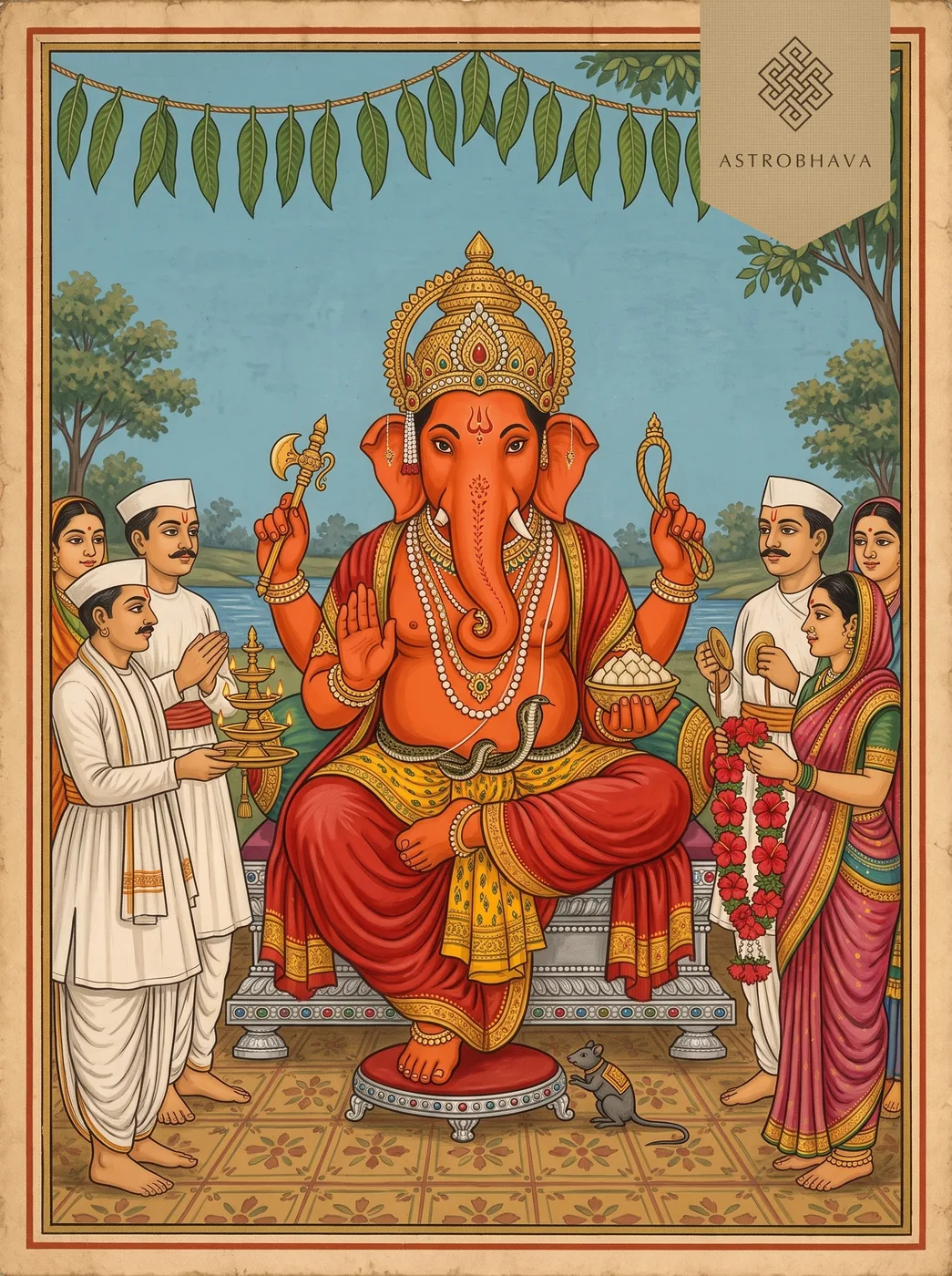
Sukhkarta Dukhharta Aarti
सुखकर्ता दुःखहर्ता वार्ता विघ्नाची । नुरवी पुरवी प्रेम कृपा जयाची ॥ सर्वांगी सुंदर उटी शेंदुराची । कंठी झळके माळ मुक्ताफळांची ॥Also known as Sukhakarta Dukhaharta
In Devanagari, Tamil, Telugu, Kannada, Malayalam and English — with the meaning of every word, and the one syllable most people pronounce wrongly.
What the Sukhkarta Dukhharta Aarti is
Sukhkarta Dukhharta is the Marathi aarti to Ganesha that Maharashtra knows simply as Ganapatichi Aarti, the aarti of Ganapati. It was composed by Samarth Ramdas (1608-1682), a saint whose own chosen deity was Rama, and he signs it in the last stanza as 'dasa Ramacha', the servant of Rama. It is written in the spoken Marathi of his day rather than in Sanskrit, and is set in raga Jogiya. There are three stanzas, with the refrain 'jaya deva jaya deva jaya mangalamurti' sung after each one. The first stanza names Ganesha as giver of joy and remover of sorrow and pictures him smeared with vermilion paste, a string of pearls at his throat. The second dwells on adornment: a jewelled seat, sandal paste with kumkum and saffron, a diamond-set crown, belled anklets. The third lists his form, big-bellied, in yellow silk, a serpent tied at his waist, three-eyed, and closes with Ramdas asking him to come in trouble and guard at the final hour.
A Rama devotee before Mayureshwar at Morgaon
Morgaon, a village in the Baramati taluka of Pune district, holds the Mayureshwar temple, the chief shrine of the eight Ashtavinayaka temples of Ganesha. The temple's own published account relates that Samarth Ramdas reached Morgaon on one of his journeys and stood before Mayureshwar calling out 'Jai Jai Raghuveer Samarth', his cry of praise to Rama. Chintamani Maharaj, son of the saint Moraya Gosavi, who had done penance at this very temple, asked him to call on the deity with Moraya's name instead. Ramdas declined and kept to his cry for Rama. According to that account, darkness then fell over the place, Ramdas yielded and asked for mercy, and the verses with which he called on Ganesha were this aarti, composed there at Morgaon. A plainer account says only that Ramdas was moved to write it on seeing the image of Mayureshwar. The text itself keeps a trace of its author's loyalties: its closing stanza still signs off as the servant of Rama, and the art historian Pratapaditya Pal noted how remarkable its address to Ganesha is, coming from a poet whose patron deity was Rama.
The mantra, in six scripts
- सुखकर्ता
- sukhakartā — giver of joy
- दुःखहर्ता
- duḥkhahartā — remover of sorrow
- वार्ता
- vārtā — trace, mention
- विघ्नाची
- vighnācī — of obstacles
- नुरवी
- nuravī — leaves none of
- पुरवी
- puravī — bestows
- प्रेम
- prema — love
- कृपा
- kṛpā — grace
- जयाची
- jayācī — whose
Sukhkarta Dukhharta lyrics in full
Three stanzas. The refrain, 'jaya deva jaya deva jaya mangalamurti', is sung after each one; it is printed once, after the first.
All 4 verses, in Marathi, Tamil, Telugu, Kannada, Malayalam and English, each with its meaning. Choose a script:
Download the Sukhkarta Dukhharta PDFAll 4 verses with their meanings, in Marathi. Free to print and keep.
सुखकर्ता दुःखहर्ता वार्ता विघ्नाची ।
नुरवी पुरवी प्रेम कृपा जयाची ॥ सर्वांगी सुंदर उटी शेंदुराची ।
कंठी झळके माळ मुक्ताफळांची ॥
ஸுககர்தா துஃகஹர்தா வார்தா விக்நாசீ ।
நுரவீ புரவீ ப்ரேம க்ருபா ஜயாசீ ॥ ஸர்வாம்கீ ஸும்தர உடீ ஶேம்துராசீ ।
கம்டீ சளகே மாள முக்தாபளாம்சீ ॥
సుఖకర్తా దుఃఖహర్తా వార్తా విఘ్నాచీ ।
నురవీ పురవీ ప్రేమ కృపా జయాచీ ॥ సర్వాంగీ సుందర ఉటీ శేందురాచీ ।
కంఠీ ఝళకే మాళ ముక్తాఫళాంచీ ॥
ಸುಖಕರ್ತಾ ದುಃಖಹರ್ತಾ ವಾರ್ತಾ ವಿಘ್ನಾಚೀ ।
ನುರವೀ ಪುರವೀ ಪ್ರೇಮ ಕೃಪಾ ಜಯಾಚೀ ॥ ಸರ್ವಾಂಗೀ ಸುಂದರ ಉಟೀ ಶೇಂದುರಾಚೀ ।
ಕಂಠೀ ಝಳಕೇ ಮಾಳ ಮುಕ್ತಾಫಳಾಂಚೀ ॥
സുഖകര്താ ദുഃഖഹര്താ വാര്താ വിഘ്നാചീ ।
നുരവീ പുരവീ പ്രേമ കൃപാ ജയാചീ ॥ സര്വാംഗീ സുംദര ഉടീ ശേംദുരാചീ ।
കംഠീ ഝളകേ മാള മുക്താഫളാംചീ ॥
sukhakartā duḥkhahartā vārtā vighnācī |
nuravī puravī prema kṛpā jayācī || sarvāṃgī suṃdara uṭī śeṃdurācī |
kaṃṭhī jhaḷake māḷa muktāphaḷāṃcī ||
He brings joy and takes away sorrow, and leaves no trace of obstacles; his grace pours out love. His whole body is beautiful, smeared with vermilion paste, and a necklace of pearls shines at his throat.
जय देव जय देव जय मंगलमूर्ती ।
दर्शनमात्रे मनकामना पुरती ॥
ஜய தேவ ஜய தேவ ஜய மம்கலமூர்தீ ।
தர்ஶநமாத்ரே மநகாமநா புரதீ ॥
జయ దేవ జయ దేవ జయ మంగలమూర్తీ ।
దర్శనమాత్రే మనకామనా పురతీ ॥
ಜಯ ದೇವ ಜಯ ದೇವ ಜಯ ಮಂಗಲಮೂರ್ತೀ ।
ದರ್ಶನಮಾತ್ರೇ ಮನಕಾಮನಾ ಪುರತೀ ॥
ജയ ദേവ ജയ ദേവ ജയ മംഗലമൂര്തീ ।
ദര്ശനമാത്രേ മനകാമനാ പുരതീ ॥
jaya deva jaya deva jaya maṃgalamūrtī |
darśanamātre manakāmanā puratī ||
Victory to you, O God, victory to you, the embodiment of auspiciousness. The verse says that by merely seeing you, the wishes of the heart are fulfilled.
रत्नखचित फरा तुज गौरीकुमरा ।
चंदनाची उटी कुंकुमकेशरा ॥ हिरे जडित मुकुट शोभतो बरा ।
रुणझुणती नूपुरे चरणी घागरिया ॥
ரத்நகசித பரா துஜ கௌரீகுமரா ।
சம்தநாசீ உடீ கும்குமகேஶரா ॥ ஹிரே ஜடித முகுட ஶோபதோ பரா ।
ருணசுணதீ நூபுரே சரணீ காகரியா ॥
రత్నఖచిత ఫరా తుజ గౌరీకుమరా ।
చందనాచీ ఉటీ కుంకుమకేశరా ॥ హిరే జడిత ముకుట శోభతో బరా ।
రుణఝుణతీ నూపురే చరణీ ఘాగరియా ॥
ರತ್ನಖಚಿತ ಫರಾ ತುಜ ಗೌರೀಕುಮರಾ ।
ಚಂದನಾಚೀ ಉಟೀ ಕುಂಕುಮಕೇಶರಾ ॥ ಹಿರೇ ಜಡಿತ ಮುಕುಟ ಶೋಭತೋ ಬರಾ ।
ರುಣಝುಣತೀ ನೂಪುರೇ ಚರಣೀ ಘಾಗರಿಯಾ ॥
രത്നഖചിത ഫരാ തുജ ഗൌരീകുമരാ ।
ചംദനാചീ ഉടീ കുംകുമകേശരാ ॥ ഹിരേ ജഡിത മുകുട ശോഭതോ ബരാ ।
രുണഝുണതീ നൂപുരേ ചരണീ ഘാഗരിയാ ॥
ratnakhacita pharā tuja gaurīkumarā |
caṃdanācī uṭī kuṃkumakeśarā || hire jaḍita mukuṭa śobhato barā |
ruṇajhuṇatī nūpure caraṇī ghāgariyā ||
O son of Gauri, a jewel-studded seat is offered to you, with sandal paste, kumkum and saffron. A diamond-studded crown sits finely on your head, and anklets with little bells jingle on your feet.
लंबोदर पीतांबर फणिवरबंधना ।
सरळ सोंड वक्रतुंड त्रिनयना ॥ दास रामाचा वाट पाहे सदना ।
संकटी पावावे निर्वाणी रक्षावे सुरवरवंदना ॥
லம்போதர பீதாம்பர பணிவரபம்தநா ।
ஸரள ஸோம்ட வக்ரதும்ட த்ரிநயநா ॥ தாஸ ராமாசா வாட பாஹே ஸதநா ।
ஸம்கடீ பாவாவே நிர்வாணீ ரக்ஷாவே ஸுரவரவம்தநா ॥
లంబోదర పీతాంబర ఫణివరబంధనా ।
సరళ సోండ వక్రతుండ త్రినయనా ॥ దాస రామాచా వాట పాహే సదనా ।
సంకటీ పావావే నిర్వాణీ రక్షావే సురవరవందనా ॥
ಲಂಬೋದರ ಪೀತಾಂಬರ ಫಣಿವರಬಂಧನಾ ।
ಸರಳ ಸೋಂಡ ವಕ್ರತುಂಡ ತ್ರಿನಯನಾ ॥ ದಾಸ ರಾಮಾಚಾ ವಾಟ ಪಾಹೇ ಸದನಾ ।
ಸಂಕಟೀ ಪಾವಾವೇ ನಿರ್ವಾಣೀ ರಕ್ಷಾವೇ ಸುರವರವಂದನಾ ॥
ലംബോദര പീതാംബര ഫണിവരബംധനാ ।
സരള സോംഡ വക്രതുംഡ ത്രിനയനാ ॥ ദാസ രാമാചാ വാട പാഹേ സദനാ ।
സംകടീ പാവാവേ നിര്വാണീ രക്ഷാവേ സുരവരവംദനാ ॥
laṃbodara pītāṃbara phaṇivarabaṃdhanā |
saraḷa soṃḍa vakratuṃḍa trinayanā || dāsa rāmācā vāṭa pāhe sadanā |
saṃkaṭī pāvāve nirvāṇī rakṣāve suravaravaṃdanā ||
Big-bellied, dressed in yellow silk, with the king of serpents tied at your waist; straight trunk, curved mouth, three-eyed. Ramdas, the servant of Rama, waits for you at home: O one worshipped by the best of the gods, come to us in trouble and protect us at the final hour.
The syllable people get wrong
In jhaḷake ('shines', stanza 1) the ḷ is the Marathi retroflex ळ: curl the tongue tip back towards the roof of the mouth, as for a hard ḍ, and let the sound pass round its sides, rather than saying the plain English l. The same sound returns in māḷa, muktāphaḷāṃcī and saraḷa.
When the Sukhkarta Dukhharta Aarti is chanted
Weekday. Tuesday
Festival. Ganesh Chaturthi (Ganeshotsav)
Questions
Have your chart read before you decide
Chanting is yours to do, and free. But which deity your situation calls for — and whether a mantra alone is the right response — depends on your chart. Sometimes it is; sometimes it is not.
- Over 30 years in the Guru–Sishya Parampara, from the age of five
- He reads every chart himself — 60 minutes, one to one, never delegated
- Charts are read only between sunrise and sunset, following tradition
Related
Ganapathi Mula Mantra
The foundational mantra. Chanted at the start of any undertaking.
Bala Ganapathi Mantra
The child form. For children's wellbeing and early education.
Taruna Ganapathi Mantra
The youthful form. For vigour at the start of a venture.
Ganapathi Homa
The fire ritual, performed for you and telecast live.