Swamiye Saranam Ayyappa
स्वामिये शरणम् अय्यप्पा ॥Also known as Ayyappa Mantra
In Devanagari, Tamil, Telugu, Kannada, Malayalam and English — with the meaning of every word, and the one syllable most people pronounce wrongly.
 The Ayyappa Homam, performed for youBook →
What the Swamiye Saranam Ayyappa is
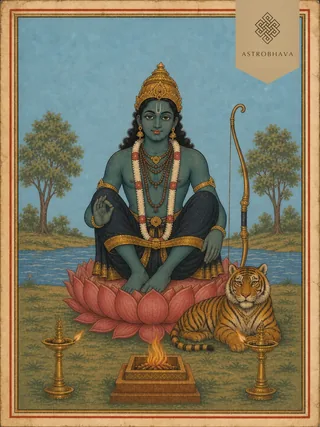
The Swamiye Saranam Ayyappa most people mean is the pilgrim call Swamiye Saranam Ayyappa, and it opens this set of eleven short items addressed to Ayyappa, also called Shasta. No single text holds them. The call belongs to the Sabarimala road and comes in Tamil and Malayalam words. The second item is the Shasta Gayatri, found at the close of the Shasta Suktam. A dhyana verse then pictures him: dusky skin, many-coloured dress, red lotus garland, tall jewelled crown, hair curling at the tips. Two free-standing verses follow, Bhutanatha Sadananda and the verse naming Dhanvantari and Maheshvara, both carried in the Shasta Dashakam; the first is also recited in the Hariharaputra puja. Last comes the Dharmashastu Pancharatnam, the Five Jewels, each verse closing on the refrain shastaram pranamamyaham, I bow to Shasta. Its final line says that when a person reads these verses daily, Shasta is pleased and dwells in that reader's mind.
Forest shrine, Pandya prince, two parents
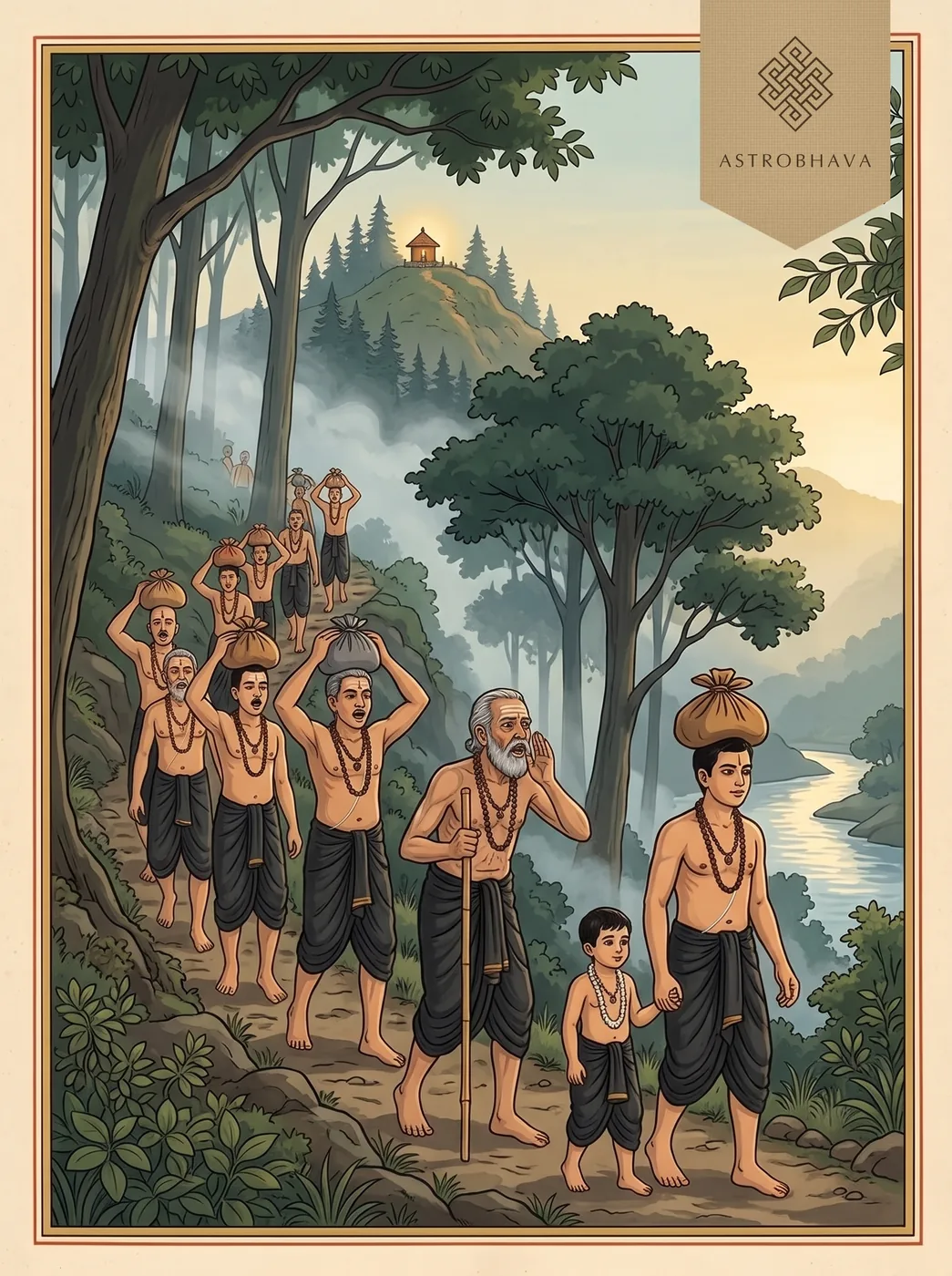
The verses compress a story told in two strands. In one, Shasta is the child of Shiva and Mohini, the form Vishnu took, which is why Verse 4 can call him the dear son of Vishnu and Shiva. Verse 2 goes further and names Dhanvantari, the physician form of Vishnu, as his mother, a turn that suits its title for him, remover of great diseases. The other strand is Kerala folklore. According to it, the king of Pandalam, childless, found an infant on the bank of the Pamba and raised him as Manikantha. The queen, favouring her own son, feigned illness and asked for tiger's milk; the boy went into the forest, overcame the demoness Mahishi and rode home on a tiger, and the king saw who he was. An arrow he shot marked the place for his shrine. Tellings differ on the king's name. Verse 7 keeps this second strand in two phrases: ornament of the Pandya line, playing in Kerala. The Pandalam family traces its descent to the Pandya kings of Madurai, though its own early dates are disputed. Some scholars read the figure as a local forest god joined to the Puranic episode of Shiva and Mohini. No text records who first raised the pilgrim call.
The mantra, in six scripts
- स्वामिये
- svāmiye — O master, O Swami
- शरणम्
- śaraṇam — refuge
- अय्यप्पा
- ayyappā — O Ayyappa
Swamiye Saranam Ayyappa lyrics in full
A selection of eleven short items in the order temple prayer books use, ending with the five verses of the Pancharatnam and their closing verse. The pilgrim call is also given in its Tamil and Malayalam wording.
All 11 verses, in Sanskrit, Tamil, Telugu, Kannada, Malayalam and English, each with its meaning. Choose a script:
Download the Swamiye Saranam Ayyappa PDFAll 11 verses with their meanings, in Sanskrit. Free to print and keep.
स्वामिये शरणम् अय्यप्पा ॥
ஸ்வாமியே ஶரணம் அய்யப்பா ॥
స్వామియే శరణమ్ అయ్యప్పా ॥
ಸ್ವಾಮಿಯೇ ಶರಣಮ್ ಅಯ್ಯಪ್ಪಾ ॥
സ്വാമിയേ ശരണമ് അയ്യപ്പാ ॥
svāmiye śaraṇam ayyappā ||
O Lord Ayyappa, you are my refuge. This is the call the pilgrims raise on the way to Sabarimala.
भूतनाथाय विद्महे भवपुत्राय धीमहि ।
तन्नः शास्ता प्रचोदयात् ॥
பூதநாதாய வித்மஹே பவபுத்ராய தீமஹி ।
தந்நஃ ஶாஸ்தா ப்ரசோதயாத் ॥
భూతనాథాయ విద్మహే భవపుత్రాయ ధీమహి ।
తన్నః శాస్తా ప్రచోదయాత్ ॥
ಭೂತನಾಥಾಯ ವಿದ್ಮಹೇ ಭವಪುತ್ರಾಯ ಧೀಮಹಿ ।
ತನ್ನಃ ಶಾಸ್ತಾ ಪ್ರಚೋದಯಾತ್ ॥
ഭൂതനാഥായ വിദ്മഹേ ഭവപുത്രായ ധീമഹി ।
തന്നഃ ശാസ്താ പ്രചോദയാത് ॥
bhūtanāthāya vidmahe bhavaputrāya dhīmahi |
tannaḥ śāstā pracodayāt ||
May we know the Lord of beings; we meditate on the son of Shiva. May that Shasta inspire us.
आश्यामकोमलविशालतनुं विचित्रवासोवसानमरुणोत्पलदामहस्तम् ।
उत्तुङ्गरत्नमकुटं कुटिलाग्रकेशं शास्तारमिष्टवरदं शरणं प्रपद्ये ॥
ஆஶ்யாமகோமலவிஶாலதநும் விசித்ரவாஸோவஸாநமருணோத்பலதாமஹஸ்தம் ।
உத்துங்கரத்நமகுடம் குடிலாக்ரகேஶம் ஶாஸ்தாரமிஷ்டவரதம் ஶரணம் ப்ரபத்யே ॥
ఆశ్యామకోమలవిశాలతనుం విచిత్రవాసోవసానమరుణోత్పలదామహస్తమ్ ।
ఉత్తుఙ్గరత్నమకుటం కుటిలాగ్రకేశం శాస్తారమిష్టవరదం శరణం ప్రపద్యే ॥
ಆಶ್ಯಾಮಕೋಮಲವಿಶಾಲತನುಂ ವಿಚಿತ್ರವಾಸೋವಸಾನಮರುಣೋತ್ಪಲದಾಮಹಸ್ತಮ್ ।
ಉತ್ತುಙ್ಗರತ್ನಮಕುಟಂ ಕುಟಿಲಾಗ್ರಕೇಶಂ ಶಾಸ್ತಾರಮಿಷ್ಟವರದಂ ಶರಣಂ ಪ್ರಪದ್ಯೇ ॥
ആശ്യാമകോമലവിശാലതനും വിചിത്രവാസോവസാനമരുണോത്പലദാമഹസ്തമ് ।
ഉത്തുങ്ഗരത്നമകുടം കുടിലാഗ്രകേശം ശാസ്താരമിഷ്ടവരദം ശരണം പ്രപദ്യേ ॥
āśyāmakomalaviśālatanuṃ vicitravāsovasānamaruṇotpaladāmahastam |
uttuṅgaratnamakuṭaṃ kuṭilāgrakeśaṃ śāstāramiṣṭavaradaṃ śaraṇaṃ prapadye ||
I take refuge in Shasta, giver of the boons one desires: his large, tender body is dusky, he is clad in many-coloured garments, a garland of red lotuses is in his hand, he wears a tall jewelled crown, and his hair curls at the tips.
भूतनाथ सदानन्द सर्वभूतदयापर ।
रक्ष रक्ष महाबाहो शास्त्रे तुभ्यं नमो नमः ॥
பூதநாத ஸதாநந்த ஸர்வபூததயாபர ।
ரக்ஷ ரக்ஷ மஹாபாஹோ ஶாஸ்த்ரே துப்யம் நமோ நமஃ ॥
భూతనాథ సదానన్ద సర్వభూతదయాపర ।
రక్ష రక్ష మహాబాహో శాస్త్రే తుభ్యం నమో నమః ॥
ಭೂತನಾಥ ಸದಾನನ್ದ ಸರ್ವಭೂತದಯಾಪರ ।
ರಕ್ಷ ರಕ್ಷ ಮಹಾಬಾಹೋ ಶಾಸ್ತ್ರೇ ತುಭ್ಯಂ ನಮೋ ನಮಃ ॥
ഭൂതനാഥ സദാനന്ദ സര്വഭൂതദയാപര ।
രക്ഷ രക്ഷ മഹാബാഹോ ശാസ്ത്രേ തുഭ്യം നമോ നമഃ ॥
bhūtanātha sadānanda sarvabhūtadayāpara |
rakṣa rakṣa mahābāho śāstre tubhyaṃ namo namaḥ ||
O Lord of beings, ever blissful, kind to all creatures, protect me, protect me, O mighty-armed one. To you, Shasta, salutation again and again.
यस्य धन्वन्तरिर्माता पिता देवो महेश्वरः ।
तं शास्तारमहं वन्दे महारोगनिवारणम् ॥
யஸ்ய தந்வந்தரிர்மாதா பிதா தேவோ மஹேஶ்வரஃ ।
தம் ஶாஸ்தாரமஹம் வந்தே மஹாரோகநிவாரணம் ॥
యస్య ధన్వన్తరిర్మాతా పితా దేవో మహేశ్వరః ।
తం శాస్తారమహం వన్దే మహారోగనివారణమ్ ॥
ಯಸ್ಯ ಧನ್ವನ್ತರಿರ್ಮಾತಾ ಪಿತಾ ದೇವೋ ಮಹೇಶ್ವರಃ ।
ತಂ ಶಾಸ್ತಾರಮಹಂ ವನ್ದೇ ಮಹಾರೋಗನಿವಾರಣಮ್ ॥
യസ്യ ധന്വന്തരിര്മാതാ പിതാ ദേവോ മഹേശ്വരഃ ।
തം ശാസ്താരമഹം വന്ദേ മഹാരോഗനിവാരണമ് ॥
yasya dhanvantarirmātā pitā devo maheśvaraḥ |
taṃ śāstāramahaṃ vande mahāroganivāraṇam ||
I bow to that Shasta whose mother is Dhanvantari and whose father is the god Maheshvara. The verse calls him the remover of great diseases.
लोकवीरं महापूज्यं सर्वरक्षाकरं विभुम् ।
पार्वतीहृदयानन्दं शास्तारं प्रणमाम्यहम् ॥
லோகவீரம் மஹாபூஜ்யம் ஸர்வரக்ஷாகரம் விபும் ।
பார்வதீஹ்ருதயாநந்தம் ஶாஸ்தாரம் ப்ரணமாம்யஹம் ॥
లోకవీరం మహాపూజ్యం సర్వరక్షాకరం విభుమ్ ।
పార్వతీహృదయానన్దం శాస్తారం ప్రణమామ్యహమ్ ॥
ಲೋಕವೀರಂ ಮಹಾಪೂಜ್ಯಂ ಸರ್ವರಕ್ಷಾಕರಂ ವಿಭುಮ್ ।
ಪಾರ್ವತೀಹೃದಯಾನನ್ದಂ ಶಾಸ್ತಾರಂ ಪ್ರಣಮಾಮ್ಯಹಮ್ ॥
ലോകവീരം മഹാപൂജ്യം സര്വരക്ഷാകരം വിഭുമ് ।
പാര്വതീഹൃദയാനന്ദം ശാസ്താരം പ്രണമാമ്യഹമ് ॥
lokavīraṃ mahāpūjyaṃ sarvarakṣākaraṃ vibhum |
pārvatīhṛdayānandaṃ śāstāraṃ praṇamāmyaham ||
I bow to Shasta, hero of the worlds, greatly worshipped, the all-pervading lord who protects everyone, the joy of Parvati's heart.
विप्रपूज्यं विश्ववन्द्यं विष्णुशम्भोः प्रियं सुतम् ।
क्षिप्रप्रसादनिरतं शास्तारं प्रणमाम्यहम् ॥
விப்ரபூஜ்யம் விஶ்வவந்த்யம் விஷ்ணுஶம்போஃ ப்ரியம் ஸுதம் ।
க்ஷிப்ரப்ரஸாதநிரதம் ஶாஸ்தாரம் ப்ரணமாம்யஹம் ॥
విప్రపూజ్యం విశ్వవన్ద్యం విష్ణుశమ్భోః ప్రియం సుతమ్ ।
క్షిప్రప్రసాదనిరతం శాస్తారం ప్రణమామ్యహమ్ ॥
ವಿಪ್ರಪೂಜ್ಯಂ ವಿಶ್ವವನ್ದ್ಯಂ ವಿಷ್ಣುಶಮ್ಭೋಃ ಪ್ರಿಯಂ ಸುತಮ್ ।
ಕ್ಷಿಪ್ರಪ್ರಸಾದನಿರತಂ ಶಾಸ್ತಾರಂ ಪ್ರಣಮಾಮ್ಯಹಮ್ ॥
വിപ്രപൂജ്യം വിശ്വവന്ദ്യം വിഷ്ണുശമ്ഭോഃ പ്രിയം സുതമ് ।
ക്ഷിപ്രപ്രസാദനിരതം ശാസ്താരം പ്രണമാമ്യഹമ് ॥
viprapūjyaṃ viśvavandyaṃ viṣṇuśambhoḥ priyaṃ sutam |
kṣipraprasādanirataṃ śāstāraṃ praṇamāmyaham ||
I bow to Shasta, worshipped by the learned and honoured by the whole world, the dear son of Vishnu and Shiva, quick to grant his grace.
मत्तमातङ्गगमनं कारुण्यामृतपूरितम् ।
सर्वविघ्नहरं देवं शास्तारं प्रणमाम्यहम् ॥
மத்தமாதங்ககமநம் காருண்யாம்ருதபூரிதம் ।
ஸர்வவிக்நஹரம் தேவம் ஶாஸ்தாரம் ப்ரணமாம்யஹம் ॥
మత్తమాతఙ్గగమనం కారుణ్యామృతపూరితమ్ ।
సర్వవిఘ్నహరం దేవం శాస్తారం ప్రణమామ్యహమ్ ॥
ಮತ್ತಮಾತಙ್ಗಗಮನಂ ಕಾರುಣ್ಯಾಮೃತಪೂರಿತಮ್ ।
ಸರ್ವವಿಘ್ನಹರಂ ದೇವಂ ಶಾಸ್ತಾರಂ ಪ್ರಣಮಾಮ್ಯಹಮ್ ॥
മത്തമാതങ്ഗഗമനം കാരുണ്യാമൃതപൂരിതമ് ।
സര്വവിഘ്നഹരം ദേവം ശാസ്താരം പ്രണമാമ്യഹമ് ॥
mattamātaṅgagamanaṃ kāruṇyāmṛtapūritam |
sarvavighnaharaṃ devaṃ śāstāraṃ praṇamāmyaham ||
I bow to the god Shasta, who walks like an elephant in its prime, full of the nectar of compassion, who removes every obstacle.
अस्मत्कुलेश्वरं देवमस्मच्छत्रुविनाशनम् ।
अस्मदिष्टप्रदातारं शास्तारं प्रणमाम्यहम् ॥
அஸ்மத்குலேஶ்வரம் தேவமஸ்மச்சத்ருவிநாஶநம் ।
அஸ்மதிஷ்டப்ரதாதாரம் ஶாஸ்தாரம் ப்ரணமாம்யஹம் ॥
అస్మత్కులేశ్వరం దేవమస్మచ్ఛత్రువినాశనమ్ ।
అస్మదిష్టప్రదాతారం శాస్తారం ప్రణమామ్యహమ్ ॥
ಅಸ್ಮತ್ಕುಲೇಶ್ವರಂ ದೇವಮಸ್ಮಚ್ಛತ್ರುವಿನಾಶನಮ್ ।
ಅಸ್ಮದಿಷ್ಟಪ್ರದಾತಾರಂ ಶಾಸ್ತಾರಂ ಪ್ರಣಮಾಮ್ಯಹಮ್ ॥
അസ്മത്കുലേശ്വരം ദേവമസ്മച്ഛത്രുവിനാശനമ് ।
അസ്മദിഷ്ടപ്രദാതാരം ശാസ്താരം പ്രണമാമ്യഹമ് ॥
asmatkuleśvaraṃ devamasmacchatruvināśanam |
asmadiṣṭapradātāraṃ śāstāraṃ praṇamāmyaham ||
I bow to Shasta, the god and lord of our family, destroyer of our enemies, giver of what we long for.
पाण्ड्येशवंशतिलकं केरले केलिविग्रहम् ।
आर्तत्राणपरं देवं शास्तारं प्रणमाम्यहम् ॥
பாண்ட்யேஶவம்ஶதிலகம் கேரலே கேலிவிக்ரஹம் ।
ஆர்தத்ராணபரம் தேவம் ஶாஸ்தாரம் ப்ரணமாம்யஹம் ॥
పాణ్డ్యేశవంశతిలకం కేరలే కేలివిగ్రహమ్ ।
ఆర్తత్రాణపరం దేవం శాస్తారం ప్రణమామ్యహమ్ ॥
ಪಾಣ್ಡ್ಯೇಶವಂಶತಿಲಕಂ ಕೇರಲೇ ಕೇಲಿವಿಗ್ರಹಮ್ ।
ಆರ್ತತ್ರಾಣಪರಂ ದೇವಂ ಶಾಸ್ತಾರಂ ಪ್ರಣಮಾಮ್ಯಹಮ್ ॥
പാണ്ഡ്യേശവംശതിലകം കേരലേ കേലിവിഗ്രഹമ് ।
ആര്തത്രാണപരം ദേവം ശാസ്താരം പ്രണമാമ്യഹമ് ॥
pāṇḍyeśavaṃśatilakaṃ kerale kelivigraham |
ārtatrāṇaparaṃ devaṃ śāstāraṃ praṇamāmyaham ||
I bow to the god Shasta, the ornament of the Pandya king's line, whose form plays in Kerala, devoted to rescuing the afflicted.
पञ्चरत्नाख्यमेतद्यो नित्यं शुद्धः पठेन्नरः ।
तस्य प्रसन्नो भगवान् शास्ता वसति मानसे ॥
பஞ்சரத்நாக்யமேதத்யோ நித்யம் ஶுத்தஃ படேந்நரஃ ।
தஸ்ய ப்ரஸந்நோ பகவாந் ஶாஸ்தா வஸதி மாநஸே ॥
పఞ్చరత్నాఖ్యమేతద్యో నిత్యం శుద్ధః పఠేన్నరః ।
తస్య ప్రసన్నో భగవాన్ శాస్తా వసతి మానసే ॥
ಪಞ್ಚರತ್ನಾಖ್ಯಮೇತದ್ಯೋ ನಿತ್ಯಂ ಶುದ್ಧಃ ಪಠೇನ್ನರಃ ।
ತಸ್ಯ ಪ್ರಸನ್ನೋ ಭಗವಾನ್ ಶಾಸ್ತಾ ವಸತಿ ಮಾನಸೇ ॥
പഞ്ചരത്നാഖ്യമേതദ്യോ നിത്യം ശുദ്ധഃ പഠേന്നരഃ ।
തസ്യ പ്രസന്നോ ഭഗവാന് ശാസ്താ വസതി മാനസേ ॥
pañcaratnākhyametadyo nityaṃ śuddhaḥ paṭhennaraḥ |
tasya prasanno bhagavān śāstā vasati mānase ||
The verse says that when a person, made pure, reads these Five Jewels every day, Lord Shasta is pleased with him and dwells in his mind.
The syllable people get wrong
In śāstāraṃ, the word that closes the refrain, the t is a plain dental t with no breath after it, so say SHAAS-taa-ram with both a's long. The English spelling Sastha adds an h the Sanskrit does not have, and it also loses the sh sound at the start.
When the Swamiye Saranam Ayyappa is chanted
Festival. Mandala season and Makaravilakku at Sabarimala
Questions
Have your chart read before you decide
Chanting is yours to do, and free. But which deity your situation calls for — and whether a mantra alone is the right response — depends on your chart. Sometimes it is; sometimes it is not.
- Over 30 years in the Guru–Sishya Parampara, from the age of five
- He reads every chart himself — 60 minutes, one to one, never delegated
- Charts are read only between sunrise and sunset, following tradition
