Thiruppavai
மார்கழித் திங்கள் மதி நிறைந்த நன்னாளால் நீராடப் போதுவீர் போதுமினோ நேரிழையீர்Also known as Margazhi Thingal
In Tamil and English — with the meaning of every word, and the one sound most people pronounce wrongly.
What the Thiruppavai is
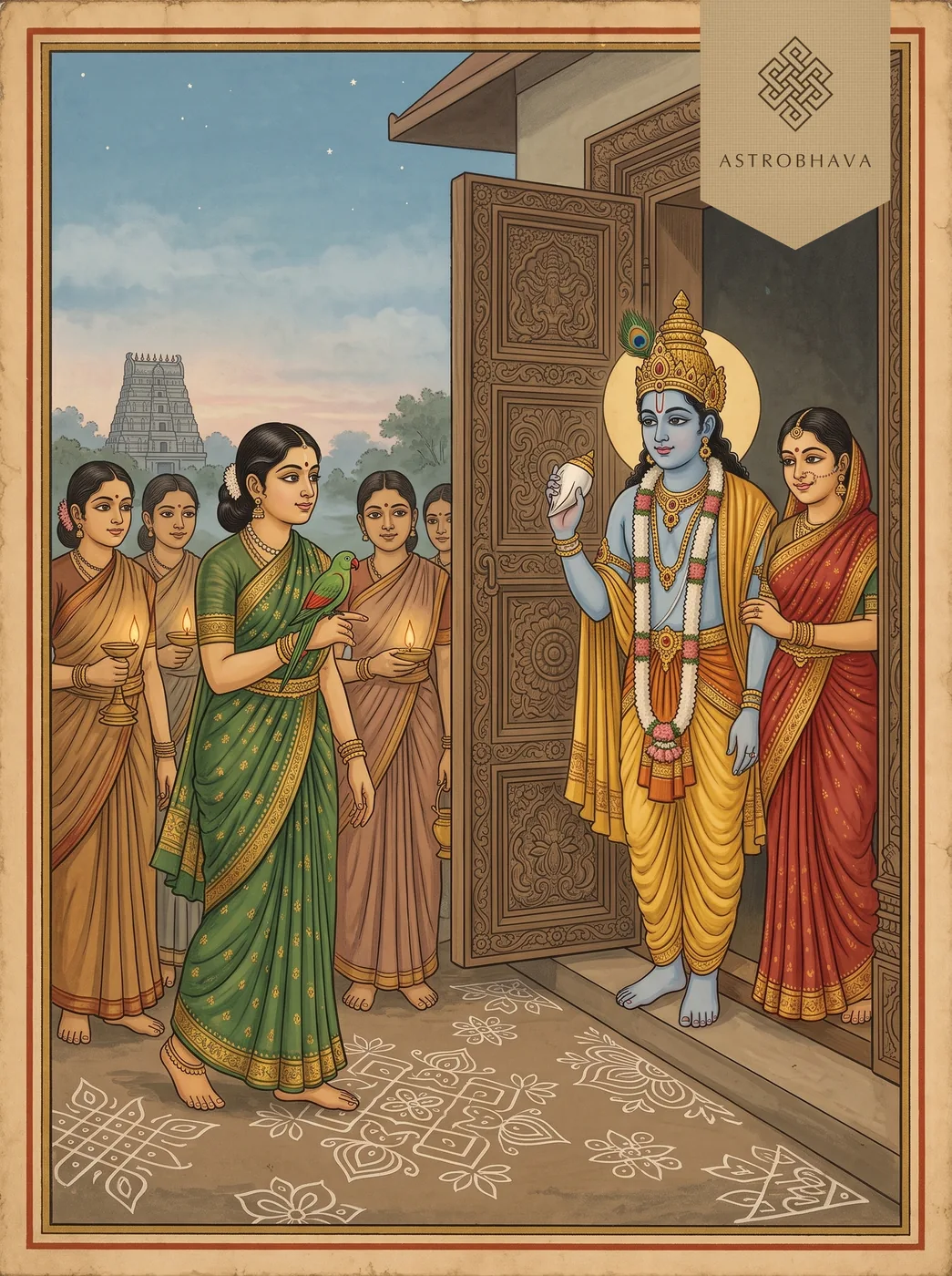
The Thiruppavai is a Tamil poem of thirty pasurams by Andal, also called Kodai or Goda, the only woman among the twelve Alvars, generally placed in the 8th or 9th century. It stands as numbers 474 to 503 in the Nalayira Divya Prabandham, the four-thousand-verse Sri Vaishnava canon gathered by Nathamuni. Every pasuram has eight lines and ends on the refrain elor empavai. The poet speaks as a cowherd girl of Ayppadi, first to her companions and at last to Krishna. Pasurams 1 to 5 announce the vow and its rules. Pasurams 6 to 15 go from door to door before sunrise, rousing friends with birdsong, the slap of churning curd and the temple conch. From 16 the girls are at Nandagopa's house, waking in turn the gatekeeper, Nandagopa, Yashoda, Balarama, Nappinnai and finally Krishna. Pasuram 24 praises his feet, 25 to 29 state their plea, and 30 names Kodai, daughter of Bhattarpiran of Puduvai, as the singer.
The garland Kodai wore before the Lord
According to tradition, Vishnuchitta of Srivilliputhur, a devotee later honoured as Periyalvar, found an infant girl beside a tulasi plant in the garden of the town's Vishnu temple and raised her as his daughter Kodai. He made garlands for the deity each day, and the story goes that she quietly wore them first. When he found out he was dismayed, but the Lord is said to have appeared in his dream asking only for the garlands she had worn; from this she came to be called Andal, she who rules. Tradition holds that she was later united with Ranganatha at Srirangam. In the Thiruppavai she turns Srivilliputhur into Ayppadi and herself into one of its girls keeping the pavai nonbu, the Margazhi vow that pasuram 2 spells out: bathing before dawn, no ghee or milk, no kohl, no flowers in the hair, no cruel talk. The Bhagavata Purana (10.22) describes the girls of Gokula keeping a month-long vow to Katyayani in the same season, and commentators read the poem against that episode. Her father's presence runs through the text: pasuram 26 asks for singers of Pallandu, his own hymn, and calls Krishna the one who lay on the banyan leaf, the form worshipped in the Srivilliputhur temple.
The opening lines, in Tamil and English
- மார்கழித்
- mārkaḻit — of Margazhi
- திங்கள்
- tiṅkaḷ — the month
- மதி
- mati — the moon
- நிறைந்த
- niṟainta — full
- நன்னாளால்
- naṉṉāḷāl — on this good day
- நீராடப்
- nīrāṭap — to bathe
- போதுவீர்
- pōtuvīr — you who will go
- போதுமினோ
- pōtumiṉō — come along
- நேரிழையீர்
- nēriḻaiyīr — girls in fine jewels
Thiruppavai lyrics in full
Thirty pasurams of eight lines each, one for every day of Margazhi; the taniyan verses sung before the poem are not printed.
All 240 lines, in Tamil and English, each with its meaning. Choose a script:
Download the Thiruppavai PDFAll 240 lines with their meanings, in Tamil. Free to print and keep.
மார்கழித் திங்கள் மதி நிறைந்த நன்னாளால்
நீராடப் போதுவீர் போதுமினோ நேரிழையீர்
சீர் மல்கும் ஆய்ப்பாடிச் செல்வச் சிறுமீர்காள்
கூர்வேல் கொடுந்தொழிலன் நந்தகோபன் குமரன்
ஏரார்ந்த கண்ணி யசோதை இளஞ்சிங்கம்
கார் மேனிச் செங்கண் கதிர் மதியம் போல் முகத்தான்
நாராயணனே நமக்கே பறை தருவான்
பாரோர் புகழப் படிந்தேலோர் எம்பாவாய்
mārkaḻit tiṅkaḷ mati niṟainta naṉṉāḷāl
nīrāṭap pōtuvīr pōtumiṉō nēriḻaiyīr
cīr malkum āyppāṭic celvac ciṟumīrkāḷ
kūrvēl koṭuntoḻilaṉ nantakōpaṉ kumaraṉ
ērārnta kaṇṇi yacōtai iḷañciṅkam
kār mēṉic ceṅkaṇ katir matiyam pōl mukattāṉ
nārāyaṇaṉē namakkē paṟai taruvāṉ
pārōr pukaḻap paṭintēlōr empāvāy
In the month of Margazhi, on this good day of the full moon, come, you girls who wish to bathe, you of fine jewels, rich young girls of the prosperous cowherd village of Ayppadi. The son of Nandagopa, fierce with his sharp spear, the young lion of lovely-eyed Yashoda, dark-bodied, red-eyed, with a face like the sun and the moon: Narayana himself will grant us the parai (the drum, the boon we seek). Come, bathe, so that the world may praise us, our Pavai.
வையத்து வாழ்வீர்காள் நாமும் நம் பாவைக்குச்
செய்யும் கிரிசைகள் கேளீரோ பாற்கடலுள்
பையத் துயின்ற பரமனடி பாடி
நெய்யுண்ணோம் பாலுண்ணோம் நாட்காலே நீராடி
மையிட்டு எழுதோம் மலரிட்டு நாம் முடியோம்
செய்யாதன செய்யோம் தீக்குறளை சென்றோதோம்
ஐயமும் பிச்சையும் ஆந்தனையும் கை காட்டி
உய்யுமாறு எண்ணி உகந்தேலோர் எம்பாவாய்
vaiyattu vāḻvīrkāḷ nāmum nam pāvaikkuc
ceyyum kiricaikaḷ kēḷīrō pāṟkaṭaluḷ
paiyat tuyiṉṟa paramaṉaṭi pāṭi
neyyuṇṇōm pāluṇṇōm nāṭkālē nīrāṭi
maiyiṭṭu eḻutōm malariṭṭu nām muṭiyōm
ceyyātaṉa ceyyōm tīkkuṟaḷai ceṉṟōtōm
aiyamum piccaiyum āntaṉaiyum kai kāṭṭi
uyyumāṟu eṇṇi ukantēlōr empāvāy
People of the world, will you hear the observances we keep for our vow? Singing the feet of the Supreme One who sleeps gently on the ocean of milk, we will not eat ghee or drink milk; we bathe before dawn, put no kohl on our eyes and no flowers in our hair. We will not do what should not be done, nor go and speak cruel gossip; we give alms and gifts as much as we can, and rejoice, thinking of the way to be saved.
ஓங்கி உலகளந்த உத்தமன் பேர் பாடி
நாங்கள் நம் பாவைக்குச் சாற்றி நீராடினால்
தீங்கின்றி நாடெல்லாம் திங்கள் மும் மாரி பெய்து
ஓங்கு பெருஞ்செந்நெல் ஊடு கயலுகளப்
பூங்குவளைப் போதில் பொறி வண்டு கண் படுப்பத்
தேங்காதே புக்கிருந்து சீர்த்த முலை பற்றி
வாங்கக் குடம் நிறைக்கும் வள்ளல் பெரும் பசுக்கள்
நீங்காத செல்வம் நிறைந்தேலோர் எம்பாவாய்
ōṅki ulakaḷanta uttamaṉ pēr pāṭi
nāṅkaḷ nam pāvaikkuc cāṟṟi nīrāṭiṉāl
tīṅkiṉṟi nāṭellām tiṅkaḷ mum māri peytu
ōṅku peruñcennel ūṭu kayalukaḷap
pūṅkuvaḷaip pōtil poṟi vaṇṭu kaṇ paṭuppat
tēṅkātē pukkiruntu cīrtta mulai paṟṟi
vāṅkak kuṭam niṟaikkum vaḷḷal perum pacukkaḷ
nīṅkāta celvam niṟaintēlōr empāvāy
If we sing the name of the Supreme One who grew tall and measured the worlds, and bathe dedicating it to our vow, the whole land will be free of harm, with rain three times a month; fish will leap among the tall red paddy, spotted bees will sleep in the blue lily buds, and great generous cows will fill pots without pause when their udders are held. The verse says unfailing wealth will fill the land.
ஆழி மழைக் கண்ணா ஒன்று நீ கை கரவேல்
ஆழியுள் புக்கு முகந்து கொடு ஆர்த்து ஏறி
ஊழி முதல்வன் உருவம் போல் மெய் கறுத்துப்
பாழியந் தோளுடைப் பற்பநாபன் கையில்
ஆழி போல் மின்னி வலம்புரி போல் நின்று அதிர்ந்து
தாழாதே சார்ங்கம் உதைத்த சர மழை போல்
வாழ உலகினில் பெய்திடாய் நாங்களும்
மார்கழி நீராட மகிழ்ந்தேலோர் எம்பாவாய்
āḻi maḻaik kaṇṇā oṉṟu nī kai karavēl
āḻiyuḷ pukku mukantu koṭu ārttu ēṟi
ūḻi mutalvaṉ uruvam pōl mey kaṟuttup
pāḻiyan tōḷuṭaip paṟpanāpaṉ kaiyil
āḻi pōl miṉṉi valampuri pōl niṉṟu atirntu
tāḻātē cārṅkam utaitta cara maḻai pōl
vāḻa ulakiṉil peytiṭāy nāṅkaḷum
mārkaḻi nīrāṭa makiḻntēlōr empāvāy
O Lord of the rain, deep as the ocean, hold nothing back. Go into the sea, draw up its water, thunder and rise; grow dark like the body of the First Lord of the ages; flash like the discus in the hand of Padmanabha of the strong shoulders, roar like his right-whorled conch, and pour down like the rain of arrows from his bow Sarnga, so that the world may flourish and we may joyfully bathe in Margazhi.
மாயனை மன்னு வட மதுரை மைந்தனைத்
தூய பெரு நீர் யமுனைத் துறைவனை
ஆயர் குலத்தினில் தோன்றும் அணி விளக்கைத்
தாயைக் குடல் விளக்கம் செய்த தாமோதரனைத்
தூயோமாய் வந்து நாம் தூமலர் தூவித் தொழுது
வாயினால் பாடி மனத்தினால் சிந்திக்கப்
போய பிழையும் புகுதருவான் நின்றனவும்
தீயினில் தூசாகும் செப்பேலோர் எம்பாவாய்
māyaṉai maṉṉu vaṭa maturai maintaṉait
tūya peru nīr yamuṉait tuṟaivaṉai
āyar kulattiṉil tōṉṟum aṇi viḷakkait
tāyaik kuṭal viḷakkam ceyta tāmōtaraṉait
tūyōmāy vantu nām tūmalar tūvit toḻutu
vāyiṉāl pāṭi maṉattiṉāl cintikkap
pōya piḻaiyum pukutaruvāṉ niṉṟaṉavum
tīyiṉil tūcākum ceppēlōr empāvāy
The wondrous one, the son of everlasting North Mathura, the lord of the pure deep Yamuna, the shining lamp born in the cowherd clan, Damodara who brought glory to his mother's womb: if we come pure, scatter pure flowers, bow, sing with our lips and think of him in our minds, the verse says past faults and those yet to come will burn away like cotton in fire.
புள்ளும் சிலம்பின காண் புள்ளரையன் கோயிலில்
வெள்ளை விளி சங்கின் பேரரவம் கேட்டிலையோ
பிள்ளாய் எழுந்திராய் பேய் முலை நஞ்சுண்டு
கள்ளச் சகடம் கலக்கழியக் காலோச்சி
வெள்ளத்தரவில் துயிலமர்ந்த வித்தினை
உள்ளத்துக் கொண்டு முனிவர்களும் யோகிகளும்
மெள்ள எழுந்து அரி என்ற பேரரவம்
உள்ளம் புகுந்து குளிர்ந்தேலோர் எம்பாவாய்
puḷḷum cilampiṉa kāṇ puḷḷaraiyaṉ kōyilil
veḷḷai viḷi caṅkiṉ pēraravam kēṭṭilaiyō
piḷḷāy eḻuntirāy pēy mulai nañcuṇṭu
kaḷḷac cakaṭam kalakkaḻiyak kālōcci
veḷḷattaravil tuyilamarnta vittiṉai
uḷḷattuk koṇṭu muṉivarkaḷum yōkikaḷum
meḷḷa eḻuntu ari eṉṟa pēraravam
uḷḷam pukuntu kuḷirntēlōr empāvāy
The birds are chirping, and do you not hear the great sound of the white conch calling in the temple of the King of birds? Wake up, child. The sages and yogis hold in their hearts the Seed of all, who drank the poison from the demoness's breast, kicked apart the deceitful cart, and sleeps on the serpent in the flood; they rise slowly and say 'Hari', and that great sound has entered our hearts and cooled them.
கீசு கீசு என்று எங்கும் ஆனைச் சாத்தன் கலந்து
பேசின பேச்சரவம் கேட்டிலையோ பேய்ப் பெண்ணே
காசும் பிறப்பும் கலகலப்பக் கை பேர்த்து
வாச நறுங்குழல் ஆய்ச்சியர் மத்தினால்
ஓசை படுத்த தயிரரவம் கேட்டிலையோ
நாயகப் பெண் பிள்ளாய் நாராயணன் மூர்த்தி
கேசவனைப் பாடவும் நீ கேட்டே கிடத்தியோ
தேசமுடையாய் திறவேலோர் எம்பாவாய்
kīcu kīcu eṉṟu eṅkum āṉaic cāttaṉ kalantu
pēciṉa pēccaravam kēṭṭilaiyō pēyp peṇṇē
kācum piṟappum kalakalappak kai pērttu
vāca naṟuṅkuḻal āycciyar mattiṉāl
ōcai paṭutta tayiraravam kēṭṭilaiyō
nāyakap peṇ piḷḷāy nārāyaṇaṉ mūrtti
kēcavaṉaip pāṭavum nī kēṭṭē kiṭattiyō
tēcamuṭaiyāy tiṟavēlōr empāvāy
Do you not hear the blackbirds chattering 'keesu keesu' everywhere? You silly girl. Do you not hear the sound of the curd as the fragrant-haired cowherd women churn, their necklaces jingling as their arms move? Noble girl, while we sing of Keshava, Narayana in form, do you lie there listening? Radiant one, open the door.
கீழ் வானம் வெள்ளென்று எருமை சிறு வீடு
மேய்வான் பரந்தன காண் மிக்குள்ள பிள்ளைகளும்
போவான் போகின்றாரைப் போகாமல் காத்து உன்னைக்
கூவுவான் வந்து நின்றோம் கோதுகலம் உடைய
பாவாய் எழுந்திராய் பாடிப் பறை கொண்டு
மாவாய் பிளந்தானை மல்லரை மாட்டிய
தேவாதி தேவனைச் சென்று நாம் சேவித்தால்
ஆவாவென்று ஆராய்ந்து அருளேலோர் எம்பாவாய்
kīḻ vāṉam veḷḷeṉṟu erumai ciṟu vīṭu
mēyvāṉ parantaṉa kāṇ mikkuḷḷa piḷḷaikaḷum
pōvāṉ pōkiṉṟāraip pōkāmal kāttu uṉṉaik
kūvuvāṉ vantu niṉṟōm kōtukalam uṭaiya
pāvāy eḻuntirāy pāṭip paṟai koṇṭu
māvāy piḷantāṉai mallarai māṭṭiya
tēvāti tēvaṉaic ceṉṟu nām cēvittāl
āvāveṉṟu ārāyntu aruḷēlōr empāvāy
The eastern sky has whitened and the buffaloes have spread out to graze in the small fields. We stopped the other girls who were leaving and have come to call you. Eager girl, get up. If we go and worship the God of gods, who split the horse's mouth and killed the wrestlers, and sing to receive the parai, he will look into our need with compassion and grace us.
தூமணி மாடத்துச் சுற்றும் விளக்கெரியத்
தூமம் கமழத் துயிலணைமேல் கண் வளரும்
மாமான் மகளே மணிக் கதவம் தாள் திறவாய்
மாமீர் அவளை எழுப்பீரோ உன் மகள் தான்
ஊமையோ அன்றிச் செவிடோ அனந்தலோ
ஏமப் பெருந் துயில் மந்திரப் பட்டாளோ
மாமாயன் மாதவன் வைகுந்தன் என்றென்று
நாமம் பலவும் நவின்றேலோர் எம்பாவாய்
tūmaṇi māṭattuc cuṟṟum viḷakkeriyat
tūmam kamaḻat tuyilaṇaimēl kaṇ vaḷarum
māmāṉ makaḷē maṇik katavam tāḷ tiṟavāy
māmīr avaḷai eḻuppīrō uṉ makaḷ tāṉ
ūmaiyō aṉṟic ceviṭō aṉantalō
ēmap perun tuyil mantirap paṭṭāḷō
māmāyaṉ mātavaṉ vaikuntaṉ eṉṟeṉṟu
nāmam palavum naviṉṟēlōr empāvāy
Daughter of my uncle, sleeping on a soft bed in the mansion of pure gems, with lamps burning all around and incense rising, open the jewelled door. Aunt, will you not wake her? Is your daughter dumb, or deaf, or drowsy, or put under a spell of deep sleep? We have chanted many names: the great Wonder, Madhava, the Lord of Vaikuntha.
நோற்றுச் சுவர்க்கம் புகுகின்ற அம்மனாய்
மாற்றமும் தாராரோ வாசல் திறவாதார்
நாற்றத் துழாய் முடி நாராயணன் நம்மால்
போற்றப் பறை தரும் புண்ணியனால் பண்டு ஒரு நாள்
கூற்றத்தின் வாய் வீழ்ந்த கும்பகரணனும்
தோற்றும் உனக்கே பெருந்துயில் தான் தந்தானோ
ஆற்ற அனந்தல் உடையாய் அருங்கலமே
தேற்றமாய் வந்து திறவேலோர் எம்பாவாய்
nōṟṟuc cuvarkkam pukukiṉṟa ammaṉāy
māṟṟamum tārārō vācal tiṟavātār
nāṟṟat tuḻāy muṭi nārāyaṇaṉ nammāl
pōṟṟap paṟai tarum puṇṇiyaṉāl paṇṭu oru nāḷ
kūṟṟattiṉ vāy vīḻnta kumpakaraṇaṉum
tōṟṟum uṉakkē peruntuyil tāṉ tantāṉō
āṟṟa aṉantal uṭaiyāy aruṅkalamē
tēṟṟamāy vantu tiṟavēlōr empāvāy
Lady who is earning heaven by her vow, will you not even answer, though you do not open the door? Narayana, crowned with fragrant tulasi, is the holy one who gives the parai when we praise him. Did Kumbhakarna, who fell into the jaws of death long ago, lose to you and hand over his great sleep? Very drowsy one, precious jewel, come to your senses and open the door.
கற்றுக் கறவைக் கணங்கள் பல கறந்து
செற்றார் திறலழியச் சென்று செருச் செய்யும்
குற்றம் ஒன்றில்லாத கோவலர்தம் பொற்கொடியே
புற்று அரவு அல்குல் புனமயிலே போதராய்
சுற்றத்துத் தோழிமார் எல்லாரும் வந்து நின்
முற்றம் புகுந்து முகில் வண்ணன் பேர் பாட
சிற்றாதே பேசாதே செல்வப் பெண்டாட்டி நீ
எற்றுக்கு உறங்கும் பொருளேலோர் எம்பாவாய்
kaṟṟuk kaṟavaik kaṇaṅkaḷ pala kaṟantu
ceṟṟār tiṟalaḻiyac ceṉṟu ceruc ceyyum
kuṟṟam oṉṟillāta kōvalartam poṟkoṭiyē
puṟṟu aravu alkul puṉamayilē pōtarāy
cuṟṟattut tōḻimār ellārum vantu niṉ
muṟṟam pukuntu mukil vaṇṇaṉ pēr pāṭa
ciṟṟātē pēcātē celvap peṇṭāṭṭi nī
eṟṟukku uṟaṅkum poruḷēlōr empāvāy
Golden creeper of the faultless cowherds, who milk many herds of young cows and go to war to break the strength of their foes; peacock of the forest, come out. All your friends and kin have come into your courtyard and are singing the name of the cloud-coloured Lord. Rich and lovely girl, why do you sleep, without moving or speaking?
கனைத்து இளங்கற்றெருமை கன்றுக்கு இரங்கி
நினைத்து முலை வழியே நின்று பால் சோர
நனைத்து இல்லம் சேறாக்கும் நற் செல்வன் தங்காய்
பனித் தலை வீழ நின் வாசல் கடை பற்றிச்
சினத்தினால் தென் இலங்கைக் கோமானைச் செற்ற
மனத்துக்கு இனியானைப் பாடவும் நீ வாய் திறவாய்
இனித்தான் எழுந்திராய் ஈதென்ன பேர் உறக்கம்
அனைத்து இல்லத்தாரும் அறிந்தேலோர் எம்பாவாய்
kaṉaittu iḷaṅkaṟṟerumai kaṉṟukku iraṅki
niṉaittu mulai vaḻiyē niṉṟu pāl cōra
naṉaittu illam cēṟākkum naṟ celvaṉ taṅkāy
paṉit talai vīḻa niṉ vācal kaṭai paṟṟic
ciṉattiṉāl teṉ ilaṅkaik kōmāṉaic ceṟṟa
maṉattukku iṉiyāṉaip pāṭavum nī vāy tiṟavāy
iṉittāṉ eḻuntirāy īteṉṉa pēr uṟakkam
aṉaittu illattārum aṟintēlōr empāvāy
The young buffaloes, lowing and thinking of their calves, let milk flow from their udders until the house turns to mud; you are the sister of such a wealthy cowherd. With the dew falling on our heads we hold your doorway and sing of the beloved Lord who in anger killed the king of southern Lanka, yet you do not open your mouth. Wake now; what is this deep sleep? Everyone in all the houses knows of it.
புள்ளின் வாய் கீண்டானைப் பொல்லா அரக்கனைக்
கிள்ளிக் களைந்தானைக் கீர்த்திமை பாடிப் போய்ப்
பிள்ளைகள் எல்லாரும் பாவைக் களம்புக்கார்
வெள்ளி எழுந்து வியாழம் உறங்கிற்று
புள்ளும் சிலம்பின காண் போதரிக் கண்ணினாய்
குள்ளக் குளிரக் குடைந்து நீராடாதே
பள்ளிக் கிடத்தியோ பாவாய் நீ நன்னாளால்
கள்ளம் தவிர்ந்து கலந்தேலோர் எம்பாவாய்
puḷḷiṉ vāy kīṇṭāṉaip pollā arakkaṉaik
kiḷḷik kaḷaintāṉaik kīrttimai pāṭip pōyp
piḷḷaikaḷ ellārum pāvaik kaḷampukkār
veḷḷi eḻuntu viyāḻam uṟaṅkiṟṟu
puḷḷum cilampiṉa kāṇ pōtarik kaṇṇiṉāy
kuḷḷak kuḷirak kuṭaintu nīrāṭātē
paḷḷik kiṭattiyō pāvāy nī naṉṉāḷāl
kaḷḷam tavirntu kalantēlōr empāvāy
All the girls have gone to the place of the vow, singing the glory of him who tore open the bird's beak and plucked off the heads of the wicked demon. Venus has risen and Jupiter has set; the birds are chirping. Girl with eyes like a flower-dwelling bee, instead of bathing in the cold water, will you lie in bed? On this good day, give up your pretence and join us.
உங்கள் புழைக்கடைத் தோட்டத்து வாவியுள்
செங்கழுநீர் வாய் நெகிழ்ந்து ஆம்பல் வாய் கூம்பின காண்
செங்கல் பொடிக் கூறை வெண்பல் தவத்தவர்
தங்கள் திருக்கோயில் சங்கிடுவான் போதந்தார்
எங்களை முன்னம் எழுப்புவான் வாய்பேசும்
நங்காய் எழுந்திராய் நாணாதாய் நாவுடையாய்
சங்கொடு சக்கரம் ஏந்தும் தடக்கையன்
பங்கயக் கண்ணானைப் பாடேலோர் எம்பாவாய்
uṅkaḷ puḻaikkaṭait tōṭṭattu vāviyuḷ
ceṅkaḻunīr vāy nekiḻntu āmpal vāy kūmpiṉa kāṇ
ceṅkal poṭik kūṟai veṇpal tavattavar
taṅkaḷ tirukkōyil caṅkiṭuvāṉ pōtantār
eṅkaḷai muṉṉam eḻuppuvāṉ vāypēcum
naṅkāy eḻuntirāy nāṇātāy nāvuṭaiyāy
caṅkoṭu cakkaram ēntum taṭakkaiyaṉ
paṅkayak kaṇṇāṉaip pāṭēlōr empāvāy
In the pond of your backyard garden the red lilies have opened and the white lilies have closed. The ascetics with saffron robes and white teeth are going to their temples to blow the conch. You who talked of waking us first, get up, shameless girl with a ready tongue, and sing of the lotus-eyed Lord whose great hands hold the conch and the discus.
எல்லே இளங்கிளியே இன்னம் உறங்குதியோ
சில்லென்று அழையேன்மின் நங்கைமீர் போதர்கின்றேன்
வல்லை உன் கட்டுரைகள் பண்டே உன் வாய் அறிதும்
வல்லீர்கள் நீங்களே நானே தான் ஆயிடுக
ஒல்லை நீ போதாய் உனக்கென்ன வேறுடையை
எல்லாரும் போந்தாரோ போந்தார் போந்து எண்ணிக்கொள்
வல்லானை கொன்றானை மாற்றாரை மாற்றழிக்க
வல்லானை மாயனைப் பாடேலோர் எம்பாவாய்
ellē iḷaṅkiḷiyē iṉṉam uṟaṅkutiyō
cilleṉṟu aḻaiyēṉmiṉ naṅkaimīr pōtarkiṉṟēṉ
vallai uṉ kaṭṭuraikaḷ paṇṭē uṉ vāy aṟitum
vallīrkaḷ nīṅkaḷē nāṉē tāṉ āyiṭuka
ollai nī pōtāy uṉakkeṉṉa vēṟuṭaiyai
ellārum pōntārō pōntār pōntu eṇṇikkoḷ
vallāṉai koṉṟāṉai māṟṟārai māṟṟaḻikka
vallāṉai māyaṉaip pāṭēlōr empāvāy
'Hey, young parrot, are you still asleep?' 'Do not call me so sharply, ladies, I am coming.' 'You are clever with words; we have long known your tongue.' 'You are the clever ones; let it be that I am.' 'Come quickly; what else keeps you?' 'Has everyone come?' 'They have; come and count them.' Come and sing of the wondrous Lord who killed the mighty elephant and can destroy the strength of his foes.
நாயகனாய் நின்ற நந்தகோபன் உடைய
கோயில் காப்பானே கொடித் தோன்றும் தோரண
வாயில் காப்பானே மணிக் கதவம் தாள் திறவாய்
ஆயர் சிறுமியரோமுக்கு அறை பறை
மாயன் மணி வண்ணன் நென்னலே வாய் நேர்ந்தான்
தூயோமாய் வந்தோம் துயில் எழப் பாடுவான்
வாயால் முன்னமுன்னம் மாற்றாதே அம்மா நீ
நேய நிலைக் கதவம் நீக்கேலோர் எம்பாவாய்
nāyakaṉāy niṉṟa nantakōpaṉ uṭaiya
kōyil kāppāṉē koṭit tōṉṟum tōraṇa
vāyil kāppāṉē maṇik katavam tāḷ tiṟavāy
āyar ciṟumiyarōmukku aṟai paṟai
māyaṉ maṇi vaṇṇaṉ neṉṉalē vāy nērntāṉ
tūyōmāy vantōm tuyil eḻap pāṭuvāṉ
vāyāl muṉṉamuṉṉam māṟṟātē ammā nī
nēya nilaik katavam nīkkēlōr empāvāy
Guard of the mansion of Nandagopa, our leader; guard of the gate with banners and festoons, open the jewelled door. The wondrous, gem-coloured Lord promised us cowherd girls the sounding drum yesterday. We have come pure to sing him awake. Sir, do not refuse us with your words first; open this door so close to our hearts.
அம்பரமே தண்ணீரே சோறே அறஞ்செய்யும்
எம்பெருமான் நந்தகோபாலா எழுந்திராய்
கொம்பனார்க்கு எல்லாம் கொழுந்தே குல விளக்கே
எம்பெருமாட்டி யசோதாய் அறிவுறாய்
அம்பரம் ஊடறுத்து ஓங்கி உலகளந்த
உம்பர் கோமானே உறங்காது எழுந்திராய்
செம் பொற் கழலடிச் செல்வா பலதேவா
உம்பியும் நீயும் உறங்கேலோர் எம்பாவாய்
amparamē taṇṇīrē cōṟē aṟañceyyum
emperumāṉ nantakōpālā eḻuntirāy
kompaṉārkku ellām koḻuntē kula viḷakkē
emperumāṭṭi yacōtāy aṟivuṟāy
amparam ūṭaṟuttu ōṅki ulakaḷanta
umpar kōmāṉē uṟaṅkātu eḻuntirāy
cem poṟ kaḻalaṭic celvā palatēvā
umpiyum nīyum uṟaṅkēlōr empāvāy
Nandagopa, our lord, who gives clothing, water and food in charity, wake up. Yashoda, our lady, tender shoot among slender women, lamp of the clan, awaken. Lord of the gods, who pierced the sky and grew tall to measure the worlds, do not sleep, rise. Balarama, rich one with anklets of red gold, do not let you and your younger brother sleep on.
உந்து மத களிற்றன் ஓடாத தோள் வலியன்
நந்தகோபாலன் மருமகளே நப்பின்னாய்
கந்தம் கமழும் குழலி கடை திறவாய்
வந்து எங்கும் கோழி அழைத்தன காண் மாதவிப்
பந்தல் மேல் பல் கால் குயிலினங்கள் கூவின காண்
பந்து ஆர் விரலி உன் மைத்துனன் பேர் பாடச்
செந்தாமரைக் கையால் சீரார் வளை ஒலிப்ப
வந்து திறவாய் மகிழ்ந்தேலோர் எம்பாவாய்
untu mata kaḷiṟṟaṉ ōṭāta tōḷ valiyaṉ
nantakōpālaṉ marumakaḷē nappiṉṉāy
kantam kamaḻum kuḻali kaṭai tiṟavāy
vantu eṅkum kōḻi aḻaittaṉa kāṇ mātavip
pantal mēl pal kāl kuyiliṉaṅkaḷ kūviṉa kāṇ
pantu ār virali uṉ maittuṉaṉ pēr pāṭac
centāmaraik kaiyāl cīrār vaḷai olippa
vantu tiṟavāy makiḻntēlōr empāvāy
Nappinnai, daughter-in-law of Nandagopa, who has elephants in rut and shoulders that never turn back in battle; lady with fragrant hair, open the door. See, the cocks crow everywhere and flocks of cuckoos call again and again from the madhavi bower. You who hold a ball in your fingers, come gladly and open the door with your lotus hands, your bangles jingling, so that we may sing your beloved's name.
குத்து விளக்கெரியக் கோட்டுக் கால் கட்டில் மேல்
மெத்தென்ற பஞ்ச சயனத்தின் மேல் ஏறிக்
கொத்தலர் பூங்குழல் நப்பின்னை கொங்கை மேல்
வைத்துக் கிடந்த மலர் மார்பா வாய் திறவாய்
மைத் தடங்கண்ணினாய் நீ உன் மணாளனை
எத்தனை போதும் துயிலெழ ஒட்டாய் காண்
எத்தனையேலும் பிரிவு ஆற்றகில்லாயால்
தத்துவம் அன்று தகவேலோர் எம்பாவாய்
kuttu viḷakkeriyak kōṭṭuk kāl kaṭṭil mēl
metteṉṟa pañca cayaṉattiṉ mēl ēṟik
kottalar pūṅkuḻal nappiṉṉai koṅkai mēl
vaittuk kiṭanta malar mārpā vāy tiṟavāy
mait taṭaṅkaṇṇiṉāy nī uṉ maṇāḷaṉai
ettaṉai pōtum tuyileḻa oṭṭāy kāṇ
ettaṉaiyēlum pirivu āṟṟakillāyāl
tattuvam aṉṟu takavēlōr empāvāy
By the light of the standing lamp, on a cot with ivory legs and a soft bed of five kinds, lies the Lord with a flowered chest, resting on the breast of Nappinnai, whose hair is full of blossoms. Open your mouth and speak. Lady with large kohl-lined eyes, you will not let your beloved wake for even a moment; you cannot bear parting from him even briefly. That is not right; it is not fitting.
முப்பத்து மூவர் அமரர்க்கு முன் சென்று
கப்பம் தவிர்க்கும் கலியே துயில் எழாய்
செப்பம் உடையாய் திறல் உடையாய் செற்றார்க்கு
வெப்பம் கொடுக்கும் விமலா துயில் எழாய்
செப்பன்ன மென் முலைச் செவ்வாய் சிறு மருங்குல்
நப்பின்னை நங்காய் திருவே துயில் எழாய்
உக்கமும் தட்டொளியும் தந்து உன் மணாளனை
இப்போதே எம்மை நீராட்டேலோர் எம்பாவாய்
muppattu mūvar amararkku muṉ ceṉṟu
kappam tavirkkum kaliyē tuyil eḻāy
ceppam uṭaiyāy tiṟal uṭaiyāy ceṟṟārkku
veppam koṭukkum vimalā tuyil eḻāy
ceppaṉṉa meṉ mulaic cevvāy ciṟu maruṅkul
nappiṉṉai naṅkāy tiruvē tuyil eḻāy
ukkamum taṭṭoḷiyum tantu uṉ maṇāḷaṉai
ippōtē emmai nīrāṭṭēlōr empāvāy
Mighty one who goes ahead of the thirty-three gods and takes away their fears, wake up. Upright and strong one, pure one who brings fear to his foes, wake up. Nappinnai, gracious lady, Lakshmi herself, with soft breasts, red lips and slender waist, wake up. Give us the fan and the mirror, and send your beloved with us now, so that we may bathe.
ஏற்ற கலங்கள் எதிர் பொங்கி மீதளிப்ப
மாற்றாதே பால் சொரியும் வள்ளல் பெரும் பசுக்கள்
ஆற்றப் படைத்தான் மகனே அறிவுறாய்
ஊற்றம் உடையாய் பெரியாய் உலகினில்
தோற்றமாய் நின்ற சுடரே துயில் எழாய்
மாற்றார் உனக்கு வலி தொலைந்து உன் வாசற் கண்
ஆற்றாது வந்து உன் அடி பணியுமா போலே
போற்றியாம் வந்தோம் புகழ்ந்தேலோர் எம்பாவாய்
ēṟṟa kalaṅkaḷ etir poṅki mītaḷippa
māṟṟātē pāl coriyum vaḷḷal perum pacukkaḷ
āṟṟap paṭaittāṉ makaṉē aṟivuṟāy
ūṟṟam uṭaiyāy periyāy ulakiṉil
tōṟṟamāy niṉṟa cuṭarē tuyil eḻāy
māṟṟār uṉakku vali tolaintu uṉ vācaṟ kaṇ
āṟṟātu vantu uṉ aṭi paṇiyumā pōlē
pōṟṟiyām vantōm pukaḻntēlōr empāvāy
Son of the cowherd who owns many great generous cows that fill every pot held under them until it overflows, pouring milk without stopping, awaken. Strong and great one, light that has appeared in the world, wake up. As your enemies come to your door, their strength gone, and helplessly fall at your feet, so we have come praising you.
அங்கண் மா ஞாலத்து அரசர் அபிமான
பங்கமாய் வந்து நின் பள்ளிக் கட்டிற் கீழே
சங்கம் இருப்பார் போல் வந்து தலைப்பெய்தோம்
கிங்கிணி வாய்ச் செய்த தாமரைப் பூப் போலே
செங்கண் சிறுச் சிறிதே எம்மேல் விழியாவோ
திங்களும் ஆதித்தியனும் எழுந்தாற் போல்
அங்கண் இரண்டும் கொண்டு எங்கள் மேல் நோக்குதியேல்
எங்கள் மேல் சாபம் இழிந்தேலோர் எம்பாவாய்
aṅkaṇ mā ñālattu aracar apimāṉa
paṅkamāy vantu niṉ paḷḷik kaṭṭiṟ kīḻē
caṅkam iruppār pōl vantu talaippeytōm
kiṅkiṇi vāyc ceyta tāmaraip pūp pōlē
ceṅkaṇ ciṟuc ciṟitē emmēl viḻiyāvō
tiṅkaḷum ātittiyaṉum eḻuntāṟ pōl
aṅkaṇ iraṇṭum koṇṭu eṅkaḷ mēl nōkkutiyēl
eṅkaḷ mēl cāpam iḻintēlōr empāvāy
Like the kings of this wide and lovely earth who come with their pride broken and gather beneath your couch, we have come together to you. Will you not open your red eyes little by little upon us, like a lotus opening from a bell-shaped bud? If you look on us with both eyes, rising like the moon and the sun together, the verse says any curse on us will fall away.
மாரி மலை முழைஞ்சில் மன்னிக் கிடந்து உறங்கும்
சீரிய சிங்கம் அறிவுற்றுத் தீ விழித்து
வேரி மயிர் பொங்க எப்பாடும் பேர்ந்து உதறி
மூரி நிமிர்ந்து முழங்கிப் புறப்பட்டுப்
போதருமா போலே நீ பூவைப்பூ வண்ணா உன்
கோயில் நின்று இங்ஙனே போந்தருளிக் கோப்புடைய
சீரிய சிங்காசனத்து இருந்து யாம் வந்த
காரியம் ஆராய்ந்து அருளேலோர் எம்பாவாய்
māri malai muḻaiñcil maṉṉik kiṭantu uṟaṅkum
cīriya ciṅkam aṟivuṟṟut tī viḻittu
vēri mayir poṅka eppāṭum pērntu utaṟi
mūri nimirntu muḻaṅkip puṟappaṭṭup
pōtarumā pōlē nī pūvaippū vaṇṇā uṉ
kōyil niṉṟu iṅṅaṉē pōntaruḷik kōppuṭaiya
cīriya ciṅkācaṉattu iruntu yām vanta
kāriyam ārāyntu aruḷēlōr empāvāy
Like a noble lion that lies sleeping in a mountain cave in the rainy season, wakes, opens fiery eyes, shakes its fragrant mane, stretches in every direction, roars and comes out: so you, Lord with the colour of the kaya flower, come out of your chamber, sit on your fine and noble throne, and look graciously into the purpose for which we have come.
அன்று இவ்வுலகம் அளந்தாய் அடி போற்றி
சென்றங்குத் தென்னிலங்கை செற்றாய் திறல் போற்றி
பொன்றச் சகடம் உதைத்தாய் புகழ் போற்றி
கன்று குணிலா எறிந்தாய் கழல் போற்றி
குன்று குடையா எடுத்தாய் குணம் போற்றி
வென்று பகை கெடுக்கும் நின் கையில் வேல் போற்றி
என்றென்று உன் சேவகமே ஏத்திப் பறை கொள்வான்
இன்று யாம் வந்தோம் இரங்கேலோர் எம்பாவாய்
aṉṟu ivvulakam aḷantāy aṭi pōṟṟi
ceṉṟaṅkut teṉṉilaṅkai ceṟṟāy tiṟal pōṟṟi
poṉṟac cakaṭam utaittāy pukaḻ pōṟṟi
kaṉṟu kuṇilā eṟintāy kaḻal pōṟṟi
kuṉṟu kuṭaiyā eṭuttāy kuṇam pōṟṟi
veṉṟu pakai keṭukkum niṉ kaiyil vēl pōṟṟi
eṉṟeṉṟu uṉ cēvakamē ēttip paṟai koḷvāṉ
iṉṟu yām vantōm iraṅkēlōr empāvāy
Praise to your feet that measured this world that day. Praise to your strength that went to southern Lanka and destroyed it. Praise to your fame, you who kicked the cart to pieces. Praise to your anklets, you who threw the calf as a stick. Praise to your goodness, you who lifted the hill as an umbrella. Praise to the spear in your hand that wins and destroys enemies. We have come today, praising your valour again and again, to receive the parai; have mercy on us.
ஒருத்தி மகனாய்ப் பிறந்து ஓர் இரவில்
ஒருத்தி மகனாய் ஒளித்து வளரத்
தரிக்கிலான் ஆகித் தான் தீங்கு நினைந்த
கருத்தைப் பிழைப்பித்துக் கஞ்சன் வயிற்றில்
நெருப்பென்ன நின்ற நெடுமாலே உன்னை
அருத்தித்து வந்தோம் பறை தருதியாகில்
திருத்தக்க செல்வமும் சேவகமும் யாம் பாடி
வருத்தமுந் தீர்ந்து மகிழ்ந்தேலோர் எம்பாவாய்
orutti makaṉāyp piṟantu ōr iravil
orutti makaṉāy oḷittu vaḷarat
tarikkilāṉ ākit tāṉ tīṅku niṉainta
karuttaip piḻaippittuk kañcaṉ vayiṟṟil
neruppeṉṉa niṉṟa neṭumālē uṉṉai
aruttittu vantōm paṟai tarutiyākil
tiruttakka celvamum cēvakamum yām pāṭi
varuttamun tīrntu makiḻntēlōr empāvāy
Born as the son of one woman, and on that same night hidden and raised as the son of another; when Kamsa could not bear it and plotted harm, you foiled his plan and stood like fire in his belly, O great Lord. We have come longing for you. If you grant us the parai, we will sing of your wealth fit for Lakshmi and of your valour, our sorrow will end and we will rejoice.
மாலே மணிவண்ணா மார்கழி நீராடுவான்
மேலையார் செய்வனகள் வேண்டுவன கேட்டியேல்
ஞாலத்தை எல்லாம் நடுங்க முரல்வன
பால் அன்ன வண்ணத்து உன் பாஞ்ச சன்னியமே
போல்வன சங்கங்கள் போய்ப் பாடுடையனவே
சாலப் பெரும் பறையே பல்லாண்டு இசைப்பாரே
கோல விளக்கே கொடியே விதானமே
ஆலின் இலையாய் அருளேலோர் எம்பாவாய்
mālē maṇivaṇṇā mārkaḻi nīrāṭuvāṉ
mēlaiyār ceyvaṉakaḷ vēṇṭuvaṉa kēṭṭiyēl
ñālattai ellām naṭuṅka muralvaṉa
pāl aṉṉa vaṇṇattu uṉ pāñca caṉṉiyamē
pōlvaṉa caṅkaṅkaḷ pōyp pāṭuṭaiyaṉavē
cālap perum paṟaiyē pallāṇṭu icaippārē
kōla viḷakkē koṭiyē vitāṉamē
āliṉ ilaiyāy aruḷēlōr empāvāy
O Lord, gem-coloured one, if you ask what our elders do for the Margazhi bath, we need conches like your milk-white Panchajanya whose sound shakes the whole earth, very large drums, singers of 'Pallandu', beautiful lamps, banners and canopies. You who lay on the banyan leaf, grant them to us.
கூடாரை வெல்லும் சீர்க் கோவிந்தா உன்தன்னைப்
பாடிப் பறை கொண்டு யாம் பெறும் சம்மானம்
நாடு புகழும் பரிசினால் நன்றாகச்
சூடகமே தோள் வளையே தோடே செவிப் பூவே
பாடகமே என்றனைய பல்கலனும் யாம் அணிவோம்
ஆடை உடுப்போம் அதன் பின்னே பாற் சோறு
மூட நெய் பெய்து முழங்கை வழி வாரக்
கூடி இருந்து குளிர்ந்தேலோர் எம்பாவாய்
kūṭārai vellum cīrk kōvintā uṉtaṉṉaip
pāṭip paṟai koṇṭu yām peṟum cammāṉam
nāṭu pukaḻum pariciṉāl naṉṟākac
cūṭakamē tōḷ vaḷaiyē tōṭē cevip pūvē
pāṭakamē eṉṟaṉaiya palkalaṉum yām aṇivōm
āṭai uṭuppōm ataṉ piṉṉē pāṟ cōṟu
mūṭa ney peytu muḻaṅkai vaḻi vārak
kūṭi iruntu kuḷirntēlōr empāvāy
Govinda, whose glory conquers those who will not come near, the reward we receive for singing you and taking the drum, such that the land praises it, is this: we will wear bracelets, armlets, earrings, ear-flowers, anklets and many such ornaments, and fine clothes. Then we will sit together over rice cooked in milk, covered in ghee that runs down to our elbows, and be content.
கறவைகள் பின் சென்று கானம் சேர்ந்து உண்போம்
அறிவு ஒன்றும் இல்லாத ஆய்க் குலத்து உன்தன்னைப்
பிறவி பெறுந்தனைப் புண்ணியம் யாம் உடையோம்
குறைவு ஒன்றும் இல்லாத கோவிந்தா உன்தன்னோடு
உறவேல் நமக்கு இங்கு ஒழிக்க ஒழியாது
அறியாத பிள்ளைகளோம் அன்பினால் உன்தன்னைச்
சிறு பேர் அழைத்தனவும் சீறி அருளாதே
இறைவா நீ தாராய் பறையேலோர் எம்பாவாய்
kaṟavaikaḷ piṉ ceṉṟu kāṉam cērntu uṇpōm
aṟivu oṉṟum illāta āyk kulattu uṉtaṉṉaip
piṟavi peṟuntaṉaip puṇṇiyam yām uṭaiyōm
kuṟaivu oṉṟum illāta kōvintā uṉtaṉṉōṭu
uṟavēl namakku iṅku oḻikka oḻiyātu
aṟiyāta piḷḷaikaḷōm aṉpiṉāl uṉtaṉṉaic
ciṟu pēr aḻaittaṉavum cīṟi aruḷātē
iṟaivā nī tārāy paṟaiyēlōr empāvāy
We follow the cows to the forest and eat there; we are of the cowherd clan, without any learning. We have the good fortune that you were born among us. Govinda, who lacks nothing, our bond with you here cannot be broken even if we tried. We are ignorant girls; do not be angry that out of love we called you by small names. O Lord, give us the parai.
சிற்றஞ்சிறுகாலே வந்து உன்னைச் சேவித்து உன்
பொற்றாமரை அடியே போற்றும் பொருள் கேளாய்
பெற்றம் மேய்த்து உண்ணும் குலத்தில் பிறந்து நீ
குற்றேவல் எங்களைக் கொள்ளாமற் போகாது
இற்றைப் பறை கொள்வான் அன்று காண் கோவிந்தா
எற்றைக்கும் ஏழ் ஏழ் பிறவிக்கும் உன்தன்னோடு
உற்றோமே ஆவோம் உனக்கே நாம் ஆட்செய்வோம்
மற்றை நம் காமங்கள் மாற்றேலோர் எம்பாவாய்
ciṟṟañciṟukālē vantu uṉṉaic cēvittu uṉ
poṟṟāmarai aṭiyē pōṟṟum poruḷ kēḷāy
peṟṟam mēyttu uṇṇum kulattil piṟantu nī
kuṟṟēval eṅkaḷaik koḷḷāmaṟ pōkātu
iṟṟaip paṟai koḷvāṉ aṉṟu kāṇ kōvintā
eṟṟaikkum ēḻ ēḻ piṟavikkum uṉtaṉṉōṭu
uṟṟōmē āvōm uṉakkē nām āṭceyvōm
maṟṟai nam kāmaṅkaḷ māṟṟēlōr empāvāy
Hear why we have come in the very early dawn to worship you and praise your golden lotus feet. You were born in our clan that lives by tending cattle; you cannot refuse to take our intimate service. Govinda, we have not come only to take the parai today. For all time, for seven times seven births, we will be bound to you alone and serve only you. Take away all our other desires.
வங்கக் கடல் கடைந்த மாதவனைக் கேசவனைத்
திங்கள் திருமுகத்துச் சேயிழையார் சென்று இறைஞ்சி
அங்கப் பறை கொண்ட ஆற்றை அணி புதுவைப்
பைங்கமலத் தண் தெரியல் பட்டர் பிரான் கோதை சொன்ன
சங்கத் தமிழ் மாலை முப்பதும் தப்பாமே
இங்கு இப்பரிசுரைப்பார் ஈரிரண்டு மால் வரைத் தோள்
செங்கண் திருமுகத்துச் செல்வத் திருமாலால்
எங்கும் திருவருள் பெற்று இன்புறுவர் எம்பாவாய்
vaṅkak kaṭal kaṭainta mātavaṉaik kēcavaṉait
tiṅkaḷ tirumukattuc cēyiḻaiyār ceṉṟu iṟaiñci
aṅkap paṟai koṇṭa āṟṟai aṇi putuvaip
paiṅkamalat taṇ teriyal paṭṭar pirāṉ kōtai coṉṉa
caṅkat tamiḻ mālai muppatum tappāmē
iṅku ipparicuraippār īriraṇṭu māl varait tōḷ
ceṅkaṇ tirumukattuc celvat tirumālāl
eṅkum tiruvaruḷ peṟṟu iṉpuṟuvar empāvāy
The verse says that those who recite without fail these thirty verses, a garland of Sangam Tamil spoken by Kodai, daughter of Bhattarpiran of beautiful Puduvai (Srivilliputtur), wearing a cool garland of fresh lotuses, telling how the jewelled girls with moon-like faces went and worshipped Madhava, Keshava, who churned the ocean, and received the parai, will receive grace everywhere from the red-eyed, glorious Lord Tirumal with four great mountain-like shoulders, and will be happy.
The syllable people get wrong
The first word, mārkaḻit (from மார்கழி mārkaḻi, the month), carries the Tamil letter ழ, written ḻ and spelt zh in English. It is neither z nor l: curl the tongue tip back toward the roof of the mouth without touching it and let the sound glide, so the word is close to MAAR-ga-rhi, never 'mar-ga-zee'; the k after r is also softened to a g.
When the Thiruppavai is chanted
Weekday. Thursday
Festival. Margazhi (Dhanurmasa), one pasuram for each day of the month
Questions
Have your chart read before you decide
Chanting is yours to do, and free. But which deity your situation calls for — and whether a mantra alone is the right response — depends on your chart. Sometimes it is; sometimes it is not.
- Over 30 years in the Guru–Sishya Parampara, from the age of five
- He reads every chart himself — 60 minutes, one to one, never delegated
- Charts are read only between sunrise and sunset, following tradition