Uma Maheshwara Stotram
नमः शिवाभ्यां नवयौवनाभ्यां परस्पराश्लिष्टवपुर्धराभ्याम् । नगेन्द्रकन्यावृषकेतनाभ्यां नमो नमः शङ्करपार्वतीभ्याम् ॥Also known as Namah Shivabhyam Navayauvanabhyam
In Devanagari, Tamil, Telugu, Kannada, Malayalam and English — with the meaning of every word, and the one syllable most people pronounce wrongly.
 The Uma Maheshwari Homam, performed for youBook →
What the Uma Maheshwara Stotram is
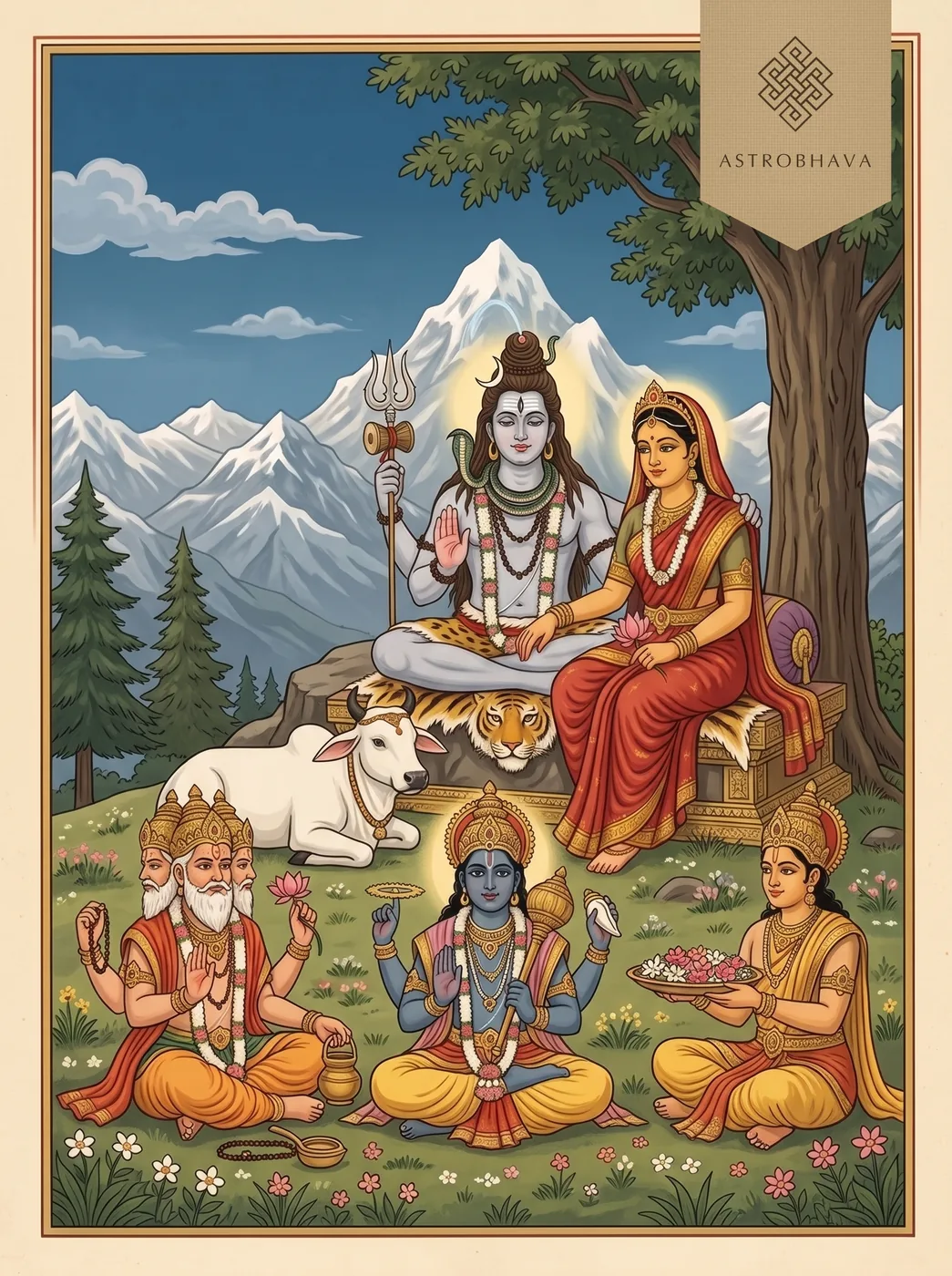
The Uma Maheshwara Stotram is a Sanskrit hymn that salutes Shiva and Parvati together as a single pair, and tradition ascribes it to Adi Shankaracharya; the printed closing line names it a work of Shri Shankaracharya. Its twelve verses share one frame. Each opens 'namah shivabhyam', a dual form in which one word names both Shiva and his consort Shivaa, and each ends with the refrain 'namo namah shankaraparvatibhyam'. In between, every line stacks epithets that fit the two at once: the bull as mount and banner, the ash and sandal paste on their bodies, eyes of sun, moon and fire, matted locks, garlands of bilva leaves and jasmine. The gods who honour them appear in turn, Narayana worshipping their sandals, then Brahma, Vishnu and Indra, and finally gods and demons alike. Verse 5 calls the couple the supreme medicine and ties them to the five-syllable mantra. A thirteenth verse, the phala shruti, calls the hymn 'the twelve' and states its fruit.
The Seated Couple and Their Full-Moon Vow
No account survives of when or where the hymn was composed. Its attribution to Adi Shankaracharya rests on the closing line of the printed text and on the tradition that counts it among the short stotras credited to him. What the verses picture, though, is a familiar image. Temple sculpture in India, Nepal and as far as Central Asia has long shown Uma and Maheshvara seated together on one throne, the bull and the lion crouched beneath their feet, sometimes on Kailasa, sometimes with the child Skanda in the Goddess's lap. The hymn's own details, the bull banner beside the mountain king's daughter and the deities who dwell on Mount Kailasa, belong to that scene. The pair also has a vow of its own. According to tradition the Uma-Maheshvara Vrata comes from the Matsya Purana, and the story told with it begins with the sage Durvasa, whose garland Indra set on the elephant Airavata instead of wearing it himself. The sage's curse cost the gods their dominion, and Durvasa is said to have kept the fast to Uma and Maheshvara. Most calendars place the vow on the full moon of Bhadrapada, while one regional tradition keeps it on the bright fourteenth of the same month. Households keep it for harmony at home, and newly married couples are among those who observe it.
The mantra, in six scripts
- नमः
- namaḥ — salutation
- शिवाभ्यां
- śivābhyāṃ — to Shiva and Shivaa, the pair
- नवयौवनाभ्यां
- navayauvanābhyāṃ — to the ever-youthful two
- परस्पराश्लिष्टवपुर्धराभ्याम्
- parasparāśliṣṭavapurdharābhyām — whose bodies embrace each other
- नगेन्द्रकन्यावृषकेतनाभ्यां
- nagendrakanyāvṛṣaketanābhyāṃ — to the mountain king's daughter and the bull-bannered one
- नमो
- namo — salutation
- नमः
- namaḥ — salutation again
- शङ्करपार्वतीभ्याम्
- śaṅkarapārvatībhyām — to Shankara and Parvati
Uma Maheshwara Stotram lyrics in full
Twelve verses with the shared refrain, followed by the phala shruti. The printed closing line is given at the end.
All 14 verses, in Sanskrit, Tamil, Telugu, Kannada, Malayalam and English, each with its meaning. Choose a script:
Download the Uma Maheshwara Stotram PDFAll 14 verses with their meanings, in Sanskrit. Free to print and keep.
नमः शिवाभ्यां नवयौवनाभ्यां परस्पराश्लिष्टवपुर्धराभ्याम् ।
नगेन्द्रकन्यावृषकेतनाभ्यां नमो नमः शङ्करपार्वतीभ्याम् ॥
நமஃ ஶிவாப்யாம் நவயௌவநாப்யாம் பரஸ்பராஶ்லிஷ்டவபுர்தராப்யாம் ।
நகேந்த்ரகந்யாவ்ருஷகேதநாப்யாம் நமோ நமஃ ஶங்கரபார்வதீப்யாம் ॥
నమః శివాభ్యాం నవయౌవనాభ్యాం పరస్పరాశ్లిష్టవపుర్ధరాభ్యామ్ ।
నగేన్ద్రకన్యావృషకేతనాభ్యాం నమో నమః శఙ్కరపార్వతీభ్యామ్ ॥
ನಮಃ ಶಿವಾಭ್ಯಾಂ ನವಯೌವನಾಭ್ಯಾಂ ಪರಸ್ಪರಾಶ್ಲಿಷ್ಟವಪುರ್ಧರಾಭ್ಯಾಮ್ ।
ನಗೇನ್ದ್ರಕನ್ಯಾವೃಷಕೇತನಾಭ್ಯಾಂ ನಮೋ ನಮಃ ಶಙ್ಕರಪಾರ್ವತೀಭ್ಯಾಮ್ ॥
നമഃ ശിവാഭ്യാം നവയൌവനാഭ്യാം പരസ്പരാശ്ലിഷ്ടവപുര്ധരാഭ്യാമ് ।
നഗേന്ദ്രകന്യാവൃഷകേതനാഭ്യാം നമോ നമഃ ശങ്കരപാര്വതീഭ്യാമ് ॥
namaḥ śivābhyāṃ navayauvanābhyāṃ parasparāśliṣṭavapurdharābhyām |
nagendrakanyāvṛṣaketanābhyāṃ namo namaḥ śaṅkarapārvatībhyām ||
Salutations to Shiva and Shivaa, the ever-youthful pair whose bodies are held in each other's embrace; to the daughter of the king of mountains and to the one whose banner bears the bull. Salutations again and again to Shankara and Parvati.
नमः शिवाभ्यां सरसोत्सवाभ्यां नमस्कृताभीष्टवरप्रदाभ्याम् ।
नारायणेनार्चितपादुकाभ्यां नमो नमः शङ्करपार्वतीभ्याम् ॥
நமஃ ஶிவாப்யாம் ஸரஸோத்ஸவாப்யாம் நமஸ்க்ருதாபீஷ்டவரப்ரதாப்யாம் ।
நாராயணேநார்சிதபாதுகாப்யாம் நமோ நமஃ ஶங்கரபார்வதீப்யாம் ॥
నమః శివాభ్యాం సరసోత్సవాభ్యాం నమస్కృతాభీష్టవరప్రదాభ్యామ్ ।
నారాయణేనార్చితపాదుకాభ్యాం నమో నమః శఙ్కరపార్వతీభ్యామ్ ॥
ನಮಃ ಶಿವಾಭ್ಯಾಂ ಸರಸೋತ್ಸವಾಭ್ಯಾಂ ನಮಸ್ಕೃತಾಭೀಷ್ಟವರಪ್ರದಾಭ್ಯಾಮ್ ।
ನಾರಾಯಣೇನಾರ್ಚಿತಪಾದುಕಾಭ್ಯಾಂ ನಮೋ ನಮಃ ಶಙ್ಕರಪಾರ್ವತೀಭ್ಯಾಮ್ ॥
നമഃ ശിവാഭ്യാം സരസോത്സവാഭ്യാം നമസ്കൃതാഭീഷ്ടവരപ്രദാഭ്യാമ് ।
നാരായണേനാര്ചിതപാദുകാഭ്യാം നമോ നമഃ ശങ്കരപാര്വതീഭ്യാമ് ॥
namaḥ śivābhyāṃ sarasotsavābhyāṃ namaskṛtābhīṣṭavarapradābhyām |
nārāyaṇenārcitapādukābhyāṃ namo namaḥ śaṅkarapārvatībhyām ||
Salutations to Shiva and Shivaa, who delight in joyful festivals and who grant the wished-for boons to those who bow to them, whose sandals are worshipped by Narayana. Salutations again and again to Shankara and Parvati.
नमः शिवाभ्यां वृषवाहनाभ्यां विरिञ्चिविष्ण्विन्द्रसुपूजिताभ्याम् ।
विभूतिपाटीरविलेपनाभ्यां नमो नमः शङ्करपार्वतीभ्याम् ॥
நமஃ ஶிவாப்யாம் வ்ருஷவாஹநாப்யாம் விரிஞ்சிவிஷ்ண்விந்த்ரஸுபூஜிதாப்யாம் ।
விபூதிபாடீரவிலேபநாப்யாம் நமோ நமஃ ஶங்கரபார்வதீப்யாம் ॥
నమః శివాభ్యాం వృషవాహనాభ్యాం విరిఞ్చివిష్ణ్విన్ద్రసుపూజితాభ్యామ్ ।
విభూతిపాటీరవిలేపనాభ్యాం నమో నమః శఙ్కరపార్వతీభ్యామ్ ॥
ನಮಃ ಶಿವಾಭ್ಯಾಂ ವೃಷವಾಹನಾಭ್ಯಾಂ ವಿರಿಞ್ಚಿವಿಷ್ಣ್ವಿನ್ದ್ರಸುಪೂಜಿತಾಭ್ಯಾಮ್ ।
ವಿಭೂತಿಪಾಟೀರವಿಲೇಪನಾಭ್ಯಾಂ ನಮೋ ನಮಃ ಶಙ್ಕರಪಾರ್ವತೀಭ್ಯಾಮ್ ॥
നമഃ ശിവാഭ്യാം വൃഷവാഹനാഭ്യാം വിരിഞ്ചിവിഷ്ണ്വിന്ദ്രസുപൂജിതാഭ്യാമ് ।
വിഭൂതിപാടീരവിലേപനാഭ്യാം നമോ നമഃ ശങ്കരപാര്വതീഭ്യാമ് ॥
namaḥ śivābhyāṃ vṛṣavāhanābhyāṃ viriñciviṣṇvindrasupūjitābhyām |
vibhūtipāṭīravilepanābhyāṃ namo namaḥ śaṅkarapārvatībhyām ||
Salutations to Shiva and Shivaa, who ride the bull, who are worshipped with devotion by Brahma, Vishnu and Indra, and whose bodies are smeared with sacred ash and sandal paste. Salutations again and again to Shankara and Parvati.
नमः शिवाभ्यां जगदीश्वराभ्यां जगत्पतिभ्यां जयविग्रहाभ्याम् ।
जम्भारिमुख्यैरभिवन्दिताभ्यां नमो नमः शङ्करपार्वतीभ्याम् ॥
நமஃ ஶிவாப்யாம் ஜகதீஶ்வராப்யாம் ஜகத்பதிப்யாம் ஜயவிக்ரஹாப்யாம் ।
ஜம்பாரிமுக்யைரபிவந்திதாப்யாம் நமோ நமஃ ஶங்கரபார்வதீப்யாம் ॥
నమః శివాభ్యాం జగదీశ్వరాభ్యాం జగత్పతిభ్యాం జయవిగ్రహాభ్యామ్ ।
జమ్భారిముఖ్యైరభివన్దితాభ్యాం నమో నమః శఙ్కరపార్వతీభ్యామ్ ॥
ನಮಃ ಶಿವಾಭ್ಯಾಂ ಜಗದೀಶ್ವರಾಭ್ಯಾಂ ಜಗತ್ಪತಿಭ್ಯಾಂ ಜಯವಿಗ್ರಹಾಭ್ಯಾಮ್ ।
ಜಮ್ಭಾರಿಮುಖ್ಯೈರಭಿವನ್ದಿತಾಭ್ಯಾಂ ನಮೋ ನಮಃ ಶಙ್ಕರಪಾರ್ವತೀಭ್ಯಾಮ್ ॥
നമഃ ശിവാഭ്യാം ജഗദീശ്വരാഭ്യാം ജഗത്പതിഭ്യാം ജയവിഗ്രഹാഭ്യാമ് ।
ജമ്ഭാരിമുഖ്യൈരഭിവന്ദിതാഭ്യാം നമോ നമഃ ശങ്കരപാര്വതീഭ്യാമ് ॥
namaḥ śivābhyāṃ jagadīśvarābhyāṃ jagatpatibhyāṃ jayavigrahābhyām |
jambhārimukhyairabhivanditābhyāṃ namo namaḥ śaṅkarapārvatībhyām ||
Salutations to Shiva and Shivaa, the rulers of the universe and lords of the world, whose forms are victory itself, and who are saluted by Indra and the other chief gods. Salutations again and again to Shankara and Parvati.
नमः शिवाभ्यां परमौषधाभ्यां पञ्चाक्षरीपञ्जररञ्जिताभ्याम् ।
प्रपञ्चसृष्टिस्थितिसंहृताभ्यां नमो नमः शङ्करपार्वतीभ्याम् ॥
நமஃ ஶிவாப்யாம் பரமௌஷதாப்யாம் பஞ்சாக்ஷரீபஞ்ஜரரஞ்ஜிதாப்யாம் ।
ப்ரபஞ்சஸ்ருஷ்டிஸ்திதிஸம்ஹ்ருதாப்யாம் நமோ நமஃ ஶங்கரபார்வதீப்யாம் ॥
నమః శివాభ్యాం పరమౌషధాభ్యాం పఞ్చాక్షరీపఞ్జరరఞ్జితాభ్యామ్ ।
ప్రపఞ్చసృష్టిస్థితిసంహృతాభ్యాం నమో నమః శఙ్కరపార్వతీభ్యామ్ ॥
ನಮಃ ಶಿವಾಭ್ಯಾಂ ಪರಮೌಷಧಾಭ್ಯಾಂ ಪಞ್ಚಾಕ್ಷರೀಪಞ್ಜರರಞ್ಜಿತಾಭ್ಯಾಮ್ ।
ಪ್ರಪಞ್ಚಸೃಷ್ಟಿಸ್ಥಿತಿಸಂಹೃತಾಭ್ಯಾಂ ನಮೋ ನಮಃ ಶಙ್ಕರಪಾರ್ವತೀಭ್ಯಾಮ್ ॥
നമഃ ശിവാഭ്യാം പരമൌഷധാഭ്യാം പഞ്ചാക്ഷരീപഞ്ജരരഞ്ജിതാഭ്യാമ് ।
പ്രപഞ്ചസൃഷ്ടിസ്ഥിതിസംഹൃതാഭ്യാം നമോ നമഃ ശങ്കരപാര്വതീഭ്യാമ് ॥
namaḥ śivābhyāṃ paramauṣadhābhyāṃ pañcākṣarīpañjararañjitābhyām |
prapañcasṛṣṭisthitisaṃhṛtābhyāṃ namo namaḥ śaṅkarapārvatībhyām ||
Salutations to Shiva and Shivaa, who are the supreme medicine, who delight in the cage of the five-syllable mantra, and who create, sustain and dissolve the world. Salutations again and again to Shankara and Parvati.
नमः शिवाभ्यामतिसुन्दराभ्याम् अत्यन्तमासक्तहृदम्बुजाभ्याम् ।
अशेषलोकैकहितङ्कराभ्यां नमो नमः शङ्करपार्वतीभ्याम् ॥
நமஃ ஶிவாப்யாமதிஸுந்தராப்யாம் அத்யந்தமாஸக்தஹ்ருதம்புஜாப்யாம் ।
அஶேஷலோகைகஹிதங்கராப்யாம் நமோ நமஃ ஶங்கரபார்வதீப்யாம் ॥
నమః శివాభ్యామతిసున్దరాభ్యామ్ అత్యన్తమాసక్తహృదమ్బుజాభ్యామ్ ।
అశేషలోకైకహితఙ్కరాభ్యాం నమో నమః శఙ్కరపార్వతీభ్యామ్ ॥
ನಮಃ ಶಿವಾಭ್ಯಾಮತಿಸುನ್ದರಾಭ್ಯಾಮ್ ಅತ್ಯನ್ತಮಾಸಕ್ತಹೃದಮ್ಬುಜಾಭ್ಯಾಮ್ ।
ಅಶೇಷಲೋಕೈಕಹಿತಙ್ಕರಾಭ್ಯಾಂ ನಮೋ ನಮಃ ಶಙ್ಕರಪಾರ್ವತೀಭ್ಯಾಮ್ ॥
നമഃ ശിവാഭ്യാമതിസുന്ദരാഭ്യാമ് അത്യന്തമാസക്തഹൃദമ്ബുജാഭ്യാമ് ।
അശേഷലോകൈകഹിതങ്കരാഭ്യാം നമോ നമഃ ശങ്കരപാര്വതീഭ്യാമ് ॥
namaḥ śivābhyāmatisundarābhyām atyantamāsaktahṛdambujābhyām |
aśeṣalokaikahitaṅkarābhyāṃ namo namaḥ śaṅkarapārvatībhyām ||
Salutations to Shiva and Shivaa, who are exceedingly beautiful, whose lotus hearts are deeply attached to each other, and who alone do good to all the worlds. Salutations again and again to Shankara and Parvati.
नमः शिवाभ्यां कलिनाशनाभ्यां कङ्कालकल्याणवपुर्धराभ्याम् ।
कैलासशैलस्थितदेवताभ्यां नमो नमः शङ्करपार्वतीभ्याम् ॥
நமஃ ஶிவாப்யாம் கலிநாஶநாப்யாம் கங்காலகல்யாணவபுர்தராப்யாம் ।
கைலாஸஶைலஸ்திததேவதாப்யாம் நமோ நமஃ ஶங்கரபார்வதீப்யாம் ॥
నమః శివాభ్యాం కలినాశనాభ్యాం కఙ్కాలకల్యాణవపుర్ధరాభ్యామ్ ।
కైలాసశైలస్థితదేవతాభ్యాం నమో నమః శఙ్కరపార్వతీభ్యామ్ ॥
ನಮಃ ಶಿವಾಭ್ಯಾಂ ಕಲಿನಾಶನಾಭ್ಯಾಂ ಕಙ್ಕಾಲಕಲ್ಯಾಣವಪುರ್ಧರಾಭ್ಯಾಮ್ ।
ಕೈಲಾಸಶೈಲಸ್ಥಿತದೇವತಾಭ್ಯಾಂ ನಮೋ ನಮಃ ಶಙ್ಕರಪಾರ್ವತೀಭ್ಯಾಮ್ ॥
നമഃ ശിവാഭ്യാം കലിനാശനാഭ്യാം കങ്കാലകല്യാണവപുര്ധരാഭ്യാമ് ।
കൈലാസശൈലസ്ഥിതദേവതാഭ്യാം നമോ നമഃ ശങ്കരപാര്വതീഭ്യാമ് ॥
namaḥ śivābhyāṃ kalināśanābhyāṃ kaṅkālakalyāṇavapurdharābhyām |
kailāsaśailasthitadevatābhyāṃ namo namaḥ śaṅkarapārvatībhyām ||
Salutations to Shiva and Shivaa, who destroy the evils of the Kali age, who bear forms both skeletal and auspicious, and who are the deities dwelling on Mount Kailasa. Salutations again and again to Shankara and Parvati.
नमः शिवाभ्यामशुभापहाभ्याम् अशेषलोकैकविशेषिताभ्याम् ।
अकुण्ठिताभ्यां स्मृतिसम्भृताभ्यां नमो नमः शङ्करपार्वतीभ्याम् ॥
நமஃ ஶிவாப்யாமஶுபாபஹாப்யாம் அஶேஷலோகைகவிஶேஷிதாப்யாம் ।
அகுண்டிதாப்யாம் ஸ்ம்ருதிஸம்ப்ருதாப்யாம் நமோ நமஃ ஶங்கரபார்வதீப்யாம் ॥
నమః శివాభ్యామశుభాపహాభ్యామ్ అశేషలోకైకవిశేషితాభ్యామ్ ।
అకుణ్ఠితాభ్యాం స్మృతిసమ్భృతాభ్యాం నమో నమః శఙ్కరపార్వతీభ్యామ్ ॥
ನಮಃ ಶಿವಾಭ್ಯಾಮಶುಭಾಪಹಾಭ್ಯಾಮ್ ಅಶೇಷಲೋಕೈಕವಿಶೇಷಿತಾಭ್ಯಾಮ್ ।
ಅಕುಣ್ಠಿತಾಭ್ಯಾಂ ಸ್ಮೃತಿಸಮ್ಭೃತಾಭ್ಯಾಂ ನಮೋ ನಮಃ ಶಙ್ಕರಪಾರ್ವತೀಭ್ಯಾಮ್ ॥
നമഃ ശിവാഭ്യാമശുഭാപഹാഭ്യാമ് അശേഷലോകൈകവിശേഷിതാഭ്യാമ് ।
അകുണ്ഠിതാഭ്യാം സ്മൃതിസമ്ഭൃതാഭ്യാം നമോ നമഃ ശങ്കരപാര്വതീഭ്യാമ് ॥
namaḥ śivābhyāmaśubhāpahābhyām aśeṣalokaikaviśeṣitābhyām |
akuṇṭhitābhyāṃ smṛtisambhṛtābhyāṃ namo namaḥ śaṅkarapārvatībhyām ||
Salutations to Shiva and Shivaa, who remove what is inauspicious, who stand singularly above all the worlds, whose power is never blunted, and who are held in remembrance. Salutations again and again to Shankara and Parvati.
नमः शिवाभ्यां रथवाहनाभ्यां रवीन्दुवैश्वानरलोचनाभ्याम् ।
राकाशशाङ्काभमुखाम्बुजाभ्यां नमो नमः शङ्करपार्वतीभ्याम् ॥
நமஃ ஶிவாப்யாம் ரதவாஹநாப்யாம் ரவீந்துவைஶ்வாநரலோசநாப்யாம் ।
ராகாஶஶாங்காபமுகாம்புஜாப்யாம் நமோ நமஃ ஶங்கரபார்வதீப்யாம் ॥
నమః శివాభ్యాం రథవాహనాభ్యాం రవీన్దువైశ్వానరలోచనాభ్యామ్ ।
రాకాశశాఙ్కాభముఖామ్బుజాభ్యాం నమో నమః శఙ్కరపార్వతీభ్యామ్ ॥
ನಮಃ ಶಿವಾಭ್ಯಾಂ ರಥವಾಹನಾಭ್ಯಾಂ ರವೀನ್ದುವೈಶ್ವಾನರಲೋಚನಾಭ್ಯಾಮ್ ।
ರಾಕಾಶಶಾಙ್ಕಾಭಮುಖಾಮ್ಬುಜಾಭ್ಯಾಂ ನಮೋ ನಮಃ ಶಙ್ಕರಪಾರ್ವತೀಭ್ಯಾಮ್ ॥
നമഃ ശിവാഭ്യാം രഥവാഹനാഭ്യാം രവീന്ദുവൈശ്വാനരലോചനാഭ്യാമ് ।
രാകാശശാങ്കാഭമുഖാമ്ബുജാഭ്യാം നമോ നമഃ ശങ്കരപാര്വതീഭ്യാമ് ॥
namaḥ śivābhyāṃ rathavāhanābhyāṃ ravīnduvaiśvānaralocanābhyām |
rākāśaśāṅkābhamukhāmbujābhyāṃ namo namaḥ śaṅkarapārvatībhyām ||
Salutations to Shiva and Shivaa, who ride in a chariot, whose eyes are the sun, the moon and fire, and whose lotus faces shine like the full moon. Salutations again and again to Shankara and Parvati.
नमः शिवाभ्यां जटिलन्धराभ्यां जरामृतिभ्यां च विवर्जिताभ्याम् ।
जनार्दनाब्जोद्भवपूजिताभ्यां नमो नमः शङ्करपार्वतीभ्याम् ॥
நமஃ ஶிவாப்யாம் ஜடிலந்தராப்யாம் ஜராம்ருதிப்யாம் ச விவர்ஜிதாப்யாம் ।
ஜநார்தநாப்ஜோத்பவபூஜிதாப்யாம் நமோ நமஃ ஶங்கரபார்வதீப்யாம் ॥
నమః శివాభ్యాం జటిలన్ధరాభ్యాం జరామృతిభ్యాం చ వివర్జితాభ్యామ్ ।
జనార్దనాబ్జోద్భవపూజితాభ్యాం నమో నమః శఙ్కరపార్వతీభ్యామ్ ॥
ನಮಃ ಶಿವಾಭ್ಯಾಂ ಜಟಿಲನ್ಧರಾಭ್ಯಾಂ ಜರಾಮೃತಿಭ್ಯಾಂ ಚ ವಿವರ್ಜಿತಾಭ್ಯಾಮ್ ।
ಜನಾರ್ದನಾಬ್ಜೋದ್ಭವಪೂಜಿತಾಭ್ಯಾಂ ನಮೋ ನಮಃ ಶಙ್ಕರಪಾರ್ವತೀಭ್ಯಾಮ್ ॥
നമഃ ശിവാഭ്യാം ജടിലന്ധരാഭ്യാം ജരാമൃതിഭ്യാം ച വിവര്ജിതാഭ്യാമ് ।
ജനാര്ദനാബ്ജോദ്ഭവപൂജിതാഭ്യാം നമോ നമഃ ശങ്കരപാര്വതീഭ്യാമ് ॥
namaḥ śivābhyāṃ jaṭilandharābhyāṃ jarāmṛtibhyāṃ ca vivarjitābhyām |
janārdanābjodbhavapūjitābhyāṃ namo namaḥ śaṅkarapārvatībhyām ||
Salutations to Shiva and Shivaa, who bear matted locks, who are free from old age and death, and who are worshipped by Vishnu and by the lotus-born Brahma. Salutations again and again to Shankara and Parvati.
नमः शिवाभ्यां विषमेक्षणाभ्यां बिल्वच्छदामल्लिकदामभृद्भ्याम् ।
शोभावतीशान्तवतीश्वराभ्यां नमो नमः शङ्करपार्वतीभ्याम् ॥
நமஃ ஶிவாப்யாம் விஷமேக்ஷணாப்யாம் பில்வச்சதாமல்லிகதாமப்ருத்ப்யாம் ।
ஶோபாவதீஶாந்தவதீஶ்வராப்யாம் நமோ நமஃ ஶங்கரபார்வதீப்யாம் ॥
నమః శివాభ్యాం విషమేక్షణాభ్యాం బిల్వచ్ఛదామల్లికదామభృద్భ్యామ్ ।
శోభావతీశాన్తవతీశ్వరాభ్యాం నమో నమః శఙ్కరపార్వతీభ్యామ్ ॥
ನಮಃ ಶಿವಾಭ್ಯಾಂ ವಿಷಮೇಕ್ಷಣಾಭ್ಯಾಂ ಬಿಲ್ವಚ್ಛದಾಮಲ್ಲಿಕದಾಮಭೃದ್ಭ್ಯಾಮ್ ।
ಶೋಭಾವತೀಶಾನ್ತವತೀಶ್ವರಾಭ್ಯಾಂ ನಮೋ ನಮಃ ಶಙ್ಕರಪಾರ್ವತೀಭ್ಯಾಮ್ ॥
നമഃ ശിവാഭ്യാം വിഷമേക്ഷണാഭ്യാം ബില്വച്ഛദാമല്ലികദാമഭൃദ്ഭ്യാമ് ।
ശോഭാവതീശാന്തവതീശ്വരാഭ്യാം നമോ നമഃ ശങ്കരപാര്വതീഭ്യാമ് ॥
namaḥ śivābhyāṃ viṣamekṣaṇābhyāṃ bilvacchadāmallikadāmabhṛdbhyām |
śobhāvatīśāntavatīśvarābhyāṃ namo namaḥ śaṅkarapārvatībhyām ||
Salutations to Shiva and Shivaa, the one with uneven (three) eyes, who wear garlands of bilva leaves and jasmine, the lord and lady of beauty and of peace. Salutations again and again to Shankara and Parvati.
नमः शिवाभ्यां पशुपालकाभ्यां जगत्रयीरक्षणबद्धहृद्भ्याम् ।
समस्तदेवासुरपूजिताभ्यां नमो नमः शङ्करपार्वतीभ्याम् ॥
நமஃ ஶிவாப்யாம் பஶுபாலகாப்யாம் ஜகத்ரயீரக்ஷணபத்தஹ்ருத்ப்யாம் ।
ஸமஸ்ததேவாஸுரபூஜிதாப்யாம் நமோ நமஃ ஶங்கரபார்வதீப்யாம் ॥
నమః శివాభ్యాం పశుపాలకాభ్యాం జగత్రయీరక్షణబద్ధహృద్భ్యామ్ ।
సమస్తదేవాసురపూజితాభ్యాం నమో నమః శఙ్కరపార్వతీభ్యామ్ ॥
ನಮಃ ಶಿವಾಭ್ಯಾಂ ಪಶುಪಾಲಕಾಭ್ಯಾಂ ಜಗತ್ರಯೀರಕ್ಷಣಬದ್ಧಹೃದ್ಭ್ಯಾಮ್ ।
ಸಮಸ್ತದೇವಾಸುರಪೂಜಿತಾಭ್ಯಾಂ ನಮೋ ನಮಃ ಶಙ್ಕರಪಾರ್ವತೀಭ್ಯಾಮ್ ॥
നമഃ ശിവാഭ്യാം പശുപാലകാഭ്യാം ജഗത്രയീരക്ഷണബദ്ധഹൃദ്ഭ്യാമ് ।
സമസ്തദേവാസുരപൂജിതാഭ്യാം നമോ നമഃ ശങ്കരപാര്വതീഭ്യാമ് ॥
namaḥ śivābhyāṃ paśupālakābhyāṃ jagatrayīrakṣaṇabaddhahṛdbhyām |
samastadevāsurapūjitābhyāṃ namo namaḥ śaṅkarapārvatībhyām ||
Salutations to Shiva and Shivaa, the protectors of all beings, whose hearts are bound to guarding the three worlds, and who are worshipped by all gods and demons. Salutations again and again to Shankara and Parvati.
स्तोत्रं त्रिसन्ध्यं शिवपार्वतीभ्यां भक्त्या पठेद्द्वादशकं नरो यः ।
स सर्वसौभाग्यफलानि भुङ्क्ते शतायुरान्ते शिवलोकमेति ॥
ஸ்தோத்ரம் த்ரிஸந்த்யம் ஶிவபார்வதீப்யாம் பக்த்யா படேத்த்வாதஶகம் நரோ யஃ ।
ஸ ஸர்வஸௌபாக்யபலாநி புங்க்தே ஶதாயுராந்தே ஶிவலோகமேதி ॥
స్తోత్రం త్రిసన్ధ్యం శివపార్వతీభ్యాం భక్త్యా పఠేద్ద్వాదశకం నరో యః ।
స సర్వసౌభాగ్యఫలాని భుఙ్క్తే శతాయురాన్తే శివలోకమేతి ॥
ಸ್ತೋತ್ರಂ ತ್ರಿಸನ್ಧ್ಯಂ ಶಿವಪಾರ್ವತೀಭ್ಯಾಂ ಭಕ್ತ್ಯಾ ಪಠೇದ್ದ್ವಾದಶಕಂ ನರೋ ಯಃ ।
ಸ ಸರ್ವಸೌಭಾಗ್ಯಫಲಾನಿ ಭುಙ್ಕ್ತೇ ಶತಾಯುರಾನ್ತೇ ಶಿವಲೋಕಮೇತಿ ॥
സ്തോത്രം ത്രിസന്ധ്യം ശിവപാര്വതീഭ്യാം ഭക്ത്യാ പഠേദ്ദ്വാദശകം നരോ യഃ ।
സ സര്വസൌഭാഗ്യഫലാനി ഭുങ്ക്തേ ശതായുരാന്തേ ശിവലോകമേതി ॥
stotraṃ trisandhyaṃ śivapārvatībhyāṃ bhaktyā paṭheddvādaśakaṃ naro yaḥ |
sa sarvasaubhāgyaphalāni bhuṅkte śatāyurānte śivalokameti ||
The verse says that a person who recites with devotion, at the three junctions of the day, this hymn of twelve verses to Shiva and Parvati enjoys the fruits of every good fortune, lives a hundred years, and at the end reaches the world of Shiva.
इति श्रीशङ्कराचार्यकृतम् उमामहेश्वरस्तोत्रं सम्पूर्णम् ॥
இதி ஶ்ரீஶங்கராசார்யக்ருதம் உமாமஹேஶ்வரஸ்தோத்ரம் ஸம்பூர்ணம் ॥
ఇతి శ్రీశఙ్కరాచార్యకృతమ్ ఉమామహేశ్వరస్తోత్రం సమ్పూర్ణమ్ ॥
ಇತಿ ಶ್ರೀಶಙ್ಕರಾಚಾರ್ಯಕೃತಮ್ ಉಮಾಮಹೇಶ್ವರಸ್ತೋತ್ರಂ ಸಮ್ಪೂರ್ಣಮ್ ॥
ഇതി ശ്രീശങ്കരാചാര്യകൃതമ് ഉമാമഹേശ്വരസ്തോത്രം സമ്പൂര്ണമ് ॥
iti śrīśaṅkarācāryakṛtam umāmaheśvarastotraṃ sampūrṇam ||
Thus ends the Uma Maheshwara Stotram composed by Shri Shankaracharya.
The syllable people get wrong
In śivābhyāṃ, the word that opens every verse, the ā after the v is long and the ending -ābhyāṃ marks the dual, so it is said shi-VAA-bhyaam with the middle vowel held; a clipped 'shivabhyam' loses the sign that two are being addressed, and the final ṃ is a soft nasal rather than a full m.
When the Uma Maheshwara Stotram is chanted
Weekday. Monday
Festival. Uma-Maheshvara Vrata, the full moon of Bhadrapada
Questions
Have your chart read before you decide
Chanting is yours to do, and free. But which deity your situation calls for — and whether a mantra alone is the right response — depends on your chart. Sometimes it is; sometimes it is not.
- Over 30 years in the Guru–Sishya Parampara, from the age of five
- He reads every chart himself — 60 minutes, one to one, never delegated
- Charts are read only between sunrise and sunset, following tradition
