Vastu Mantra
वास्तोष्पते प्रति जानीह्यस्मान्स्वावेशो अनमीवो भवा नः । यत्त्वेमहे प्रति तन्नो जुषस्व शं नो भव द्विपदे शं चतुष्पदे ॥Also known as Vastu Purusha Mantra
In Devanagari, Tamil, Telugu, Kannada, Malayalam and English — with the meaning of every word, and the one syllable most people pronounce wrongly.
 The Vastu Homam, performed for youBook →
What the Vastu Mantra is
The Vastu mantra printed here has two layers. The first is Rigveda 7.54, a hymn of three verses in trishtubh metre from the seventh mandala, the family book of the seer Vasishtha, addressed to Vastoshpati, whose name means lord of the dwelling. Each verse opens by calling him by that name. The first asks him to recognise the family as his own, to give them a good place to settle free of sickness, and to be kind to the two-footed and four-footed members of the household alike. The second asks him to carry them forward, swell their cattle and horses, and cherish them as a father cherishes his sons. The third asks for his company and his guard over the household. The second layer is a later couplet, the Vastu Purusha namaskara, which is not part of the Veda and has no known author. The Vedic verses are printed without accent marks; chanting them with the svaras is learned from a teacher.
From Vasishtha's hymn to the house rite
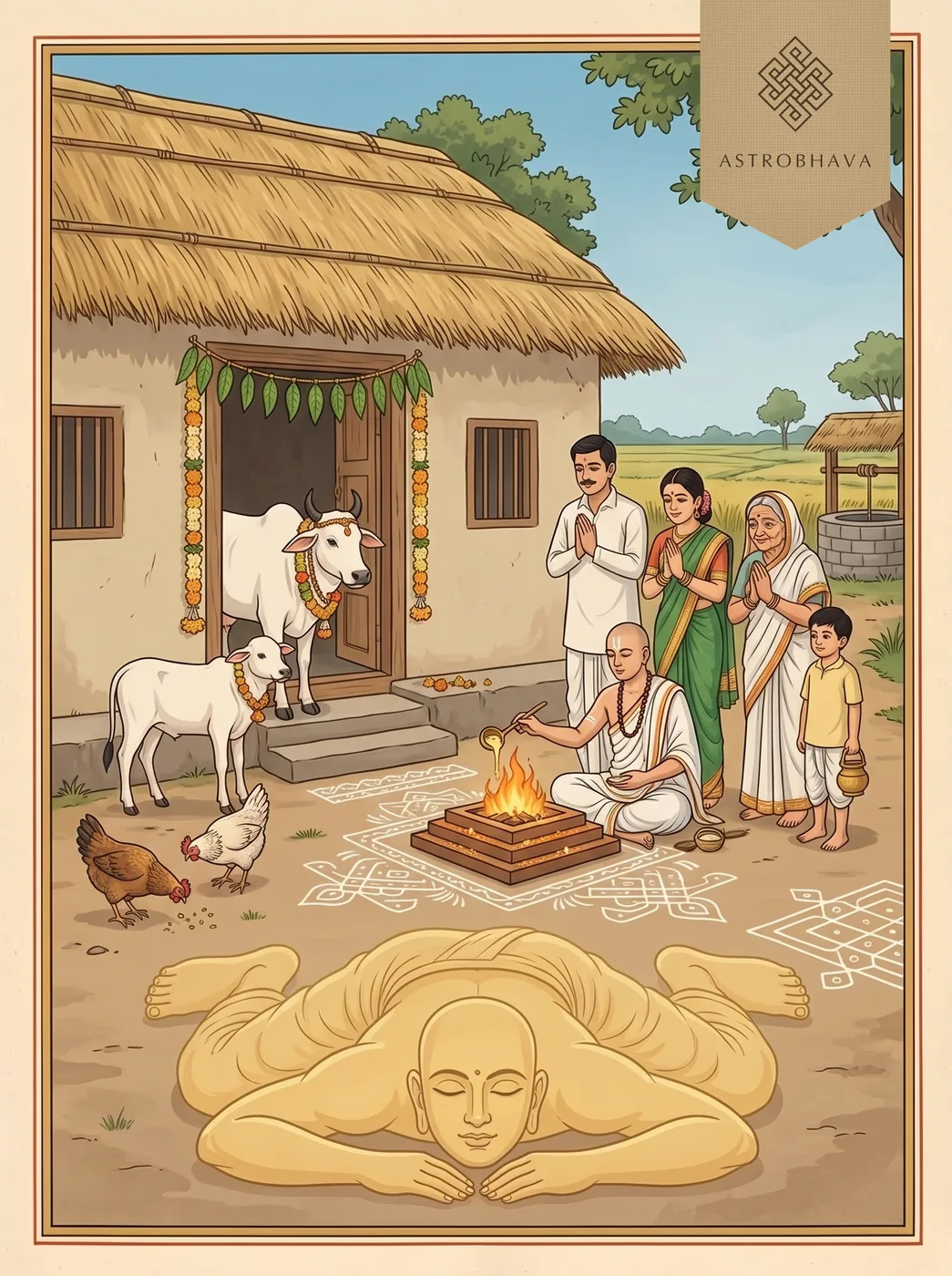
Following the old index of the Rigveda, Sayana introduces hymn 7.54 as a tricha, a set of three verses, by Vasishtha to Vastoshpati; the next hymn, 7.55, calls on the same deity in its first line. Sayana, the fourteenth-century commentator, records how the verses left the hymnal and entered the household: for the smarta rite of building a house he cites the Ashvalayana Grihya Sutra (2.9.9), which has offerings poured into the fire with the verse beginning prati janihy asman. In the Vedic hymn Vastoshpati has no body and no story; he is a guardian addressed as a friend and called indu, which Sayana reads as one who gladdens like Soma. The figure of Vastu Purusha belongs to a later age. The Matsya Purana tells that a being was born from a drop of sweat from Shiva's brow during the battle with the demon Andhaka, and that his hunger could not be stilled until the gods held him to the ground, after which every building site became his to be honoured. The Agni Purana tells it more briefly, as a great being the Devas buried in the earth, and names an offering to him when a house is finished. Accounts differ on the details. The namaskara printed after the hymn joins the two strands: it calls the Vedic Vastoshpati the lord who rests upon the earth.
The mantra, in six scripts
- वास्तोष्पते
- vāstoṣpate — O lord of the dwelling
- प्रति
- prati — in turn, toward us
- जानीह्यस्मान्स्वावेशो
- jānīhyasmānsvāveśo — recognise us; (be) of good settling
- अनमीवो
- anamīvo — free of sickness
- भवा
- bhavā — be
- नः
- naḥ — for us
- यत्त्वेमहे
- yattvemahe — what we ask of you
- प्रति
- prati — in return
- तन्नो
- tanno — that, for us
- जुषस्व
- juṣasva — accept gladly
- शं
- śaṃ — welfare
- नो
- no — to us
- भव
- bhava — be
- द्विपदे
- dvipade — for the two-footed
- शं
- śaṃ — welfare
- चतुष्पदे
- catuṣpade — for the four-footed
Vastu Mantra lyrics in full
The three Vastoshpati verses of Rigveda 7.54, printed without accent marks, followed by the Vastu Purusha namaskara.
All 4 verses, in Sanskrit, Tamil, Telugu, Kannada, Malayalam and English, each with its meaning. Choose a script:
Download the Vastu Mantra PDFAll 4 verses with their meanings, in Sanskrit. Free to print and keep.
वास्तोष्पते प्रति जानीह्यस्मान्स्वावेशो अनमीवो भवा नः ।
यत्त्वेमहे प्रति तन्नो जुषस्व शं नो भव द्विपदे शं चतुष्पदे ॥
வாஸ்தோஷ்பதே ப்ரதி ஜாநீஹ்யஸ்மாந்ஸ்வாவேஶோ அநமீவோ பவா நஃ ।
யத்த்வேமஹே ப்ரதி தந்நோ ஜுஷஸ்வ ஶம் நோ பவ த்விபதே ஶம் சதுஷ்பதே ॥
వాస్తోష్పతే ప్రతి జానీహ్యస్మాన్స్వావేశో అనమీవో భవా నః ।
యత్త్వేమహే ప్రతి తన్నో జుషస్వ శం నో భవ ద్విపదే శం చతుష్పదే ॥
ವಾಸ್ತೋಷ್ಪತೇ ಪ್ರತಿ ಜಾನೀಹ್ಯಸ್ಮಾನ್ಸ್ವಾವೇಶೋ ಅನಮೀವೋ ಭವಾ ನಃ ।
ಯತ್ತ್ವೇಮಹೇ ಪ್ರತಿ ತನ್ನೋ ಜುಷಸ್ವ ಶಂ ನೋ ಭವ ದ್ವಿಪದೇ ಶಂ ಚತುಷ್ಪದೇ ॥
വാസ്തോഷ്പതേ പ്രതി ജാനീഹ്യസ്മാന്സ്വാവേശോ അനമീവോ ഭവാ നഃ ।
യത്ത്വേമഹേ പ്രതി തന്നോ ജുഷസ്വ ശം നോ ഭവ ദ്വിപദേ ശം ചതുഷ്പദേ ॥
vāstoṣpate prati jānīhyasmānsvāveśo anamīvo bhavā naḥ |
yattvemahe prati tanno juṣasva śaṃ no bhava dvipade śaṃ catuṣpade ||
O Vastoshpati, lord of the dwelling, recognise us as your own; give us a good place to settle and keep it free of sickness. Whatever we ask of you, grant it to us gladly, and be a blessing to our two-footed and our four-footed ones.
वास्तोष्पते प्रतरणो न एधि गयस्फानो गोभिरश्वेभिरिन्दो ।
अजरासस्ते सख्ये स्याम पितेव पुत्रान्प्रति नो जुषस्व ॥
வாஸ்தோஷ்பதே ப்ரதரணோ ந ஏதி கயஸ்பாநோ கோபிரஶ்வேபிரிந்தோ ।
அஜராஸஸ்தே ஸக்யே ஸ்யாம பிதேவ புத்ராந்ப்ரதி நோ ஜுஷஸ்வ ॥
వాస్తోష్పతే ప్రతరణో న ఏధి గయస్ఫానో గోభిరశ్వేభిరిన్దో ।
అజరాసస్తే సఖ్యే స్యామ పితేవ పుత్రాన్ప్రతి నో జుషస్వ ॥
ವಾಸ್ತೋಷ್ಪತೇ ಪ್ರತರಣೋ ನ ಏಧಿ ಗಯಸ್ಫಾನೋ ಗೋಭಿರಶ್ವೇಭಿರಿನ್ದೋ ।
ಅಜರಾಸಸ್ತೇ ಸಖ್ಯೇ ಸ್ಯಾಮ ಪಿತೇವ ಪುತ್ರಾನ್ಪ್ರತಿ ನೋ ಜುಷಸ್ವ ॥
വാസ്തോഷ്പതേ പ്രതരണോ ന ഏധി ഗയസ്ഫാനോ ഗോഭിരശ്വേഭിരിന്ദോ ।
അജരാസസ്തേ സഖ്യേ സ്യാമ പിതേവ പുത്രാന്പ്രതി നോ ജുഷസ്വ ॥
vāstoṣpate prataraṇo na edhi gayasphāno gobhiraśvebhirindo |
ajarāsaste sakhye syāma piteva putrānprati no juṣasva ||
O Vastoshpati, bright one, be the one who carries us forward and swells our household with cattle and horses. In your friendship may we not grow old; cherish us as a father cherishes his sons.
वास्तोष्पते शग्मया संसदा ते सक्षीमहि रण्वया गातुमत्या ।
पाहि क्षेम उत योगे वरं नो यूयं पात स्वस्तिभिः सदा नः ॥
வாஸ்தோஷ்பதே ஶக்மயா ஸம்ஸதா தே ஸக்ஷீமஹி ரண்வயா காதுமத்யா ।
பாஹி க்ஷேம உத யோகே வரம் நோ யூயம் பாத ஸ்வஸ்திபிஃ ஸதா நஃ ॥
వాస్తోష్పతే శగ్మయా సంసదా తే సక్షీమహి రణ్వయా గాతుమత్యా ।
పాహి క్షేమ ఉత యోగే వరం నో యూయం పాత స్వస్తిభిః సదా నః ॥
ವಾಸ್ತೋಷ್ಪತೇ ಶಗ್ಮಯಾ ಸಂಸದಾ ತೇ ಸಕ್ಷೀಮಹಿ ರಣ್ವಯಾ ಗಾತುಮತ್ಯಾ ।
ಪಾಹಿ ಕ್ಷೇಮ ಉತ ಯೋಗೇ ವರಂ ನೋ ಯೂಯಂ ಪಾತ ಸ್ವಸ್ತಿಭಿಃ ಸದಾ ನಃ ॥
വാസ്തോഷ്പതേ ശഗ്മയാ സംസദാ തേ സക്ഷീമഹി രണ്വയാ ഗാതുമത്യാ ।
പാഹി ക്ഷേമ ഉത യോഗേ വരം നോ യൂയം പാത സ്വസ്തിഭിഃ സദാ നഃ ॥
vāstoṣpate śagmayā saṃsadā te sakṣīmahi raṇvayā gātumatyā |
pāhi kṣema uta yoge varaṃ no yūyaṃ pāta svastibhiḥ sadā naḥ ||
O Vastoshpati, may we keep company with you in a gathering that is kindly, joyful and full of progress. Guard what we hold dear, both in times of rest and in times of striving; and you gods, protect us always with your blessings.
वास्तोष्पते नमस्तेऽस्तु भूशय्यानिरत प्रभो ।
मद्गृहे धनधान्यादिसमृद्धिं कुरु सर्वदा ॥
வாஸ்தோஷ்பதே நமஸ்தேஸ்து பூஶய்யாநிரத ப்ரபோ ।
மத்க்ருஹே தநதாந்யாதிஸம்ருத்திம் குரு ஸர்வதா ॥
వాస్తోష్పతే నమస్తేఽస్తు భూశయ్యానిరత ప్రభో ।
మద్గృహే ధనధాన్యాదిసమృద్ధిం కురు సర్వదా ॥
ವಾಸ್ತೋಷ್ಪತೇ ನಮಸ್ತೇಽಸ್ತು ಭೂಶಯ್ಯಾನಿರತ ಪ್ರಭೋ ।
ಮದ್ಗೃಹೇ ಧನಧಾನ್ಯಾದಿಸಮೃದ್ಧಿಂ ಕುರು ಸರ್ವದಾ ॥
വാസ്തോഷ്പതേ നമസ്തേഽസ്തു ഭൂശയ്യാനിരത പ്രഭോ ।
മദ്ഗൃഹേ ധനധാന്യാദിസമൃദ്ധിം കുരു സര്വദാ ॥
vāstoṣpate namaste'stu bhūśayyānirata prabho |
madgṛhe dhanadhānyādisamṛddhiṃ kuru sarvadā ||
O lord of the dwelling, salutations to you, master who lies at rest upon the earth. Always make my home rich in wealth, grain and every kind of plenty.
The syllable people get wrong
Vāstoṣpate is often said as "Vastu-pate", but the word is vāstoḥ, of the dwelling, joined to pate, O lord, and the visarga turns into the retroflex ṣ. Say it VAAS-tosh-pa-tay, with a long first vowel and the sh made with the tongue curled back.
When the Vastu Mantra is chanted
Festival. Griha pravesha and Vastu shanti
Questions
Have your chart read before you decide
Chanting is yours to do, and free. But which deity your situation calls for — and whether a mantra alone is the right response — depends on your chart. Sometimes it is; sometimes it is not.
- Over 30 years in the Guru–Sishya Parampara, from the age of five
- He reads every chart himself — 60 minutes, one to one, never delegated
- Charts are read only between sunrise and sunset, following tradition
