Vishwakarma Mantra
ॐ विश्वकर्मणे नमः ।Also known as Vishwakarma Puja Mantra
In Devanagari, Tamil, Telugu, Kannada, Malayalam and English — with the meaning of every word, and the one syllable most people pronounce wrongly.
 The Vastu Homam, performed for youBook →
What the Vishwakarma Mantra is
The Vishwakarma Mantra, in the form printed for Vishwakarma Puja, is a short sequence of six Sanskrit lines addressed to Vishwakarma, the craftsman of the gods. It opens with the name mantra Om Vishwakarmane Namah, the salutation said in japa and, with svaha added, at each offering into the fire. Two dhyana verses follow. The first, beginning Narayanabja, places him in a lineage: Brahma rose from the lotus of Narayana, Dharma was Brahma's son, Vastu was the son of Dharma, and Vishwakarma is the son of Vastu. The second, beginning Damshapala, pictures him as an armoured hero, maker and upholder of the world, holding the measuring rod. The pranam shloka Devashilpin salutes him as the one who completes the works of the gods, and a two-verse prarthana closes the set, bowing to the two-armed lord who lays out houses and their sites and asking the master of the science of crafts to be gracious. All six are anonymous puja shlokas shared by Hindi and Bengali manuals.
From the Vedic maker to the gods' builder
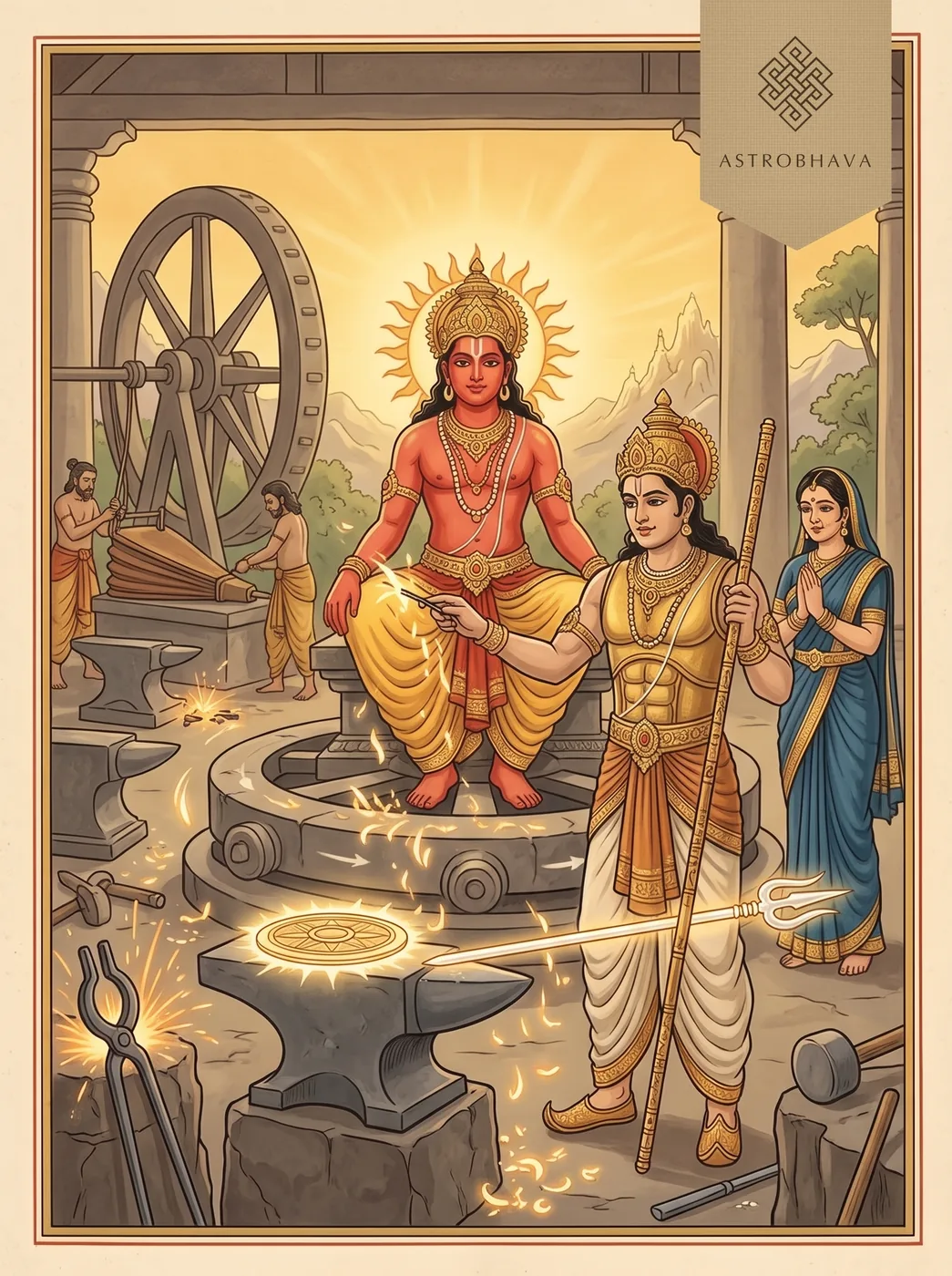
Long before the puja manuals, the name Vishvakarman, 'maker of all', belonged to a Vedic creator. Two hymns in the tenth book of the Rigveda (10.81 and 10.82) picture him as all-seeing, with eyes, faces, arms and feet on every side, and ask from what wood and what tree heaven and earth were shaped. In the epics and Puranas the name settles on one figure, the architect of the gods, and his parentage is told in more than one way. The Vishnu Purana makes him the son of Prabhasa, one of the eight Vasus, and of Varastri, sister of Brihaspati; the Mahabharata and Harivamsha name his mother Yogasiddha; other Puranas call him the son of Vastu, the line the Narayanabja verse follows. The Puranas also tell of his daughter Sanjna, married to Surya, who could not bear her husband's heat. According to tradition, Vishwakarma pared away an eighth of the Sun's brilliance and forged weapons from it, among them the Sudarshana disc and the trident. Shilpa texts such as the Vishwakarma Prakasha are handed down under his name. The two-armed form named in the prarthana is not the only image: western India often shows him four-armed and aged with a hamsa beside him, while eastern India shows a young, moustached figure riding an elephant.
The mantra, in six scripts
- ॐ
- oṃ — Om, the sacred syllable
- विश्वकर्मणे
- viśvakarmaṇe — to Vishwakarma, maker of all
- नमः
- namaḥ — salutation
Vishwakarma Mantra lyrics in full
The name mantra, two dhyana verses, the pranam shloka and a two-verse prayer, in the order of the puja.
All 6 verses, in Sanskrit, Tamil, Telugu, Kannada, Malayalam and English, each with its meaning. Choose a script:
Download the Vishwakarma Mantra PDFAll 6 verses with their meanings, in Sanskrit. Free to print and keep.
ॐ विश्वकर्मणे नमः ।
ௐ விஶ்வகர்மணே நமஃ ।
ఓం విశ్వకర్మణే నమః ।
ಓಂ ವಿಶ್ವಕರ್ಮಣೇ ನಮಃ ।
ഓം വിശ്വകര്മണേ നമഃ ।
oṃ viśvakarmaṇe namaḥ |
Om, salutation to Vishwakarma, the maker of all. This is the short name mantra repeated in japa and with each offering in his worship.
नारायणाब्ज-जनितस्य विधेः सुतस्य धर्मात्मजस्य गृहवास्तुसुतं वरेण्यम् ।
स्वर्गादिलोकरचनाकुशलं तमद्य श्रीविश्वकर्म विश्रुतं सततं स्मरामः ॥
நாராயணாப்ஜ-ஜநிதஸ்ய விதேஃ ஸுதஸ்ய தர்மாத்மஜஸ்ய க்ருஹவாஸ்துஸுதம் வரேண்யம் ।
ஸ்வர்காதிலோகரசநாகுஶலம் தமத்ய ஶ்ரீவிஶ்வகர்ம விஶ்ருதம் ஸததம் ஸ்மராமஃ ॥
నారాయణాబ్జ-జనితస్య విధేః సుతస్య ధర్మాత్మజస్య గృహవాస్తుసుతం వరేణ్యమ్ ।
స్వర్గాదిలోకరచనాకుశలం తమద్య శ్రీవిశ్వకర్మ విశ్రుతం సతతం స్మరామః ॥
ನಾರಾಯಣಾಬ್ಜ-ಜನಿತಸ್ಯ ವಿಧೇಃ ಸುತಸ್ಯ ಧರ್ಮಾತ್ಮಜಸ್ಯ ಗೃಹವಾಸ್ತುಸುತಂ ವರೇಣ್ಯಮ್ ।
ಸ್ವರ್ಗಾದಿಲೋಕರಚನಾಕುಶಲಂ ತಮದ್ಯ ಶ್ರೀವಿಶ್ವಕರ್ಮ ವಿಶ್ರುತಂ ಸತತಂ ಸ್ಮರಾಮಃ ॥
നാരായണാബ്ജ-ജനിതസ്യ വിധേഃ സുതസ്യ ധര്മാത്മജസ്യ ഗൃഹവാസ്തുസുതം വരേണ്യമ് ।
സ്വര്ഗാദിലോകരചനാകുശലം തമദ്യ ശ്രീവിശ്വകര്മ വിശ്രുതം സതതം സ്മരാമഃ ॥
nārāyaṇābja-janitasya vidheḥ sutasya dharmātmajasya gṛhavāstusutaṃ vareṇyam |
svargādilokaracanākuśalaṃ tamadya śrīviśvakarma viśrutaṃ satataṃ smarāmaḥ ||
Brahma the ordainer was born from the lotus of Narayana; Dharma was his son, and Vastu, lord of dwellings, was the son of Dharma. Today and always we remember that excellent and renowned Shri Vishwakarma, son of Vastu, who is skilled in shaping heaven and the other worlds.
ॐ दंशपाल महावीर सुचित्रकर्मकारक ।
विश्वकृत् विश्वधृक् च त्वं वसना मानदण्डधृक् ॥
ௐ தம்ஶபால மஹாவீர ஸுசித்ரகர்மகாரக ।
விஶ்வக்ருத் விஶ்வத்ருக் ச த்வம் வஸநா மாநதண்டத்ருக் ॥
ఓం దంశపాల మహావీర సుచిత్రకర్మకారక ।
విశ్వకృత్ విశ్వధృక్ చ త్వం వసనా మానదణ్డధృక్ ॥
ಓಂ ದಂಶಪಾಲ ಮಹಾವೀರ ಸುಚಿತ್ರಕರ್ಮಕಾರಕ ।
ವಿಶ್ವಕೃತ್ ವಿಶ್ವಧೃಕ್ ಚ ತ್ವಂ ವಸನಾ ಮಾನದಣ್ಡಧೃಕ್ ॥
ഓം ദംശപാല മഹാവീര സുചിത്രകര്മകാരക ।
വിശ്വകൃത് വിശ്വധൃക് ച ത്വം വസനാ മാനദണ്ഡധൃക് ॥
oṃ daṃśapāla mahāvīra sucitrakarmakāraka |
viśvakṛt viśvadhṛk ca tvaṃ vasanā mānadaṇḍadhṛk ||
Om. O protector clad in armour, great hero, maker of beautiful and wondrous works: you are the maker of the world and its upholder, clothed in fine garments and holding the measuring rod.
देवशिल्पिन् महाभाग देवानां कार्यसाधक ।
विश्वकर्मन् नमस्तुभ्यं सर्वाभीष्टप्रदायक ॥
தேவஶில்பிந் மஹாபாக தேவாநாம் கார்யஸாதக ।
விஶ்வகர்மந் நமஸ்துப்யம் ஸர்வாபீஷ்டப்ரதாயக ॥
దేవశిల్పిన్ మహాభాగ దేవానాం కార్యసాధక ।
విశ్వకర్మన్ నమస్తుభ్యం సర్వాభీష్టప్రదాయక ॥
ದೇವಶಿಲ್ಪಿನ್ ಮಹಾಭಾಗ ದೇವಾನಾಂ ಕಾರ್ಯಸಾಧಕ ।
ವಿಶ್ವಕರ್ಮನ್ ನಮಸ್ತುಭ್ಯಂ ಸರ್ವಾಭೀಷ್ಟಪ್ರದಾಯಕ ॥
ദേവശില്പിന് മഹാഭാഗ ദേവാനാം കാര്യസാധക ।
വിശ്വകര്മന് നമസ്തുഭ്യം സര്വാഭീഷ്ടപ്രദായക ॥
devaśilpin mahābhāga devānāṃ kāryasādhaka |
viśvakarman namastubhyaṃ sarvābhīṣṭapradāyaka ||
O craftsman of the gods, most blessed one, who carries out the works of the gods: O Vishwakarma, salutation to you, giver of every wish.
नमामि विश्वकर्माणं द्विभुजं विश्ववन्दितम् ।
गृहवास्तुविधातारं महाबलपराक्रमम् ॥
நமாமி விஶ்வகர்மாணம் த்விபுஜம் விஶ்வவந்திதம் ।
க்ருஹவாஸ்துவிதாதாரம் மஹாபலபராக்ரமம் ॥
నమామి విశ్వకర్మాణం ద్విభుజం విశ్వవన్దితమ్ ।
గృహవాస్తువిధాతారం మహాబలపరాక్రమమ్ ॥
ನಮಾಮಿ ವಿಶ್ವಕರ್ಮಾಣಂ ದ್ವಿಭುಜಂ ವಿಶ್ವವನ್ದಿತಮ್ ।
ಗೃಹವಾಸ್ತುವಿಧಾತಾರಂ ಮಹಾಬಲಪರಾಕ್ರಮಮ್ ॥
നമാമി വിശ്വകര്മാണം ദ്വിഭുജം വിശ്വവന്ദിതമ് ।
ഗൃഹവാസ്തുവിധാതാരം മഹാബലപരാക്രമമ് ॥
namāmi viśvakarmāṇaṃ dvibhujaṃ viśvavanditam |
gṛhavāstuvidhātāraṃ mahābalaparākramam ||
I bow to Vishwakarma, the two-armed one honoured by the whole world, who lays out houses and their sites, mighty in strength and valour.
प्रसीद विश्वकर्मस्त्वं शिल्पविद्याविशारद ।
दण्डपाणे नमस्तुभ्यं तेजोमूर्तिधर प्रभो ॥
ப்ரஸீத விஶ்வகர்மஸ்த்வம் ஶில்பவித்யாவிஶாரத ।
தண்டபாணே நமஸ்துப்யம் தேஜோமூர்திதர ப்ரபோ ॥
ప్రసీద విశ్వకర్మస్త్వం శిల్పవిద్యావిశారద ।
దణ్డపాణే నమస్తుభ్యం తేజోమూర్తిధర ప్రభో ॥
ಪ್ರಸೀದ ವಿಶ್ವಕರ್ಮಸ್ತ್ವಂ ಶಿಲ್ಪವಿದ್ಯಾವಿಶಾರದ ।
ದಣ್ಡಪಾಣೇ ನಮಸ್ತುಭ್ಯಂ ತೇಜೋಮೂರ್ತಿಧರ ಪ್ರಭೋ ॥
പ്രസീദ വിശ്വകര്മസ്ത്വം ശില്പവിദ്യാവിശാരദ ।
ദണ്ഡപാണേ നമസ്തുഭ്യം തേജോമൂര്തിധര പ്രഭോ ॥
prasīda viśvakarmastvaṃ śilpavidyāviśārada |
daṇḍapāṇe namastubhyaṃ tejomūrtidhara prabho ||
Be gracious, O Vishwakarma, master of the science of crafts. O Lord who holds the rod in your hand and whose form is radiance, salutation to you.
The syllable people get wrong
In viśvakarmaṇe the ṇ is retroflex, said with the tongue tip curled back, and the word ends in three clear syllables kar-ma-ṇe, not 'karmaye' and not swallowed into namaḥ. The opening śv is 'shv', with the v nearer a soft w, so the whole reads roughly 'Vish-wa-kar-ma-ne'.
When the Vishwakarma Mantra is chanted
Festival. Vishwakarma Puja, on Kanya Sankranti in mid-September
Questions
Have your chart read before you decide
Chanting is yours to do, and free. But which deity your situation calls for — and whether a mantra alone is the right response — depends on your chart. Sometimes it is; sometimes it is not.
- Over 30 years in the Guru–Sishya Parampara, from the age of five
- He reads every chart himself — 60 minutes, one to one, never delegated
- Charts are read only between sunrise and sunset, following tradition
