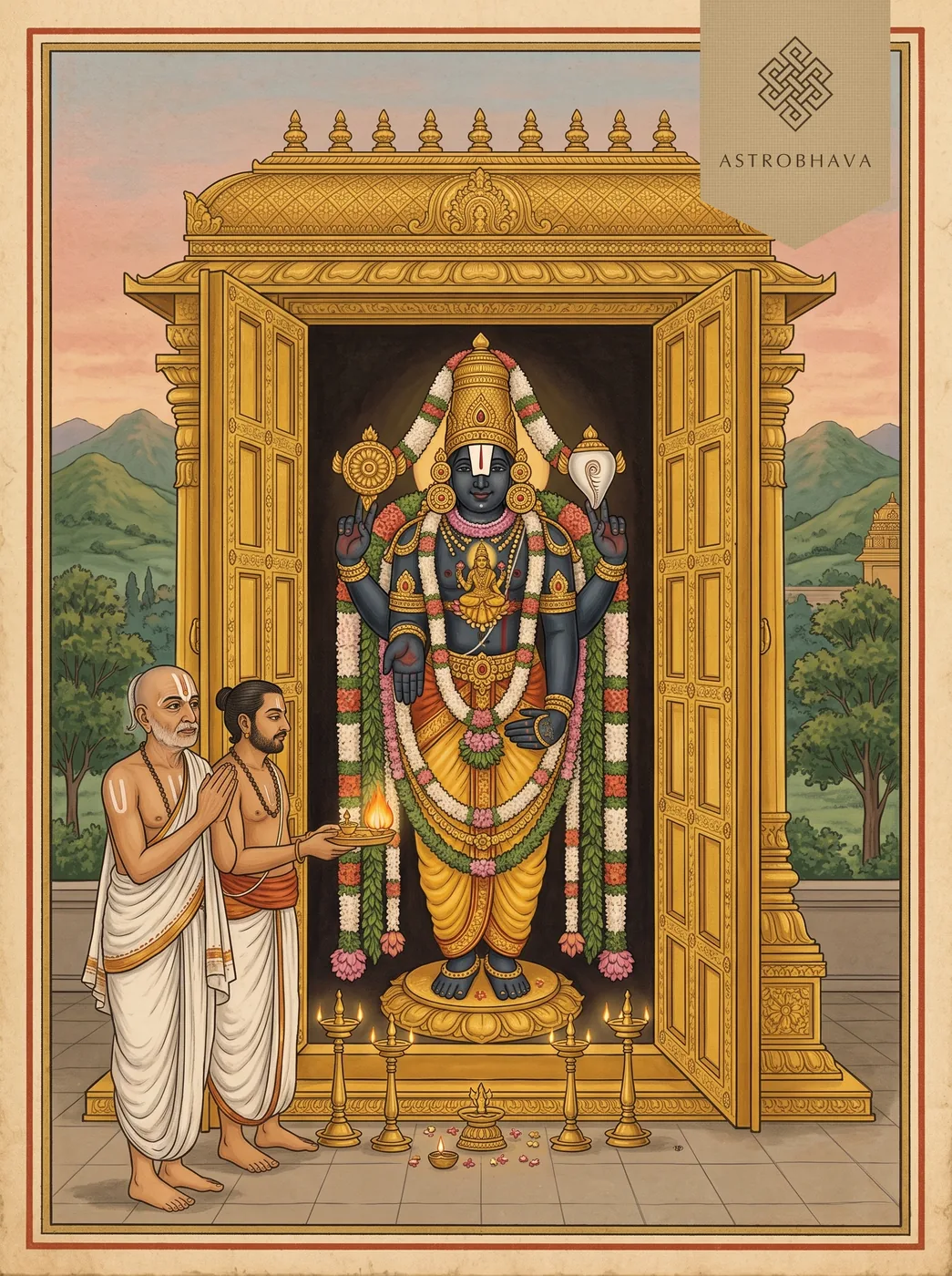
Venkateswara Stotram
कमलाकुचचूचुककुङ्कुमतो नियतारुणितातुलनीलतनो । कमलायतलोचन लोकपते विजयी भव वेङ्कटशैलपते ॥Also known as Kamalakucha Chuchuka
In Devanagari, Tamil, Telugu, Kannada, Malayalam and English — with the meaning of every word, and the one syllable most people pronounce wrongly.
 A reading of your birth chartBook →
What the Venkateswara Stotram is
The Venkateswara Stotram, printed in most editions as the Sri Venkatesha Stotram and often called by its first words, Kamalakucha Chuchuka, is the second of the four hymns that make up the Tirumala morning recital. Prativadi Bhayankaram Annan, a fifteenth-century disciple of Manavala Mamunigal, set it between the Suprabhatam, which wakes the Lord, and the Prapatti, which surrenders to him. Its eleven verses move in three steps. Verses 1 to 4, in totaka metre, address Venkatesa as Lord of the Venkata and Vrisha hills, crest-jewel even of Brahma, Skanda and Shiva, and confess hundreds of offences committed again and again. Verses 5 to 8 see the same Lord as Krishna among the cowherd women and as Rama, son of Dasharatha. Verses 9 and 10 change to bhujangaprayata metre for the plea that without Venkatesa there is no protector, and verse 11, a short anushtubh, asks forgiveness for faults done in ignorance.
Praise Set Between Waking and Surrender
According to Sri Vaishnava tradition, Annan composed the whole morning set at the wish of his teacher Manavala Mamunigal, sometime between about 1420 and 1432, and its four parts are meant to be heard in order. Once the Suprabhatam has roused the Lord, the Stotram turns from calling to praising: the poet now stands before a Lord who is awake and says who he is before asking anything of him. The opening picture is an intimate one, the dark body reddened by kumkum from Lakshmi's breast, a reminder that on this hill the goddess is held to live on the Lord's chest. The middle verses widen the view. Tradition reads Venkatesa as the same Vishnu who came as Krishna and as Rama, so the poet praises the flute-player of Vraja and the archer of the Raghu line without leaving the hill, and verse 8 ends with a vow to worship no one else. Verse 10 speaks in a pilgrim's voice: having come from far away to bow at the two feet, the poet asks that one act of service bear the fruit of service done always. At Tirumala the set is recited before dawn, with devotees gathered at the Bangaru Vakili, the golden doorway; only in Dhanurmasa does Andal's Tiruppavai take the place of the Suprabhata Seva.
The mantra, in six scripts
- कमलाकुचचूचुककुङ्कुमतो
- kamalākucacūcukakuṅkumato — by kumkum from Lakshmi's breast
- नियतारुणितातुलनीलतनो
- niyatāruṇitātulanīlatano — O matchless dark body ever reddened
- कमलायतलोचन
- kamalāyatalocana — O lotus-eyed one
- लोकपते
- lokapate — O Lord of the worlds
- विजयी
- vijayī — victorious
- भव
- bhava — be
- वेङ्कटशैलपते
- veṅkaṭaśailapate — O Lord of the Venkata hill
Venkateswara Stotram lyrics in full
Eleven verses, as recited after the Suprabhatam at Tirumala.
All 11 verses, in Sanskrit, Tamil, Telugu, Kannada, Malayalam and English, each with its meaning. Choose a script:
Download the Venkateswara Stotram PDFAll 11 verses with their meanings, in Sanskrit. Free to print and keep.
कमलाकुचचूचुककुङ्कुमतो नियतारुणितातुलनीलतनो ।
कमलायतलोचन लोकपते विजयी भव वेङ्कटशैलपते ॥
கமலாகுசசூசுககுங்குமதோ நியதாருணிதாதுலநீலதநோ ।
கமலாயதலோசந லோகபதே விஜயீ பவ வேங்கடஶைலபதே ॥
కమలాకుచచూచుకకుఙ్కుమతో నియతారుణితాతులనీలతనో ।
కమలాయతలోచన లోకపతే విజయీ భవ వేఙ్కటశైలపతే ॥
ಕಮಲಾಕುಚಚೂಚುಕಕುಙ್ಕುಮತೋ ನಿಯತಾರುಣಿತಾತುಲನೀಲತನೋ ।
ಕಮಲಾಯತಲೋಚನ ಲೋಕಪತೇ ವಿಜಯೀ ಭವ ವೇಙ್ಕಟಶೈಲಪತೇ ॥
കമലാകുചചൂചുകകുങ്കുമതോ നിയതാരുണിതാതുലനീലതനോ ।
കമലായതലോചന ലോകപതേ വിജയീ ഭവ വേങ്കടശൈലപതേ ॥
kamalākucacūcukakuṅkumato niyatāruṇitātulanīlatano |
kamalāyatalocana lokapate vijayī bhava veṅkaṭaśailapate ||
O Lord whose matchless dark-blue body is always tinged red by the kumkum from the bosom of Lakshmi, lotus-eyed Lord of the worlds, Lord of the Venkata hill: may you be ever victorious.
सचतुर्मुखषण्मुखपञ्चमुखप्रमुखाखिलदैवतमौलिमणे ।
शरणागतवत्सल सारनिधे परिपालय मां वृषशैलपते ॥
ஸசதுர்முகஷண்முகபஞ்சமுகப்ரமுகாகிலதைவதமௌலிமணே ।
ஶரணாகதவத்ஸல ஸாரநிதே பரிபாலய மாம் வ்ருஷஶைலபதே ॥
సచతుర్ముఖషణ్ముఖపఞ్చముఖప్రముఖాఖిలదైవతమౌలిమణే ।
శరణాగతవత్సల సారనిధే పరిపాలయ మాం వృషశైలపతే ॥
ಸಚತುರ್ಮುಖಷಣ್ಮುಖಪಞ್ಚಮುಖಪ್ರಮುಖಾಖಿಲದೈವತಮೌಲಿಮಣೇ ।
ಶರಣಾಗತವತ್ಸಲ ಸಾರನಿಧೇ ಪರಿಪಾಲಯ ಮಾಂ ವೃಷಶೈಲಪತೇ ॥
സചതുര്മുഖഷണ്മുഖപഞ്ചമുഖപ്രമുഖാഖിലദൈവതമൌലിമണേ ।
ശരണാഗതവത്സല സാരനിധേ പരിപാലയ മാം വൃഷശൈലപതേ ॥
sacaturmukhaṣaṇmukhapañcamukhapramukhākhiladaivatamaulimaṇe |
śaraṇāgatavatsala sāranidhe paripālaya māṃ vṛṣaśailapate ||
O crest-jewel of all the gods, led by four-faced Brahma, six-faced Skanda and five-faced Shiva; O you who love those who take refuge in you, treasure of all that is essential, Lord of the Vrisha hill, protect me.
अतिवेलतया तव दुर्विषहैरनुवेलकृतैरपराधशतैः ।
भरितं त्वरितं वृषशैलपते परया कृपया परिपाहि हरे ॥
அதிவேலதயா தவ துர்விஷஹைரநுவேலக்ருதைரபராதஶதைஃ ।
பரிதம் த்வரிதம் வ்ருஷஶைலபதே பரயா க்ருபயா பரிபாஹி ஹரே ॥
అతివేలతయా తవ దుర్విషహైరనువేలకృతైరపరాధశతైః ।
భరితం త్వరితం వృషశైలపతే పరయా కృపయా పరిపాహి హరే ॥
ಅತಿವೇಲತಯಾ ತವ ದುರ್ವಿಷಹೈರನುವೇಲಕೃತೈರಪರಾಧಶತೈಃ ।
ಭರಿತಂ ತ್ವರಿತಂ ವೃಷಶೈಲಪತೇ ಪರಯಾ ಕೃಪಯಾ ಪರಿಪಾಹಿ ಹರೇ ॥
അതിവേലതയാ തവ ദുര്വിഷഹൈരനുവേലകൃതൈരപരാധശതൈഃ ।
ഭരിതം ത്വരിതം വൃഷശൈലപതേ പരയാ കൃപയാ പരിപാഹി ഹരേ ॥
ativelatayā tava durviṣahairanuvelakṛtairaparādhaśataiḥ |
bharitaṃ tvaritaṃ vṛṣaśailapate parayā kṛpayā paripāhi hare ||
I am filled with hundreds of offences, committed again and again, so beyond measure that you could hardly bear them. O Hari, Lord of the Vrisha hill, quickly protect me with your supreme compassion.
अधिवेङ्कटशैलमुदारमतेर्जनताभिमताधिकदानरतात् ।
परदेवतया गदितान्निगमैः कमलादयितान्न परं कलये ॥
அதிவேங்கடஶைலமுதாரமதேர்ஜநதாபிமதாதிகதாநரதாத் ।
பரதேவதயா கதிதாந்நிகமைஃ கமலாதயிதாந்ந பரம் கலயே ॥
అధివేఙ్కటశైలముదారమతేర్జనతాభిమతాధికదానరతాత్ ।
పరదేవతయా గదితాన్నిగమైః కమలాదయితాన్న పరం కలయే ॥
ಅಧಿವೇಙ್ಕಟಶೈಲಮುದಾರಮತೇರ್ಜನತಾಭಿಮತಾಧಿಕದಾನರತಾತ್ ।
ಪರದೇವತಯಾ ಗದಿತಾನ್ನಿಗಮೈಃ ಕಮಲಾದಯಿತಾನ್ನ ಪರಂ ಕಲಯೇ ॥
അധിവേങ്കടശൈലമുദാരമതേര്ജനതാഭിമതാധികദാനരതാത് ।
പരദേവതയാ ഗദിതാന്നിഗമൈഃ കമലാദയിതാന്ന പരം കലയേ ॥
adhiveṅkaṭaśailamudāramaterjanatābhimatādhikadānaratāt |
paradevatayā gaditānnigamaiḥ kamalādayitānna paraṃ kalaye ||
Beyond the beloved of Lakshmi, who dwells on the Venkata hill, generous of mind, who delights in giving people more than they wish for, and whom the Vedas proclaim as the supreme deity, I know of no one higher.
कलवेणुरवावशगोपवधूशतकोटिवृतात्स्मरकोटिसमात् ।
प्रतिवल्लविकाभिमतात्सुखदात् वसुदेवसुतान्न परं कलये ॥
கலவேணுரவாவஶகோபவதூஶதகோடிவ்ருதாத்ஸ்மரகோடிஸமாத் ।
ப்ரதிவல்லவிகாபிமதாத்ஸுகதாத் வஸுதேவஸுதாந்ந பரம் கலயே ॥
కలవేణురవావశగోపవధూశతకోటివృతాత్స్మరకోటిసమాత్ ।
ప్రతివల్లవికాభిమతాత్సుఖదాత్ వసుదేవసుతాన్న పరం కలయే ॥
ಕಲವೇಣುರವಾವಶಗೋಪವಧೂಶತಕೋಟಿವೃತಾತ್ಸ್ಮರಕೋಟಿಸಮಾತ್ ।
ಪ್ರತಿವಲ್ಲವಿಕಾಭಿಮತಾತ್ಸುಖದಾತ್ ವಸುದೇವಸುತಾನ್ನ ಪರಂ ಕಲಯೇ ॥
കലവേണുരവാവശഗോപവധൂശതകോടിവൃതാത്സ്മരകോടിസമാത് ।
പ്രതിവല്ലവികാഭിമതാത്സുഖദാത് വസുദേവസുതാന്ന പരം കലയേ ॥
kalaveṇuravāvaśagopavadhūśatakoṭivṛtātsmarakoṭisamāt |
prativallavikābhimatātsukhadāt vasudevasutānna paraṃ kalaye ||
Beyond the son of Vasudeva, surrounded by countless cowherd women held spellbound by the sweet sound of his flute, as beautiful as millions of Kamas, dear to every cowherd girl and the giver of joy, I know of no one higher.
अभिरामगुणाकर दाशरथे जगदेकधनुर्धर धीरमते ।
रघुनायक राम रमेश विभो वरदो भव देव दयाजलधे ॥
அபிராமகுணாகர தாஶரதே ஜகதேகதநுர்தர தீரமதே ।
ரகுநாயக ராம ரமேஶ விபோ வரதோ பவ தேவ தயாஜலதே ॥
అభిరామగుణాకర దాశరథే జగదేకధనుర్ధర ధీరమతే ।
రఘునాయక రామ రమేశ విభో వరదో భవ దేవ దయాజలధే ॥
ಅಭಿರಾಮಗುಣಾಕರ ದಾಶರಥೇ ಜಗದೇಕಧನುರ್ಧರ ಧೀರಮತೇ ।
ರಘುನಾಯಕ ರಾಮ ರಮೇಶ ವಿಭೋ ವರದೋ ಭವ ದೇವ ದಯಾಜಲಧೇ ॥
അഭിരാമഗുണാകര ദാശരഥേ ജഗദേകധനുര്ധര ധീരമതേ ।
രഘുനായക രാമ രമേശ വിഭോ വരദോ ഭവ ദേവ ദയാജലധേ ॥
abhirāmaguṇākara dāśarathe jagadekadhanurdhara dhīramate |
raghunāyaka rāma rameśa vibho varado bhava deva dayājaladhe ||
O son of Dasharatha, mine of delightful virtues, the one archer of the world, steadfast of mind; O Rama, leader of the Raghus, Lord of Lakshmi, all-pervading one, ocean of mercy: O God, grant me your blessings.
अवनीतनयाकमनीयकरं रजनीकरचारुमुखाम्बुरुहम् ।
रजनीचरराजतमोमिहिरं महनीयमहं रघुराममये ॥
அவநீதநயாகமநீயகரம் ரஜநீகரசாருமுகாம்புருஹம் ।
ரஜநீசரராஜதமோமிஹிரம் மஹநீயமஹம் ரகுராமமயே ॥
అవనీతనయాకమనీయకరం రజనీకరచారుముఖామ్బురుహమ్ ।
రజనీచరరాజతమోమిహిరం మహనీయమహం రఘురామమయే ॥
ಅವನೀತನಯಾಕಮನೀಯಕರಂ ರಜನೀಕರಚಾರುಮುಖಾಮ್ಬುರುಹಮ್ ।
ರಜನೀಚರರಾಜತಮೋಮಿಹಿರಂ ಮಹನೀಯಮಹಂ ರಘುರಾಮಮಯೇ ॥
അവനീതനയാകമനീയകരം രജനീകരചാരുമുഖാമ്ബുരുഹമ് ।
രജനീചരരാജതമോമിഹിരം മഹനീയമഹം രഘുരാമമയേ ॥
avanītanayākamanīyakaraṃ rajanīkaracārumukhāmburuham |
rajanīcararājatamomihiraṃ mahanīyamahaṃ raghurāmamaye ||
I go to Rama of the Raghu line, worthy of worship, whose hand is the beloved of Sita, daughter of the Earth, whose lotus face is lovely as the moon, and who is the sun that dispels the darkness that was the king of the night-roaming demons.
सुमुखं सुहृदं सुलभं सुखदं स्वनुजं च सुकायममोघशरम् ।
अपहाय रघूद्वहमन्यमहं न कथञ्चन कञ्चन जातु भजे ॥
ஸுமுகம் ஸுஹ்ருதம் ஸுலபம் ஸுகதம் ஸ்வநுஜம் ச ஸுகாயமமோகஶரம் ।
அபஹாய ரகூத்வஹமந்யமஹம் ந கதஞ்சந கஞ்சந ஜாது பஜே ॥
సుముఖం సుహృదం సులభం సుఖదం స్వనుజం చ సుకాయమమోఘశరమ్ ।
అపహాయ రఘూద్వహమన్యమహం న కథఞ్చన కఞ్చన జాతు భజే ॥
ಸುಮುಖಂ ಸುಹೃದಂ ಸುಲಭಂ ಸುಖದಂ ಸ್ವನುಜಂ ಚ ಸುಕಾಯಮಮೋಘಶರಮ್ ।
ಅಪಹಾಯ ರಘೂದ್ವಹಮನ್ಯಮಹಂ ನ ಕಥಞ್ಚನ ಕಞ್ಚನ ಜಾತು ಭಜೇ ॥
സുമുഖം സുഹൃദം സുലഭം സുഖദം സ്വനുജം ച സുകായമമോഘശരമ് ।
അപഹായ രഘൂദ്വഹമന്യമഹം ന കഥഞ്ചന കഞ്ചന ജാതു ഭജേ ॥
sumukhaṃ suhṛdaṃ sulabhaṃ sukhadaṃ svanujaṃ ca sukāyamamoghaśaram |
apahāya raghūdvahamanyamahaṃ na kathañcana kañcana jātu bhaje ||
Leaving aside the pride of the Raghus - gracious of face, a true friend, easy to reach, giver of joy, blessed with a good younger brother, handsome of form, whose arrows never miss - I will never, in any way, worship anyone else.
विना वेङ्कटेशं न नाथो न नाथः सदा वेङ्कटेशं स्मरामि स्मरामि ।
हरे वेङ्कटेश प्रसीद प्रसीद प्रियं वेङ्कटेश प्रयच्छ प्रयच्छ ॥
விநா வேங்கடேஶம் ந நாதோ ந நாதஃ ஸதா வேங்கடேஶம் ஸ்மராமி ஸ்மராமி ।
ஹரே வேங்கடேஶ ப்ரஸீத ப்ரஸீத ப்ரியம் வேங்கடேஶ ப்ரயச்ச ப்ரயச்ச ॥
వినా వేఙ్కటేశం న నాథో న నాథః సదా వేఙ్కటేశం స్మరామి స్మరామి ।
హరే వేఙ్కటేశ ప్రసీద ప్రసీద ప్రియం వేఙ్కటేశ ప్రయచ్ఛ ప్రయచ్ఛ ॥
ವಿನಾ ವೇಙ್ಕಟೇಶಂ ನ ನಾಥೋ ನ ನಾಥಃ ಸದಾ ವೇಙ್ಕಟೇಶಂ ಸ್ಮರಾಮಿ ಸ್ಮರಾಮಿ ।
ಹರೇ ವೇಙ್ಕಟೇಶ ಪ್ರಸೀದ ಪ್ರಸೀದ ಪ್ರಿಯಂ ವೇಙ್ಕಟೇಶ ಪ್ರಯಚ್ಛ ಪ್ರಯಚ್ಛ ॥
വിനാ വേങ്കടേശം ന നാഥോ ന നാഥഃ സദാ വേങ്കടേശം സ്മരാമി സ്മരാമി ।
ഹരേ വേങ്കടേശ പ്രസീദ പ്രസീദ പ്രിയം വേങ്കടേശ പ്രയച്ഛ പ്രയച്ഛ ॥
vinā veṅkaṭeśaṃ na nātho na nāthaḥ sadā veṅkaṭeśaṃ smarāmi smarāmi |
hare veṅkaṭeśa prasīda prasīda priyaṃ veṅkaṭeśa prayaccha prayaccha ||
Without Venkatesha there is no protector, no protector at all; I always remember Venkatesha, I remember him. O Hari, Venkatesha, be gracious, be gracious; O Venkatesha, grant what is dear to me, grant it.
अहं दूरतस्ते पदाम्भोजयुग्मप्रणामेच्छयाऽऽगत्य सेवां करोमि ।
सकृत्सेवया नित्यसेवाफलं त्वं प्रयच्छ प्रयच्छ प्रभो वेङ्कटेश ॥
அஹம் தூரதஸ்தே பதாம்போஜயுக்மப்ரணாமேச்சயாகத்ய ஸேவாம் கரோமி ।
ஸக்ருத்ஸேவயா நித்யஸேவாபலம் த்வம் ப்ரயச்ச ப்ரயச்ச ப்ரபோ வேங்கடேஶ ॥
అహం దూరతస్తే పదామ్భోజయుగ్మప్రణామేచ్ఛయాఽఽగత్య సేవాం కరోమి ।
సకృత్సేవయా నిత్యసేవాఫలం త్వం ప్రయచ్ఛ ప్రయచ్ఛ ప్రభో వేఙ్కటేశ ॥
ಅಹಂ ದೂರತಸ್ತೇ ಪದಾಮ್ಭೋಜಯುಗ್ಮಪ್ರಣಾಮೇಚ್ಛಯಾಽಽಗತ್ಯ ಸೇವಾಂ ಕರೋಮಿ ।
ಸಕೃತ್ಸೇವಯಾ ನಿತ್ಯಸೇವಾಫಲಂ ತ್ವಂ ಪ್ರಯಚ್ಛ ಪ್ರಯಚ್ಛ ಪ್ರಭೋ ವೇಙ್ಕಟೇಶ ॥
അഹം ദൂരതസ്തേ പദാമ്ഭോജയുഗ്മപ്രണാമേച്ഛയാഽഽഗത്യ സേവാം കരോമി ।
സകൃത്സേവയാ നിത്യസേവാഫലം ത്വം പ്രയച്ഛ പ്രയച്ഛ പ്രഭോ വേങ്കടേശ ॥
ahaṃ dūrataste padāmbhojayugmapraṇāmecchayā''gatya sevāṃ karomi |
sakṛtsevayā nityasevāphalaṃ tvaṃ prayaccha prayaccha prabho veṅkaṭeśa ||
I have come from far away, longing to bow at your two lotus feet, and I offer you my service. O Lord Venkatesha, for this single act of service grant me the fruit of serving you always; grant it.
अज्ञानिना मया दोषानशेषान्विहितान् हरे ।
क्षमस्व त्वं क्षमस्व त्वं शेषशैलशिखामणे ॥
அஜ்ஞாநிநா மயா தோஷாநஶேஷாந்விஹிதாந் ஹரே ।
க்ஷமஸ்வ த்வம் க்ஷமஸ்வ த்வம் ஶேஷஶைலஶிகாமணே ॥
అజ్ఞానినా మయా దోషానశేషాన్విహితాన్ హరే ।
క్షమస్వ త్వం క్షమస్వ త్వం శేషశైలశిఖామణే ॥
ಅಜ್ಞಾನಿನಾ ಮಯಾ ದೋಷಾನಶೇಷಾನ್ವಿಹಿತಾನ್ ಹರೇ ।
ಕ್ಷಮಸ್ವ ತ್ವಂ ಕ್ಷಮಸ್ವ ತ್ವಂ ಶೇಷಶೈಲಶಿಖಾಮಣೇ ॥
അജ്ഞാനിനാ മയാ ദോഷാനശേഷാന്വിഹിതാന് ഹരേ ।
ക്ഷമസ്വ ത്വം ക്ഷമസ്വ ത്വം ശേഷശൈലശിഖാമണേ ॥
ajñāninā mayā doṣānaśeṣānvihitān hare |
kṣamasva tvaṃ kṣamasva tvaṃ śeṣaśailaśikhāmaṇe ||
O Hari, crest-jewel of the Shesha hill, forgive all the faults I have committed in my ignorance; forgive me, forgive me.
The syllable people get wrong
In vṛṣaśailapate (Lord of the Vrisha hill, verses 2 and 3) the vṛ is a short vowel r, said "vri", not "vru" or "ver", and the two sibilants differ: ṣ is said with the tongue curled back, ś with the tongue flat behind the teeth, so the word runs vri-sha-shai-la-pa-te with two distinct sh sounds.
When the Venkateswara Stotram is chanted
Weekday. Thursday
Questions
Have your chart read before you decide
Chanting is yours to do, and free. But which deity your situation calls for — and whether a mantra alone is the right response — depends on your chart. Sometimes it is; sometimes it is not.
- Over 30 years in the Guru–Sishya Parampara, from the age of five
- He reads every chart himself — 60 minutes, one to one, never delegated
- Charts are read only between sunrise and sunset, following tradition
