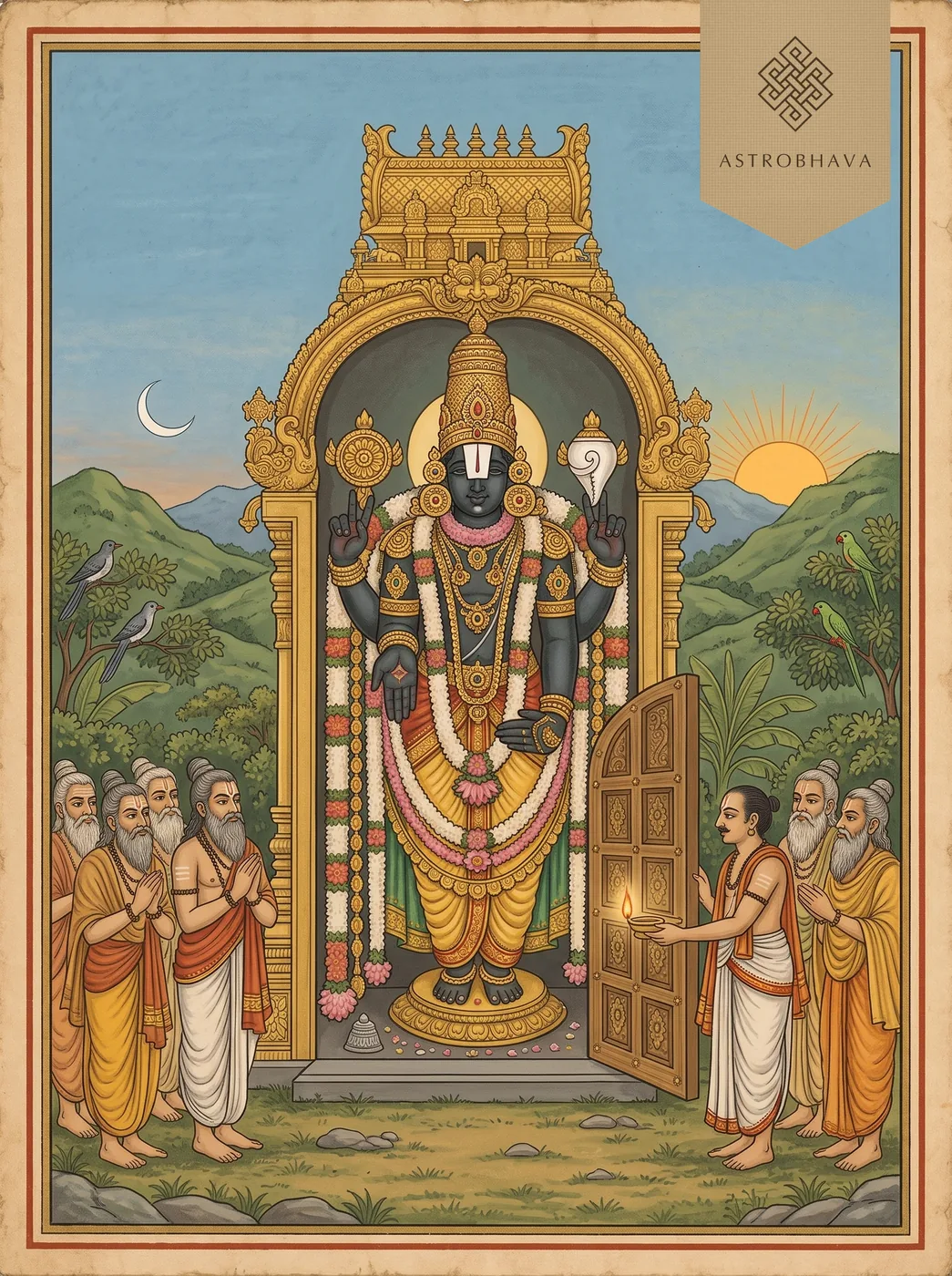
Venkateswara Suprabhatam
कौसल्या सुप्रजा राम पूर्वा सन्ध्या प्रवर्तते । उत्तिष्ठ नरशार्दूल कर्तव्यं दैवमाह्निकम् ॥Also known as Venkatesa Suprabhatam
In Devanagari, Tamil, Telugu, Kannada, Malayalam and English — with the meaning of every word, and the one syllable most people pronounce wrongly.
What the Venkateswara Suprabhatam is
The Venkateswara Suprabhatam is a Sanskrit waking hymn addressed to Venkatesa, the form of Vishnu on the Venkata hill at Tirumala. It was composed in the fifteenth century by Prativadi Bhayankaram Annan, a disciple of Manavala Mamunigal. The 29 verses on this page are the Suprabhatam proper; the full recital continues with three more works by the same author, the Stotram, the Prapatti and the Mangalasasanam. The sequence moves like a morning in the temple. Verses 1 and 2 call the sleeper to rise, verses 3 and 4 greet Lakshmi as his beloved, and verses 5 to 12 end on the refrain Seshadri-shekhara-vibho while the scene fills with sages carrying lotuses, Narada's vina, waking parrots and churning pots. From verse 13 the refrain becomes Sri Venkatachalapate: gods wait at the door, the nine planets call themselves servants of his servants, verse 24 lists the ten avatars, and verse 29 states the reward of reciting it.
A morning hymn Mamunigal found missing
According to the Sri Vaishnava accounts of his life, Annan was born in Kanchipuram, in 1361 by one reckoning, and after his marriage settled at Tirumala to serve the Lord. His assigned service was to carry water from the Akasa Ganga stream for the deity's bath and to scent it before worship. One day a visitor from Srirangam met him at the stream and spoke at length about Manavala Mamunigal. Annan listened so closely that he forgot the fragrances, yet the story says the water reached the shrine more fragrant than ever, and he took this as a sign to seek out Mamunigal. He went to Srirangam and became one of his close disciples. Later, when Mamunigal travelled to Tirumala by way of Kanchipuram, he noticed that the Lord there had no morning hymn of his own and asked Annan to write one. Annan produced the Suprabhatam together with the Stotram, Prapatti and Mangalasasanam, usually dated between about 1420 and 1432, and Mamunigal had it recited daily. Verse 25, with its golden pots of heavenly river water scented with cardamom, clove and camphor, describes the same service the story gives Annan. At Tirumala the Suprabhata Seva is still recited at the Bangaru Vakili, the golden doorway, except in Dhanurmasa, when Andal's Tiruppavai takes its place.
The mantra, in six scripts
- कौसल्या
- kausalyā — of Kausalya
- सुप्रजा
- suprajā — worthy son
- राम
- rāma — O Rama
- पूर्वा
- pūrvā — the eastern
- सन्ध्या
- sandhyā — dawn twilight
- प्रवर्तते
- pravartate — is breaking
- उत्तिष्ठ
- uttiṣṭha — rise
- नरशार्दूल
- naraśārdūla — O tiger among men
- कर्तव्यं
- kartavyaṃ — is to be performed
- दैवमाह्निकम्
- daivamāhnikam — the daily rite to the gods
Venkateswara Suprabhatam lyrics in full
All 29 verses, in Sanskrit, Tamil, Telugu, Kannada, Malayalam and English, each with its meaning. Choose a script:
Download the Venkateswara Suprabhatam PDFAll 29 verses with their meanings, in Sanskrit. Free to print and keep.
कौसल्या सुप्रजा राम पूर्वा सन्ध्या प्रवर्तते ।
उत्तिष्ठ नरशार्दूल कर्तव्यं दैवमाह्निकम् ॥
கௌஸல்யா ஸுப்ரஜா ராம பூர்வா ஸந்த்யா ப்ரவர்ததே ।
உத்திஷ்ட நரஶார்தூல கர்தவ்யம் தைவமாஹ்நிகம் ॥
కౌసల్యా సుప్రజా రామ పూర్వా సన్ధ్యా ప్రవర్తతే ।
ఉత్తిష్ఠ నరశార్దూల కర్తవ్యం దైవమాహ్నికమ్ ॥
ಕೌಸಲ್ಯಾ ಸುಪ್ರಜಾ ರಾಮ ಪೂರ್ವಾ ಸನ್ಧ್ಯಾ ಪ್ರವರ್ತತೇ ।
ಉತ್ತಿಷ್ಠ ನರಶಾರ್ದೂಲ ಕರ್ತವ್ಯಂ ದೈವಮಾಹ್ನಿಕಮ್ ॥
കൌസല്യാ സുപ്രജാ രാമ പൂര്വാ സന്ധ്യാ പ്രവര്തതേ ।
ഉത്തിഷ്ഠ നരശാര്ദൂല കര്തവ്യം ദൈവമാഹ്നികമ് ॥
kausalyā suprajā rāma pūrvā sandhyā pravartate |
uttiṣṭha naraśārdūla kartavyaṃ daivamāhnikam ||
O Rama, worthy son of Kausalya, the eastern dawn is breaking. Rise, tiger among men; the daily rites owed to the gods are to be performed.
उत्तिष्ठोत्तिष्ठ गोविन्द उत्तिष्ठ गरुडध्वज ।
उत्तिष्ठ कमलाकान्त त्रैलोक्यं मङ्गलं कुरु ॥
உத்திஷ்டோத்திஷ்ட கோவிந்த உத்திஷ்ட கருடத்வஜ ।
உத்திஷ்ட கமலாகாந்த த்ரைலோக்யம் மங்கலம் குரு ॥
ఉత్తిష్ఠోత్తిష్ఠ గోవిన్ద ఉత్తిష్ఠ గరుడధ్వజ ।
ఉత్తిష్ఠ కమలాకాన్త త్రైలోక్యం మఙ్గలం కురు ॥
ಉತ್ತಿಷ್ಠೋತ್ತಿಷ್ಠ ಗೋವಿನ್ದ ಉತ್ತಿಷ್ಠ ಗರುಡಧ್ವಜ ।
ಉತ್ತಿಷ್ಠ ಕಮಲಾಕಾನ್ತ ತ್ರೈಲೋಕ್ಯಂ ಮಙ್ಗಲಂ ಕುರು ॥
ഉത്തിഷ്ഠോത്തിഷ്ഠ ഗോവിന്ദ ഉത്തിഷ്ഠ ഗരുഡധ്വജ ।
ഉത്തിഷ്ഠ കമലാകാന്ത ത്രൈലോക്യം മങ്ഗലം കുരു ॥
uttiṣṭhottiṣṭha govinda uttiṣṭha garuḍadhvaja |
uttiṣṭha kamalākānta trailokyaṃ maṅgalaṃ kuru ||
Rise, rise, O Govinda; rise, O you whose banner bears Garuda. Rise, O beloved of Lakshmi, and make the three worlds auspicious.
मातस्समस्तजगतां मधुकैटभारेः वक्षोविहारिणि मनोहरदिव्यमूर्ते ।
श्रीस्वामिनि श्रितजनप्रियदानशीले श्रीवेङ्कटेशदयिते तव सुप्रभातम् ॥
மாதஸ்ஸமஸ்தஜகதாம் மதுகைடபாரேஃ வக்ஷோவிஹாரிணி மநோஹரதிவ்யமூர்தே ।
ஶ்ரீஸ்வாமிநி ஶ்ரிதஜநப்ரியதாநஶீலே ஶ்ரீவேங்கடேஶதயிதே தவ ஸுப்ரபாதம் ॥
మాతస్సమస్తజగతాం మధుకైటభారేః వక్షోవిహారిణి మనోహరదివ్యమూర్తే ।
శ్రీస్వామిని శ్రితజనప్రియదానశీలే శ్రీవేఙ్కటేశదయితే తవ సుప్రభాతమ్ ॥
ಮಾತಸ್ಸಮಸ್ತಜಗತಾಂ ಮಧುಕೈಟಭಾರೇಃ ವಕ್ಷೋವಿಹಾರಿಣಿ ಮನೋಹರದಿವ್ಯಮೂರ್ತೇ ।
ಶ್ರೀಸ್ವಾಮಿನಿ ಶ್ರಿತಜನಪ್ರಿಯದಾನಶೀಲೇ ಶ್ರೀವೇಙ್ಕಟೇಶದಯಿತೇ ತವ ಸುಪ್ರಭಾತಮ್ ॥
മാതസ്സമസ്തജഗതാം മധുകൈടഭാരേഃ വക്ഷോവിഹാരിണി മനോഹരദിവ്യമൂര്തേ ।
ശ്രീസ്വാമിനി ശ്രിതജനപ്രിയദാനശീലേ ശ്രീവേങ്കടേശദയിതേ തവ സുപ്രഭാതമ് ॥
mātassamastajagatāṃ madhukaiṭabhāreḥ vakṣovihāriṇi manoharadivyamūrte |
śrīsvāmini śritajanapriyadānaśīle śrīveṅkaṭeśadayite tava suprabhātam ||
O Mother of all the worlds, who dwells on the chest of Vishnu, the slayer of Madhu and Kaitabha, O you of enchanting divine form. O sovereign lady, ever giving what is dear to those who seek refuge, beloved of Sri Venkatesa, may your dawn be auspicious.
तव सुप्रभातमरविन्दलोचने भवतु प्रसन्नमुखचन्द्रमण्डले ।
विधिशङ्करेन्द्रवनिताभिरर्चिते वृषशैलनाथदयिते दयानिधे ॥
தவ ஸுப்ரபாதமரவிந்தலோசநே பவது ப்ரஸந்நமுகசந்த்ரமண்டலே ।
விதிஶங்கரேந்த்ரவநிதாபிரர்சிதே வ்ருஷஶைலநாததயிதே தயாநிதே ॥
తవ సుప్రభాతమరవిన్దలోచనే భవతు ప్రసన్నముఖచన్ద్రమణ్డలే ।
విధిశఙ్కరేన్ద్రవనితాభిరర్చితే వృషశైలనాథదయితే దయానిధే ॥
ತವ ಸುಪ್ರಭಾತಮರವಿನ್ದಲೋಚನೇ ಭವತು ಪ್ರಸನ್ನಮುಖಚನ್ದ್ರಮಣ್ಡಲೇ ।
ವಿಧಿಶಙ್ಕರೇನ್ದ್ರವನಿತಾಭಿರರ್ಚಿತೇ ವೃಷಶೈಲನಾಥದಯಿತೇ ದಯಾನಿಧೇ ॥
തവ സുപ്രഭാതമരവിന്ദലോചനേ ഭവതു പ്രസന്നമുഖചന്ദ്രമണ്ഡലേ ।
വിധിശങ്കരേന്ദ്രവനിതാഭിരര്ചിതേ വൃഷശൈലനാഥദയിതേ ദയാനിധേ ॥
tava suprabhātamaravindalocane bhavatu prasannamukhacandramaṇḍale |
vidhiśaṅkarendravanitābhirarcite vṛṣaśailanāthadayite dayānidhe ||
O lotus-eyed one, whose face shines like the calm full moon, may your dawn be auspicious. O you who are worshipped by the consorts of Brahma, Shiva and Indra, beloved of the Lord of the Vrisha hill, treasure of compassion.
अत्र्यादिसप्तऋषयस्समुपास्य सन्ध्यां आकाशसिन्धुकमलानि मनोहराणि ।
आदाय पादयुगमर्चयितुं प्रपन्नाः शेषाद्रिशेखरविभो तव सुप्रभातम् ॥
அத்ர்யாதிஸப்தருஷயஸ்ஸமுபாஸ்ய ஸந்த்யாம் ஆகாஶஸிந்துகமலாநி மநோஹராணி ।
ஆதாய பாதயுகமர்சயிதும் ப்ரபந்நாஃ ஶேஷாத்ரிஶேகரவிபோ தவ ஸுப்ரபாதம் ॥
అత్ర్యాదిసప్తఋషయస్సముపాస్య సన్ధ్యాం ఆకాశసిన్ధుకమలాని మనోహరాణి ।
ఆదాయ పాదయుగమర్చయితుం ప్రపన్నాః శేషాద్రిశేఖరవిభో తవ సుప్రభాతమ్ ॥
ಅತ್ರ್ಯಾದಿಸಪ್ತಋಷಯಸ್ಸಮುಪಾಸ್ಯ ಸನ್ಧ್ಯಾಂ ಆಕಾಶಸಿನ್ಧುಕಮಲಾನಿ ಮನೋಹರಾಣಿ ।
ಆದಾಯ ಪಾದಯುಗಮರ್ಚಯಿತುಂ ಪ್ರಪನ್ನಾಃ ಶೇಷಾದ್ರಿಶೇಖರವಿಭೋ ತವ ಸುಪ್ರಭಾತಮ್ ॥
അത്ര്യാദിസപ്തഋഷയസ്സമുപാസ്യ സന്ധ്യാം ആകാശസിന്ധുകമലാനി മനോഹരാണി ।
ആദായ പാദയുഗമര്ചയിതും പ്രപന്നാഃ ശേഷാദ്രിശേഖരവിഭോ തവ സുപ്രഭാതമ് ॥
atryādisaptaṛṣayassamupāsya sandhyāṃ ākāśasindhukamalāni manoharāṇi |
ādāya pādayugamarcayituṃ prapannāḥ śeṣādriśekharavibho tava suprabhātam ||
The seven sages led by Atri have finished their dawn worship and have come with lovely lotuses from the heavenly Ganga to worship your two feet. O Lord who crowns the Seshadri hill, may your dawn be auspicious.
पञ्चाननाब्जभवषण्मुखवासवाद्याः त्रैविक्रमादिचरितं विबुधाः स्तुवन्ति ।
भाषापतिः पठति वासरशुद्धिमारात् शेषाद्रिशेखरविभो तव सुप्रभातम् ॥
பஞ்சாநநாப்ஜபவஷண்முகவாஸவாத்யாஃ த்ரைவிக்ரமாதிசரிதம் விபுதாஃ ஸ்துவந்தி ।
பாஷாபதிஃ படதி வாஸரஶுத்திமாராத் ஶேஷாத்ரிஶேகரவிபோ தவ ஸுப்ரபாதம் ॥
పఞ్చాననాబ్జభవషణ్ముఖవాసవాద్యాః త్రైవిక్రమాదిచరితం విబుధాః స్తువన్తి ।
భాషాపతిః పఠతి వాసరశుద్ధిమారాత్ శేషాద్రిశేఖరవిభో తవ సుప్రభాతమ్ ॥
ಪಞ್ಚಾನನಾಬ್ಜಭವಷಣ್ಮುಖವಾಸವಾದ್ಯಾಃ ತ್ರೈವಿಕ್ರಮಾದಿಚರಿತಂ ವಿಬುಧಾಃ ಸ್ತುವನ್ತಿ ।
ಭಾಷಾಪತಿಃ ಪಠತಿ ವಾಸರಶುದ್ಧಿಮಾರಾತ್ ಶೇಷಾದ್ರಿಶೇಖರವಿಭೋ ತವ ಸುಪ್ರಭಾತಮ್ ॥
പഞ്ചാനനാബ്ജഭവഷണ്മുഖവാസവാദ്യാഃ ത്രൈവിക്രമാദിചരിതം വിബുധാഃ സ്തുവന്തി ।
ഭാഷാപതിഃ പഠതി വാസരശുദ്ധിമാരാത് ശേഷാദ്രിശേഖരവിഭോ തവ സുപ്രഭാതമ് ॥
pañcānanābjabhavaṣaṇmukhavāsavādyāḥ traivikramādicaritaṃ vibudhāḥ stuvanti |
bhāṣāpatiḥ paṭhati vāsaraśuddhimārāt śeṣādriśekharavibho tava suprabhātam ||
The gods, led by five-faced Shiva, lotus-born Brahma, six-faced Skanda and Indra, praise your deeds such as the Trivikrama incarnation. Brihaspati, lord of speech, stands near and recites the purity of the day. O Lord of the Seshadri hill, may your dawn be auspicious.
ईषत्प्रफुल्लसरसीरुहनारिकेल पूगद्रुमादिसुमनोहरपालिकानाम् ।
आवाति मन्दमनिलः सह दिव्यगन्धैः शेषाद्रिशेखरविभो तव सुप्रभातम् ॥
ஈஷத்ப்ரபுல்லஸரஸீருஹநாரிகேல பூகத்ருமாதிஸுமநோஹரபாலிகாநாம் ।
ஆவாதி மந்தமநிலஃ ஸஹ திவ்யகந்தைஃ ஶேஷாத்ரிஶேகரவிபோ தவ ஸுப்ரபாதம் ॥
ఈషత్ప్రఫుల్లసరసీరుహనారికేల పూగద్రుమాదిసుమనోహరపాలికానామ్ ।
ఆవాతి మన్దమనిలః సహ దివ్యగన్ధైః శేషాద్రిశేఖరవిభో తవ సుప్రభాతమ్ ॥
ಈಷತ್ಪ್ರಫುಲ್ಲಸರಸೀರುಹನಾರಿಕೇಲ ಪೂಗದ್ರುಮಾದಿಸುಮನೋಹರಪಾಲಿಕಾನಾಮ್ ।
ಆವಾತಿ ಮನ್ದಮನಿಲಃ ಸಹ ದಿವ್ಯಗನ್ಧೈಃ ಶೇಷಾದ್ರಿಶೇಖರವಿಭೋ ತವ ಸುಪ್ರಭಾತಮ್ ॥
ഈഷത്പ്രഫുല്ലസരസീരുഹനാരികേല പൂഗദ്രുമാദിസുമനോഹരപാലികാനാമ് ।
ആവാതി മന്ദമനിലഃ സഹ ദിവ്യഗന്ധൈഃ ശേഷാദ്രിശേഖരവിഭോ തവ സുപ്രഭാതമ് ॥
īṣatpraphullasarasīruhanārikela pūgadrumādisumanoharapālikānām |
āvāti mandamanilaḥ saha divyagandhaiḥ śeṣādriśekharavibho tava suprabhātam ||
A gentle breeze blows, carrying the divine fragrance of half-opened lotuses and of the lovely rows of coconut, areca and other trees. O Lord of the Seshadri hill, may your dawn be auspicious.
उन्मील्य नेत्रयुगमुत्तमपञ्जरस्थाः पात्रावशिष्टकदलीफलपायसानि ।
भुक्त्वा सलीलमथ केलिशुकाः पठन्ति शेषाद्रिशेखरविभो तव सुप्रभातम् ॥
உந்மீல்ய நேத்ரயுகமுத்தமபஞ்ஜரஸ்தாஃ பாத்ராவஶிஷ்டகதலீபலபாயஸாநி ।
புக்த்வா ஸலீலமத கேலிஶுகாஃ படந்தி ஶேஷாத்ரிஶேகரவிபோ தவ ஸுப்ரபாதம் ॥
ఉన్మీల్య నేత్రయుగముత్తమపఞ్జరస్థాః పాత్రావశిష్టకదలీఫలపాయసాని ।
భుక్త్వా సలీలమథ కేలిశుకాః పఠన్తి శేషాద్రిశేఖరవిభో తవ సుప్రభాతమ్ ॥
ಉನ್ಮೀಲ್ಯ ನೇತ್ರಯುಗಮುತ್ತಮಪಞ್ಜರಸ್ಥಾಃ ಪಾತ್ರಾವಶಿಷ್ಟಕದಲೀಫಲಪಾಯಸಾನಿ ।
ಭುಕ್ತ್ವಾ ಸಲೀಲಮಥ ಕೇಲಿಶುಕಾಃ ಪಠನ್ತಿ ಶೇಷಾದ್ರಿಶೇಖರವಿಭೋ ತವ ಸುಪ್ರಭಾತಮ್ ॥
ഉന്മീല്യ നേത്രയുഗമുത്തമപഞ്ജരസ്ഥാഃ പാത്രാവശിഷ്ടകദലീഫലപായസാനി ।
ഭുക്ത്വാ സലീലമഥ കേലിശുകാഃ പഠന്തി ശേഷാദ്രിശേഖരവിഭോ തവ സുപ്രഭാതമ് ॥
unmīlya netrayugamuttamapañjarasthāḥ pātrāvaśiṣṭakadalīphalapāyasāni |
bhuktvā salīlamatha keliśukāḥ paṭhanti śeṣādriśekharavibho tava suprabhātam ||
The pet parrots in their fine cages open their eyes, playfully eat the banana and sweet rice left in their bowls, and begin to recite. O Lord of the Seshadri hill, may your dawn be auspicious.
तन्त्रीप्रकर्षमधुरस्वनया विपञ्च्या गायत्यनन्तचरितं तव नारदोऽपि ।
भाषासमग्रमसकृत्करचाररम्यं शेषाद्रिशेखरविभो तव सुप्रभातम् ॥
தந்த்ரீப்ரகர்ஷமதுரஸ்வநயா விபஞ்ச்யா காயத்யநந்தசரிதம் தவ நாரதோபி ।
பாஷாஸமக்ரமஸக்ருத்கரசாரரம்யம் ஶேஷாத்ரிஶேகரவிபோ தவ ஸுப்ரபாதம் ॥
తన్త్రీప్రకర్షమధురస్వనయా విపఞ్చ్యా గాయత్యనన్తచరితం తవ నారదోఽపి ।
భాషాసమగ్రమసకృత్కరచారరమ్యం శేషాద్రిశేఖరవిభో తవ సుప్రభాతమ్ ॥
ತನ್ತ್ರೀಪ್ರಕರ್ಷಮಧುರಸ್ವನಯಾ ವಿಪಞ್ಚ್ಯಾ ಗಾಯತ್ಯನನ್ತಚರಿತಂ ತವ ನಾರದೋಽಪಿ ।
ಭಾಷಾಸಮಗ್ರಮಸಕೃತ್ಕರಚಾರರಮ್ಯಂ ಶೇಷಾದ್ರಿಶೇಖರವಿಭೋ ತವ ಸುಪ್ರಭಾತಮ್ ॥
തന്ത്രീപ്രകര്ഷമധുരസ്വനയാ വിപഞ്ച്യാ ഗായത്യനന്തചരിതം തവ നാരദോഽപി ।
ഭാഷാസമഗ്രമസകൃത്കരചാരരമ്യം ശേഷാദ്രിശേഖരവിഭോ തവ സുപ്രഭാതമ് ॥
tantrīprakarṣamadhurasvanayā vipañcyā gāyatyanantacaritaṃ tava nārado'pi |
bhāṣāsamagramasakṛtkaracāraramyaṃ śeṣādriśekharavibho tava suprabhātam ||
Narada too sings your endless story again and again on his vina, sweet with the fine tone of its strings, in full and rich words, graceful with the movement of his hands. O Lord of the Seshadri hill, may your dawn be auspicious.
भृङ्गावली च मकरन्दरसानुविद्ध झङ्कारगीतनिनदैः सह सेवनाय ।
निर्यात्युपान्तसरसीकमलोदरेभ्यः शेषाद्रिशेखरविभो तव सुप्रभातम् ॥
ப்ருங்காவலீ ச மகரந்தரஸாநுவித்த சங்காரகீதநிநதைஃ ஸஹ ஸேவநாய ।
நிர்யாத்யுபாந்தஸரஸீகமலோதரேப்யஃ ஶேஷாத்ரிஶேகரவிபோ தவ ஸுப்ரபாதம் ॥
భృఙ్గావలీ చ మకరన్దరసానువిద్ధ ఝఙ్కారగీతనినదైః సహ సేవనాయ ।
నిర్యాత్యుపాన్తసరసీకమలోదరేభ్యః శేషాద్రిశేఖరవిభో తవ సుప్రభాతమ్ ॥
ಭೃಙ್ಗಾವಲೀ ಚ ಮಕರನ್ದರಸಾನುವಿದ್ಧ ಝಙ್ಕಾರಗೀತನಿನದೈಃ ಸಹ ಸೇವನಾಯ ।
ನಿರ್ಯಾತ್ಯುಪಾನ್ತಸರಸೀಕಮಲೋದರೇಭ್ಯಃ ಶೇಷಾದ್ರಿಶೇಖರವಿಭೋ ತವ ಸುಪ್ರಭಾತಮ್ ॥
ഭൃങ്ഗാവലീ ച മകരന്ദരസാനുവിദ്ധ ഝങ്കാരഗീതനിനദൈഃ സഹ സേവനായ ।
നിര്യാത്യുപാന്തസരസീകമലോദരേഭ്യഃ ശേഷാദ്രിശേഖരവിഭോ തവ സുപ്രഭാതമ് ॥
bhṛṅgāvalī ca makarandarasānuviddha jhaṅkāragītaninadaiḥ saha sevanāya |
niryātyupāntasarasīkamalodarebhyaḥ śeṣādriśekharavibho tava suprabhātam ||
Swarms of bees, steeped in honey, come out from the hearts of the lotuses in the nearby lakes with humming songs to serve you. O Lord of the Seshadri hill, may your dawn be auspicious.
योषागणेन वरदध्नि विमथ्यमाने घोषालयेषु दधिमन्थनतीव्रघोषाः ।
रोषात्कलिं विदधते ककुभश्च कुम्भाः शेषाद्रिशेखरविभो तव सुप्रभातम् ॥
யோஷாகணேந வரதத்நி விமத்யமாநே கோஷாலயேஷு ததிமந்தநதீவ்ரகோஷாஃ ।
ரோஷாத்கலிம் விதததே ககுபஶ்ச கும்பாஃ ஶேஷாத்ரிஶேகரவிபோ தவ ஸுப்ரபாதம் ॥
యోషాగణేన వరదధ్ని విమథ్యమానే ఘోషాలయేషు దధిమన్థనతీవ్రఘోషాః ।
రోషాత్కలిం విదధతే కకుభశ్చ కుమ్భాః శేషాద్రిశేఖరవిభో తవ సుప్రభాతమ్ ॥
ಯೋಷಾಗಣೇನ ವರದಧ್ನಿ ವಿಮಥ್ಯಮಾನೇ ಘೋಷಾಲಯೇಷು ದಧಿಮನ್ಥನತೀವ್ರಘೋಷಾಃ ।
ರೋಷಾತ್ಕಲಿಂ ವಿದಧತೇ ಕಕುಭಶ್ಚ ಕುಮ್ಭಾಃ ಶೇಷಾದ್ರಿಶೇಖರವಿಭೋ ತವ ಸುಪ್ರಭಾತಮ್ ॥
യോഷാഗണേന വരദധ്നി വിമഥ്യമാനേ ഘോഷാലയേഷു ദധിമന്ഥനതീവ്രഘോഷാഃ ।
രോഷാത്കലിം വിദധതേ കകുഭശ്ച കുമ്ഭാഃ ശേഷാദ്രിശേഖരവിഭോ തവ സുപ്രഭാതമ് ॥
yoṣāgaṇena varadadhni vimathyamāne ghoṣālayeṣu dadhimanthanatīvraghoṣāḥ |
roṣātkaliṃ vidadhate kakubhaśca kumbhāḥ śeṣādriśekharavibho tava suprabhātam ||
In the cowherd homes, as the women churn the rich curd, the loud sounds of churning from the pots seem to quarrel angrily with the echoing directions. O Lord of the Seshadri hill, may your dawn be auspicious.
पद्मेशमित्रशतपत्रगतालिवर्गाः हर्तुं श्रियं कुवलयस्य निजाङ्गलक्ष्म्या ।
भेरीनिनादमिव बिभ्रति तीव्रनादं शेषाद्रिशेखरविभो तव सुप्रभातम् ॥
பத்மேஶமித்ரஶதபத்ரகதாலிவர்காஃ ஹர்தும் ஶ்ரியம் குவலயஸ்ய நிஜாங்கலக்ஷ்ம்யா ।
பேரீநிநாதமிவ பிப்ரதி தீவ்ரநாதம் ஶேஷாத்ரிஶேகரவிபோ தவ ஸுப்ரபாதம் ॥
పద్మేశమిత్రశతపత్రగతాలివర్గాః హర్తుం శ్రియం కువలయస్య నిజాఙ్గలక్ష్మ్యా ।
భేరీనినాదమివ బిభ్రతి తీవ్రనాదం శేషాద్రిశేఖరవిభో తవ సుప్రభాతమ్ ॥
ಪದ್ಮೇಶಮಿತ್ರಶತಪತ್ರಗತಾಲಿವರ್ಗಾಃ ಹರ್ತುಂ ಶ್ರಿಯಂ ಕುವಲಯಸ್ಯ ನಿಜಾಙ್ಗಲಕ್ಷ್ಮ್ಯಾ ।
ಭೇರೀನಿನಾದಮಿವ ಬಿಭ್ರತಿ ತೀವ್ರನಾದಂ ಶೇಷಾದ್ರಿಶೇಖರವಿಭೋ ತವ ಸುಪ್ರಭಾತಮ್ ॥
പദ്മേശമിത്രശതപത്രഗതാലിവര്ഗാഃ ഹര്തും ശ്രിയം കുവലയസ്യ നിജാങ്ഗലക്ഷ്മ്യാ ।
ഭേരീനിനാദമിവ ബിഭ്രതി തീവ്രനാദം ശേഷാദ്രിശേഖരവിഭോ തവ സുപ്രഭാതമ് ॥
padmeśamitraśatapatragatālivargāḥ hartuṃ śriyaṃ kuvalayasya nijāṅgalakṣmyā |
bherīninādamiva bibhrati tīvranādaṃ śeṣādriśekharavibho tava suprabhātam ||
The swarms of bees in the lotuses that are friends of the sun, wishing to outshine the blue lily with the beauty of their own dark bodies, raise a loud hum like the beating of war drums. O Lord of the Seshadri hill, may your dawn be auspicious.
श्रीमन्नभीष्टवरदाखिललोकबन्धो श्रीश्रीनिवास जगदेकदयैकसिन्धो ।
श्रीदेवतागृहभुजान्तरदिव्यमूर्ते श्रीवेङ्कटाचलपते तव सुप्रभातम् ॥
ஶ்ரீமந்நபீஷ்டவரதாகிலலோகபந்தோ ஶ்ரீஶ்ரீநிவாஸ ஜகதேகதயைகஸிந்தோ ।
ஶ்ரீதேவதாக்ருஹபுஜாந்தரதிவ்யமூர்தே ஶ்ரீவேங்கடாசலபதே தவ ஸுப்ரபாதம் ॥
శ్రీమన్నభీష్టవరదాఖిలలోకబన్ధో శ్రీశ్రీనివాస జగదేకదయైకసిన్ధో ।
శ్రీదేవతాగృహభుజాన్తరదివ్యమూర్తే శ్రీవేఙ్కటాచలపతే తవ సుప్రభాతమ్ ॥
ಶ್ರೀಮನ್ನಭೀಷ್ಟವರದಾಖಿಲಲೋಕಬನ್ಧೋ ಶ್ರೀಶ್ರೀನಿವಾಸ ಜಗದೇಕದಯೈಕಸಿನ್ಧೋ ।
ಶ್ರೀದೇವತಾಗೃಹಭುಜಾನ್ತರದಿವ್ಯಮೂರ್ತೇ ಶ್ರೀವೇಙ್ಕಟಾಚಲಪತೇ ತವ ಸುಪ್ರಭಾತಮ್ ॥
ശ്രീമന്നഭീഷ്ടവരദാഖിലലോകബന്ധോ ശ്രീശ്രീനിവാസ ജഗദേകദയൈകസിന്ധോ ।
ശ്രീദേവതാഗൃഹഭുജാന്തരദിവ്യമൂര്തേ ശ്രീവേങ്കടാചലപതേ തവ സുപ്രഭാതമ് ॥
śrīmannabhīṣṭavaradākhilalokabandho śrīśrīnivāsa jagadekadayaikasindho |
śrīdevatāgṛhabhujāntaradivyamūrte śrīveṅkaṭācalapate tava suprabhātam ||
O glorious one who grants the boons we desire, kinsman of all the worlds, O Srinivasa, the one ocean of compassion for the world. O you of divine form whose chest is the home of goddess Lakshmi, Lord of the Venkata hill, may your dawn be auspicious.
श्रीस्वामिपुष्करिणिकाऽऽप्लवनिर्मलाङ्गाः श्रेयोऽर्थिनो हरविरिञ्चिसनन्दनाद्याः ।
द्वारे वसन्ति वरवेत्रहतोत्तमाङ्गाः श्रीवेङ्कटाचलपते तव सुप्रभातम् ॥
ஶ்ரீஸ்வாமிபுஷ்கரிணிகாப்லவநிர்மலாங்காஃ ஶ்ரேயோர்திநோ ஹரவிரிஞ்சிஸநந்தநாத்யாஃ ।
த்வாரே வஸந்தி வரவேத்ரஹதோத்தமாங்காஃ ஶ்ரீவேங்கடாசலபதே தவ ஸுப்ரபாதம் ॥
శ్రీస్వామిపుష్కరిణికాఽఽప్లవనిర్మలాఙ్గాః శ్రేయోఽర్థినో హరవిరిఞ్చిసనన్దనాద్యాః ।
ద్వారే వసన్తి వరవేత్రహతోత్తమాఙ్గాః శ్రీవేఙ్కటాచలపతే తవ సుప్రభాతమ్ ॥
ಶ್ರೀಸ್ವಾಮಿಪುಷ್ಕರಿಣಿಕಾಽಽಪ್ಲವನಿರ್ಮಲಾಙ್ಗಾಃ ಶ್ರೇಯೋಽರ್ಥಿನೋ ಹರವಿರಿಞ್ಚಿಸನನ್ದನಾದ್ಯಾಃ ।
ದ್ವಾರೇ ವಸನ್ತಿ ವರವೇತ್ರಹತೋತ್ತಮಾಙ್ಗಾಃ ಶ್ರೀವೇಙ್ಕಟಾಚಲಪತೇ ತವ ಸುಪ್ರಭಾತಮ್ ॥
ശ്രീസ്വാമിപുഷ്കരിണികാഽഽപ്ലവനിര്മലാങ്ഗാഃ ശ്രേയോഽര്ഥിനോ ഹരവിരിഞ്ചിസനന്ദനാദ്യാഃ ।
ദ്വാരേ വസന്തി വരവേത്രഹതോത്തമാങ്ഗാഃ ശ്രീവേങ്കടാചലപതേ തവ സുപ്രഭാതമ് ॥
śrīsvāmipuṣkariṇikā''plavanirmalāṅgāḥ śreyo'rthino haraviriñcisanandanādyāḥ |
dvāre vasanti varavetrahatottamāṅgāḥ śrīveṅkaṭācalapate tava suprabhātam ||
Shiva, Brahma, Sanandana and others, seeking the highest good, their bodies made pure by bathing in the Swami Pushkarini tank, wait at your door, their heads struck by the gatekeepers' canes. O Lord of the Venkata hill, may your dawn be auspicious.
श्रीशेषशैलगरुडाचलवेङ्कटाद्रि नारायणाद्रिवृषभाद्रिवृषाद्रिमुख्याम् ।
आख्यां त्वदीयवसतेरनिशं वदन्ति श्रीवेङ्कटाचलपते तव सुप्रभातम् ॥
ஶ்ரீஶேஷஶைலகருடாசலவேங்கடாத்ரி நாராயணாத்ரிவ்ருஷபாத்ரிவ்ருஷாத்ரிமுக்யாம் ।
ஆக்யாம் த்வதீயவஸதேரநிஶம் வதந்தி ஶ்ரீவேங்கடாசலபதே தவ ஸுப்ரபாதம் ॥
శ్రీశేషశైలగరుడాచలవేఙ్కటాద్రి నారాయణాద్రివృషభాద్రివృషాద్రిముఖ్యామ్ ।
ఆఖ్యాం త్వదీయవసతేరనిశం వదన్తి శ్రీవేఙ్కటాచలపతే తవ సుప్రభాతమ్ ॥
ಶ್ರೀಶೇಷಶೈಲಗರುಡಾಚಲವೇಙ್ಕಟಾದ್ರಿ ನಾರಾಯಣಾದ್ರಿವೃಷಭಾದ್ರಿವೃಷಾದ್ರಿಮುಖ್ಯಾಮ್ ।
ಆಖ್ಯಾಂ ತ್ವದೀಯವಸತೇರನಿಶಂ ವದನ್ತಿ ಶ್ರೀವೇಙ್ಕಟಾಚಲಪತೇ ತವ ಸುಪ್ರಭಾತಮ್ ॥
ശ്രീശേഷശൈലഗരുഡാചലവേങ്കടാദ്രി നാരായണാദ്രിവൃഷഭാദ്രിവൃഷാദ്രിമുഖ്യാമ് ।
ആഖ്യാം ത്വദീയവസതേരനിശം വദന്തി ശ്രീവേങ്കടാചലപതേ തവ സുപ്രഭാതമ് ॥
śrīśeṣaśailagaruḍācalaveṅkaṭādri nārāyaṇādrivṛṣabhādrivṛṣādrimukhyām |
ākhyāṃ tvadīyavasateraniśaṃ vadanti śrīveṅkaṭācalapate tava suprabhātam ||
People constantly speak the names of your dwelling place: Seshasaila, Garudachala, Venkatadri, Narayanadri, Vrishabhadri, Vrishadri and others. O Lord of the Venkata hill, may your dawn be auspicious.
सेवापराः शिवसुरेशकृशानुधर्म रक्षोऽम्बुनाथपवमानधनाधिनाथाः ।
बद्धाञ्जलिप्रविलसन्निजशीर्षदेशाः श्रीवेङ्कटाचलपते तव सुप्रभातम् ॥
ஸேவாபராஃ ஶிவஸுரேஶக்ருஶாநுதர்ம ரக்ஷோம்புநாதபவமாநதநாதிநாதாஃ ।
பத்தாஞ்ஜலிப்ரவிலஸந்நிஜஶீர்ஷதேஶாஃ ஶ்ரீவேங்கடாசலபதே தவ ஸுப்ரபாதம் ॥
సేవాపరాః శివసురేశకృశానుధర్మ రక్షోఽమ్బునాథపవమానధనాధినాథాః ।
బద్ధాఞ్జలిప్రవిలసన్నిజశీర్షదేశాః శ్రీవేఙ్కటాచలపతే తవ సుప్రభాతమ్ ॥
ಸೇವಾಪರಾಃ ಶಿವಸುರೇಶಕೃಶಾನುಧರ್ಮ ರಕ್ಷೋಽಮ್ಬುನಾಥಪವಮಾನಧನಾಧಿನಾಥಾಃ ।
ಬದ್ಧಾಞ್ಜಲಿಪ್ರವಿಲಸನ್ನಿಜಶೀರ್ಷದೇಶಾಃ ಶ್ರೀವೇಙ್ಕಟಾಚಲಪತೇ ತವ ಸುಪ್ರಭಾತಮ್ ॥
സേവാപരാഃ ശിവസുരേശകൃശാനുധര്മ രക്ഷോഽമ്ബുനാഥപവമാനധനാധിനാഥാഃ ।
ബദ്ധാഞ്ജലിപ്രവിലസന്നിജശീര്ഷദേശാഃ ശ്രീവേങ്കടാചലപതേ തവ സുപ്രഭാതമ് ॥
sevāparāḥ śivasureśakṛśānudharma rakṣo'mbunāthapavamānadhanādhināthāḥ |
baddhāñjalipravilasannijaśīrṣadeśāḥ śrīveṅkaṭācalapate tava suprabhātam ||
The guardians of the directions, Shiva, Indra, Agni, Yama, Nirriti, Varuna, Vayu and Kubera, stand ready to serve, their heads shining with hands joined in salutation. O Lord of the Venkata hill, may your dawn be auspicious.
धाटीषु ते विहगराजमृगाधिराज नागाधिराजगजराजहयाधिराजाः ।
स्वस्वाधिकारमहिमादिकमर्थयन्ते श्रीवेङ्कटाचलपते तव सुप्रभातम् ॥
தாடீஷு தே விஹகராஜம்ருகாதிராஜ நாகாதிராஜகஜராஜஹயாதிராஜாஃ ।
ஸ்வஸ்வாதிகாரமஹிமாதிகமர்தயந்தே ஶ்ரீவேங்கடாசலபதே தவ ஸுப்ரபாதம் ॥
ధాటీషు తే విహగరాజమృగాధిరాజ నాగాధిరాజగజరాజహయాధిరాజాః ।
స్వస్వాధికారమహిమాదికమర్థయన్తే శ్రీవేఙ్కటాచలపతే తవ సుప్రభాతమ్ ॥
ಧಾಟೀಷು ತೇ ವಿಹಗರಾಜಮೃಗಾಧಿರಾಜ ನಾಗಾಧಿರಾಜಗಜರಾಜಹಯಾಧಿರಾಜಾಃ ।
ಸ್ವಸ್ವಾಧಿಕಾರಮಹಿಮಾದಿಕಮರ್ಥಯನ್ತೇ ಶ್ರೀವೇಙ್ಕಟಾಚಲಪತೇ ತವ ಸುಪ್ರಭಾತಮ್ ॥
ധാടീഷു തേ വിഹഗരാജമൃഗാധിരാജ നാഗാധിരാജഗജരാജഹയാധിരാജാഃ ।
സ്വസ്വാധികാരമഹിമാദികമര്ഥയന്തേ ശ്രീവേങ്കടാചലപതേ തവ സുപ്രഭാതമ് ॥
dhāṭīṣu te vihagarājamṛgādhirāja nāgādhirājagajarājahayādhirājāḥ |
svasvādhikāramahimādikamarthayante śrīveṅkaṭācalapate tava suprabhātam ||
In your processions, Garuda king of birds, the king of beasts, the king of serpents, the king of elephants and the king of horses each ask for their own office of service, its glory and all that goes with it. O Lord of the Venkata hill, may your dawn be auspicious.
सूर्येन्दुभौमबुधवाक्पतिकाव्यसौरि स्वर्भानुकेतुदिविषत्परिषत्प्रधानाः ।
त्वद्दासदासचरमावधिदासदासाः श्रीवेङ्कटाचलपते तव सुप्रभातम् ॥
ஸூர்யேந்துபௌமபுதவாக்பதிகாவ்யஸௌரி ஸ்வர்பாநுகேதுதிவிஷத்பரிஷத்ப்ரதாநாஃ ।
த்வத்தாஸதாஸசரமாவதிதாஸதாஸாஃ ஶ்ரீவேங்கடாசலபதே தவ ஸுப்ரபாதம் ॥
సూర్యేన్దుభౌమబుధవాక్పతికావ్యసౌరి స్వర్భానుకేతుదివిషత్పరిషత్ప్రధానాః ।
త్వద్దాసదాసచరమావధిదాసదాసాః శ్రీవేఙ్కటాచలపతే తవ సుప్రభాతమ్ ॥
ಸೂರ್ಯೇನ್ದುಭೌಮಬುಧವಾಕ್ಪತಿಕಾವ್ಯಸೌರಿ ಸ್ವರ್ಭಾನುಕೇತುದಿವಿಷತ್ಪರಿಷತ್ಪ್ರಧಾನಾಃ ।
ತ್ವದ್ದಾಸದಾಸಚರಮಾವಧಿದಾಸದಾಸಾಃ ಶ್ರೀವೇಙ್ಕಟಾಚಲಪತೇ ತವ ಸುಪ್ರಭಾತಮ್ ॥
സൂര്യേന്ദുഭൌമബുധവാക്പതികാവ്യസൌരി സ്വര്ഭാനുകേതുദിവിഷത്പരിഷത്പ്രധാനാഃ ।
ത്വദ്ദാസദാസചരമാവധിദാസദാസാഃ ശ്രീവേങ്കടാചലപതേ തവ സുപ്രഭാതമ് ॥
sūryendubhaumabudhavākpatikāvyasauri svarbhānuketudiviṣatpariṣatpradhānāḥ |
tvaddāsadāsacaramāvadhidāsadāsāḥ śrīveṅkaṭācalapate tava suprabhātam ||
The Sun, Moon, Mars, Mercury, Jupiter, Venus, Saturn, Rahu and Ketu, chiefs of the assembly of the heavens, are servants of the last in the line of the servants of your servants. O Lord of the Venkata hill, may your dawn be auspicious.
त्वत्पादधूलिभरितस्फुरितोत्तमाङ्गाः स्वर्गापवर्गनिरपेक्षनिजान्तरङ्गाः ।
कल्पागमाकलनयाऽऽकुलतां लभन्ते श्रीवेङ्कटाचलपते तव सुप्रभातम् ॥
த்வத்பாததூலிபரிதஸ்புரிதோத்தமாங்காஃ ஸ்வர்காபவர்கநிரபேக்ஷநிஜாந்தரங்காஃ ।
கல்பாகமாகலநயாகுலதாம் லபந்தே ஶ்ரீவேங்கடாசலபதே தவ ஸுப்ரபாதம் ॥
త్వత్పాదధూలిభరితస్ఫురితోత్తమాఙ్గాః స్వర్గాపవర్గనిరపేక్షనిజాన్తరఙ్గాః ।
కల్పాగమాకలనయాఽఽకులతాం లభన్తే శ్రీవేఙ్కటాచలపతే తవ సుప్రభాతమ్ ॥
ತ್ವತ್ಪಾದಧೂಲಿಭರಿತಸ್ಫುರಿತೋತ್ತಮಾಙ್ಗಾಃ ಸ್ವರ್ಗಾಪವರ್ಗನಿರಪೇಕ್ಷನಿಜಾನ್ತರಙ್ಗಾಃ ।
ಕಲ್ಪಾಗಮಾಕಲನಯಾಽಽಕುಲತಾಂ ಲಭನ್ತೇ ಶ್ರೀವೇಙ್ಕಟಾಚಲಪತೇ ತವ ಸುಪ್ರಭಾತಮ್ ॥
ത്വത്പാദധൂലിഭരിതസ്ഫുരിതോത്തമാങ്ഗാഃ സ്വര്ഗാപവര്ഗനിരപേക്ഷനിജാന്തരങ്ഗാഃ ।
കല്പാഗമാകലനയാഽഽകുലതാം ലഭന്തേ ശ്രീവേങ്കടാചലപതേ തവ സുപ്രഭാതമ് ॥
tvatpādadhūlibharitasphuritottamāṅgāḥ svargāpavarganirapekṣanijāntaraṅgāḥ |
kalpāgamākalanayā''kulatāṃ labhante śrīveṅkaṭācalapate tava suprabhātam ||
Those whose heads shine, covered with the dust of your feet, and whose hearts want neither heaven nor liberation, grow anxious at the thought of a new age coming. O Lord of the Venkata hill, may your dawn be auspicious.
त्वद्गोपुराग्रशिखराणि निरीक्षमाणाः स्वर्गापवर्गपदवीं परमां श्रयन्तः ।
मर्त्या मनुष्यभुवने मतिमाश्रयन्ते श्रीवेङ्कटाचलपते तव सुप्रभातम् ॥
த்வத்கோபுராக்ரஶிகராணி நிரீக்ஷமாணாஃ ஸ்வர்காபவர்கபதவீம் பரமாம் ஶ்ரயந்தஃ ।
மர்த்யா மநுஷ்யபுவநே மதிமாஶ்ரயந்தே ஶ்ரீவேங்கடாசலபதே தவ ஸுப்ரபாதம் ॥
త్వద్గోపురాగ్రశిఖరాణి నిరీక్షమాణాః స్వర్గాపవర్గపదవీం పరమాం శ్రయన్తః ।
మర్త్యా మనుష్యభువనే మతిమాశ్రయన్తే శ్రీవేఙ్కటాచలపతే తవ సుప్రభాతమ్ ॥
ತ್ವದ್ಗೋಪುರಾಗ್ರಶಿಖರಾಣಿ ನಿರೀಕ್ಷಮಾಣಾಃ ಸ್ವರ್ಗಾಪವರ್ಗಪದವೀಂ ಪರಮಾಂ ಶ್ರಯನ್ತಃ ।
ಮರ್ತ್ಯಾ ಮನುಷ್ಯಭುವನೇ ಮತಿಮಾಶ್ರಯನ್ತೇ ಶ್ರೀವೇಙ್ಕಟಾಚಲಪತೇ ತವ ಸುಪ್ರಭಾತಮ್ ॥
ത്വദ്ഗോപുരാഗ്രശിഖരാണി നിരീക്ഷമാണാഃ സ്വര്ഗാപവര്ഗപദവീം പരമാം ശ്രയന്തഃ ।
മര്ത്യാ മനുഷ്യഭുവനേ മതിമാശ്രയന്തേ ശ്രീവേങ്കടാചലപതേ തവ സുപ്രഭാതമ് ॥
tvadgopurāgraśikharāṇi nirīkṣamāṇāḥ svargāpavargapadavīṃ paramāṃ śrayantaḥ |
martyā manuṣyabhuvane matimāśrayante śrīveṅkaṭācalapate tava suprabhātam ||
Mortals who gaze at the tips of your temple towers, even while on the high road to heaven and liberation, set their minds on staying in the world of men. O Lord of the Venkata hill, may your dawn be auspicious.
श्रीभूमिनायक दयादिगुणामृताब्धे देवाधिदेव जगदेकशरण्यमूर्ते ।
श्रीमन्ननन्तगरुडादिभिरर्चिताङ्घ्रे श्रीवेङ्कटाचलपते तव सुप्रभातम् ॥
ஶ்ரீபூமிநாயக தயாதிகுணாம்ருதாப்தே தேவாதிதேவ ஜகதேகஶரண்யமூர்தே ।
ஶ்ரீமந்நநந்தகருடாதிபிரர்சிதாங்க்ரே ஶ்ரீவேங்கடாசலபதே தவ ஸுப்ரபாதம் ॥
శ్రీభూమినాయక దయాదిగుణామృతాబ్ధే దేవాధిదేవ జగదేకశరణ్యమూర్తే ।
శ్రీమన్ననన్తగరుడాదిభిరర్చితాఙ్ఘ్రే శ్రీవేఙ్కటాచలపతే తవ సుప్రభాతమ్ ॥
ಶ್ರೀಭೂಮಿನಾಯಕ ದಯಾದಿಗುಣಾಮೃತಾಬ್ಧೇ ದೇವಾಧಿದೇವ ಜಗದೇಕಶರಣ್ಯಮೂರ್ತೇ ।
ಶ್ರೀಮನ್ನನನ್ತಗರುಡಾದಿಭಿರರ್ಚಿತಾಙ್ಘ್ರೇ ಶ್ರೀವೇಙ್ಕಟಾಚಲಪತೇ ತವ ಸುಪ್ರಭಾತಮ್ ॥
ശ്രീഭൂമിനായക ദയാദിഗുണാമൃതാബ്ധേ ദേവാധിദേവ ജഗദേകശരണ്യമൂര്തേ ।
ശ്രീമന്നനന്തഗരുഡാദിഭിരര്ചിതാങ്ഘ്രേ ശ്രീവേങ്കടാചലപതേ തവ സുപ്രഭാതമ് ॥
śrībhūmināyaka dayādiguṇāmṛtābdhe devādhideva jagadekaśaraṇyamūrte |
śrīmannanantagaruḍādibhirarcitāṅghre śrīveṅkaṭācalapate tava suprabhātam ||
O consort of Sri and Bhu, nectar-ocean of compassion and other virtues, God of gods, the one refuge of the world. O glorious one whose feet are worshipped by Ananta, Garuda and others, Lord of the Venkata hill, may your dawn be auspicious.
श्रीपद्मनाभ पुरुषोत्तम वासुदेव वैकुण्ठ माधव जनार्दन चक्रपाणे ।
श्रीवत्सचिह्न शरणागतपारिजात श्रीवेङ्कटाचलपते तव सुप्रभातम् ॥
ஶ்ரீபத்மநாப புருஷோத்தம வாஸுதேவ வைகுண்ட மாதவ ஜநார்தந சக்ரபாணே ।
ஶ்ரீவத்ஸசிஹ்ந ஶரணாகதபாரிஜாத ஶ்ரீவேங்கடாசலபதே தவ ஸுப்ரபாதம் ॥
శ్రీపద్మనాభ పురుషోత్తమ వాసుదేవ వైకుణ్ఠ మాధవ జనార్దన చక్రపాణే ।
శ్రీవత్సచిహ్న శరణాగతపారిజాత శ్రీవేఙ్కటాచలపతే తవ సుప్రభాతమ్ ॥
ಶ್ರೀಪದ್ಮನಾಭ ಪುರುಷೋತ್ತಮ ವಾಸುದೇವ ವೈಕುಣ್ಠ ಮಾಧವ ಜನಾರ್ದನ ಚಕ್ರಪಾಣೇ ।
ಶ್ರೀವತ್ಸಚಿಹ್ನ ಶರಣಾಗತಪಾರಿಜಾತ ಶ್ರೀವೇಙ್ಕಟಾಚಲಪತೇ ತವ ಸುಪ್ರಭಾತಮ್ ॥
ശ്രീപദ്മനാഭ പുരുഷോത്തമ വാസുദേവ വൈകുണ്ഠ മാധവ ജനാര്ദന ചക്രപാണേ ।
ശ്രീവത്സചിഹ്ന ശരണാഗതപാരിജാത ശ്രീവേങ്കടാചലപതേ തവ സുപ്രഭാതമ് ॥
śrīpadmanābha puruṣottama vāsudeva vaikuṇṭha mādhava janārdana cakrapāṇe |
śrīvatsacihna śaraṇāgatapārijāta śrīveṅkaṭācalapate tava suprabhātam ||
O Padmanabha, Purushottama, Vasudeva, Vaikuntha, Madhava, Janardana, bearer of the discus. O you who bear the Srivatsa mark, wish-granting tree for those who seek refuge, Lord of the Venkata hill, may your dawn be auspicious.
कन्दर्पदर्पहरसुन्दरदिव्यमूर्ते कान्ताकुचाम्बुरुहकुट्मललोलदृष्टे ।
कल्याणनिर्मलगुणाकरदिव्यकीर्ते श्रीवेङ्कटाचलपते तव सुप्रभातम् ॥
கந்தர்பதர்பஹரஸுந்தரதிவ்யமூர்தே காந்தாகுசாம்புருஹகுட்மலலோலத்ருஷ்டே ।
கல்யாணநிர்மலகுணாகரதிவ்யகீர்தே ஶ்ரீவேங்கடாசலபதே தவ ஸுப்ரபாதம் ॥
కన్దర్పదర్పహరసున్దరదివ్యమూర్తే కాన్తాకుచామ్బురుహకుట్మలలోలదృష్టే ।
కల్యాణనిర్మలగుణాకరదివ్యకీర్తే శ్రీవేఙ్కటాచలపతే తవ సుప్రభాతమ్ ॥
ಕನ್ದರ್ಪದರ್ಪಹರಸುನ್ದರದಿವ್ಯಮೂರ್ತೇ ಕಾನ್ತಾಕುಚಾಮ್ಬುರುಹಕುಟ್ಮಲಲೋಲದೃಷ್ಟೇ ।
ಕಲ್ಯಾಣನಿರ್ಮಲಗುಣಾಕರದಿವ್ಯಕೀರ್ತೇ ಶ್ರೀವೇಙ್ಕಟಾಚಲಪತೇ ತವ ಸುಪ್ರಭಾತಮ್ ॥
കന്ദര്പദര്പഹരസുന്ദരദിവ്യമൂര്തേ കാന്താകുചാമ്ബുരുഹകുട്മലലോലദൃഷ്ടേ ।
കല്യാണനിര്മലഗുണാകരദിവ്യകീര്തേ ശ്രീവേങ്കടാചലപതേ തവ സുപ്രഭാതമ് ॥
kandarpadarpaharasundaradivyamūrte kāntākucāmburuhakuṭmalaloladṛṣṭe |
kalyāṇanirmalaguṇākaradivyakīrte śrīveṅkaṭācalapate tava suprabhātam ||
O divine form whose beauty humbles the pride of Kamadeva, whose glance lingers on the lotus-bud bosom of your beloved; O mine of auspicious, spotless virtues, of divine renown, O Lord of the Venkata hill, may your dawn be auspicious.
मीनाकृते कमठ कोल नृसिंह वर्णिन् स्वामिन् परश्वथतपोधन रामचन्द्र ।
शेषांशराम यदुनन्दन कल्किरूप श्रीवेङ्कटाचलपते तव सुप्रभातम् ॥
மீநாக்ருதே கமட கோல ந்ருஸிம்ஹ வர்ணிந் ஸ்வாமிந் பரஶ்வததபோதந ராமசந்த்ர ।
ஶேஷாம்ஶராம யதுநந்தந கல்கிரூப ஶ்ரீவேங்கடாசலபதே தவ ஸுப்ரபாதம் ॥
మీనాకృతే కమఠ కోల నృసింహ వర్ణిన్ స్వామిన్ పరశ్వథతపోధన రామచన్ద్ర ।
శేషాంశరామ యదునన్దన కల్కిరూప శ్రీవేఙ్కటాచలపతే తవ సుప్రభాతమ్ ॥
ಮೀನಾಕೃತೇ ಕಮಠ ಕೋಲ ನೃಸಿಂಹ ವರ್ಣಿನ್ ಸ್ವಾಮಿನ್ ಪರಶ್ವಥತಪೋಧನ ರಾಮಚನ್ದ್ರ ।
ಶೇಷಾಂಶರಾಮ ಯದುನನ್ದನ ಕಲ್ಕಿರೂಪ ಶ್ರೀವೇಙ್ಕಟಾಚಲಪತೇ ತವ ಸುಪ್ರಭಾತಮ್ ॥
മീനാകൃതേ കമഠ കോല നൃസിംഹ വര്ണിന് സ്വാമിന് പരശ്വഥതപോധന രാമചന്ദ്ര ।
ശേഷാംശരാമ യദുനന്ദന കല്കിരൂപ ശ്രീവേങ്കടാചലപതേ തവ സുപ്രഭാതമ് ॥
mīnākṛte kamaṭha kola nṛsiṃha varṇin svāmin paraśvathatapodhana rāmacandra |
śeṣāṃśarāma yadunandana kalkirūpa śrīveṅkaṭācalapate tava suprabhātam ||
O Lord who took the forms of the Fish, the Tortoise, the Boar, Narasimha and the young Brahmin Vamana; O ascetic with the axe, O Ramachandra. O Balarama, part of Sesha, O Krishna of the Yadus, O Kalki, Lord of the Venkata hill, may your dawn be auspicious.
एलालवङ्गघनसारसुगन्धितीर्थं दिव्यं वियत्सरिति हेमघटेषु पूर्णम् ।
धृत्वाऽद्य वैदिकशिखामणयः प्रहृष्टाः तिष्ठन्ति वेङ्कटपते तव सुप्रभातम् ॥
ஏலாலவங்ககநஸாரஸுகந்திதீர்தம் திவ்யம் வியத்ஸரிதி ஹேமகடேஷு பூர்ணம் ।
த்ருத்வாத்ய வைதிகஶிகாமணயஃ ப்ரஹ்ருஷ்டாஃ திஷ்டந்தி வேங்கடபதே தவ ஸுப்ரபாதம் ॥
ఏలాలవఙ్గఘనసారసుగన్ధితీర్థం దివ్యం వియత్సరితి హేమఘటేషు పూర్ణమ్ ।
ధృత్వాఽద్య వైదికశిఖామణయః ప్రహృష్టాః తిష్ఠన్తి వేఙ్కటపతే తవ సుప్రభాతమ్ ॥
ಏಲಾಲವಙ್ಗಘನಸಾರಸುಗನ್ಧಿತೀರ್ಥಂ ದಿವ್ಯಂ ವಿಯತ್ಸರಿತಿ ಹೇಮಘಟೇಷು ಪೂರ್ಣಮ್ ।
ಧೃತ್ವಾಽದ್ಯ ವೈದಿಕಶಿಖಾಮಣಯಃ ಪ್ರಹೃಷ್ಟಾಃ ತಿಷ್ಠನ್ತಿ ವೇಙ್ಕಟಪತೇ ತವ ಸುಪ್ರಭಾತಮ್ ॥
ഏലാലവങ്ഗഘനസാരസുഗന്ധിതീര്ഥം ദിവ്യം വിയത്സരിതി ഹേമഘടേഷു പൂര്ണമ് ।
ധൃത്വാഽദ്യ വൈദികശിഖാമണയഃ പ്രഹൃഷ്ടാഃ തിഷ്ഠന്തി വേങ്കടപതേ തവ സുപ്രഭാതമ് ॥
elālavaṅgaghanasārasugandhitīrthaṃ divyaṃ viyatsariti hemaghaṭeṣu pūrṇam |
dhṛtvā'dya vaidikaśikhāmaṇayaḥ prahṛṣṭāḥ tiṣṭhanti veṅkaṭapate tava suprabhātam ||
The foremost Vedic scholars stand joyfully today holding golden pots filled from the heavenly river with holy water scented with cardamom, clove and camphor. O Lord of Venkata, may your dawn be auspicious.
भास्वानुदेति विकचानि सरोरुहाणि सम्पूरयन्ति निनदैः ककुभो विहङ्गाः ।
श्रीवैष्णवास्सततमर्थितमङ्गलास्ते धामाश्रयन्ति तव वेङ्कट सुप्रभातम् ॥
பாஸ்வாநுதேதி விகசாநி ஸரோருஹாணி ஸம்பூரயந்தி நிநதைஃ ககுபோ விஹங்காஃ ।
ஶ்ரீவைஷ்ணவாஸ்ஸததமர்திதமங்கலாஸ்தே தாமாஶ்ரயந்தி தவ வேங்கட ஸுப்ரபாதம் ॥
భాస్వానుదేతి వికచాని సరోరుహాణి సమ్పూరయన్తి నినదైః కకుభో విహఙ్గాః ।
శ్రీవైష్ణవాస్సతతమర్థితమఙ్గలాస్తే ధామాశ్రయన్తి తవ వేఙ్కట సుప్రభాతమ్ ॥
ಭಾಸ್ವಾನುದೇತಿ ವಿಕಚಾನಿ ಸರೋರುಹಾಣಿ ಸಮ್ಪೂರಯನ್ತಿ ನಿನದೈಃ ಕಕುಭೋ ವಿಹಙ್ಗಾಃ ।
ಶ್ರೀವೈಷ್ಣವಾಸ್ಸತತಮರ್ಥಿತಮಙ್ಗಲಾಸ್ತೇ ಧಾಮಾಶ್ರಯನ್ತಿ ತವ ವೇಙ್ಕಟ ಸುಪ್ರಭಾತಮ್ ॥
ഭാസ്വാനുദേതി വികചാനി സരോരുഹാണി സമ്പൂരയന്തി നിനദൈഃ കകുഭോ വിഹങ്ഗാഃ ।
ശ്രീവൈഷ്ണവാസ്സതതമര്ഥിതമങ്ഗലാസ്തേ ധാമാശ്രയന്തി തവ വേങ്കട സുപ്രഭാതമ് ॥
bhāsvānudeti vikacāni saroruhāṇi sampūrayanti ninadaiḥ kakubho vihaṅgāḥ |
śrīvaiṣṇavāssatatamarthitamaṅgalāste dhāmāśrayanti tava veṅkaṭa suprabhātam ||
The sun is rising, the lotuses have opened, and birds fill the directions with their calls. The Sri Vaishnavas, ever praying for your welfare, come to your shrine. O Venkata, may your dawn be auspicious.
ब्रह्मादयः सुरवरास्समहर्षयस्ते सन्तस्सनन्दनमुखास्त्वथ योगिवर्याः ।
धामान्तिके तव हि मङ्गलवस्तुहस्ताः श्रीवेङ्कटाचलपते तव सुप्रभातम् ॥
ப்ரஹ்மாதயஃ ஸுரவராஸ்ஸமஹர்ஷயஸ்தே ஸந்தஸ்ஸநந்தநமுகாஸ்த்வத யோகிவர்யாஃ ।
தாமாந்திகே தவ ஹி மங்கலவஸ்துஹஸ்தாஃ ஶ்ரீவேங்கடாசலபதே தவ ஸுப்ரபாதம் ॥
బ్రహ్మాదయః సురవరాస్సమహర్షయస్తే సన్తస్సనన్దనముఖాస్త్వథ యోగివర్యాః ।
ధామాన్తికే తవ హి మఙ్గలవస్తుహస్తాః శ్రీవేఙ్కటాచలపతే తవ సుప్రభాతమ్ ॥
ಬ್ರಹ್ಮಾದಯಃ ಸುರವರಾಸ್ಸಮಹರ್ಷಯಸ್ತೇ ಸನ್ತಸ್ಸನನ್ದನಮುಖಾಸ್ತ್ವಥ ಯೋಗಿವರ್ಯಾಃ ।
ಧಾಮಾನ್ತಿಕೇ ತವ ಹಿ ಮಙ್ಗಲವಸ್ತುಹಸ್ತಾಃ ಶ್ರೀವೇಙ್ಕಟಾಚಲಪತೇ ತವ ಸುಪ್ರಭಾತಮ್ ॥
ബ്രഹ്മാദയഃ സുരവരാസ്സമഹര്ഷയസ്തേ സന്തസ്സനന്ദനമുഖാസ്ത്വഥ യോഗിവര്യാഃ ।
ധാമാന്തികേ തവ ഹി മങ്ഗലവസ്തുഹസ്താഃ ശ്രീവേങ്കടാചലപതേ തവ സുപ്രഭാതമ് ॥
brahmādayaḥ suravarāssamaharṣayaste santassanandanamukhāstvatha yogivaryāḥ |
dhāmāntike tava hi maṅgalavastuhastāḥ śrīveṅkaṭācalapate tava suprabhātam ||
Brahma and the chief gods with the great sages, and the saints and great yogis led by Sanandana, stand near your shrine holding auspicious offerings in their hands. O Lord of the Venkata hill, may your dawn be auspicious.
लक्ष्मीनिवास निरवद्यगुणैकसिन्धो संसारसागरसमुत्तरणैकसेतो ।
वेदान्तवेद्यनिजवैभव भक्तभोग्य श्रीवेङ्कटाचलपते तव सुप्रभातम् ॥
லக்ஷ்மீநிவாஸ நிரவத்யகுணைகஸிந்தோ ஸம்ஸாரஸாகரஸமுத்தரணைகஸேதோ ।
வேதாந்தவேத்யநிஜவைபவ பக்தபோக்ய ஶ்ரீவேங்கடாசலபதே தவ ஸுப்ரபாதம் ॥
లక్ష్మీనివాస నిరవద్యగుణైకసిన్ధో సంసారసాగరసముత్తరణైకసేతో ।
వేదాన్తవేద్యనిజవైభవ భక్తభోగ్య శ్రీవేఙ్కటాచలపతే తవ సుప్రభాతమ్ ॥
ಲಕ್ಷ್ಮೀನಿವಾಸ ನಿರವದ್ಯಗುಣೈಕಸಿನ್ಧೋ ಸಂಸಾರಸಾಗರಸಮುತ್ತರಣೈಕಸೇತೋ ।
ವೇದಾನ್ತವೇದ್ಯನಿಜವೈಭವ ಭಕ್ತಭೋಗ್ಯ ಶ್ರೀವೇಙ್ಕಟಾಚಲಪತೇ ತವ ಸುಪ್ರಭಾತಮ್ ॥
ലക്ഷ്മീനിവാസ നിരവദ്യഗുണൈകസിന്ധോ സംസാരസാഗരസമുത്തരണൈകസേതോ ।
വേദാന്തവേദ്യനിജവൈഭവ ഭക്തഭോഗ്യ ശ്രീവേങ്കടാചലപതേ തവ സുപ്രഭാതമ് ॥
lakṣmīnivāsa niravadyaguṇaikasindho saṃsārasāgarasamuttaraṇaikaseto |
vedāntavedyanijavaibhava bhaktabhogya śrīveṅkaṭācalapate tava suprabhātam ||
O abode of Lakshmi, sole ocean of faultless virtues, the one bridge for crossing the ocean of worldly life. O you whose glory is known through the Vedanta, who are the delight of your devotees, Lord of the Venkata hill, may your dawn be auspicious.
इत्थं वृषाचलपतेरिह सुप्रभातं ये मानवाः प्रतिदिनं पठितुं प्रवृत्ताः ।
तेषां प्रभातसमये स्मृतिरङ्गभाजां प्रज्ञां परार्थसुलभां परमां प्रसूते ॥
இத்தம் வ்ருஷாசலபதேரிஹ ஸுப்ரபாதம் யே மாநவாஃ ப்ரதிதிநம் படிதும் ப்ரவ்ருத்தாஃ ।
தேஷாம் ப்ரபாதஸமயே ஸ்ம்ருதிரங்கபாஜாம் ப்ரஜ்ஞாம் பரார்தஸுலபாம் பரமாம் ப்ரஸூதே ॥
ఇత్థం వృషాచలపతేరిహ సుప్రభాతం యే మానవాః ప్రతిదినం పఠితుం ప్రవృత్తాః ।
తేషాం ప్రభాతసమయే స్మృతిరఙ్గభాజాం ప్రజ్ఞాం పరార్థసులభాం పరమాం ప్రసూతే ॥
ಇತ್ಥಂ ವೃಷಾಚಲಪತೇರಿಹ ಸುಪ್ರಭಾತಂ ಯೇ ಮಾನವಾಃ ಪ್ರತಿದಿನಂ ಪಠಿತುಂ ಪ್ರವೃತ್ತಾಃ ।
ತೇಷಾಂ ಪ್ರಭಾತಸಮಯೇ ಸ್ಮೃತಿರಙ್ಗಭಾಜಾಂ ಪ್ರಜ್ಞಾಂ ಪರಾರ್ಥಸುಲಭಾಂ ಪರಮಾಂ ಪ್ರಸೂತೇ ॥
ഇത്ഥം വൃഷാചലപതേരിഹ സുപ്രഭാതം യേ മാനവാഃ പ്രതിദിനം പഠിതും പ്രവൃത്താഃ ।
തേഷാം പ്രഭാതസമയേ സ്മൃതിരങ്ഗഭാജാം പ്രജ്ഞാം പരാര്ഥസുലഭാം പരമാം പ്രസൂതേ ॥
itthaṃ vṛṣācalapateriha suprabhātaṃ ye mānavāḥ pratidinaṃ paṭhituṃ pravṛttāḥ |
teṣāṃ prabhātasamaye smṛtiraṅgabhājāṃ prajñāṃ parārthasulabhāṃ paramāṃ prasūte ||
The verse says that for those who take up reciting this dawn hymn of the Lord of the Vrisha hill every day, the remembrance of it at daybreak brings forth the highest wisdom, which is easily turned to the good of others.
The syllable people get wrong
The refrain word suprabhātam ends every verse from 3 to 28: the bh is an aspirated b with a breath after it, the middle ā is long, and the final t is a soft dental t with the tongue against the teeth, so it is su-pra-BHAA-tam. The common spelling 'Suprabhatham' is a Tamil-style romanization; it does not mean an English 'th' as in 'thin'.
When the Venkateswara Suprabhatam is chanted
Weekday. Thursday
Festival. The daily Suprabhata Seva at Tirumala (replaced by Tiruppavai in Dhanurmasa)
Questions
Have your chart read before you decide
Chanting is yours to do, and free. But which deity your situation calls for — and whether a mantra alone is the right response — depends on your chart. Sometimes it is; sometimes it is not.
- Over 30 years in the Guru–Sishya Parampara, from the age of five
- He reads every chart himself — 60 minutes, one to one, never delegated
- Charts are read only between sunrise and sunset, following tradition