Vinayagar Agaval
சீதக் களபச் செந்தா மரைப்பூம் பாதச் சிலம்பு பலவிசை பாடப்Also known as Seetha Kalaba
In Tamil and English — with the meaning of every word, and the one sound most people pronounce wrongly.
What the Vinayagar Agaval is
The Vinayagar Agaval is a Tamil poem of seventy-two lines addressed to Vinayaka, the Tamil name for Ganesha, and tradition credits it to the poet Avvaiyar. It is written in the agaval metre, a free-flowing measure close to speech, and it reads almost as one unbroken sentence that only comes to rest on its final word, charane, 'refuge'. The first twelve lines picture Vinayaka from the feet upward: anklets, golden waist-cord, pot belly, single tusk, five hands with goad and noose, three eyes and a golden crown. Lines thirteen and fourteen turn to address him as the wish-granting elephant, and from there the poem becomes the poet's account of what he did as her guru. In that account he cuts away karma and delusion, teaches control of the senses, and opens the inner path of the yogic body. The poem closes inside the Shaiva faith, with Sadashiva shown within sound, the Shiva linga within the mind, and the meaning of the five syllables.
The puja that reached Kailasa first
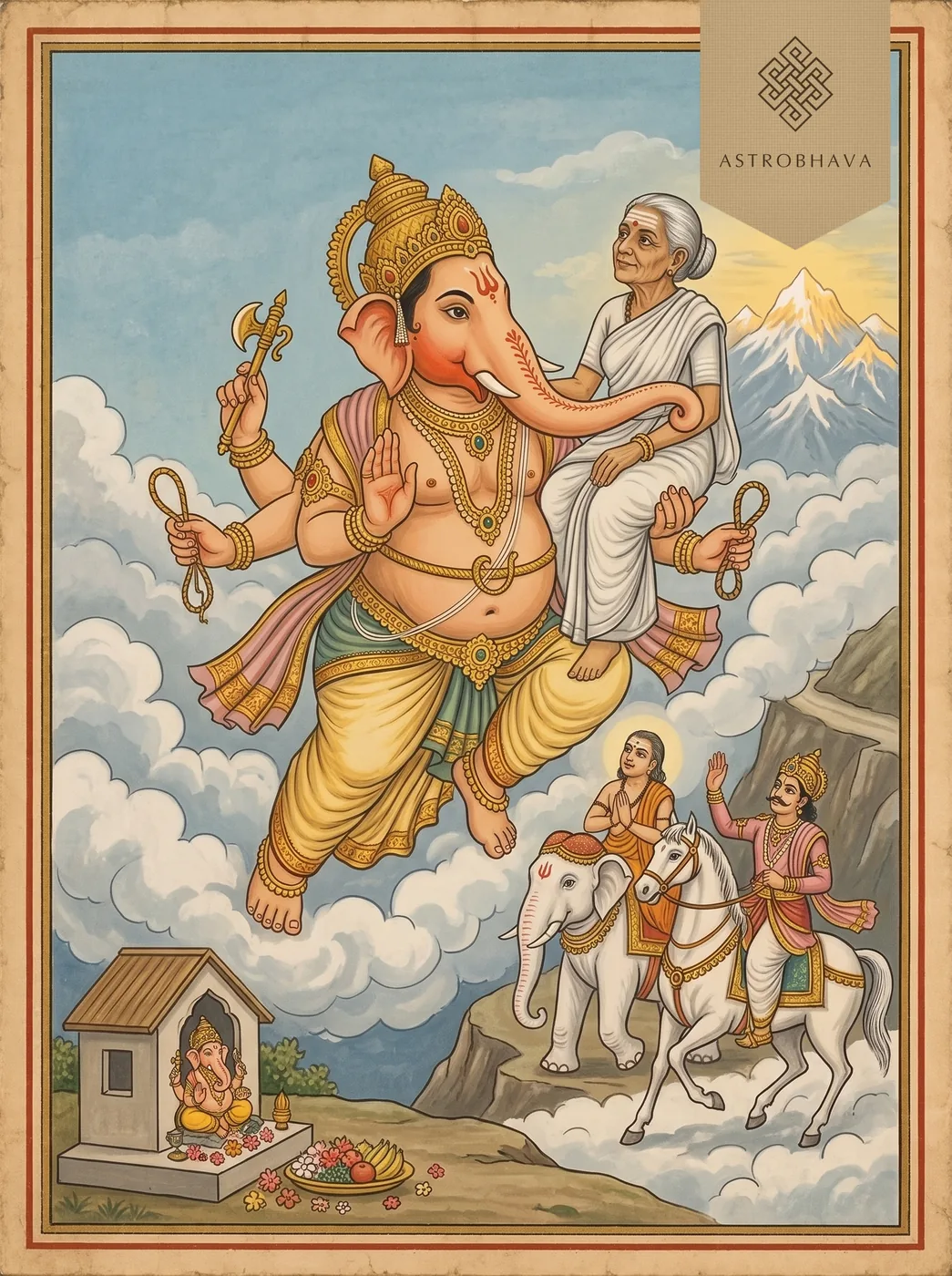
The Periyapuranam, the twelfth-century lives of the Shaiva saints, tells how Sundarar left the earth from the Shiva temple at Thiruvanchikulam in the Chera country, riding a white elephant to Kailasa, with his friend King Cheraman Perumal following on horseback. Tamil tradition adds Avvaiyar to this scene. According to the story, the two saints passed her as she was worshipping Vinayaka and urged her to cut her puja short and come with them. She told them to go their own way, because she would not hurry her worship for anyone, and for her the worship of Vinayaka was Kailasa itself. When she had finished and laid her offering at his feet, Vinayaka appeared, lifted her in his trunk and set her down on Kailasa before the elephant and the horse had arrived. When Cheraman asked how she had come there ahead of them, the poem she sang in answer is said to be this agaval. It is a legend rather than history, and it explains why the agaval ends on refuge: the poet's journey is made at Vinayaka's feet, not on any road.
The opening lines, in Tamil and English
- சீதக்
- cītak — cool
- களபச்
- kaḷapac — sandal-anointed
- செந்தா
- centā — red lo- (centāmarai, red lotus)
- மரைப்பூம்
- maraippūm — -tus flower-like
- பாதச்
- pātac — of the feet
- சிலம்பு
- cilampu — anklets
- பலவிசை
- palavicai — many melodies
- பாடப்
- pāṭap — singing
- பொன்னரை
- poṉṉarai — golden waist
- ஞாணும்
- ñāṇum — and the cord
- பூந்துகில்
- pūntukil — fine silk
- ஆடையும்
- āṭaiyum — and the garment
- வன்ன
- vaṉṉa — beautiful
- மருங்கில்
- maruṅkil — on the waist
- வளர்ந்தழ
- vaḷarntaḻa — ever-growing beau-
- கெறிப்பப்
- keṟippap — -ty shining forth
Vinayagar Agaval lyrics in full
The seventy-two lines of the agaval, set out in eighteen groups of four, in the word-divided form in which it is read and sung today.
All 72 lines, in Tamil and English, each with its meaning. Choose a script:
Download the Vinayagar Agaval PDFAll 72 lines with their meanings, in Tamil. Free to print and keep.
சீதக் களபச் செந்தா மரைப்பூம்
பாதச் சிலம்பு பலவிசை பாடப்
பொன்னரை ஞாணும் பூந்துகில் ஆடையும்
வன்ன மருங்கில் வளர்ந்தழ கெறிப்பப்
cītak kaḷapac centā maraippūm
pātac cilampu palavicai pāṭap
poṉṉarai ñāṇum pūntukil āṭaiyum
vaṉṉa maruṅkil vaḷarntaḻa keṟippap
Your cool, sandal-anointed feet, lovely as red lotus flowers, wear anklets that sing many melodies; a golden waist-cord and a fine silk garment glow with ever-growing beauty on your graceful waist.
பேழை வயிறும் பெரும்பாரக் கோடும்
வேழ முகமும் விளங்குசிந் தூரமும்
அஞ்சு கரமும் அங்குச பாசமும்
நெஞ்சிற் குடிகொண்ட நீல மேனியும்
pēḻai vayiṟum perumpārak kōṭum
vēḻa mukamum viḷaṅkucin tūramum
añcu karamum aṅkuca pācamum
neñciṟ kuṭikoṇṭa nīla mēṉiyum
Your pot belly, your great heavy tusk, your elephant face with its shining vermilion, your five hands holding the goad and the noose, and your dark-blue form that has made its home in my heart;
நான்ற வாயும் நாலிரு புயமும்
மூன்று கண்ணும் மும்மதச் சுவடும்
இரண்டு செவியும் இலங்குபொன் முடியும்
திரண்டமுப் புரிநூல் திகழொளி மார்பும்
nāṉṟa vāyum nāliru puyamum
mūṉṟu kaṇṇum mummatac cuvaṭum
iraṇṭu ceviyum ilaṅkupoṉ muṭiyum
tiraṇṭamup purinūl tikaḻoḷi mārpum
your hanging mouth, your eight arms, your three eyes, the marks of the threefold musth, your two ears, your gleaming golden crown, and your chest bright with the thick three-stranded sacred thread;
சொற்பதம் கடந்த துரியமெய்ஞ் ஞான
அற்புதம் நின்ற கற்பகக் களிறே
முப்பழ நுகரும் மூஷிக வாகன
இப்பொழு தென்னை ஆட்கொள வேண்டித்
coṟpatam kaṭanta turiyameyñ ñāṉa
aṟputam niṉṟa kaṟpakak kaḷiṟē
muppaḻa nukarum mūṣika vākaṉa
ippoḻu teṉṉai āṭkoḷa vēṇṭit
O wish-granting elephant, wonder of the true knowledge of the fourth state that lies beyond the reach of words. O rider of the mouse, who enjoys the three fruits. Now, wishing to take me as your own,
தாயா யெனக்குத் தானெழுந் தருளி
மாயாப் பிறவி மயக்கம் அறுத்துத்
திருந்திய முதலைந் தெழுத்தும் தெளிவாய்ப்
பொருந்தவே வந்தென் உளந்தனில் புகுந்து
tāyā yeṉakkut tāṉeḻun taruḷi
māyāp piṟavi mayakkam aṟuttut
tiruntiya mutalain teḻuttum teḷivāyp
poruntavē vanteṉ uḷantaṉil pukuntu
you came forth yourself as a mother to me, cut away the delusion of this birth born of maya, made the refined first five letters clear, and came fittingly and entered my heart.
குருவடி வாகிக் குவலயந் தன்னில்
திருவடி வைத்துத் திறமிது பொருளென
வாடா வகைதான் மகிழ்ந்தெனக் கருளிக்
கோடா யுதத்தால் கொடுவினை களைந்தே
kuruvaṭi vākik kuvalayan taṉṉil
tiruvaṭi vaittut tiṟamitu poruḷeṉa
vāṭā vakaitāṉ makiḻnteṉak karuḷik
kōṭā yutattāl koṭuviṉai kaḷaintē
Taking the form of the guru, you set your holy feet upon this earth and gladly granted me, in a way that never fades, the knowledge 'this is the lasting truth'; with your tusk as a weapon you removed my cruel karma.
உவட்டா உபதேசம் புகட்டியென் செவியில்
தெவிட்டாத ஞானத் தெளிவையும் காட்டி
ஐம்புலன் தன்னை அடக்கும் உபாயம்
இன்புறு கருணையின் இனிதெனக் கருளிக்
uvaṭṭā upatēcam pukaṭṭiyeṉ ceviyil
teviṭṭāta ñāṉat teḷivaiyum kāṭṭi
aimpulaṉ taṉṉai aṭakkum upāyam
iṉpuṟu karuṇaiyiṉ iṉiteṉak karuḷik
You poured into my ear a teaching that never wearies, showed me the clarity of a knowledge that never cloys, and in your joyful compassion sweetly granted me the means to master the five senses.
கருவிக ளொடுங்கும் கருத்தினை யறிவித்து
இருவினை தன்னை அறுத்திருள் கடிந்து
தலமொரு நான்கும் தந்தெனக் கருளி
மலமொரு மூன்றின் மயக்கம் அறுத்தே
karuvika ḷoṭuṅkum karuttiṉai yaṟivittu
iruviṉai taṉṉai aṟuttiruḷ kaṭintu
talamoru nāṉkum tanteṉak karuḷi
malamoru mūṉṟiṉ mayakkam aṟuttē
You made known to me the understanding in which the inner faculties fall still, cut away my two kinds of karma and drove out the darkness, granted me the four stations, and cut away the delusion of the three impurities.
ஒன்பது வாயில் ஒருமந் திரத்தால்
ஐம்புலக் கதவை அடைப்பதும் காட்டி
ஆறா தாரத்து அங்குச நிலையும்
பேறா நிறுத்திப் பேச்சுரை யறுத்தே
oṉpatu vāyil oruman tirattāl
aimpulak katavai aṭaippatum kāṭṭi
āṟā tārattu aṅkuca nilaiyum
pēṟā niṟuttip pēccurai yaṟuttē
You showed how a single mantra closes the door of the five senses at the nine gates of the body, firmly set the goad-state in the six supports (adharas) as a gift, and put an end to idle speech.
இடைபிங் கலையின் எழுத்தறி வித்துக்
கடையிற் சுழுமுனைக் கபாலமும் காட்டி
மூன்றுமண் டலத்தின் முட்டிய தூணின்
நான்றெழு பாம்பின் நாவில் உணர்த்திக்
iṭaipiṅ kalaiyiṉ eḻuttaṟi vittuk
kaṭaiyiṟ cuḻumuṉaik kapālamum kāṭṭi
mūṉṟumaṇ ṭalattiṉ muṭṭiya tūṇiṉ
nāṉṟeḻu pāmpiṉ nāvil uṇarttik
You made known the letters of the ida and pingala channels, showed at their end the sushumna that reaches the crown of the head, and taught me through the tongue of the serpent that rises upon the pillar piercing the three regions.
குண்டலி யதனிற் கூடிய அசபை
விண்டெழு மந்திரம் வெளிப்பட உரைத்து
மூலா தாரத்தின் மூண்டெழு கனலைக்
காலால் எழுப்பும் கருத்தறி வித்தே
kuṇṭali yataṉiṟ kūṭiya acapai
viṇṭeḻu mantiram veḷippaṭa uraittu
mūlā tārattiṉ mūṇṭeḻu kaṉalaik
kālāl eḻuppum karuttaṟi vittē
You plainly spoke the ajapa mantra that bursts forth, joined in the kundalini, and made known how the breath raises the fire that blazes up in the muladhara.
அமுத நிலையும் ஆதித்தன் இயக்கமும்
குமுத சகாயன் குணத்தையும் கூறி
இடைச்சக் கரத்தின் ஈரெட்டு நிலையும்
உடல்சக் கரத்தின் உறுப்பையும் காட்டிச்
amuta nilaiyum ātittaṉ iyakkamum
kumuta cakāyaṉ kuṇattaiyum kūṟi
iṭaiccak karattiṉ īreṭṭu nilaiyum
uṭalcak karattiṉ uṟuppaiyum kāṭṭic
You told of the state of nectar, the course of the sun and the nature of the moon, friend of the night lily; you showed the sixteen stations of the middle chakra and the parts of the chakras of the body.
சண்முக தூலமும் சதுர்முக சூக்கமும்
எண் முகமாக இனிதெனக் கருளிப்
புரியட்ட காயம் புலப்பட எனக்குத்
தெரியெட்டு நிலையும் தெரிசனப் படுத்திக்
caṇmuka tūlamum caturmuka cūkkamum
eṇ mukamāka iṉiteṉak karuḷip
puriyaṭṭa kāyam pulappaṭa eṉakkut
teriyeṭṭu nilaiyum tericaṉap paṭuttik
Becoming eight-faced, you sweetly granted me the gross form of the six-faced one and the subtle form of the four-faced one; you made the eightfold subtle body perceptible to me and revealed to my sight the eight stations.
கருத்தினில் கபால வாயில் காட்டி
இருத்தி முத்தி யினிதெனக் கருளி
என்னை யறிவித்து எனக்கருள் செய்து
முன்னை வினையின் முதலைக் களைந்து
karuttiṉil kapāla vāyil kāṭṭi
irutti mutti yiṉiteṉak karuḷi
eṉṉai yaṟivittu eṉakkaruḷ ceytu
muṉṉai viṉaiyiṉ mutalaik kaḷaintu
You showed me in my thought the gateway at the crown of the head, sweetly granted me steadfastness and liberation, made me know myself, showed me grace, and uprooted the root of my former karma.
வாக்கும் மனமும் இல்லா மனோலயம்
தேக்கியே யென்றன் சிந்தை தெளிவித்து
இருள்வெளி யிரண்டுக்கு ஒன்றிடம் என்ன
அருள்தரும் ஆனந்தத்து அழுத்தியென் செவியில்
vākkum maṉamum illā maṉōlayam
tēkkiyē yeṉṟaṉ cintai teḷivittu
iruḷveḷi yiraṇṭukku oṉṟiṭam eṉṉa
aruḷtarum āṉantattu aḻuttiyeṉ ceviyil
You filled me with the stillness of mind where speech and mind are absent, cleared my thinking, and, so that darkness and light became one place, immersed me in grace-giving bliss and into my ear
எல்லை யில்லா ஆனந்தம் அளித்து
அல்லல் களைந்தே அருள்வழி காட்டிச்
சத்தத்தின் உள்ளே சதாசிவம் காட்டிச்
சித்தத்தின் உள்ளே சிவலிங்கம் காட்டி
ellai yillā āṉantam aḷittu
allal kaḷaintē aruḷvaḻi kāṭṭic
cattattiṉ uḷḷē catācivam kāṭṭic
cittattiṉ uḷḷē civaliṅkam kāṭṭi
you gave bliss without limit; removing my sorrow, you showed the path of grace; you showed me Sadashiva within sound and the Shiva lingam within the mind.
அணுவிற்கு அணுவாய் அப்பாலுக்கு அப்பாலாய்க்
கணுமுற்றி நின்ற கரும்புள்ளே காட்டி
வேடமும் நீறும் விளங்க நிறுத்திக்
கூடுமெய்த் தொண்டர் குழாத்துடன் கூட்டி
aṇuviṟku aṇuvāy appālukku appālāyk
kaṇumuṟṟi niṉṟa karumpuḷḷē kāṭṭi
vēṭamum nīṟum viḷaṅka niṟuttik
kūṭumeyt toṇṭar kuḻāttuṭaṉ kūṭṭi
You showed yourself as the atom within the atom and the beyond of the beyond, like the sweetness within the full-jointed sugarcane; you set the holy marks and sacred ash shining upon me and brought me into the gathering of true devotees.
அஞ்சக் கரத்தின் அரும்பொருள் தன்னை
நெஞ்சக் கருத்தின் நிலையறி வித்துத்
தத்துவ நிலையைத் தந்தெனை யாண்ட
வித்தக விநாயக விரைகழல் சரணே
añcak karattiṉ arumporuḷ taṉṉai
neñcak karuttiṉ nilaiyaṟi vittut
tattuva nilaiyait tanteṉai yāṇṭa
vittaka vināyaka viraikaḻal caraṇē
You made known in my heart the precious meaning of the five syllables, granted me the state of the true principles, and took me as your own. O wise Vinayaka, your fragrant anklet-wearing feet are my refuge.
The syllable people get wrong
In the opening of verse 2, pēḻai vayiṟum ('casket-like belly'), the ழ of pēḻai is the Tamil retroflex approximant, which is neither l nor z. Say PAY-zhai with the tongue tip curled back towards the roof of the mouth and the sound kept soft and gliding, the same letter that ends the word Tamil itself (tamiḻ).
When the Vinayagar Agaval is chanted
Weekday. Tuesday
Festival. Vinayaka Chaturthi
Questions
Have your chart read before you decide
Chanting is yours to do, and free. But which deity your situation calls for — and whether a mantra alone is the right response — depends on your chart. Sometimes it is; sometimes it is not.
- Over 30 years in the Guru–Sishya Parampara, from the age of five
- He reads every chart himself — 60 minutes, one to one, never delegated
- Charts are read only between sunrise and sunset, following tradition
Related
Ganapathi Mula Mantra
The foundational mantra. Chanted at the start of any undertaking.
Bala Ganapathi Mantra
The child form. For children's wellbeing and early education.
Taruna Ganapathi Mantra
The youthful form. For vigour at the start of a venture.
Ganapathi Homa
The fire ritual, performed for you and telecast live.