Yamashtakam
तपसा धर्ममाराध्य पुष्करे भास्करः पुरा । धर्मांशं यं सुतं प्राप धर्मराजं नमाम्यहम् ॥Also known as Tapasa Dharmam Aradhya
In Devanagari, Tamil, Telugu, Kannada, Malayalam and English — with the meaning of every word, and the one syllable most people pronounce wrongly.
 The Yamaraja Homam, performed for youBook →
What the Yamashtakam is
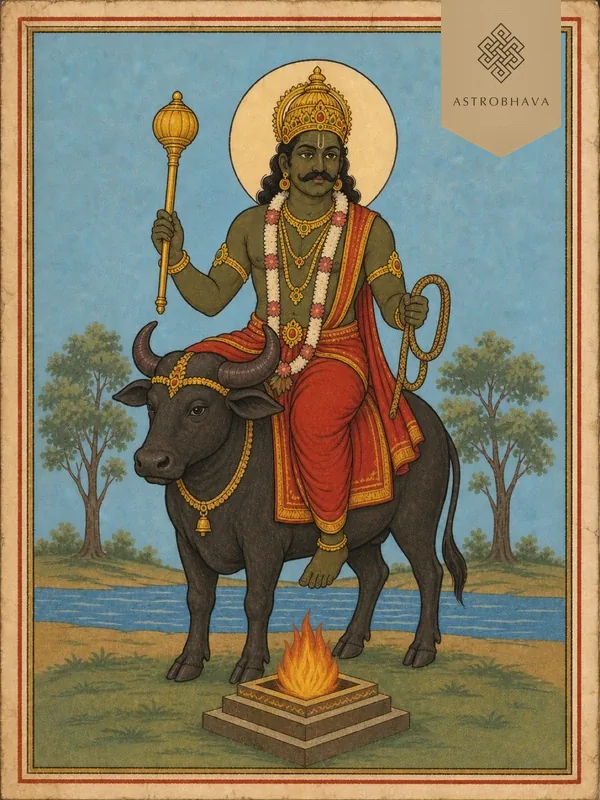
The Yamashtakam is Savitri's hymn of eight verses to Yama, spoken in chapter 28 of the Prakriti Khanda of the Brahmavaivarta Purana, a text traditionally attributed to Vyasa. The chapter's closing line calls it the hymn to Yama made by Savitri, while its own recitation verse uses the name Yamashtakam. Each verse bows to Yama under one title and gives the reason for that title. He is Dharmaraja, born to the Sun at Pushkara as a portion of Dharma; Shamana, even-handed toward all beings; Kritanta, who brings the end at the time that accords with karma; Dandadhara, who holds the staff so that wrongdoers may be purified; Kala, who measures out every life span; Yama, the restrained ascetic who gives karma its fruit; Punyamitra, friend of the virtuous; and finally one of Brahma's line. A ninth verse returns to the narrative, and two verses on recitation follow.
Savitri praises Yama between his teachings
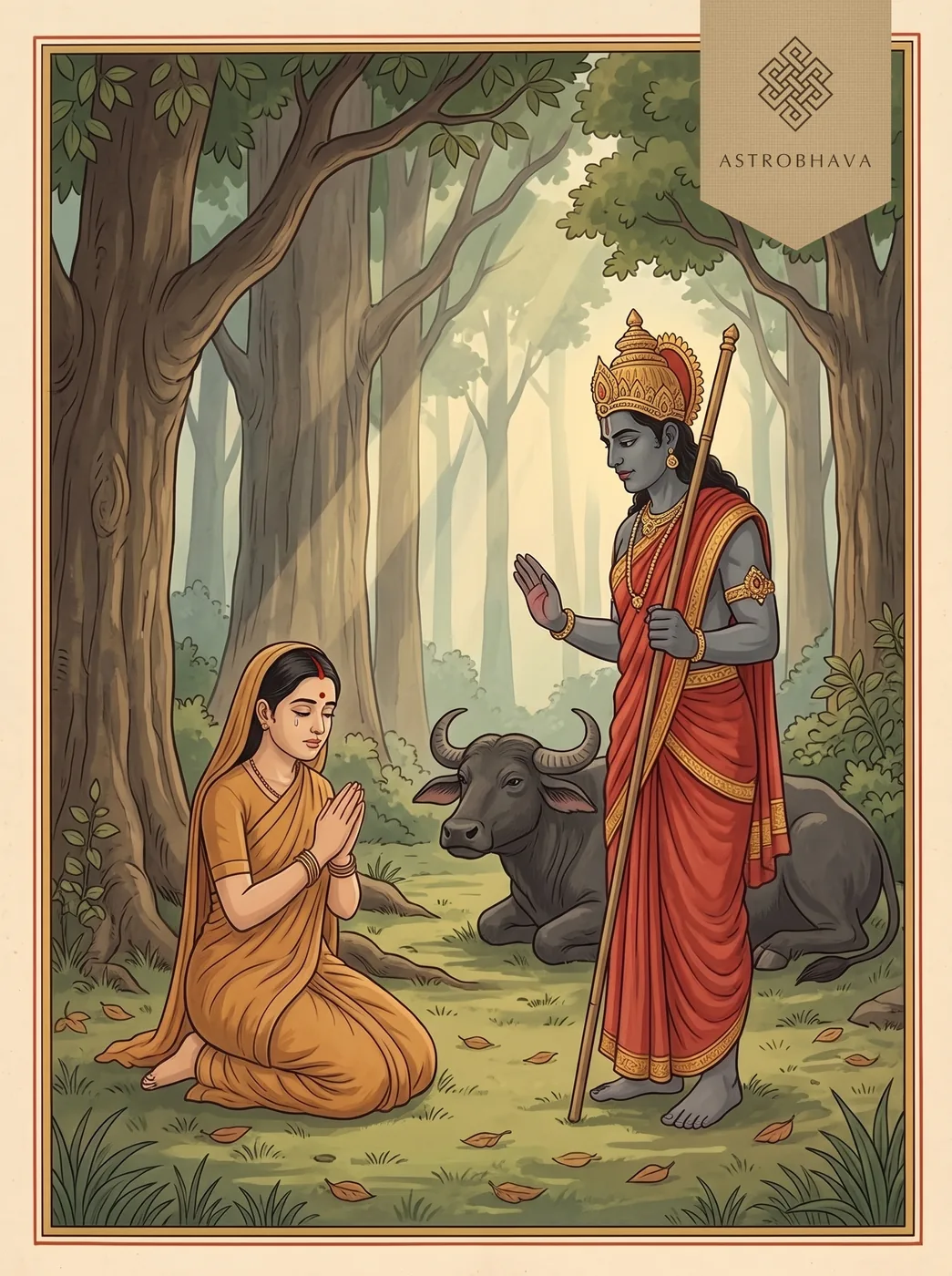
The hymn sits inside the long Savitri episode that Narayana relates to Narada. In chapter 24 Satyavan goes out for firewood with his father's leave and falls from a tree. Yama binds his subtle body and departs, and Savitri follows. From there the Purana turns the meeting into a teaching. Savitri asks what karma is, who gives its fruit and who enjoys it, and in chapter 26 Yama offers her boons. She asks for a hundred sons by Satyavan, a hundred sons for her father, and sight and kingdom for her father-in-law. By chapter 28 she has heard Yama speak of Hari, and the text says her eyes filled with tears and her hair stood on end. She calls herself an unlearned woman, asks how Krishna beyond nature is to be worshipped, and asks to hear the results of bad karma as well as good. Then, her head bowed, she praises him with the eight verses. Yama answers in chapter 29 by giving her the Vishnu mantra and goes on to describe the hell-pits. Only in chapter 34 does he end his instruction, restore Satyavan's life and return to his abode, while Savitri takes her husband home.
The mantra, in six scripts
- तपसा
- tapasā — through austerity
- धर्ममाराध्य
- dharmamārādhya — having worshipped Dharma
- पुष्करे
- puṣkare — at Pushkara
- भास्करः
- bhāskaraḥ — the Sun
- पुरा
- purā — long ago
- धर्मांशं
- dharmāṃśaṃ — a portion of Dharma
- यं
- yaṃ — whom
- सुतं
- sutaṃ — as a son
- प्राप
- prāpa — gained
- धर्मराजं
- dharmarājaṃ — to Dharmaraja
- नमाम्यहम्
- namāmyaham — I bow
Yamashtakam lyrics in full
Eight verses of praise, one verse of narrative and two verses on recitation, all from chapter 28. The printed closing line is given at the end.
All 12 verses, in Sanskrit, Tamil, Telugu, Kannada, Malayalam and English, each with its meaning. Choose a script:
Download the Yamashtakam PDFAll 12 verses with their meanings, in Sanskrit. Free to print and keep.
तपसा धर्ममाराध्य पुष्करे भास्करः पुरा ।
धर्मांशं यं सुतं प्राप धर्मराजं नमाम्यहम् ॥
தபஸா தர்மமாராத்ய புஷ்கரே பாஸ்கரஃ புரா ।
தர்மாம்ஶம் யம் ஸுதம் ப்ராப தர்மராஜம் நமாம்யஹம் ॥
తపసా ధర్మమారాధ్య పుష్కరే భాస్కరః పురా ।
ధర్మాంశం యం సుతం ప్రాప ధర్మరాజం నమామ్యహమ్ ॥
ತಪಸಾ ಧರ್ಮಮಾರಾಧ್ಯ ಪುಷ್ಕರೇ ಭಾಸ್ಕರಃ ಪುರಾ ।
ಧರ್ಮಾಂಶಂ ಯಂ ಸುತಂ ಪ್ರಾಪ ಧರ್ಮರಾಜಂ ನಮಾಮ್ಯಹಮ್ ॥
തപസാ ധര്മമാരാധ്യ പുഷ്കരേ ഭാസ്കരഃ പുരാ ।
ധര്മാംശം യം സുതം പ്രാപ ധര്മരാജം നമാമ്യഹമ് ॥
tapasā dharmamārādhya puṣkare bhāskaraḥ purā |
dharmāṃśaṃ yaṃ sutaṃ prāpa dharmarājaṃ namāmyaham ||
Long ago at Pushkara, the Sun worshipped Dharma through austerity and gained a son who was a portion of Dharma. I bow to that Dharmaraja.
समता सर्वभूतेषु यस्य सर्वस्य साक्षिणः ।
अतो यन्नाम शमनमिति तं प्रणमाम्यहम् ॥
ஸமதா ஸர்வபூதேஷு யஸ்ய ஸர்வஸ்ய ஸாக்ஷிணஃ ।
அதோ யந்நாம ஶமநமிதி தம் ப்ரணமாம்யஹம் ॥
సమతా సర్వభూతేషు యస్య సర్వస్య సాక్షిణః ।
అతో యన్నామ శమనమితి తం ప్రణమామ్యహమ్ ॥
ಸಮತಾ ಸರ್ವಭೂತೇಷು ಯಸ್ಯ ಸರ್ವಸ್ಯ ಸಾಕ್ಷಿಣಃ ।
ಅತೋ ಯನ್ನಾಮ ಶಮನಮಿತಿ ತಂ ಪ್ರಣಮಾಮ್ಯಹಮ್ ॥
സമതാ സര്വഭൂതേഷു യസ്യ സര്വസ്യ സാക്ഷിണഃ ।
അതോ യന്നാമ ശമനമിതി തം പ്രണമാമ്യഹമ് ॥
samatā sarvabhūteṣu yasya sarvasya sākṣiṇaḥ |
ato yannāma śamanamiti taṃ praṇamāmyaham ||
He is the witness of all and is even-handed toward every being, and for that reason his name is Shamana. I bow to him.
येनान्तश्च कृतो विश्वे सर्वेषां जीविनां परम् ।
कर्मानुरूपकालेन तं कृतान्तं नमाम्यहम् ॥
யேநாந்தஶ்ச க்ருதோ விஶ்வே ஸர்வேஷாம் ஜீவிநாம் பரம் ।
கர்மாநுரூபகாலேந தம் க்ருதாந்தம் நமாம்யஹம் ॥
యేనాన్తశ్చ కృతో విశ్వే సర్వేషాం జీవినాం పరమ్ ।
కర్మానురూపకాలేన తం కృతాన్తం నమామ్యహమ్ ॥
ಯೇನಾನ್ತಶ್ಚ ಕೃತೋ ವಿಶ್ವೇ ಸರ್ವೇಷಾಂ ಜೀವಿನಾಂ ಪರಮ್ ।
ಕರ್ಮಾನುರೂಪಕಾಲೇನ ತಂ ಕೃತಾನ್ತಂ ನಮಾಮ್ಯಹಮ್ ॥
യേനാന്തശ്ച കൃതോ വിശ്വേ സര്വേഷാം ജീവിനാം പരമ് ।
കര്മാനുരൂപകാലേന തം കൃതാന്തം നമാമ്യഹമ് ॥
yenāntaśca kṛto viśve sarveṣāṃ jīvināṃ param |
karmānurūpakālena taṃ kṛtāntaṃ namāmyaham ||
By him the final end of all living beings in the world is brought about, at the time that accords with their karma. I bow to that Kritanta.
बिभर्ति दण्डं दण्डाय पापिनां शुद्धिहेतवे ।
नमामि तं दण्डधरं यः शास्ता सर्वकर्मणाम् ॥
பிபர்தி தண்டம் தண்டாய பாபிநாம் ஶுத்திஹேதவே ।
நமாமி தம் தண்டதரம் யஃ ஶாஸ்தா ஸர்வகர்மணாம் ॥
బిభర్తి దణ్డం దణ్డాయ పాపినాం శుద్ధిహేతవే ।
నమామి తం దణ్డధరం యః శాస్తా సర్వకర్మణామ్ ॥
ಬಿಭರ್ತಿ ದಣ್ಡಂ ದಣ್ಡಾಯ ಪಾಪಿನಾಂ ಶುದ್ಧಿಹೇತವೇ ।
ನಮಾಮಿ ತಂ ದಣ್ಡಧರಂ ಯಃ ಶಾಸ್ತಾ ಸರ್ವಕರ್ಮಣಾಮ್ ॥
ബിഭര്തി ദണ്ഡം ദണ്ഡായ പാപിനാം ശുദ്ധിഹേതവേ ।
നമാമി തം ദണ്ഡധരം യഃ ശാസ്താ സര്വകര്മണാമ് ॥
bibharti daṇḍaṃ daṇḍāya pāpināṃ śuddhihetave |
namāmi taṃ daṇḍadharaṃ yaḥ śāstā sarvakarmaṇām ||
He carries the staff for punishment, so that sinners may be purified. I bow to that Dandadhara, the ruler over all actions.
विश्वे यः कलयत्येव सर्वायुश्चापि सन्ततम् ।
अतीव दुर्निवार्यं च तं कालं प्रणमाम्यहम् ॥
விஶ்வே யஃ கலயத்யேவ ஸர்வாயுஶ்சாபி ஸந்ததம் ।
அதீவ துர்நிவார்யம் ச தம் காலம் ப்ரணமாம்யஹம் ॥
విశ్వే యః కలయత్యేవ సర్వాయుశ్చాపి సన్తతమ్ ।
అతీవ దుర్నివార్యం చ తం కాలం ప్రణమామ్యహమ్ ॥
ವಿಶ್ವೇ ಯಃ ಕಲಯತ್ಯೇವ ಸರ್ವಾಯುಶ್ಚಾಪಿ ಸನ್ತತಮ್ ।
ಅತೀವ ದುರ್ನಿವಾರ್ಯಂ ಚ ತಂ ಕಾಲಂ ಪ್ರಣಮಾಮ್ಯಹಮ್ ॥
വിശ്വേ യഃ കലയത്യേവ സര്വായുശ്ചാപി സന്തതമ് ।
അതീവ ദുര്നിവാര്യം ച തം കാലം പ്രണമാമ്യഹമ് ॥
viśve yaḥ kalayatyeva sarvāyuścāpi santatam |
atīva durnivāryaṃ ca taṃ kālaṃ praṇamāmyaham ||
In this world he constantly measures out the life span of all, and he cannot be turned back. I bow to that Kala.
तपस्वी वैष्णवो धर्मी संयमी विजितेन्द्रियः ।
जीविनां कर्मफलदं तं यमं प्रणमाम्यहम् ॥
தபஸ்வீ வைஷ்ணவோ தர்மீ ஸம்யமீ விஜிதேந்த்ரியஃ ।
ஜீவிநாம் கர்மபலதம் தம் யமம் ப்ரணமாம்யஹம் ॥
తపస్వీ వైష్ణవో ధర్మీ సంయమీ విజితేన్ద్రియః ।
జీవినాం కర్మఫలదం తం యమం ప్రణమామ్యహమ్ ॥
ತಪಸ್ವೀ ವೈಷ್ಣವೋ ಧರ್ಮೀ ಸಂಯಮೀ ವಿಜಿತೇನ್ದ್ರಿಯಃ ।
ಜೀವಿನಾಂ ಕರ್ಮಫಲದಂ ತಂ ಯಮಂ ಪ್ರಣಮಾಮ್ಯಹಮ್ ॥
തപസ്വീ വൈഷ്ണവോ ധര്മീ സംയമീ വിജിതേന്ദ്രിയഃ ।
ജീവിനാം കര്മഫലദം തം യമം പ്രണമാമ്യഹമ് ॥
tapasvī vaiṣṇavo dharmī saṃyamī vijitendriyaḥ |
jīvināṃ karmaphaladaṃ taṃ yamaṃ praṇamāmyaham ||
He is an ascetic, a devotee of Vishnu, righteous, restrained, the conqueror of his senses, and he gives living beings the fruit of their karma. I bow to that Yama.
स्वात्मारामश्च सर्वज्ञो मित्रं पुण्यकृतां भवेत् ।
पापिनां क्लेशदो यश्च पुण्यमित्रं नमाम्यहम् ॥
ஸ்வாத்மாராமஶ்ச ஸர்வஜ்ஞோ மித்ரம் புண்யக்ருதாம் பவேத் ।
பாபிநாம் க்லேஶதோ யஶ்ச புண்யமித்ரம் நமாம்யஹம் ॥
స్వాత్మారామశ్చ సర్వజ్ఞో మిత్రం పుణ్యకృతాం భవేత్ ।
పాపినాం క్లేశదో యశ్చ పుణ్యమిత్రం నమామ్యహమ్ ॥
ಸ್ವಾತ್ಮಾರಾಮಶ್ಚ ಸರ್ವಜ್ಞೋ ಮಿತ್ರಂ ಪುಣ್ಯಕೃತಾಂ ಭವೇತ್ ।
ಪಾಪಿನಾಂ ಕ್ಲೇಶದೋ ಯಶ್ಚ ಪುಣ್ಯಮಿತ್ರಂ ನಮಾಮ್ಯಹಮ್ ॥
സ്വാത്മാരാമശ്ച സര്വജ്ഞോ മിത്രം പുണ്യകൃതാം ഭവേത് ।
പാപിനാം ക്ലേശദോ യശ്ച പുണ്യമിത്രം നമാമ്യഹമ് ॥
svātmārāmaśca sarvajño mitraṃ puṇyakṛtāṃ bhavet |
pāpināṃ kleśado yaśca puṇyamitraṃ namāmyaham ||
He rests content in his own Self, knows all, is a friend to those who do good, and brings suffering to sinners. I bow to that Punyamitra, the friend of the virtuous.
यज्जन्म ब्रह्मणो वंशे ज्वलन्तं ब्रह्मतेजसा ।
यो ध्यायति परं ब्रह्म ब्रह्मवंशं नमाम्यहम् ॥
யஜ்ஜந்ம ப்ரஹ்மணோ வம்ஶே ஜ்வலந்தம் ப்ரஹ்மதேஜஸா ।
யோ த்யாயதி பரம் ப்ரஹ்ம ப்ரஹ்மவம்ஶம் நமாம்யஹம் ॥
యజ్జన్మ బ్రహ్మణో వంశే జ్వలన్తం బ్రహ్మతేజసా ।
యో ధ్యాయతి పరం బ్రహ్మ బ్రహ్మవంశం నమామ్యహమ్ ॥
ಯಜ್ಜನ್ಮ ಬ್ರಹ್ಮಣೋ ವಂಶೇ ಜ್ವಲನ್ತಂ ಬ್ರಹ್ಮತೇಜಸಾ ।
ಯೋ ಧ್ಯಾಯತಿ ಪರಂ ಬ್ರಹ್ಮ ಬ್ರಹ್ಮವಂಶಂ ನಮಾಮ್ಯಹಮ್ ॥
യജ്ജന്മ ബ്രഹ്മണോ വംശേ ജ്വലന്തം ബ്രഹ്മതേജസാ ।
യോ ധ്യായതി പരം ബ്രഹ്മ ബ്രഹ്മവംശം നമാമ്യഹമ് ॥
yajjanma brahmaṇo vaṃśe jvalantaṃ brahmatejasā |
yo dhyāyati paraṃ brahma brahmavaṃśaṃ namāmyaham ||
His birth is in the line of Brahma, he blazes with the radiance of Brahman, and he meditates on the supreme Brahman. I bow to him of Brahma's line.
इत्युक्त्वा सा च सावित्री प्रणनाम यमं मुने ।
यमस्तां विष्णुभजनं कर्मपाकमुवाच ह ॥
இத்யுக்த்வா ஸா ச ஸாவித்ரீ ப்ரணநாம யமம் முநே ।
யமஸ்தாம் விஷ்ணுபஜநம் கர்மபாகமுவாச ஹ ॥
ఇత్యుక్త్వా సా చ సావిత్రీ ప్రణనామ యమం మునే ।
యమస్తాం విష్ణుభజనం కర్మపాకమువాచ హ ॥
ಇತ್ಯುಕ್ತ್ವಾ ಸಾ ಚ ಸಾವಿತ್ರೀ ಪ್ರಣನಾಮ ಯಮಂ ಮುನೇ ।
ಯಮಸ್ತಾಂ ವಿಷ್ಣುಭಜನಂ ಕರ್ಮಪಾಕಮುವಾಚ ಹ ॥
ഇത്യുക്ത്വാ സാ ച സാവിത്രീ പ്രണനാമ യമം മുനേ ।
യമസ്താം വിഷ്ണുഭജനം കര്മപാകമുവാച ഹ ॥
ityuktvā sā ca sāvitrī praṇanāma yamaṃ mune |
yamastāṃ viṣṇubhajanaṃ karmapākamuvāca ha ||
O sage, having said this, Savitri bowed to Yama. Then Yama told her of the worship of Vishnu and of the ripening of karma.
इदं यमाष्टकं नित्यं प्रातरुत्थाय यः पठेत् ।
यमात्तस्य भयं नास्ति सर्वपापात्प्रमुच्यते ॥
இதம் யமாஷ்டகம் நித்யம் ப்ராதருத்தாய யஃ படேத் ।
யமாத்தஸ்ய பயம் நாஸ்தி ஸர்வபாபாத்ப்ரமுச்யதே ॥
ఇదం యమాష్టకం నిత్యం ప్రాతరుత్థాయ యః పఠేత్ ।
యమాత్తస్య భయం నాస్తి సర్వపాపాత్ప్రముచ్యతే ॥
ಇದಂ ಯಮಾಷ್ಟಕಂ ನಿತ್ಯಂ ಪ್ರಾತರುತ್ಥಾಯ ಯಃ ಪಠೇತ್ ।
ಯಮಾತ್ತಸ್ಯ ಭಯಂ ನಾಸ್ತಿ ಸರ್ವಪಾಪಾತ್ಪ್ರಮುಚ್ಯತೇ ॥
ഇദം യമാഷ്ടകം നിത്യം പ്രാതരുത്ഥായ യഃ പഠേത് ।
യമാത്തസ്യ ഭയം നാസ്തി സര്വപാപാത്പ്രമുച്യതേ ॥
idaṃ yamāṣṭakaṃ nityaṃ prātarutthāya yaḥ paṭhet |
yamāttasya bhayaṃ nāsti sarvapāpātpramucyate ||
The verse says that whoever rises at dawn and recites this Yamashtakam daily has no fear of Yama and is released from all sin.
महापापी यदि पठेन्नित्यं भक्त्या च नारद ।
यमः करोति तं शुद्धं कायव्यूहेन निश्चितम् ॥
மஹாபாபீ யதி படேந்நித்யம் பக்த்யா ச நாரத ।
யமஃ கரோதி தம் ஶுத்தம் காயவ்யூஹேந நிஶ்சிதம் ॥
మహాపాపీ యది పఠేన్నిత్యం భక్త్యా చ నారద ।
యమః కరోతి తం శుద్ధం కాయవ్యూహేన నిశ్చితమ్ ॥
ಮಹಾಪಾಪೀ ಯದಿ ಪಠೇನ್ನಿತ್ಯಂ ಭಕ್ತ್ಯಾ ಚ ನಾರದ ।
ಯಮಃ ಕರೋತಿ ತಂ ಶುದ್ಧಂ ಕಾಯವ್ಯೂಹೇನ ನಿಶ್ಚಿತಮ್ ॥
മഹാപാപീ യദി പഠേന്നിത്യം ഭക്ത്യാ ച നാരദ ।
യമഃ കരോതി തം ശുദ്ധം കായവ്യൂഹേന നിശ്ചിതമ് ॥
mahāpāpī yadi paṭhennityaṃ bhaktyā ca nārada |
yamaḥ karoti taṃ śuddhaṃ kāyavyūhena niścitam ||
The verse says, O Narada, that if even a great sinner recites it daily with devotion, Yama surely makes him pure through the array of his bodies.
इति श्रीब्रह्मवैवर्त्ते महापुराणे द्वितीये प्रकृतिखण्डे नारदनारायणसंवादे सावित्रीकृतयमस्तोत्रं नामाष्टाविंशोऽध्यायः ॥
இதி ஶ்ரீப்ரஹ்மவைவர்த்தே மஹாபுராணே த்விதீயே ப்ரக்ருதிகண்டே நாரதநாராயணஸம்வாதே ஸாவித்ரீக்ருதயமஸ்தோத்ரம் நாமாஷ்டாவிம்ஶோத்யாயஃ ॥
ఇతి శ్రీబ్రహ్మవైవర్త్తే మహాపురాణే ద్వితీయే ప్రకృతిఖణ్డే నారదనారాయణసంవాదే సావిత్రీకృతయమస్తోత్రం నామాష్టావింశోఽధ్యాయః ॥
ಇತಿ ಶ್ರೀಬ್ರಹ್ಮವೈವರ್ತ್ತೇ ಮಹಾಪುರಾಣೇ ದ್ವಿತೀಯೇ ಪ್ರಕೃತಿಖಣ್ಡೇ ನಾರದನಾರಾಯಣಸಂವಾದೇ ಸಾವಿತ್ರೀಕೃತಯಮಸ್ತೋತ್ರಂ ನಾಮಾಷ್ಟಾವಿಂಶೋಽಧ್ಯಾಯಃ ॥
ഇതി ശ്രീബ്രഹ്മവൈവര്ത്തേ മഹാപുരാണേ ദ്വിതീയേ പ്രകൃതിഖണ്ഡേ നാരദനാരായണസംവാദേ സാവിത്രീകൃതയമസ്തോത്രം നാമാഷ്ടാവിംശോഽധ്യായഃ ॥
iti śrībrahmavaivartte mahāpurāṇe dvitīye prakṛtikhaṇḍe nāradanārāyaṇasaṃvāde sāvitrīkṛtayamastotraṃ nāmāṣṭāviṃśo'dhyāyaḥ ||
Thus ends the twenty-eighth chapter, named the Hymn to Yama by Savitri, in the dialogue of Narada and Narayana, in the second part, the Prakriti Khanda, of the great Brahmavaivarta Purana.
The syllable people get wrong
In Verse 2, śamanam opens with the palatal ś, as in 'shut', and its first three syllables are all short: SHA-ma-nam. Singers often carry over the dental s of samatā, which opens the same verse, and say 'samanam', which loses the title the verse is explaining.
Questions
Have your chart read before you decide
Chanting is yours to do, and free. But which deity your situation calls for — and whether a mantra alone is the right response — depends on your chart. Sometimes it is; sometimes it is not.
- Over 30 years in the Guru–Sishya Parampara, from the age of five
- He reads every chart himself — 60 minutes, one to one, never delegated
- Charts are read only between sunrise and sunset, following tradition
