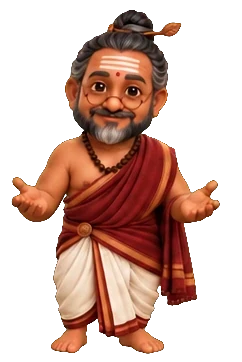
Parshuram Jayanti marks the birth tithi of Lord Parshuram, the sixth avatar of Lord Vishnu. He is remembered as the Brahmin-warrior who received the divine axe from Lord Shiva and stood for dharma against oppressive rule. Unlike most avatars, tradition holds him to be chiranjivi — still present on earth — which is why his Jayanti is observed with quiet reverence rather than the wide temple culture of Rama or Krishna.
In 2026 the Jayanti falls on Sunday, 19 April, on the Tritiya tithi of Shukla Paksha in Vaishakh. The same day is also Akshaya Tritiya, one of the few swayam-siddha muhurtas in the Hindu calendar. Devotees who wish to align home worship with the correct window can confirm the day’s tithi, nakshatra and rahukalam on the daily panchang, and place the festival against the wider year on the festival calendar.
This guide keeps to what the title asks for: the 2026 date and timings, the classical background, the puja steps tradition prescribes, the mantras commonly used, and the simple do’s and don’ts of the day.
Who Is Lord Parshuram
Lord Parshuram was born to Sage Jamadagni and Mata Renuka. His birth name was Rama; after Lord Shiva gifted him the parshu (axe), he became known as Parshuram. He is unique among Vishnu’s avatars in combining Brahmin birth with the discipline of a kshatriya warrior. Puranic accounts describe his mission as the removal of corrupt rulers who oppressed sages and ordinary people; the tradition that he confronted wicked kshatriya power twenty-one times is read as a symbol of unwavering commitment to dharma.
A well-known episode from the Mahabharata and the Puranas recounts his obedience to Jamadagni’s command regarding Mata Renuka, followed by the boon through which she was restored. The story is taught as an illustration of guru-bhakti and of compassion held together with austerity. Because he is regarded as chiranjivi, living still in the mountains, his worship is less temple-centred than that of other avatars, yet the Jayanti remains a fixed point in the Vaishakh calendar along India’s western coast — the region remembered as Parashurama Kshetra — and at shrines such as Pajaka near Udupi, Janapav in Madhya Pradesh, and Parshuram Kund in Arunachal Pradesh.
Parshuram Jayanti 2026: Date and Tithi Timings
Parshuram Jayanti 2026 is observed on Sunday, 19 April 2026, on Vaishakh Shukla Tritiya. Approximate IST timings for the tithi are:
| Event | Timing (IST) |
|---|---|
| Tritiya tithi begins | 10:49 AM, 19 April 2026 |
| Tritiya tithi ends | 7:27 AM, 20 April 2026 |
Classical belief places Lord Parshuram’s birth in Pradosh Kaal — the evening twilight. For that reason, the evening window on 19 April is treated as the principal period for puja and japa. Local sunrise, sunset and exact Pradosh boundaries vary by city; check them on the panchang for your location before fixing the lamp and sankalpa. The same Tritiya is also Akshaya Tritiya in 2026, so the day carries both observances.
astrobhava.com
Parshuram Jayanti 2026
Parshuram Jayanti 2026 falls on Sunday, 19 April
- 10:49 AMTritiya tithi begins
- 7:27 AMTritiya tithi ends
- 4:00–6:00 AMRise in the pre-dawn window
Puja Vidhi: Step-by-Step Rituals
- Brahma muhurta bath. Rise in the pre-dawn window (roughly 4:00–6:00 AM). A few drops of Gangajal in the bath water are customary where available
- Dress. Fresh clothes; yellow or white are preferred as colours associated with Vishnu
- Space. Sprinkle Gangajal around the altar. Place a clean image or murti of Lord Parshuram; an image of Lord Vishnu may stand beside it
- Offerings. Yellow flowers, chandan, tulsi leaves, kumkum, incense, a ghee or oil diya
- Fast. Many devotees keep a full-day fast on fruits
When a Jayanti and Akshaya Tritiya share a tithi, priests often keep the sankalpa simple
What to Do and What to Avoid
sankalpa · vidhi · agni
ASTROBHAVA.COMVedic rituals, never a group ceremony, telecast live
Why the Day Is Observed — and the 2026 Double Tithi
The Jayanti is first of all a birth observance for an avatar held to be still accessible to sincere prayer. Smriti and puranic practice also place the day among those suitable for austerity, charity and the reading of Parshuram’s episodes from the Mahabharata, Bhagavata Purana and Skanda Purana. Because Parshuram is a form of Vishnu, Vishnu-centred worship — including rites that honour the full dashavatara — sits naturally on this tithi. Households facing questions of courage, dharma or protection often turn to the wider protection and negative-energy homa catalogue, or to a Dasavathara Homa, which tradition links to Vishnu’s ten descents including Parshuram.
Akshaya Tritiya is independently counted among the swayam-siddha muhurtas: days on which auspicious work is undertaken without waiting for a separate election of time. The word akshaya means that which does not diminish; classical teaching holds that dana, japa and satkarmani begun on this Tritiya carry lasting merit. When Parshuram Jayanti and Akshaya Tritiya fall together, as they do on 19 April 2026, the same evening window serves both observances. Couples who follow the older household custom of praying for progeny on this tithi do so within that combined frame, without treating the day as a guarantee of any particular result.
Puja Vidhi: Step-by-Step Rituals
The home rite is deliberately simple. Tradition emphasises purity of time, offering and intention over elaborate arrangement.
- Brahma muhurta bath. Rise in the pre-dawn window (roughly 4:00–6:00 AM). A few drops of Gangajal in the bath water are customary where available.
- Dress. Fresh clothes; yellow or white are preferred as colours associated with Vishnu.
- Space. Sprinkle Gangajal around the altar. Place a clean image or murti of Lord Parshuram; an image of Lord Vishnu may stand beside it.
- Offerings. Yellow flowers, chandan, tulsi leaves, kumkum, incense, a ghee or oil diya, and a simple naivedya of sweets or fruit. Sandalwood is especially noted as a cooling, purifying offering.
- Fast. Many devotees keep a full-day fast on fruits, milk and other satvik items, avoiding grains, pulses, onion, garlic and non-vegetarian food, and break the fast after the evening puja.
- Japa and patha. Chant the mantras given below. If time allows, read or hear a short episode of Parshuram’s life from the Mahabharata or Bhagavata Purana.
- Dana. Water pots, cooling fruits, jaggery, sattu, food and clothing are traditional gifts. Capacity and sincerity matter more than scale.
- Pradosh puja. Complete the main lamp, offerings and arati in the evening twilight on 19 April — the window associated with the birth.
Where a full home homa is not practical, the house performs deity pujas and homas at its Yagna Ashram in Pollachi, Coimbatore District, telecast live to the sankalpa-holder. A Dasavathara Homa or a Vishnu-facing rite from the Aradhana catalogue is the form most often chosen for this Jayanti. For a first reading of which observance fits a chart or situation, Ask Nirnaya offers free guidance.
Mantras Chanted on Parshuram Jayanti
Japa is kept steady and unhurried. Even a single mala of the short namaskara mantra is the usual household measure; longer counts are taken only when the mind stays settled.
Pronunciation and breath matter as much as the count. A short note on posture, mala and pace is in the house guide on how to chant a mantra correctly. Keep the japa inside the Pradosh window if the day allows only one sitting.
What to Do and What to Avoid
Observances tradition encourages
- Early sacred bath and clean yellow or white dress
- Satvik fast, broken after the evening puja
- Mantra japa and a short patha of Parshuram’s story, especially in Pradosh Kaal
- Dana according to means — water, fruit, jaggery, food, cloth
- A visit to a Vishnu temple where that is possible
What is set aside for the day
- Non-vegetarian food, alcohol, onion and garlic
- False or harsh speech, argument and aggression
- Letting the Pradosh window pass without any lamp, japa or quiet recollection
Auspicious starting-points for dana, japa or a vowed observance can also be cross-checked on the muhurat finder if the household wants a named sub-window inside the tithi.
Questions devotees ask
Rukmini Balachandran covers the festival calendar and the vratams kept around it, tracing each observance to the tradition that keeps it.