Aarti Shri Ramayan Ji Ki
आरति श्रीरामायनजी की । कीरति कलित ललित सिय पी की ॥Also known as Kirati Kalita Lalita Siya Pi Ki
In Devanagari, Tamil, Telugu, Kannada, Malayalam and English — with the meaning of every word, and the one syllable most people pronounce wrongly.
 The Rama Homam, performed for youBook →
What the Aarti Shri Ramayan Ji Ki is
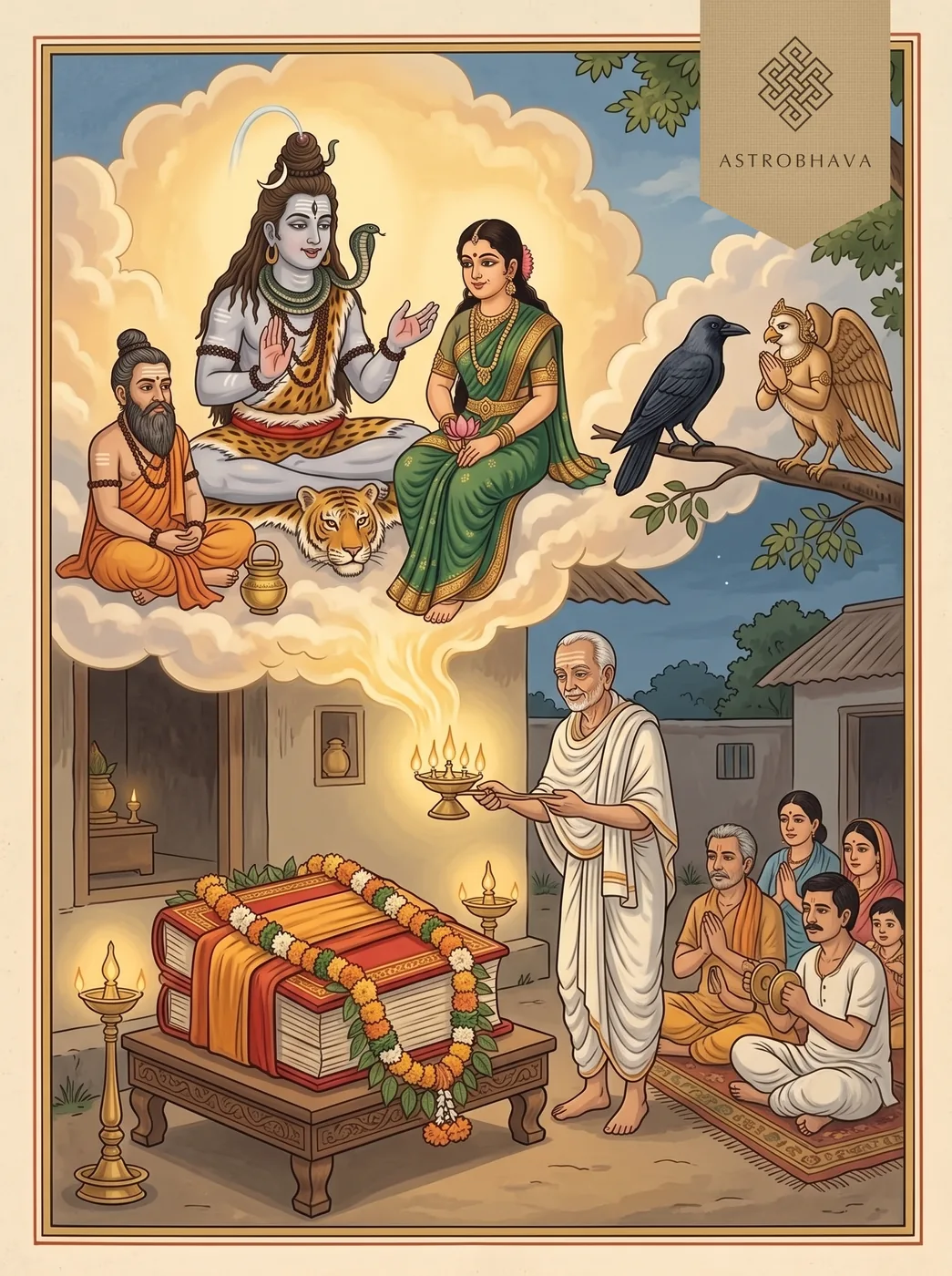
Aarti Shri Ramayan Ji Ki, the Ramayan ji ki aarti, is unusual among aartis because its object is a book rather than a deity: the lamp is waved before the Ramayana as the written glory of Rama, whom the refrain calls siya pi, the beloved of Sita. It is a short Awadhi song of a refrain and four four-line stanzas, printed without an author's name after the Uttarakand in the standard printed edition of Tulsidas's Ramcharitmanas. The stanzas work as a ladder of witnesses. Stanza 1 lists those who sing the story: Brahma, Narada, Valmiki, Shuka, the Sanaka brothers, Shesha, Sharada and Hanuman. Stanza 2 calls it the essence of the Vedas, the eighteen Puranas and the six schools of philosophy. Stanza 3 names its tellers within the Manas, Shiva and Bhavani, Agastya, Vyasa, Kakabhushundi and Garuda. Stanza 4 gives the phala lines and ends by calling the book father and mother to Tulsi.
A roll-call of the Manas's own narrators
Tulsidas began the Ramcharitmanas in Ayodhya on Rama Navami of Vikram Samvat 1631, that is 1574 CE, and he likened its seven books to seven steps going down into the holy lake Manasarovar. The poem is not told by a single voice. It is built as nested conversations: Shiva tells the story to Parvati, the sage Yajnavalkya tells it to Bharadvaja, and the crow-sage Kakabhushundi tells it to Garuda, the eagle who carries Vishnu. According to the Manas, Shiva first heard the story himself in the Treta age from the sage Agastya. Stanza 3 of the aarti walks through exactly this chain. Sambhu and Bhavani are Shiva and Parvati. Ghatasambhava, born from a pot, is Agastya, who is also called Kumbhaja because tradition holds he was born from a clay jar. Kakabhushundi and Garuda close the Uttarakand, where both Shiva's and Kakabhushundi's narrations end. The other stanzas widen the circle to Valmiki, Vyasa and the gods. No one knows who put these lines together; the standard edition prints them unsigned at the very end of the book, which is where the aarti belongs in practice, sung when a reading of the Manas, whether a single sitting or a continuous Akhand Path of about a day, reaches its last page.
The mantra, in six scripts
- आरति
- ārati — lamp-waving worship, aarti
- श्रीरामायनजी
- śrīrāmāyanajī — to the revered Ramayana
- की
- kī — of
- कीरति
- kīrati — glory, fame
- कलित
- kalita — graceful, adorned
- ललित
- lalita — lovely
- सिय
- siya — of Sita
- पी
- pī — beloved (Rama)
- की
- kī — of
Aarti Shri Ramayan Ji Ki lyrics in full
The refrain and four stanzas, as printed after the Uttarakand of the Ramcharitmanas. Singers repeat the refrain after each stanza.
All 5 verses, in Hindi, Tamil, Telugu, Kannada, Malayalam and English, each with its meaning. Choose a script:
Download the Aarti Shri Ramayan Ji Ki PDFAll 5 verses with their meanings, in Hindi. Free to print and keep.
आरति श्रीरामायनजी की ।
कीरति कलित ललित सिय पी की ॥
ஆரதி ஶ்ரீராமாயநஜீ கீ ।
கீரதி கலித லலித ஸிய பீ கீ ॥
ఆరతి శ్రీరామాయనజీ కీ ।
కీరతి కలిత లలిత సియ పీ కీ ॥
ಆರತಿ ಶ್ರೀರಾಮಾಯನಜೀ ಕೀ ।
ಕೀರತಿ ಕಲಿತ ಲಲಿತ ಸಿಯ ಪೀ ಕೀ ॥
ആരതി ശ്രീരാമായനജീ കീ ।
കീരതി കലിത ലലിത സിയ പീ കീ ॥
ārati śrīrāmāyanajī kī |
kīrati kalita lalita siya pī kī ||
Aarti to the holy Ramayana, the graceful and lovely glory of Sita's beloved Lord Rama.
गावत ब्रह्मादिक मुनि नारद ।
बालमीक बिग्यान बिसारद ॥
सुक सनकादि सेष अरु सारद ।
बरनि पवनसुत कीरति नीकी ॥
காவத ப்ரஹ்மாதிக முநி நாரத ।
பாலமீக பிக்யாந பிஸாரத ॥
ஸுக ஸநகாதி ஸேஷ அரு ஸாரத ।
பரநி பவநஸுத கீரதி நீகீ ॥
గావత బ్రహ్మాదిక ముని నారద ।
బాలమీక బిగ్యాన బిసారద ॥
సుక సనకాది సేష అరు సారద ।
బరని పవనసుత కీరతి నీకీ ॥
ಗಾವತ ಬ್ರಹ್ಮಾದಿಕ ಮುನಿ ನಾರದ ।
ಬಾಲಮೀಕ ಬಿಗ್ಯಾನ ಬಿಸಾರದ ॥
ಸುಕ ಸನಕಾದಿ ಸೇಷ ಅರು ಸಾರದ ।
ಬರನಿ ಪವನಸುತ ಕೀರತಿ ನೀಕೀ ॥
ഗാവത ബ്രഹ്മാദിക മുനി നാരദ ।
ബാലമീക ബിഗ്യാന ബിസാരദ ॥
സുക സനകാദി സേഷ അരു സാരദ ।
ബരനി പവനസുത കീരതി നീകീ ॥
gāvata brahmādika muni nārada |
bālamīka bigyāna bisārada ||
suka sanakādi seṣa aru sārada |
barani pavanasuta kīrati nīkī ||
Brahma and the other gods sing it, as do the sage Narada and Valmiki, master of wisdom. Shuka, Sanaka and his brothers, Shesha and Sharada sing it too, and Hanuman, son of the Wind, has described its fine glory.
गावत बेद पुरान अष्टदस ।
छओ सास्त्र सब ग्रंथन को रस ॥
मुनि जन धन संतन को सरबस ।
सार अंस संमत सबही की ॥
காவத பேத புராந அஷ்டதஸ ।
சஓ ஸாஸ்த்ர ஸப க்ரம்தந கோ ரஸ ॥
முநி ஜந தந ஸம்தந கோ ஸரபஸ ।
ஸார அம்ஸ ஸம்மத ஸபஹீ கீ ॥
గావత బేద పురాన అష్టదస ।
ఛఓ సాస్త్ర సబ గ్రంథన కో రస ॥
ముని జన ధన సంతన కో సరబస ।
సార అంస సంమత సబహీ కీ ॥
ಗಾವತ ಬೇದ ಪುರಾನ ಅಷ್ಟದಸ ।
ಛಓ ಸಾಸ್ತ್ರ ಸಬ ಗ್ರಂಥನ ಕೋ ರಸ ॥
ಮುನಿ ಜನ ಧನ ಸಂತನ ಕೋ ಸರಬಸ ।
ಸಾರ ಅಂಸ ಸಂಮತ ಸಬಹೀ ಕೀ ॥
ഗാവത ബേദ പുരാന അഷ്ടദസ ।
ഛഓ സാസ്ത്ര സബ ഗ്രംഥന കോ രസ ॥
മുനി ജന ധന സംതന കോ സരബസ ।
സാര അംസ സംമത സബഹീ കീ ॥
gāvata beda purāna aṣṭadasa |
chao sāstra saba graṃthana ko rasa ||
muni jana dhana saṃtana ko sarabasa |
sāra aṃsa saṃmata sabahī kī ||
The Vedas and the eighteen Puranas sing it; it is the essence of the six schools of philosophy and of all the scriptures. It is the wealth of the sages and the all-in-all of the saints, the essential core that all of them agree on.
गावत संतत संभु भवानी ।
अरु घटसंभव मुनि बिग्यानी ॥
ब्यास आदि कबिबर्ज बखानी ।
कागभुसुंडि गरुड के ही की ॥
காவத ஸம்தத ஸம்பு பவாநீ ।
அரு கடஸம்பவ முநி பிக்யாநீ ॥
ப்யாஸ ஆதி கபிபர்ஜ பகாநீ ।
காகபுஸும்டி கருட கே ஹீ கீ ॥
గావత సంతత సంభు భవానీ ।
అరు ఘటసంభవ ముని బిగ్యానీ ॥
బ్యాస ఆది కబిబర్జ బఖానీ ।
కాగభుసుండి గరుడ కే హీ కీ ॥
ಗಾವತ ಸಂತತ ಸಂಭು ಭವಾನೀ ।
ಅರು ಘಟಸಂಭವ ಮುನಿ ಬಿಗ್ಯಾನೀ ॥
ಬ್ಯಾಸ ಆದಿ ಕಬಿಬರ್ಜ ಬಖಾನೀ ।
ಕಾಗಭುಸುಂಡಿ ಗರುಡ ಕೇ ಹೀ ಕೀ ॥
ഗാവത സംതത സംഭു ഭവാനീ ।
അരു ഘടസംഭവ മുനി ബിഗ്യാനീ ॥
ബ്യാസ ആദി കബിബര്ജ ബഖാനീ ।
കാഗഭുസുംഡി ഗരുഡ കേ ഹീ കീ ॥
gāvata saṃtata saṃbhu bhavānī |
aru ghaṭasaṃbhava muni bigyānī ||
byāsa ādi kabibarja bakhānī |
kāgabhusuṃḍi garuḍa ke hī kī ||
Shiva and Bhavani sing it constantly, and so does the wise sage Agastya, born from a pot. Vyasa and the finest poets have told it, and it is dear to the hearts of Kakabhushundi and Garuda.
कलिमल हरनि बिषय रस फीकी ।
सुभग सिंगार मुक्ति जुबती की ॥
दलन रोग भव मूरि अमी की ।
तात मात सब बिधि तुलसी की ॥
கலிமல ஹரநி பிஷய ரஸ பீகீ ।
ஸுபக ஸிம்கார முக்தி ஜுபதீ கீ ॥
தலந ரோக பவ மூரி அமீ கீ ।
தாத மாத ஸப பிதி துலஸீ கீ ॥
కలిమల హరని బిషయ రస ఫీకీ ।
సుభగ సింగార ముక్తి జుబతీ కీ ॥
దలన రోగ భవ మూరి అమీ కీ ।
తాత మాత సబ బిధి తులసీ కీ ॥
ಕಲಿಮಲ ಹರನಿ ಬಿಷಯ ರಸ ಫೀಕೀ ।
ಸುಭಗ ಸಿಂಗಾರ ಮುಕ್ತಿ ಜುಬತೀ ಕೀ ॥
ದಲನ ರೋಗ ಭವ ಮೂರಿ ಅಮೀ ಕೀ ।
ತಾತ ಮಾತ ಸಬ ಬಿಧಿ ತುಲಸೀ ಕೀ ॥
കലിമല ഹരനി ബിഷയ രസ ഫീകീ ।
സുഭഗ സിംഗാര മുക്തി ജുബതീ കീ ॥
ദലന രോഗ ഭവ മൂരി അമീ കീ ।
താത മാത സബ ബിധി തുലസീ കീ ॥
kalimala harani biṣaya rasa phīkī |
subhaga siṃgāra mukti jubatī kī ||
dalana roga bhava mūri amī kī |
tāta māta saba bidhi tulasī kī ||
The verse says it washes away the impurities of the Kali age and makes the taste of sense pleasures seem flat; it is the lovely adornment of the maiden Liberation. It is a nectar root that destroys the disease of worldly existence, and it is in every way father and mother to Tulsi.
The syllable people get wrong
In stanza 1, बिग्यान (bigyāna, 'wisdom') is the Awadhi form of the Sanskrit vijñāna: say it 'big-yaan', with a b and a plain gy, and resist correcting it to 'vigyaan' or 'vij-nyaan', which belongs to Sanskrit, not to this song.
When the Aarti Shri Ramayan Ji Ki is chanted
Weekday. Thursday
Festival. Ram Navami and the close of a Ramcharitmanas reading
Questions
Have your chart read before you decide
Chanting is yours to do, and free. But which deity your situation calls for — and whether a mantra alone is the right response — depends on your chart. Sometimes it is; sometimes it is not.
- Over 30 years in the Guru–Sishya Parampara, from the age of five
- He reads every chart himself — 60 minutes, one to one, never delegated
- Charts are read only between sunrise and sunset, following tradition
