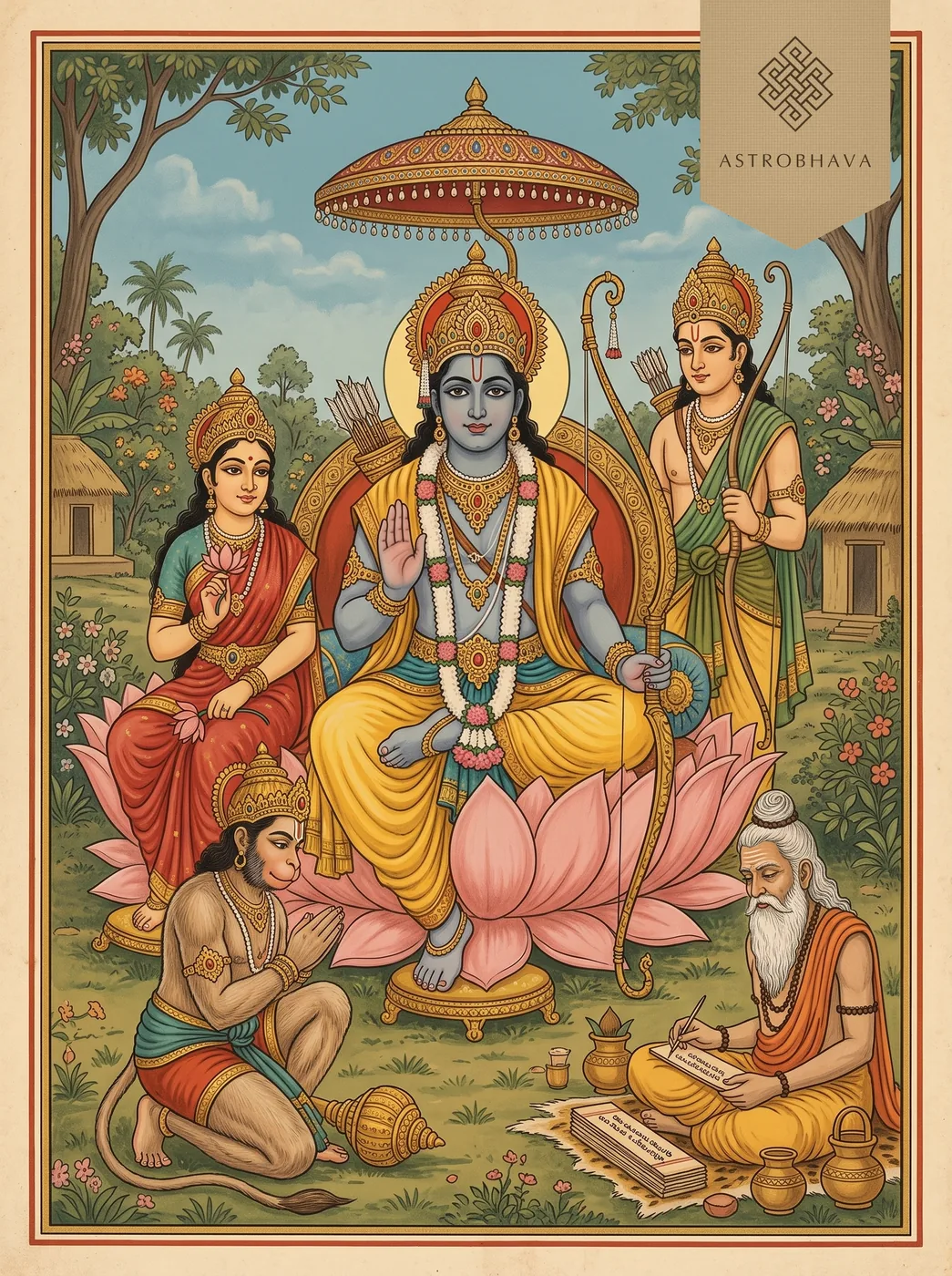
Rama Raksha Stotram
अस्य श्रीरामरक्षास्तोत्रमन्त्रस्य बुधकौशिक ऋषिः श्रीसीतारामचन्द्रो देवता अनुष्टुप् छन्दः सीता शक्तिः । श्रीमान् हनुमान् कीलकं श्रीरामचन्द्रप्रीत्यर्थे रामरक्षास्तोत्रजपे विनियोगः ॥Also known as Ram Raksha Stotra
In Devanagari, Tamil, Telugu, Kannada, Malayalam and English — with the meaning of every word, and the one syllable most people pronounce wrongly.
What the Rama Raksha Stotram is
The Rama Raksha Stotram, widely written Ram Raksha Stotra, is a protective hymn, a kavacha, addressed to Rama together with Sita, Lakshmana and Hanuman. Its opening viniyoga names Budha Kaushika as the seer, Sita and Ramachandra as the deity, Sita as its shakti and Hanuman as its kilaka, the pin that holds it shut. After a dhyana verse that pictures Rama seated in padmasana with Sita on his left lap, the 38 verses fall into clear blocks. Verses 1 to 3 set the scene; from the second line of verse 4 through verse 9, a different epithet of Rama is asked to guard each part of the body, head to feet. Verses 10 to 15 state what the text says the armour does and how it was received. Verses 16 to 38 gather praise verses, including the Hanuman verse manojavam (33), a salute to Valmiki as a cuckoo (34), and verse 27, Ramaya Ramabhadraya, the verse quoted on our Rama mantra page; the full hymn is given here.
A hymn dictated by Shiva in a dream
The hymn carries its own account of where it came from. Verse 15 says that Hara, that is Shiva, taught this Rama Raksha in a dream, and that Budha Kaushika, on waking at dawn, wrote it down exactly as he had been told. Later retellings add that Shiva gave the instruction so that devotees would have a shield of Rama's names, and that all 38 stanzas were recited within that one dream. Who Budha Kaushika was is not settled. Many devotees take the name as another title of Vishvamitra, the sage who led the young Rama and Lakshmana into the forest to guard his sacrifice; verse 5 itself calls Rama the beloved of Vishvamitra and the protector of the sacrifice. Other commentators leave the identity open, and the hymn has no securely known date. The later part of the text appears to be gathered from older devotional sources. The last verse, in which Shiva tells Parvati that saying Rama's name equals the thousand names, is the verse that closes the Vishnu Sahasranama as given in the Uttara Khanda of the Padma Purana, so the hymn that opens with Shiva's dream also ends in Shiva's own words.
The mantra, in six scripts
- चरितं
- caritaṃ — the story, the deeds
- रघुनाथस्य
- raghunāthasya — of Raghunatha (Rama)
- शतकोटिप्रविस्तरम्
- śatakoṭipravistaram — spread over a hundred crore (verses)
- एकैकमक्षरं
- ekaikamakṣaraṃ — each single syllable
- पुंसां
- puṃsāṃ — of people
- महापातकनाशनम्
- mahāpātakanāśanam — destroys the gravest sins
Ram Raksha Stotra lyrics in full
All 40 verses, in Sanskrit, Tamil, Telugu, Kannada, Malayalam and English, each with its meaning. Choose a script:
Download the Ram Raksha Stotra PDFAll 40 verses with their meanings, in Sanskrit. Free to print and keep.
अस्य श्रीरामरक्षास्तोत्रमन्त्रस्य बुधकौशिक ऋषिः श्रीसीतारामचन्द्रो देवता अनुष्टुप् छन्दः सीता शक्तिः ।
श्रीमान् हनुमान् कीलकं श्रीरामचन्द्रप्रीत्यर्थे रामरक्षास्तोत्रजपे विनियोगः ॥
அஸ்ய ஶ்ரீராமரக்ஷாஸ்தோத்ரமந்த்ரஸ்ய புதகௌஶிக ருஷிஃ ஶ்ரீஸீதாராமசந்த்ரோ தேவதா அநுஷ்டுப் சந்தஃ ஸீதா ஶக்திஃ ।
ஶ்ரீமாந் ஹநுமாந் கீலகம் ஶ்ரீராமசந்த்ரப்ரீத்யர்தே ராமரக்ஷாஸ்தோத்ரஜபே விநியோகஃ ॥
అస్య శ్రీరామరక్షాస్తోత్రమన్త్రస్య బుధకౌశిక ఋషిః శ్రీసీతారామచన్ద్రో దేవతా అనుష్టుప్ ఛన్దః సీతా శక్తిః ।
శ్రీమాన్ హనుమాన్ కీలకం శ్రీరామచన్ద్రప్రీత్యర్థే రామరక్షాస్తోత్రజపే వినియోగః ॥
ಅಸ್ಯ ಶ್ರೀರಾಮರಕ್ಷಾಸ್ತೋತ್ರಮನ್ತ್ರಸ್ಯ ಬುಧಕೌಶಿಕ ಋಷಿಃ ಶ್ರೀಸೀತಾರಾಮಚನ್ದ್ರೋ ದೇವತಾ ಅನುಷ್ಟುಪ್ ಛನ್ದಃ ಸೀತಾ ಶಕ್ತಿಃ ।
ಶ್ರೀಮಾನ್ ಹನುಮಾನ್ ಕೀಲಕಂ ಶ್ರೀರಾಮಚನ್ದ್ರಪ್ರೀತ್ಯರ್ಥೇ ರಾಮರಕ್ಷಾಸ್ತೋತ್ರಜಪೇ ವಿನಿಯೋಗಃ ॥
അസ്യ ശ്രീരാമരക്ഷാസ്തോത്രമന്ത്രസ്യ ബുധകൌശിക ഋഷിഃ ശ്രീസീതാരാമചന്ദ്രോ ദേവതാ അനുഷ്ടുപ് ഛന്ദഃ സീതാ ശക്തിഃ ।
ശ്രീമാന് ഹനുമാന് കീലകം ശ്രീരാമചന്ദ്രപ്രീത്യര്ഥേ രാമരക്ഷാസ്തോത്രജപേ വിനിയോഗഃ ॥
asya śrīrāmarakṣāstotramantrasya budhakauśika ṛṣiḥ śrīsītārāmacandro devatā anuṣṭup chandaḥ sītā śaktiḥ |
śrīmān hanumān kīlakaṃ śrīrāmacandraprītyarthe rāmarakṣāstotrajape viniyogaḥ ||
Of this Rama Raksha Stotra mantra, the seer is Budha Kaushika, the deity is Sita and Ramachandra, the metre is Anushtup, Sita is the power and the glorious Hanuman is the pin (kilaka). It is applied in chanting the Rama Raksha Stotra to please Sri Ramachandra.
ध्यायेदाजानुबाहुं धृतशरधनुषं बद्धपद्मासनस्थं पीतं वासो वसानं नवकमलदलस्पर्धिनेत्रं प्रसन्नम् ।
वामाङ्कारूढसीतामुखकमलमिलल्लोचनं नीरदाभं नानालंकारदीप्तं दधतमुरुजटामण्डलं रामचन्द्रम् ॥
த்யாயேதாஜாநுபாஹும் த்ருதஶரதநுஷம் பத்தபத்மாஸநஸ்தம் பீதம் வாஸோ வஸாநம் நவகமலதலஸ்பர்திநேத்ரம் ப்ரஸந்நம் ।
வாமாங்காரூடஸீதாமுககமலமிலல்லோசநம் நீரதாபம் நாநாலம்காரதீப்தம் தததமுருஜடாமண்டலம் ராமசந்த்ரம் ॥
ధ్యాయేదాజానుబాహుం ధృతశరధనుషం బద్ధపద్మాసనస్థం పీతం వాసో వసానం నవకమలదలస్పర్ధినేత్రం ప్రసన్నమ్ ।
వామాఙ్కారూఢసీతాముఖకమలమిలల్లోచనం నీరదాభం నానాలంకారదీప్తం దధతమురుజటామణ్డలం రామచన్ద్రమ్ ॥
ಧ್ಯಾಯೇದಾಜಾನುಬಾಹುಂ ಧೃತಶರಧನುಷಂ ಬದ್ಧಪದ್ಮಾಸನಸ್ಥಂ ಪೀತಂ ವಾಸೋ ವಸಾನಂ ನವಕಮಲದಲಸ್ಪರ್ಧಿನೇತ್ರಂ ಪ್ರಸನ್ನಮ್ ।
ವಾಮಾಙ್ಕಾರೂಢಸೀತಾಮುಖಕಮಲಮಿಲಲ್ಲೋಚನಂ ನೀರದಾಭಂ ನಾನಾಲಂಕಾರದೀಪ್ತಂ ದಧತಮುರುಜಟಾಮಣ್ಡಲಂ ರಾಮಚನ್ದ್ರಮ್ ॥
ധ്യായേദാജാനുബാഹും ധൃതശരധനുഷം ബദ്ധപദ്മാസനസ്ഥം പീതം വാസോ വസാനം നവകമലദലസ്പര്ധിനേത്രം പ്രസന്നമ് ।
വാമാങ്കാരൂഢസീതാമുഖകമലമിലല്ലോചനം നീരദാഭം നാനാലംകാരദീപ്തം ദധതമുരുജടാമണ്ഡലം രാമചന്ദ്രമ് ॥
dhyāyedājānubāhuṃ dhṛtaśaradhanuṣaṃ baddhapadmāsanasthaṃ pītaṃ vāso vasānaṃ navakamaladalaspardhinetraṃ prasannam |
vāmāṅkārūḍhasītāmukhakamalamilallocanaṃ nīradābhaṃ nānālaṃkāradīptaṃ dadhatamurujaṭāmaṇḍalaṃ rāmacandram ||
One should meditate on Ramachandra: his arms reach to his knees, he holds bow and arrows and is seated in the bound lotus posture. He wears yellow garments, his calm eyes rival fresh lotus petals, and his gaze meets the lotus face of Sita seated on his left lap. He is dark as a rain cloud, shining with many ornaments, and wears a great circle of matted locks.
चरितं रघुनाथस्य शतकोटिप्रविस्तरम् ।
एकैकमक्षरं पुंसां महापातकनाशनम् ॥
சரிதம் ரகுநாதஸ்ய ஶதகோடிப்ரவிஸ்தரம் ।
ஏகைகமக்ஷரம் பும்ஸாம் மஹாபாதகநாஶநம் ॥
చరితం రఘునాథస్య శతకోటిప్రవిస్తరమ్ ।
ఏకైకమక్షరం పుంసాం మహాపాతకనాశనమ్ ॥
ಚರಿತಂ ರಘುನಾಥಸ್ಯ ಶತಕೋಟಿಪ್ರವಿಸ್ತರಮ್ ।
ಏಕೈಕಮಕ್ಷರಂ ಪುಂಸಾಂ ಮಹಾಪಾತಕನಾಶನಮ್ ॥
ചരിതം രഘുനാഥസ്യ ശതകോടിപ്രവിസ്തരമ് ।
ഏകൈകമക്ഷരം പുംസാം മഹാപാതകനാശനമ് ॥
caritaṃ raghunāthasya śatakoṭipravistaram |
ekaikamakṣaraṃ puṃsāṃ mahāpātakanāśanam ||
The story of Raghunatha (Rama) extends to a hundred crore verses. The verse says each single syllable of it destroys even the gravest sins of people.
ध्यात्वा नीलोत्पलश्यामं रामं राजीवलोचनम् ।
जानकीलक्ष्मणोपेतं जटामुकुटमण्डितम् ॥
த்யாத்வா நீலோத்பலஶ்யாமம் ராமம் ராஜீவலோசநம் ।
ஜாநகீலக்ஷ்மணோபேதம் ஜடாமுகுடமண்டிதம் ॥
ధ్యాత్వా నీలోత్పలశ్యామం రామం రాజీవలోచనమ్ ।
జానకీలక్ష్మణోపేతం జటాముకుటమణ్డితమ్ ॥
ಧ್ಯಾತ್ವಾ ನೀಲೋತ್ಪಲಶ್ಯಾಮಂ ರಾಮಂ ರಾಜೀವಲೋಚನಮ್ ।
ಜಾನಕೀಲಕ್ಷ್ಮಣೋಪೇತಂ ಜಟಾಮುಕುಟಮಣ್ಡಿತಮ್ ॥
ധ്യാത്വാ നീലോത്പലശ്യാമം രാമം രാജീവലോചനമ് ।
ജാനകീലക്ഷ്മണോപേതം ജടാമുകുടമണ്ഡിതമ് ॥
dhyātvā nīlotpalaśyāmaṃ rāmaṃ rājīvalocanam |
jānakīlakṣmaṇopetaṃ jaṭāmukuṭamaṇḍitam ||
Meditating on Rama, dark like the blue lotus, lotus-eyed, accompanied by Janaki (Sita) and Lakshmana, and adorned with a crown of matted hair...
सासितूणधनुर्बाणपाणिं नक्तंचरान्तकम् ।
स्वलीलया जगत्त्रातुमाविर्भूतमजं विभुम् ॥
ஸாஸிதூணதநுர்பாணபாணிம் நக்தம்சராந்தகம் ।
ஸ்வலீலயா ஜகத்த்ராதுமாவிர்பூதமஜம் விபும் ॥
సాసితూణధనుర్బాణపాణిం నక్తంచరాన్తకమ్ ।
స్వలీలయా జగత్త్రాతుమావిర్భూతమజం విభుమ్ ॥
ಸಾಸಿತೂಣಧನುರ್ಬಾಣಪಾಣಿಂ ನಕ್ತಂಚರಾನ್ತಕಮ್ ।
ಸ್ವಲೀಲಯಾ ಜಗತ್ತ್ರಾತುಮಾವಿರ್ಭೂತಮಜಂ ವಿಭುಮ್ ॥
സാസിതൂണധനുര്ബാണപാണിം നക്തംചരാന്തകമ് ।
സ്വലീലയാ ജഗത്ത്രാതുമാവിര്ഭൂതമജം വിഭുമ് ॥
sāsitūṇadhanurbāṇapāṇiṃ naktaṃcarāntakam |
svalīlayā jagattrātumāvirbhūtamajaṃ vibhum ||
...who holds sword, quiver, bow and arrows in his hands, who destroys the night-roaming demons, the unborn, all-pervading Lord who appeared by his own play to protect the world...
रामरक्षां पठेत्प्राज्ञः पापघ्नीं सर्वकामदाम् ।
शिरो मे राघवः पातु भालं दशरथात्मजः ॥
ராமரக்ஷாம் படேத்ப்ராஜ்ஞஃ பாபக்நீம் ஸர்வகாமதாம் ।
ஶிரோ மே ராகவஃ பாது பாலம் தஶரதாத்மஜஃ ॥
రామరక్షాం పఠేత్ప్రాజ్ఞః పాపఘ్నీం సర్వకామదామ్ ।
శిరో మే రాఘవః పాతు భాలం దశరథాత్మజః ॥
ರಾಮರಕ್ಷಾಂ ಪಠೇತ್ಪ್ರಾಜ್ಞಃ ಪಾಪಘ್ನೀಂ ಸರ್ವಕಾಮದಾಮ್ ।
ಶಿರೋ ಮೇ ರಾಘವಃ ಪಾತು ಭಾಲಂ ದಶರಥಾತ್ಮಜಃ ॥
രാമരക്ഷാം പഠേത്പ്രാജ്ഞഃ പാപഘ്നീം സര്വകാമദാമ് ।
ശിരോ മേ രാഘവഃ പാതു ഭാലം ദശരഥാത്മജഃ ॥
rāmarakṣāṃ paṭhetprājñaḥ pāpaghnīṃ sarvakāmadām |
śiro me rāghavaḥ pātu bhālaṃ daśarathātmajaḥ ||
...the wise person should recite this Rama Raksha, which removes sin and grants every wish. May Raghava protect my head, and the son of Dasharatha my forehead.
कौसल्येयो दृशौ पातु विश्वामित्रप्रियः श्रुती ।
घ्राणं पातु मखत्राता मुखं सौमित्रिवत्सलः ॥
கௌஸல்யேயோ த்ருஶௌ பாது விஶ்வாமித்ரப்ரியஃ ஶ்ருதீ ।
க்ராணம் பாது மகத்ராதா முகம் ஸௌமித்ரிவத்ஸலஃ ॥
కౌసల్యేయో దృశౌ పాతు విశ్వామిత్రప్రియః శ్రుతీ ।
ఘ్రాణం పాతు మఖత్రాతా ముఖం సౌమిత్రివత్సలః ॥
ಕೌಸಲ್ಯೇಯೋ ದೃಶೌ ಪಾತು ವಿಶ್ವಾಮಿತ್ರಪ್ರಿಯಃ ಶ್ರುತೀ ।
ಘ್ರಾಣಂ ಪಾತು ಮಖತ್ರಾತಾ ಮುಖಂ ಸೌಮಿತ್ರಿವತ್ಸಲಃ ॥
കൌസല്യേയോ ദൃശൌ പാതു വിശ്വാമിത്രപ്രിയഃ ശ്രുതീ ।
ഘ്രാണം പാതു മഖത്രാതാ മുഖം സൌമിത്രിവത്സലഃ ॥
kausalyeyo dṛśau pātu viśvāmitrapriyaḥ śrutī |
ghrāṇaṃ pātu makhatrātā mukhaṃ saumitrivatsalaḥ ||
May the son of Kausalya protect my eyes, and the beloved of Vishvamitra my ears. May the protector of the sacrifice guard my nose, and he who is fond of Saumitri (Lakshmana) my mouth.
जिह्वां विद्यानिधिः पातु कण्ठं भरतवन्दितः ।
स्कन्धौ दिव्यायुधः पातु भुजौ भग्नेशकार्मुकः ॥
ஜிஹ்வாம் வித்யாநிதிஃ பாது கண்டம் பரதவந்திதஃ ।
ஸ்கந்தௌ திவ்யாயுதஃ பாது புஜௌ பக்நேஶகார்முகஃ ॥
జిహ్వాం విద్యానిధిః పాతు కణ్ఠం భరతవన్దితః ।
స్కన్ధౌ దివ్యాయుధః పాతు భుజౌ భగ్నేశకార్ముకః ॥
ಜಿಹ್ವಾಂ ವಿದ್ಯಾನಿಧಿಃ ಪಾತು ಕಣ್ಠಂ ಭರತವನ್ದಿತಃ ।
ಸ್ಕನ್ಧೌ ದಿವ್ಯಾಯುಧಃ ಪಾತು ಭುಜೌ ಭಗ್ನೇಶಕಾರ್ಮುಕಃ ॥
ജിഹ്വാം വിദ്യാനിധിഃ പാതു കണ്ഠം ഭരതവന്ദിതഃ ।
സ്കന്ധൌ ദിവ്യായുധഃ പാതു ഭുജൌ ഭഗ്നേശകാര്മുകഃ ॥
jihvāṃ vidyānidhiḥ pātu kaṇṭhaṃ bharatavanditaḥ |
skandhau divyāyudhaḥ pātu bhujau bhagneśakārmukaḥ ||
May the treasury of learning protect my tongue, and he who is revered by Bharata my throat. May the bearer of divine weapons protect my shoulders, and the breaker of Shiva's bow my arms.
करौ सीतापतिः पातु हृदयं जामदग्न्यजित् ।
मध्यं पातु खरध्वंसी नाभिं जाम्बवदाश्रयः ॥
கரௌ ஸீதாபதிஃ பாது ஹ்ருதயம் ஜாமதக்ந்யஜித் ।
மத்யம் பாது கரத்வம்ஸீ நாபிம் ஜாம்பவதாஶ்ரயஃ ॥
కరౌ సీతాపతిః పాతు హృదయం జామదగ్న్యజిత్ ।
మధ్యం పాతు ఖరధ్వంసీ నాభిం జామ్బవదాశ్రయః ॥
ಕರೌ ಸೀತಾಪತಿಃ ಪಾತು ಹೃದಯಂ ಜಾಮದಗ್ನ್ಯಜಿತ್ ।
ಮಧ್ಯಂ ಪಾತು ಖರಧ್ವಂಸೀ ನಾಭಿಂ ಜಾಮ್ಬವದಾಶ್ರಯಃ ॥
കരൌ സീതാപതിഃ പാതു ഹൃദയം ജാമദഗ്ന്യജിത് ।
മധ്യം പാതു ഖരധ്വംസീ നാഭിം ജാമ്ബവദാശ്രയഃ ॥
karau sītāpatiḥ pātu hṛdayaṃ jāmadagnyajit |
madhyaṃ pātu kharadhvaṃsī nābhiṃ jāmbavadāśrayaḥ ||
May the lord of Sita protect my hands, and the victor over Parashurama (son of Jamadagni) my heart. May the slayer of Khara protect my middle, and the refuge of Jambavan my navel.
सुग्रीवेशः कटी पातु सक्थिनी हनुमत्प्रभुः ।
ऊरू रघूत्तमः पातु रक्षःकुलविनाशकृत् ॥
ஸுக்ரீவேஶஃ கடீ பாது ஸக்திநீ ஹநுமத்ப்ரபுஃ ।
ஊரூ ரகூத்தமஃ பாது ரக்ஷஃகுலவிநாஶக்ருத் ॥
సుగ్రీవేశః కటీ పాతు సక్థినీ హనుమత్ప్రభుః ।
ఊరూ రఘూత్తమః పాతు రక్షఃకులవినాశకృత్ ॥
ಸುಗ್ರೀವೇಶಃ ಕಟೀ ಪಾತು ಸಕ್ಥಿನೀ ಹನುಮತ್ಪ್ರಭುಃ ।
ಊರೂ ರಘೂತ್ತಮಃ ಪಾತು ರಕ್ಷಃಕುಲವಿನಾಶಕೃತ್ ॥
സുഗ്രീവേശഃ കടീ പാതു സക്ഥിനീ ഹനുമത്പ്രഭുഃ ।
ഊരൂ രഘൂത്തമഃ പാതു രക്ഷഃകുലവിനാശകൃത് ॥
sugrīveśaḥ kaṭī pātu sakthinī hanumatprabhuḥ |
ūrū raghūttamaḥ pātu rakṣaḥkulavināśakṛt ||
May the lord of Sugriva protect my hips, and the master of Hanuman my haunches. May the best of the Raghus, destroyer of the demon race, protect my thighs.
जानुनी सेतुकृत्पातु जङ्घे दशमुखान्तकः ।
पादौ विभीषणश्रीदः पातु रामोऽखिलं वपुः ॥
ஜாநுநீ ஸேதுக்ருத்பாது ஜங்கே தஶமுகாந்தகஃ ।
பாதௌ விபீஷணஶ்ரீதஃ பாது ராமோகிலம் வபுஃ ॥
జానునీ సేతుకృత్పాతు జఙ్ఘే దశముఖాన్తకః ।
పాదౌ విభీషణశ్రీదః పాతు రామోఽఖిలం వపుః ॥
ಜಾನುನೀ ಸೇತುಕೃತ್ಪಾತು ಜಙ್ಘೇ ದಶಮುಖಾನ್ತಕಃ ।
ಪಾದೌ ವಿಭೀಷಣಶ್ರೀದಃ ಪಾತು ರಾಮೋಽಖಿಲಂ ವಪುಃ ॥
ജാനുനീ സേതുകൃത്പാതു ജങ്ഘേ ദശമുഖാന്തകഃ ।
പാദൌ വിഭീഷണശ്രീദഃ പാതു രാമോഽഖിലം വപുഃ ॥
jānunī setukṛtpātu jaṅghe daśamukhāntakaḥ |
pādau vibhīṣaṇaśrīdaḥ pātu rāmo'khilaṃ vapuḥ ||
May the builder of the bridge protect my knees, and the slayer of ten-headed Ravana my shins. May the giver of fortune to Vibhishana protect my feet, and may Rama protect my whole body.
एतां रामबलोपेतां रक्षां यः सुकृती पठेत् ।
स चिरायुः सुखी पुत्री विजयी विनयी भवेत् ॥
ஏதாம் ராமபலோபேதாம் ரக்ஷாம் யஃ ஸுக்ருதீ படேத் ।
ஸ சிராயுஃ ஸுகீ புத்ரீ விஜயீ விநயீ பவேத் ॥
ఏతాం రామబలోపేతాం రక్షాం యః సుకృతీ పఠేత్ ।
స చిరాయుః సుఖీ పుత్రీ విజయీ వినయీ భవేత్ ॥
ಏತಾಂ ರಾಮಬಲೋಪೇತಾಂ ರಕ್ಷಾಂ ಯಃ ಸುಕೃತೀ ಪಠೇತ್ ।
ಸ ಚಿರಾಯುಃ ಸುಖೀ ಪುತ್ರೀ ವಿಜಯೀ ವಿನಯೀ ಭವೇತ್ ॥
ഏതാം രാമബലോപേതാം രക്ഷാം യഃ സുകൃതീ പഠേത് ।
സ ചിരായുഃ സുഖീ പുത്രീ വിജയീ വിനയീ ഭവേത് ॥
etāṃ rāmabalopetāṃ rakṣāṃ yaḥ sukṛtī paṭhet |
sa cirāyuḥ sukhī putrī vijayī vinayī bhavet ||
The verse says that the virtuous person who recites this protection, filled with the strength of Rama, becomes long-lived, happy, blessed with children, victorious and humble.
पातालभूतलव्योमचारिणश्छद्मचारिणः ।
न द्रष्टुमपि शक्तास्ते रक्षितं रामनामभिः ॥
பாதாலபூதலவ்யோமசாரிணஶ்சத்மசாரிணஃ ।
ந த்ரஷ்டுமபி ஶக்தாஸ்தே ரக்ஷிதம் ராமநாமபிஃ ॥
పాతాలభూతలవ్యోమచారిణశ్ఛద్మచారిణః ।
న ద్రష్టుమపి శక్తాస్తే రక్షితం రామనామభిః ॥
ಪಾತಾಲಭೂತಲವ್ಯೋಮಚಾರಿಣಶ್ಛದ್ಮಚಾರಿಣಃ ।
ನ ದ್ರಷ್ಟುಮಪಿ ಶಕ್ತಾಸ್ತೇ ರಕ್ಷಿತಂ ರಾಮನಾಮಭಿಃ ॥
പാതാലഭൂതലവ്യോമചാരിണശ്ഛദ്മചാരിണഃ ।
ന ദ്രഷ്ടുമപി ശക്താസ്തേ രക്ഷിതം രാമനാമഭിഃ ॥
pātālabhūtalavyomacāriṇaśchadmacāriṇaḥ |
na draṣṭumapi śaktāste rakṣitaṃ rāmanāmabhiḥ ||
Beings that move in the netherworld, on earth or in the sky, and those that go about in disguise, cannot even look upon one who is protected by the names of Rama.
रामेति रामभद्रेति रामचन्द्रेति वा स्मरन् ।
नरो न लिप्यते पापैर्भुक्तिं मुक्तिं च विन्दति ॥
ராமேதி ராமபத்ரேதி ராமசந்த்ரேதி வா ஸ்மரந் ।
நரோ ந லிப்யதே பாபைர்புக்திம் முக்திம் ச விந்ததி ॥
రామేతి రామభద్రేతి రామచన్ద్రేతి వా స్మరన్ ।
నరో న లిప్యతే పాపైర్భుక్తిం ముక్తిం చ విన్దతి ॥
ರಾಮೇತಿ ರಾಮಭದ್ರೇತಿ ರಾಮಚನ್ದ್ರೇತಿ ವಾ ಸ್ಮರನ್ ।
ನರೋ ನ ಲಿಪ್ಯತೇ ಪಾಪೈರ್ಭುಕ್ತಿಂ ಮುಕ್ತಿಂ ಚ ವಿನ್ದತಿ ॥
രാമേതി രാമഭദ്രേതി രാമചന്ദ്രേതി വാ സ്മരന് ।
നരോ ന ലിപ്യതേ പാപൈര്ഭുക്തിം മുക്തിം ച വിന്ദതി ॥
rāmeti rāmabhadreti rāmacandreti vā smaran |
naro na lipyate pāpairbhuktiṃ muktiṃ ca vindati ||
The verse says that a person who remembers the names Rama, Ramabhadra or Ramachandra is not stained by sins, and gains both worldly enjoyment and liberation.
जगज्जैत्रैकमन्त्रेण रामनाम्नाभिरक्षितम् ।
यः कण्ठे धारयेत्तस्य करस्थाः सर्वसिद्धयः ॥
ஜகஜ்ஜைத்ரைகமந்த்ரேண ராமநாம்நாபிரக்ஷிதம் ।
யஃ கண்டே தாரயேத்தஸ்ய கரஸ்தாஃ ஸர்வஸித்தயஃ ॥
జగజ్జైత్రైకమన్త్రేణ రామనామ్నాభిరక్షితమ్ ।
యః కణ్ఠే ధారయేత్తస్య కరస్థాః సర్వసిద్ధయః ॥
ಜಗಜ್ಜೈತ್ರೈಕಮನ್ತ್ರೇಣ ರಾಮನಾಮ್ನಾಭಿರಕ್ಷಿತಮ್ ।
ಯಃ ಕಣ್ಠೇ ಧಾರಯೇತ್ತಸ್ಯ ಕರಸ್ಥಾಃ ಸರ್ವಸಿದ್ಧಯಃ ॥
ജഗജ്ജൈത്രൈകമന്ത്രേണ രാമനാമ്നാഭിരക്ഷിതമ് ।
യഃ കണ്ഠേ ധാരയേത്തസ്യ കരസ്ഥാഃ സര്വസിദ്ധയഃ ॥
jagajjaitraikamantreṇa rāmanāmnābhirakṣitam |
yaḥ kaṇṭhe dhārayettasya karasthāḥ sarvasiddhayaḥ ||
The verse says that whoever holds in the throat (learns by heart) this hymn, guarded by the name of Rama, the one mantra that conquers the world, has all accomplishments within reach of the hand.
वज्रपञ्जरनामेदं यो रामकवचं स्मरेत् ।
अव्याहताज्ञः सर्वत्र लभते जयमङ्गलम् ॥
வஜ்ரபஞ்ஜரநாமேதம் யோ ராமகவசம் ஸ்மரேத் ।
அவ்யாஹதாஜ்ஞஃ ஸர்வத்ர லபதே ஜயமங்கலம் ॥
వజ్రపఞ్జరనామేదం యో రామకవచం స్మరేత్ ।
అవ్యాహతాజ్ఞః సర్వత్ర లభతే జయమఙ్గలమ్ ॥
ವಜ್ರಪಞ್ಜರನಾಮೇದಂ ಯೋ ರಾಮಕವಚಂ ಸ್ಮರೇತ್ ।
ಅವ್ಯಾಹತಾಜ್ಞಃ ಸರ್ವತ್ರ ಲಭತೇ ಜಯಮಙ್ಗಲಮ್ ॥
വജ്രപഞ്ജരനാമേദം യോ രാമകവചം സ്മരേത് ।
അവ്യാഹതാജ്ഞഃ സര്വത്ര ലഭതേ ജയമങ്ഗലമ് ॥
vajrapañjaranāmedaṃ yo rāmakavacaṃ smaret |
avyāhatājñaḥ sarvatra labhate jayamaṅgalam ||
The verse says that one who remembers this Rama Kavacha, called the Vajrapanjara (diamond cage), finds his word unopposed everywhere and gains victory and auspiciousness.
आदिष्टवान्यथा स्वप्ने रामरक्षामिमां हरः ।
तथा लिखितवान्प्रातः प्रबुद्धो बुधकौशिकः ॥
ஆதிஷ்டவாந்யதா ஸ்வப்நே ராமரக்ஷாமிமாம் ஹரஃ ।
ததா லிகிதவாந்ப்ராதஃ ப்ரபுத்தோ புதகௌஶிகஃ ॥
ఆదిష్టవాన్యథా స్వప్నే రామరక్షామిమాం హరః ।
తథా లిఖితవాన్ప్రాతః ప్రబుద్ధో బుధకౌశికః ॥
ಆದಿಷ್ಟವಾನ್ಯಥಾ ಸ್ವಪ್ನೇ ರಾಮರಕ್ಷಾಮಿಮಾಂ ಹರಃ ।
ತಥಾ ಲಿಖಿತವಾನ್ಪ್ರಾತಃ ಪ್ರಬುದ್ಧೋ ಬುಧಕೌಶಿಕಃ ॥
ആദിഷ്ടവാന്യഥാ സ്വപ്നേ രാമരക്ഷാമിമാം ഹരഃ ।
തഥാ ലിഖിതവാന്പ്രാതഃ പ്രബുദ്ധോ ബുധകൌശികഃ ॥
ādiṣṭavānyathā svapne rāmarakṣāmimāṃ haraḥ |
tathā likhitavānprātaḥ prabuddho budhakauśikaḥ ||
Just as Hara (Shiva) imparted this Rama Raksha in a dream, so Budha Kaushika wrote it down on waking in the morning.
आरामः कल्पवृक्षाणां विरामः सकलापदाम् ।
अभिरामस्त्रिलोकानां रामः श्रीमान्स नः प्रभुः ॥
ஆராமஃ கல்பவ்ருக்ஷாணாம் விராமஃ ஸகலாபதாம் ।
அபிராமஸ்த்ரிலோகாநாம் ராமஃ ஶ்ரீமாந்ஸ நஃ ப்ரபுஃ ॥
ఆరామః కల్పవృక్షాణాం విరామః సకలాపదామ్ ।
అభిరామస్త్రిలోకానాం రామః శ్రీమాన్స నః ప్రభుః ॥
ಆರಾಮಃ ಕಲ್ಪವೃಕ್ಷಾಣಾಂ ವಿರಾಮಃ ಸಕಲಾಪದಾಮ್ ।
ಅಭಿರಾಮಸ್ತ್ರಿಲೋಕಾನಾಂ ರಾಮಃ ಶ್ರೀಮಾನ್ಸ ನಃ ಪ್ರಭುಃ ॥
ആരാമഃ കല്പവൃക്ഷാണാം വിരാമഃ സകലാപദാമ് ।
അഭിരാമസ്ത്രിലോകാനാം രാമഃ ശ്രീമാന്സ നഃ പ്രഭുഃ ॥
ārāmaḥ kalpavṛkṣāṇāṃ virāmaḥ sakalāpadām |
abhirāmastrilokānāṃ rāmaḥ śrīmānsa naḥ prabhuḥ ||
He who is a garden of wish-fulfilling trees, the end of all calamities, and the delight of the three worlds, that glorious Rama is our Lord.
तरुणौ रूपसम्पन्नौ सुकुमारौ महाबलौ ।
पुण्डरीकविशालाक्षौ चीरकृष्णाजिनाम्बरौ ॥
தருணௌ ரூபஸம்பந்நௌ ஸுகுமாரௌ மஹாபலௌ ।
புண்டரீகவிஶாலாக்ஷௌ சீரக்ருஷ்ணாஜிநாம்பரௌ ॥
తరుణౌ రూపసమ్పన్నౌ సుకుమారౌ మహాబలౌ ।
పుణ్డరీకవిశాలాక్షౌ చీరకృష్ణాజినామ్బరౌ ॥
ತರುಣೌ ರೂಪಸಮ್ಪನ್ನೌ ಸುಕುಮಾರೌ ಮಹಾಬಲೌ ।
ಪುಣ್ಡರೀಕವಿಶಾಲಾಕ್ಷೌ ಚೀರಕೃಷ್ಣಾಜಿನಾಮ್ಬರೌ ॥
തരുണൌ രൂപസമ്പന്നൌ സുകുമാരൌ മഹാബലൌ ।
പുണ്ഡരീകവിശാലാക്ഷൌ ചീരകൃഷ്ണാജിനാമ്ബരൌ ॥
taruṇau rūpasampannau sukumārau mahābalau |
puṇḍarīkaviśālākṣau cīrakṛṣṇājināmbarau ||
Young, handsome, tender yet mighty, with large eyes like white lotuses, clothed in bark garments and black deerskin...
फलमूलाशिनौ दान्तौ तापसौ ब्रह्मचारिणौ ।
पुत्रौ दशरथस्यैतौ भ्रातरौ रामलक्ष्मणौ ॥
பலமூலாஶிநௌ தாந்தௌ தாபஸௌ ப்ரஹ்மசாரிணௌ ।
புத்ரௌ தஶரதஸ்யைதௌ ப்ராதரௌ ராமலக்ஷ்மணௌ ॥
ఫలమూలాశినౌ దాన్తౌ తాపసౌ బ్రహ్మచారిణౌ ।
పుత్రౌ దశరథస్యైతౌ భ్రాతరౌ రామలక్ష్మణౌ ॥
ಫಲಮೂಲಾಶಿನೌ ದಾನ್ತೌ ತಾಪಸೌ ಬ್ರಹ್ಮಚಾರಿಣೌ ।
ಪುತ್ರೌ ದಶರಥಸ್ಯೈತೌ ಭ್ರಾತರೌ ರಾಮಲಕ್ಷ್ಮಣೌ ॥
ഫലമൂലാശിനൌ ദാന്തൌ താപസൌ ബ്രഹ്മചാരിണൌ ।
പുത്രൌ ദശരഥസ്യൈതൌ ഭ്രാതരൌ രാമലക്ഷ്മണൌ ॥
phalamūlāśinau dāntau tāpasau brahmacāriṇau |
putrau daśarathasyaitau bhrātarau rāmalakṣmaṇau ||
...living on fruits and roots, self-controlled, ascetics and celibates, these two sons of Dasharatha, the brothers Rama and Lakshmana...
शरण्यौ सर्वसत्त्वानां श्रेष्ठौ सर्वधनुष्मताम् ।
रक्षःकुलनिहन्तारौ त्रायेतां नो रघूत्तमौ ॥
ஶரண்யௌ ஸர்வஸத்த்வாநாம் ஶ்ரேஷ்டௌ ஸர்வதநுஷ்மதாம் ।
ரக்ஷஃகுலநிஹந்தாரௌ த்ராயேதாம் நோ ரகூத்தமௌ ॥
శరణ్యౌ సర్వసత్త్వానాం శ్రేష్ఠౌ సర్వధనుష్మతామ్ ।
రక్షఃకులనిహన్తారౌ త్రాయేతాం నో రఘూత్తమౌ ॥
ಶರಣ್ಯೌ ಸರ್ವಸತ್ತ್ವಾನಾಂ ಶ್ರೇಷ್ಠೌ ಸರ್ವಧನುಷ್ಮತಾಮ್ ।
ರಕ್ಷಃಕುಲನಿಹನ್ತಾರೌ ತ್ರಾಯೇತಾಂ ನೋ ರಘೂತ್ತಮೌ ॥
ശരണ്യൌ സര്വസത്ത്വാനാം ശ്രേഷ്ഠൌ സര്വധനുഷ്മതാമ് ।
രക്ഷഃകുലനിഹന്താരൌ ത്രായേതാം നോ രഘൂത്തമൌ ॥
śaraṇyau sarvasattvānāṃ śreṣṭhau sarvadhanuṣmatām |
rakṣaḥkulanihantārau trāyetāṃ no raghūttamau ||
...refuge of all beings, foremost among all archers, destroyers of the demon race, may these two best of the Raghus protect us.
आत्तसज्जधनुषाविषुस्पृशावक्षयाशुगनिषङ्गसङ्गिनौ ।
रक्षणाय मम रामलक्ष्मणावग्रतः पथि सदैव गच्छताम् ॥
ஆத்தஸஜ்ஜதநுஷாவிஷுஸ்ப்ருஶாவக்ஷயாஶுகநிஷங்கஸங்கிநௌ ।
ரக்ஷணாய மம ராமலக்ஷ்மணாவக்ரதஃ பதி ஸதைவ கச்சதாம் ॥
ఆత్తసజ్జధనుషావిషుస్పృశావక్షయాశుగనిషఙ్గసఙ్గినౌ ।
రక్షణాయ మమ రామలక్ష్మణావగ్రతః పథి సదైవ గచ్ఛతామ్ ॥
ಆತ್ತಸಜ್ಜಧನುಷಾವಿಷುಸ್ಪೃಶಾವಕ್ಷಯಾಶುಗನಿಷಙ್ಗಸಙ್ಗಿನೌ ।
ರಕ್ಷಣಾಯ ಮಮ ರಾಮಲಕ್ಷ್ಮಣಾವಗ್ರತಃ ಪಥಿ ಸದೈವ ಗಚ್ಛತಾಮ್ ॥
ആത്തസജ്ജധനുഷാവിഷുസ്പൃശാവക്ഷയാശുഗനിഷങ്ഗസങ്ഗിനൌ ।
രക്ഷണായ മമ രാമലക്ഷ്മണാവഗ്രതഃ പഥി സദൈവ ഗച്ഛതാമ് ॥
āttasajjadhanuṣāviṣuspṛśāvakṣayāśuganiṣaṅgasaṅginau |
rakṣaṇāya mama rāmalakṣmaṇāvagrataḥ pathi sadaiva gacchatām ||
Holding strung bows, hands touching their arrows, carrying quivers of inexhaustible arrows, may Rama and Lakshmana always walk ahead of me on the path to protect me.
संनद्धः कवची खड्गी चापबाणधरो युवा ।
गच्छन्मनोरथान्नश्च रामः पातु सलक्ष्मणः ॥
ஸம்நத்தஃ கவசீ கட்கீ சாபபாணதரோ யுவா ।
கச்சந்மநோரதாந்நஶ்ச ராமஃ பாது ஸலக்ஷ்மணஃ ॥
సంనద్ధః కవచీ ఖడ్గీ చాపబాణధరో యువా ।
గచ్ఛన్మనోరథాన్నశ్చ రామః పాతు సలక్ష్మణః ॥
ಸಂನದ್ಧಃ ಕವಚೀ ಖಡ್ಗೀ ಚಾಪಬಾಣಧರೋ ಯುವಾ ।
ಗಚ್ಛನ್ಮನೋರಥಾನ್ನಶ್ಚ ರಾಮಃ ಪಾತು ಸಲಕ್ಷ್ಮಣಃ ॥
സംനദ്ധഃ കവചീ ഖഡ്ഗീ ചാപബാണധരോ യുവാ ।
ഗച്ഛന്മനോരഥാന്നശ്ച രാമഃ പാതു സലക്ഷ്മണഃ ॥
saṃnaddhaḥ kavacī khaḍgī cāpabāṇadharo yuvā |
gacchanmanorathānnaśca rāmaḥ pātu salakṣmaṇaḥ ||
Ever ready, armoured, bearing sword, bow and arrows, youthful, going before us, may Rama together with Lakshmana protect our wishes.
रामो दाशरथिः शूरो लक्ष्मणानुचरो बली ।
काकुत्स्थः पुरुषः पूर्णः कौसल्येयो रघूत्तमः ॥
ராமோ தாஶரதிஃ ஶூரோ லக்ஷ்மணாநுசரோ பலீ ।
காகுத்ஸ்தஃ புருஷஃ பூர்ணஃ கௌஸல்யேயோ ரகூத்தமஃ ॥
రామో దాశరథిః శూరో లక్ష్మణానుచరో బలీ ।
కాకుత్స్థః పురుషః పూర్ణః కౌసల్యేయో రఘూత్తమః ॥
ರಾಮೋ ದಾಶರಥಿಃ ಶೂರೋ ಲಕ್ಷ್ಮಣಾನುಚರೋ ಬಲೀ ।
ಕಾಕುತ್ಸ್ಥಃ ಪುರುಷಃ ಪೂರ್ಣಃ ಕೌಸಲ್ಯೇಯೋ ರಘೂತ್ತಮಃ ॥
രാമോ ദാശരഥിഃ ശൂരോ ലക്ഷ്മണാനുചരോ ബലീ ।
കാകുത്സ്ഥഃ പുരുഷഃ പൂര്ണഃ കൌസല്യേയോ രഘൂത്തമഃ ॥
rāmo dāśarathiḥ śūro lakṣmaṇānucaro balī |
kākutsthaḥ puruṣaḥ pūrṇaḥ kausalyeyo raghūttamaḥ ||
Rama, son of Dasharatha, the hero, followed by Lakshmana, the mighty, descendant of Kakutstha, the Person, the complete one, son of Kausalya, best of the Raghus...
वेदान्तवेद्यो यज्ञेशः पुराणपुरुषोत्तमः ।
जानकीवल्लभः श्रीमानप्रमेयपराक्रमः ॥
வேதாந்தவேத்யோ யஜ்ஞேஶஃ புராணபுருஷோத்தமஃ ।
ஜாநகீவல்லபஃ ஶ்ரீமாநப்ரமேயபராக்ரமஃ ॥
వేదాన్తవేద్యో యజ్ఞేశః పురాణపురుషోత్తమః ।
జానకీవల్లభః శ్రీమానప్రమేయపరాక్రమః ॥
ವೇದಾನ್ತವೇದ್ಯೋ ಯಜ್ಞೇಶಃ ಪುರಾಣಪುರುಷೋತ್ತಮಃ ।
ಜಾನಕೀವಲ್ಲಭಃ ಶ್ರೀಮಾನಪ್ರಮೇಯಪರಾಕ್ರಮಃ ॥
വേദാന്തവേദ്യോ യജ്ഞേശഃ പുരാണപുരുഷോത്തമഃ ।
ജാനകീവല്ലഭഃ ശ്രീമാനപ്രമേയപരാക്രമഃ ॥
vedāntavedyo yajñeśaḥ purāṇapuruṣottamaḥ |
jānakīvallabhaḥ śrīmānaprameyaparākramaḥ ||
...known through the Vedanta, lord of sacrifice, the ancient Supreme Person, beloved of Janaki, the glorious one of immeasurable valour.
इत्येतानि जपन्नित्यं मद्भक्तः श्रद्धयान्वितः ।
अश्वमेधाधिकं पुण्यं सम्प्राप्नोति न संशयः ॥
இத்யேதாநி ஜபந்நித்யம் மத்பக்தஃ ஶ்ரத்தயாந்விதஃ ।
அஶ்வமேதாதிகம் புண்யம் ஸம்ப்ராப்நோதி ந ஸம்ஶயஃ ॥
ఇత్యేతాని జపన్నిత్యం మద్భక్తః శ్రద్ధయాన్వితః ।
అశ్వమేధాధికం పుణ్యం సమ్ప్రాప్నోతి న సంశయః ॥
ಇತ್ಯೇತಾನಿ ಜಪನ್ನಿತ್ಯಂ ಮದ್ಭಕ್ತಃ ಶ್ರದ್ಧಯಾನ್ವಿತಃ ।
ಅಶ್ವಮೇಧಾಧಿಕಂ ಪುಣ್ಯಂ ಸಮ್ಪ್ರಾಪ್ನೋತಿ ನ ಸಂಶಯಃ ॥
ഇത്യേതാനി ജപന്നിത്യം മദ്ഭക്തഃ ശ്രദ്ധയാന്വിതഃ ।
അശ്വമേധാധികം പുണ്യം സമ്പ്രാപ്നോതി ന സംശയഃ ॥
ityetāni japannityaṃ madbhaktaḥ śraddhayānvitaḥ |
aśvamedhādhikaṃ puṇyaṃ samprāpnoti na saṃśayaḥ ||
The verse says that my devotee who chants these names daily with faith gains merit greater than that of the horse sacrifice, without doubt.
रामं दूर्वादलश्यामं पद्माक्षं पीतवाससम् ।
स्तुवन्ति नामभिर्दिव्यैर्न ते संसारिणो नराः ॥
ராமம் தூர்வாதலஶ்யாமம் பத்மாக்ஷம் பீதவாஸஸம் ।
ஸ்துவந்தி நாமபிர்திவ்யைர்ந தே ஸம்ஸாரிணோ நராஃ ॥
రామం దూర్వాదలశ్యామం పద్మాక్షం పీతవాససమ్ ।
స్తువన్తి నామభిర్దివ్యైర్న తే సంసారిణో నరాః ॥
ರಾಮಂ ದೂರ್ವಾದಲಶ್ಯಾಮಂ ಪದ್ಮಾಕ್ಷಂ ಪೀತವಾಸಸಮ್ ।
ಸ್ತುವನ್ತಿ ನಾಮಭಿರ್ದಿವ್ಯೈರ್ನ ತೇ ಸಂಸಾರಿಣೋ ನರಾಃ ॥
രാമം ദൂര്വാദലശ്യാമം പദ്മാക്ഷം പീതവാസസമ് ।
സ്തുവന്തി നാമഭിര്ദിവ്യൈര്ന തേ സംസാരിണോ നരാഃ ॥
rāmaṃ dūrvādalaśyāmaṃ padmākṣaṃ pītavāsasam |
stuvanti nāmabhirdivyairna te saṃsāriṇo narāḥ ||
The verse says that those who praise with these divine names Rama, dark as a blade of durva grass, lotus-eyed and clad in yellow, are no longer bound to the cycle of worldly life.
रामं लक्ष्मणपूर्वजं रघुवरं सीतापतिं सुन्दरं काकुत्स्थं करुणार्णवं गुणनिधिं विप्रप्रियं धार्मिकम् ।
राजेन्द्रं सत्यसंधं दशरथतनयं श्यामलं शान्तमूर्तिं वन्दे लोकाभिरामं रघुकुलतिलकं राघवं रावणारिम् ॥
ராமம் லக்ஷ்மணபூர்வஜம் ரகுவரம் ஸீதாபதிம் ஸுந்தரம் காகுத்ஸ்தம் கருணார்ணவம் குணநிதிம் விப்ரப்ரியம் தார்மிகம் ।
ராஜேந்த்ரம் ஸத்யஸம்தம் தஶரததநயம் ஶ்யாமலம் ஶாந்தமூர்திம் வந்தே லோகாபிராமம் ரகுகுலதிலகம் ராகவம் ராவணாரிம் ॥
రామం లక్ష్మణపూర్వజం రఘువరం సీతాపతిం సున్దరం కాకుత్స్థం కరుణార్ణవం గుణనిధిం విప్రప్రియం ధార్మికమ్ ।
రాజేన్ద్రం సత్యసంధం దశరథతనయం శ్యామలం శాన్తమూర్తిం వన్దే లోకాభిరామం రఘుకులతిలకం రాఘవం రావణారిమ్ ॥
ರಾಮಂ ಲಕ್ಷ್ಮಣಪೂರ್ವಜಂ ರಘುವರಂ ಸೀತಾಪತಿಂ ಸುನ್ದರಂ ಕಾಕುತ್ಸ್ಥಂ ಕರುಣಾರ್ಣವಂ ಗುಣನಿಧಿಂ ವಿಪ್ರಪ್ರಿಯಂ ಧಾರ್ಮಿಕಮ್ ।
ರಾಜೇನ್ದ್ರಂ ಸತ್ಯಸಂಧಂ ದಶರಥತನಯಂ ಶ್ಯಾಮಲಂ ಶಾನ್ತಮೂರ್ತಿಂ ವನ್ದೇ ಲೋಕಾಭಿರಾಮಂ ರಘುಕುಲತಿಲಕಂ ರಾಘವಂ ರಾವಣಾರಿಮ್ ॥
രാമം ലക്ഷ്മണപൂര്വജം രഘുവരം സീതാപതിം സുന്ദരം കാകുത്സ്ഥം കരുണാര്ണവം ഗുണനിധിം വിപ്രപ്രിയം ധാര്മികമ് ।
രാജേന്ദ്രം സത്യസംധം ദശരഥതനയം ശ്യാമലം ശാന്തമൂര്തിം വന്ദേ ലോകാഭിരാമം രഘുകുലതിലകം രാഘവം രാവണാരിമ് ॥
rāmaṃ lakṣmaṇapūrvajaṃ raghuvaraṃ sītāpatiṃ sundaraṃ kākutsthaṃ karuṇārṇavaṃ guṇanidhiṃ viprapriyaṃ dhārmikam |
rājendraṃ satyasaṃdhaṃ daśarathatanayaṃ śyāmalaṃ śāntamūrtiṃ vande lokābhirāmaṃ raghukulatilakaṃ rāghavaṃ rāvaṇārim ||
I bow to Rama, elder brother of Lakshmana, best of the Raghus, husband of Sita, the beautiful one, descendant of Kakutstha, ocean of compassion, treasury of virtues, dear to the learned and righteous; king of kings, true to his word, son of Dasharatha, dark and peaceful in form, delight of the world, ornament of the Raghu line, Raghava, the foe of Ravana.
रामाय रामभद्राय रामचन्द्राय वेधसे ।
रघुनाथाय नाथाय सीतायाः पतये नमः ॥
ராமாய ராமபத்ராய ராமசந்த்ராய வேதஸே ।
ரகுநாதாய நாதாய ஸீதாயாஃ பதயே நமஃ ॥
రామాయ రామభద్రాయ రామచన్ద్రాయ వేధసే ।
రఘునాథాయ నాథాయ సీతాయాః పతయే నమః ॥
ರಾಮಾಯ ರಾಮಭದ್ರಾಯ ರಾಮಚನ್ದ್ರಾಯ ವೇಧಸೇ ।
ರಘುನಾಥಾಯ ನಾಥಾಯ ಸೀತಾಯಾಃ ಪತಯೇ ನಮಃ ॥
രാമായ രാമഭദ്രായ രാമചന്ദ്രായ വേധസേ ।
രഘുനാഥായ നാഥായ സീതായാഃ പതയേ നമഃ ॥
rāmāya rāmabhadrāya rāmacandrāya vedhase |
raghunāthāya nāthāya sītāyāḥ pataye namaḥ ||
Salutations to Rama, to Ramabhadra, to Ramachandra, to the Creator, to Raghunatha, the Lord, the husband of Sita.
श्रीराम राम रघुनन्दन राम राम श्रीराम राम भरताग्रज राम राम ।
श्रीराम राम रणकर्कश राम राम श्रीराम राम शरणं भव राम राम ॥
ஶ்ரீராம ராம ரகுநந்தந ராம ராம ஶ்ரீராம ராம பரதாக்ரஜ ராம ராம ।
ஶ்ரீராம ராம ரணகர்கஶ ராம ராம ஶ்ரீராம ராம ஶரணம் பவ ராம ராம ॥
శ్రీరామ రామ రఘునన్దన రామ రామ శ్రీరామ రామ భరతాగ్రజ రామ రామ ।
శ్రీరామ రామ రణకర్కశ రామ రామ శ్రీరామ రామ శరణం భవ రామ రామ ॥
ಶ್ರೀರಾಮ ರಾಮ ರಘುನನ್ದನ ರಾಮ ರಾಮ ಶ್ರೀರಾಮ ರಾಮ ಭರತಾಗ್ರಜ ರಾಮ ರಾಮ ।
ಶ್ರೀರಾಮ ರಾಮ ರಣಕರ್ಕಶ ರಾಮ ರಾಮ ಶ್ರೀರಾಮ ರಾಮ ಶರಣಂ ಭವ ರಾಮ ರಾಮ ॥
ശ്രീരാമ രാമ രഘുനന്ദന രാമ രാമ ശ്രീരാമ രാമ ഭരതാഗ്രജ രാമ രാമ ।
ശ്രീരാമ രാമ രണകര്കശ രാമ രാമ ശ്രീരാമ രാമ ശരണം ഭവ രാമ രാമ ॥
śrīrāma rāma raghunandana rāma rāma śrīrāma rāma bharatāgraja rāma rāma |
śrīrāma rāma raṇakarkaśa rāma rāma śrīrāma rāma śaraṇaṃ bhava rāma rāma ||
O Sri Rama, joy of the Raghus; O Sri Rama, elder brother of Bharata; O Sri Rama, fierce in battle; O Sri Rama, be my refuge.
श्रीरामचन्द्रचरणौ मनसा स्मरामि श्रीरामचन्द्रचरणौ वचसा गृणामि ।
श्रीरामचन्द्रचरणौ शिरसा नमामि श्रीरामचन्द्रचरणौ शरणं प्रपद्ये ॥
ஶ்ரீராமசந்த்ரசரணௌ மநஸா ஸ்மராமி ஶ்ரீராமசந்த்ரசரணௌ வசஸா க்ருணாமி ।
ஶ்ரீராமசந்த்ரசரணௌ ஶிரஸா நமாமி ஶ்ரீராமசந்த்ரசரணௌ ஶரணம் ப்ரபத்யே ॥
శ్రీరామచన్ద్రచరణౌ మనసా స్మరామి శ్రీరామచన్ద్రచరణౌ వచసా గృణామి ।
శ్రీరామచన్ద్రచరణౌ శిరసా నమామి శ్రీరామచన్ద్రచరణౌ శరణం ప్రపద్యే ॥
ಶ್ರೀರಾಮಚನ್ದ್ರಚರಣೌ ಮನಸಾ ಸ್ಮರಾಮಿ ಶ್ರೀರಾಮಚನ್ದ್ರಚರಣೌ ವಚಸಾ ಗೃಣಾಮಿ ।
ಶ್ರೀರಾಮಚನ್ದ್ರಚರಣೌ ಶಿರಸಾ ನಮಾಮಿ ಶ್ರೀರಾಮಚನ್ದ್ರಚರಣೌ ಶರಣಂ ಪ್ರಪದ್ಯೇ ॥
ശ്രീരാമചന്ദ്രചരണൌ മനസാ സ്മരാമി ശ്രീരാമചന്ദ്രചരണൌ വചസാ ഗൃണാമി ।
ശ്രീരാമചന്ദ്രചരണൌ ശിരസാ നമാമി ശ്രീരാമചന്ദ്രചരണൌ ശരണം പ്രപദ്യേ ॥
śrīrāmacandracaraṇau manasā smarāmi śrīrāmacandracaraṇau vacasā gṛṇāmi |
śrīrāmacandracaraṇau śirasā namāmi śrīrāmacandracaraṇau śaraṇaṃ prapadye ||
I remember the feet of Sri Ramachandra with my mind, I praise the feet of Sri Ramachandra with my speech, I bow my head to the feet of Sri Ramachandra, and I take refuge in the feet of Sri Ramachandra.
माता रामो मत्पिता रामचन्द्रः स्वामी रामो मत्सखा रामचन्द्रः ।
सर्वस्वं मे रामचन्द्रो दयालुर्नान्यं जाने नैव जाने न जाने ॥
மாதா ராமோ மத்பிதா ராமசந்த்ரஃ ஸ்வாமீ ராமோ மத்ஸகா ராமசந்த்ரஃ ।
ஸர்வஸ்வம் மே ராமசந்த்ரோ தயாலுர்நாந்யம் ஜாநே நைவ ஜாநே ந ஜாநே ॥
మాతా రామో మత్పితా రామచన్ద్రః స్వామీ రామో మత్సఖా రామచన్ద్రః ।
సర్వస్వం మే రామచన్ద్రో దయాలుర్నాన్యం జానే నైవ జానే న జానే ॥
ಮಾತಾ ರಾಮೋ ಮತ್ಪಿತಾ ರಾಮಚನ್ದ್ರಃ ಸ್ವಾಮೀ ರಾಮೋ ಮತ್ಸಖಾ ರಾಮಚನ್ದ್ರಃ ।
ಸರ್ವಸ್ವಂ ಮೇ ರಾಮಚನ್ದ್ರೋ ದಯಾಲುರ್ನಾನ್ಯಂ ಜಾನೇ ನೈವ ಜಾನೇ ನ ಜಾನೇ ॥
മാതാ രാമോ മത്പിതാ രാമചന്ദ്രഃ സ്വാമീ രാമോ മത്സഖാ രാമചന്ദ്രഃ ।
സര്വസ്വം മേ രാമചന്ദ്രോ ദയാലുര്നാന്യം ജാനേ നൈവ ജാനേ ന ജാനേ ॥
mātā rāmo matpitā rāmacandraḥ svāmī rāmo matsakhā rāmacandraḥ |
sarvasvaṃ me rāmacandro dayālurnānyaṃ jāne naiva jāne na jāne ||
Rama is my mother, Ramachandra my father; Rama is my master, Ramachandra my friend. Compassionate Ramachandra is my everything; I know no other, none at all.
दक्षिणे लक्ष्मणो यस्य वामे च जनकात्मजा ।
पुरतो मारुतिर्यस्य तं वन्दे रघुनन्दनम् ॥
தக்ஷிணே லக்ஷ்மணோ யஸ்ய வாமே ச ஜநகாத்மஜா ।
புரதோ மாருதிர்யஸ்ய தம் வந்தே ரகுநந்தநம் ॥
దక్షిణే లక్ష్మణో యస్య వామే చ జనకాత్మజా ।
పురతో మారుతిర్యస్య తం వన్దే రఘునన్దనమ్ ॥
ದಕ್ಷಿಣೇ ಲಕ್ಷ್ಮಣೋ ಯಸ್ಯ ವಾಮೇ ಚ ಜನಕಾತ್ಮಜಾ ।
ಪುರತೋ ಮಾರುತಿರ್ಯಸ್ಯ ತಂ ವನ್ದೇ ರಘುನನ್ದನಮ್ ॥
ദക്ഷിണേ ലക്ഷ്മണോ യസ്യ വാമേ ച ജനകാത്മജാ ।
പുരതോ മാരുതിര്യസ്യ തം വന്ദേ രഘുനന്ദനമ് ॥
dakṣiṇe lakṣmaṇo yasya vāme ca janakātmajā |
purato mārutiryasya taṃ vande raghunandanam ||
I bow to the joy of the Raghus, who has Lakshmana on his right, the daughter of Janaka on his left, and Maruti (Hanuman) before him.
लोकाभिरामं रणरङ्गधीरं राजीवनेत्रं रघुवंशनाथम् ।
कारुण्यरूपं करुणाकरं तं श्रीरामचन्द्रं शरणं प्रपद्ये ॥
லோகாபிராமம் ரணரங்கதீரம் ராஜீவநேத்ரம் ரகுவம்ஶநாதம் ।
காருண்யரூபம் கருணாகரம் தம் ஶ்ரீராமசந்த்ரம் ஶரணம் ப்ரபத்யே ॥
లోకాభిరామం రణరఙ్గధీరం రాజీవనేత్రం రఘువంశనాథమ్ ।
కారుణ్యరూపం కరుణాకరం తం శ్రీరామచన్ద్రం శరణం ప్రపద్యే ॥
ಲೋಕಾಭಿರಾಮಂ ರಣರಙ್ಗಧೀರಂ ರಾಜೀವನೇತ್ರಂ ರಘುವಂಶನಾಥಮ್ ।
ಕಾರುಣ್ಯರೂಪಂ ಕರುಣಾಕರಂ ತಂ ಶ್ರೀರಾಮಚನ್ದ್ರಂ ಶರಣಂ ಪ್ರಪದ್ಯೇ ॥
ലോകാഭിരാമം രണരങ്ഗധീരം രാജീവനേത്രം രഘുവംശനാഥമ് ।
കാരുണ്യരൂപം കരുണാകരം തം ശ്രീരാമചന്ദ്രം ശരണം പ്രപദ്യേ ॥
lokābhirāmaṃ raṇaraṅgadhīraṃ rājīvanetraṃ raghuvaṃśanātham |
kāruṇyarūpaṃ karuṇākaraṃ taṃ śrīrāmacandraṃ śaraṇaṃ prapadye ||
I take refuge in Sri Ramachandra, the delight of the world, steadfast on the field of battle, lotus-eyed, lord of the Raghu line, compassion in form and a mine of mercy.
मनोजवं मारुततुल्यवेगं जितेन्द्रियं बुद्धिमतां वरिष्ठम् ।
वातात्मजं वानरयूथमुख्यं श्रीरामदूतं शरणं प्रपद्ये ॥
மநோஜவம் மாருததுல்யவேகம் ஜிதேந்த்ரியம் புத்திமதாம் வரிஷ்டம் ।
வாதாத்மஜம் வாநரயூதமுக்யம் ஶ்ரீராமதூதம் ஶரணம் ப்ரபத்யே ॥
మనోజవం మారుతతుల్యవేగం జితేన్ద్రియం బుద్ధిమతాం వరిష్ఠమ్ ।
వాతాత్మజం వానరయూథముఖ్యం శ్రీరామదూతం శరణం ప్రపద్యే ॥
ಮನೋಜವಂ ಮಾರುತತುಲ್ಯವೇಗಂ ಜಿತೇನ್ದ್ರಿಯಂ ಬುದ್ಧಿಮತಾಂ ವರಿಷ್ಠಮ್ ।
ವಾತಾತ್ಮಜಂ ವಾನರಯೂಥಮುಖ್ಯಂ ಶ್ರೀರಾಮದೂತಂ ಶರಣಂ ಪ್ರಪದ್ಯೇ ॥
മനോജവം മാരുതതുല്യവേഗം ജിതേന്ദ്രിയം ബുദ്ധിമതാം വരിഷ്ഠമ് ।
വാതാത്മജം വാനരയൂഥമുഖ്യം ശ്രീരാമദൂതം ശരണം പ്രപദ്യേ ॥
manojavaṃ mārutatulyavegaṃ jitendriyaṃ buddhimatāṃ variṣṭham |
vātātmajaṃ vānarayūthamukhyaṃ śrīrāmadūtaṃ śaraṇaṃ prapadye ||
I take refuge in the messenger of Sri Rama (Hanuman), swift as the mind, fast as the wind, master of the senses, foremost of the wise, son of the Wind god and chief of the monkey hosts.
कूजन्तं रामरामेति मधुरं मधुराक्षरम् ।
आरुह्य कविताशाखां वन्दे वाल्मीकिकोकिलम् ॥
கூஜந்தம் ராமராமேதி மதுரம் மதுராக்ஷரம் ।
ஆருஹ்ய கவிதாஶாகாம் வந்தே வால்மீகிகோகிலம் ॥
కూజన్తం రామరామేతి మధురం మధురాక్షరమ్ ।
ఆరుహ్య కవితాశాఖాం వన్దే వాల్మీకికోకిలమ్ ॥
ಕೂಜನ್ತಂ ರಾಮರಾಮೇತಿ ಮಧುರಂ ಮಧುರಾಕ್ಷರಮ್ ।
ಆರುಹ್ಯ ಕವಿತಾಶಾಖಾಂ ವನ್ದೇ ವಾಲ್ಮೀಕಿಕೋಕಿಲಮ್ ॥
കൂജന്തം രാമരാമേതി മധുരം മധുരാക്ഷരമ് ।
ആരുഹ്യ കവിതാശാഖാം വന്ദേ വാല്മീകികോകിലമ് ॥
kūjantaṃ rāmarāmeti madhuraṃ madhurākṣaram |
āruhya kavitāśākhāṃ vande vālmīkikokilam ||
I bow to Valmiki, the cuckoo who, perched on the branch of poetry, sings sweetly the sweet syllables 'Rama, Rama'.
आपदामपहर्तारं दातारं सर्वसम्पदाम् ।
लोकाभिरामं श्रीरामं भूयो भूयो नमाम्यहम् ॥
ஆபதாமபஹர்தாரம் தாதாரம் ஸர்வஸம்பதாம் ।
லோகாபிராமம் ஶ்ரீராமம் பூயோ பூயோ நமாம்யஹம் ॥
ఆపదామపహర్తారం దాతారం సర్వసమ్పదామ్ ।
లోకాభిరామం శ్రీరామం భూయో భూయో నమామ్యహమ్ ॥
ಆಪದಾಮಪಹರ್ತಾರಂ ದಾತಾರಂ ಸರ್ವಸಮ್ಪದಾಮ್ ।
ಲೋಕಾಭಿರಾಮಂ ಶ್ರೀರಾಮಂ ಭೂಯೋ ಭೂಯೋ ನಮಾಮ್ಯಹಮ್ ॥
ആപദാമപഹര്താരം ദാതാരം സര്വസമ്പദാമ് ।
ലോകാഭിരാമം ശ്രീരാമം ഭൂയോ ഭൂയോ നമാമ്യഹമ് ॥
āpadāmapahartāraṃ dātāraṃ sarvasampadām |
lokābhirāmaṃ śrīrāmaṃ bhūyo bhūyo namāmyaham ||
Again and again I bow to Sri Rama, the remover of calamities, the giver of all prosperity, the delight of the world.
भर्जनं भवबीजानामर्जनं सुखसम्पदाम् ।
तर्जनं यमदूतानां रामरामेति गर्जनम् ॥
பர்ஜநம் பவபீஜாநாமர்ஜநம் ஸுகஸம்பதாம் ।
தர்ஜநம் யமதூதாநாம் ராமராமேதி கர்ஜநம் ॥
భర్జనం భవబీజానామర్జనం సుఖసమ్పదామ్ ।
తర్జనం యమదూతానాం రామరామేతి గర్జనమ్ ॥
ಭರ್ಜನಂ ಭವಬೀಜಾನಾಮರ್ಜನಂ ಸುಖಸಮ್ಪದಾಮ್ ।
ತರ್ಜನಂ ಯಮದೂತಾನಾಂ ರಾಮರಾಮೇತಿ ಗರ್ಜನಮ್ ॥
ഭര്ജനം ഭവബീജാനാമര്ജനം സുഖസമ്പദാമ് ।
തര്ജനം യമദൂതാനാം രാമരാമേതി ഗര്ജനമ് ॥
bharjanaṃ bhavabījānāmarjanaṃ sukhasampadām |
tarjanaṃ yamadūtānāṃ rāmarāmeti garjanam ||
The verse says that loudly calling 'Rama, Rama' roasts the seeds of worldly existence, earns happiness and prosperity, and frightens away the messengers of Yama.
रामो राजमणिः सदा विजयते रामं रमेशं भजे रामेणाभिहता निशाचरचमू रामाय तस्मै नमः ।
रामान्नास्ति परायणं परतरं रामस्य दासोऽस्म्यहं रामे चित्तलयः सदा भवतु मे भो राम मामुद्धर ॥
ராமோ ராஜமணிஃ ஸதா விஜயதே ராமம் ரமேஶம் பஜே ராமேணாபிஹதா நிஶாசரசமூ ராமாய தஸ்மை நமஃ ।
ராமாந்நாஸ்தி பராயணம் பரதரம் ராமஸ்ய தாஸோஸ்ம்யஹம் ராமே சித்தலயஃ ஸதா பவது மே போ ராம மாமுத்தர ॥
రామో రాజమణిః సదా విజయతే రామం రమేశం భజే రామేణాభిహతా నిశాచరచమూ రామాయ తస్మై నమః ।
రామాన్నాస్తి పరాయణం పరతరం రామస్య దాసోఽస్మ్యహం రామే చిత్తలయః సదా భవతు మే భో రామ మాముద్ధర ॥
ರಾಮೋ ರಾಜಮಣಿಃ ಸದಾ ವಿಜಯತೇ ರಾಮಂ ರಮೇಶಂ ಭಜೇ ರಾಮೇಣಾಭಿಹತಾ ನಿಶಾಚರಚಮೂ ರಾಮಾಯ ತಸ್ಮೈ ನಮಃ ।
ರಾಮಾನ್ನಾಸ್ತಿ ಪರಾಯಣಂ ಪರತರಂ ರಾಮಸ್ಯ ದಾಸೋಽಸ್ಮ್ಯಹಂ ರಾಮೇ ಚಿತ್ತಲಯಃ ಸದಾ ಭವತು ಮೇ ಭೋ ರಾಮ ಮಾಮುದ್ಧರ ॥
രാമോ രാജമണിഃ സദാ വിജയതേ രാമം രമേശം ഭജേ രാമേണാഭിഹതാ നിശാചരചമൂ രാമായ തസ്മൈ നമഃ ।
രാമാന്നാസ്തി പരായണം പരതരം രാമസ്യ ദാസോഽസ്മ്യഹം രാമേ ചിത്തലയഃ സദാ ഭവതു മേ ഭോ രാമ മാമുദ്ധര ॥
rāmo rājamaṇiḥ sadā vijayate rāmaṃ rameśaṃ bhaje rāmeṇābhihatā niśācaracamū rāmāya tasmai namaḥ |
rāmānnāsti parāyaṇaṃ parataraṃ rāmasya dāso'smyahaṃ rāme cittalayaḥ sadā bhavatu me bho rāma māmuddhara ||
Rama, jewel among kings, is ever victorious; I worship Rama, lord of Lakshmi. By Rama the army of night-roamers was struck down; salutations to that Rama. There is no refuge higher than Rama; I am the servant of Rama. May my mind always rest in Rama; O Rama, uplift me.
राम रामेति रामेति रमे रामे मनोरमे ।
सहस्रनाम तत्तुल्यं रामनाम वरानने ॥
ராம ராமேதி ராமேதி ரமே ராமே மநோரமே ।
ஸஹஸ்ரநாம தத்துல்யம் ராமநாம வராநநே ॥
రామ రామేతి రామేతి రమే రామే మనోరమే ।
సహస్రనామ తత్తుల్యం రామనామ వరాననే ॥
ರಾಮ ರಾಮೇತಿ ರಾಮೇತಿ ರಮೇ ರಾಮೇ ಮನೋರಮೇ ।
ಸಹಸ್ರನಾಮ ತತ್ತುಲ್ಯಂ ರಾಮನಾಮ ವರಾನನೇ ॥
രാമ രാമേതി രാമേതി രമേ രാമേ മനോരമേ ।
സഹസ്രനാമ തത്തുല്യം രാമനാമ വരാനനേ ॥
rāma rāmeti rāmeti rame rāme manorame |
sahasranāma tattulyaṃ rāmanāma varānane ||
(Shiva says to Parvati:) O fair-faced one, I delight in Rama, the delightful, saying 'Rama, Rama, Rama'. The name of Rama is equal to the thousand names (of Vishnu).
The syllable people get wrong
Kākutstha (verses 22 and 26), Rama's family name from his ancestor Kakutstha, is often flattened to 'kaa-kus-tha'. Say kaa-KUT-stha: a long first a, then a clear t that closes the second syllable before the aspirated stha.
When the Rama Raksha Stotram is chanted
Weekday. Thursday
Festival. Rama Navami
Questions
Have your chart read before you decide
Chanting is yours to do, and free. But which deity your situation calls for — and whether a mantra alone is the right response — depends on your chart. Sometimes it is; sometimes it is not.
- Over 30 years in the Guru–Sishya Parampara, from the age of five
- He reads every chart himself — 60 minutes, one to one, never delegated
- Charts are read only between sunrise and sunset, following tradition