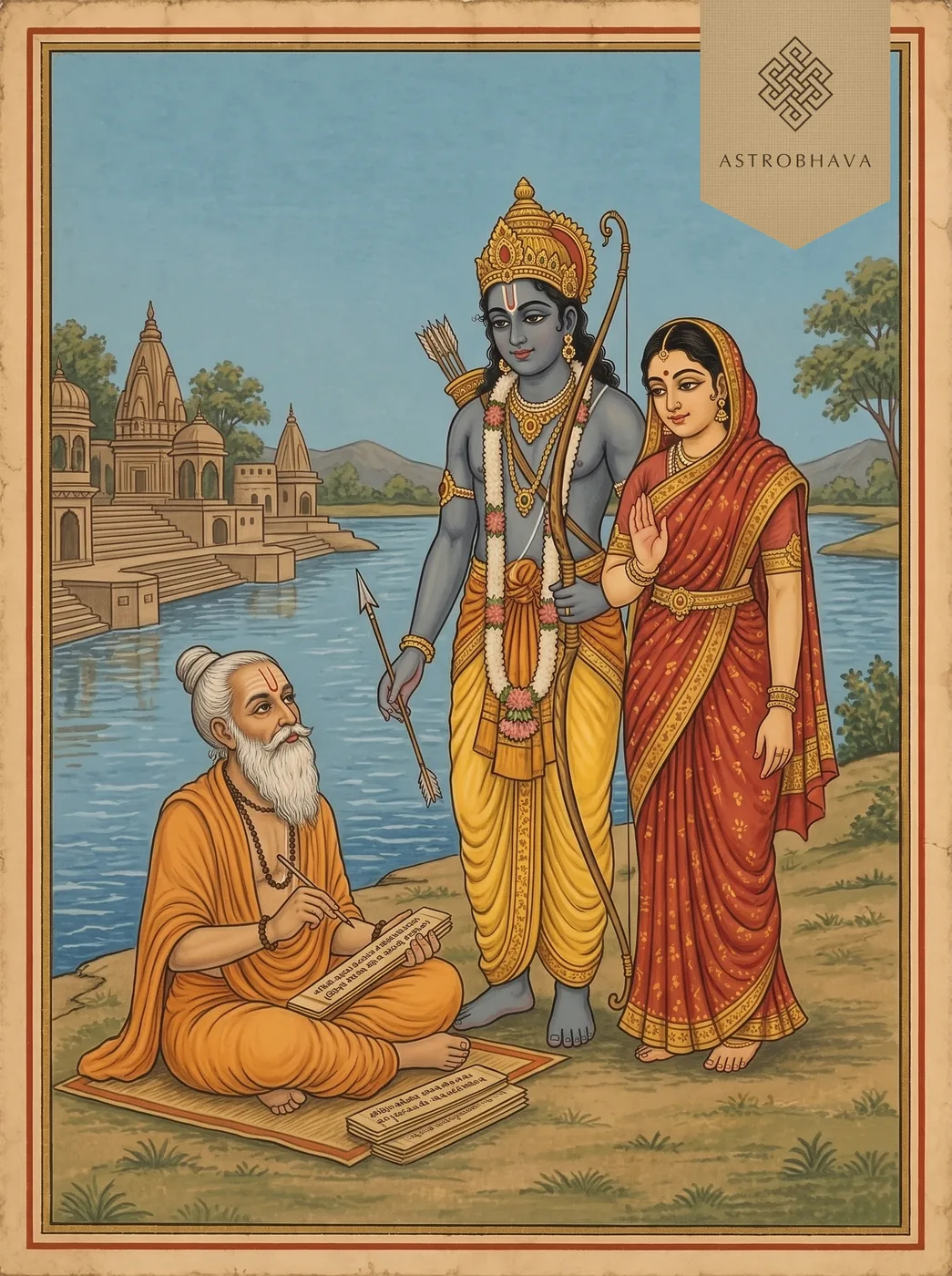
Shri Ram Chandra Kripalu
श्रीरामचंद्र कृपालु भजु मन हरण भवभय दारुणं । नवकंज-लोचन, कंज-मुख, कर-कंज, पद कंजारुणं ॥Also known as Shri Ramchandra Kripalu Bhaj Man
In Devanagari, Tamil, Telugu, Kannada, Malayalam and English — with the meaning of every word, and the one syllable most people pronounce wrongly.
What the Shri Ram Chandra Kripalu is
Shri Ramachandra Kripalu, also written Shri Ram Chandra Kripalu and often printed as Shri Ram Stuti, is pada 45 of Goswami Tulsidas's Vinaya Patrika, set in Raga Gauri. It addresses Rama, but its first word of command is to the singer's own mind: bhaju mana, O mind, worship. The five stanzas move from looking to asking. Stanza 1 builds Rama out of lotuses: lotus eyes, lotus face, lotus hands, feet red as lotuses. Stanza 2 compares him to a fresh rain cloud, with his yellow cloth as the lightning, and names him the husband of Janaka's daughter. Stanza 3 strings together his titles: friend of the lowly, son of Dasharatha, moon of Kosala. Stanza 4 pictures his crown, earrings and knee-length arms holding bow and arrow, and recalls his victory over Khara and Dushana. Stanza 5 carries the poet's signature and a single request: that Rama live in the lotus of his heart and break the band of desire and the other passions.
A petition filed in Rama's court
The book this hymn comes from is framed as a legal plea. Vinaya Patrika means, roughly, a letter of humble petition, and it gathers 279 padas, widely regarded as among the last works Tulsidas composed. According to a tradition retold by Swami Yatiswarananda and others, Kali, the spirit of the dark age, began to torment the poet. Tulsidas turned to Hanuman, who came to him in a dream and told him to take his case directly to Rama. The result reads like a court file: Tulsidas is the plaintiff speaking for all people, Hanuman acts as his advocate, and the charges are laid against the six passions, including lust, anger and greed, and a list of vices that flourish in the Kali age. Before reaching Rama, the collection also praises Ganesha, Surya, Devi, Ganga, Hanuman, Sita and the city of Kashi. In its closing padas the poet asks Bharata, Lakshmana, Shatrughna and Hanuman to vouch for him, and the last pada states that Rama himself signed the petition. Pada 45 fits this frame closely: its last line asks Rama to destroy the band of kama and the passions that follow it, the very defendants named in the plea. Many Hindu households in North India sing this pada as their evening aarti.
The mantra, in six scripts
- श्रीरामचंद्र
- śrīrāmacaṃdra — Shri Ramachandra
- कृपालु
- kṛpālu — the compassionate
- भजु
- bhaju — worship
- मन
- mana — O mind
- हरण
- haraṇa — remover of
- भवभय
- bhavabhaya — fear of worldly existence
- दारुणं
- dāruṇaṃ — terrible
- नवकंज-लोचन
- navakaṃja-locana — eyes like fresh lotuses
- कंज-मुख
- kaṃja-mukha — lotus face
- कर-कंज
- kara-kaṃja — lotus hands
- पद
- pada — feet
- कंजारुणं
- kaṃjāruṇaṃ — red as lotuses
Shri Ram Chandra Kripalu lyrics in full
All 5 verses, in Hindi, Tamil, Telugu, Kannada, Malayalam and English, each with its meaning. Choose a script:
Download the Shri Ram Chandra Kripalu PDFAll 5 verses with their meanings, in Hindi. Free to print and keep.
श्रीरामचंद्र कृपालु भजु मन हरण भवभय दारुणं ।
नवकंज-लोचन, कंज-मुख, कर-कंज, पद कंजारुणं ॥
ஶ்ரீராமசம்த்ர க்ருபாலு பஜு மந ஹரண பவபய தாருணம் ।
நவகம்ஜ-லோசந, கம்ஜ-முக, கர-கம்ஜ, பத கம்ஜாருணம் ॥
శ్రీరామచంద్ర కృపాలు భజు మన హరణ భవభయ దారుణం ।
నవకంజ-లోచన, కంజ-ముఖ, కర-కంజ, పద కంజారుణం ॥
ಶ್ರೀರಾಮಚಂದ್ರ ಕೃಪಾಲು ಭಜು ಮನ ಹರಣ ಭವಭಯ ದಾರುಣಂ ।
ನವಕಂಜ-ಲೋಚನ, ಕಂಜ-ಮುಖ, ಕರ-ಕಂಜ, ಪದ ಕಂಜಾರುಣಂ ॥
ശ്രീരാമചംദ്ര കൃപാലു ഭജു മന ഹരണ ഭവഭയ ദാരുണം ।
നവകംജ-ലോചന, കംജ-മുഖ, കര-കംജ, പദ കംജാരുണം ॥
śrīrāmacaṃdra kṛpālu bhaju mana haraṇa bhavabhaya dāruṇaṃ |
navakaṃja-locana, kaṃja-mukha, kara-kaṃja, pada kaṃjāruṇaṃ ||
O mind, worship the compassionate Shri Ramachandra, who removes the terrible fear of worldly existence. His eyes are like fresh lotuses, and his face, hands and feet are like red lotuses.
कंदर्प अगणित अमित छवि, नवनील नीरद सुंदरं ।
पट पीत मानहु तड़ित रुचि शुचि नौमि जनक सुतावरं ॥
கம்தர்ப அகணித அமித சவி, நவநீல நீரத ஸும்தரம் ।
பட பீத மாநஹு தடித ருசி ஶுசி நௌமி ஜநக ஸுதாவரம் ॥
కందర్ప అగణిత అమిత ఛవి, నవనీల నీరద సుందరం ।
పట పీత మానహు తడిత రుచి శుచి నౌమి జనక సుతావరం ॥
ಕಂದರ್ಪ ಅಗಣಿತ ಅಮಿತ ಛವಿ, ನವನೀಲ ನೀರದ ಸುಂದರಂ ।
ಪಟ ಪೀತ ಮಾನಹು ತಡಿತ ರುಚಿ ಶುಚಿ ನೌಮಿ ಜನಕ ಸುತಾವರಂ ॥
കംദര്പ അഗണിത അമിത ഛവി, നവനീല നീരദ സുംദരം ।
പട പീത മാനഹു തഡിത രുചി ശുചി നൌമി ജനക സുതാവരം ॥
kaṃdarpa agaṇita amita chavi, navanīla nīrada suṃdaraṃ |
paṭa pīta mānahu taṛita ruci śuci naumi janaka sutāvaraṃ ||
His beauty surpasses countless Kamadevas, and he is lovely like a fresh dark-blue rain cloud. His yellow garment shines like lightning; I bow to that pure one, the husband of Janaka's daughter.
भजु दीनबंधु दिनेश दानव-दैत्य-वंश निकंदनं ।
रघुनंद आनँदकंद कोशलचंद दशरथ-नंदनं ॥
பஜு தீநபம்து திநேஶ தாநவ-தைத்ய-வம்ஶ நிகம்தநம் ।
ரகுநம்த ஆநம்தகம்த கோஶலசம்த தஶரத-நம்தநம் ॥
భజు దీనబంధు దినేశ దానవ-దైత్య-వంశ నికందనం ।
రఘునంద ఆనఁదకంద కోశలచంద దశరథ-నందనం ॥
ಭಜು ದೀನಬಂಧು ದಿನೇಶ ದಾನವ-ದೈತ್ಯ-ವಂಶ ನಿಕಂದನಂ ।
ರಘುನಂದ ಆನಁದಕಂದ ಕೋಶಲಚಂದ ದಶರಥ-ನಂದನಂ ॥
ഭജു ദീനബംധു ദിനേശ ദാനവ-ദൈത്യ-വംശ നികംദനം ।
രഘുനംദ ആനഁദകംദ കോശലചംദ ദശരഥ-നംദനം ॥
bhaju dīnabaṃdhu dineśa dānava-daitya-vaṃśa nikaṃdanaṃ |
raghunaṃda ānaṃdakaṃda kośalacaṃda daśaratha-naṃdanaṃ ||
Worship the friend of the lowly, radiant like the sun, who uproots the clans of demons. He is the joy of the Raghu line, the root of bliss, the moon of Kosala and the son of Dasharatha.
सिर मुकुट कुंडल तिलक चारु उदारु अंग विभूषणं ।
आजानुभुज शर-चाप-धर, संग्राम-जित-खरदूषणं ॥
ஸிர முகுட கும்டல திலக சாரு உதாரு அம்க விபூஷணம் ।
ஆஜாநுபுஜ ஶர-சாப-தர, ஸம்க்ராம-ஜித-கரதூஷணம் ॥
సిర ముకుట కుండల తిలక చారు ఉదారు అంగ విభూషణం ।
ఆజానుభుజ శర-చాప-ధర, సంగ్రామ-జిత-ఖరదూషణం ॥
ಸಿರ ಮುಕುಟ ಕುಂಡಲ ತಿಲಕ ಚಾರು ಉದಾರು ಅಂಗ ವಿಭೂಷಣಂ ।
ಆಜಾನುಭುಜ ಶರ-ಚಾಪ-ಧರ, ಸಂಗ್ರಾಮ-ಜಿತ-ಖರದೂಷಣಂ ॥
സിര മുകുട കുംഡല തിലക ചാരു ഉദാരു അംഗ വിഭൂഷണം ।
ആജാനുഭുജ ശര-ചാപ-ധര, സംഗ്രാമ-ജിത-ഖരദൂഷണം ॥
sira mukuṭa kuṃḍala tilaka cāru udāru aṃga vibhūṣaṇaṃ |
ājānubhuja śara-cāpa-dhara, saṃgrāma-jita-kharadūṣaṇaṃ ||
He wears a crown on his head, earrings and a lovely tilak, with fine ornaments on every limb. His arms reach to his knees, he carries bow and arrows, and he defeated Khara and Dushana in battle.
इति वदति तुलसीदास शंकर-शेष-मुनि-मन-रंजनं ।
मम हृदय कंज निवास कुरु, कामादि खल-दल-गंजनं ॥
இதி வததி துலஸீதாஸ ஶம்கர-ஶேஷ-முநி-மந-ரம்ஜநம் ।
மம ஹ்ருதய கம்ஜ நிவாஸ குரு, காமாதி கல-தல-கம்ஜநம் ॥
ఇతి వదతి తులసీదాస శంకర-శేష-ముని-మన-రంజనం ।
మమ హృదయ కంజ నివాస కురు, కామాది ఖల-దల-గంజనం ॥
ಇತಿ ವದತಿ ತುಲಸೀದಾಸ ಶಂಕರ-ಶೇಷ-ಮುನಿ-ಮನ-ರಂಜನಂ ।
ಮಮ ಹೃದಯ ಕಂಜ ನಿವಾಸ ಕುರು, ಕಾಮಾದಿ ಖಲ-ದಲ-ಗಂಜನಂ ॥
ഇതി വദതി തുലസീദാസ ശംകര-ശേഷ-മുനി-മന-രംജനം ।
മമ ഹൃദയ കംജ നിവാസ കുരു, കാമാദി ഖല-ദല-ഗംജനം ॥
iti vadati tulasīdāsa śaṃkara-śeṣa-muni-mana-raṃjanaṃ |
mama hṛdaya kaṃja nivāsa kuru, kāmādi khala-dala-gaṃjanaṃ ||
Thus says Tulasidas: O delight of the minds of Shiva, Shesha and the sages, destroyer of the wicked host of desire and the other passions, make your dwelling in the lotus of my heart.
The syllable people get wrong
In stanza 2, taṛita (lightning, written तड़ित) has the retroflex flap ṛ (ड़): curl the tongue tip back and flick it forward once. Avoid both a plain English 'r' ('ta-rit') and a hard 'd' ('ta-dit').
When the Shri Ram Chandra Kripalu is chanted
Weekday. Thursday
Festival. Rama Navami
Questions
Have your chart read before you decide
Chanting is yours to do, and free. But which deity your situation calls for — and whether a mantra alone is the right response — depends on your chart. Sometimes it is; sometimes it is not.
- Over 30 years in the Guru–Sishya Parampara, from the age of five
- He reads every chart himself — 60 minutes, one to one, never delegated
- Charts are read only between sunrise and sunset, following tradition