Ahoi Mata Aarti
जय अहोई माता, जय अहोई माता । तुमको निसदिन ध्यावत, हर विष्णु विधाता ॥Also known as Jai Ahoi Mata
In Devanagari, Tamil, Telugu, Kannada, Malayalam and English — with the meaning of every word, and the one syllable most people pronounce wrongly.
 The Durga Homam, performed for youBook →
What the Ahoi Mata Aarti is
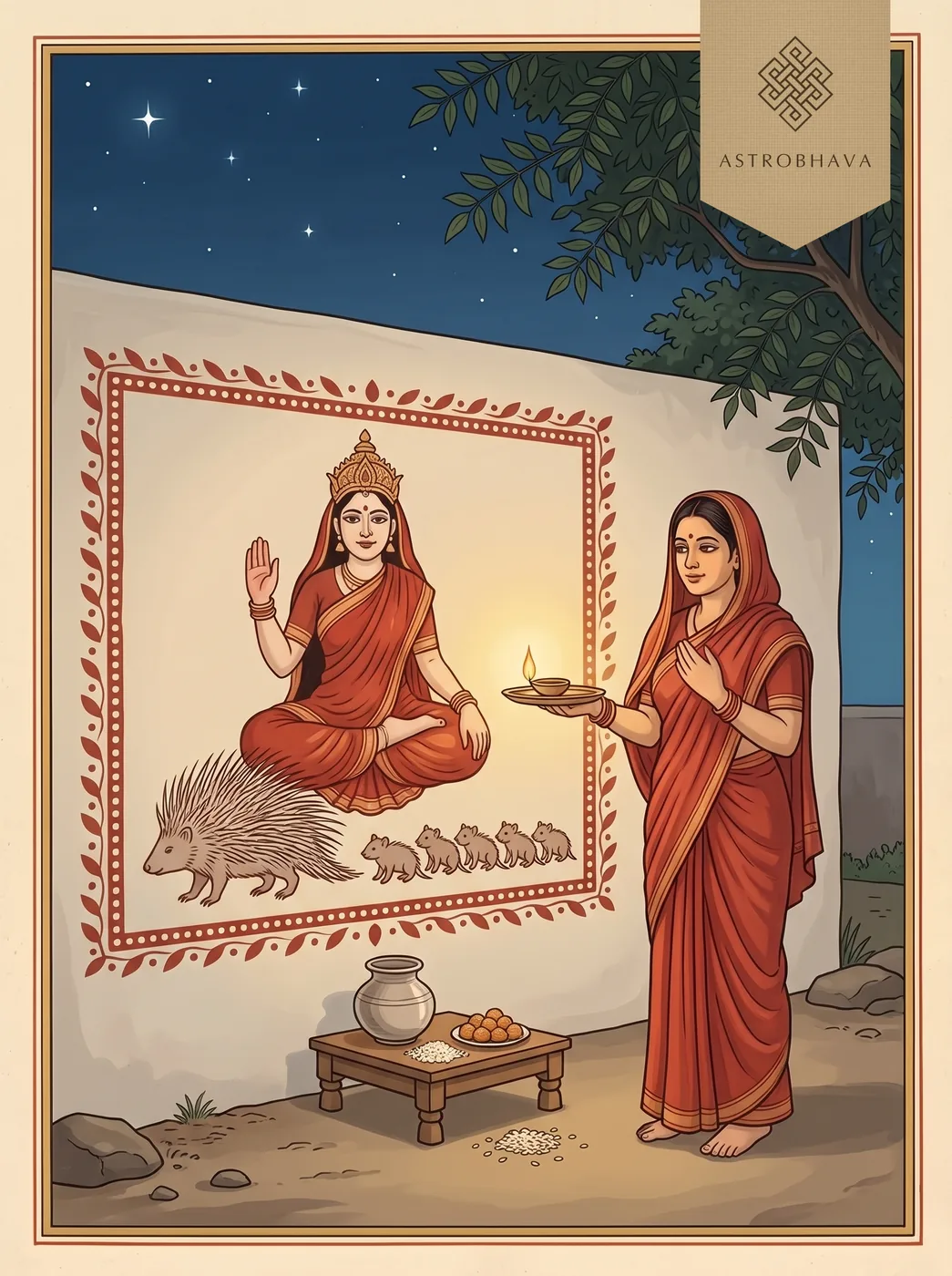
The Ahoi Mata Aarti, sung as "Jai Ahoi Mata", is the Hindi lamp hymn that closes the evening puja of Ahoi Ashtami, when mothers in North India worship Ahoi Mata for the welfare of their children. It is a folk text, and no printing names an author. The opening couplet is the refrain: it hails the Mother twice and says that Hara, Vishnu and the Creator meditate on her night and day, and the line "Om Jai Ahoi Mata" is sung again after every stanza. Seven short stanzas follow. The first calls her Brahmani, Rudrani and Kamala at once, the consorts of the three gods just named, with the Sun, the Moon and Narada among her worshippers. The middle stanzas move from her spotless form to her dwelling in the netherworld and in the home where good qualities gather. The sixth gives her Lakshmi's birth from the ocean of milk, and the seventh is the phala verse: it says sins fall away from whoever sings it.
The red earth dug before Diwali
Ahoi Ashtami falls on the eighth day of the waning moon in Kartika, eight days before Diwali and four days after Karva Chauth. According to the story told on the day, a moneylender's wife with seven sons went into the forest shortly before Diwali to dig red earth for plastering her house. Her spade struck the den of a syahu, a porcupine, and killed one of its young. She came home troubled, and within the year her sons died one after another. The older women of the village told her to fast on the Ashtami and worship Ahoi Bhagavati, drawing the syahu and its cubs beside the goddess, and the story ends with her sons given back to her. Some tellings make the animal a lioness's cub, and some say Parvati herself restored the sons. The day's puja keeps the story's details. The image is drawn in red ochre on a wall, with eight sections for the Ashtami, the seven sons and the syahu family, and a silver pendant called the syau is worshipped beside it. Mothers fast from dawn, hear the katha, sing this aarti and offer water to the stars when they appear; some wait for the moon. Near Govardhan, large crowds bathe in Radha Kund at midnight, the hour tradition gives for the pond's appearance.
The mantra, in six scripts
- जय
- jaya — victory
- अहोई
- ahoī — Ahoi
- माता
- mātā — Mother
- जय
- jaya — victory
- अहोई
- ahoī — Ahoi
- माता
- mātā — Mother
- तुमको
- tumako — on you
- निसदिन
- nisadina — night and day
- ध्यावत
- dhyāvata — meditate
- हर
- hara — Hara (Shiva)
- विष्णु
- viṣṇu — Vishnu
- विधाता
- vidhātā — the Creator (Brahma)
Ahoi Mata Aarti lyrics in full
A refrain and seven stanzas; the line "Om Jai Ahoi Mata" is sung again after each stanza.
All 8 verses, in Hindi, Tamil, Telugu, Kannada, Malayalam and English, each with its meaning. Choose a script:
Download the Ahoi Mata Aarti PDFAll 8 verses with their meanings, in Hindi. Free to print and keep.
जय अहोई माता,
जय अहोई माता ।
तुमको निसदिन ध्यावत,
हर विष्णु विधाता ॥
ஜய அஹோஈ மாதா,
ஜய அஹோஈ மாதா ।
துமகோ நிஸதிந த்யாவத,
ஹர விஷ்ணு விதாதா ॥
జయ అహోఈ మాతా,
జయ అహోఈ మాతా ।
తుమకో నిసదిన ధ్యావత,
హర విష్ణు విధాతా ॥
ಜಯ ಅಹೋಈ ಮಾತಾ,
ಜಯ ಅಹೋಈ ಮಾತಾ ।
ತುಮಕೋ ನಿಸದಿನ ಧ್ಯಾವತ,
ಹರ ವಿಷ್ಣು ವಿಧಾತಾ ॥
ജയ അഹോഈ മാതാ,
ജയ അഹോഈ മാതാ ।
തുമകോ നിസദിന ധ്യാവത,
ഹര വിഷ്ണു വിധാതാ ॥
jaya ahoī mātā,
jaya ahoī mātā |
tumako nisadina dhyāvata,
hara viṣṇu vidhātā ||
Victory to Mother Ahoi, victory to Mother Ahoi. Hara (Shiva), Vishnu and Brahma the Creator meditate on you night and day.
ब्रह्माणी, रुद्राणी, कमला,
तू ही है जगमाता ।
सूर्य-चन्द्रमा ध्यावत,
नारद ऋषि गाता ॥
ப்ரஹ்மாணீ, ருத்ராணீ, கமலா,
தூ ஹீ ஹை ஜகமாதா ।
ஸூர்ய-சந்த்ரமா த்யாவத,
நாரத ருஷி காதா ॥
బ్రహ్మాణీ, రుద్రాణీ, కమలా,
తూ హీ హై జగమాతా ।
సూర్య-చన్ద్రమా ధ్యావత,
నారద ఋషి గాతా ॥
ಬ್ರಹ್ಮಾಣೀ, ರುದ್ರಾಣೀ, ಕಮಲಾ,
ತೂ ಹೀ ಹೈ ಜಗಮಾತಾ ।
ಸೂರ್ಯ-ಚನ್ದ್ರಮಾ ಧ್ಯಾವತ,
ನಾರದ ಋಷಿ ಗಾತಾ ॥
ബ്രഹ്മാണീ, രുദ്രാണീ, കമലാ,
തൂ ഹീ ഹൈ ജഗമാതാ ।
സൂര്യ-ചന്ദ്രമാ ധ്യാവത,
നാരദ ഋഷി ഗാതാ ॥
brahmāṇī, rudrāṇī, kamalā,
tū hī hai jagamātā |
sūrya-candramā dhyāvata,
nārada ṛṣi gātā ||
You alone are Brahmani, Rudrani and Kamala, the Mother of the world. The Sun and the Moon meditate on you, and the sage Narada sings your praise.
माता रूप निरंजन,
सुख-सम्पत्ति दाता ।
जो कोई तुमको ध्यावत,
नित मंगल पाता ॥
மாதா ரூப நிரம்ஜந,
ஸுக-ஸம்பத்தி தாதா ।
ஜோ கோஈ துமகோ த்யாவத,
நித மம்கல பாதா ॥
మాతా రూప నిరంజన,
సుఖ-సమ్పత్తి దాతా ।
జో కోఈ తుమకో ధ్యావత,
నిత మంగల పాతా ॥
ಮಾತಾ ರೂಪ ನಿರಂಜನ,
ಸುಖ-ಸಮ್ಪತ್ತಿ ದಾತಾ ।
ಜೋ ಕೋಈ ತುಮಕೋ ಧ್ಯಾವತ,
ನಿತ ಮಂಗಲ ಪಾತಾ ॥
മാതാ രൂപ നിരംജന,
സുഖ-സമ്പത്തി ദാതാ ।
ജോ കോഈ തുമകോ ധ്യാവത,
നിത മംഗല പാതാ ॥
mātā rūpa niraṃjana,
sukha-sampatti dātā |
jo koī tumako dhyāvata,
nita maṃgala pātā ||
Mother, your form is spotless, and you give happiness and wealth. The verse says that whoever meditates on you receives blessings every day.
तू ही पाताल बसंती,
तू ही है शुभदाता ।
कर्म-प्रभाव प्रकाशक,
जगनिधि से त्राता ॥
தூ ஹீ பாதால பஸம்தீ,
தூ ஹீ ஹை ஶுபதாதா ।
கர்ம-ப்ரபாவ ப்ரகாஶக,
ஜகநிதி ஸே த்ராதா ॥
తూ హీ పాతాల బసంతీ,
తూ హీ హై శుభదాతా ।
కర్మ-ప్రభావ ప్రకాశక,
జగనిధి సే త్రాతా ॥
ತೂ ಹೀ ಪಾತಾಲ ಬಸಂತೀ,
ತೂ ಹೀ ಹೈ ಶುಭದಾತಾ ।
ಕರ್ಮ-ಪ್ರಭಾವ ಪ್ರಕಾಶಕ,
ಜಗನಿಧಿ ಸೇ ತ್ರಾತಾ ॥
തൂ ഹീ പാതാല ബസംതീ,
തൂ ഹീ ഹൈ ശുഭദാതാ ।
കര്മ-പ്രഭാവ പ്രകാശക,
ജഗനിധി സേ ത്രാതാ ॥
tū hī pātāla basaṃtī,
tū hī hai śubhadātā |
karma-prabhāva prakāśaka,
jaganidhi se trātā ||
You dwell in the netherworld, and you are the giver of all that is auspicious. You make the working of karma plain and rescue from the ocean of the world.
जिस घर थारो वासा,
वाहि में गुण आता ।
कर न सके सोई कर ले,
मन नहीं घबराता ॥
ஜிஸ கர தாரோ வாஸா,
வாஹி மேம் குண ஆதா ।
கர ந ஸகே ஸோஈ கர லே,
மந நஹீம் கபராதா ॥
జిస ఘర థారో వాసా,
వాహి మేం గుణ ఆతా ।
కర న సకే సోఈ కర లే,
మన నహీం ఘబరాతా ॥
ಜಿಸ ಘರ ಥಾರೋ ವಾಸಾ,
ವಾಹಿ ಮೇಂ ಗುಣ ಆತಾ ।
ಕರ ನ ಸಕೇ ಸೋಈ ಕರ ಲೇ,
ಮನ ನಹೀಂ ಘಬರಾತಾ ॥
ജിസ ഘര ഥാരോ വാസാ,
വാഹി മേം ഗുണ ആതാ ।
കര ന സകേ സോഈ കര ലേ,
മന നഹീം ഘബരാതാ ॥
jisa ghara thāro vāsā,
vāhi meṃ guṇa ātā |
kara na sake soī kara le,
mana nahīṃ ghabarātā ||
Good qualities come into the home where you dwell. The verse says such a devotee can do even what he could not do before, and his mind does not take fright.
तुम बिन सुख न होवे,
न कोई पुत्र पाता ।
खान-पान का वैभव,
तुम बिन नहीं आता ॥
தும பிந ஸுக ந ஹோவே,
ந கோஈ புத்ர பாதா ।
காந-பாந கா வைபவ,
தும பிந நஹீம் ஆதா ॥
తుమ బిన సుఖ న హోవే,
న కోఈ పుత్ర పాతా ।
ఖాన-పాన కా వైభవ,
తుమ బిన నహీం ఆతా ॥
ತುಮ ಬಿನ ಸುಖ ನ ಹೋವೇ,
ನ ಕೋಈ ಪುತ್ರ ಪಾತಾ ।
ಖಾನ-ಪಾನ ಕಾ ವೈಭವ,
ತುಮ ಬಿನ ನಹೀಂ ಆತಾ ॥
തുമ ബിന സുഖ ന ഹോവേ,
ന കോഈ പുത്ര പാതാ ।
ഖാന-പാന കാ വൈഭവ,
തുമ ബിന നഹീം ആതാ ॥
tuma bina sukha na hove,
na koī putra pātā |
khāna-pāna kā vaibhava,
tuma bina nahīṃ ātā ||
Without you there is no happiness, and no one is blessed with a son. Without you the plenty of food and drink does not come.
शुभ गुण सुंदर युक्ता,
क्षीर निधि जाता ।
रतन चतुर्दश तोकू,
कोई नहीं पाता ॥
ஶுப குண ஸும்தர யுக்தா,
க்ஷீர நிதி ஜாதா ।
ரதந சதுர்தஶ தோகூ,
கோஈ நஹீம் பாதா ॥
శుభ గుణ సుందర యుక్తా,
క్షీర నిధి జాతా ।
రతన చతుర్దశ తోకూ,
కోఈ నహీం పాతా ॥
ಶುಭ ಗುಣ ಸುಂದರ ಯುಕ್ತಾ,
ಕ್ಷೀರ ನಿಧಿ ಜಾತಾ ।
ರತನ ಚತುರ್ದಶ ತೋಕೂ,
ಕೋಈ ನಹೀಂ ಪಾತಾ ॥
ശുഭ ഗുണ സുംദര യുക്താ,
ക്ഷീര നിധി ജാതാ ।
രതന ചതുര്ദശ തോകൂ,
കോഈ നഹീം പാതാ ॥
śubha guṇa suṃdara yuktā,
kṣīra nidhi jātā |
ratana caturdaśa tokū,
koī nahīṃ pātā ||
You are endowed with auspicious and beautiful qualities, born of the ocean of milk. Even the fourteen jewels, the stanza says, cannot equal you.
श्री अहोई माँ की आरती,
जो कोई गाता ।
उर उमंग अति उपजे,
पाप उतर जाता ॥
ஶ்ரீ அஹோஈ மாம் கீ ஆரதீ,
ஜோ கோஈ காதா ।
உர உமம்க அதி உபஜே,
பாப உதர ஜாதா ॥
శ్రీ అహోఈ మాఁ కీ ఆరతీ,
జో కోఈ గాతా ।
ఉర ఉమంగ అతి ఉపజే,
పాప ఉతర జాతా ॥
ಶ್ರೀ ಅಹೋಈ ಮಾಁ ಕೀ ಆರತೀ,
ಜೋ ಕೋಈ ಗಾತಾ ।
ಉರ ಉಮಂಗ ಅತಿ ಉಪಜೇ,
ಪಾಪ ಉತರ ಜಾತಾ ॥
ശ്രീ അഹോഈ മാഁ കീ ആരതീ,
ജോ കോഈ ഗാതാ ।
ഉര ഉമംഗ അതി ഉപജേ,
പാപ ഉതര ജാതാ ॥
śrī ahoī māṃ kī āratī,
jo koī gātā |
ura umaṃga ati upaje,
pāpa utara jātā ||
Whoever sings this aarti of Shri Ahoi Mother, the verse says, feels great joy rise in the heart, and that person's sins fall away.
The syllable people get wrong
In the fourth stanza, थारो (thāro) is the dialect word for "your"; the th is a soft dental t with a breath after it, as in Hindi thālī, never the English th of "thin", and the first vowel is long: THAA-ro.
When the Ahoi Mata Aarti is chanted
Weekday. Friday
Festival. Ahoi Ashtami (Kartika Krishna Ashtami)
Questions
Have your chart read before you decide
Chanting is yours to do, and free. But which deity your situation calls for — and whether a mantra alone is the right response — depends on your chart. Sometimes it is; sometimes it is not.
- Over 30 years in the Guru–Sishya Parampara, from the age of five
- He reads every chart himself — 60 minutes, one to one, never delegated
- Charts are read only between sunrise and sunset, following tradition
