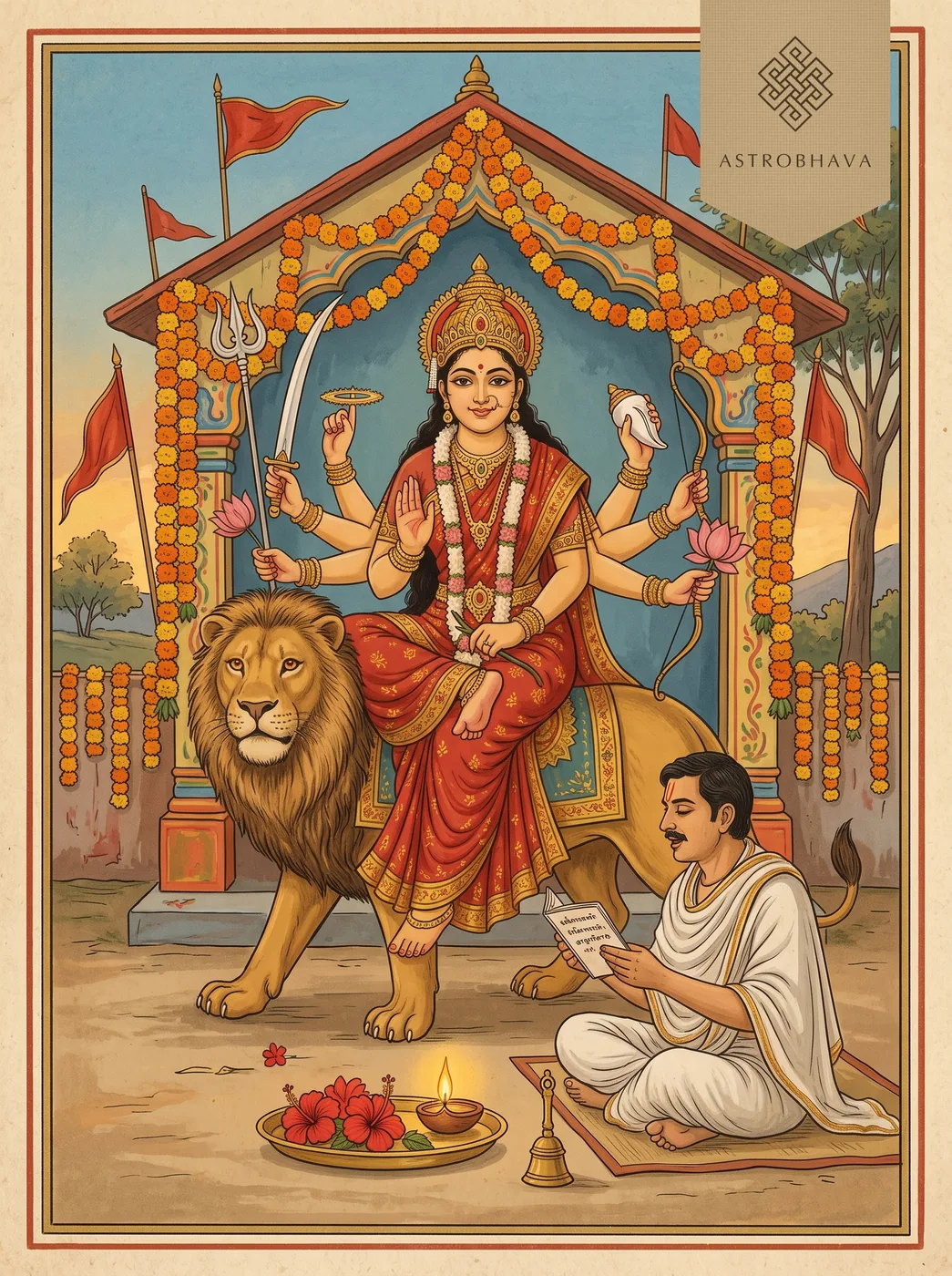
Durga Chalisa
नमो नमो दुर्गे सुख करनी । नमो नमो अम्बे दुःख हरनी ॥In Devanagari, Tamil, Telugu, Kannada, Malayalam and English — with the meaning of every word, and the one syllable most people pronounce wrongly.
What the Durga Chalisa is
The Durga Chalisa is a Hindi hymn of forty chaupai lines addressed to Durga as Amba, Bhavani and Jagadamba, closed by a forty-first line that names its poet, Devidas. Nothing further is recorded about him, and the printed editions give no date. The language is the Awadhi-tinged Hindi of the north Indian chalisa tradition, not Sanskrit. As a sequence, the lines first describe her face and her formless light, then claim the other goddesses and even Vishnu's deeds as her own: Annapurna, Gauri, Sarasvati, Lakshmi, and the Narasimha who burst from the pillar. Lines 15 and 16 pack seven of the ten Mahavidyas into two couplets. Shrines follow, at Hinglaj, Nagarkot and Jwala, then the battles with Shumbha, Nishumbha, Raktabija and Mahishasura. Lines 30 to 34 tell a story about Shankaracharya, and lines 35 to 39 turn to the singer's own troubles.
Shankara, the lost Shakti and Devidas
Unlike many chalisas, this one carries its own story inside the verses. Lines 30 to 34 say that Shankara Acharya performed austerities, mastered desire and anger, and meditated day and night on Shiva while never once remembering the Goddess. Because he had not understood her as Shakti, his power left him. He repented, took refuge, and sang 'jaya jaya jaya Jagadamba Bhavani', and she restored his strength without delay. The Chalisa does not say where this happened. A popular legend, told in several forms, supplies a setting. In one version Shankara travelled to Kashmir to debate the Shaktas, was struck down by an illness that left him unable to move or speak, and was approached by a young girl who asked how he could deny Shakti when he could not stir without it. He bowed to her as the Goddess. Another telling, set at Manikarnika Ghat in Kashi, has a grieving widow ask how a corpse could rise without energy before she vanishes and Durga appears. Devidas seems to place himself in Shankara's position: right after the episode, line 35 opens 'moko matu kashta ati ghero', great troubles surround me, and the poet asks for the same grace.
The mantra, in six scripts
- नमो
- namo — salutation
- नमो
- namo — salutation
- दुर्गे
- durge — O Durga
- सुख
- sukha — happiness
- करनी
- karanī — giver, maker of
- नमो
- namo — salutation
- नमो
- namo — salutation
- अम्बे
- ambe — O Mother, Amba
- दुःख
- duḥkha — sorrow
- हरनी
- haranī — remover of
Durga Chalisa lyrics in full
All 41 verses, in Hindi, Tamil, Telugu, Kannada, Malayalam and English, each with its meaning. Choose a script:
Download the Durga Chalisa PDFAll 41 verses with their meanings, in Hindi. Free to print and keep.
नमो नमो दुर्गे सुख करनी ।
नमो नमो अम्बे दुःख हरनी ॥
நமோ நமோ துர்கே ஸுக கரநீ ।
நமோ நமோ அம்பே துஃக ஹரநீ ॥
నమో నమో దుర్గే సుఖ కరనీ ।
నమో నమో అమ్బే దుఃఖ హరనీ ॥
ನಮೋ ನಮೋ ದುರ್ಗೇ ಸುಖ ಕರನೀ ।
ನಮೋ ನಮೋ ಅಮ್ಬೇ ದುಃಖ ಹರನೀ ॥
നമോ നമോ ദുര്ഗേ സുഖ കരനീ ।
നമോ നമോ അമ്ബേ ദുഃഖ ഹരനീ ॥
namo namo durge sukha karanī |
namo namo ambe duḥkha haranī ||
Salutations, salutations to Durga, giver of happiness; salutations, salutations to Amba, remover of sorrow.
निरंकार है ज्योति तुम्हारी ।
तिहूँ लोक फैली उजियारी ॥
நிரம்கார ஹை ஜ்யோதி தும்ஹாரீ ।
திஹூம் லோக பைலீ உஜியாரீ ॥
నిరంకార హై జ్యోతి తుమ్హారీ ।
తిహూఁ లోక ఫైలీ ఉజియారీ ॥
ನಿರಂಕಾರ ಹೈ ಜ್ಯೋತಿ ತುಮ್ಹಾರೀ ।
ತಿಹೂಁ ಲೋಕ ಫೈಲೀ ಉಜಿಯಾರೀ ॥
നിരംകാര ഹൈ ജ്യോതി തുമ്ഹാരീ ।
തിഹൂഁ ലോക ഫൈലീ ഉജിയാരീ ॥
niraṃkāra hai jyoti tumhārī |
tihūṃ loka phailī ujiyārī ||
Your light is formless, and its radiance spreads through the three worlds.
शशि ललाट मुख महाविशाला ।
नेत्र लाल भृकुटि विकराला ॥
ஶஶி லலாட முக மஹாவிஶாலா ।
நேத்ர லால ப்ருகுடி விகராலா ॥
శశి లలాట ముఖ మహావిశాలా ।
నేత్ర లాల భృకుటి వికరాలా ॥
ಶಶಿ ಲಲಾಟ ಮುಖ ಮಹಾವಿಶಾಲಾ ।
ನೇತ್ರ ಲಾಲ ಭೃಕುಟಿ ವಿಕರಾಲಾ ॥
ശശി ലലാട മുഖ മഹാവിശാലാ ।
നേത്ര ലാല ഭൃകുടി വികരാലാ ॥
śaśi lalāṭa mukha mahāviśālā |
netra lāla bhṛkuṭi vikarālā ||
The moon is on your forehead and your face is vast; your eyes are red and your brows are fearsome.
रूप मातु को अधिक सुहावे ।
दरश करत जन अति सुख पावे ॥
ரூப மாது கோ அதிக ஸுஹாவே ।
தரஶ கரத ஜந அதி ஸுக பாவே ॥
రూప మాతు కో అధిక సుహావే ।
దరశ కరత జన అతి సుఖ పావే ॥
ರೂಪ ಮಾತು ಕೋ ಅಧಿಕ ಸುಹಾವೇ ।
ದರಶ ಕರತ ಜನ ಅತಿ ಸುಖ ಪಾವೇ ॥
രൂപ മാതു കോ അധിക സുഹാവേ ।
ദരശ കരത ജന അതി സുഖ പാവേ ॥
rūpa mātu ko adhika suhāve |
daraśa karata jana ati sukha pāve ||
The Mother's form is surpassingly lovely; people who behold it feel great joy.
तुम संसार शक्ति लै कीना ।
पालन हेतु अन्न धन दीना ॥
தும ஸம்ஸார ஶக்தி லை கீநா ।
பாலந ஹேது அந்ந தந தீநா ॥
తుమ సంసార శక్తి లై కీనా ।
పాలన హేతు అన్న ధన దీనా ॥
ತುಮ ಸಂಸಾರ ಶಕ್ತಿ ಲೈ ಕೀನಾ ।
ಪಾಲನ ಹೇತು ಅನ್ನ ಧನ ದೀನಾ ॥
തുമ സംസാര ശക്തി ലൈ കീനാ ।
പാലന ഹേതു അന്ന ധന ദീനാ ॥
tuma saṃsāra śakti lai kīnā |
pālana hetu anna dhana dīnā ||
You gave the world its power, and to sustain it you gave food and wealth.
अन्नपूर्णा हुई जग पाला ।
तुम ही आदि सुन्दरी बाला ॥
அந்நபூர்ணா ஹுஈ ஜக பாலா ।
தும ஹீ ஆதி ஸுந்தரீ பாலா ॥
అన్నపూర్ణా హుఈ జగ పాలా ।
తుమ హీ ఆది సున్దరీ బాలా ॥
ಅನ್ನಪೂರ್ಣಾ ಹುಈ ಜಗ ಪಾಲಾ ।
ತುಮ ಹೀ ಆದಿ ಸುನ್ದರೀ ಬಾಲಾ ॥
അന്നപൂര്ണാ ഹുഈ ജഗ പാലാ ।
തുമ ഹീ ആദി സുന്ദരീ ബാലാ ॥
annapūrṇā huī jaga pālā |
tuma hī ādi sundarī bālā ||
As Annapurna you nourish the world; you are the primal beautiful maiden.
प्रलयकाल सब नाशन हारी ।
तुम गौरी शिवशंकर प्यारी ॥
ப்ரலயகால ஸப நாஶந ஹாரீ ।
தும கௌரீ ஶிவஶம்கர ப்யாரீ ॥
ప్రలయకాల సబ నాశన హారీ ।
తుమ గౌరీ శివశంకర ప్యారీ ॥
ಪ್ರಲಯಕಾಲ ಸಬ ನಾಶನ ಹಾರೀ ।
ತುಮ ಗೌರೀ ಶಿವಶಂಕರ ಪ್ಯಾರೀ ॥
പ്രലയകാല സബ നാശന ഹാരീ ।
തുമ ഗൌരീ ശിവശംകര പ്യാരീ ॥
pralayakāla saba nāśana hārī |
tuma gaurī śivaśaṃkara pyārī ||
At the time of dissolution you destroy all things; you are Gauri, beloved of Shiva.
शिव योगी तुम्हरे गुण गावें ।
ब्रह्मा विष्णु तुम्हें नित ध्यावें ॥
ஶிவ யோகீ தும்ஹரே குண காவேம் ।
ப்ரஹ்மா விஷ்ணு தும்ஹேம் நித த்யாவேம் ॥
శివ యోగీ తుమ్హరే గుణ గావేం ।
బ్రహ్మా విష్ణు తుమ్హేం నిత ధ్యావేం ॥
ಶಿವ ಯೋಗೀ ತುಮ್ಹರೇ ಗುಣ ಗಾವೇಂ ।
ಬ್ರಹ್ಮಾ ವಿಷ್ಣು ತುಮ್ಹೇಂ ನಿತ ಧ್ಯಾವೇಂ ॥
ശിവ യോഗീ തുമ്ഹരേ ഗുണ ഗാവേം ।
ബ്രഹ്മാ വിഷ്ണു തുമ്ഹേം നിത ധ്യാവേം ॥
śiva yogī tumhare guṇa gāveṃ |
brahmā viṣṇu tumheṃ nita dhyāveṃ ||
Shiva and the yogis sing your praises; Brahma and Vishnu meditate on you always.
रूप सरस्वती को तुम धारा ।
दे सुबुद्धि ऋषि मुनिन उबारा ॥
ரூப ஸரஸ்வதீ கோ தும தாரா ।
தே ஸுபுத்தி ருஷி முநிந உபாரா ॥
రూప సరస్వతీ కో తుమ ధారా ।
దే సుబుద్ధి ఋషి మునిన ఉబారా ॥
ರೂಪ ಸರಸ್ವತೀ ಕೋ ತುಮ ಧಾರಾ ।
ದೇ ಸುಬುದ್ಧಿ ಋಷಿ ಮುನಿನ ಉಬಾರಾ ॥
രൂപ സരസ്വതീ കോ തുമ ധാരാ ।
ദേ സുബുദ്ധി ഋഷി മുനിന ഉബാരാ ॥
rūpa sarasvatī ko tuma dhārā |
de subuddhi ṛṣi munina ubārā ||
You took the form of Sarasvati, gave good understanding to the sages and saved them.
धरयो रूप नरसिंह को अम्बा ।
परगट भई फाड़कर खम्बा ॥
தரயோ ரூப நரஸிம்ஹ கோ அம்பா ।
பரகட பஈ பாடகர கம்பா ॥
ధరయో రూప నరసింహ కో అమ్బా ।
పరగట భఈ ఫాడకర ఖమ్బా ॥
ಧರಯೋ ರೂಪ ನರಸಿಂಹ ಕೋ ಅಮ್ಬಾ ।
ಪರಗಟ ಭಈ ಫಾಡಕರ ಖಮ್ಬಾ ॥
ധരയോ രൂപ നരസിംഹ കോ അമ്ബാ ।
പരഗട ഭഈ ഫാഡകര ഖമ്ബാ ॥
dharayo rūpa narasiṃha ko ambā |
paragaṭa bhaī phāṛakara khambā ||
O Amba, you took the form of Narasimha and appeared by bursting open the pillar.
रक्षा करि प्रह्लाद बचायो ।
हिरण्याक्ष को स्वर्ग पठायो ॥
ரக்ஷா கரி ப்ரஹ்லாத பசாயோ ।
ஹிரண்யாக்ஷ கோ ஸ்வர்க படாயோ ॥
రక్షా కరి ప్రహ్లాద బచాయో ।
హిరణ్యాక్ష కో స్వర్గ పఠాయో ॥
ರಕ್ಷಾ ಕರಿ ಪ್ರಹ್ಲಾದ ಬಚಾಯೋ ।
ಹಿರಣ್ಯಾಕ್ಷ ಕೋ ಸ್ವರ್ಗ ಪಠಾಯೋ ॥
രക്ഷാ കരി പ്രഹ്ലാദ ബചായോ ।
ഹിരണ്യാക്ഷ കോ സ്വര്ഗ പഠായോ ॥
rakṣā kari prahlāda bacāyo |
hiraṇyākṣa ko svarga paṭhāyo ||
You protected and saved Prahlada, and sent Hiranyaksha to heaven.
लक्ष्मी रूप धरो जग माहीं ।
श्री नारायण अंग समाहीं ॥
லக்ஷ்மீ ரூப தரோ ஜக மாஹீம் ।
ஶ்ரீ நாராயண அம்க ஸமாஹீம் ॥
లక్ష్మీ రూప ధరో జగ మాహీం ।
శ్రీ నారాయణ అంగ సమాహీం ॥
ಲಕ್ಷ್ಮೀ ರೂಪ ಧರೋ ಜಗ ಮಾಹೀಂ ।
ಶ್ರೀ ನಾರಾಯಣ ಅಂಗ ಸಮಾಹೀಂ ॥
ലക്ഷ്മീ രൂപ ധരോ ജഗ മാഹീം ।
ശ്രീ നാരായണ അംഗ സമാഹീം ॥
lakṣmī rūpa dharo jaga māhīṃ |
śrī nārāyaṇa aṃga samāhīṃ ||
You took the form of Lakshmi in the world and dwell in the body of Shri Narayana.
क्षीरसिन्धु में करत विलासा ।
दयासिन्धु दीजै मन आसा ॥
க்ஷீரஸிந்து மேம் கரத விலாஸா ।
தயாஸிந்து தீஜை மந ஆஸா ॥
క్షీరసిన్ధు మేం కరత విలాసా ।
దయాసిన్ధు దీజై మన ఆసా ॥
ಕ್ಷೀರಸಿನ್ಧು ಮೇಂ ಕರತ ವಿಲಾಸಾ ।
ದಯಾಸಿನ್ಧು ದೀಜೈ ಮನ ಆಸಾ ॥
ക്ഷീരസിന്ധു മേം കരത വിലാസാ ।
ദയാസിന്ധു ദീജൈ മന ആസാ ॥
kṣīrasindhu meṃ karata vilāsā |
dayāsindhu dījai mana āsā ||
You sport in the Ocean of Milk; O ocean of mercy, fulfil the hopes of my heart.
हिंगलाज में तुम्हीं भवानी ।
महिमा अमित न जात बखानी ॥
ஹிம்கலாஜ மேம் தும்ஹீம் பவாநீ ।
மஹிமா அமித ந ஜாத பகாநீ ॥
హింగలాజ మేం తుమ్హీం భవానీ ।
మహిమా అమిత న జాత బఖానీ ॥
ಹಿಂಗಲಾಜ ಮೇಂ ತುಮ್ಹೀಂ ಭವಾನೀ ।
ಮಹಿಮಾ ಅಮಿತ ನ ಜಾತ ಬಖಾನೀ ॥
ഹിംഗലാജ മേം തുമ്ഹീം ഭവാനീ ।
മഹിമാ അമിത ന ജാത ബഖാനീ ॥
hiṃgalāja meṃ tumhīṃ bhavānī |
mahimā amita na jāta bakhānī ||
At Hinglaj you are Bhavani; your glory is boundless and cannot be described.
मातंगी अरु धूमावति माता ।
भुवनेश्वरी बगला सुख दाता ॥
மாதம்கீ அரு தூமாவதி மாதா ।
புவநேஶ்வரீ பகலா ஸுக தாதா ॥
మాతంగీ అరు ధూమావతి మాతా ।
భువనేశ్వరీ బగలా సుఖ దాతా ॥
ಮಾತಂಗೀ ಅರು ಧೂಮಾವತಿ ಮಾತಾ ।
ಭುವನೇಶ್ವರೀ ಬಗಲಾ ಸುಖ ದಾತಾ ॥
മാതംഗീ അരു ധൂമാവതി മാതാ ।
ഭുവനേശ്വരീ ബഗലാ സുഖ ദാതാ ॥
mātaṃgī aru dhūmāvati mātā |
bhuvaneśvarī bagalā sukha dātā ||
You are Matangi and Mother Dhumavati, and Bhuvaneshvari and Bagala, givers of happiness.
श्री भैरव तारा जग तारिणी ।
छिन्न भाल भव दुःख निवारिणी ॥
ஶ்ரீ பைரவ தாரா ஜக தாரிணீ ।
சிந்ந பால பவ துஃக நிவாரிணீ ॥
శ్రీ భైరవ తారా జగ తారిణీ ।
ఛిన్న భాల భవ దుఃఖ నివారిణీ ॥
ಶ್ರೀ ಭೈರವ ತಾರಾ ಜಗ ತಾರಿಣೀ ।
ಛಿನ್ನ ಭಾಲ ಭವ ದುಃಖ ನಿವಾರಿಣೀ ॥
ശ്രീ ഭൈരവ താരാ ജഗ താരിണീ ।
ഛിന്ന ഭാല ഭവ ദുഃഖ നിവാരിണീ ॥
śrī bhairava tārā jaga tāriṇī |
chinna bhāla bhava duḥkha nivāriṇī ||
You are Shri Bhairavi and Tara who carries the world across; as Chinnamasta, with severed head, you remove the sorrows of worldly life.
केहरि वाहन सोह भवानी ।
लांगुर वीर चलत अगवानी ॥
கேஹரி வாஹந ஸோஹ பவாநீ ।
லாம்குர வீர சலத அகவாநீ ॥
కేహరి వాహన సోహ భవానీ ।
లాంగుర వీర చలత అగవానీ ॥
ಕೇಹರಿ ವಾಹನ ಸೋಹ ಭವಾನೀ ।
ಲಾಂಗುರ ವೀರ ಚಲತ ಅಗವಾನೀ ॥
കേഹരി വാഹന സോഹ ഭവാനീ ।
ലാംഗുര വീര ചലത അഗവാനീ ॥
kehari vāhana soha bhavānī |
lāṃgura vīra calata agavānī ||
Bhavani shines riding on the lion, and the heroic Langur goes before you.
कर में खप्पर खड्ग विराजै ।
जाको देख काल डर भाजै ॥
கர மேம் கப்பர கட்க விராஜை ।
ஜாகோ தேக கால டர பாஜை ॥
కర మేం ఖప్పర ఖడ్గ విరాజై ।
జాకో దేఖ కాల డర భాజై ॥
ಕರ ಮೇಂ ಖಪ್ಪರ ಖಡ್ಗ ವಿರಾಜೈ ।
ಜಾಕೋ ದೇಖ ಕಾಲ ಡರ ಭಾಜೈ ॥
കര മേം ഖപ്പര ഖഡ്ഗ വിരാജൈ ।
ജാകോ ദേഖ കാല ഡര ഭാജൈ ॥
kara meṃ khappara khaḍga virājai |
jāko dekha kāla ḍara bhājai ||
A skull-bowl and a sword shine in your hands; seeing you, even Death flees in fear.
सोहै अस्त्र और त्रिशूला ।
जाते उठत शत्रु हिय शूला ॥
ஸோஹை அஸ்த்ர ஔர த்ரிஶூலா ।
ஜாதே உடத ஶத்ரு ஹிய ஶூலா ॥
సోహై అస్త్ర ఔర త్రిశూలా ।
జాతే ఉఠత శత్రు హియ శూలా ॥
ಸೋಹೈ ಅಸ್ತ್ರ ಔರ ತ್ರಿಶೂಲಾ ।
ಜಾತೇ ಉಠತ ಶತ್ರು ಹಿಯ ಶೂಲಾ ॥
സോഹൈ അസ്ത്ര ഔര ത്രിശൂലാ ।
ജാതേ ഉഠത ശത്രു ഹിയ ശൂലാ ॥
sohai astra aura triśūlā |
jāte uṭhata śatru hiya śūlā ||
Weapons and the trident adorn you, and at their sight pain rises in the hearts of enemies.
नगरकोट में तुम्हीं विराजत ।
तिहुँलोक में डंका बाजत ॥
நகரகோட மேம் தும்ஹீம் விராஜத ।
திஹும்லோக மேம் டம்கா பாஜத ॥
నగరకోట మేం తుమ్హీం విరాజత ।
తిహుఁలోక మేం డంకా బాజత ॥
ನಗರಕೋಟ ಮೇಂ ತುಮ್ಹೀಂ ವಿರಾಜತ ।
ತಿಹುಁಲೋಕ ಮೇಂ ಡಂಕಾ ಬಾಜತ ॥
നഗരകോട മേം തുമ്ഹീം വിരാജത ।
തിഹുഁലോക മേം ഡംകാ ബാജത ॥
nagarakoṭa meṃ tumhīṃ virājata |
tihuṃloka meṃ ḍaṃkā bājata ||
You reside at Nagarkot, and your drum of victory resounds in the three worlds.
शुम्भ निशुम्भ दानव तुम मारे ।
रक्तबीज शंखन संहारे ॥
ஶும்ப நிஶும்ப தாநவ தும மாரே ।
ரக்தபீஜ ஶம்கந ஸம்ஹாரே ॥
శుమ్భ నిశుమ్భ దానవ తుమ మారే ।
రక్తబీజ శంఖన సంహారే ॥
ಶುಮ್ಭ ನಿಶುಮ್ಭ ದಾನವ ತುಮ ಮಾರೇ ।
ರಕ್ತಬೀಜ ಶಂಖನ ಸಂಹಾರೇ ॥
ശുമ്ഭ നിശുമ്ഭ ദാനവ തുമ മാരേ ।
രക്തബീജ ശംഖന സംഹാരേ ॥
śumbha niśumbha dānava tuma māre |
raktabīja śaṃkhana saṃhāre ||
You slew the demons Shumbha and Nishumbha, and destroyed Raktabija and Shankha.
महिषासुर नृप अति अभिमानी ।
जेहि अघ भार मही अकुलानी ॥
மஹிஷாஸுர ந்ருப அதி அபிமாநீ ।
ஜேஹி அக பார மஹீ அகுலாநீ ॥
మహిషాసుర నృప అతి అభిమానీ ।
జేహి అఘ భార మహీ అకులానీ ॥
ಮಹಿಷಾಸುರ ನೃಪ ಅತಿ ಅಭಿಮಾನೀ ।
ಜೇಹಿ ಅಘ ಭಾರ ಮಹೀ ಅಕುಲಾನೀ ॥
മഹിഷാസുര നൃപ അതി അഭിമാനീ ।
ജേഹി അഘ ഭാര മഹീ അകുലാനീ ॥
mahiṣāsura nṛpa ati abhimānī |
jehi agha bhāra mahī akulānī ||
Mahishasura was a king of great arrogance, under the weight of whose sins the earth was distressed.
रूप कराल कालिका धारा ।
सेन सहित तुम तिहि संहारा ॥
ரூப கரால காலிகா தாரா ।
ஸேந ஸஹித தும திஹி ஸம்ஹாரா ॥
రూప కరాల కాలికా ధారా ।
సేన సహిత తుమ తిహి సంహారా ॥
ರೂಪ ಕರಾಲ ಕಾಲಿಕಾ ಧಾರಾ ।
ಸೇನ ಸಹಿತ ತುಮ ತಿಹಿ ಸಂಹಾರಾ ॥
രൂപ കരാല കാലികാ ധാരാ ।
സേന സഹിത തുമ തിഹി സംഹാരാ ॥
rūpa karāla kālikā dhārā |
sena sahita tuma tihi saṃhārā ||
Taking the fearsome form of Kalika, you destroyed him together with his army.
परी गाढ़ सन्तन पर जब जब ।
भई सहाय मातु तुम तब तब ॥
பரீ காட ஸந்தந பர ஜப ஜப ।
பஈ ஸஹாய மாது தும தப தப ॥
పరీ గాఢ సన్తన పర జబ జబ ।
భఈ సహాయ మాతు తుమ తబ తబ ॥
ಪರೀ ಗಾಢ ಸನ್ತನ ಪರ ಜಬ ಜಬ ।
ಭಈ ಸಹಾಯ ಮಾತು ತುಮ ತಬ ತಬ ॥
പരീ ഗാഢ സന്തന പര ജബ ജബ ।
ഭഈ സഹായ മാതു തുമ തബ തബ ॥
parī gāṛha santana para jaba jaba |
bhaī sahāya mātu tuma taba taba ||
Whenever hardship fell upon the saints, then, O Mother, you came to their help.
अमरपुरी अरु बासव लोका ।
तब महिमा सब रहें अशोका ॥
அமரபுரீ அரு பாஸவ லோகா ।
தப மஹிமா ஸப ரஹேம் அஶோகா ॥
అమరపురీ అరు బాసవ లోకా ।
తబ మహిమా సబ రహేం అశోకా ॥
ಅಮರಪುರೀ ಅರು ಬಾಸವ ಲೋಕಾ ।
ತಬ ಮಹಿಮಾ ಸಬ ರಹೇಂ ಅಶೋಕಾ ॥
അമരപുരീ അരു ബാസവ ലോകാ ।
തബ മഹിമാ സബ രഹേം അശോകാ ॥
amarapurī aru bāsava lokā |
taba mahimā saba raheṃ aśokā ||
In Amarapuri and the realm of Indra, all remain free of sorrow through your glory.
ज्वाला में है ज्योति तुम्हारी ।
तुम्हें सदा पूजें नर-नारी ॥
ஜ்வாலா மேம் ஹை ஜ்யோதி தும்ஹாரீ ।
தும்ஹேம் ஸதா பூஜேம் நர-நாரீ ॥
జ్వాలా మేం హై జ్యోతి తుమ్హారీ ।
తుమ్హేం సదా పూజేం నర-నారీ ॥
ಜ್ವಾಲಾ ಮೇಂ ಹೈ ಜ್ಯೋತಿ ತುಮ್ಹಾರೀ ।
ತುಮ್ಹೇಂ ಸದಾ ಪೂಜೇಂ ನರ-ನಾರೀ ॥
ജ്വാലാ മേം ഹൈ ജ്യോതി തുമ്ഹാരീ ।
തുമ്ഹേം സദാ പൂജേം നര-നാരീ ॥
jvālā meṃ hai jyoti tumhārī |
tumheṃ sadā pūjeṃ nara-nārī ||
Your light shines in the flame at Jwala, and men and women worship you always.
प्रेम भक्ति से जो यश गावें ।
दुःख दारिद्र निकट नहिं आवें ॥
ப்ரேம பக்தி ஸே ஜோ யஶ காவேம் ।
துஃக தாரித்ர நிகட நஹிம் ஆவேம் ॥
ప్రేమ భక్తి సే జో యశ గావేం ।
దుఃఖ దారిద్ర నికట నహిం ఆవేం ॥
ಪ್ರೇಮ ಭಕ್ತಿ ಸೇ ಜೋ ಯಶ ಗಾವೇಂ ।
ದುಃಖ ದಾರಿದ್ರ ನಿಕಟ ನಹಿಂ ಆವೇಂ ॥
പ്രേമ ഭക്തി സേ ജോ യശ ഗാവേം ।
ദുഃഖ ദാരിദ്ര നികട നഹിം ആവേം ॥
prema bhakti se jo yaśa gāveṃ |
duḥkha dāridra nikaṭa nahiṃ āveṃ ||
The verse says that those who sing your glory with love and devotion are not approached by sorrow and poverty.
ध्यावे तुम्हें जो नर मन लाई ।
जन्म-मरण ताकौ छुटि जाई ॥
த்யாவே தும்ஹேம் ஜோ நர மந லாஈ ।
ஜந்ம-மரண தாகௌ சுடி ஜாஈ ॥
ధ్యావే తుమ్హేం జో నర మన లాఈ ।
జన్మ-మరణ తాకౌ ఛుటి జాఈ ॥
ಧ್ಯಾವೇ ತುಮ್ಹೇಂ ಜೋ ನರ ಮನ ಲಾಈ ।
ಜನ್ಮ-ಮರಣ ತಾಕೌ ಛುಟಿ ಜಾಈ ॥
ധ്യാവേ തുമ്ഹേം ജോ നര മന ലാഈ ।
ജന്മ-മരണ താകൌ ഛുടി ജാഈ ॥
dhyāve tumheṃ jo nara mana lāī |
janma-maraṇa tākau chuṭi jāī ||
The verse says that whoever meditates on you with a fixed mind is freed from birth and death.
जोगी सुर मुनि कहत पुकारी ।
योग न हो बिन शक्ति तुम्हारी ॥
ஜோகீ ஸுர முநி கஹத புகாரீ ।
யோக ந ஹோ பிந ஶக்தி தும்ஹாரீ ॥
జోగీ సుర ముని కహత పుకారీ ।
యోగ న హో బిన శక్తి తుమ్హారీ ॥
ಜೋಗೀ ಸುರ ಮುನಿ ಕಹತ ಪುಕಾರೀ ।
ಯೋಗ ನ ಹೋ ಬಿನ ಶಕ್ತಿ ತುಮ್ಹಾರೀ ॥
ജോഗീ സുര മുനി കഹത പുകാരീ ।
യോഗ ന ഹോ ബിന ശക്തി തുമ്ഹാരീ ॥
jogī sura muni kahata pukārī |
yoga na ho bina śakti tumhārī ||
Yogis, gods and sages proclaim aloud that there is no yoga without your power.
शंकर आचारज तप कीनो ।
काम अरु क्रोध जीति सब लीनो ॥
ஶம்கர ஆசாரஜ தப கீநோ ।
காம அரு க்ரோத ஜீதி ஸப லீநோ ॥
శంకర ఆచారజ తప కీనో ।
కామ అరు క్రోధ జీతి సబ లీనో ॥
ಶಂಕರ ಆಚಾರಜ ತಪ ಕೀನೋ ।
ಕಾಮ ಅರು ಕ್ರೋಧ ಜೀತಿ ಸಬ ಲೀನೋ ॥
ശംകര ആചാരജ തപ കീനോ ।
കാമ അരു ക്രോധ ജീതി സബ ലീനോ ॥
śaṃkara ācāraja tapa kīno |
kāma aru krodha jīti saba līno ||
Shankara Acharya performed austerities and conquered desire and anger completely.
निशिदिन ध्यान धरो शंकर को ।
काहु काल नहिं सुमिरो तुमको ॥
நிஶிதிந த்யாந தரோ ஶம்கர கோ ।
காஹு கால நஹிம் ஸுமிரோ துமகோ ॥
నిశిదిన ధ్యాన ధరో శంకర కో ।
కాహు కాల నహిం సుమిరో తుమకో ॥
ನಿಶಿದಿನ ಧ್ಯಾನ ಧರೋ ಶಂಕರ ಕೋ ।
ಕಾಹು ಕಾಲ ನಹಿಂ ಸುಮಿರೋ ತುಮಕೋ ॥
നിശിദിന ധ്യാന ധരോ ശംകര കോ ।
കാഹു കാല നഹിം സുമിരോ തുമകോ ॥
niśidina dhyāna dharo śaṃkara ko |
kāhu kāla nahiṃ sumiro tumako ||
Day and night he meditated on Shankara, and never at any time remembered you.
शक्ति रूप का मरम न पायो ।
शक्ति गई तब मन पछितायो ॥
ஶக்தி ரூப கா மரம ந பாயோ ।
ஶக்தி கஈ தப மந பசிதாயோ ॥
శక్తి రూప కా మరమ న పాయో ।
శక్తి గఈ తబ మన పఛితాయో ॥
ಶಕ್ತಿ ರೂಪ ಕಾ ಮರಮ ನ ಪಾಯೋ ।
ಶಕ್ತಿ ಗಈ ತಬ ಮನ ಪಛಿತಾಯೋ ॥
ശക്തി രൂപ കാ മരമ ന പായോ ।
ശക്തി ഗഈ തബ മന പഛിതായോ ॥
śakti rūpa kā marama na pāyo |
śakti gaī taba mana pachitāyo ||
He did not grasp the secret of your form as Shakti; when his power left him, he repented.
शरणागत हुई कीर्ति बखानी ।
जय जय जय जगदम्ब भवानी ॥
ஶரணாகத ஹுஈ கீர்தி பகாநீ ।
ஜய ஜய ஜய ஜகதம்ப பவாநீ ॥
శరణాగత హుఈ కీర్తి బఖానీ ।
జయ జయ జయ జగదమ్బ భవానీ ॥
ಶರಣಾಗತ ಹುಈ ಕೀರ್ತಿ ಬಖಾನೀ ।
ಜಯ ಜಯ ಜಯ ಜಗದಮ್ಬ ಭವಾನೀ ॥
ശരണാഗത ഹുഈ കീര്തി ബഖാനീ ।
ജയ ജയ ജയ ജഗദമ്ബ ഭവാനീ ॥
śaraṇāgata huī kīrti bakhānī |
jaya jaya jaya jagadamba bhavānī ||
He took refuge in you and sang your fame: victory, victory, victory to Jagadamba Bhavani.
भई प्रसन्न आदि जगदम्बा ।
दई शक्ति नहिं कीन विलम्बा ॥
பஈ ப்ரஸந்ந ஆதி ஜகதம்பா ।
தஈ ஶக்தி நஹிம் கீந விலம்பா ॥
భఈ ప్రసన్న ఆది జగదమ్బా ।
దఈ శక్తి నహిం కీన విలమ్బా ॥
ಭಈ ಪ್ರಸನ್ನ ಆದಿ ಜಗದಮ್ಬಾ ।
ದಈ ಶಕ್ತಿ ನಹಿಂ ಕೀನ ವಿಲಮ್ಬಾ ॥
ഭഈ പ്രസന്ന ആദി ജഗദമ്ബാ ।
ദഈ ശക്തി നഹിം കീന വിലമ്ബാ ॥
bhaī prasanna ādi jagadambā |
daī śakti nahiṃ kīna vilambā ||
The primal Mother of the world was pleased and restored his power without delay.
मोको मातु कष्ट अति घेरो ।
तुम बिन कौन हरै दुःख मेरो ॥
மோகோ மாது கஷ்ட அதி கேரோ ।
தும பிந கௌந ஹரை துஃக மேரோ ॥
మోకో మాతు కష్ట అతి ఘేరో ।
తుమ బిన కౌన హరై దుఃఖ మేరో ॥
ಮೋಕೋ ಮಾತು ಕಷ್ಟ ಅತಿ ಘೇರೋ ।
ತುಮ ಬಿನ ಕೌನ ಹರೈ ದುಃಖ ಮೇರೋ ॥
മോകോ മാതു കഷ്ട അതി ഘേരോ ।
തുമ ബിന കൌന ഹരൈ ദുഃഖ മേരോ ॥
moko mātu kaṣṭa ati ghero |
tuma bina kauna harai duḥkha mero ||
O Mother, great troubles surround me; who but you can remove my sorrow?
आशा तृष्णा निपट सतावें ।
मोह मदादिक सब बिनशावें ॥
ஆஶா த்ருஷ்ணா நிபட ஸதாவேம் ।
மோஹ மதாதிக ஸப பிநஶாவேம் ॥
ఆశా తృష్ణా నిపట సతావేం ।
మోహ మదాదిక సబ బినశావేం ॥
ಆಶಾ ತೃಷ್ಣಾ ನಿಪಟ ಸತಾವೇಂ ।
ಮೋಹ ಮದಾದಿಕ ಸಬ ಬಿನಶಾವೇಂ ॥
ആശാ തൃഷ്ണാ നിപട സതാവേം ।
മോഹ മദാദിക സബ ബിനശാവേം ॥
āśā tṛṣṇā nipaṭa satāveṃ |
moha madādika saba binaśāveṃ ||
Hope and craving torment me greatly; destroy all delusion, pride and the rest.
शत्रु नाश कीजै महारानी ।
सुमिरौं इकचित तुम्हें भवानी ॥
ஶத்ரு நாஶ கீஜை மஹாராநீ ।
ஸுமிரௌம் இகசித தும்ஹேம் பவாநீ ॥
శత్రు నాశ కీజై మహారానీ ।
సుమిరౌం ఇకచిత తుమ్హేం భవానీ ॥
ಶತ್ರು ನಾಶ ಕೀಜೈ ಮಹಾರಾನೀ ।
ಸುಮಿರೌಂ ಇಕಚಿತ ತುಮ್ಹೇಂ ಭವಾನೀ ॥
ശത്രു നാശ കീജൈ മഹാരാനീ ।
സുമിരൌം ഇകചിത തുമ്ഹേം ഭവാനീ ॥
śatru nāśa kījai mahārānī |
sumirauṃ ikacita tumheṃ bhavānī ||
O great Queen, destroy my enemies; with a one-pointed mind I remember you, Bhavani.
करो कृपा हे मातु दयाला ।
ऋद्धि-सिद्धि दै करहु निहाला ॥
கரோ க்ருபா ஹே மாது தயாலா ।
ருத்தி-ஸித்தி தை கரஹு நிஹாலா ॥
కరో కృపా హే మాతు దయాలా ।
ఋద్ధి-సిద్ధి దై కరహు నిహాలా ॥
ಕರೋ ಕೃಪಾ ಹೇ ಮಾತು ದಯಾಲಾ ।
ಋದ್ಧಿ-ಸಿದ್ಧಿ ದೈ ಕರಹು ನಿಹಾಲಾ ॥
കരോ കൃപാ ഹേ മാതു ദയാലാ ।
ഋദ്ധി-സിദ്ധി ദൈ കരഹു നിഹാലാ ॥
karo kṛpā he mātu dayālā |
ṛddhi-siddhi dai karahu nihālā ||
O merciful Mother, show your grace; grant me prosperity and success and make me fulfilled.
जब लगि जिऊं दया फल पाऊं ।
तुम्हरो यश मैं सदा सुनाऊं ॥
ஜப லகி ஜிஊம் தயா பல பாஊம் ।
தும்ஹரோ யஶ மைம் ஸதா ஸுநாஊம் ॥
జబ లగి జిఊం దయా ఫల పాఊం ।
తుమ్హరో యశ మైం సదా సునాఊం ॥
ಜಬ ಲಗಿ ಜಿಊಂ ದಯಾ ಫಲ ಪಾಊಂ ।
ತುಮ್ಹರೋ ಯಶ ಮೈಂ ಸದಾ ಸುನಾಊಂ ॥
ജബ ലഗി ജിഊം ദയാ ഫല പാഊം ।
തുമ്ഹരോ യശ മൈം സദാ സുനാഊം ॥
jaba lagi jiūṃ dayā phala pāūṃ |
tumharo yaśa maiṃ sadā sunāūṃ ||
As long as I live, may I receive the fruit of your mercy, and may I always proclaim your glory.
दुर्गा चालीसा जो कोई गावै ।
सब सुख भोग परमपद पावै ॥
துர்கா சாலீஸா ஜோ கோஈ காவை ।
ஸப ஸுக போக பரமபத பாவை ॥
దుర్గా చాలీసా జో కోఈ గావై ।
సబ సుఖ భోగ పరమపద పావై ॥
ದುರ್ಗಾ ಚಾಲೀಸಾ ಜೋ ಕೋಈ ಗಾವೈ ।
ಸಬ ಸುಖ ಭೋಗ ಪರಮಪದ ಪಾವೈ ॥
ദുര്ഗാ ചാലീസാ ജോ കോഈ ഗാവൈ ।
സബ സുഖ ഭോഗ പരമപദ പാവൈ ॥
durgā cālīsā jo koī gāvai |
saba sukha bhoga paramapada pāvai ||
The verse says that whoever sings the Durga Chalisa enjoys every happiness and attains the supreme state.
देवीदास शरण निज जानी ।
करहु कृपा जगदम्ब भवानी ॥
தேவீதாஸ ஶரண நிஜ ஜாநீ ।
கரஹு க்ருபா ஜகதம்ப பவாநீ ॥
దేవీదాస శరణ నిజ జానీ ।
కరహు కృపా జగదమ్బ భవానీ ॥
ದೇವೀದಾಸ ಶರಣ ನಿಜ ಜಾನೀ ।
ಕರಹು ಕೃಪಾ ಜಗದಮ್ಬ ಭವಾನೀ ॥
ദേവീദാസ ശരണ നിജ ജാനീ ।
കരഹു കൃപാ ജഗദമ്ബ ഭവാനീ ॥
devīdāsa śaraṇa nija jānī |
karahu kṛpā jagadamba bhavānī ||
Knowing Devidas to be your own who has taken refuge in you, show your grace, O Jagadamba Bhavani.
The syllable people get wrong
Line 2 reads niraṃkāra, not the textbook Sanskrit nirākāra: the anusvara before k is a nasal, so it is said ni-rung-KAA-ra, with the stress on the long kā. Singing it as 'nirakar' follows a minority reading found in few printed editions.
When the Durga Chalisa is chanted
Weekday. Friday
Festival. Navaratri
Questions
Have your chart read before you decide
Chanting is yours to do, and free. But which deity your situation calls for — and whether a mantra alone is the right response — depends on your chart. Sometimes it is; sometimes it is not.
- Over 30 years in the Guru–Sishya Parampara, from the age of five
- He reads every chart himself — 60 minutes, one to one, never delegated
- Charts are read only between sunrise and sunset, following tradition