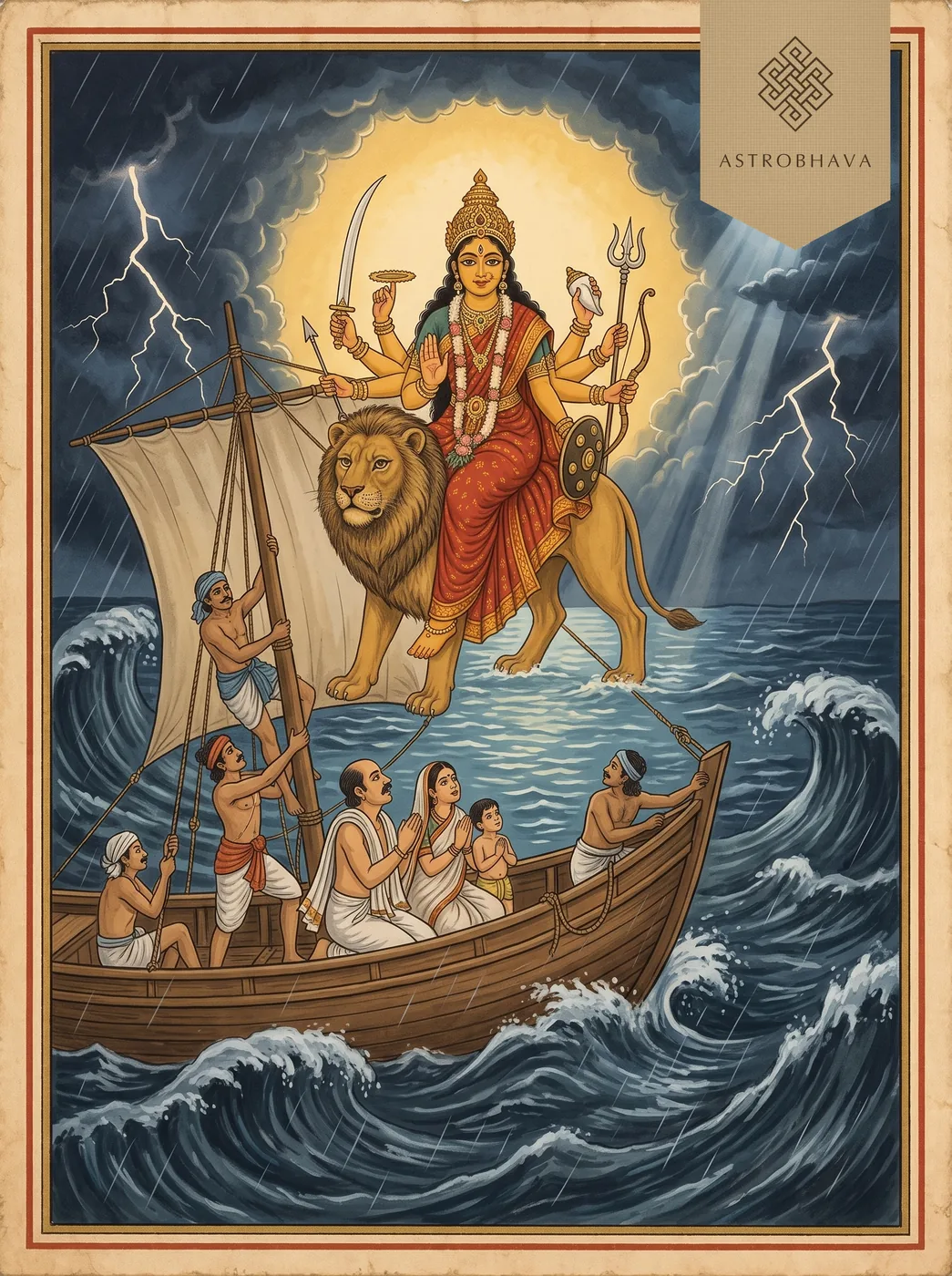
Durga Apaduddharaka Stotram
नमस्ते शरण्ये शिवे सानुकम्पे नमस्ते जगद्व्यापिके विश्वरूपे । नमस्ते जगद्वन्द्यपादारविन्दे नमस्ते जगत्तारिणि त्राहि दुर्गे ॥Also known as Durga Apaduddhara Ashtakam
In Devanagari, Tamil, Telugu, Kannada, Malayalam and English — with the meaning of every word, and the one syllable most people pronounce wrongly.
What the Durga Apaduddharaka Stotram is
The Durga Apaduddharaka Stotram is the hymn that Shiva recites to Uma in the Siddheshvari Tantra and describes in its closing verses as a means of rescue from calamity. It belongs to that tantra's dialogue of Uma and Maheshvara, and no human author is named for it. Its core is eight verses sharing one closing line, namaste jagattarini trahi durge: salutations to you who carry the world across, protect me, Durga. Verses 1 and 2 are pure salutation, to her compassion, her universal form, her knowledge and her bliss. Verses 3 to 6 turn to those who need her, from the creature with no protector to people caught in fire, at sea or in a king's court, and each time call her the one way out: by turns its doer, its boat, its cause and its seed. Verse 7 identifies her with the three nadis, verse 8 names her Kalaratri and Sati, and a ninth verse in a longer metre leads into three closing verses in Shiva's own voice.
A king of hymns, told in brief
No tale of a particular crisis is attached to this hymn; its setting is the frame of the tantra itself. The closing line of the printed editions places it in the Siddheshvari Tantra, within a conversation between Uma and Maheshvara, and one older printing names the same exchange a dialogue of Hara and Gauri. For eight verses the speaker is simply a devotee calling out to Durga. The voice changes only at the end. In the three closing verses Shiva turns to the Goddess, addresses her as Deveshi, queen of the gods, and claims the stotra as his own words: this hymn, he says, was spoken by him as a cause of release from calamity. He goes on to call it a stavaraja, a king of hymns, and remarks that he has told it to her in brief. The text has come down in two written forms. The Brihat Stotra Ratnakara, an older North Indian anthology, prints it as the Durga Apaduddhara Ashtakam, with different lines in verses 4, 6 and 8 and with the last half-verse counted on its own. The form most widely printed and chanted today keeps the boat of crossing in verse 4 and ends with one closing verse of six quarters. Some devotees add it to their reading during Devi Navaratri.
The mantra, in six scripts
- नमस्ते
- namaste — salutations to you
- शरण्ये
- śaraṇye — O refuge
- शिवे
- śive — O auspicious one
- सानुकम्पे
- sānukampe — full of compassion
- नमस्ते
- namaste — salutations to you
- जगद्व्यापिके
- jagadvyāpike — who pervade the world
- विश्वरूपे
- viśvarūpe — whose form is the universe
- नमस्ते
- namaste — salutations to you
- जगद्वन्द्यपादारविन्दे
- jagadvandyapādāravinde — whose lotus feet the world worships
- नमस्ते
- namaste — salutations to you
- जगत्तारिणि
- jagattāriṇi — who carry the world across
- त्राहि
- trāhi — protect
- दुर्गे
- durge — O Durga
Durga Apaduddharaka Stotram lyrics in full
Eight verses ending in a shared refrain, a ninth in a longer metre, and the three closing verses in which Shiva speaks.
All 12 verses, in Sanskrit, Tamil, Telugu, Kannada, Malayalam and English, each with its meaning. Choose a script:
Download the Durga Apaduddharaka Stotram PDFAll 12 verses with their meanings, in Sanskrit. Free to print and keep.
नमस्ते शरण्ये शिवे सानुकम्पे नमस्ते जगद्व्यापिके विश्वरूपे ।
नमस्ते जगद्वन्द्यपादारविन्दे नमस्ते जगत्तारिणि त्राहि दुर्गे ॥
நமஸ்தே ஶரண்யே ஶிவே ஸாநுகம்பே நமஸ்தே ஜகத்வ்யாபிகே விஶ்வரூபே ।
நமஸ்தே ஜகத்வந்த்யபாதாரவிந்தே நமஸ்தே ஜகத்தாரிணி த்ராஹி துர்கே ॥
నమస్తే శరణ్యే శివే సానుకమ్పే నమస్తే జగద్వ్యాపికే విశ్వరూపే ।
నమస్తే జగద్వన్ద్యపాదారవిన్దే నమస్తే జగత్తారిణి త్రాహి దుర్గే ॥
ನಮಸ್ತೇ ಶರಣ್ಯೇ ಶಿವೇ ಸಾನುಕಮ್ಪೇ ನಮಸ್ತೇ ಜಗದ್ವ್ಯಾಪಿಕೇ ವಿಶ್ವರೂಪೇ ।
ನಮಸ್ತೇ ಜಗದ್ವನ್ದ್ಯಪಾದಾರವಿನ್ದೇ ನಮಸ್ತೇ ಜಗತ್ತಾರಿಣಿ ತ್ರಾಹಿ ದುರ್ಗೇ ॥
നമസ്തേ ശരണ്യേ ശിവേ സാനുകമ്പേ നമസ്തേ ജഗദ്വ്യാപികേ വിശ്വരൂപേ ।
നമസ്തേ ജഗദ്വന്ദ്യപാദാരവിന്ദേ നമസ്തേ ജഗത്താരിണി ത്രാഹി ദുര്ഗേ ॥
namaste śaraṇye śive sānukampe namaste jagadvyāpike viśvarūpe |
namaste jagadvandyapādāravinde namaste jagattāriṇi trāhi durge ||
Salutations to you, the refuge, the auspicious one, full of compassion; salutations to you who pervade the world and whose form is the universe. Salutations to you whose lotus feet the whole world worships; salutations to you who carry the world across - protect me, Durga.
नमस्ते जगच्चिन्त्यमानस्वरूपे नमस्ते महायोगिनि ज्ञानरूपे ।
नमस्ते नमस्ते सदानन्दरूपे नमस्ते जगत्तारिणि त्राहि दुर्गे ॥
நமஸ்தே ஜகச்சிந்த்யமாநஸ்வரூபே நமஸ்தே மஹாயோகிநி ஜ்ஞாநரூபே ।
நமஸ்தே நமஸ்தே ஸதாநந்தரூபே நமஸ்தே ஜகத்தாரிணி த்ராஹி துர்கே ॥
నమస్తే జగచ్చిన్త్యమానస్వరూపే నమస్తే మహాయోగిని జ్ఞానరూపే ।
నమస్తే నమస్తే సదానన్దరూపే నమస్తే జగత్తారిణి త్రాహి దుర్గే ॥
ನಮಸ್ತೇ ಜಗಚ್ಚಿನ್ತ್ಯಮಾನಸ್ವರೂಪೇ ನಮಸ್ತೇ ಮಹಾಯೋಗಿನಿ ಜ್ಞಾನರೂಪೇ ।
ನಮಸ್ತೇ ನಮಸ್ತೇ ಸದಾನನ್ದರೂಪೇ ನಮಸ್ತೇ ಜಗತ್ತಾರಿಣಿ ತ್ರಾಹಿ ದುರ್ಗೇ ॥
നമസ്തേ ജഗച്ചിന്ത്യമാനസ്വരൂപേ നമസ്തേ മഹായോഗിനി ജ്ഞാനരൂപേ ।
നമസ്തേ നമസ്തേ സദാനന്ദരൂപേ നമസ്തേ ജഗത്താരിണി ത്രാഹി ദുര്ഗേ ॥
namaste jagaccintyamānasvarūpe namaste mahāyogini jñānarūpe |
namaste namaste sadānandarūpe namaste jagattāriṇi trāhi durge ||
Salutations to you whose form the world contemplates; salutations to you, great yogini, whose form is knowledge. Salutations again and again to you whose form is everlasting bliss; salutations to you who carry the world across - protect me, Durga.
अनाथस्य दीनस्य तृष्णातुरस्य भयार्तस्य भीतस्य बद्धस्य जन्तोः ।
त्वमेका गतिर्देवि निस्तारकर्त्री नमस्ते जगत्तारिणि त्राहि दुर्गे ॥
அநாதஸ்ய தீநஸ்ய த்ருஷ்ணாதுரஸ்ய பயார்தஸ்ய பீதஸ்ய பத்தஸ்ய ஜந்தோஃ ।
த்வமேகா கதிர்தேவி நிஸ்தாரகர்த்ரீ நமஸ்தே ஜகத்தாரிணி த்ராஹி துர்கே ॥
అనాథస్య దీనస్య తృష్ణాతురస్య భయార్తస్య భీతస్య బద్ధస్య జన్తోః ।
త్వమేకా గతిర్దేవి నిస్తారకర్త్రీ నమస్తే జగత్తారిణి త్రాహి దుర్గే ॥
ಅನಾಥಸ್ಯ ದೀನಸ್ಯ ತೃಷ್ಣಾತುರಸ್ಯ ಭಯಾರ್ತಸ್ಯ ಭೀತಸ್ಯ ಬದ್ಧಸ್ಯ ಜನ್ತೋಃ ।
ತ್ವಮೇಕಾ ಗತಿರ್ದೇವಿ ನಿಸ್ತಾರಕರ್ತ್ರೀ ನಮಸ್ತೇ ಜಗತ್ತಾರಿಣಿ ತ್ರಾಹಿ ದುರ್ಗೇ ॥
അനാഥസ്യ ദീനസ്യ തൃഷ്ണാതുരസ്യ ഭയാര്തസ്യ ഭീതസ്യ ബദ്ധസ്യ ജന്തോഃ ।
ത്വമേകാ ഗതിര്ദേവി നിസ്താരകര്ത്രീ നമസ്തേ ജഗത്താരിണി ത്രാഹി ദുര്ഗേ ॥
anāthasya dīnasya tṛṣṇāturasya bhayārtasya bhītasya baddhasya jantoḥ |
tvamekā gatirdevi nistārakartrī namaste jagattāriṇi trāhi durge ||
For a creature who is without a protector, wretched, tormented by craving, stricken with fear, frightened or in bondage, you alone, O Goddess, are the refuge and the one who brings deliverance. Salutations to you who carry the world across - protect me, Durga.
अरण्ये रणे दारुणे शत्रुमध्येऽनले सागरे प्रान्तरे राजगेहे ।
त्वमेका गतिर्देवि निस्तारनौका नमस्ते जगत्तारिणि त्राहि दुर्गे ॥
அரண்யே ரணே தாருணே ஶத்ருமத்யேநலே ஸாகரே ப்ராந்தரே ராஜகேஹே ।
த்வமேகா கதிர்தேவி நிஸ்தாரநௌகா நமஸ்தே ஜகத்தாரிணி த்ராஹி துர்கே ॥
అరణ్యే రణే దారుణే శత్రుమధ్యేఽనలే సాగరే ప్రాన్తరే రాజగేహే ।
త్వమేకా గతిర్దేవి నిస్తారనౌకా నమస్తే జగత్తారిణి త్రాహి దుర్గే ॥
ಅರಣ್ಯೇ ರಣೇ ದಾರುಣೇ ಶತ್ರುಮಧ್ಯೇಽನಲೇ ಸಾಗರೇ ಪ್ರಾನ್ತರೇ ರಾಜಗೇಹೇ ।
ತ್ವಮೇಕಾ ಗತಿರ್ದೇವಿ ನಿಸ್ತಾರನೌಕಾ ನಮಸ್ತೇ ಜಗತ್ತಾರಿಣಿ ತ್ರಾಹಿ ದುರ್ಗೇ ॥
അരണ്യേ രണേ ദാരുണേ ശത്രുമധ്യേഽനലേ സാഗരേ പ്രാന്തരേ രാജഗേഹേ ।
ത്വമേകാ ഗതിര്ദേവി നിസ്താരനൌകാ നമസ്തേ ജഗത്താരിണി ത്രാഹി ദുര്ഗേ ॥
araṇye raṇe dāruṇe śatrumadhye'nale sāgare prāntare rājagehe |
tvamekā gatirdevi nistāranaukā namaste jagattāriṇi trāhi durge ||
In the forest, in battle, in danger, in the midst of enemies, in fire, at sea, in a lonely wilderness and in a king's court, you alone, O Goddess, are the refuge and the boat that carries one across. Salutations to you who carry the world across - protect me, Durga.
अपारे महादुस्तरेऽत्यन्तघोरे विपत्सागरे मज्जतां देहभाजाम् ।
त्वमेका गतिर्देवि निस्तारहेतुर्नमस्ते जगत्तारिणि त्राहि दुर्गे ॥
அபாரே மஹாதுஸ்தரேத்யந்தகோரே விபத்ஸாகரே மஜ்ஜதாம் தேஹபாஜாம் ।
த்வமேகா கதிர்தேவி நிஸ்தாரஹேதுர்நமஸ்தே ஜகத்தாரிணி த்ராஹி துர்கே ॥
అపారే మహాదుస్తరేఽత్యన్తఘోరే విపత్సాగరే మజ్జతాం దేహభాజామ్ ।
త్వమేకా గతిర్దేవి నిస్తారహేతుర్నమస్తే జగత్తారిణి త్రాహి దుర్గే ॥
ಅಪಾರೇ ಮಹಾದುಸ್ತರೇಽತ್ಯನ್ತಘೋರೇ ವಿಪತ್ಸಾಗರೇ ಮಜ್ಜತಾಂ ದೇಹಭಾಜಾಮ್ ।
ತ್ವಮೇಕಾ ಗತಿರ್ದೇವಿ ನಿಸ್ತಾರಹೇತುರ್ನಮಸ್ತೇ ಜಗತ್ತಾರಿಣಿ ತ್ರಾಹಿ ದುರ್ಗೇ ॥
അപാരേ മഹാദുസ്തരേഽത്യന്തഘോരേ വിപത്സാഗരേ മജ്ജതാം ദേഹഭാജാമ് ।
ത്വമേകാ ഗതിര്ദേവി നിസ്താരഹേതുര്നമസ്തേ ജഗത്താരിണി ത്രാഹി ദുര്ഗേ ॥
apāre mahādustare'tyantaghore vipatsāgare majjatāṃ dehabhājām |
tvamekā gatirdevi nistāraheturnamaste jagattāriṇi trāhi durge ||
For embodied beings sinking in the shoreless, very hard to cross and utterly terrible ocean of misfortune, you alone, O Goddess, are the refuge and the cause of their deliverance. Salutations to you who carry the world across - protect me, Durga.
नमश्चण्डिके चण्डदुर्दण्डलीलासमुत्खण्डिता खण्डिता शेषशत्रोः ।
त्वमेका गतिर्देवि निस्तारबीजं नमस्ते जगत्तारिणि त्राहि दुर्गे ॥
நமஶ்சண்டிகே சண்டதுர்தண்டலீலாஸமுத்கண்டிதா கண்டிதா ஶேஷஶத்ரோஃ ।
த்வமேகா கதிர்தேவி நிஸ்தாரபீஜம் நமஸ்தே ஜகத்தாரிணி த்ராஹி துர்கே ॥
నమశ్చణ్డికే చణ్డదుర్దణ్డలీలాసముత్ఖణ్డితా ఖణ్డితా శేషశత్రోః ।
త్వమేకా గతిర్దేవి నిస్తారబీజం నమస్తే జగత్తారిణి త్రాహి దుర్గే ॥
ನಮಶ್ಚಣ್ಡಿಕೇ ಚಣ್ಡದುರ್ದಣ್ಡಲೀಲಾಸಮುತ್ಖಣ್ಡಿತಾ ಖಣ್ಡಿತಾ ಶೇಷಶತ್ರೋಃ ।
ತ್ವಮೇಕಾ ಗತಿರ್ದೇವಿ ನಿಸ್ತಾರಬೀಜಂ ನಮಸ್ತೇ ಜಗತ್ತಾರಿಣಿ ತ್ರಾಹಿ ದುರ್ಗೇ ॥
നമശ്ചണ്ഡികേ ചണ്ഡദുര്ദണ്ഡലീലാസമുത്ഖണ്ഡിതാ ഖണ്ഡിതാ ശേഷശത്രോഃ ।
ത്വമേകാ ഗതിര്ദേവി നിസ്താരബീജം നമസ്തേ ജഗത്താരിണി ത്രാഹി ദുര്ഗേ ॥
namaścaṇḍike caṇḍadurdaṇḍalīlāsamutkhaṇḍitā khaṇḍitā śeṣaśatroḥ |
tvamekā gatirdevi nistārabījaṃ namaste jagattāriṇi trāhi durge ||
Salutations, O Chandika, who in the fierce play of your irresistible might cut down and shattered every one of the enemies. You alone, O Goddess, are the refuge and the seed of deliverance. Salutations to you who carry the world across - protect me, Durga.
त्वमेका सदाराधिता सत्यवादिन्यनेकाखिला क्रोधनात्क्रोधनिष्ठा ।
इडा पिङ्गला त्वं सुषुम्ना च नाडी नमस्ते जगत्तारिणि त्राहि दुर्गे ॥
த்வமேகா ஸதாராதிதா ஸத்யவாதிந்யநேகாகிலா க்ரோதநாத்க்ரோதநிஷ்டா ।
இடா பிங்கலா த்வம் ஸுஷும்நா ச நாடீ நமஸ்தே ஜகத்தாரிணி த்ராஹி துர்கே ॥
త్వమేకా సదారాధితా సత్యవాదిన్యనేకాఖిలా క్రోధనాత్క్రోధనిష్ఠా ।
ఇడా పిఙ్గలా త్వం సుషుమ్నా చ నాడీ నమస్తే జగత్తారిణి త్రాహి దుర్గే ॥
ತ್ವಮೇಕಾ ಸದಾರಾಧಿತಾ ಸತ್ಯವಾದಿನ್ಯನೇಕಾಖಿಲಾ ಕ್ರೋಧನಾತ್ಕ್ರೋಧನಿಷ್ಠಾ ।
ಇಡಾ ಪಿಙ್ಗಲಾ ತ್ವಂ ಸುಷುಮ್ನಾ ಚ ನಾಡೀ ನಮಸ್ತೇ ಜಗತ್ತಾರಿಣಿ ತ್ರಾಹಿ ದುರ್ಗೇ ॥
ത്വമേകാ സദാരാധിതാ സത്യവാദിന്യനേകാഖിലാ ക്രോധനാത്ക്രോധനിഷ്ഠാ ।
ഇഡാ പിങ്ഗലാ ത്വം സുഷുമ്നാ ച നാഡീ നമസ്തേ ജഗത്താരിണി ത്രാഹി ദുര്ഗേ ॥
tvamekā sadārādhitā satyavādinyanekākhilā krodhanātkrodhaniṣṭhā |
iḍā piṅgalā tvaṃ suṣumnā ca nāḍī namaste jagattāriṇi trāhi durge ||
You alone are ever worshipped, the speaker of truth, the many and the whole; out of your wrath against wrong you stand firm in wrath. You are the Ida, the Pingala and the Sushumna channels. Salutations to you who carry the world across - protect me, Durga.
नमो देवि दुर्गे शिवे भीमनादे सदासर्वसिद्धिप्रदातृस्वरूपे ।
विभूतिः शची कालरात्री सती त्वं नमस्ते जगत्तारिणि त्राहि दुर्गे ॥
நமோ தேவி துர்கே ஶிவே பீமநாதே ஸதாஸர்வஸித்திப்ரதாத்ருஸ்வரூபே ।
விபூதிஃ ஶசீ காலராத்ரீ ஸதீ த்வம் நமஸ்தே ஜகத்தாரிணி த்ராஹி துர்கே ॥
నమో దేవి దుర్గే శివే భీమనాదే సదాసర్వసిద్ధిప్రదాతృస్వరూపే ।
విభూతిః శచీ కాలరాత్రీ సతీ త్వం నమస్తే జగత్తారిణి త్రాహి దుర్గే ॥
ನಮೋ ದೇವಿ ದುರ್ಗೇ ಶಿವೇ ಭೀಮನಾದೇ ಸದಾಸರ್ವಸಿದ್ಧಿಪ್ರದಾತೃಸ್ವರೂಪೇ ।
ವಿಭೂತಿಃ ಶಚೀ ಕಾಲರಾತ್ರೀ ಸತೀ ತ್ವಂ ನಮಸ್ತೇ ಜಗತ್ತಾರಿಣಿ ತ್ರಾಹಿ ದುರ್ಗೇ ॥
നമോ ദേവി ദുര്ഗേ ശിവേ ഭീമനാദേ സദാസര്വസിദ്ധിപ്രദാതൃസ്വരൂപേ ।
വിഭൂതിഃ ശചീ കാലരാത്രീ സതീ ത്വം നമസ്തേ ജഗത്താരിണി ത്രാഹി ദുര്ഗേ ॥
namo devi durge śive bhīmanāde sadāsarvasiddhipradātṛsvarūpe |
vibhūtiḥ śacī kālarātrī satī tvaṃ namaste jagattāriṇi trāhi durge ||
Salutations, O Goddess Durga, auspicious one of the terrible roar, whose nature is to grant every accomplishment at all times. You are Vibhuti (splendour), Shachi, Kalaratri and Sati. Salutations to you who carry the world across - protect me, Durga.
शरणमसि सुराणां सिद्धविद्याधराणां मुनिमनुजपशूनां दस्युभिस्त्रासितानाम् ।
नृपतिगृहगतानां व्याधिभिः पीडितानां त्वमसि शरणमेका देवि दुर्गे प्रसीद ॥
ஶரணமஸி ஸுராணாம் ஸித்தவித்யாதராணாம் முநிமநுஜபஶூநாம் தஸ்யுபிஸ்த்ராஸிதாநாம் ।
ந்ருபதிக்ருஹகதாநாம் வ்யாதிபிஃ பீடிதாநாம் த்வமஸி ஶரணமேகா தேவி துர்கே ப்ரஸீத ॥
శరణమసి సురాణాం సిద్ధవిద్యాధరాణాం మునిమనుజపశూనాం దస్యుభిస్త్రాసితానామ్ ।
నృపతిగృహగతానాం వ్యాధిభిః పీడితానాం త్వమసి శరణమేకా దేవి దుర్గే ప్రసీద ॥
ಶರಣಮಸಿ ಸುರಾಣಾಂ ಸಿದ್ಧವಿದ್ಯಾಧರಾಣಾಂ ಮುನಿಮನುಜಪಶೂನಾಂ ದಸ್ಯುಭಿಸ್ತ್ರಾಸಿತಾನಾಮ್ ।
ನೃಪತಿಗೃಹಗತಾನಾಂ ವ್ಯಾಧಿಭಿಃ ಪೀಡಿತಾನಾಂ ತ್ವಮಸಿ ಶರಣಮೇಕಾ ದೇವಿ ದುರ್ಗೇ ಪ್ರಸೀದ ॥
ശരണമസി സുരാണാം സിദ്ധവിദ്യാധരാണാം മുനിമനുജപശൂനാം ദസ്യുഭിസ്ത്രാസിതാനാമ് ।
നൃപതിഗൃഹഗതാനാം വ്യാധിഭിഃ പീഡിതാനാം ത്വമസി ശരണമേകാ ദേവി ദുര്ഗേ പ്രസീദ ॥
śaraṇamasi surāṇāṃ siddhavidyādharāṇāṃ munimanujapaśūnāṃ dasyubhistrāsitānām |
nṛpatigṛhagatānāṃ vyādhibhiḥ pīḍitānāṃ tvamasi śaraṇamekā devi durge prasīda ||
You are the refuge of the gods, the Siddhas and the Vidyadharas, of sages, humans and animals, and of those terrorised by robbers. Of those held in a king's house and those afflicted by disease, you alone are the refuge, O Goddess Durga - be gracious.
इदं स्तोत्रं मया प्रोक्तमापदुद्धारहेतुकम् ।
त्रिसन्ध्यमेकसन्ध्यं वा पठनाद्घोरसङ्कटात् ॥
இதம் ஸ்தோத்ரம் மயா ப்ரோக்தமாபதுத்தாரஹேதுகம் ।
த்ரிஸந்த்யமேகஸந்த்யம் வா படநாத்கோரஸங்கடாத் ॥
ఇదం స్తోత్రం మయా ప్రోక్తమాపదుద్ధారహేతుకమ్ ।
త్రిసన్ధ్యమేకసన్ధ్యం వా పఠనాద్ఘోరసఙ్కటాత్ ॥
ಇದಂ ಸ್ತೋತ್ರಂ ಮಯಾ ಪ್ರೋಕ್ತಮಾಪದುದ್ಧಾರಹೇತುಕಮ್ ।
ತ್ರಿಸನ್ಧ್ಯಮೇಕಸನ್ಧ್ಯಂ ವಾ ಪಠನಾದ್ಘೋರಸಙ್ಕಟಾತ್ ॥
ഇദം സ്തോത്രം മയാ പ്രോക്തമാപദുദ്ധാരഹേതുകമ് ।
ത്രിസന്ധ്യമേകസന്ധ്യം വാ പഠനാദ്ഘോരസങ്കടാത് ॥
idaṃ stotraṃ mayā proktamāpaduddhārahetukam |
trisandhyamekasandhyaṃ vā paṭhanādghorasaṅkaṭāt ||
Shiva says: This hymn, spoken by me, is a means of rescue from calamity. The verse says that by reciting it at the three junctions of the day, or at just one, a person is freed from terrible distress -
मुच्यते नात्र सन्देहो भुवि स्वर्गे रसातले ।
सर्वं वा श्लोकमेकं वा यः पठेद्भक्तिमान् सदा ॥
முச்யதே நாத்ர ஸந்தேஹோ புவி ஸ்வர்கே ரஸாதலே ।
ஸர்வம் வா ஶ்லோகமேகம் வா யஃ படேத்பக்திமாந் ஸதா ॥
ముచ్యతే నాత్ర సన్దేహో భువి స్వర్గే రసాతలే ।
సర్వం వా శ్లోకమేకం వా యః పఠేద్భక్తిమాన్ సదా ॥
ಮುಚ್ಯತೇ ನಾತ್ರ ಸನ್ದೇಹೋ ಭುವಿ ಸ್ವರ್ಗೇ ರಸಾತಲೇ ।
ಸರ್ವಂ ವಾ ಶ್ಲೋಕಮೇಕಂ ವಾ ಯಃ ಪಠೇದ್ಭಕ್ತಿಮಾನ್ ಸದಾ ॥
മുച്യതേ നാത്ര സന്ദേഹോ ഭുവി സ്വര്ഗേ രസാതലേ ।
സര്വം വാ ശ്ലോകമേകം വാ യഃ പഠേദ്ഭക്തിമാന് സദാ ॥
mucyate nātra sandeho bhuvi svarge rasātale |
sarvaṃ vā ślokamekaṃ vā yaḥ paṭhedbhaktimān sadā ||
- of this there is no doubt, whether on earth, in heaven or in the netherworld. Whoever, full of devotion, always recites the whole hymn or even a single verse of it -
स सर्वं दुष्कृतं त्यक्त्वा प्राप्नोति परमं पदम् ।
पठनादस्य देवेशि किं न सिद्ध्यति भूतले ।
स्तवराजमिदं देवि सङ्क्षेपात्कथितं मया ॥
ஸ ஸர்வம் துஷ்க்ருதம் த்யக்த்வா ப்ராப்நோதி பரமம் பதம் ।
படநாதஸ்ய தேவேஶி கிம் ந ஸித்த்யதி பூதலே ।
ஸ்தவராஜமிதம் தேவி ஸங்க்ஷேபாத்கதிதம் மயா ॥
స సర్వం దుష్కృతం త్యక్త్వా ప్రాప్నోతి పరమం పదమ్ ।
పఠనాదస్య దేవేశి కిం న సిద్ధ్యతి భూతలే ।
స్తవరాజమిదం దేవి సఙ్క్షేపాత్కథితం మయా ॥
ಸ ಸರ್ವಂ ದುಷ್ಕೃತಂ ತ್ಯಕ್ತ್ವಾ ಪ್ರಾಪ್ನೋತಿ ಪರಮಂ ಪದಮ್ ।
ಪಠನಾದಸ್ಯ ದೇವೇಶಿ ಕಿಂ ನ ಸಿದ್ಧ್ಯತಿ ಭೂತಲೇ ।
ಸ್ತವರಾಜಮಿದಂ ದೇವಿ ಸಙ್ಕ್ಷೇಪಾತ್ಕಥಿತಂ ಮಯಾ ॥
സ സര്വം ദുഷ്കൃതം ത്യക്ത്വാ പ്രാപ്നോതി പരമം പദമ് ।
പഠനാദസ്യ ദേവേശി കിം ന സിദ്ധ്യതി ഭൂതലേ ।
സ്തവരാജമിദം ദേവി സങ്ക്ഷേപാത്കഥിതം മയാ ॥
sa sarvaṃ duṣkṛtaṃ tyaktvā prāpnoti paramaṃ padam |
paṭhanādasya deveśi kiṃ na siddhyati bhūtale |
stavarājamidaṃ devi saṅkṣepātkathitaṃ mayā ||
- the verse says that person casts off every wrong deed and reaches the supreme state. O Queen of the gods, what on earth is not accomplished by reciting it? O Goddess, I have told you this king of hymns in brief.
The syllable people get wrong
In the refrain, jagattāriṇi (जगत्तारिणि) has a doubled tt, a long ā and a retroflex ṇ: say ja-gat-TAA-ri-ni, holding the t before releasing it, rather than the common 'jaga-tarini' with one soft t. The final i stays short, since the word is a call to the Goddess.
When the Durga Apaduddharaka Stotram is chanted
Weekday. Friday
Festival. Devi Navaratri, by devotional custom
Questions
Have your chart read before you decide
Chanting is yours to do, and free. But which deity your situation calls for — and whether a mantra alone is the right response — depends on your chart. Sometimes it is; sometimes it is not.
- Over 30 years in the Guru–Sishya Parampara, from the age of five
- He reads every chart himself — 60 minutes, one to one, never delegated
- Charts are read only between sunrise and sunset, following tradition